
Taj Mahal
Exploration of the Taj Mahal's architectural legacy, historical significance, and speculative design interventions.
The Taj Mahal stands as one of the world's most recognized monuments, representing the pinnacle of Mughal architecture and a testament to devotional design. Its symmetry, material refinement, and spatial composition continue to inform contemporary architectural practice and theory.
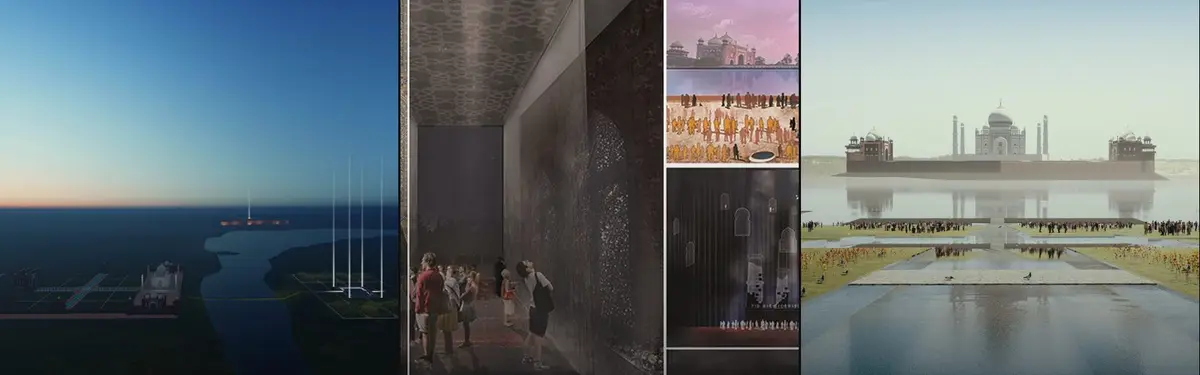
The community examines the legendary Black Taj—the speculative mirror structure said to have been planned across the Yamuna River—as a vehicle for exploring themes of loss, temporality, and architectural memory. Members investigate how historical myth, water, light, and ruin can be reimagined through design interventions that bridge past and present.
Popular projects
View all 37 projects


Latest journals
View all 35 journals

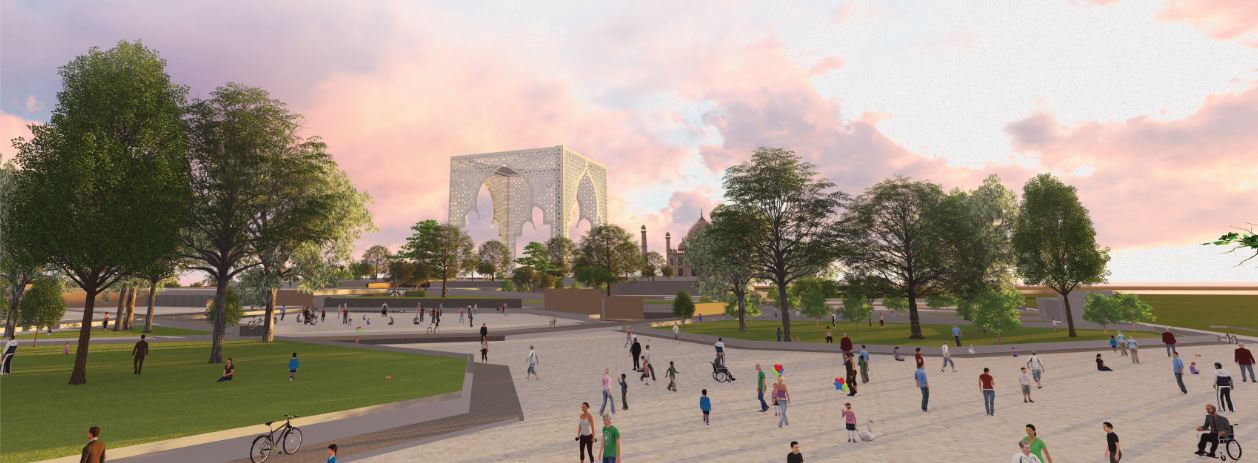
The Black Taj: Architecture as a Temporal Bridge Across the Yamuna
A fluid, sculptural counterpart to the Taj Mahal reimagines memorial architecture as a living civic and cultural destination in Agra.
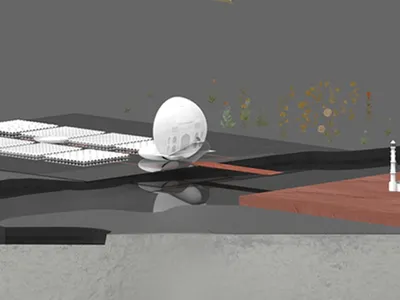
The Moonlight Garden: Rebuilding the Black Taj as Pure Perception
Ornruja Boonyasit reimagines Shah Jahan's mythic counterpart to the Taj Mahal as a choreography of light, water, and spatial silence.

The Black Taj: Resurrecting Mughal Myth Through Water, Ruin, and Subterranean Light
A shortlisted entry reimagines Shah Jahan's legendary dark twin as a layered landscape of glass floors, cascading water, and buried heritage.

The Black Taj: Five Monolithic Interventions Reimagine Mehtab Bagh's Lost Symmetry
A shortlisted proposal reinterprets Mughal spatial logic through earth-toned towers, stanchions, and viewing frames along the Yamuna riverbank.


