

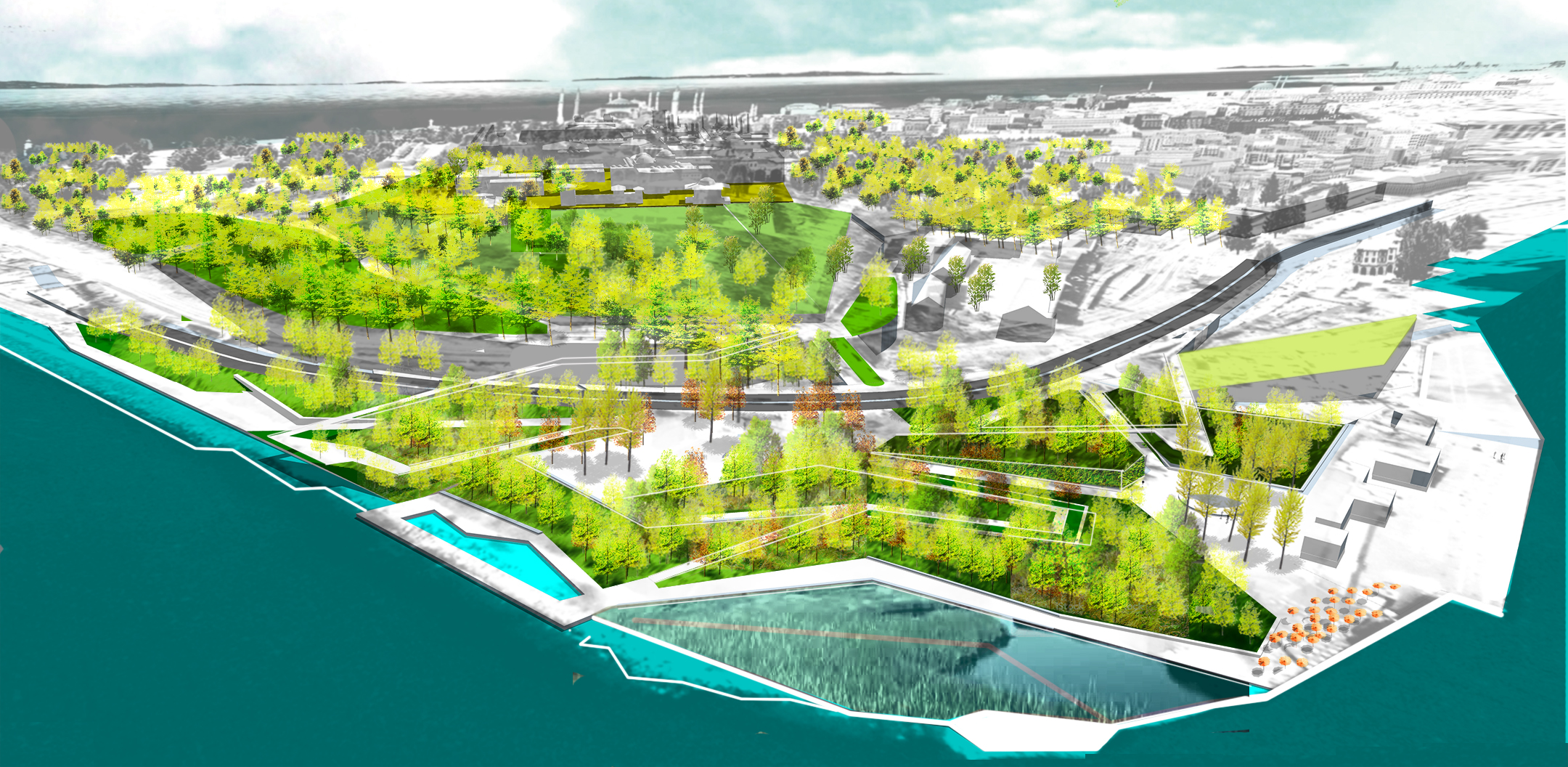
Urban Ecology
Design and planning work that integrates ecological systems, habitat, and resilience into dense urban environments.
Urban ecology studies the relationships between living systems and the built city, including habitat, water, soil, and vegetation. For designers, it asks how buildings, streets, and infrastructure can support biodiversity and recover land that has been degraded by development. The field draws on landscape architecture, ecology, and urban planning.
Member work under this topic reconsiders vacant lots, landfills, waterfronts, and leftover street space as sites for ecological repair. Projects range from wetland restoration and habitat towers to bus stops and infill libraries that add shared green ground to tight urban plots.


Popular projects
View all 98 projects


Latest journals
View all 15 journals

Public Infill Library: A Crack Through a Sharjah Block Turns a Tight Plot into Shared Green Ground
Rachel George fragments a library across a dense Sharjah plot, sinking communal reading below ground and wrapping upper floors in a timber screen.

ProEixample 4.0: A Land Trust and a Parametric Rulebook for Barcelona's Leftover Streets
A Hyperblock winner that reads Barcelona through eleven historical layers and turns surplus Eixample road space into commons run by a land trust.
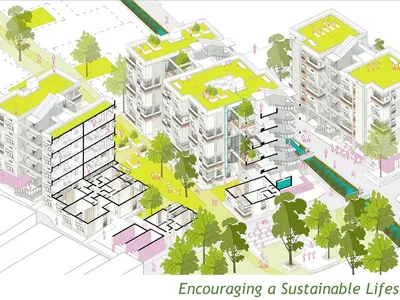
Productive Organism: A Mumbai Thesis That Treats Peripheral Housing as a Tool for Ecological Repair
Amod Nargund's thesis for Marve, Malvani layers mangrove ecology, adaptive housing and water cycles into a habitat that works like a living organism.
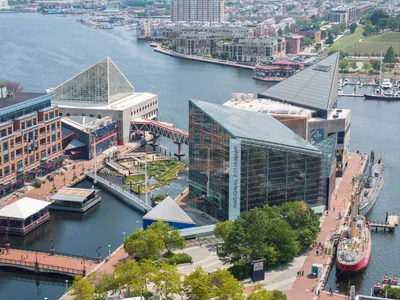
Harbor Wetland by Ayers Saint Gross: Transforming Baltimore’s Inner Harbor Through Sustainable Design
Harbor Wetland by Ayers Saint Gross is a 10,000 ft² sustainable floating wetland in Baltimore, restoring habitats, educating visitors, and promoting urban ecology.


