
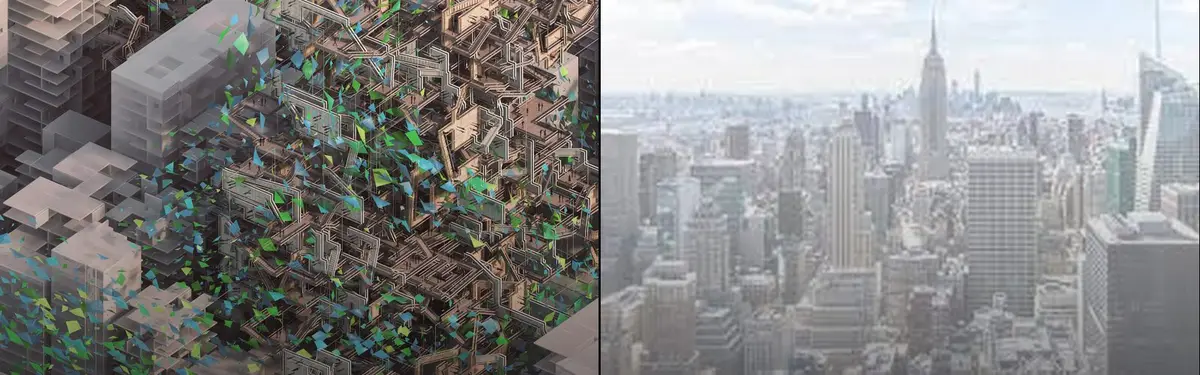


Urban Sprawl
Design responses to urban expansion, density, and the relationship between built environments and natural spaces.
Urban sprawl describes the unplanned expansion of cities into surrounding areas, creating challenges for infrastructure, ecology, and community. Designers and architects address these issues through interventions that reconsider land use, density, and the boundaries between urban and rural environments.
The community explores adaptive strategies for sprawling cities: converting agricultural land into mixed-use hubs, inserting green infrastructure into dense plots, integrating housing into existing urban fabric, and creating spaces that blur distinctions between wilderness and development.


Popular projects
View all 6 projects


Latest journals
View all 25 journals

Common Practice and Studio AAAN Carve a Hidden Courtyard World into Amsterdam's Narrowest Plot
Sixty-four mid-rent apartments on Oostenburgereiland turn a sliver beside a parking garage into a layered urban interior.
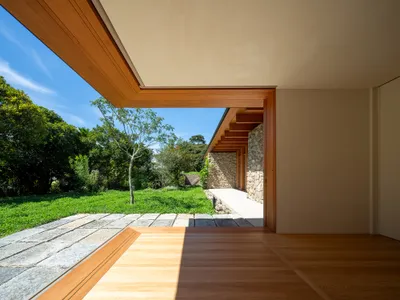
Teitakusubako and Yusuke Igarashi Architects Dissolve a House into the Forest Edge in Zushi
A 215 m² residence on a generous Tokyo-suburban plot uses stone, timber, and fragmented volumes to blur the line between dwelling and woodland.
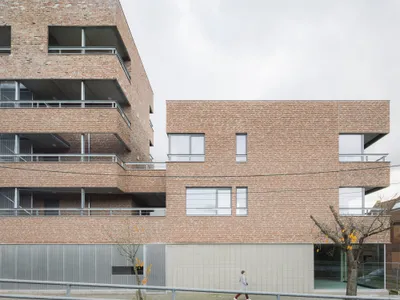
MAKER Architecten Weaves Social Housing into Kortrijk's Dense Urban Fabric with Brick and Restraint
A social housing infill in Kortrijk, Belgium, negotiates between existing rooftops, rail corridors, and neighborhood memory with quiet force.

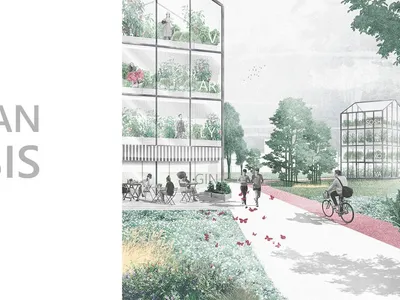
Urban Oasis: Turning a Former Spandau Barracks into a Dense District That Grows Its Own Green
Varlygin and Soshnikova recast Berlin's garden culture as an urban typology, weaving greenhouses and shared plots into a densified former barracks site.


