
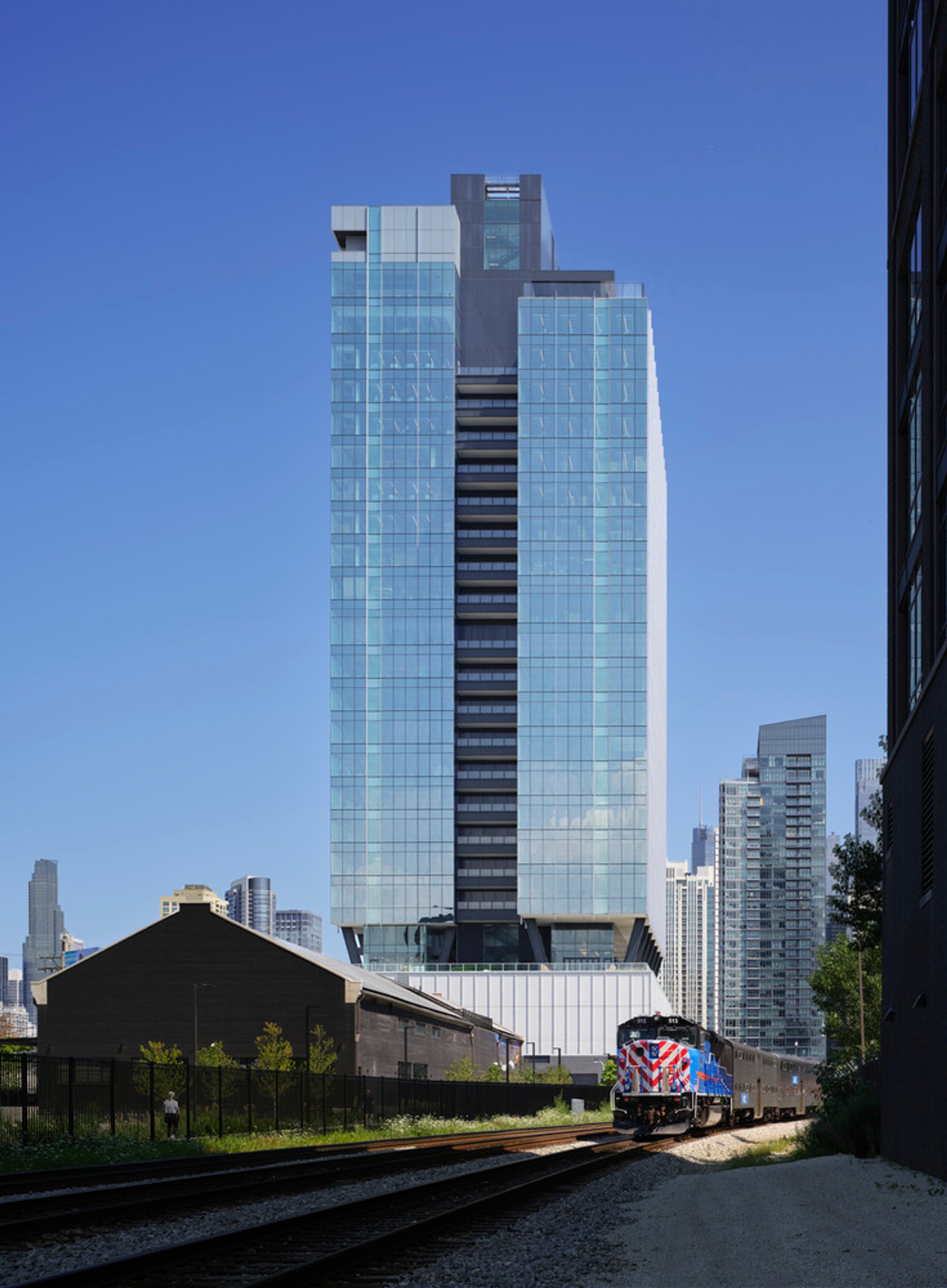
360 N Green Office Building by Gensler: A New Icon of Workplace Design in Chicago’s Fulton Market
A sustainable 24-story office tower by Gensler in Chicago’s Fulton Market, blending modern design, wellness-focused spaces, and structural expressionism.

A Landmark of Modern Commercial Architecture in Chicago
Designed by Gensler in collaboration with Sterling Bay Design Studio, the 360 N Green Office Building stands as a new benchmark in commercial architecture within Chicago’s thriving Fulton Market District. Spanning 500,000 square feet across 24 stories, this Class A office tower introduces a sophisticated vision of workplace design tailored for professional service firms, marking a pivotal expansion beyond Chicago’s traditional Loop business core.
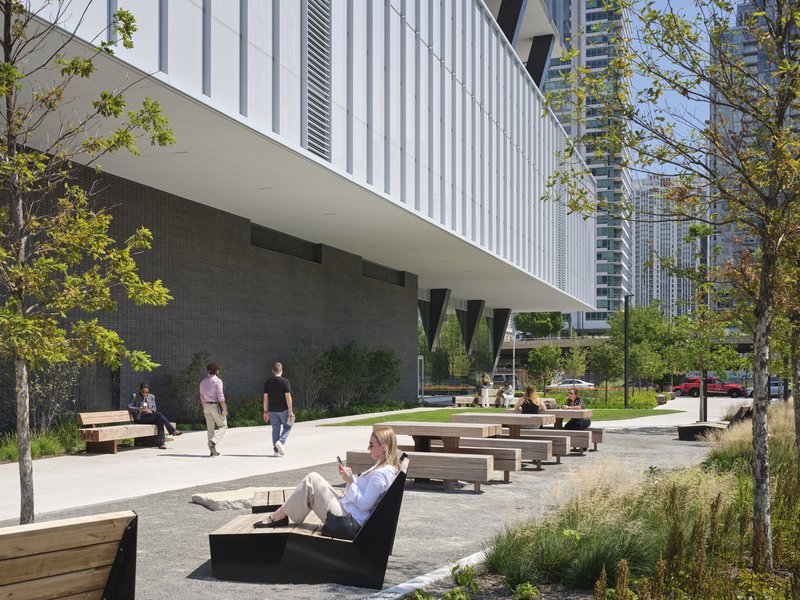
Strategically positioned at the northern boundary of Green Street, 360 N Green anchors one of the city’s most dynamic urban corridors—an area known for its mix of heritage warehouses, boutique hotels, high-end restaurants, and retail spaces. Developed by Sterling Bay, the project exemplifies the fusion of architectural innovation, sustainability, and cultural identity that continues to redefine Chicago’s skyline.
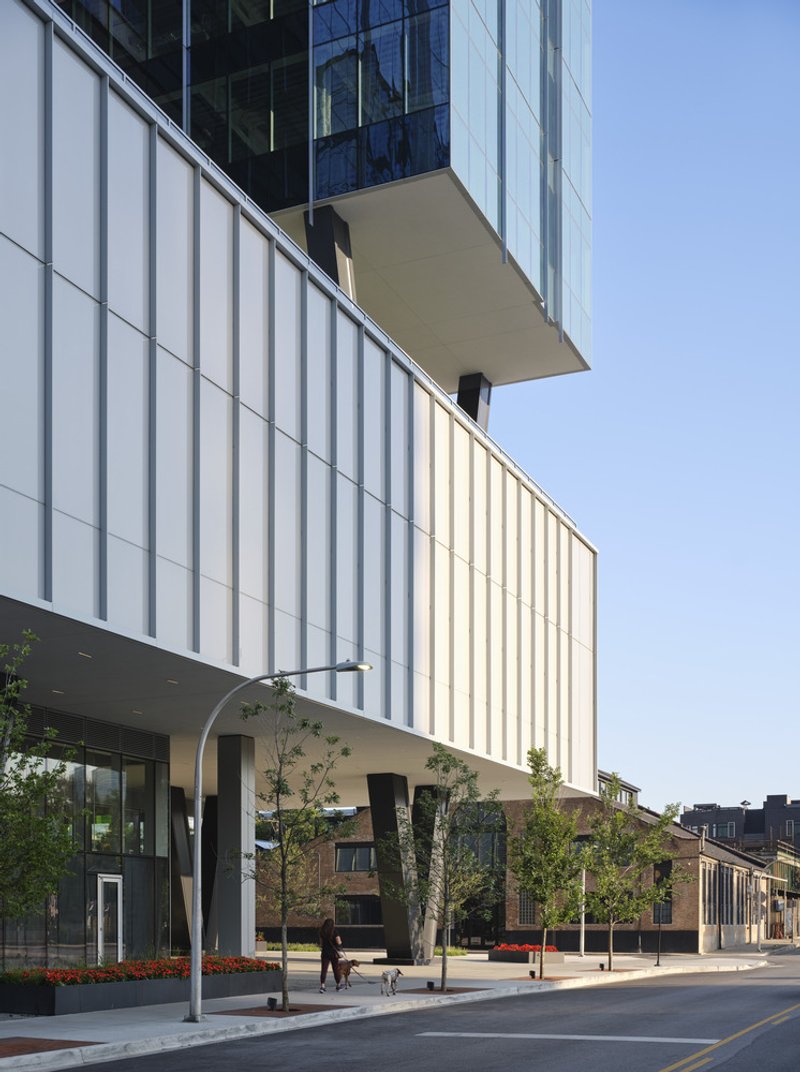
Architectural Concept: Balancing Modernism and Structural Expressionism
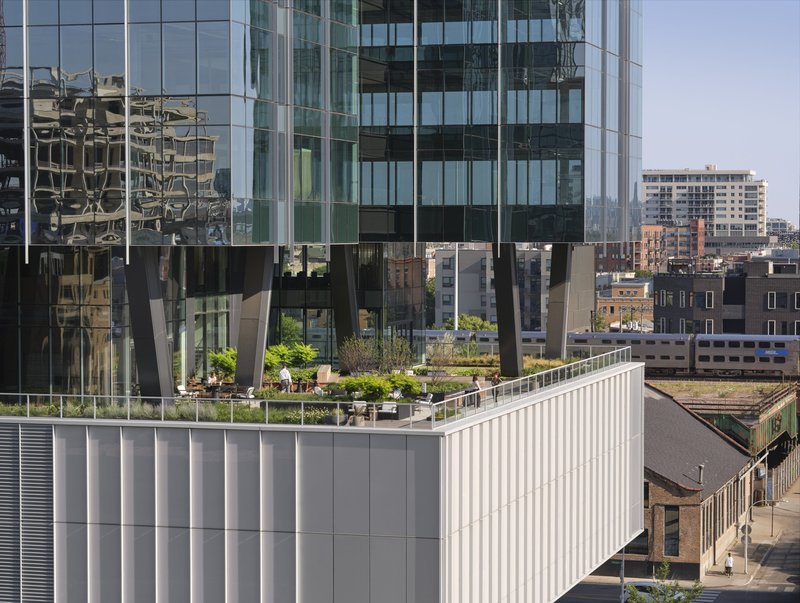
Gensler’s design for 360 N Green takes inspiration from Chicago’s lineage of high-rise innovation and Structural Expressionism, while introducing a distinctly modern workplace typology. The building’s symmetrical twin towers celebrate steel and glass—materials emblematic of the city’s architectural DNA. Its clean, geometric form reflects a function-first modernist approach, combined with an expressive structural clarity that enhances visual rhythm and performance.
In contrast to the adaptive warehouse conversions that characterize Fulton Market’s tech and creative sector, 360 N Green establishes a new architectural language: one that harmonizes contemporary form with the neighborhood’s industrial heritage. The result is a forward-looking urban icon—both rooted in context and responsive to the evolving nature of work.
Interior Design and Spatial Organization
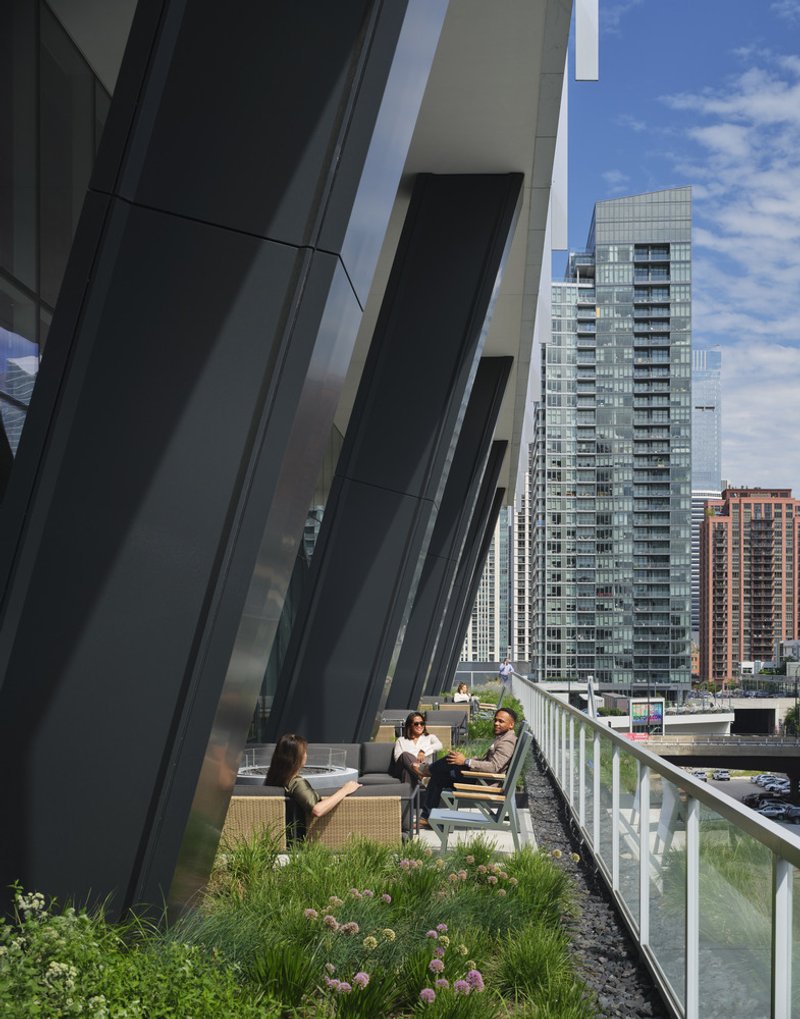
At the heart of the design is a deep understanding of modern workplace culture. Gensler envisioned interiors that promote flexibility, connection, and wellness, enabling a seamless balance between focused work and collaboration. The double-tower configuration ensures abundant natural light, column-free interiors, and dual terraces on every floor, creating dynamic spaces that blur the boundaries between inside and out.
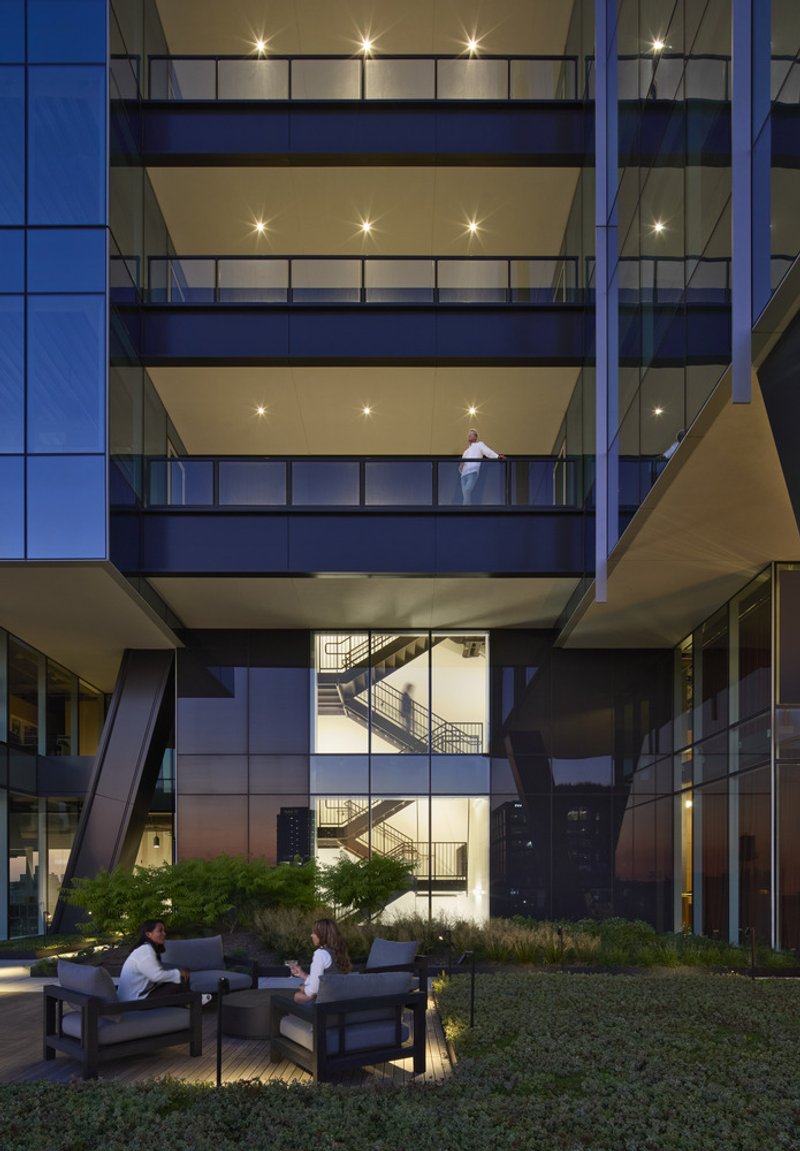
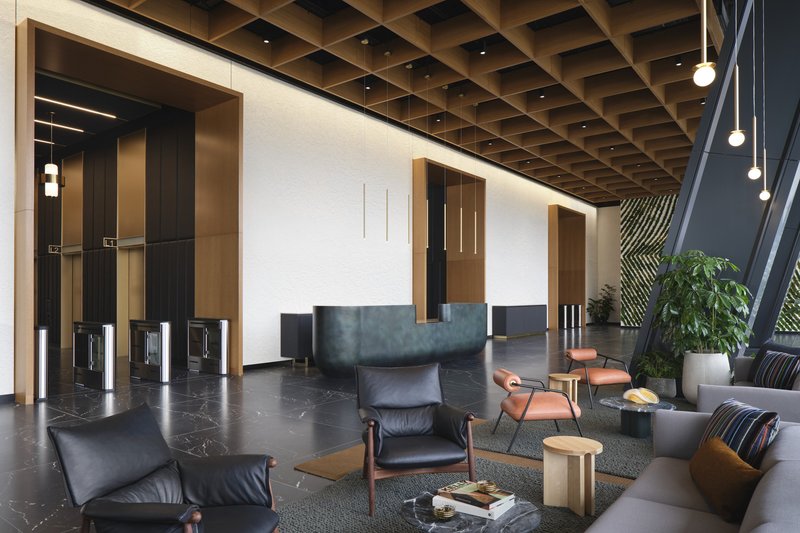
The building’s stacked amenity floors above the lobby offer an array of indoor and outdoor environments—including meeting areas, lounges, and wellness spaces designed for both formal and casual interactions. Visible craftsmanship and exposed structural elements are carried throughout, extending the structural expressionism of the exterior into the core of the workspace. A dramatic feature stair connects the two amenity levels, supported by a bold V-shaped steel frame that echoes the tower’s visual language.
Sustainable Design and Performance
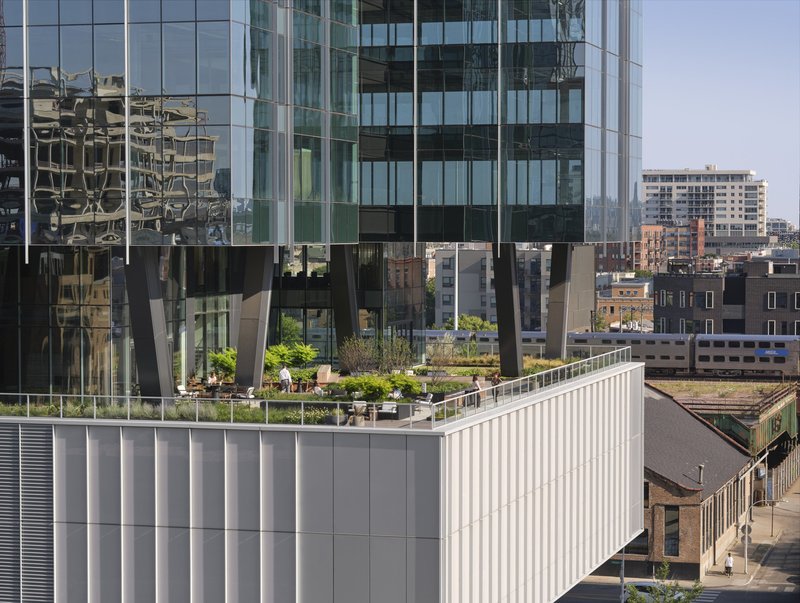
Sustainability and wellness are central to the project’s design ethos. 360 N Green integrates high-efficiency mechanical systems, state-of-the-art elevators, and a high-performance façade that optimizes energy use while maximizing comfort and natural illumination. Each floor’s dual outdoor terraces foster wellness through light, air, and open space, promoting employee well-being and social connection.
The building is currently pursuing LEED Silver Certification, underscoring Gensler’s commitment to environmentally responsible architecture. Through data-driven design research, the project explores how spatial form influences physical, social, and mental health—a particularly timely focus in the post-pandemic era of hybrid and flexible work.
Redefining the Future of Work in Chicago
As the first Class A office building in Fulton Market designed explicitly for professional services firms, 360 N Green signals a significant shift in Chicago’s corporate geography. It represents a holistic model of workplace design, one that reimagines the office as a wellness-oriented, sustainable, and socially connected environment.
By merging structural authenticity, architectural refinement, and cultural sensitivity, Gensler and Sterling Bay have created more than a building—they’ve crafted a vision for the future of urban workspaces in Chicago and beyond.
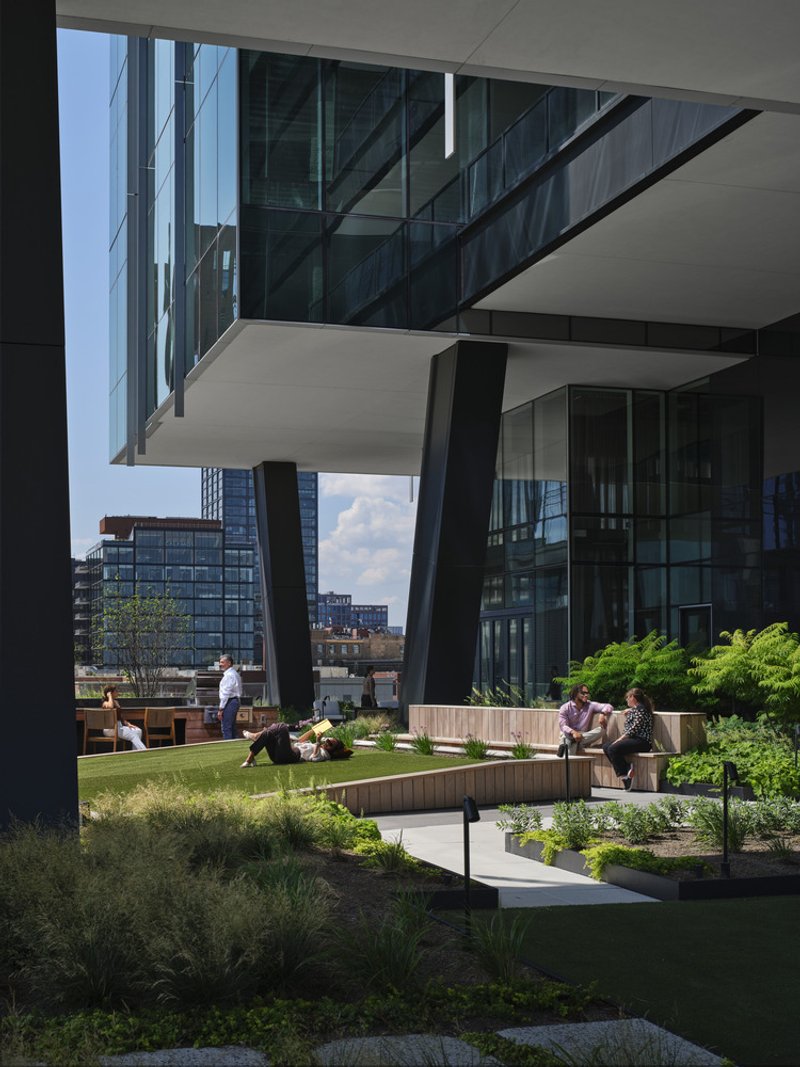
All photographs are works of Kendall McCaugherty




Popular Articles
Popular articles from the community

Atelier Macri Concept Store Interior Design by CASE-REAL
Atelier Macri store features a "ko" counter, walnut wood details, cork displays, blending retail, gallery, and seamless customer experiences.
An Miên Lumière Cafe by xưởng xép, Ho Chi Minh City, Vietnam
An industrial-inspired café where layered steel and warm light create a dynamic, immersive environment shaped by reflection, depth, and perception.
Flamboyant House by Juliana Camargo + Prumo Projetos
Modern Brazilian house integrating existing tree, pool, and volumes with glass, wood, and transitional spaces blending interior, exterior, and landscape seamlessly.
A Contemporary Take on Iranian Residential Architecture
A modern interior design in Mashhad that reinterprets brick, light, and spatial flow to create a warm, contemporary residential architecture.

Similar Reads
You might also enjoy these articles


The Ken Roberts Memorial Delineation Competition (Krob)
As the most senior architectural drawing competition currently in operation anywhere in the world, it draws hundreds of entries each year, awarding the very best submissions in a series of medium-based categories.

Waterfront Redevelopment and Urban Revitalization in Mumbai: Forging a New Dawn for Darukhana
A transformative waterfront redevelopment project reimagining Darukhana’s shipbreaking heritage into an inclusive urban future.

OUT-OF-MAP: A Call for Postcards on Feminist Narratives of Public Space
Rhizoma Design and Research Lab invites artists, designers, architects, researchers, and students to reflect on how feminist perspectives can reshape public space. Selected works will be exhibited in Barcelona, October 2026. Submissions open until 15 April 2026.


Documentation Work on Buddhist Wooden Temple
Architectural syncretism and cultural hybridity: A comparative study of the Buddhist temples in Chattogram Hill tracks


Explore Office Building Competitions
Discover active competitions in this discipline




The International Standard for Design Portfolios


The Global Benchmark for Architecture Dissertation Awards


The Global Benchmark for Graduation Excellence


Challenge to reimagine the Iron Throne
Comments (0)
Please login or sign up to add comments
No comments yet. Be the first to comment!