
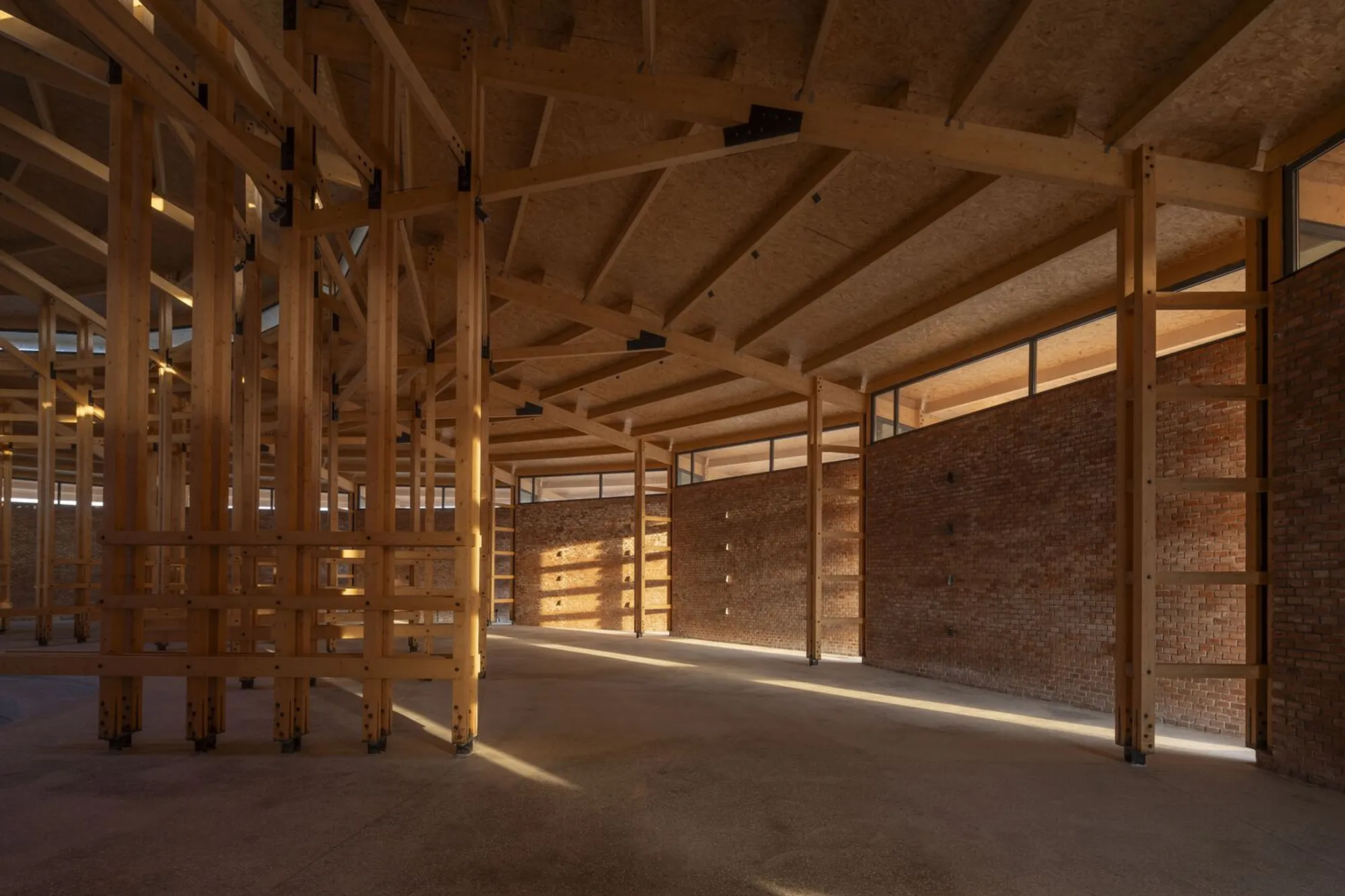
A Masterpiece of Sustainable Architecture
The article explores the innovative and sustainable architectural design of the Prepared Rehmannia Root Crafts Exhibition Hall by LUO Studio.


The Prepared Rehmannia Root Crafts Exhibition Hall in Jiaozuo, China, designed by LUO studio, is a remarkable example of sustainable architecture that harmoniously blends traditional and contemporary design elements. This article delves into the unique architectural features of this exhibition hall, emphasizing its innovative use of materials, structural design, and ecological considerations.
Conceptual Shift from Factory to Exhibition Hall
Background and Location
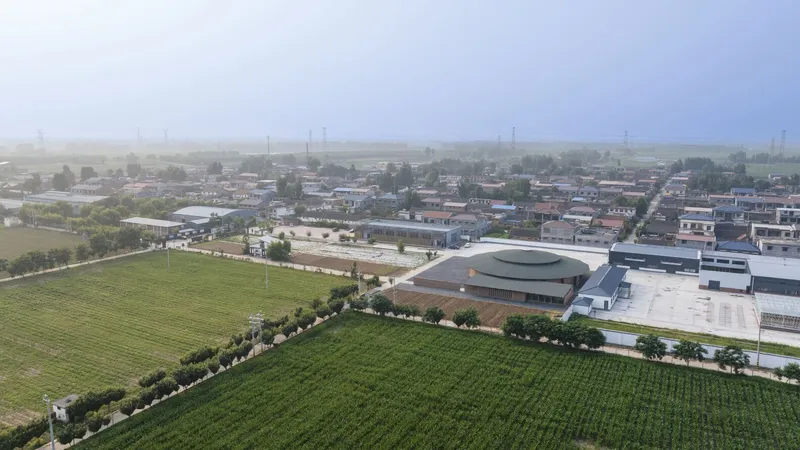
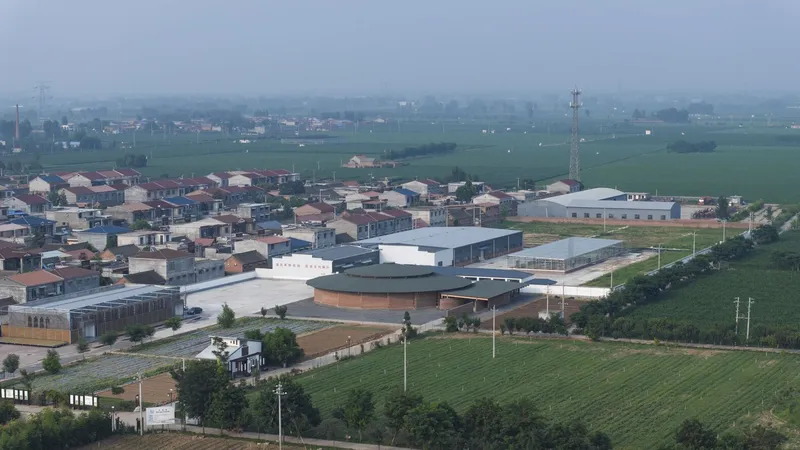
Xiuwu County, historically known as Huaiqing Prefecture, is renowned for its production of traditional Chinese medicine herbs, including the Rehmannia root. The local government has supported the development of the medicinal herb industry in Houyanmen Village, culminating in the creation of the Prepared Rehmannia Root Crafts Exhibition Hall.
Design Approach
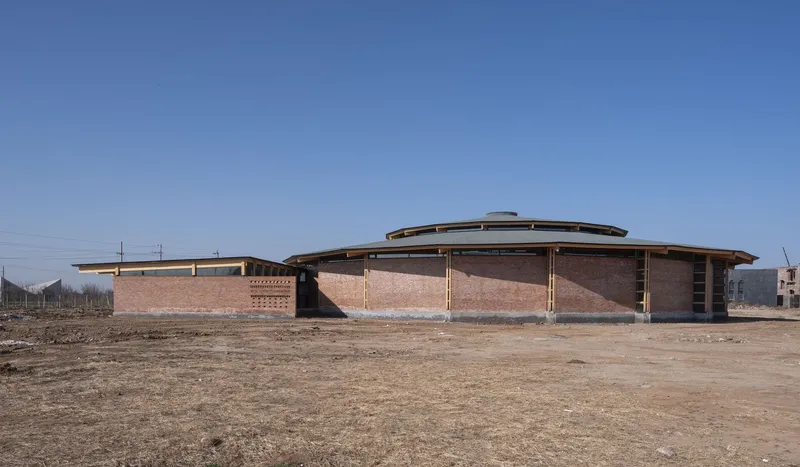
The transition from a factory-style building to an exhibition hall required a significant conceptual shift. LUO studio persuaded stakeholders to embrace a new design paradigm that met the requirements of a large-span, open space while reflecting the local characteristics and ecological considerations.
Sunlight as the Core of Craftsmanship and Space
Inspiration from Traditional Techniques
The design team drew inspiration from the ancient Chinese physician Sun Simiao's "nine steaming and nine sun-drying" methodology. This traditional process, which relies heavily on sunlight, became a central theme in shaping the exhibition hall's space.
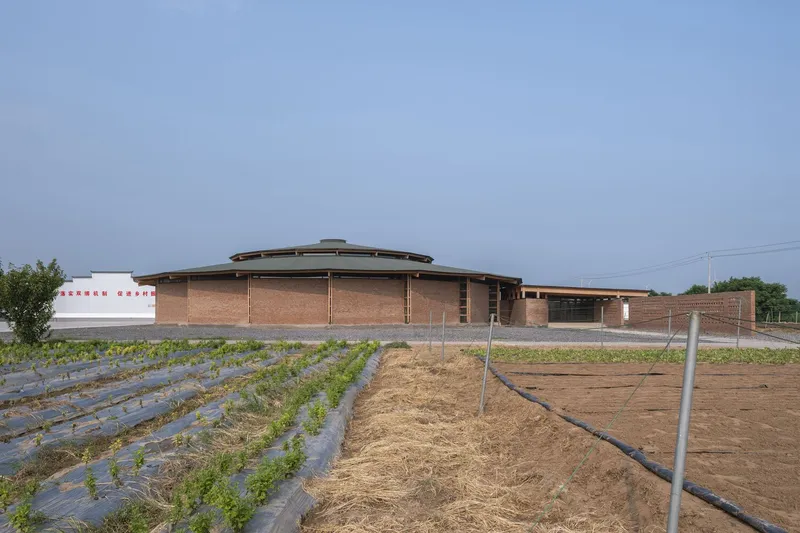
Architectural Design
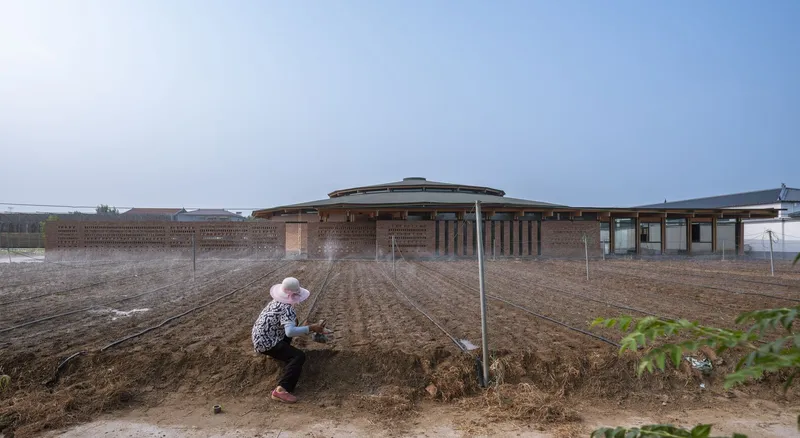
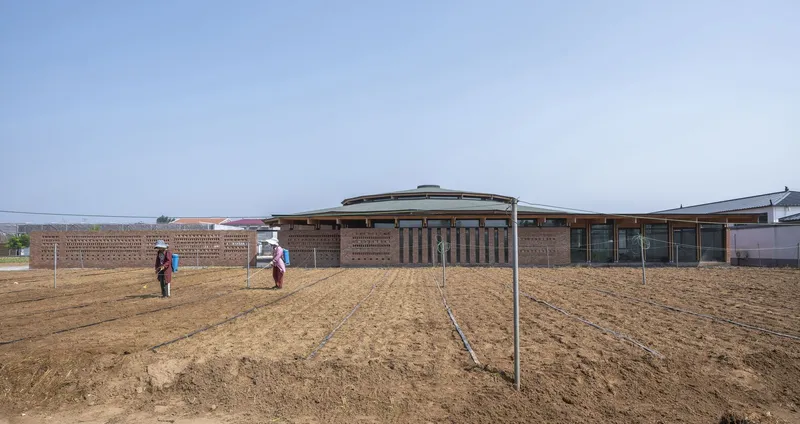
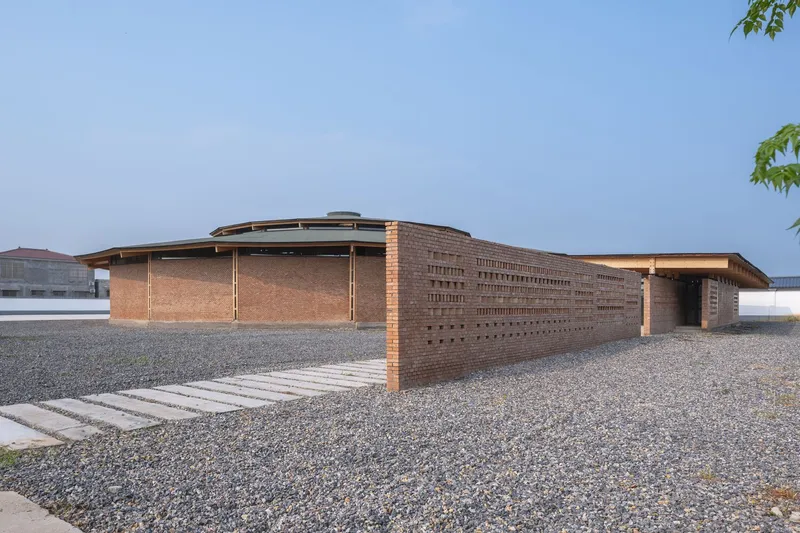
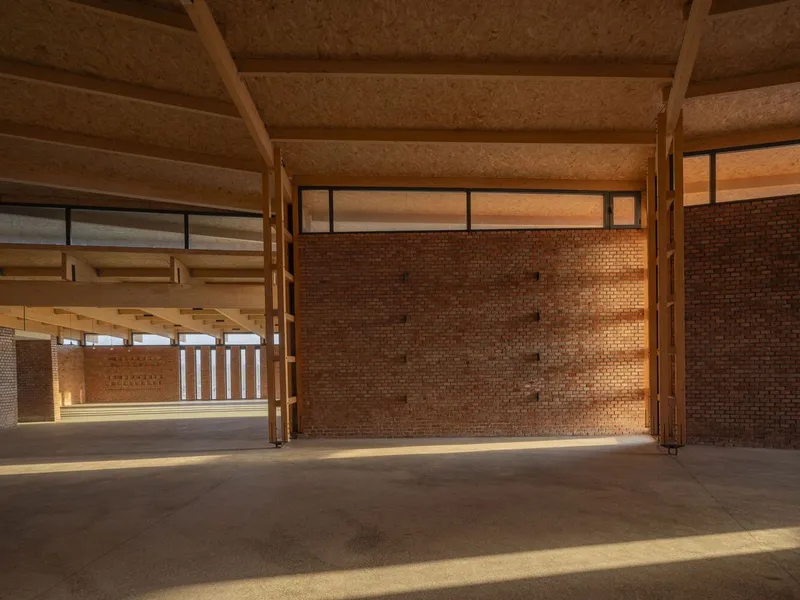
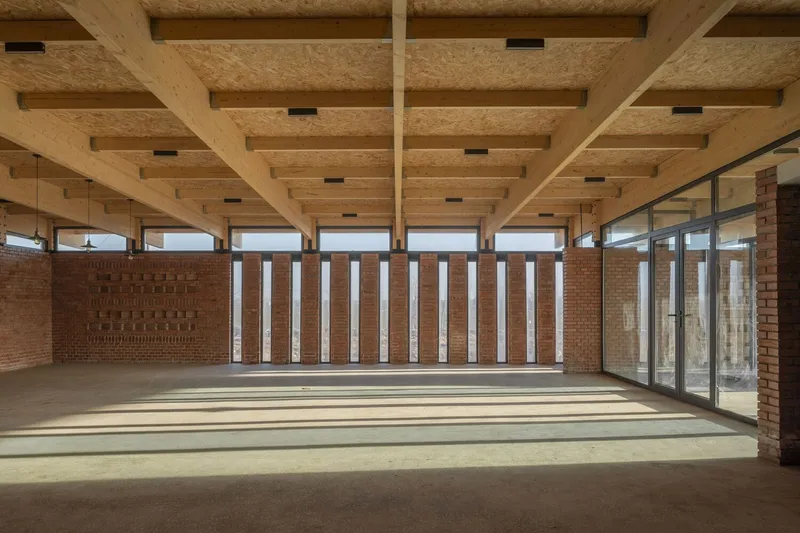
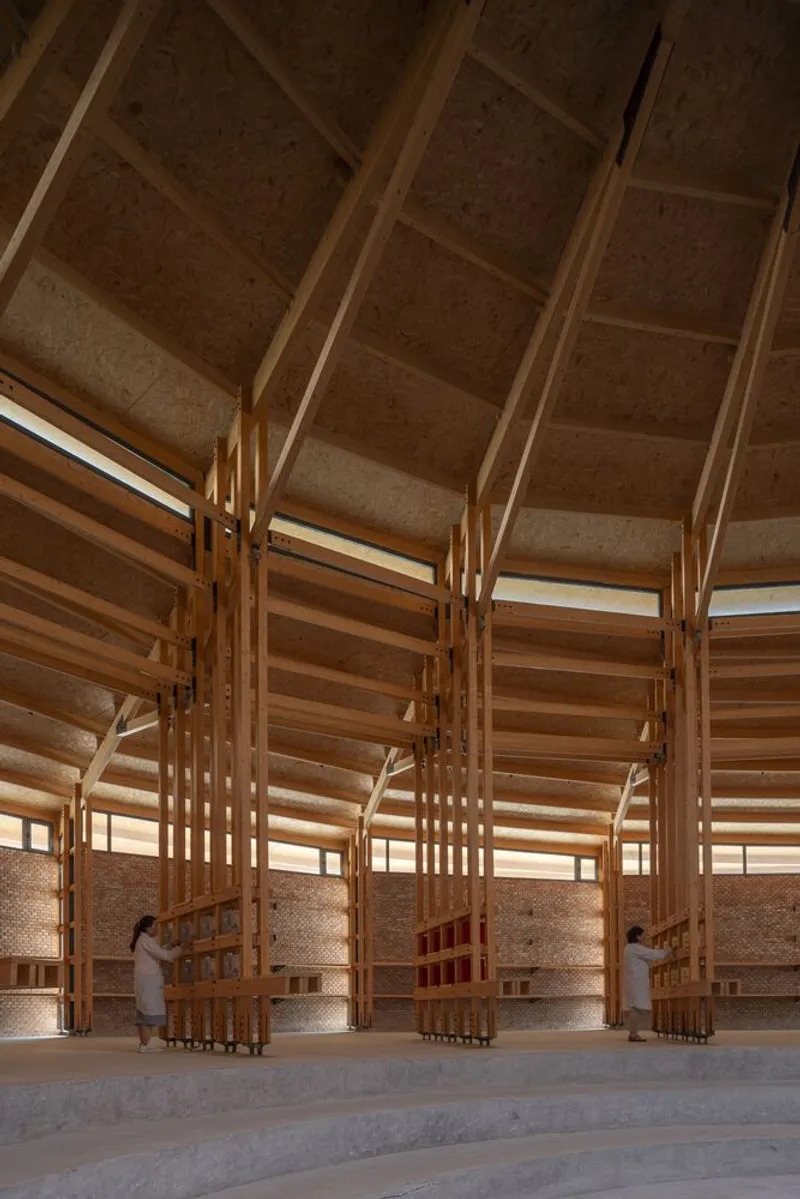
The circular form of the building enhances the play of light and shadow, creating a dynamic and enriched light environment. The design incorporates unconventional methods for introducing natural light, such as through ceilings, eaves, and gaps between walls.
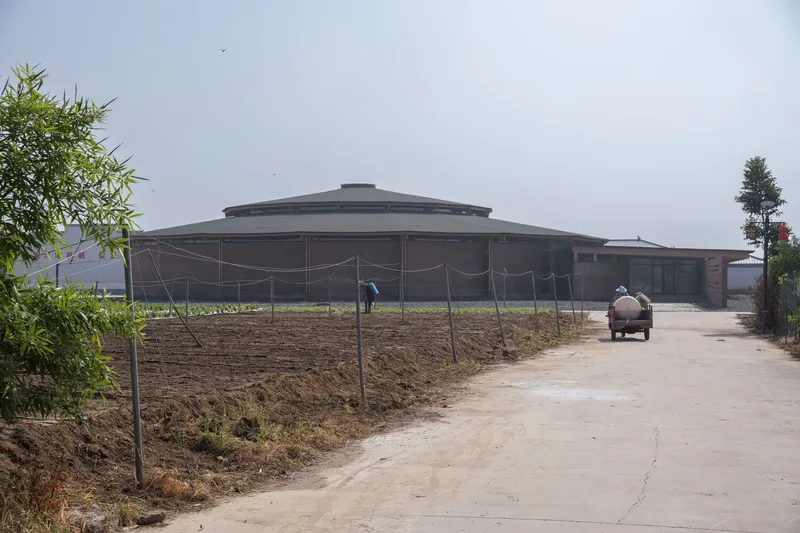
Circular Plane and Visitor Circulation
Efficient Space Organization
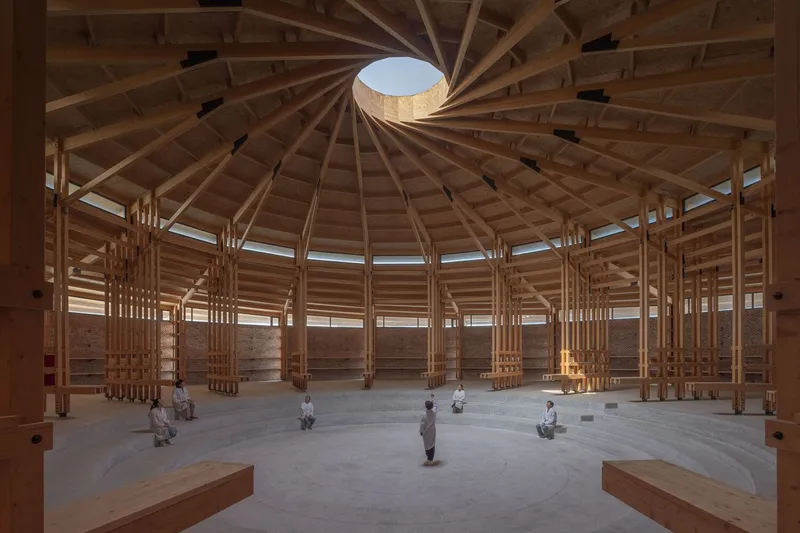
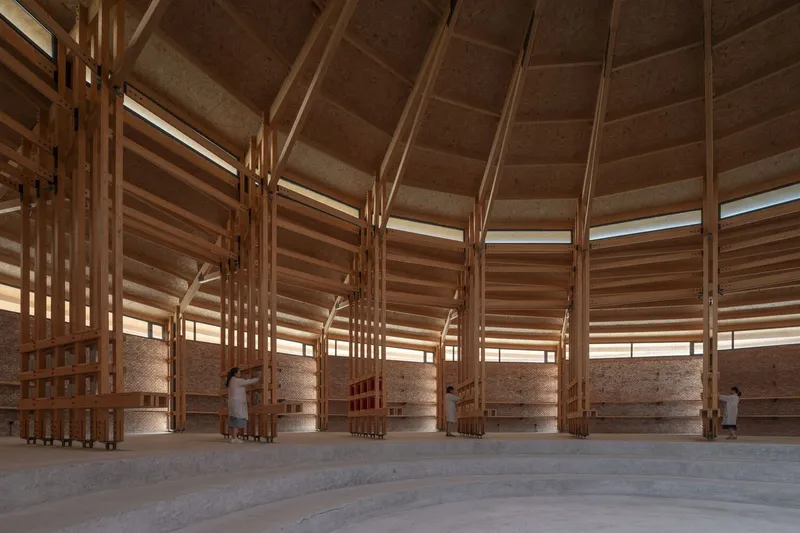
The exhibition hall features a nearly circular plane, forming an inscribed circle with a diameter of 37 meters. This layout ensures a logically arranged circulation route, avoiding overlaps and detours. The periphery of the inscribed circle serves as the main circulation route for visitors.
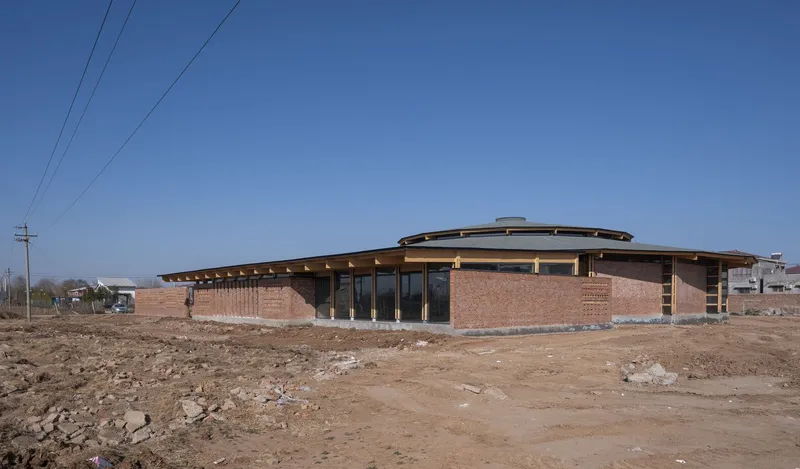
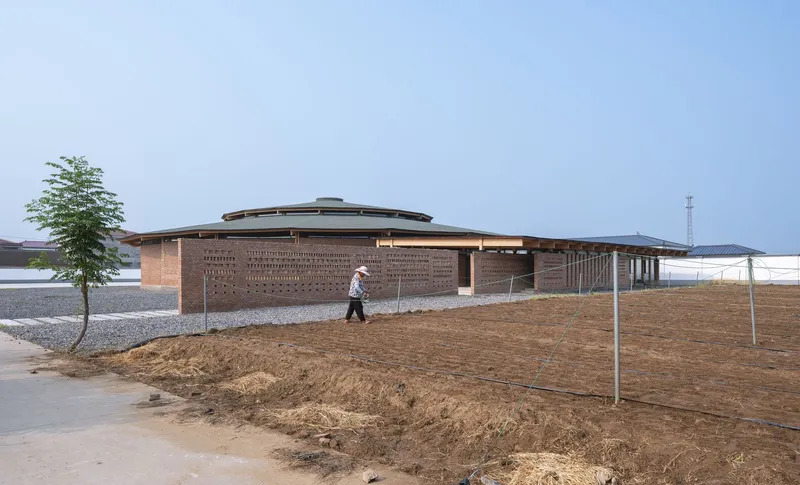
Functional Zones
The design introduces distinct "ring" spaces:
- Outer Ring: Enclosure walls with wooden structures for display boards.
- Middle Ring: Shelves for displaying Rehmannia root products.
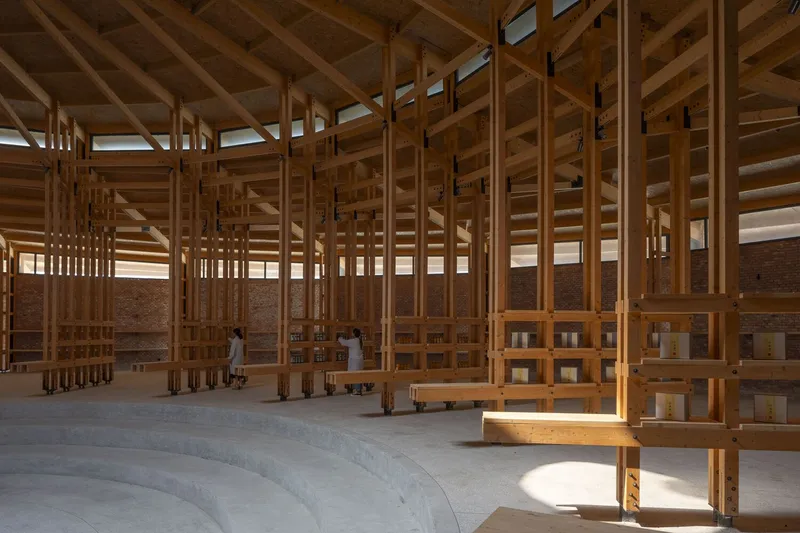
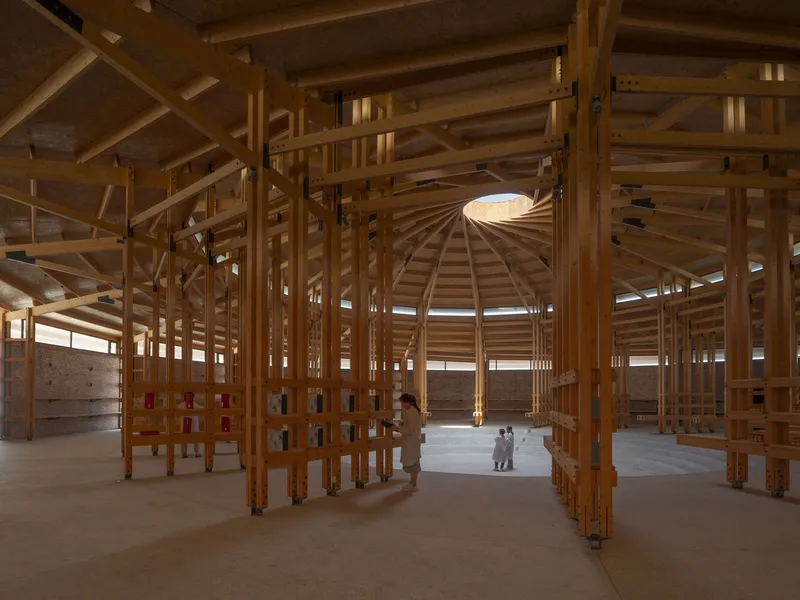
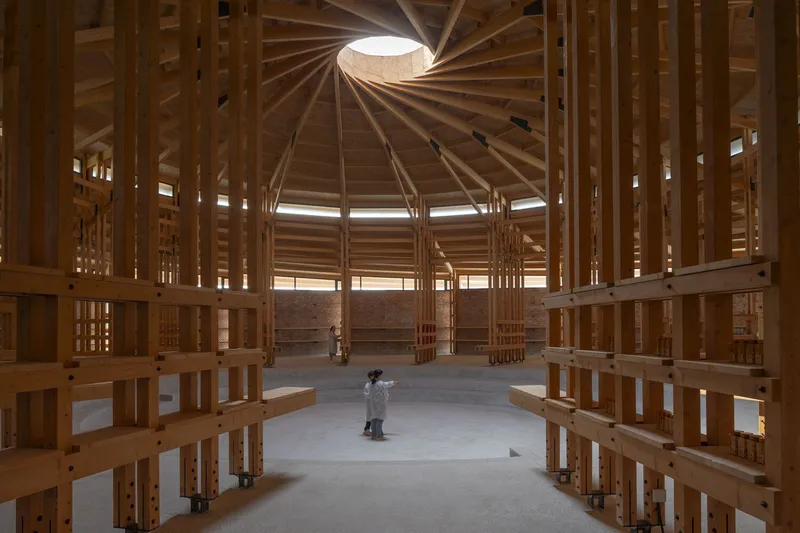
- Inner Ring: A sunken seating area for health and wellness sessions, accentuated by a central skylight.
Furniture-Structure-Space Integration
Sustainable Construction Techniques
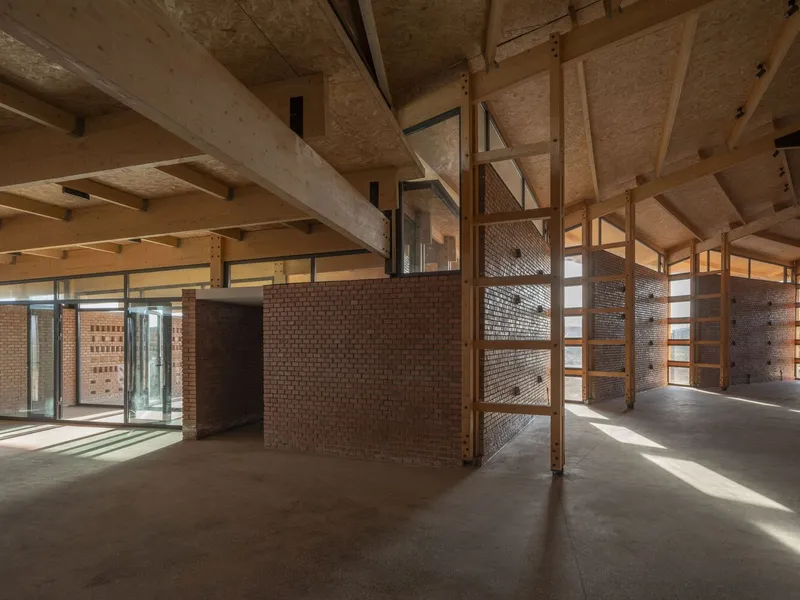
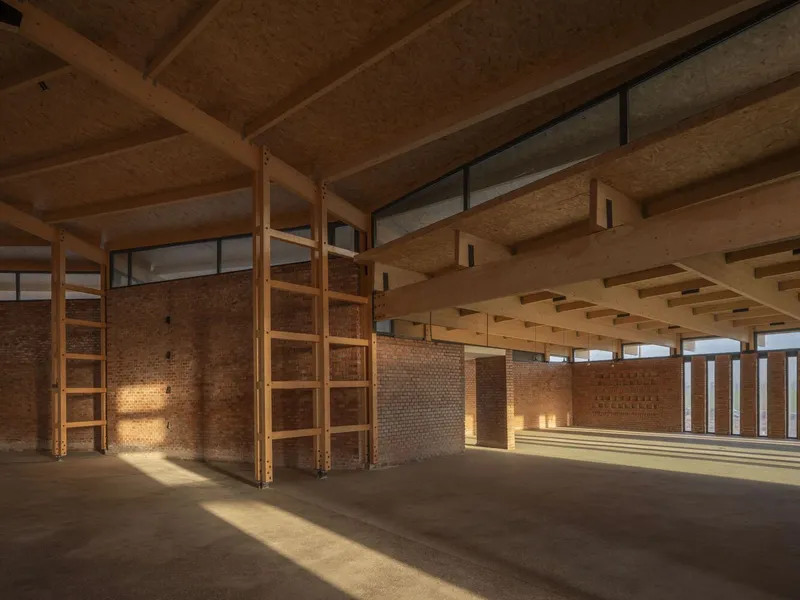
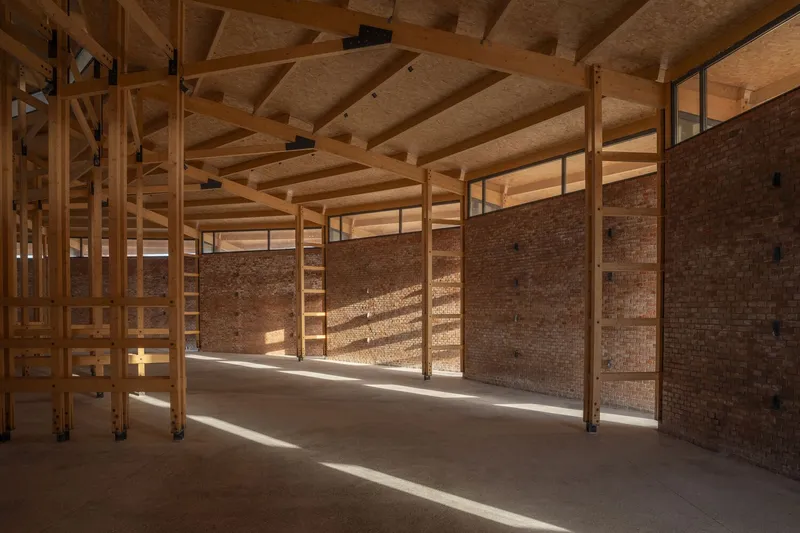
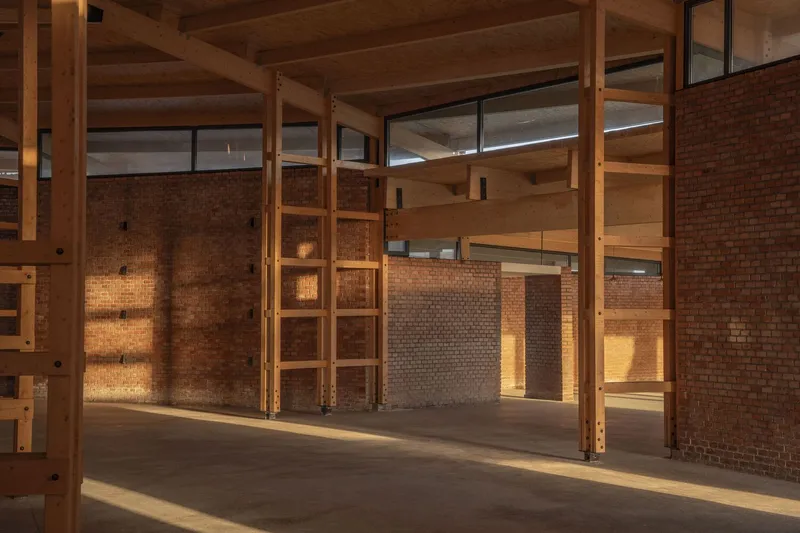
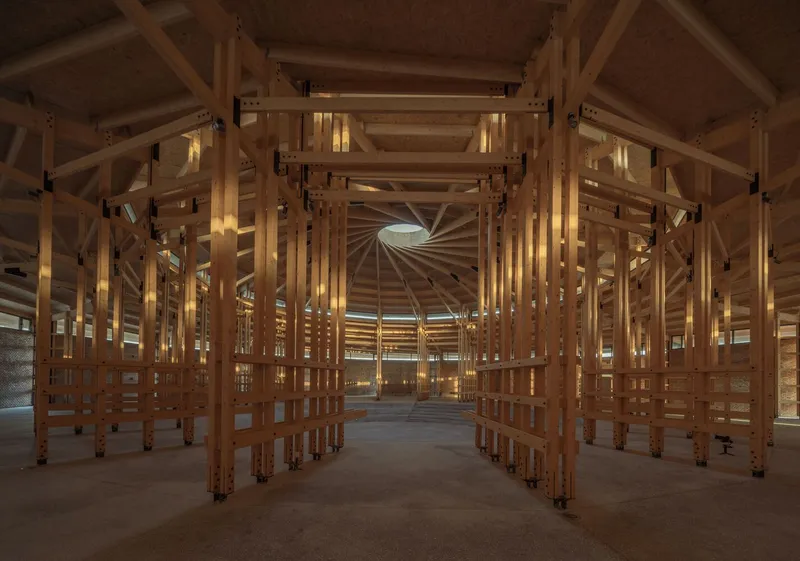
Inspired by traditional wooden construction methods, the project employs the "furniture as structure" methodology. Small-section column arrays are used to create functional shelves, integrating structure, furniture, and space into a cohesive whole.
Advantages in Rural Construction
This construction approach offers significant advantages in rural settings:
- Manual Construction: The use of small components facilitated manual movement, allowing local villagers to participate in the construction process.
- Efficiency and Cost Savings: The modular construction method enhanced processing and assembly efficiency, leading to substantial savings in manpower and material resources.
Roof Truss in Spirally Circular Overlap Formation
Structural Design
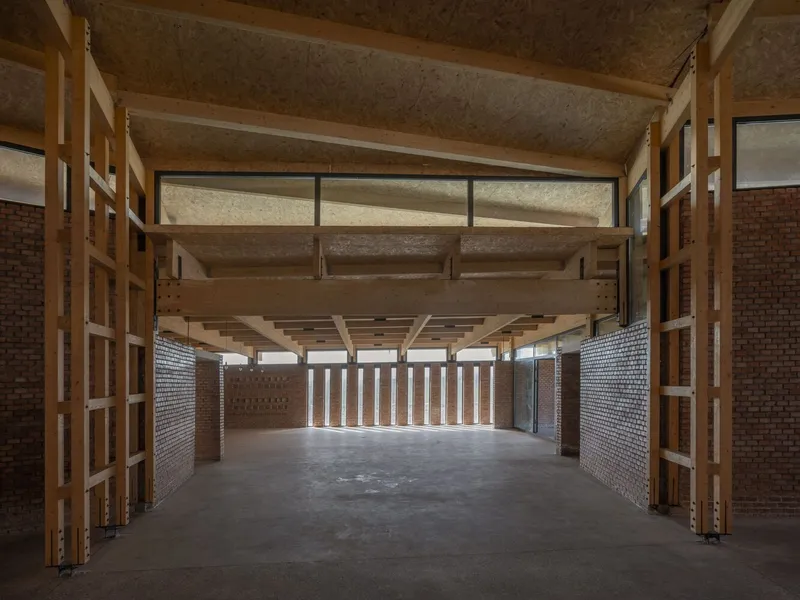
The roof truss follows the logical framework of a regular 18-sided polygon. The design eliminates complex central nodes by using a spirally circular formation, where wooden beams support each other, distributing pressure evenly.
Visual and Functional Impact
The staggered gaps between the 18 walls allow natural light to filter into the space, creating a visually captivating interplay of light and shadow. The central skylight accentuates the sense of centrality and enhances daylighting in the middle of the building.
Use of Local Materials and Traditional Techniques
Brick and Timber Construction
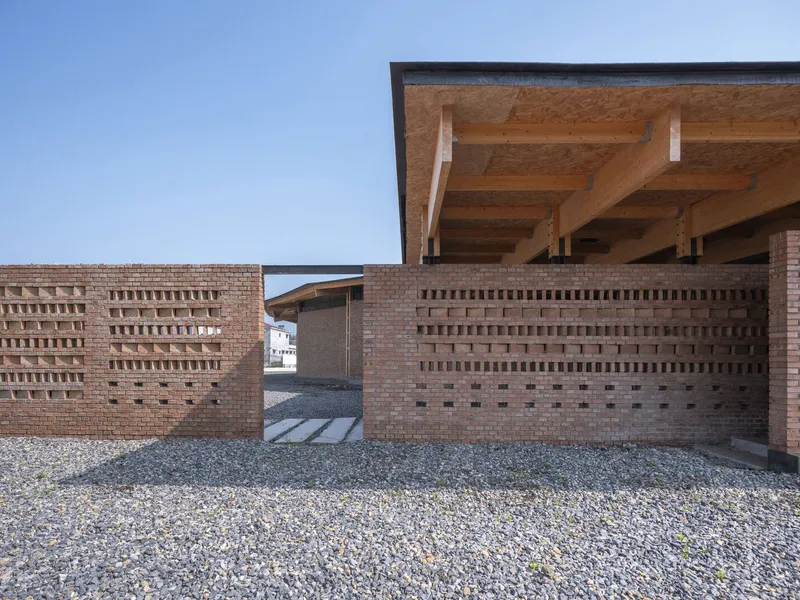
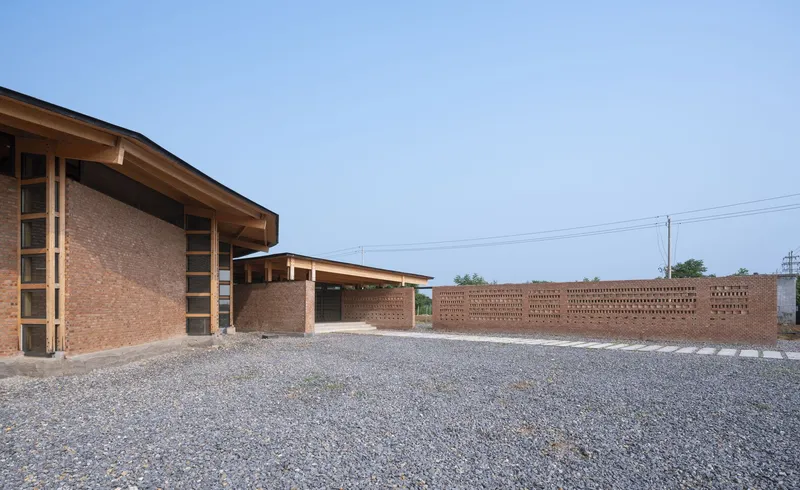
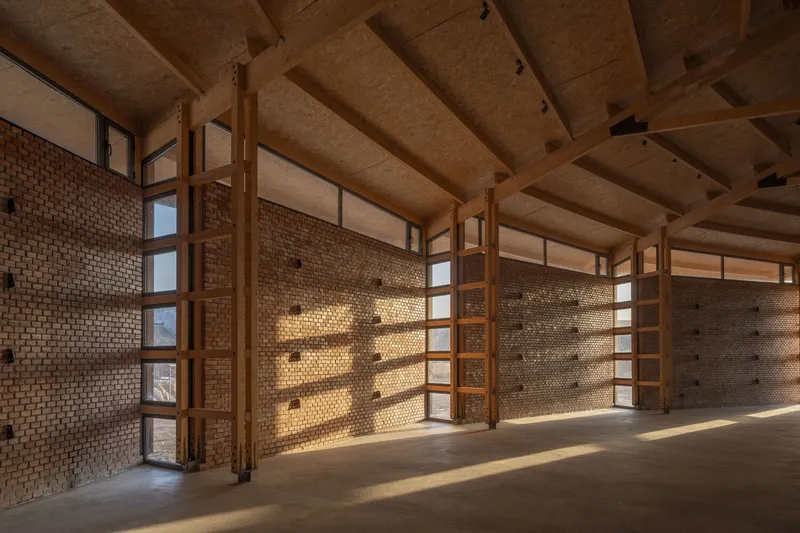
The exhibition hall utilizes local red bricks and traditional masonry techniques for the enclosure and internal partition walls. The combination of red-brick masonry with an engineered wood frame structure ensures structural integrity and durability.
Alignment with Local Architecture
The design echoes the traditional built environment of Houyanmen Village, where houses typically feature brick walls on the lower section and wooden frames on the upper part. This approach enhances the spatial aesthetics and aligns with the genius loci.
The Prepared Rehmannia Root Crafts Exhibition Hall by LUO studio is a testament to the innovative and sustainable architectural practices that harmoniously blend traditional and contemporary design elements. By embracing ecological considerations and local craftsmanship, the exhibition hall not only meets the functional requirements but also enhances the cultural and aesthetic value of the rural landscape.
All the photographs are work of Weiqi Jin




Popular Articles
Popular articles from the community


The Ocean Hive: Sustainable Architecture for a Self-Sufficient Civilization at Sea
The Ocean Hive imagines sustainable architecture at sea, where modular habitats, algae, wave power and ocean waste sustain a growing colony.

Play: Fragments of Their World
Familiar architecture becomes modular playground design, creating safe spaces where displaced children can learn, connect, imagine and play.

Conexión: Biophilic Design Reimagines High-Rise Living in Hong Kong
Conexión reimagines high-rise living in Hong Kong through biophilic design, green facades, shared spaces, daylight, water and nature within.

Riyadh For All: Intergenerational Urban Design for Active Aging in Rabat
Riyadh For All reimagines urban design in Rabat with intergenerational co-living, adaptive courtyards, and Moroccan cultural exchange today.

Similar Reads
You might also enjoy these articles

Maya Harvest: A Cacao Resort Village Rooted in Mayan Tradition and Local Craft
Situated within a Tabasco cacao plantation, this shortlisted resort proposal merges vernacular materials with hands-on cultural immersion.
Harmonia: A River-Shaped Community That Grows Over Decades in Boa Vista
Curved pathways and modular grid structures along the Branco River create a phased settlement designed to evolve from 2030 to 2050.
The Architecture of Bathing: A Mughal Hammam Reimagined Across the Yamuna
Charlotte May's honorable mention entry for The Black Taj reinterprets Agra's bathing rituals through red sandstone, water, and framed views of the Taj Mah
Om-1: A Wall-Hung System That Moves Your Workspace Off the Desk
Modular plywood boards, magnetic pegs, and utility elements migrate clutter from the horizontal surface to the vertical plane.


Explore Chinese Small Scale Architecture Competitions
Discover active competitions in this discipline



Challenge to reimagine the Iron Throne


Photograph architecture without architects


Illustrate the lost glory of Angkor Wat - Render Challenge


Design challenge to reuse E-waste
Comments (0)
Please login or sign up to add comments
No comments yet. Be the first to comment!