
Path to Sustenance
Achieving sustainability through temporary construction

Almost every artifact, edifice and generally any creature within our vicinity is located in a cycle of life and existence that begins, continues, and ends. This also applies to the buildings that we see around our setting. Some have a very long-lasting life cycle lasting thousands of years while others are a few hundred years old but many are not particularly old either; being decades or just a few years. They almost cannot avoid the inevitable because some day they will be destroyed by calamity or time as is the fate of everything in this world in general.
Although it may be difficult to imagine, many engineers and architects across the globe have begun to question why we waste our materials, energy and other precious components on permanent structures when temporary methods are better for our planet. Land is not going to run out any time soon and resources are capable of being replenished through recycling as opposed turn into trash that will take thousands of years to break down or worse, be in a landfill never to decompose. The answer has been found in temporary architecture.
In urban contexts…
In urban spaces, temporary architecture is always appearing and disappearing at certain times of the year. This kind of architecture is so popular because it provides a bit of light entertainment, promotes projects or events, or catches the eye of bloggers who love to take pictures of such exhibits. But there's nothing new under the sun - especially in the world of temporary architecture. There is a long history behind this kind of work that spans back a generation or two. Temporary architecture can be used to illustrate how we could live, work and play more harmoniously as we move forward into the future.
Temporary architecture might sometimes have a bad rap. Sure, temporary structures used to seem like a flash in the pan trend or a flighty endeavor, fueled by a frenzied market of space holding projects and developers cashing in. But properly executed temporary structures go well beyond shipping containers for offsite project offices and street food stalls for annual festivals.
Architects are working towards the future of safer urban structures by investing in positive, basic necessities that come equipped with thoughtful and temporary designs that may easily be adapted to other zoning or reservation purposes. They play an active role in showcasing their potential to invest in communities by determining how people of all walks of life might benefit from the implementation of their work. This type of architecture largely engages its users daily to provide for them with a sense of pride and easy access to better living conditions!
In architecture…
Ludwig Mies van der Rohe's Barcelona Pavilion, originally built for the 1929 International Exhibition in Barcelona, was a radical yet stunning modern structure. Like many of the architect's pieces, it was constructed from steel, marble and travertine and took two years to build. Yet after its 1929 debut, it only remained intact for six months before being demolished by Phillips & Rubio (the radical structure was painstakingly rebuilt in 1986). Although unique, the fact that cutting-edge architecture is often not intended to last should come as no surprise since there will always be an element of destruction as well as creation when it comes down to building something new.
The practice of constructing temporary pavilions by architects began long before Mies. In fact, this practice is still popular among architects today — their pavilions are built for expositions, conventions, and biennales, despite our better understanding of the relationships between careless architecture and environmental destruction. Every year, architects create temporary projects for these public displays that often serve little purpose other than to demonstrate new architectural ideas.
While temporary architecture responds to environmental concerns and helps create less of a footprint than permanent structures, many pavilions are still assailed by these problems because they require significant amounts of energy and materials, despite their short lifespans. In order to produce minimal environmental impact, architects must not only design efficient modes of production; they must also focus on environmentally conscious approaches when it comes down to the building of the actual structure.
The following projects are all pavilions built to exhibit new architectural ideas. They not only represent environmentally conscious approaches to pavilion-building – they make these alternative construction processes a major component of their conceptual approach.
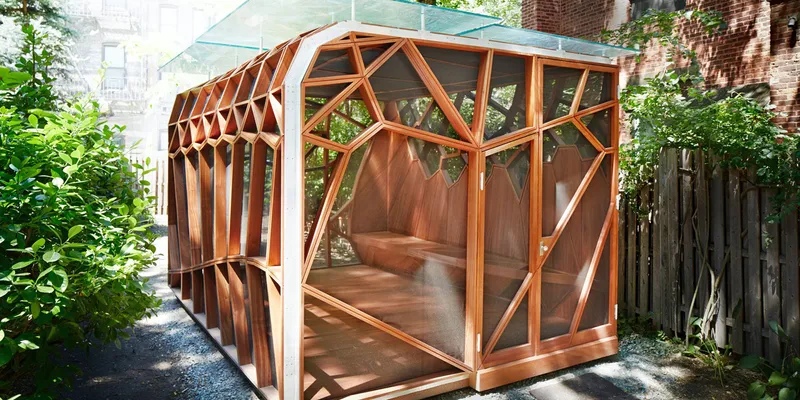
Image by John Muggenborg Architectural Photography
CDR Studio Architects display that recycled architecture does not have to mean compromising beauty, sophistication or complexity. Built out of plant-based biomass with a recycled aluminum frame, this postmodern glamping shelter was conceived via digital tools and templates that helped reduce the materials required for construction. The architects studied the physicals of the dragonfly in order to differentiate their own design before any actual construction took place.
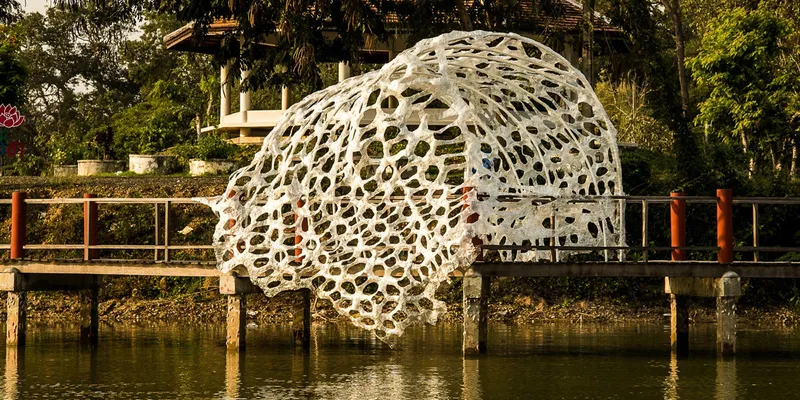
Image by VINN PATARARIN X FAHPAV
Rather than representing a landscape or forces of nature, Self-Ornamentalize evokes — in an abstracted form — the waste that it is made from. Determined to create a pavilion using local materials, the architect decided that one of the most abundant local materials was plastic bottle waste that's thrown away after just a few minutes of being enjoyed. The architect decided he wanted to give common trash a more positive representation, so rather than letting this kind of plastic debris litter his lake, he created something beautiful out of it.
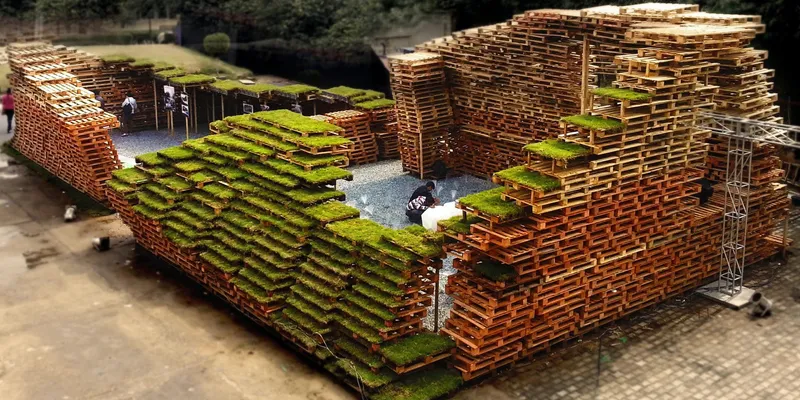
Image by MOFA Studios Pvt. Ltd.
In their re-design of the Upcycle Pavilion, MOFA studios took a similar approach as to their design for project "Pensieve", which started with a vision of recycling. Rather than growing out of the soda crate design project, this design instead grew from an idea about the use of waste. To create the archival structure, they decided to exploit wood pallets that had previously been seen as useless given that they'd already been used before. The power of imagination and inspiration stemming from childhood experiences is an undeniable force to be reckoned with. As children, many architects discovered their passion for sustainability while they engaged in imaginative expeditions or played freely on old ruins, sketching silhouettes and talking of fantastical new architecture. In keeping with ideas of sustainability, the studio imagined a pavilion that would provide a similarly inspiring platform for citizen participation. And so, just as the architects originally hoped, their pavilion has indeed instilled a steady flow of visitors looking to share in this imaginative world of play!
The reality is that our world only has a limited amount of resources left. Many people are pushing the limits on how much they take without considering how long it will last or how this affects our future generations. As we search for alternatives to using up all of these limited resources, we must turn to creating structures that can be rebuilt again and again so as not to have a permanent mark on the land.
References (3)

Popular Articles
Popular articles from the community

Temporary Home for Dogs: A Reversed Zoo Rethinks Animal Shelter Architecture
In Bucharest, a sinuous corridor and freed landscape flip the logic of containment, designing a shelter that works to make itself unnecessary.
Opera by the Sea Estonia: Three Shells Dissolving Architecture into Tallinn's Coastline
A winning opera house proposal replaces monumental form with interconnected shells that blur the boundary between building, park and Baltic Sea.
Tsunami Convergenics: Turning Catastrophic Ocean Forces into Underwater Housing Infrastructure
A speculative underwater settlement off the coast of Onagawa, Japan, treats tsunamis and typhoons as energy sources rather than threats.

The Amber Palace Opera: A Geological Fiction Surfaces on Tallinn's Baltic Waterfront
Pierre Brillard reimagines a Baltic legend as a public landscape, opera house, and waterfront promenade rooted in Tallinn's coastal identity.

Similar Reads
You might also enjoy these articles

Pixel Gardens: One Repeated Module Stacked Into a Terraced Social Housing Tower for Famagusta
Salem Bader's shortlisted housing tower builds a vertical neighbourhood from one repeated module, offsetting units to carve terraces, light and air.

Bao Huynh Watercolor Atelier: A Serene Art Retreat in Hội An
Bao Huynh Watercolor Atelier in Hội An blends multifunctional art spaces, sustainable design, local materials, and family-friendly living in a serene environment.

Atelier Macri Concept Store Interior Design by CASE-REAL
Atelier Macri store features a "ko" counter, walnut wood details, cork displays, blending retail, gallery, and seamless customer experiences.

Manuel Vargas Izquierdo Stadium and High-Performance Sports Center: Architectural Excellence in Jalpa de Méndez
The Manuel Vargas Izquierdo Stadium blends sustainable design, inclusive sports facilities, and cultural-inspired architecture, revitalizing Jalpa de Méndez’s public spaces.


Comments (0)
Please login or sign up to add comments
No comments yet. Be the first to comment!