
Al Naseej Textile Factory by Leopold Banchini Architects: Weaving Tradition, Architecture, and Community in Bahrain
The Al Naseej Textile Factory blends tradition and modern design, honoring Bahraini weaving heritage with sustainable architecture and community space.

Reinterpreting Tradition Through Architecture
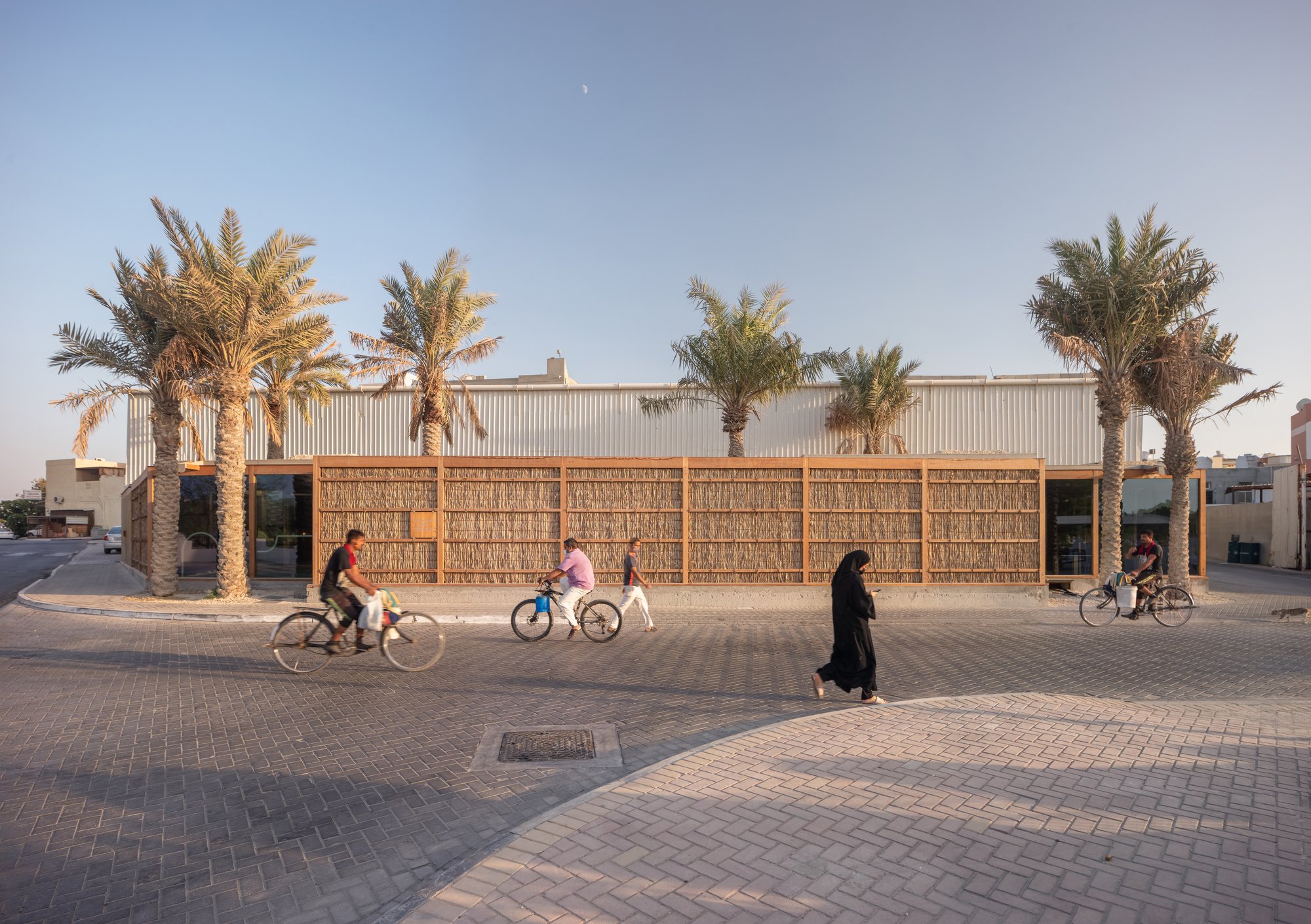
The Al Naseej Textile Factory in Bani Jamra, Bahrain, designed by Leopold Banchini Architects, is more than just a factory—it is a cultural landmark that intertwines tradition, craft, and contemporary architectural design. Commissioned as part of the Bahrain Authority for Culture and Antiquities’ initiative to revive local industries and heritage, the project creates both a textile weaving facility and a social space for the artisans of the village.
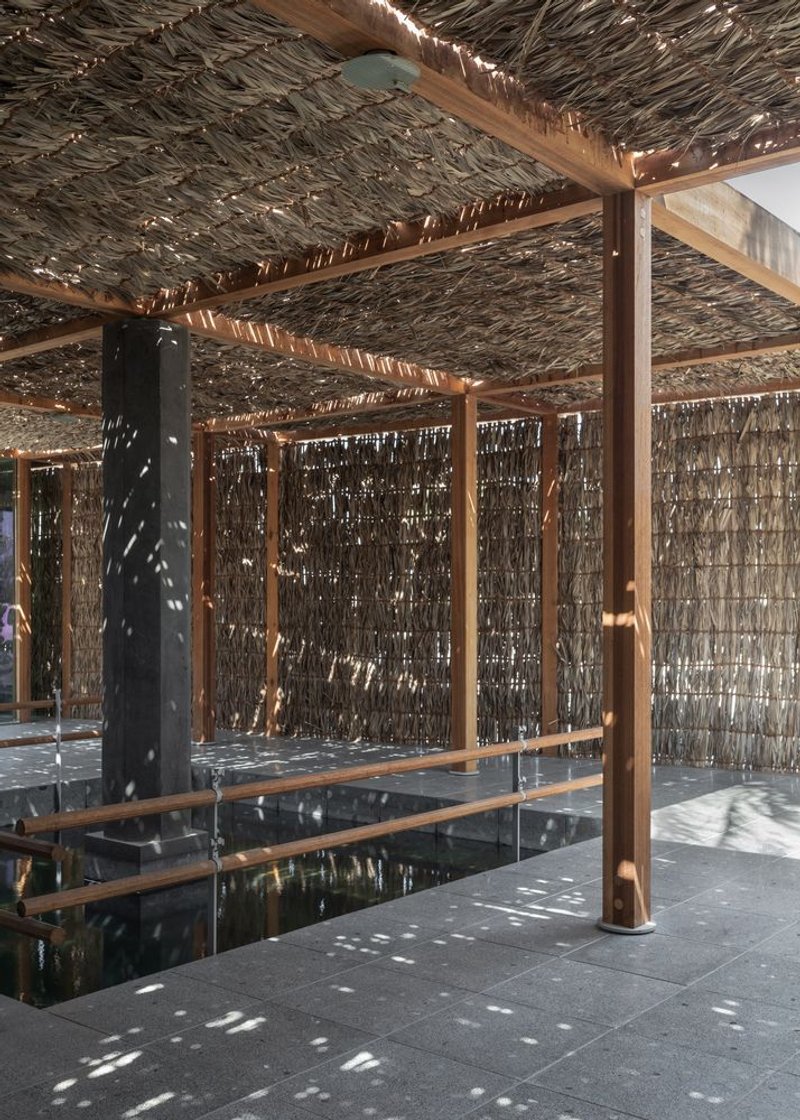
The architecture reflects the deep connection between craftsmanship and environment. Historically, Bahraini weavers worked under lightweight Arish structures, simple shelters made by weaving dry palm leaves into protective surfaces. They would dig pits in the ground to sit comfortably while weaving, transforming the earth itself into part of their loom. Inspired by this heritage, the architects reinterpreted these traditions into a modern yet rooted spatial design.
Spatial Concept: A Grid That Breathes
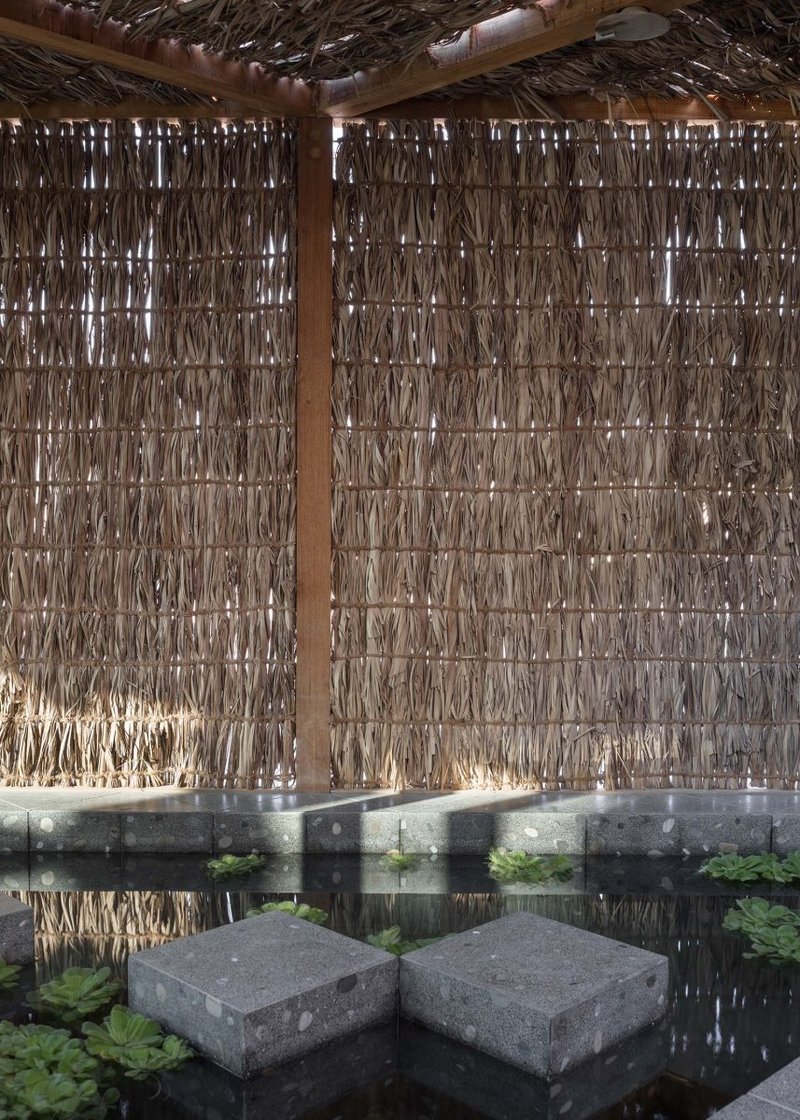
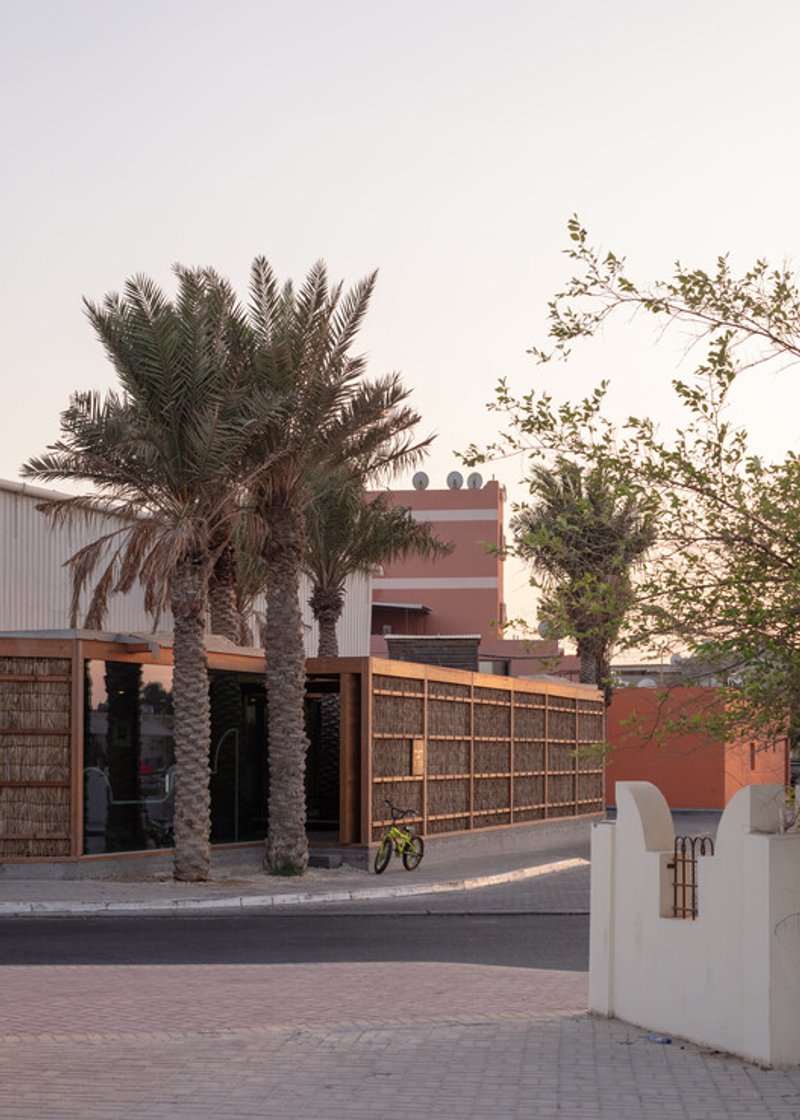
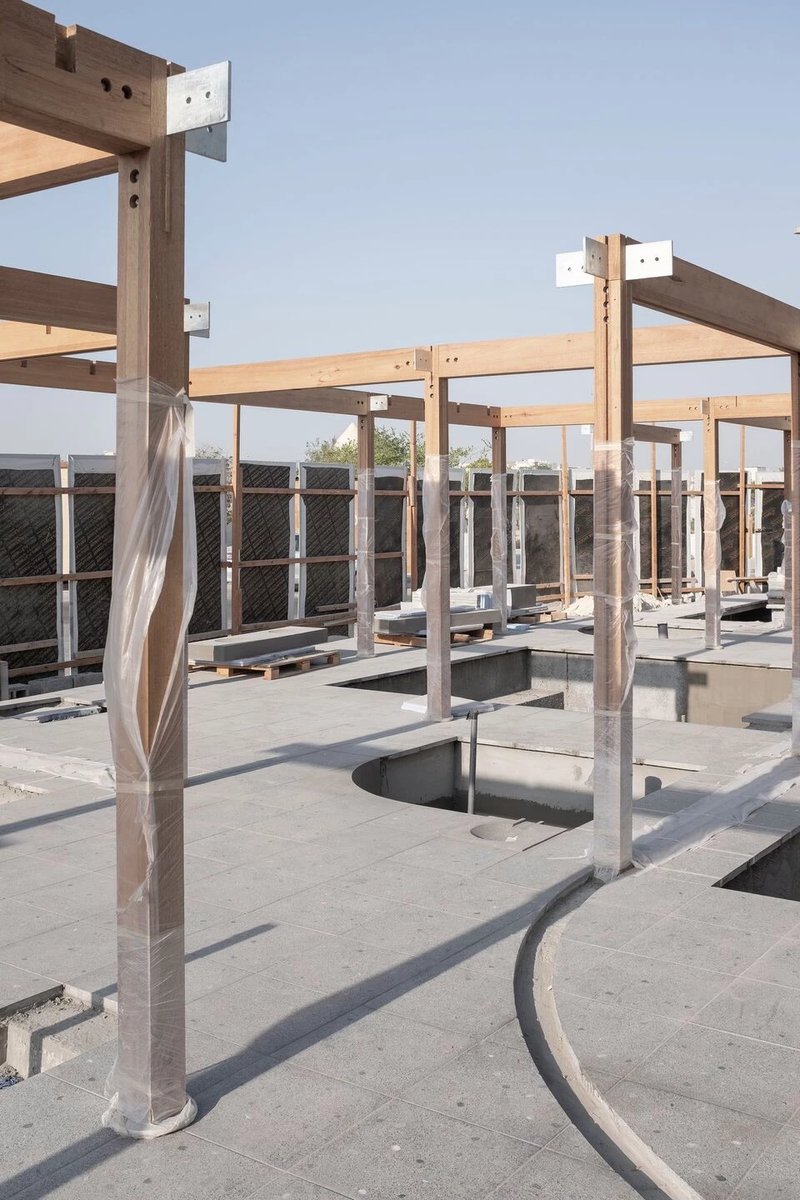
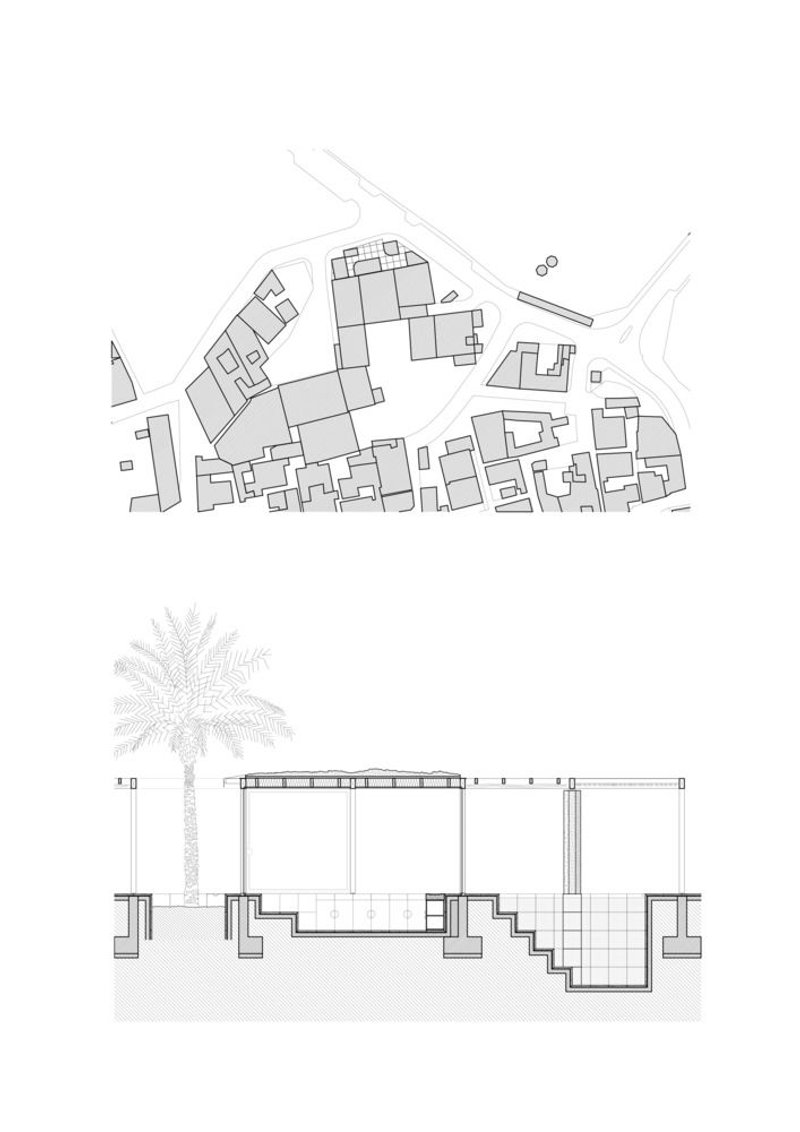
At first glance, the textile factory appears as a low-rise gridded elevation, a quiet structure that stretches along the street boundary. Its design takes inspiration from date palm plantations of northern Bahrain, where timber grids and irrigation channels create rhythm and order in the landscape.
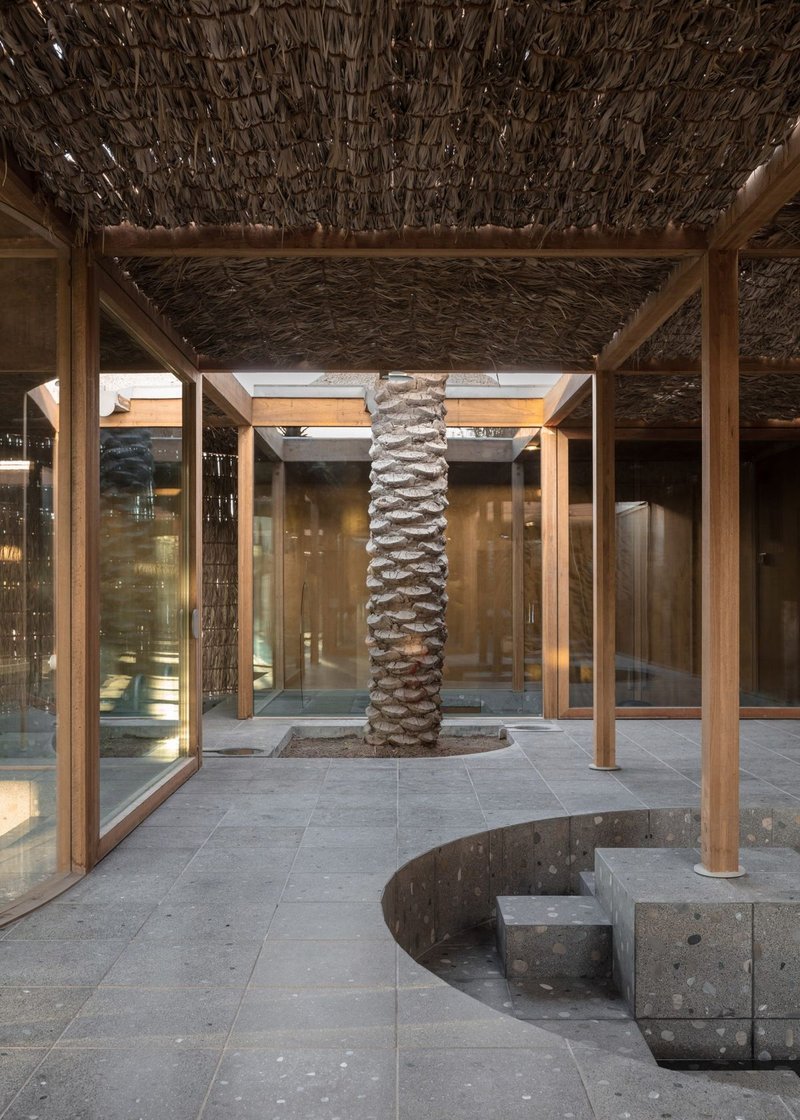
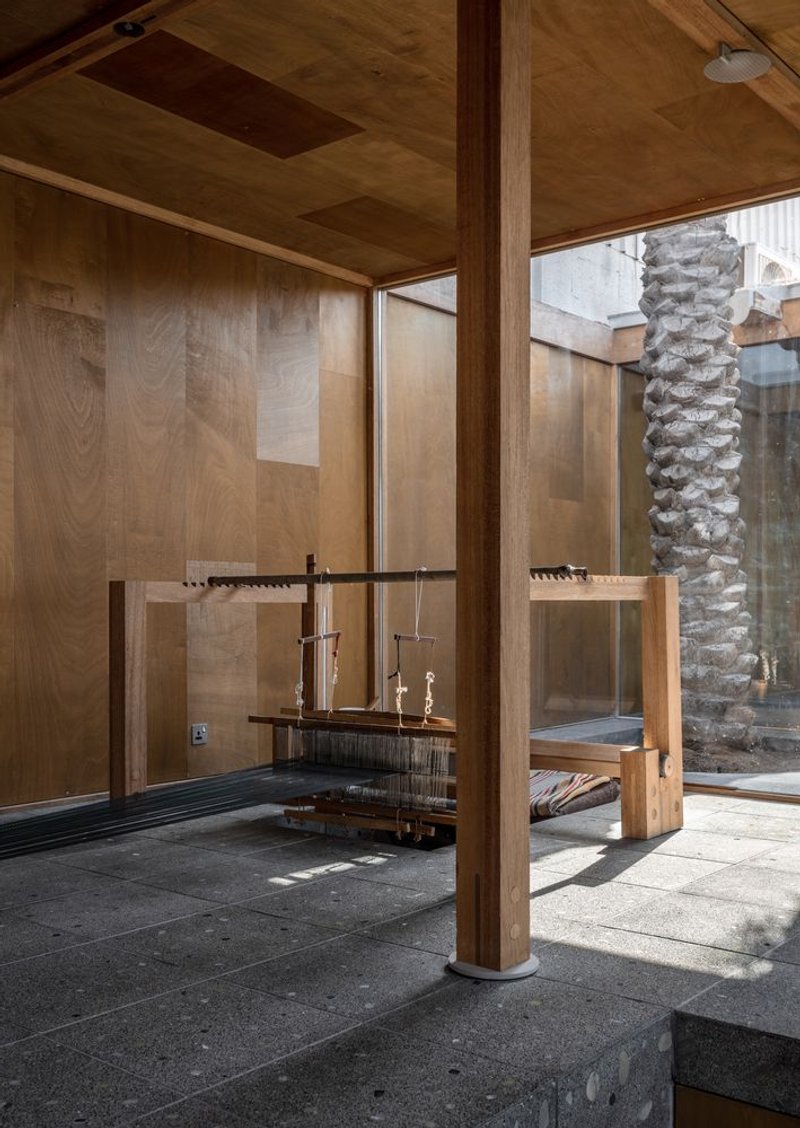
A tight grid of timber beams and columns organizes the space, creating a sense of continuity while allowing nature to intervene. Palm trees rise through openings in the horizontal roof plane, piercing the structure and becoming a living extension of the building.
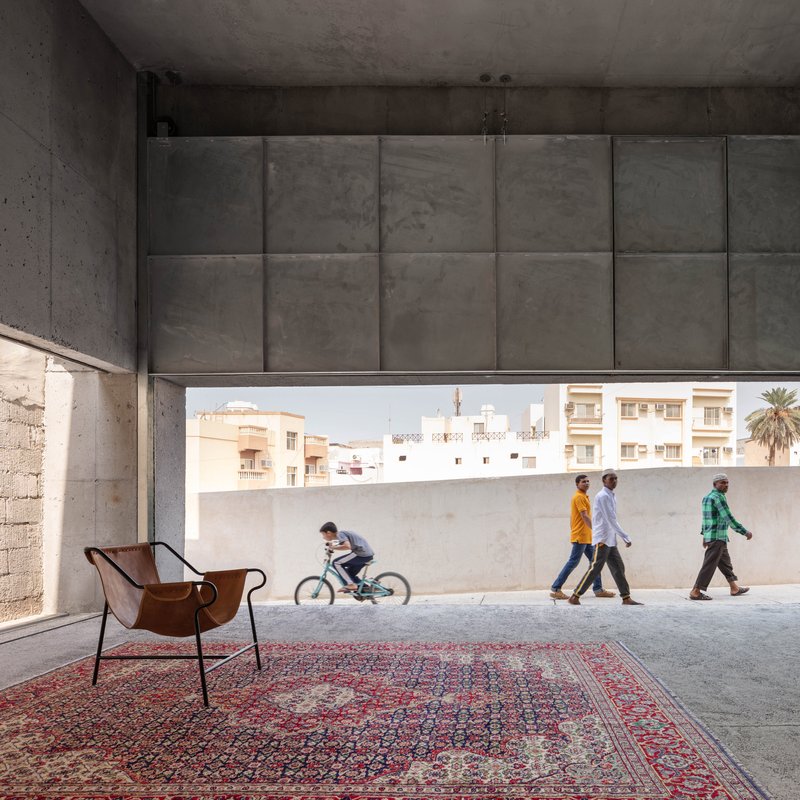
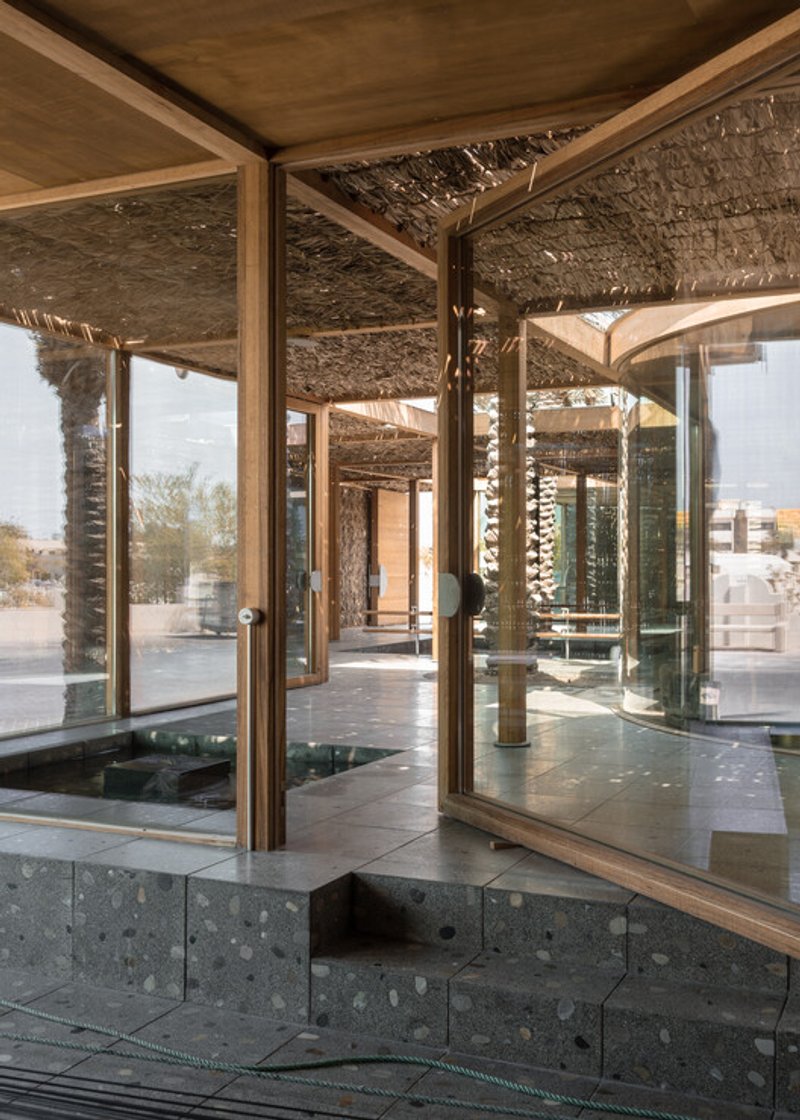
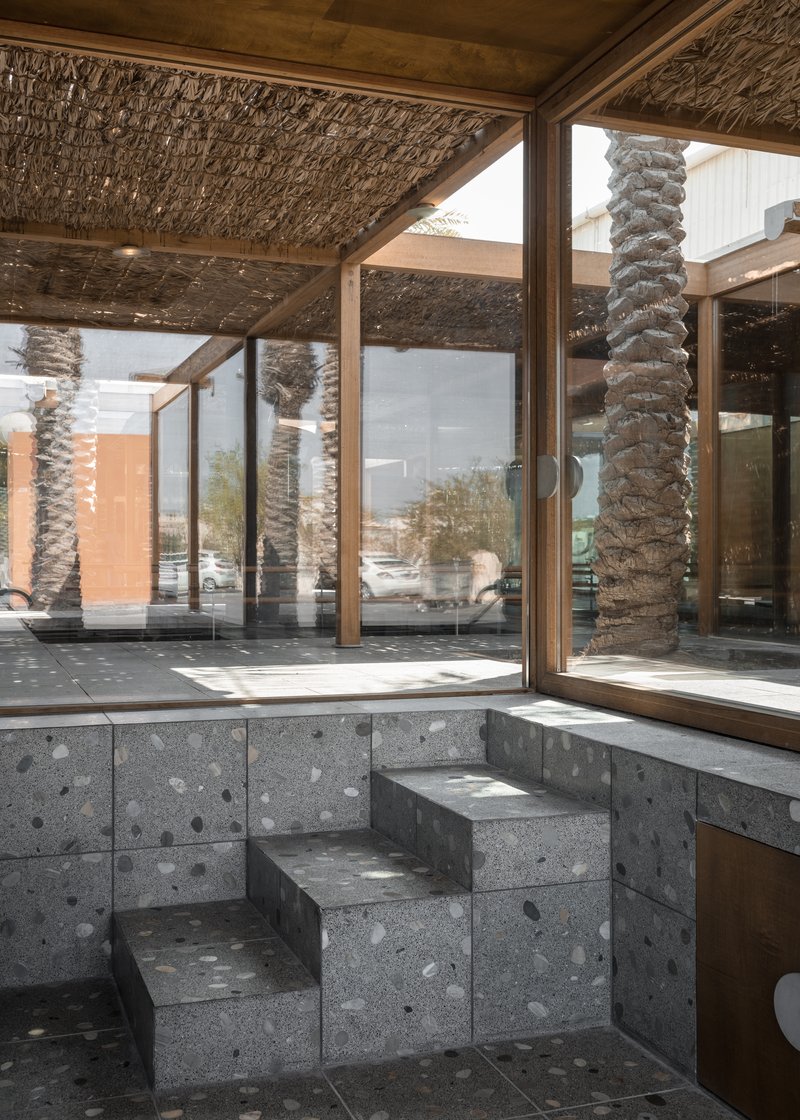
Inside, the design shifts from rigid geometry to sculpted voids. Excavated floor pits recreate the traditional weaving positions of artisans, giving the interior both functional and cultural depth. These sunken areas define workstations, social zones, and communal gathering points.
A Garden Within Walls
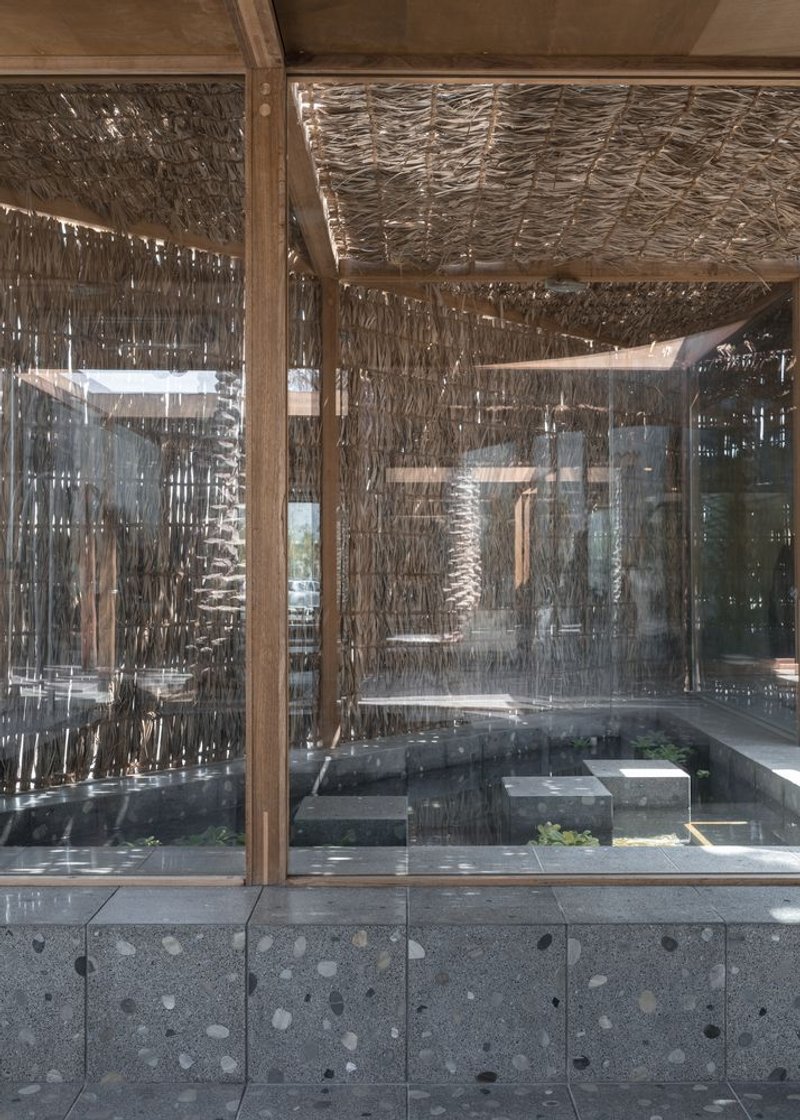
The Al Naseej Textile Factory is not merely an industrial building—it is also a garden and a social hub. Interspersed within the grid are date palms, water ponds, and fountains, softening the architectural rhythm and transforming the interior into a shaded, cool oasis.
This thoughtful integration of nature provides a passive cooling system, allowing airflow and moisture to naturally regulate temperature. Glass-enclosed areas, such as workshops or offices, dissolve visually into the shaded garden, reinforcing the idea of openness and transparency.
Materiality and Local Craft
In keeping with the project’s mission of cultural revival, the building is constructed using locally available materials. The reliance on timber, concrete, and traditional techniques emphasizes both sustainability and the celebration of regional craftsmanship.
The result is an architecture that feels both timeless and contextual—a building that breathes with its environment and honors the very crafts it houses. Much like a woven fabric, the structure brings together threads of tradition, modernity, and community.
A Living Heritage
The Al Naseej Textile Factory is not just a space for production, but a living monument to Bahrain’s weaving heritage. By blending function, memory, and landscape, the project exemplifies how contemporary architecture can protect and reinvigorate intangible cultural traditions.
Through its design, the factory acts as both a workplace and a community hub, creating opportunities for social interaction, cultural continuity, and sustainable craftsmanship.
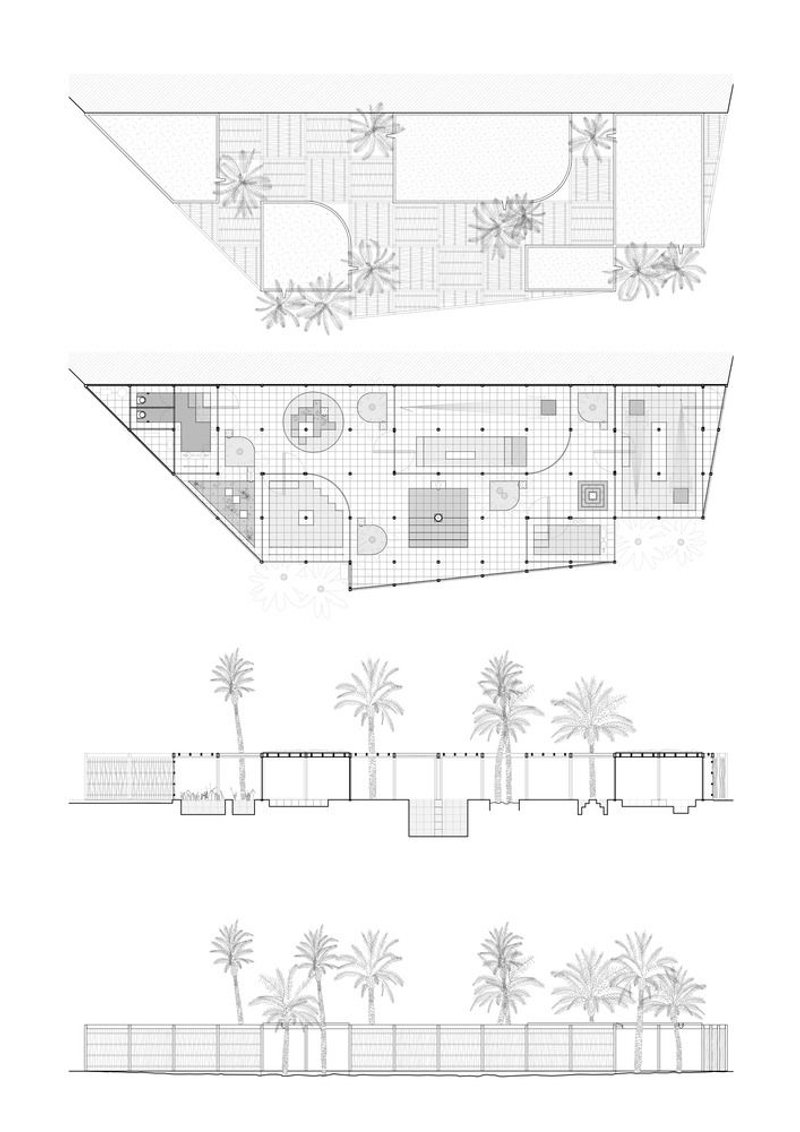
All the photographs are works of Dylan Perrenoud



Popular Articles
Popular articles from the community

A Contemporary Take on Iranian Residential Architecture
A modern interior design in Mashhad that reinterprets brick, light, and spatial flow to create a warm, contemporary residential architecture.
Treehouse Apartment: A Warm Timber Interior Blending Craft, Play, and Contemporary Living
Warm timber apartment with integrated treehouse, combining natural materials, craftsmanship, and playful design to create a flexible, family-oriented living environment.


The Ken Roberts Memorial Delineation Competition (Krob)
As the most senior architectural drawing competition currently in operation anywhere in the world, it draws hundreds of entries each year, awarding the very best submissions in a series of medium-based categories.

Solar Steam: A Climate-Responsive Architecture That Redefines the Monument
A climate-responsive memorial architecture that transforms heat, decay, and time into a living system reflecting humanity’s ecological impact.


Similar Reads
You might also enjoy these articles
The Ken Roberts Memorial Delineation Competition (Krob)
As the most senior architectural drawing competition currently in operation anywhere in the world, it draws hundreds of entries each year, awarding the very best submissions in a series of medium-based categories.

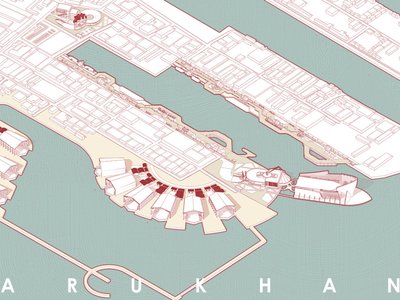
Waterfront Redevelopment and Urban Revitalization in Mumbai: Forging a New Dawn for Darukhana
A transformative waterfront redevelopment project reimagining Darukhana’s shipbreaking heritage into an inclusive urban future.

OUT-OF-MAP: A Call for Postcards on Feminist Narratives of Public Space
Rhizoma Design and Research Lab invites artists, designers, architects, researchers, and students to reflect on how feminist perspectives can reshape public space. Selected works will be exhibited in Barcelona, October 2026. Submissions open until 15 April 2026.


Documentation Work on Buddhist Wooden Temple
Architectural syncretism and cultural hybridity: A comparative study of the Buddhist temples in Chattogram Hill tracks


Explore Architecture Competitions
Discover active competitions in this discipline




The International Standard for Design Portfolios


The Global Benchmark for Architecture Dissertation Awards


The Global Benchmark for Graduation Excellence


Challenge to reimagine the Iron Throne
Comments (0)
Please login or sign up to add comments
No comments yet. Be the first to comment!