

Better Bus Stop Design Competition Journal
ASHRAY- an extension to Public Space

Most of the Bus stops in India follow standardized design solutions which are the same in different cities (Pune, Mumbai, or Nagpur). Pune is one of the leading Smart Cities of the first 100 chosen Smart cities of India, have not brought smart features in Cities bus stops. The bus stops here, don’t follow the local climate, lifestyle of local people, their culture and heritage. These bus stops cause trouble especially to the differently abled, pregnant women and the senior citizens, as roads are too wide, they are not streets in City but high-speed wider lanes of National Highways.
The bus arriving at the bus stop has to wait away from the bus stop, as vendors/ parking occupy the frontage since there are no dedicated designated spots on our streets for these stakeholders. Additionally, our site is located near BDP- Pashan Baner Hill- serving as a magnet that attracts Sports enthusiasts like Cyclists, trekkers, joggers, marathon runners, or their everyday practice sessions.
- How bus stops can be an extension of our public spaces in the public realm accommodating all the stakeholders?
Provision of additional seating space on steps thus serving as its sidewalls. Advertisement and GPS live tracking Screen facing roadside. That can be used as display boards for local advertisement/ billboards and Trivia boards to display local stories and facts about BDP on the backside which is facing the cyclists, pedestrians on sidewalks, and vendors on MUZs.
By accommodating bus stop near existing tree shades to keep outdoor seating spaces operational for sports enthusiasts and will create small playful features for children. Fabrication of 2 lower-level seating out of 12 for children. Creating tactile for blind and physically challenged citizens and sensor and Live tracking-based lighting systems to address the deaf citizens of Pashan and Baner.
- Is it following the principles of sustainability?
Our Design focuses on keeping Bus stop a net-zero energy system. The solar panels above will operate the submersible pumps to send water in fiber OHT to give a 24/7 Public drinking water facility. It will also charge batteries for all the sensor-based ceiling-facing diffused lighting systems that operate as per occupancy. It will operate the running and storing of surveillance footage stored by two CCTV cameras. Both of these features will ensure the safety of citizens as this will make all bus stops as Safe houses at night located after very 500 mts from each other.
The use of hollow Precast members instead of Existing Aluminium or SS section bus stops will decrease its embodied energy and keep almost the same life cycle of the Module. This will also allow us to run electric cables and piping through hollow sections, which in turn ensure Thermal comfort compared to existing steel roofs which are greenhouses for the most of time during the day. We have added a feature of additional roof extensions which will be small triangular tensile fabrics that will have different angles for North/south facing bus stops compared to east/ west facing bus stops in the city.
- Modularity and Structural technology:
Keeping in mind, how the bus stops can be installed in very little time on the site, as our Indian cities the roads are very narrow in core areas and congested slum areas, we propose to build this with 4 X 4 feet hollow precast panels which are of low self-weight, post-tensioned on-site, supported by the I section framework which will have Lighting and electrical systems incorporated to alert our passengers 2 mins before the arrival of their respective bus. The same will be also conveyed via Built-in Speaker systems located in LED screens for Blind citizens. The number of I sections can be reduced or increased depending upon the local footfall, thus modulating the overall length of the bus stop depending upon various sites in the city. Currently, there is ample space and higher footfall, 10 mt long bus stop has been proposed w.r.t to the size of the bus with a total of 8 seats and almost 10-15 people standing waiting areas under one roof following the current Covid 19 social distancing protocols. In the Normal scenarios, the waiting occupancy for seating and standing passengers will be double. The modularity ensured that we can transport these modules even in a small tempo which can go to the densest parts of Pune. This easy transportation will allow off-site fabrication of modules at a large scale thus ensuring the cost-effective feature, which is very essential for any public projects in a developing country.
The proposed module is a cost-effective solution and can be easily installed on-site due to its modularity. It is adaptable for the local communities thus following a bottom-up design approach. It addresses the issues faced by the differently-abled. It offers accessibility for Children, pregnant women, and elder citizens by using various smart features. It follows the social distancing protocols of Covid 19. It serves as a safe house for night travellers. This highlight of the bus stop is that it incorporated net-zero strategies of energy and aims for better thermal comfort for the citizen. Thus, we aim to create better bus stops for future generations.


Popular Articles
Popular articles from the community

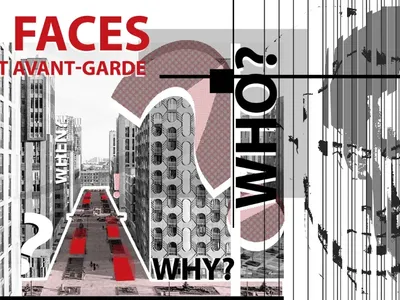
Faces of the Soviet Avant-Garde: Turning Moscow's Street Names into an Open-Air Museum
A network of sculptural installations across a Moscow residential district transforms forgotten architect names into spatial encounters with cultural memor

Singing Woman: Contemporary Architecture Inspired by Estonia’s Voice and the Sea
Singing Woman turns Estonia’s song culture into flowing opera house architecture, blending public life, landscape, sea, and national memory.
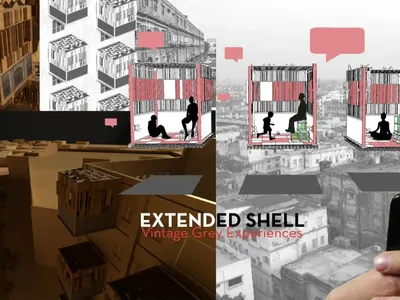
Extended Shell: Retrofitting Kolkata's Balconies as Living Urban Thresholds
A modular retrofit system recovers the social and environmental intelligence of Kolkata's historic verandas for contemporary Park Street residents.
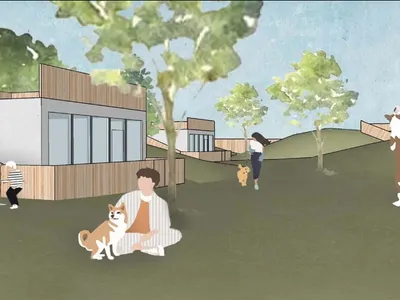
Temporary Home for Dogs: A Reversed Zoo Rethinks Animal Shelter Architecture
In Bucharest, a sinuous corridor and freed landscape flip the logic of containment, designing a shelter that works to make itself unnecessary.

Similar Reads
You might also enjoy these articles

Bao Huynh Watercolor Atelier: A Serene Art Retreat in Hội An
Bao Huynh Watercolor Atelier in Hội An blends multifunctional art spaces, sustainable design, local materials, and family-friendly living in a serene environment.

Atelier Macri Concept Store Interior Design by CASE-REAL
Atelier Macri store features a "ko" counter, walnut wood details, cork displays, blending retail, gallery, and seamless customer experiences.

Manuel Vargas Izquierdo Stadium and High-Performance Sports Center: Architectural Excellence in Jalpa de Méndez
The Manuel Vargas Izquierdo Stadium blends sustainable design, inclusive sports facilities, and cultural-inspired architecture, revitalizing Jalpa de Méndez’s public spaces.

KAKR Buluh Awar Hall: Revitalizing Community and Ecology Through Bamboo Architecture
Community built bamboo hall revitalizes Buluh Awar village, empowering youth, restoring ecology, celebrating vernacular craftsmanship through sustainable architecture and culture.

Explore Urban Design Competitions
Discover active competitions in this discipline


Challenge to design locus for the upliftment of human rights

Design challenge to reuse E-waste
Comments (0)
Please login or sign up to add comments
No comments yet. Be the first to comment!