

Brutalist Architecture in Education: A Case Study of Zone de Joie
This article discusses the design and educational philosophy behind the Brutalist kindergarten, Zone de Joie, in Marseille.


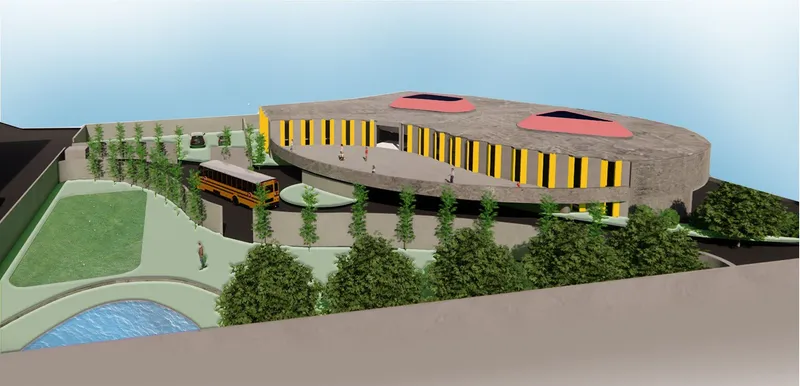
In the vibrant city of Marseille, France, a unique educational structure stands as a testament to innovative design and thoughtful consideration of children's learning environments. The "Zone de Joie" Editor's Choice entry of Untainted, kindergarten school is a pioneering example of how Brutalist architecture in education can be harmoniously blended with elements of playfulness and openness to create an inspiring place for children. This article delves into the architectural marvel that is Zone de Joie, exploring its design principles, form development, and the integration of Brutalism with child-centric spaces.
The Genesis of Zone de Joie
The inception of Zone de Joie began with an in-depth analysis of Marseille's climate, geography, and urban context. Leveraging resources like Google Earth and traditional maps, architects Ved Joshi, Rucha Joshi, and Riddhi Deshmukh, along with urban planner Pranjal Tak, embarked on a journey to create a space that not only stands out architecturally but also addresses the nuanced needs of young learners.
Drawing inspiration from iconic Brutalist structures such as the Geisel Library and Le Corbusier's Unité d'Habitation, the team sought to manifest the raw, unadorned essence of Brutalism while ensuring the environment remained inviting and conducive to children's exploration and learning. The project was further informed by case studies of renowned kindergarten schools and direct observations of children's interactions within educational spaces.

Architectural Philosophy and Design Strategy
Embracing Brutalism in a Playful Context
At the heart of Zone de Joie's architectural philosophy is a commitment to revealing the raw beauty of materials, as evidenced by the structure's rough, untreated surfaces. The design embraces the transparency of structural elements, a hallmark of Brutalist architecture, while integrating playful shapes and vibrant colors to captivate and stimulate young minds.

Integration of Open and Semi-Open Spaces
A key feature of Zone de Joie is its seamless blend of open, semi-open, and closed spaces. The design incorporates slits and punctures throughout the structure, allowing natural light to filter through and create dynamic light and shadow patterns. This interplay not only enhances the aesthetic appeal of the space but also promotes natural ventilation, making the building more sustainable and comfortable for its inhabitants.

The Role of Punctures and Levels in Design
The strategic use of punctures in the roof and the variation in floor levels add an element of surprise and discovery, encouraging children to engage with their environment in new and exciting ways. These design choices ensure that the learning experience extends beyond the classroom, as children navigate through the varied landscape of the school.
External and Internal Planning for Maximum Efficiency
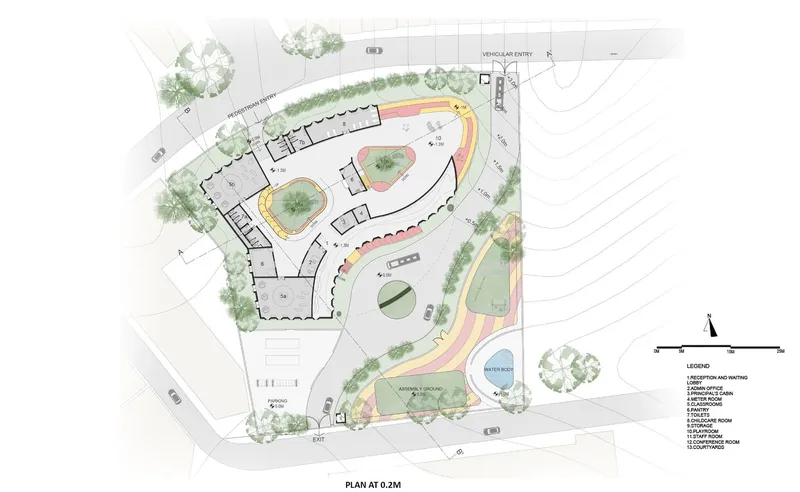
The external layout of Zone de Joie prioritizes safety and efficiency, with separate entries for vehicular and pedestrian traffic to minimize congestion. The thoughtful placement of playgrounds, assembly areas, and water bodies considers the topography and climate, creating a cohesive and enjoyable outdoor environment.
Internally, the school is designed to foster a sense of community and collaboration. Double-height spaces, illuminated by natural light, serve as welcoming areas for students and parents alike. Classrooms and common areas are strategically placed around courtyards, promoting an open and inclusive atmosphere.
Zone de Joie stands as a beacon of Brutalist architecture in education, proving that spaces designed for children can be both aesthetically profound and deeply functional. By marrying the principles of Brutalism with a child-centered approach, the architects have created a space that not only educates but also inspires. As we look to the future of educational architecture, Zone de Joie serves as a powerful example of how design can shape young minds and hearts.


Popular Articles
Popular articles from the community


Temporary Home for Dogs: A Reversed Zoo Rethinks Animal Shelter Architecture
In Bucharest, a sinuous corridor and freed landscape flip the logic of containment, designing a shelter that works to make itself unnecessary.

Singing Woman: Contemporary Architecture Inspired by Estonia’s Voice and the Sea
Singing Woman turns Estonia’s song culture into flowing opera house architecture, blending public life, landscape, sea, and national memory.

Extended Shell: Retrofitting Kolkata's Balconies as Living Urban Thresholds
A modular retrofit system recovers the social and environmental intelligence of Kolkata's historic verandas for contemporary Park Street residents.

The Amber Palace Opera: A Geological Fiction Surfaces on Tallinn's Baltic Waterfront
Pierre Brillard reimagines a Baltic legend as a public landscape, opera house, and waterfront promenade rooted in Tallinn's coastal identity.

Similar Reads
You might also enjoy these articles

Day and Night Park: A Time-Based Urban Newsstand in Beijing
A temporary urban newsstand in Beijing blending travel, light, and reading through poetic colors, compact form, and community-focused design.

Modernist Patio Renovation in El Masnou, Barcelona by Oliver Segura Arquitectura + Cebrià Arquitectura
Modernist patio renovation blending tradition and innovation with a movable pool, leveled floors, and Catalan materials in El Masnou.

Alto Residencial Coop: Cooperative Housing Development in Santiago de Compostela by Carbajo Barrios Arquitectos
A linear cooperative housing complex blending white volumes and perforated metal façades, enhancing community living, natural light, privacy, and urban integration.

Vil Genis School by BPA ARCHITECTURE – Massy, France
Vil Genis School in Massy, France, features sustainable design, south-facing classrooms, community integration, accessible spaces, and modern educational architecture.

Explore Brutalist Architecture Competitions
Discover active competitions in this discipline

Challenge to design public laboratory

Challenge to reimagine the Iron Throne

Photograph architecture without architects

Illustrate the lost glory of Angkor Wat - Render Challenge
Comments (0)
Please login or sign up to add comments
No comments yet. Be the first to comment!