
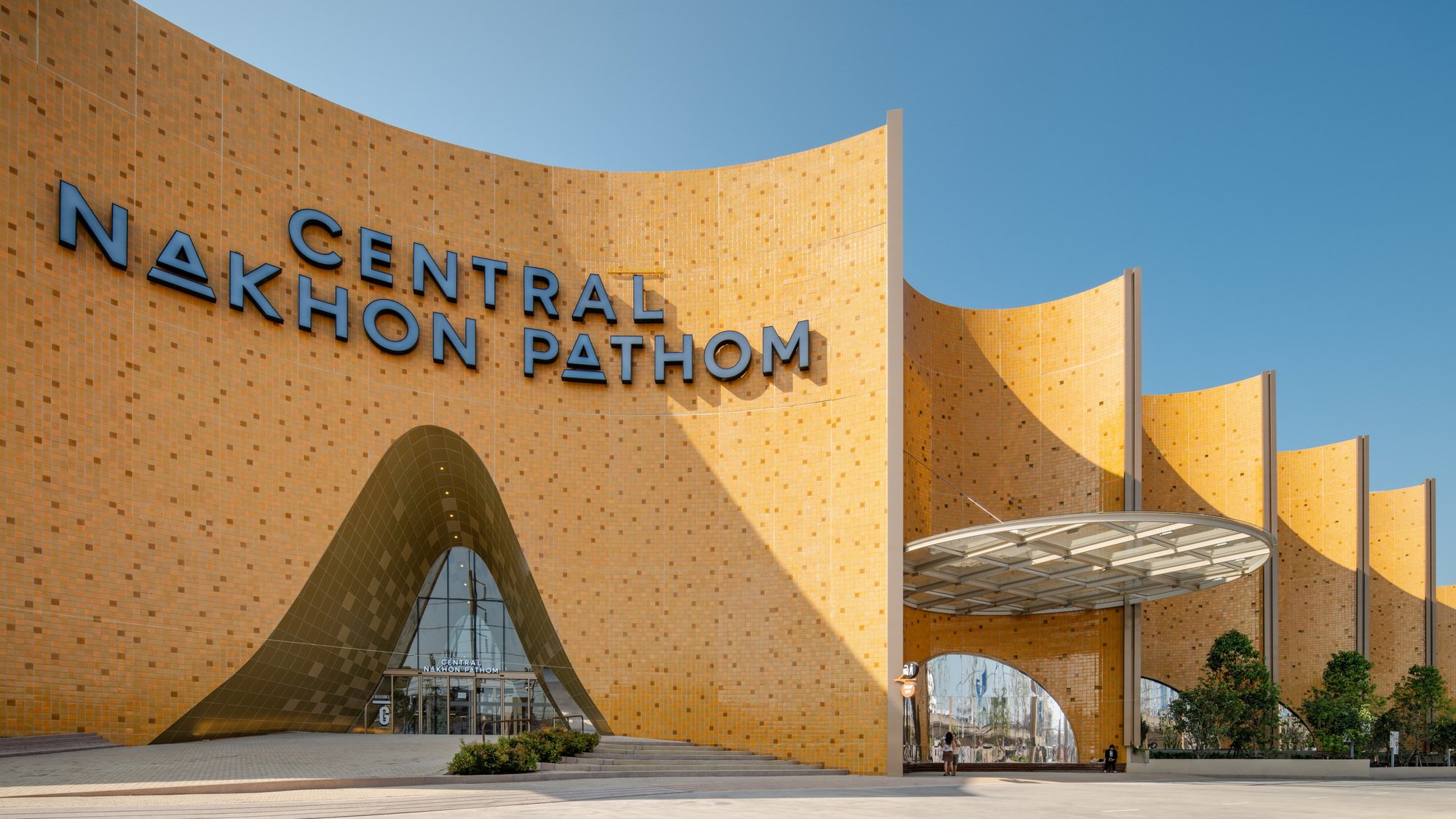
Central Nakhon Pathom By Stu/D/O Architects
Central Nakhon Pathom blends retail, public parks, and Thai heritage, reinterpreting Phra Pathom Chedi through contemporary, sustainable, community-centered architecture.

A Contemporary Civic Landmark Rooted in History
Located in Nakhon Pathom, Thailand, Central Nakhon Pathom is a 140,000-square-meter mixed-use retail development designed by Stu/D/O Architects and completed in 2024. Rather than functioning solely as a shopping mall, the project is conceived as a modern civic anchor—reviving the historic role of architecture as a place for gathering, rituals, markets, and shared urban life.
The design draws deep inspiration from Phra Pathom Chedi, Thailand’s tallest and most revered Buddhist stupa, which has historically shaped the city’s spatial, cultural, and social identity. By abstracting and reinterpreting its architectural language, the project establishes a powerful dialogue between tradition and modernity, positioning the mall as a new urban heart for the province.
Planning with Public Space First
Set on a 45-rai site, Central Nakhon Pathom forms part of a larger mixed-use master plan, with retail spaces located toward the front and residential developments positioned behind. Uniquely, the design process began not with built mass but with open space.
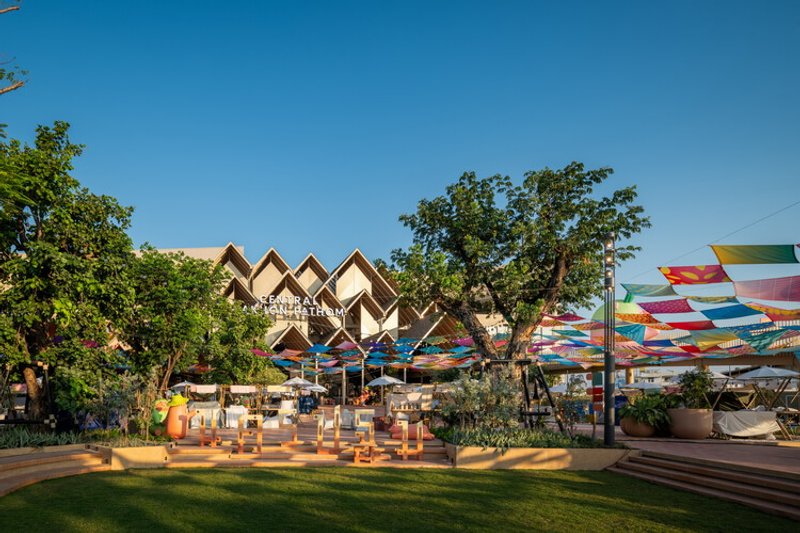
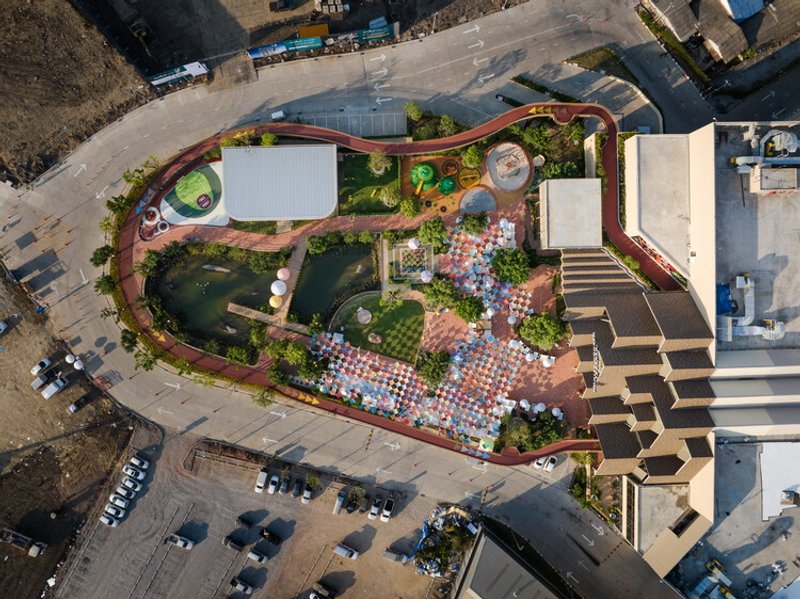
At the core of the project lies a central green park, envisioned as a democratic public realm accessible to all. This park is complemented by two additional urban squares, each designed to host different activities—markets, festivals, leisure, and everyday social interaction. A continuous pedestrian spine connects these spaces, forming a looped circulation system that encourages exploration while seamlessly integrating retail, dining, and landscape.
The architecture deliberately blends fully air-conditioned interiors with semi-outdoor, naturally ventilated spaces, offering climatic comfort while reducing energy consumption in Thailand’s tropical environment.
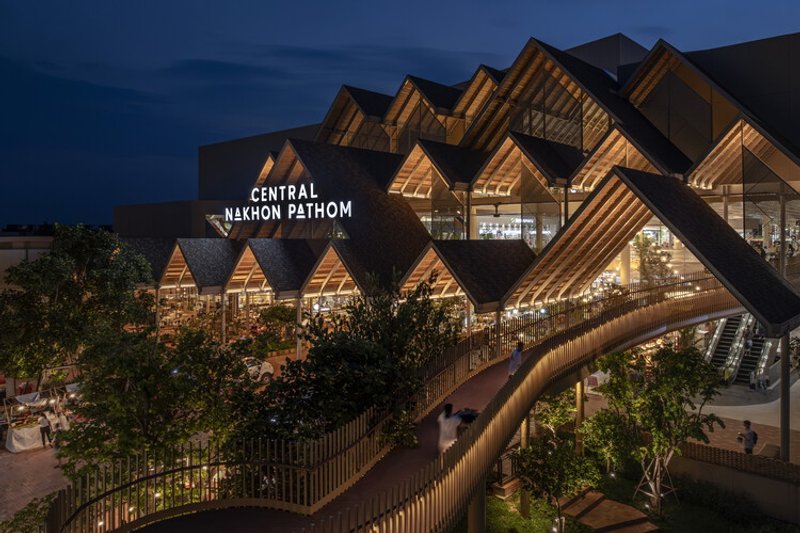
Reinterpreting Local Identity Through Architecture
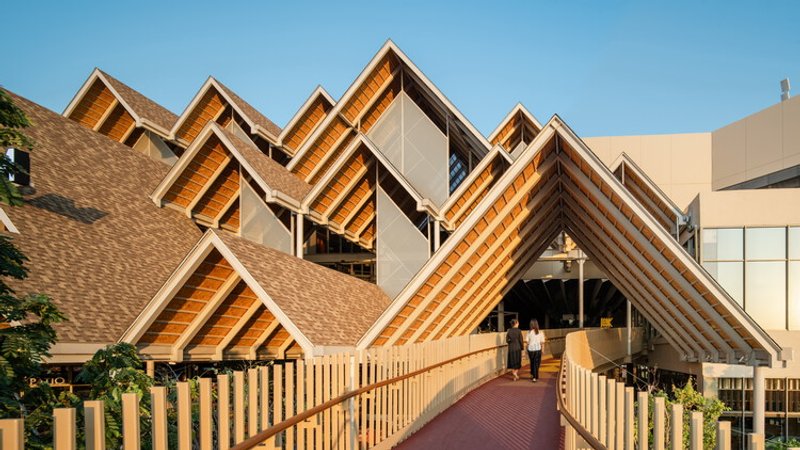
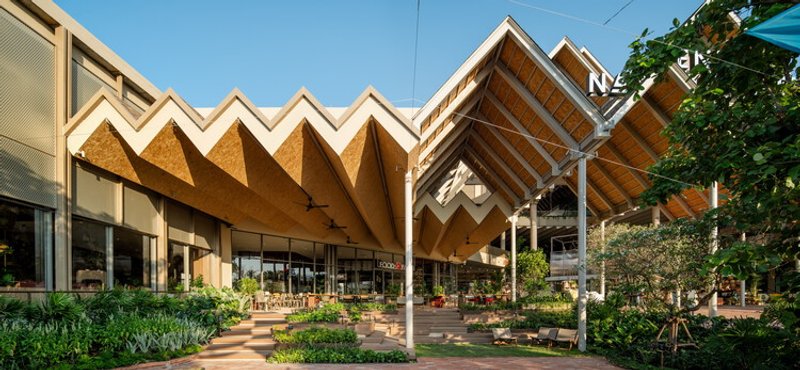
The project’s architectural expression reimagines elements of Phra Pathom Chedi using a contemporary vocabulary. A gabled roof form, checkerboard motifs, and carefully articulated massing evoke familiarity while remaining unmistakably modern.
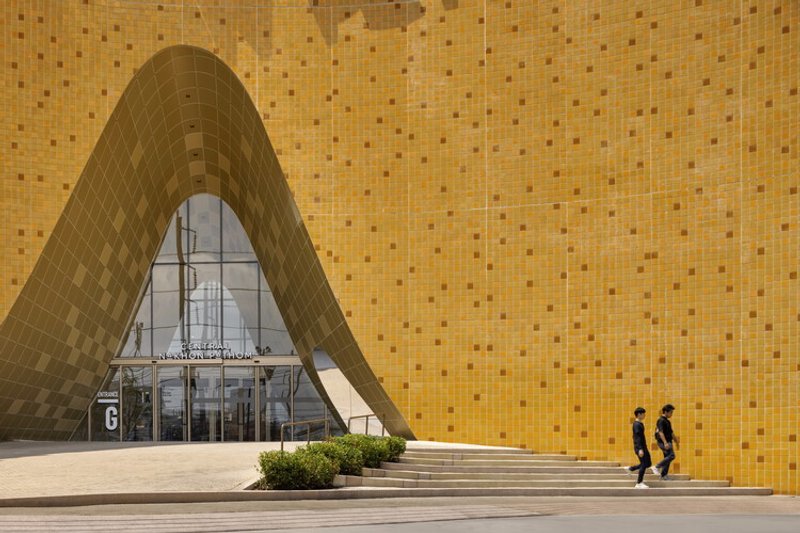
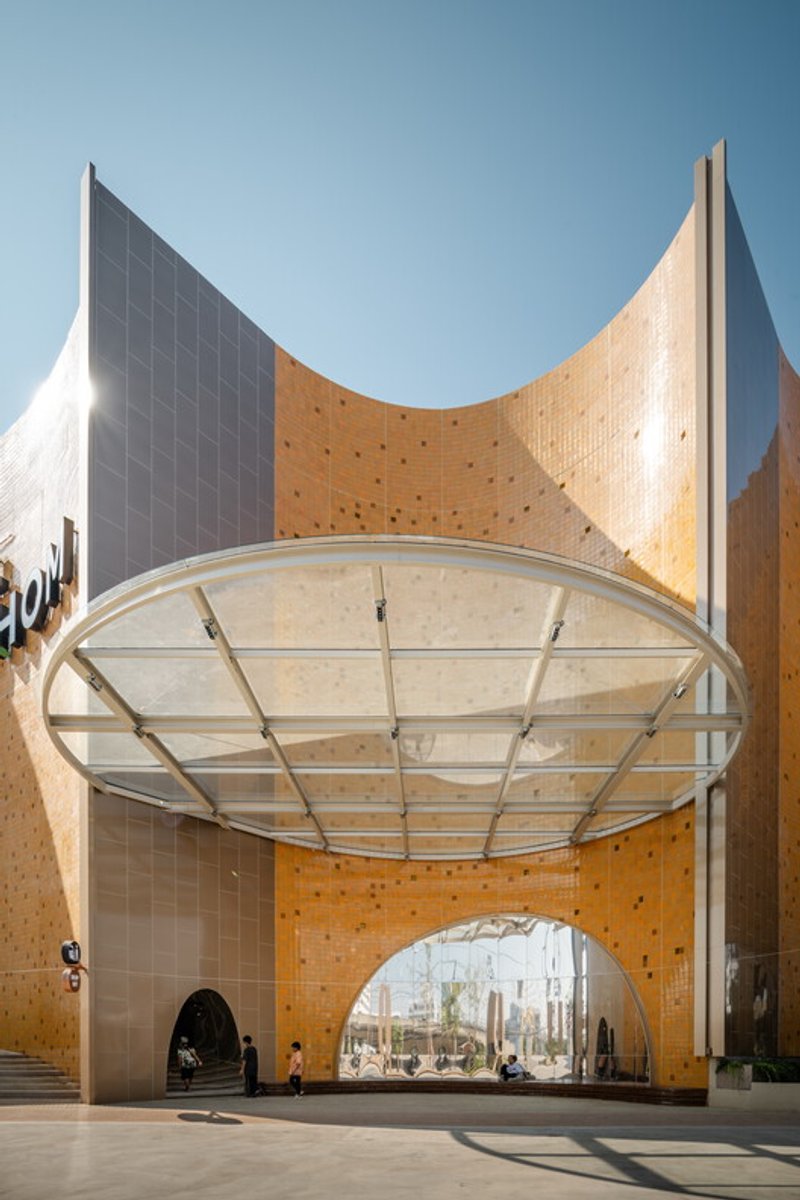
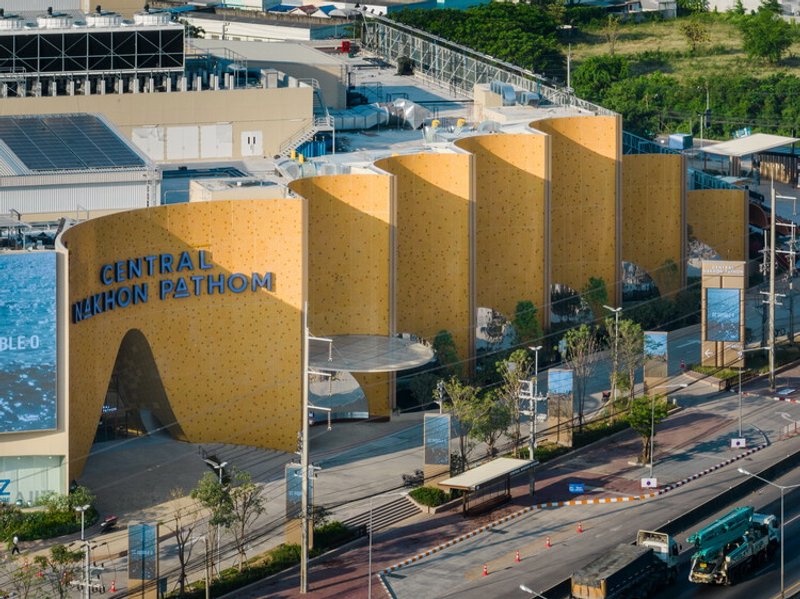
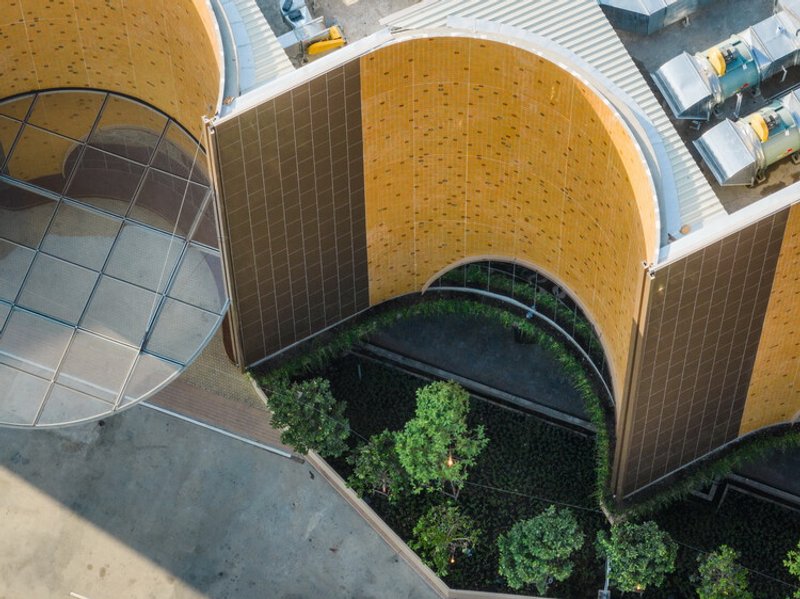
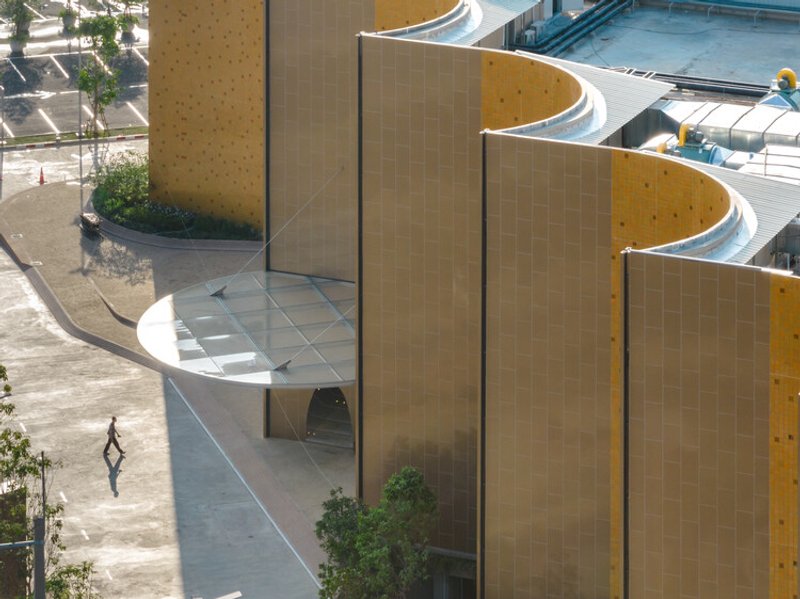
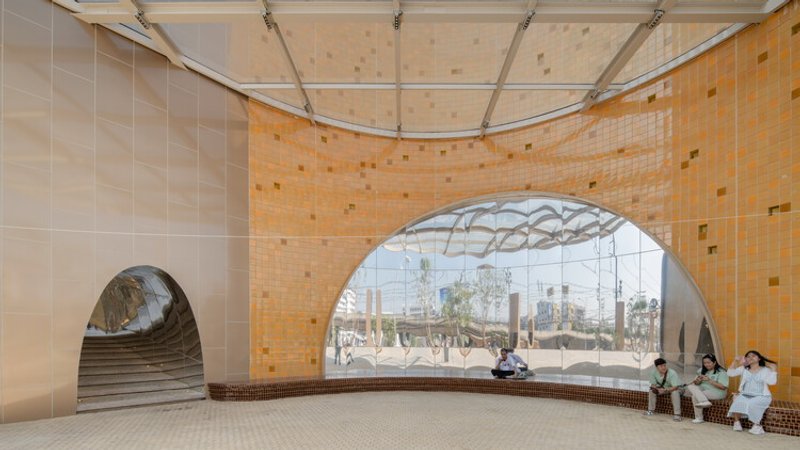
The main façade is clad in yellow terracotta tiles, sourced from the same local craftsmen responsible for the restoration of Phra Pathom Chedi itself. These hand-laid 6” × 6” tiles are integrated into precast concrete panels, combining traditional craftsmanship with modern construction techniques. Three tonal variations of yellow create depth, rhythm, and visual warmth across the façade.
In contrast, aluminum composite panels introduce a sleek modern counterpoint. The curved terracotta wall faces the historic Chedi and welcomes visitors arriving from Bangkok, while the linear aluminum façade addresses the city—symbolizing movement between past and future.
Experiential Interiors Inspired by Sacred Architecture
Inside, spatial sequences are inspired by the layered construction history of Phra Pathom Chedi. One secondary entrance unfolds through a series of curved, terracotta-clad corridors, with reflective ceilings enhancing sensory depth and guiding visitors inward. This compressed, immersive passage contrasts with the openness of the main atrium, creating moments of discovery and transition.
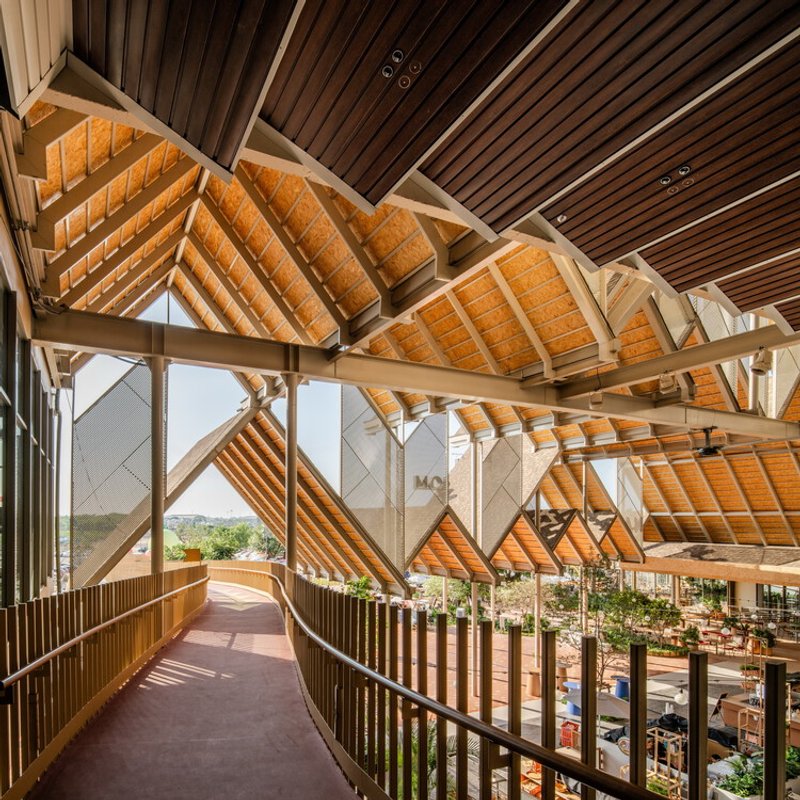
A standout feature is the three-story vertical garden, a semi-outdoor oasis that offers shade, airflow, and visual relief. Retail walkways wrap around this green core, while floating “sky pods” provide informal seating beneath a large canopy roof that filters sunlight through checkerboard-patterned ceilings.
Market, Park, and Everyday Urban Life
At the heart of the development is Pathom Samosorn, a triple-height local food market inspired by traditional Thai marketplaces. Set beneath layered gable roofs, the space fosters intimacy, social interaction, and strong visual connections to the surrounding gardens. It seamlessly links to outdoor food patios and serves as a bridge between interior retail and exterior public spaces.
Beyond the market, the project opens into the Pomelo Garden, a large, pet-friendly public park anchored by a retention pond. Encircled by a running track, lawns, play areas, and art installations, the park hosts daily recreation as well as major cultural festivals such as Songkran, Loy Krathong, and New Year celebrations. An 800-square-meter event lawn further reinforces the site’s role as a regional cultural hub.
Sustainability Embedded in Design
Sustainability is integral to Central Nakhon Pathom’s planning and performance. The site achieves an Open Space Ratio (OSR) of 31%, ensuring generous green areas and improved microclimate. Native and low-maintenance planting reduces water demand, while the retention pond supports stormwater management.
The building envelope employs low-reflectance glazing, insulated roofing, and terracotta cladding to minimize heat gain. Interior finishes prioritize low-VOC materials, supporting indoor air quality. Water-efficient fixtures, natural ventilation strategies, daylight optimization, and the use of ceiling fans further reduce energy and water consumption.
A New Urban Heart for Nakhon Pathom
More than a shopping center, Central Nakhon Pathom is a contemporary civic landscape—one that reclaims the social role once held by sacred architecture and repositions it within a modern commercial framework. By merging heritage, public space, sustainability, and everyday life, the project establishes a powerful new identity for Nakhon Pathom—rooted in tradition, yet confidently looking forward.
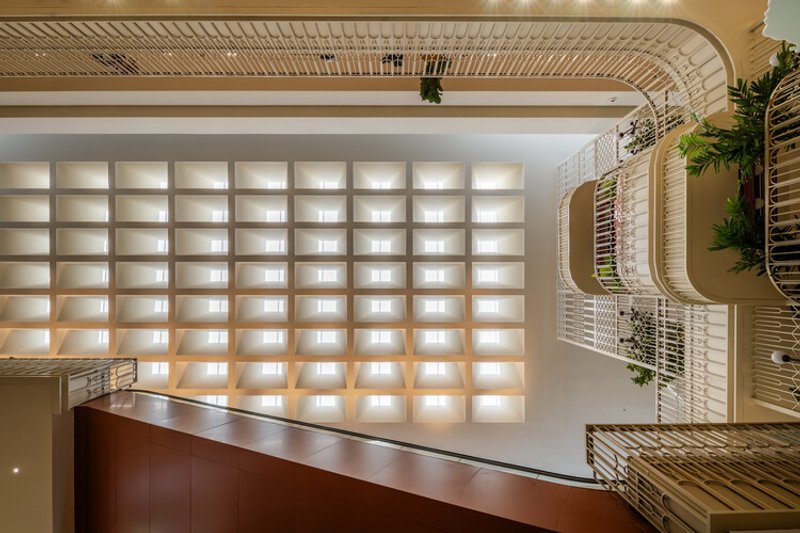
All the photographs are works of Art4d x Jinnawat Borihankijanan, W Workspace




Popular Articles
Popular articles from the community

Treehouse Apartment: A Warm Timber Interior Blending Craft, Play, and Contemporary Living
Warm timber apartment with integrated treehouse, combining natural materials, craftsmanship, and playful design to create a flexible, family-oriented living environment.
Louis Malle Cinema: A Limestone Cultural Landmark Revitalizing Community Life in Prayssac
Limestone cinema extension with public forecourt, blending heritage and modern design to create flexible cultural spaces and strengthen community interaction.
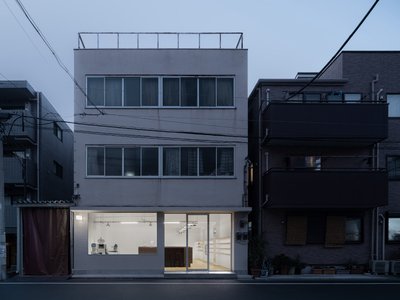
Atelier Macri Concept Store Interior Design by CASE-REAL
Atelier Macri store features a "ko" counter, walnut wood details, cork displays, blending retail, gallery, and seamless customer experiences.

Solar Steam: A Climate-Responsive Architecture That Redefines the Monument
A climate-responsive memorial architecture that transforms heat, decay, and time into a living system reflecting humanity’s ecological impact.

Similar Reads
You might also enjoy these articles


The Ken Roberts Memorial Delineation Competition (Krob)
As the most senior architectural drawing competition currently in operation anywhere in the world, it draws hundreds of entries each year, awarding the very best submissions in a series of medium-based categories.

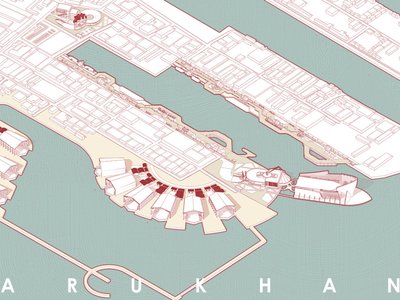
Waterfront Redevelopment and Urban Revitalization in Mumbai: Forging a New Dawn for Darukhana
A transformative waterfront redevelopment project reimagining Darukhana’s shipbreaking heritage into an inclusive urban future.

OUT-OF-MAP: A Call for Postcards on Feminist Narratives of Public Space
Rhizoma Design and Research Lab invites artists, designers, architects, researchers, and students to reflect on how feminist perspectives can reshape public space. Selected works will be exhibited in Barcelona, October 2026. Submissions open until 15 April 2026.

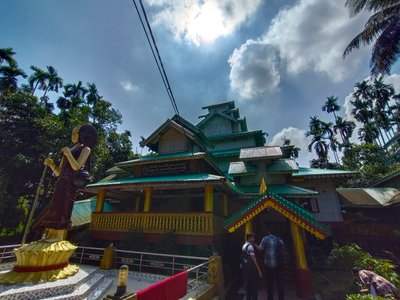
Documentation Work on Buddhist Wooden Temple
Architectural syncretism and cultural hybridity: A comparative study of the Buddhist temples in Chattogram Hill tracks


Explore Architecture Competitions
Discover active competitions in this discipline




The International Standard for Design Portfolios


The Global Benchmark for Architecture Dissertation Awards


The Global Benchmark for Graduation Excellence


Challenge to reimagine the Iron Throne
Comments (0)
Please login or sign up to add comments
No comments yet. Be the first to comment!