
Chapadmalal House by Nicolas Pinto da Mota & Victoria Falcon
Chapadmalal House is a minimalist coastal retreat featuring Shou Sugi Ban wood, passive design, and seamless indoor-outdoor spatial integration.

A Minimalist Summer Retreat in Coastal Argentina
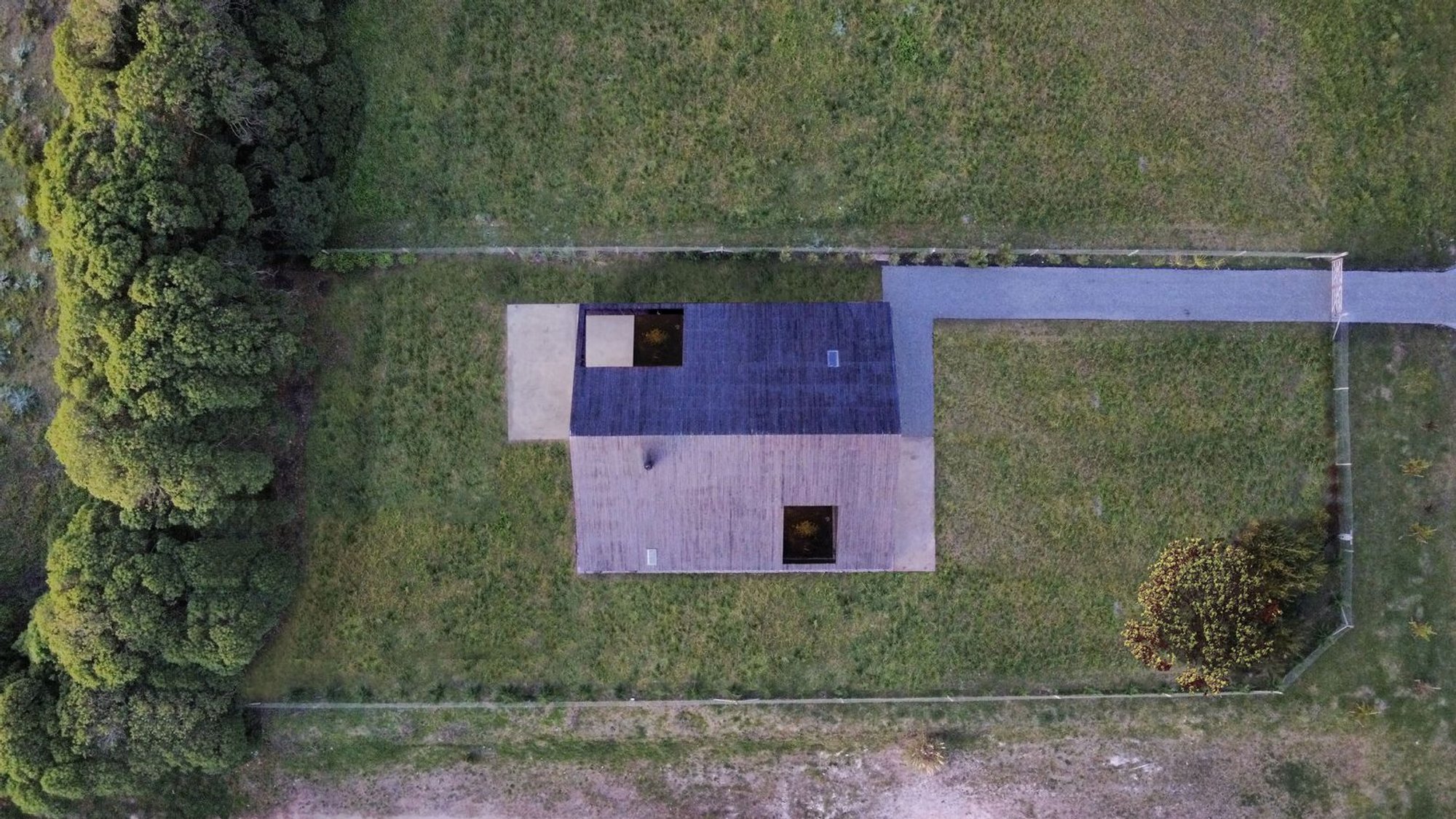
Located in the serene coastal town of Chapadmalal, Argentina, this summer house by Nicolas Pinto da Mota and Victoria Falcon embraces a minimalist architectural approach while integrating with its natural surroundings. Spanning 1,937 ft², the residence is designed as a contemporary retreat, balancing privacy and openness through strategic spatial planning.
Architectural Concept & Design
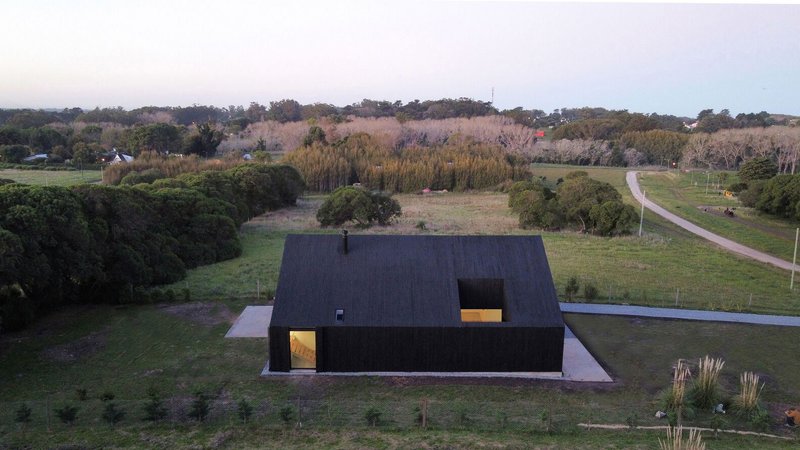
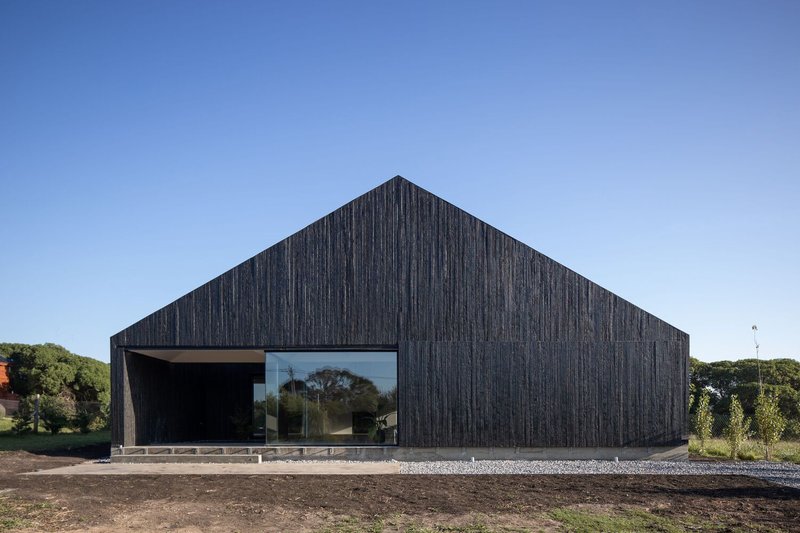
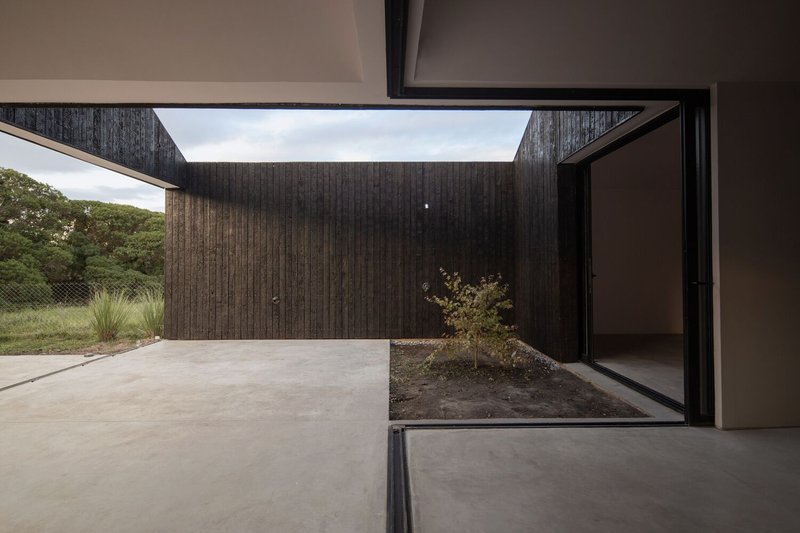
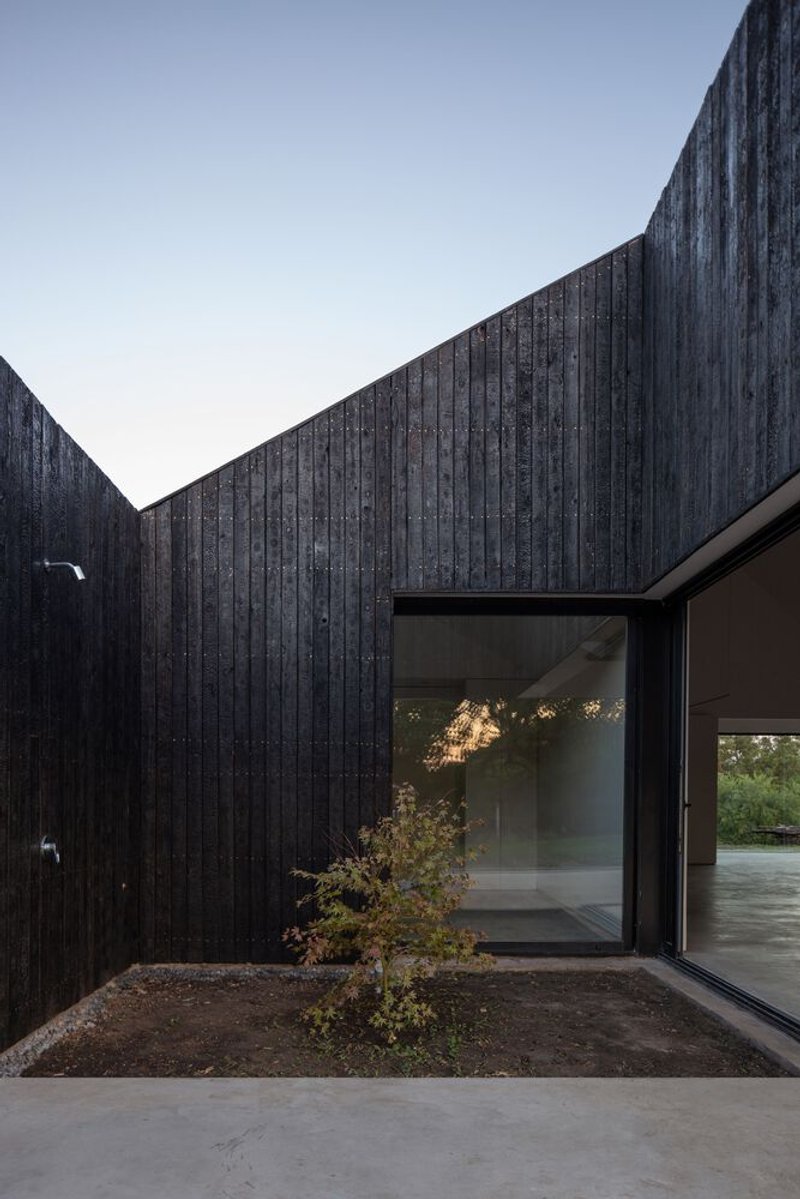
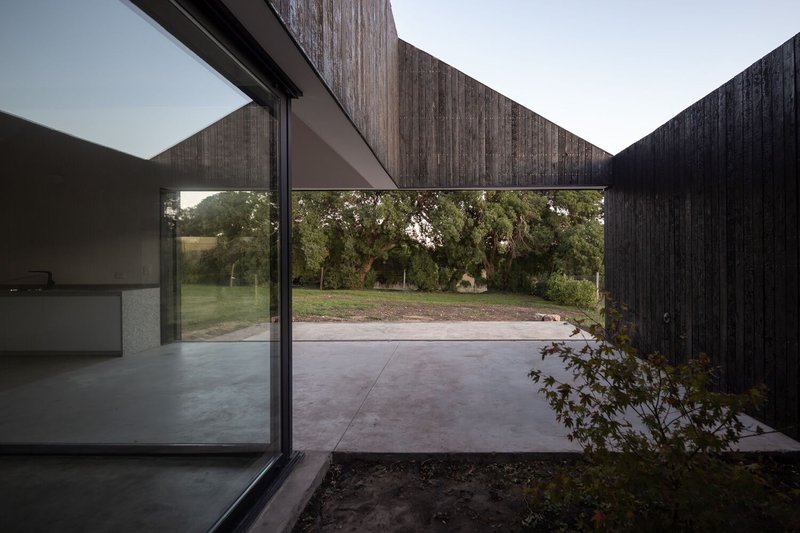
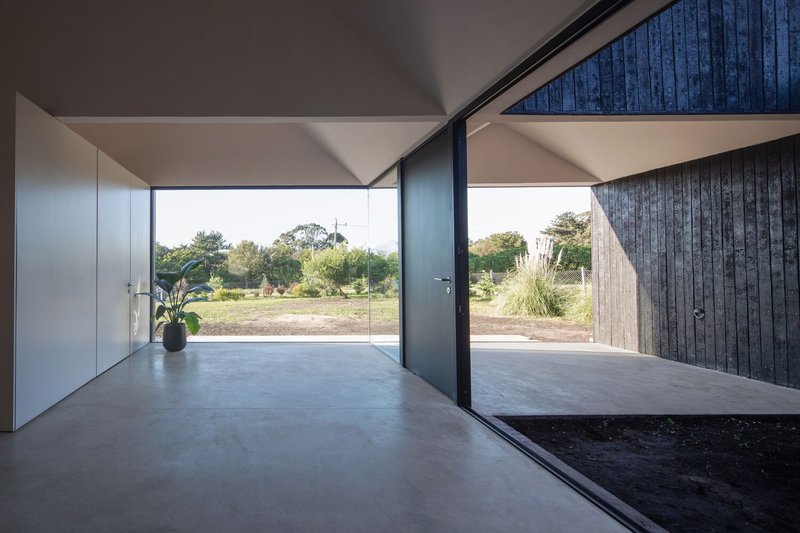
The house is conceived as a rectangular prism, a recognizable archetype that establishes a strong presence while responding to its environment. The structure appears hermetically enclosed, yet its ends are intentionally hollowed out to allow natural light to filter through. This duality enhances the home's integration with the landscape, fostering a seamless indoor-outdoor experience.
At its core, the residence follows a container/continent spatial strategy. A central hall—the heart of the home—is encircled by service areas, courtyards, and a covered gallery. This layout enhances functionality, creating a protective shell around the primary living spaces while opening up to controlled outdoor areas through carefully positioned patios and galleries.
Materiality & Sustainability
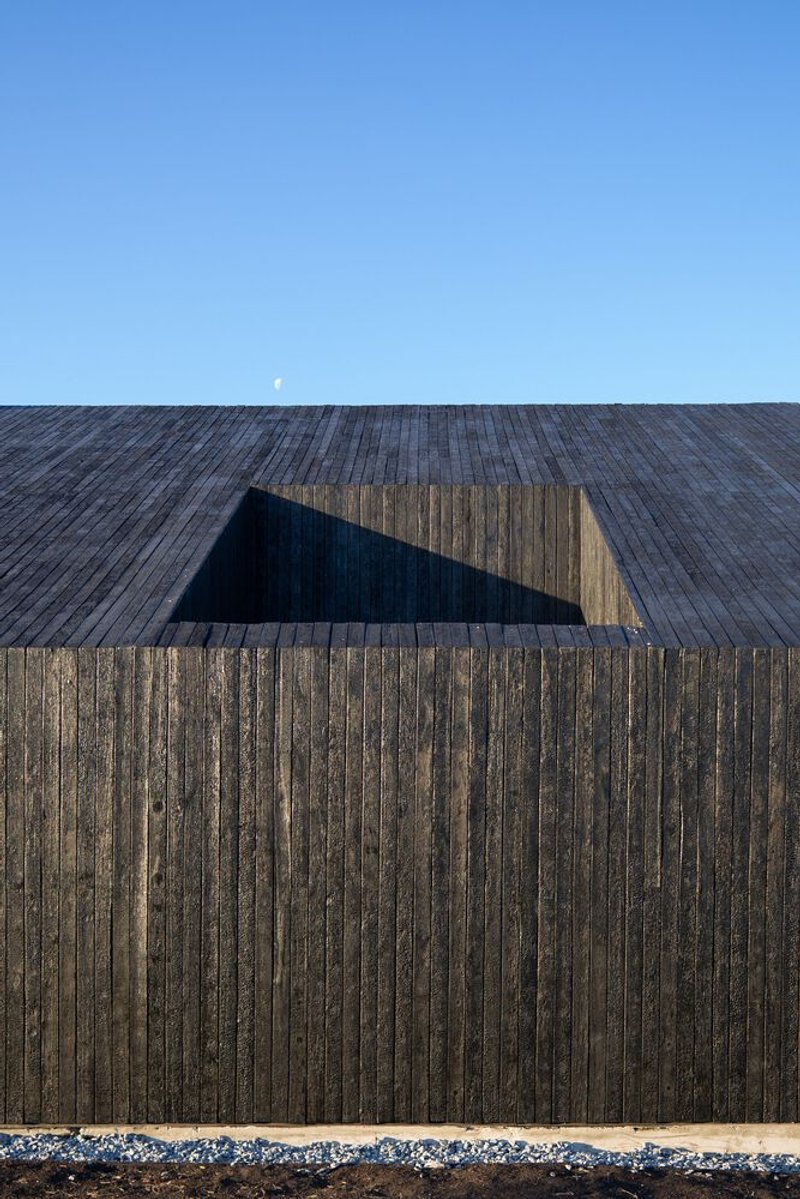
A defining feature of the Chapadmalal House is its use of Shou Sugi Ban, a traditional Japanese wood preservation technique that involves charring the surface to enhance durability. By repurposing discarded wood, the project not only achieves a striking textured black façade but also aligns with sustainable construction principles. The carbonized wood increases longevity, offering a low-maintenance, weather-resistant solution that harmonizes with the coastal climate.
Additional materials such as Aluar aluminum, Ilva ceramics, and Ferrum fixtures contribute to the home’s refined yet durable aesthetic. These elements work together to create a timeless, low-impact dwelling, perfect for seasonal living.
With its bold geometric form, thoughtful spatial organization, and eco-conscious materiality, Chapadmalal House stands as an exemplary model of contemporary coastal architecture. Designed for tranquility and sustainability, it offers a serene escape while respecting the surrounding landscape.
All Photographs are works of Joaquin Portela



Popular Articles
Popular articles from the community


Solar Steam: A Climate-Responsive Architecture That Redefines the Monument
A climate-responsive memorial architecture that transforms heat, decay, and time into a living system reflecting humanity’s ecological impact.
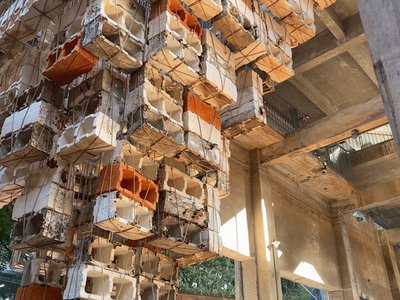
Inverted Architecture Installation by Studio Link-Arc: Exploring the Intersection of Architecture and Living Organisms
Inverted Architecture Installation by Studio Link-Arc blends mycelium, sustainability, inverted design, ecological cycles, and urban adaptive architecture in Shenzhen.
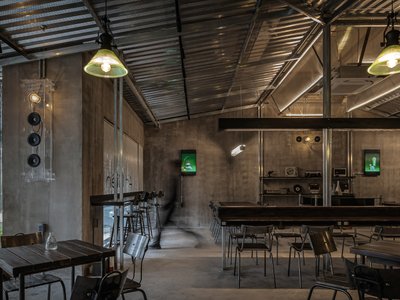
An Miên Lumière Cafe by xưởng xép, Ho Chi Minh City, Vietnam
An industrial-inspired café where layered steel and warm light create a dynamic, immersive environment shaped by reflection, depth, and perception.
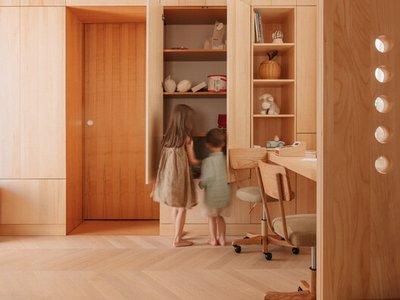
Treehouse Apartment: A Warm Timber Interior Blending Craft, Play, and Contemporary Living
Warm timber apartment with integrated treehouse, combining natural materials, craftsmanship, and playful design to create a flexible, family-oriented living environment.


Similar Reads
You might also enjoy these articles


The Ken Roberts Memorial Delineation Competition (Krob)
As the most senior architectural drawing competition currently in operation anywhere in the world, it draws hundreds of entries each year, awarding the very best submissions in a series of medium-based categories.

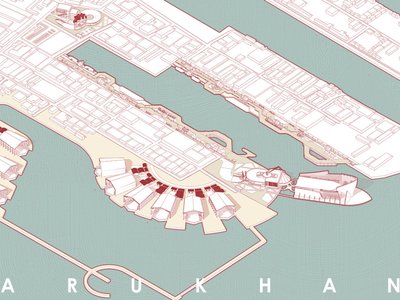
Waterfront Redevelopment and Urban Revitalization in Mumbai: Forging a New Dawn for Darukhana
A transformative waterfront redevelopment project reimagining Darukhana’s shipbreaking heritage into an inclusive urban future.

OUT-OF-MAP: A Call for Postcards on Feminist Narratives of Public Space
Rhizoma Design and Research Lab invites artists, designers, architects, researchers, and students to reflect on how feminist perspectives can reshape public space. Selected works will be exhibited in Barcelona, October 2026. Submissions open until 15 April 2026.


Documentation Work on Buddhist Wooden Temple
Architectural syncretism and cultural hybridity: A comparative study of the Buddhist temples in Chattogram Hill tracks


Explore Architecture Competitions
Discover active competitions in this discipline




The International Standard for Design Portfolios


The Global Benchmark for Architecture Dissertation Awards


The Global Benchmark for Graduation Excellence


Challenge to reimagine the Iron Throne
Comments (0)
Please login or sign up to add comments
No comments yet. Be the first to comment!