
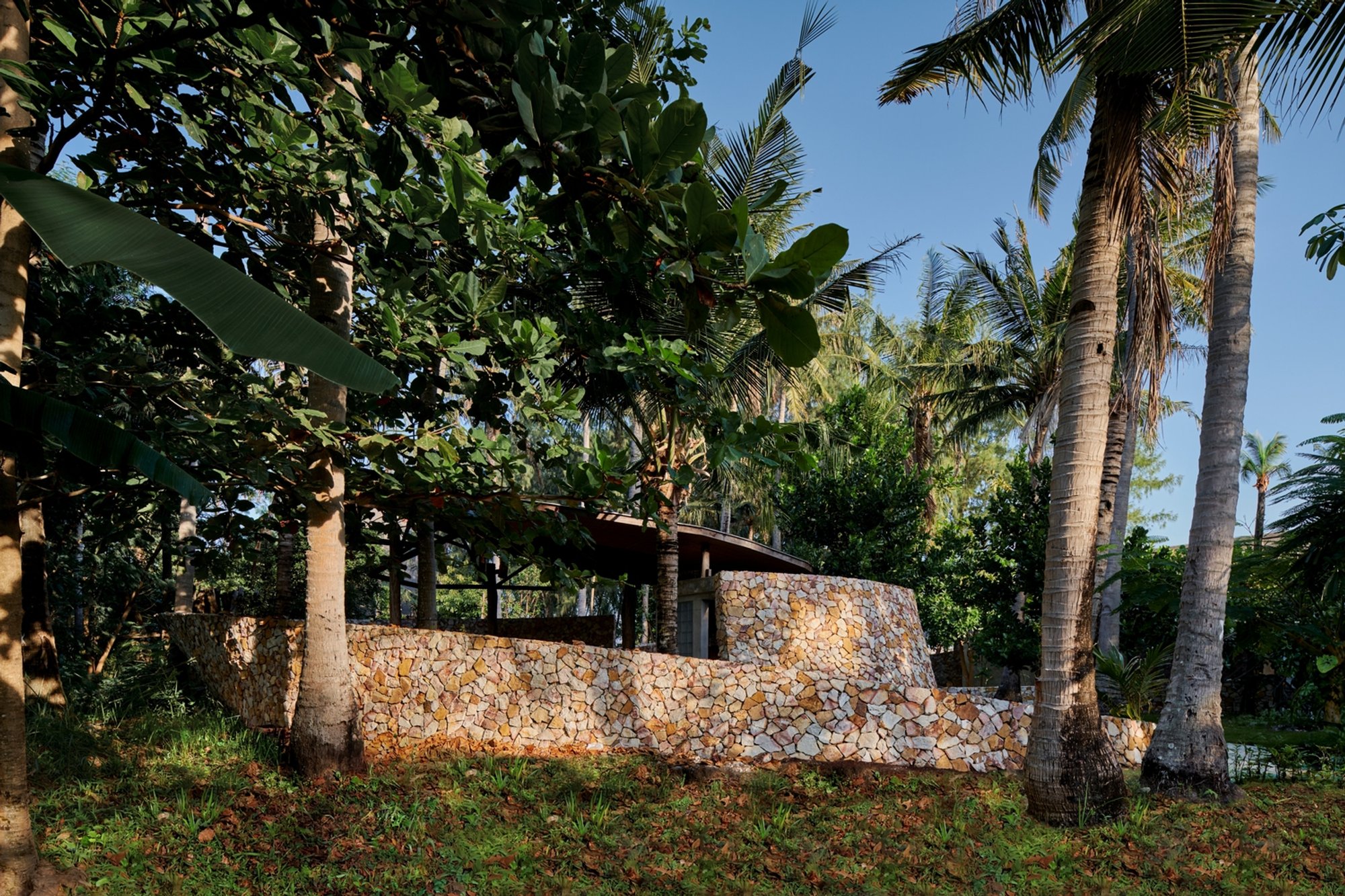
Coconut Wellness Garden by RAD+ar: A Sustainable Sanctuary of Mindful Architecture in Karimun Jawa
A serene circular yoga retreat in Karimun Jawa by RAD+ar, blending rammed earth, timber, and limestone in sustainable tropical harmony.

A Minimalist Haven of Wellness Rooted in Nature
Located on a private island in Karimun Jawa, Indonesia, Coconut Wellness Garden by RAD+ar (Research Artistic Design + Architecture) is conceived as an immersive wellness retreat where architecture, nature, and wellbeing converge. Designed in 2024 by lead architect Junovan Muhammad, the 1000-square-meter project embodies the firm’s dedication to sustainable, context-driven architecture that prioritizes emotional experience, tactile materiality, and environmental harmony.
Evoking Emotion Through Material and Space
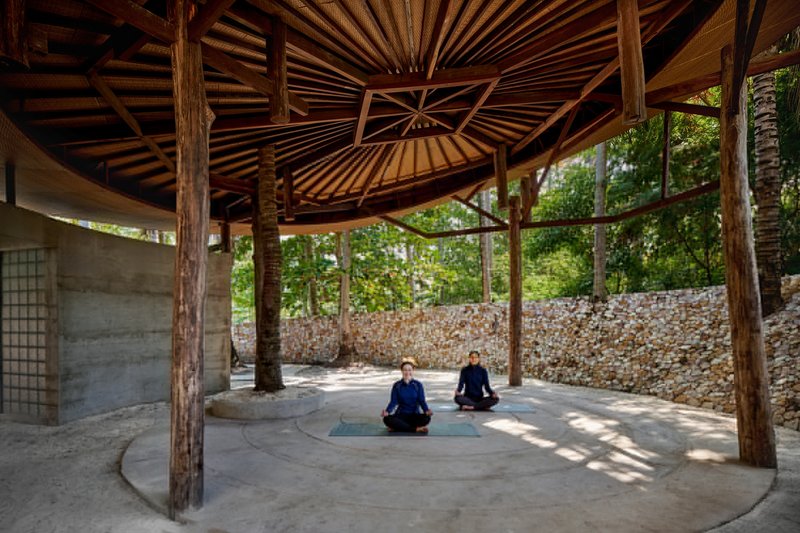
The design mission was to craft a yoga and wellness center that evokes emotion through spatial simplicity and material honesty. The serene palette of natural materials—including reinforced in-situ rammed earth, locally sourced limestone, and timber—draws inspiration from the textures and tones of the surrounding island landscape. These elements are used in unconventional compositions, creating a tactile connection between visitors and the earth beneath them.
Every surface and joint is designed to reflect light, absorb warmth, and age gracefully, allowing the building to blend into its environment over time. The result is a structure that not only supports physical wellbeing but also encourages a spiritual connection to the natural world.
Architecture as a Frame for Nature
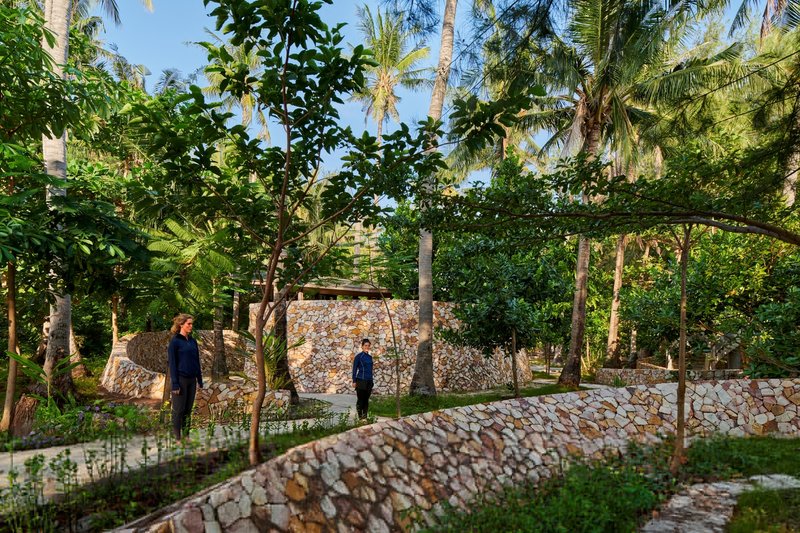
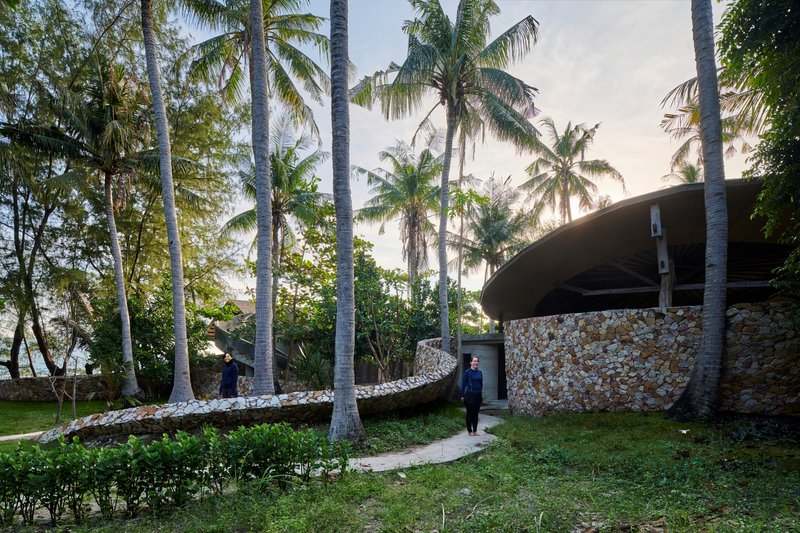
Unlike conventional wellness centers dominated by built form, Coconut Wellness Garden embraces architecture as a gentle frame for nature. The design prioritizes the authenticity of spaces shaped by the island’s organic topography rather than imposing artificial geometry.
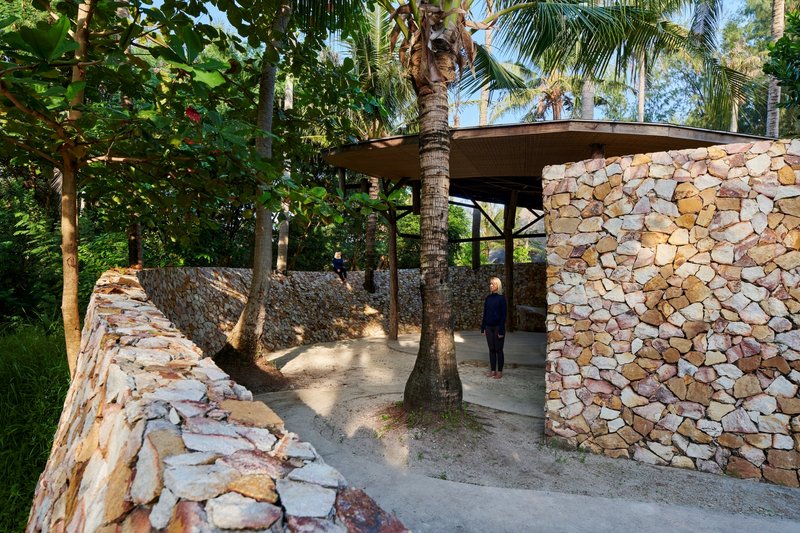
Throughout the day, the play of sunlight and shadow transforms the yoga garden’s natural stone surfaces, creating a living atmosphere that changes with the rhythm of the island. This constant interplay of light and material makes each visit a distinct sensory experience—a meditation in motion.
Circular Form and Fluid Spatial Flow
The building’s circular layout mirrors the fluidity of yoga practice. Its near-perfect 30-meter diameter creates a continuous spatial loop, where curved rammed-earth walls guide visitors through distinct yet interconnected zones: a yoga plaza, gym area, indoor diving classroom, and sunset deck.
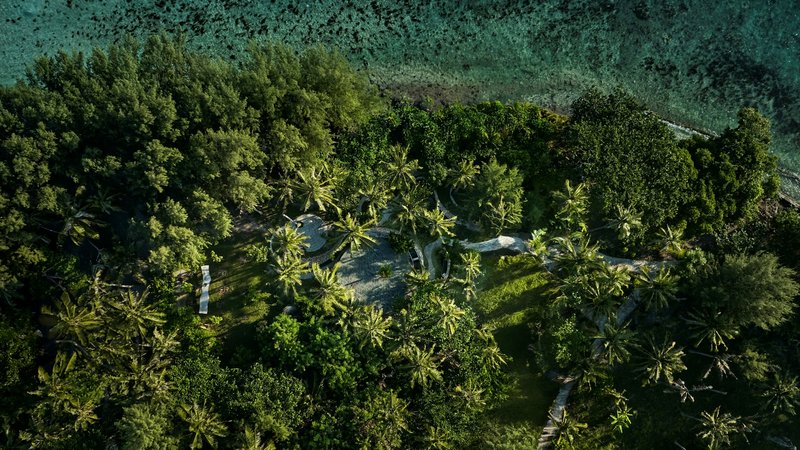
The circulation route follows the outer ring of the circle, ensuring a logical and intuitive flow between spaces. This radial organization fosters privacy and openness simultaneously, allowing users to engage with the landscape without visual interruption. Inside, the curved walls transform into integrated seating, accommodating large audiences for wellness lectures or meditation gatherings.
Learning from Traditional Wisdom
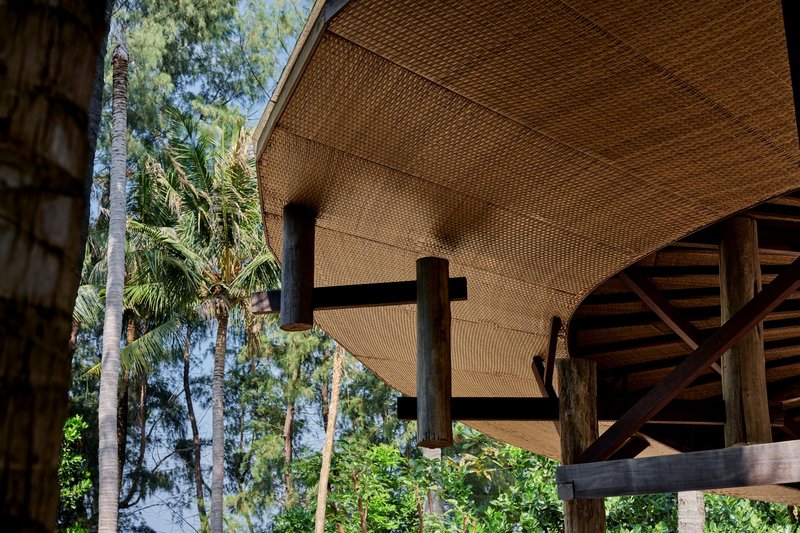
Informed by vernacular Indonesian construction methods, RAD+ar integrated local craftsmanship and sustainable building techniques to reduce environmental impact. Large-section local timber columns—stacked both vertically and horizontally—support an 8-meter diagonal roof cantilever, achieving both visual lightness and structural efficiency.
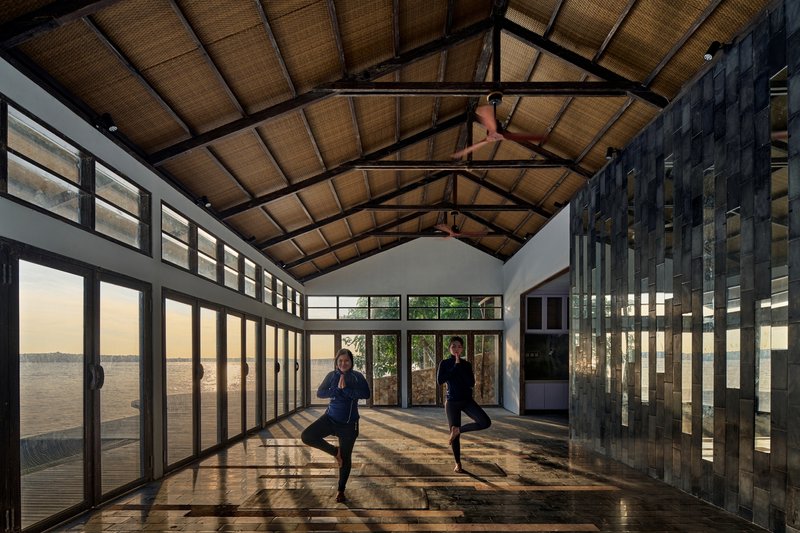
The floating oval roof, wrapped in wood shingles and lined with rattan, tilts gently toward the east, inviting morning sunlight into the meditation spaces. This natural lighting strategy not only enhances comfort but aligns with the building’s purpose as a place for rejuvenation and renewal.
Sustainable Design Through Local Resources
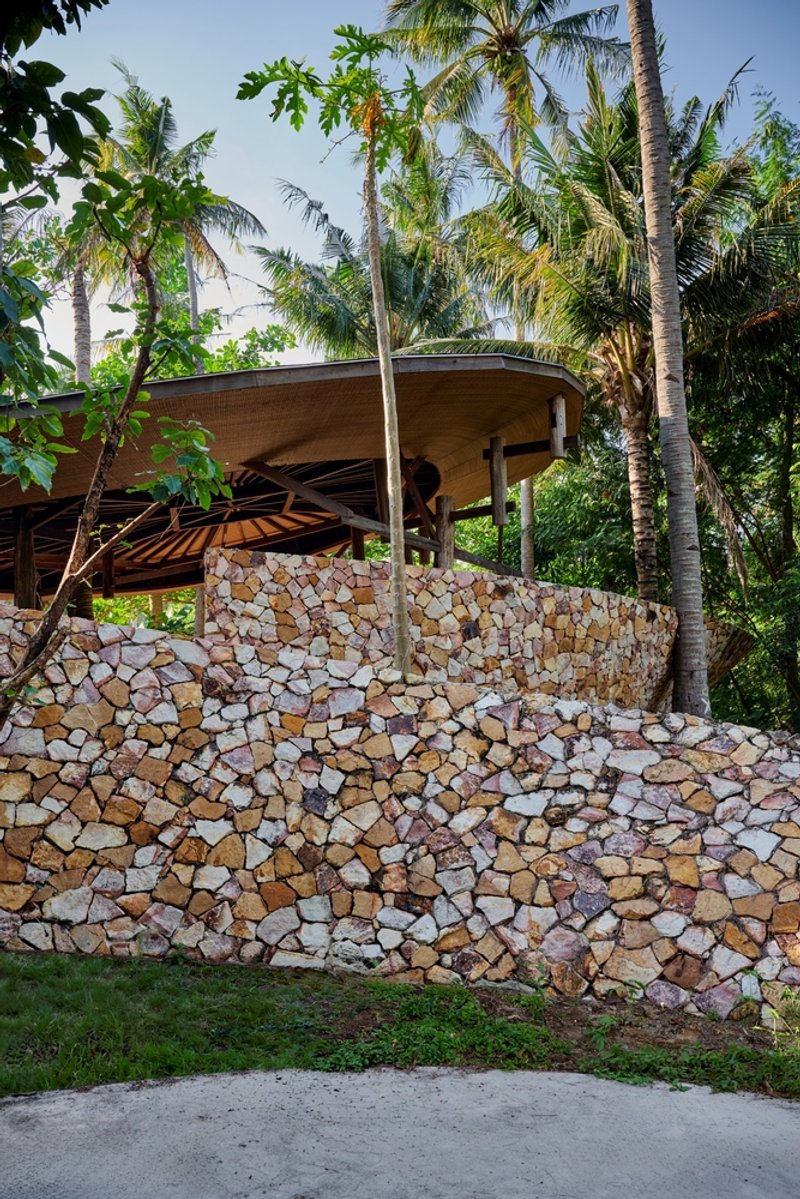
Situated on a private island, minimizing carbon footprint was crucial to the design strategy. RAD+ar prioritized local materials and labor, avoiding imported components that would require high-energy transportation. The use of earth, limestone, and coconut timber exemplifies a commitment to low-impact, circular construction.
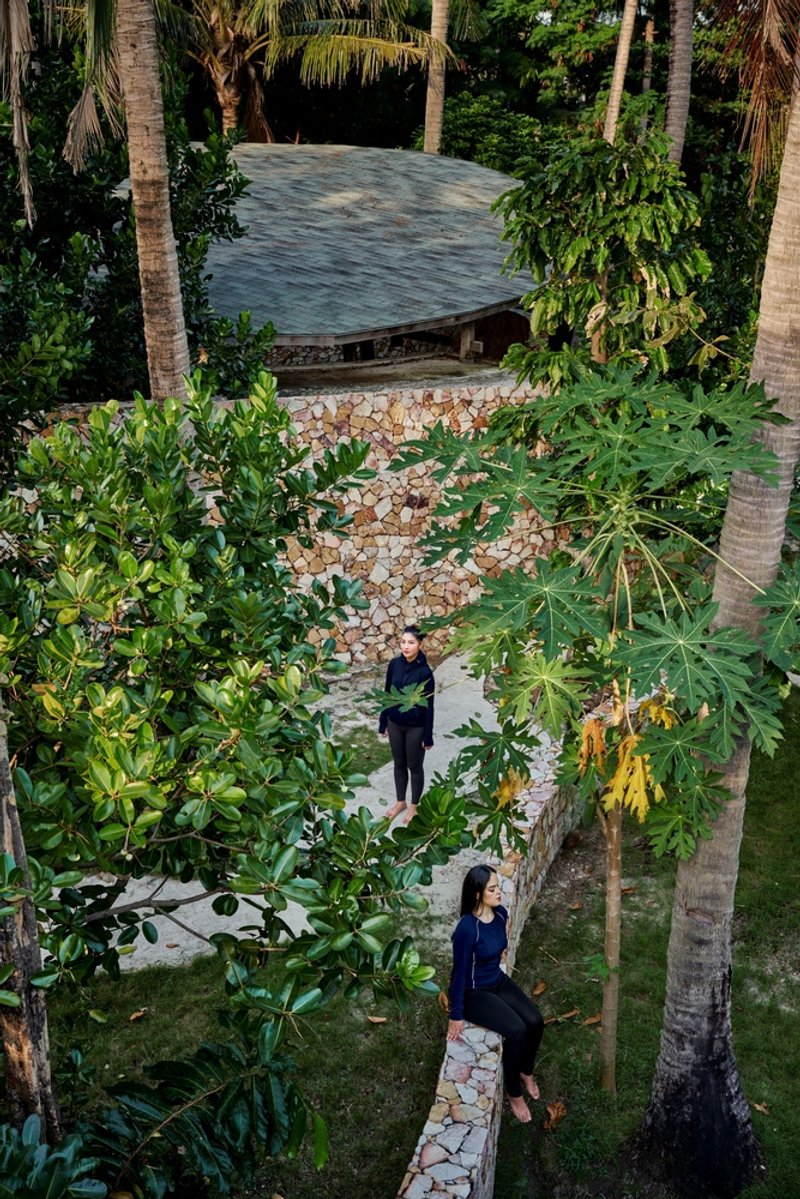
The architecture itself doubles as furniture and structure, an approach that merges function and form. Coconut wood columns with traditional mortise joinery support wooden beams and partition panels, demonstrating the elegance of resource-efficient craftsmanship. This fusion of structure and furniture embodies the project’s sustainable ethos—architecture as a living organism, growing from its environment.
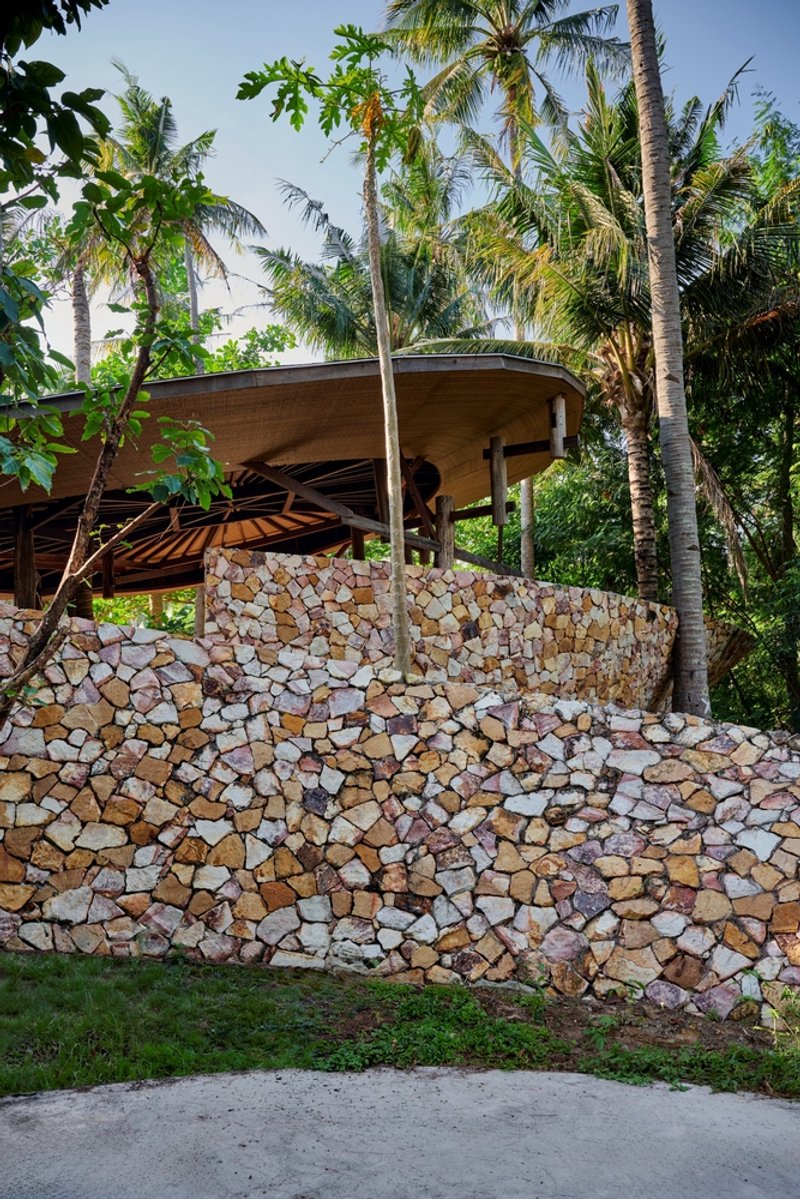
A Holistic Space for Mind, Body, and Environment
Coconut Wellness Garden stands as a testament to mindful architecture—a design that not only shelters but heals. It reflects RAD+ar’s philosophy of Research Artistic Design, where every structural choice and aesthetic decision serves a deeper purpose: to restore balance between human wellbeing and natural systems.



Popular Articles
Popular articles from the community


Solar Steam: A Climate-Responsive Architecture That Redefines the Monument
A climate-responsive memorial architecture that transforms heat, decay, and time into a living system reflecting humanity’s ecological impact.
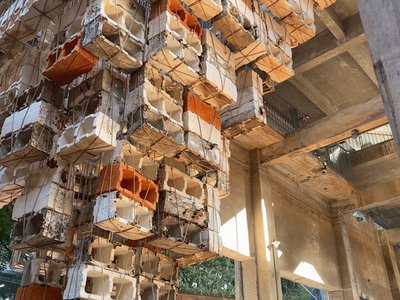
Inverted Architecture Installation by Studio Link-Arc: Exploring the Intersection of Architecture and Living Organisms
Inverted Architecture Installation by Studio Link-Arc blends mycelium, sustainability, inverted design, ecological cycles, and urban adaptive architecture in Shenzhen.
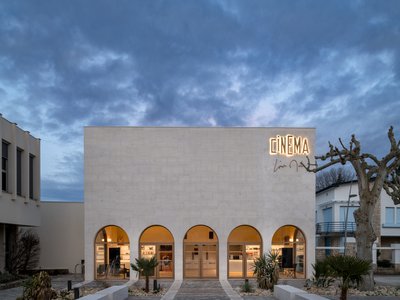
Louis Malle Cinema: A Limestone Cultural Landmark Revitalizing Community Life in Prayssac
Limestone cinema extension with public forecourt, blending heritage and modern design to create flexible cultural spaces and strengthen community interaction.
On the Brooks House by Monsoon Collective – A Contemporary Kerala Home Rooted in Tradition
Kerala home blending tradition and modernity with water-inspired design, brick architecture, courtyard planning, and sustainable rainwater harvesting strategies.


Similar Reads
You might also enjoy these articles


The Ken Roberts Memorial Delineation Competition (Krob)
As the most senior architectural drawing competition currently in operation anywhere in the world, it draws hundreds of entries each year, awarding the very best submissions in a series of medium-based categories.


Waterfront Redevelopment and Urban Revitalization in Mumbai: Forging a New Dawn for Darukhana
A transformative waterfront redevelopment project reimagining Darukhana’s shipbreaking heritage into an inclusive urban future.

OUT-OF-MAP: A Call for Postcards on Feminist Narratives of Public Space
Rhizoma Design and Research Lab invites artists, designers, architects, researchers, and students to reflect on how feminist perspectives can reshape public space. Selected works will be exhibited in Barcelona, October 2026. Submissions open until 15 April 2026.

Documentation Work on Buddhist Wooden Temple
Architectural syncretism and cultural hybridity: A comparative study of the Buddhist temples in Chattogram Hill tracks

Explore Architecture Competitions
Discover active competitions in this discipline




The International Standard for Design Portfolios


The Global Benchmark for Architecture Dissertation Awards


The Global Benchmark for Graduation Excellence


Challenge to design locus for the upliftment of human rights
Comments (0)
Please login or sign up to add comments
No comments yet. Be the first to comment!