
Cosmic (Re)Connection:
Unveiling New Architectural Narratives Through Cosmic Insights

Architecture has always been a reflection of humanity’s relationship with the cosmos. From the earliest stone monuments aligned with the solstices to Gothic cathedrals suffused with cosmic light, humans have long attempted to mirror the harmony and mystery of the universe in built form. These structures were not simply shelters or symbols; they were bridges between the microcosm of human existence and the macrocosm of the universe. Yet in modern times, this bond has weakened. The rise of rationalism, scientific abstraction, and mechanistic interpretations of the cosmos has left us with architecture often focused on efficiency and functionality, stripped of mystery and transcendence. Humanity, once positioned at the symbolic center of the universe, now sees itself as a fleeting presence in an infinite and indefinite cosmos. In this shift, we have lost our orientation, our collective narrative, and a vital sense of belonging within the larger cosmic whole.
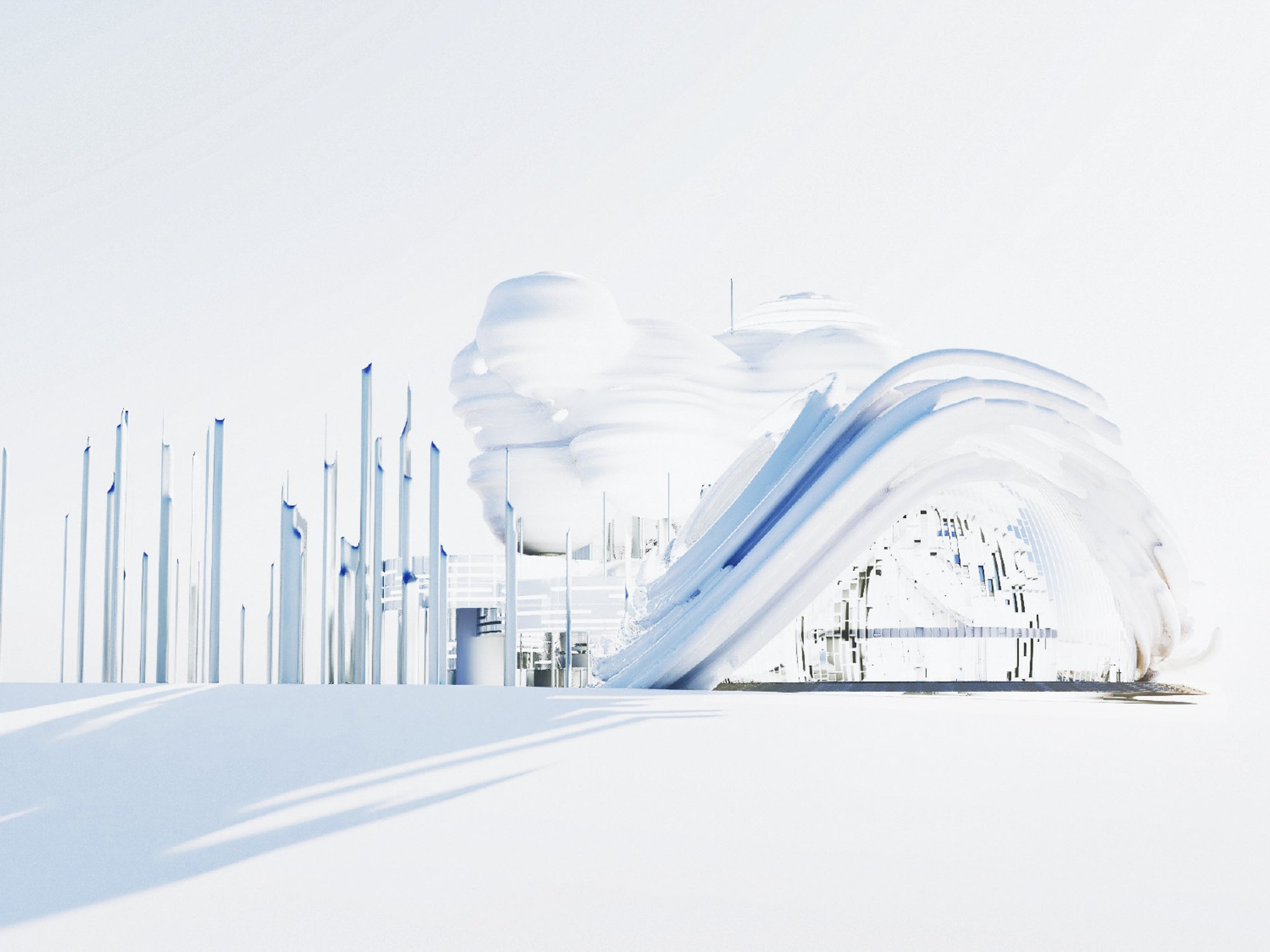
Cosmic (Re)Connection emerges from this crisis of disconnection. The project seeks to restore architecture’s role as a mediator between human life and the universe by proposing a design language inspired directly by cosmology—the scientific study of the origin, evolution, and fate of the universe. Rather than reproducing the static alignments of ancient cosmological structures, this project aims to create an architecture that is interactive, dynamic, and integrally woven into cosmic processes. The central question guiding the work is: How can the interdisciplinary insights from the study of the universe’s origin, & evolution inform architectural design to create interactive, experiential spaces that foster a renewed human connection with the cosmos, while transcending architecture’s traditional role as a passive container or active cosmic expression to become an interactive, dynamic, and integral part of cosmic processes?
To answer this question, the thesis adopts an interdisciplinary methodology that combines scientific study, phenomenology, and systems thinking. Architecture is reconceived not as a passive container of meaning, nor as a symbolic reflection of cosmic forms, but as an active participant in the unfolding processes of the universe. This ambition required deconstructing traditional notions of architectural permanence and instead embracing dynamism, interactivity, and temporal adaptation. At the same time, the project foregrounds lived experience: the architecture is meant to be felt, observed, and inhabited in ways that make the vastness of cosmic time and space tangibly present.
The Site as A Cosmic Stage:
The chosen site for this exploration is the Pingualuit Crater in northern Quebec, Canada. This location is charged with cosmic significance. Formed by the violent collision of a meteorite with Earth some 1.4 million years ago, the crater is a geological scar and a cosmic archive. Its lake preserves sediments from the Ice Age, offering a natural time capsule of planetary history. The crater’s exceptional preservation, its 2.8 km diameter, and its position under some of the clearest skies in the world make it a place where the human encounter with the cosmos can be staged both symbolically and scientifically. Frequent auroras, long polar nights, and the visibility of constellations such as Orion and Ursa Minor further amplify its suitability. The crater thus serves both as a literal trace of cosmic impact and a metaphorical pause in time, a space where an immense cosmic event once intersected with Earth and where a renewed dialogue with the universe can now unfold.
The Inuit cosmology tied to the region deepens this resonance. For the Inuit, Polaris (the North Star) functioned as an orientation device, marking direction and guiding seasonal rhythms. The aurora was considered the dancing spirits of ancestors. Constellations such as the Two Sunbeams carried symbolic significance tied to cycles of sustenance, movement, and survival. By weaving these cultural narratives with contemporary cosmology, the project grounds its universal ambition in a specific place, where the cosmic, the cultural, and the scientific overlap.
Accordingly, the rise and set points of the constellations, aurora timelines, daylight and solar cycle extremes were mapped into a contextual annual timeline of architectural interactivity.
Programmatic Duality:
The project unfolds as two intertwined yet distinct streams: the Scientific Research Hub and the Cosmic Interaction Center.
The Research Hub is conceived as a timeless repository of knowledge. It contains cosmology laboratories with simulation zones and observatory decks, meteorology and space weather research centers to monitor auroras and solar activity, and geological labs that study the unique sediments of the crater. These facilities anchor the site in scientific rigor, ensuring it functions as a living laboratory for the universe. Here, architecture provides the infrastructure for discovery, giving form to humanity’s quest for understanding.
In parallel, the Cosmic Interaction Center addresses the human dimension of reconnection. This center is vast and adaptive, designed not for utility but for experience. Dynamic exhibition galleries narrate the evolving history of cosmology, from ancient models to contemporary theories of multiverses and dark energy. Immersive archives simulate cosmic phenomena, turning abstract concepts into visceral encounters. Sky-view zones open directly to auroras, eclipses, and meteor showers, turning architecture into a framing device for celestial events. These areas encapsulate the notions of infinity through vertical opennes and use of spheres, as well as existential pause through long linear corridors. The circular layering of the spaces echoes the cosmic layers. This center is divided into timeless component “To Observe” and the semi-timely ones (To See, To Learn, To Feel). Together these spaces and entities provide experential connection with cosmos through exhibitions, seminar spaces, simulation zones and immersive experiences.
For example, the main principle behind “To Feel” space is partially outlined below:
.....What if we could feel the cosmic essence through experience? That is exactly what is achieved through a series of concentric domes, with walls divided according to stellar alignments.
First, you pass through a narrow pathway into what could be called the “presence” of a cosmic force—or a reception—because we, as humans, are microcosms of the universe. Then, you enter the absence: the pre-Big Bang. Darkness surrounds you, with recessed floor spotlights and subtle sound frequencies guiding the atmosphere.
Next, you move along circular corridors into the realm of vision. In the beginning, reflective surfaces and immense illumination. The following stage brings the experience of cosmic evolution, with textures representing phenomena like dark matter through dark, absorbing surfaces......
Interactivity:
One of the most radical shifts in the project is its embrace of interactivity. Traditional cosmological architecture—whether pyramids or cathedrals—aligned with cosmic bodies but remained static. In Cosmic (Re)Connection, the architecture itself moves, adapts, and evolves in response to cosmic cycles.
At the most basic level, the project interacts with the rising and setting of stars and the sun. Platforms rotate and align with solar solstices and equinoxes. Structures expand or contract in relation to celestial motion, symbolizing the pull and release of cosmic fields. The aurora introduces another layer of interactivity. A Platform in “To Observe” rise toward the sky during peak aurora seasons, literally lifting the observer closer to the shimmering veil of charged particles.
The pods embody the highest level of interactivity. Initially grounded, they detach and ascend into the atmosphere according to cosmic events. During eclipses, supermoons, or meteor showers, pods rise and transform into floating observatories. Their inflation, ascent, and eventual dispersal replicate cosmic processes of expansion and dissipation, making the architecture itself an enactment of universal dynamics. Once in the atmosphere, they continue their ascent driven by cosmic events of the century.
The Architecture of Time:
Equally important to the project is its relationship to time. The architecture is not conceived as a fixed monument but as a temporal process unfolding over decades and centuries.
The major timeline begins in April 2029, when the asteroid Apophis will pass closer to Earth than the Moon. This event inaugurates the project’s cycle of interactivity. Over the next seven years, until Apophis’ return in 2036, the architecture responds to key cosmic events: the annular solar eclipse of 2030, the transit of Mercury in 2032, the supermoon lunar eclipse of 2033, and the Leonid meteor shower later that year.
After 2036, the architecture continues to evolve. Pods rise higher into the stratosphere and mesosphere, connected by smart particles into a distributed network. Some dissolve, returning material to the Earth, while others continue to float, reflecting auroras and starlight. The site becomes simultaneously a ruin and a constellation, a grounded hub and a dispersed network.
Design Outcomes:
The design outcomes of Cosmic (Re)Connection reflect the translation of cosmological principles into architectural form through a combination of early experiments, parametric explorations, and site-specific adaptations.
The design process began with abstract computational experiments that tested how cosmic parameters could be embodied spatially. One study mapped the Cosmic Microwave Background (CMB) radiation into a height-field, converting variations in early-universe temperature into topographical shifts. Another experiment applied the butterfly effect to parametric geometries by introducing small rotational increments and measuring cumulative distortions, producing unpredictable, nonlinear morphologies. Field-based studies modeled gravitational and repulsive forces as vectors acting upon meshes, bending and stretching them in ways that resembled cosmic webs. Finally, experiments in expansion produced forms that detached from one another, echoing the dispersal of galaxies. These studies were not intended as final designs but as a vocabulary of operations—rotation, expansion, distortion, and disassembly—that could later inform built form.
When projected onto the crater site, these operations were refined into architectural systems. The circulation network was generated by overlaying stellar alignments, particularly those tied to Polaris and Orion, onto the crater’s geometry. Volumes were derived from field lines, resulting in cylindrical, spherical, and faceted geometries. Cylinders were selected for the research hub, emphasizing verticality and precision in astronomical observation. Spheres and domes defined the interaction center, invoking both planetary forms and the celestial vault. The pods were shaped as faceted spheres inspired by Platonic solids, reflecting the clustered nature of cosmic webs.
The material outcomes support this formal logic. The research structures are clad in titanium and chromium steel for referance to impactite materials, their surfaces catching the glow of auroras. The interaction spaces use polished white panels, creating moments where architecture dissolves into landscape. The pods, are enclosed in 3D-printed biodegradable PLA, emphasizing their temporal character. Their programmed dissolution is central to the design: they are meant to embody impermanence.
Experientially, the architecture is structured as a progression from grounded to elevated, from static to dynamic. Visitors begin in the Research Hub, where simulations and laboratories offer structured knowledge. They move toward the Interaction Center, where immersive installations and observation domes foster embodied experience. Finally, they encounter the pods, the most interactive elements, which can ascend and detach, offering temporary and extraordinary encounters with the cosmos. This progression mirrors the project’s conceptual trajectory: from scientific explanation to human experience to direct cosmic engagement.
The timeline of outcomes ensures the architecture is never static. In the early decades, the architecture emphasizes interactivity with near-term celestial events, framing eclipses and meteor showers. As pods ascend and form atmospheric networks, the site transforms into both a grounded archive and a dispersed constellation. In the long term, when the structures have dissolved, what remains are the timeless elements: the alignments to Polaris, Orion, and seasonal cycles. The site thus exists in three temporal registers—immediate interaction, medium-term evolution, and long-term endurance, each producing distinct architectural outcomes.
By embedding these experiments and principles into form, Cosmic (Re)Connection produces an architecture that is scientific, experiential, and interactive at once. The final outcome is not a single building but a constellation of spaces and temporal processes that together reestablish the human relationship to the cosmos.




Popular Articles
Popular articles from the community

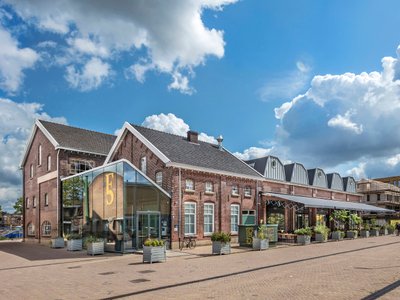
Fifth NRE Jazz Club – De Bever Architecten: Eindhoven’s Revitalized Cultural Hub
Historic gas factory transformed into Fifth NRE Jazz Club blending modern sustainability, jazz culture, dining, and heritage architecture seamlessly.


Free Architecture Competitions You Can Enter Right Now
No entry fees, real prizes. Here are the best free architecture competitions open for submissions in 2026.
Split House: A Compact Urban Home Blending Privacy, Light, and Flexible Living in Japan
Compact Japanese home featuring DOMA space, flexible café potential, passive lighting, privacy zoning, and sustainable urban living design.


Similar Reads
You might also enjoy these articles
Converge Hub – A Human-Centered and Sustainable Mobility Hub at the Urban Edge
Its open and permeable design promotes sustainable movement through walkable connections, green axes, and integrated public transport
51st Annual KRob - Ken Roberts Memorial Delineation Competition
Join us in celebrating 51 years in excellence in architectural representation! With $2,400 in prize money awarded across 8 categories, this prompt-less competition is accessible to all!




Explore Architecture Competitions
Discover active competitions in this discipline




The International Standard for Design Portfolios


The Global Benchmark for Architecture Dissertation Awards


The Global Benchmark for Graduation Excellence


Challenge to reimagine the Iron Throne
Comments (0)
Please login or sign up to add comments
No comments yet. Be the first to comment!