
Discreet House by Jirau Arquitetura: A Harmonious Blend of Simplicity, Sustainability, and Local Craftsmanship
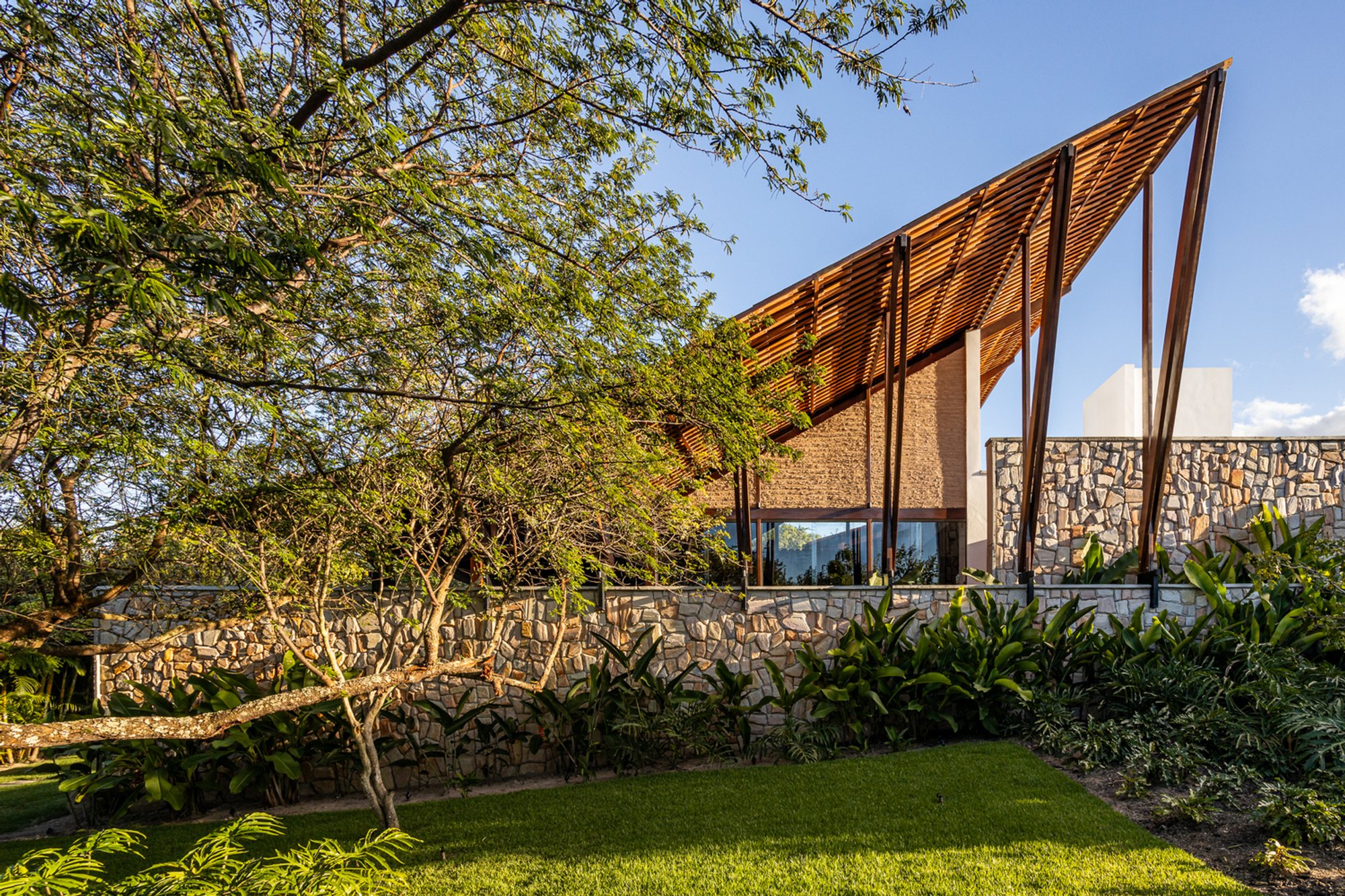
Discreet House by Jirau Arquitetura blends sustainable design, local materials, and nature integration to create a simple, harmonious home.

Located in the serene surroundings of Caruaru, Brazil, the Discreet House designed by Jirau Arquitetura is a testament to the power of simplicity and the deep connection between architecture and its environment. Completed in 2022, this 505 m² residence is a stunning example of how thoughtful design can honor local culture while providing a sustainable, comfortable living space for its inhabitants. The house embraces the concept of "architecture for the soul," focusing on intimacy, functionality, and a deep respect for nature.
Design Philosophy: A Home for the Inward Journey
At the heart of Discreet House lies a clear and bold concept: to create a house that is not a symbol of opulence or social status, but rather a space that fosters personal well-being and self-expression. The clients sought a home that prioritized personal experiences over exterior appearances—a house designed for the inside. In the words of the architects: "Not for the condominium, but for the individuals who live in it." This vision was realized through every decision, from the layout to the material choices.
Integrating Nature and Architecture
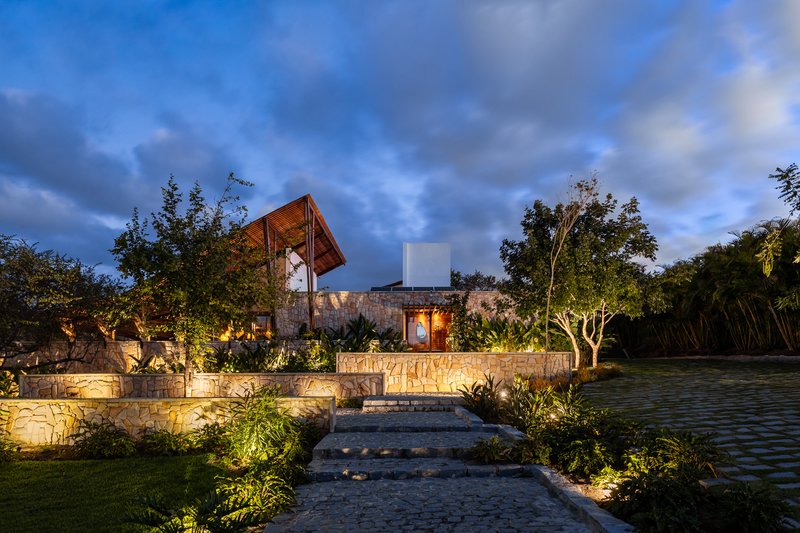
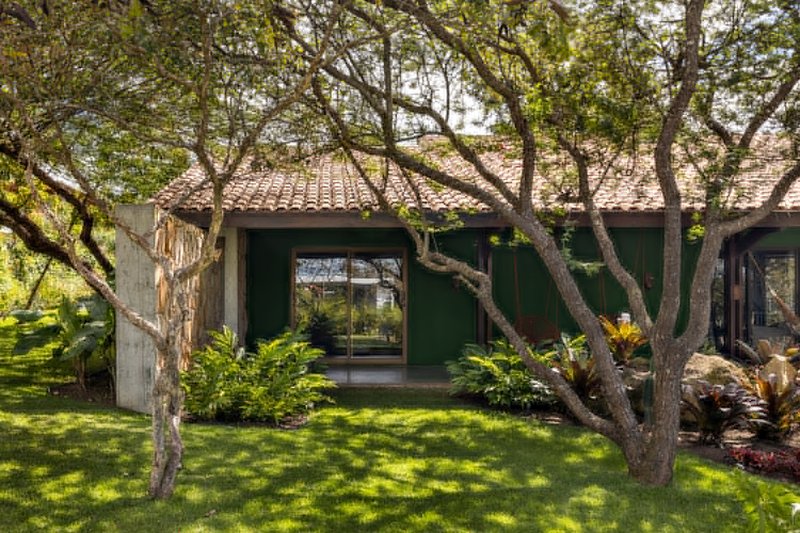
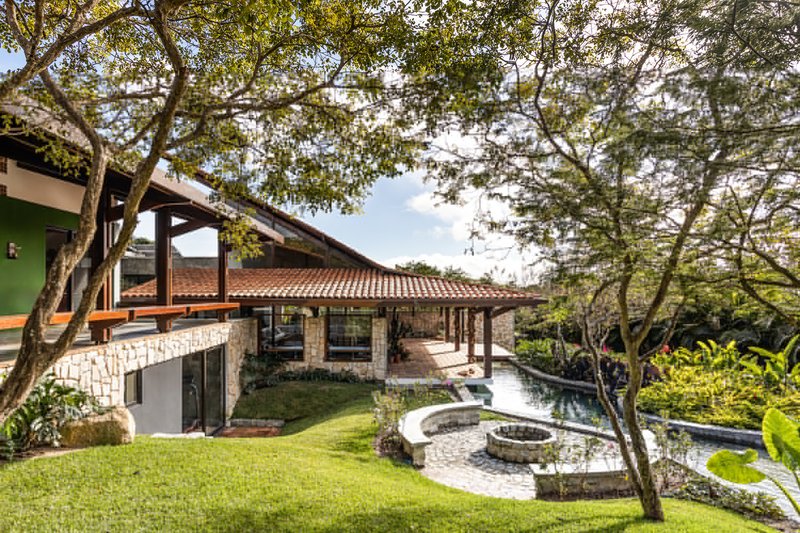
The 2,400m² plot of land provided an excellent canvas for the architectural vision. Jirau Arquitetura opted to preserve the existing trees and vegetation, seamlessly integrating them into the design. The house is set back 17 meters from the street, offering privacy while creating a natural buffer from the urban environment. This design approach creates a peaceful transition from the bustling city life to the calm interior, guiding visitors along a winding path through levels and leading them to the front door.
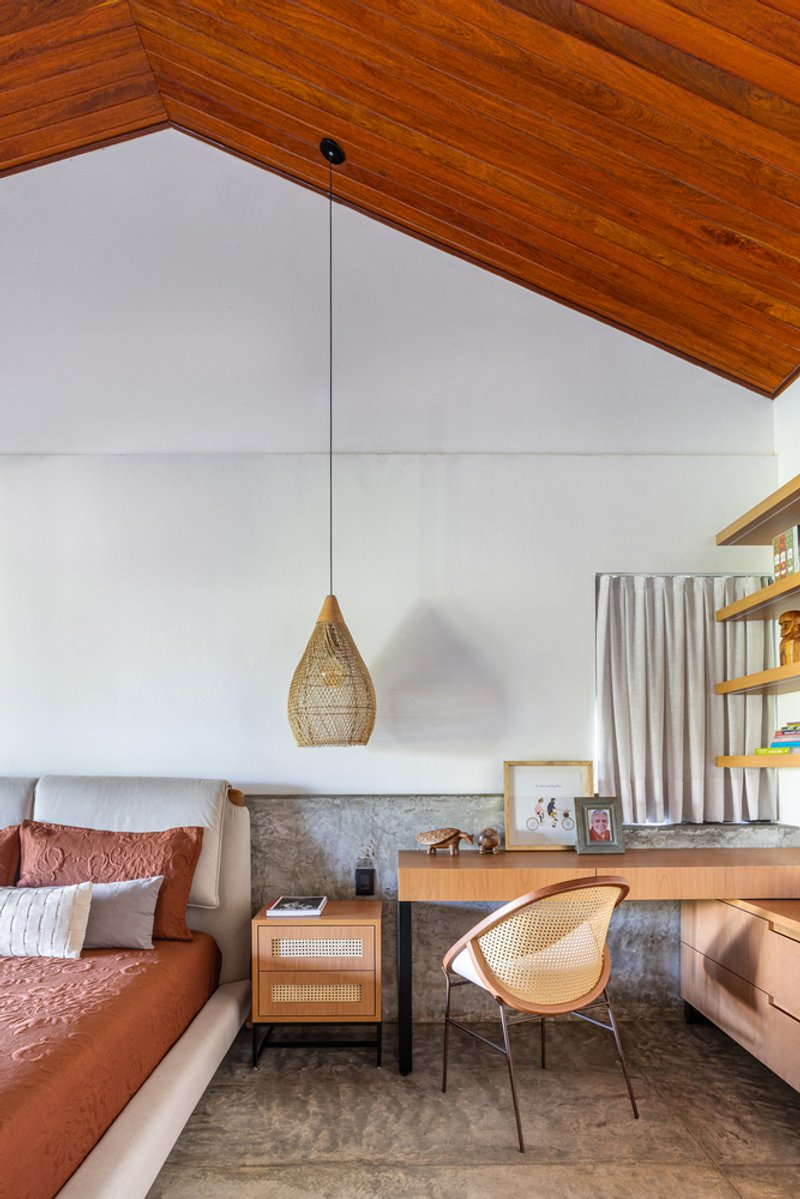
Sustainable Architecture with a Focus on Local Materials
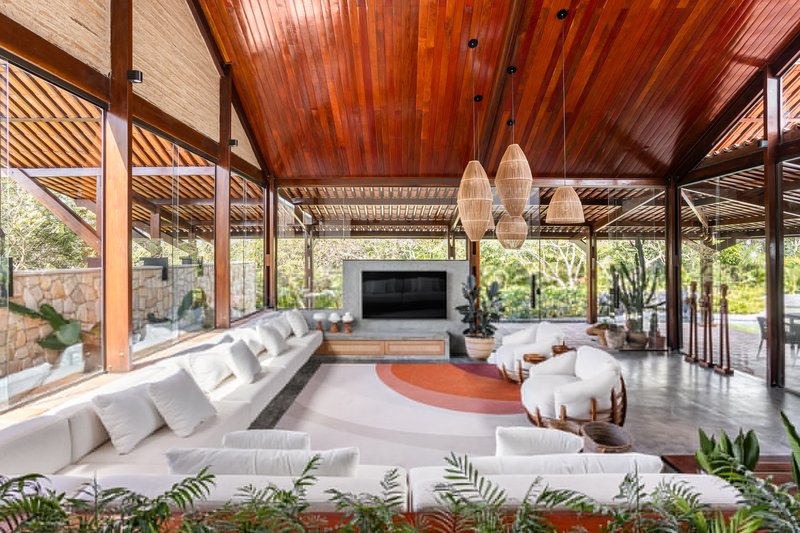
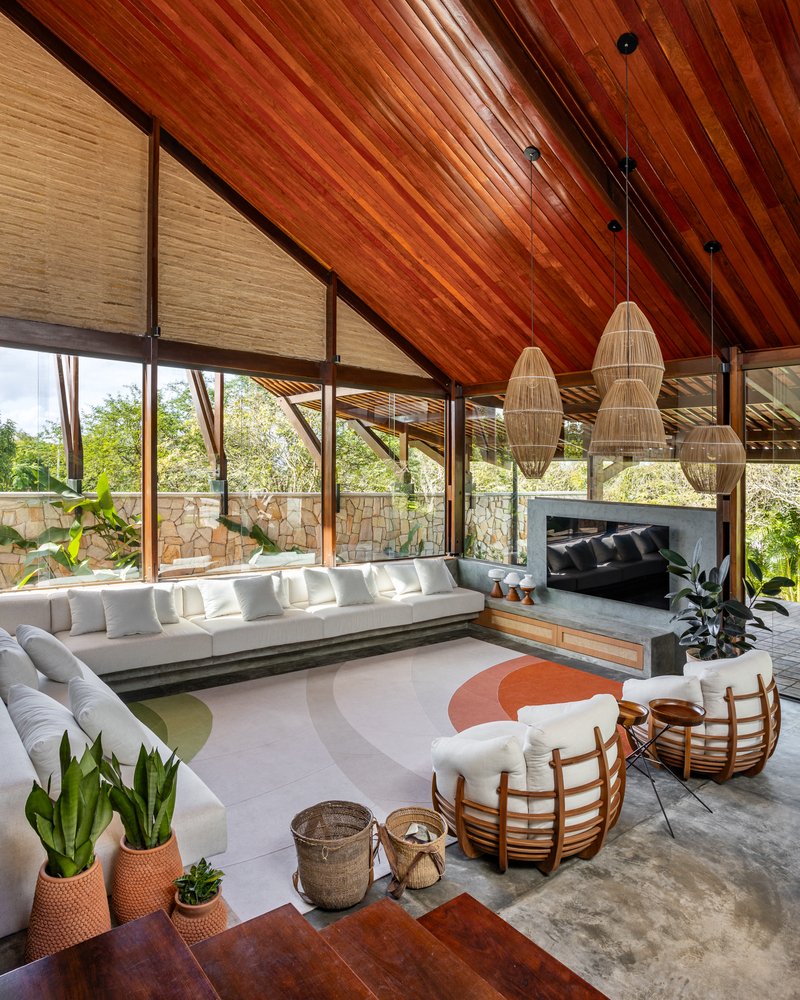
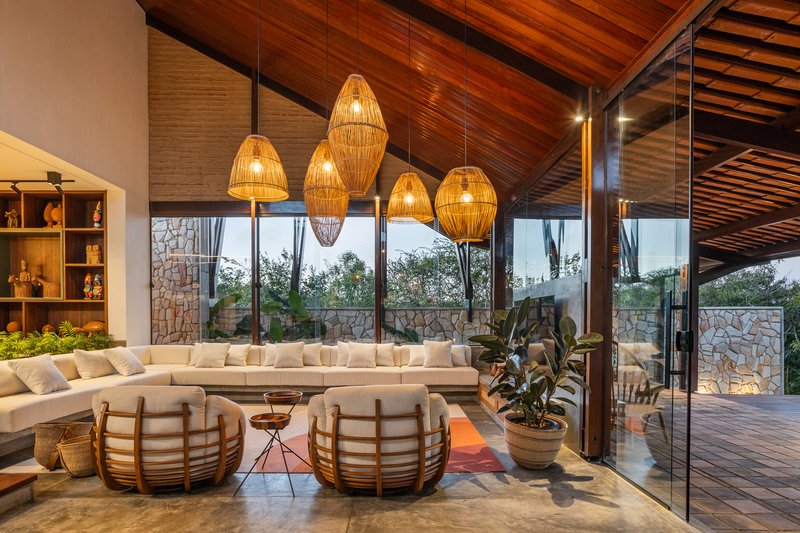
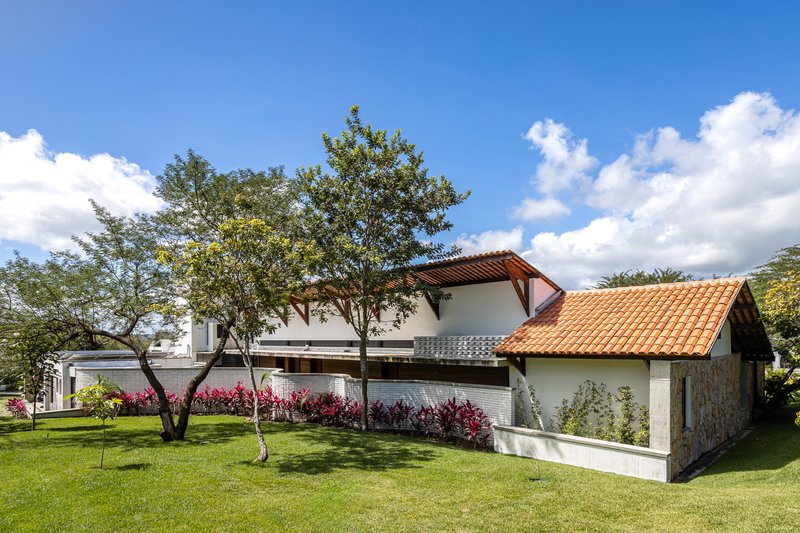
One of the key highlights of Discreet House is its use of traditional and local construction techniques, such as rammed earth (taipa) and ceramic tiles. These materials, common in the region, not only respect the local building culture but also contribute to the sustainability of the project. The living room features a sculptural hand-hewn wooden structure, with each piece carefully crafted to accommodate the sloping roof. The meticulous attention to detail is also evident in the metal couplings, which connect the wooden elements to the masonry and floors.
Sustainability plays a central role in the design. The house features an intelligent system of gutters that capture, store, and reuse rainwater, while the flat slab above the garages houses a power generation plant, contributing to the home’s energy efficiency. Cross ventilation runs throughout, ensuring natural cooling, while the abundant natural light enhances the warm, welcoming atmosphere.
Creating Spaces that Foster Connection
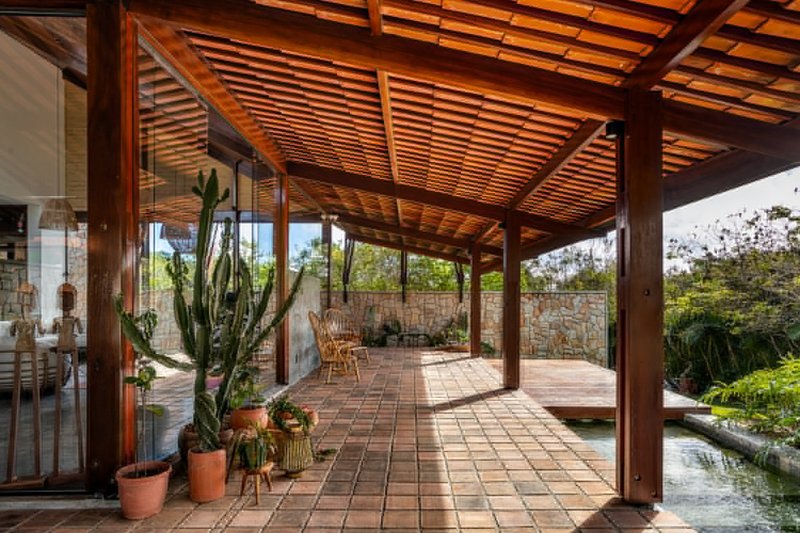
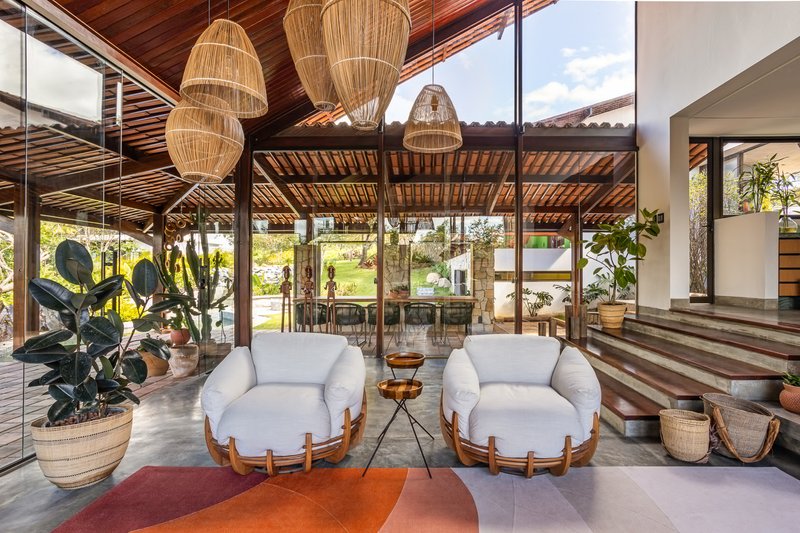
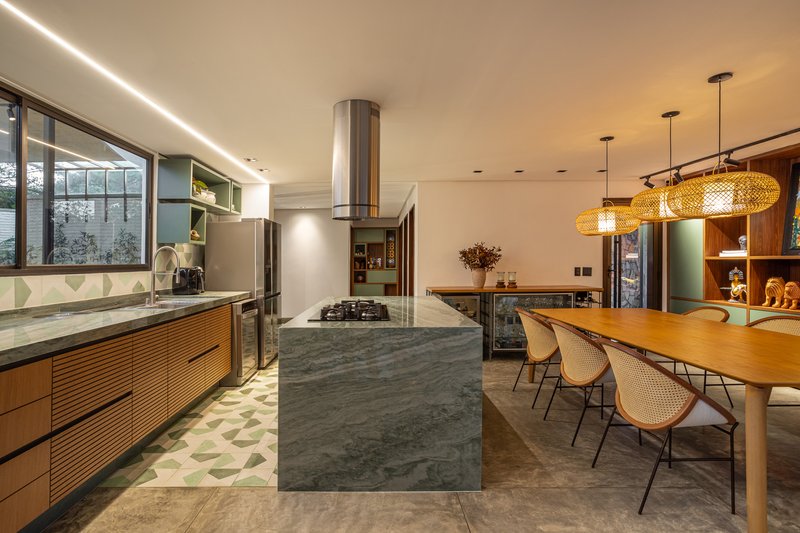
The layout of the house promotes an open, interconnected living experience. The living and dining areas are spacious and bright, with various ceiling heights and materials defining the boundaries between the spaces. A shaded porch wraps around the living room on three sides, offering the necessary intimacy and coolness required in the northeastern climate.
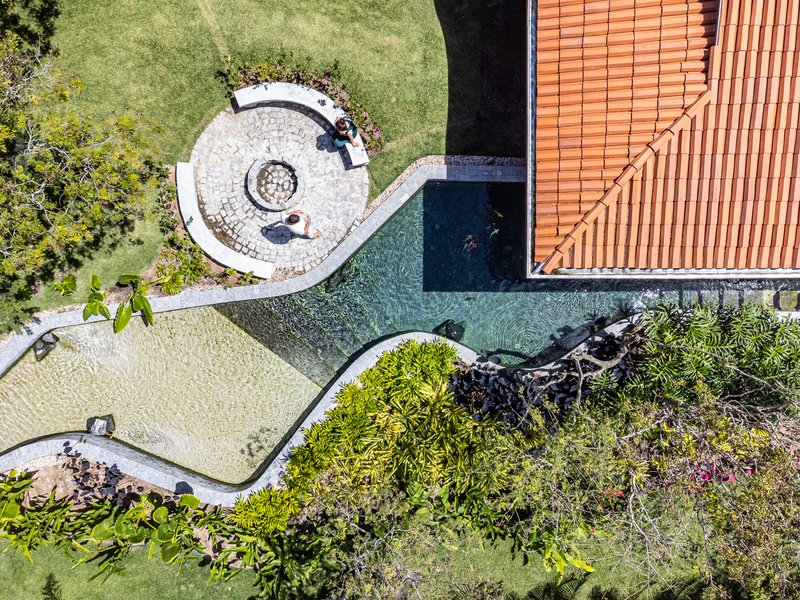
The bedrooms, designed with a large veranda at the front, echo the traditional Northeastern house's design. This veranda serves as a social space, where residents can relax, enjoy the view, and interact with nature. The garden, central to the home's design, is defined by the house on one side and a sinuous natural pool on the other. The landscape is shaped by the existing trees, creating a harmonious balance between the built and natural environments.
Unique Spatial Experiences
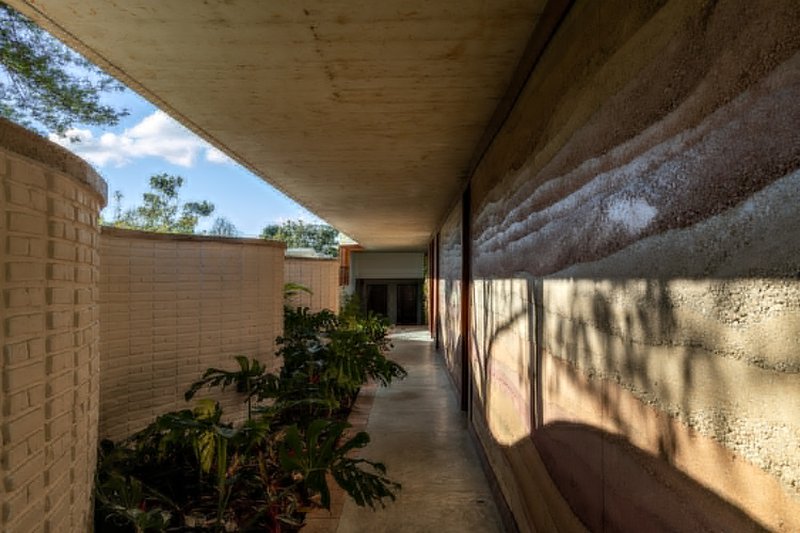
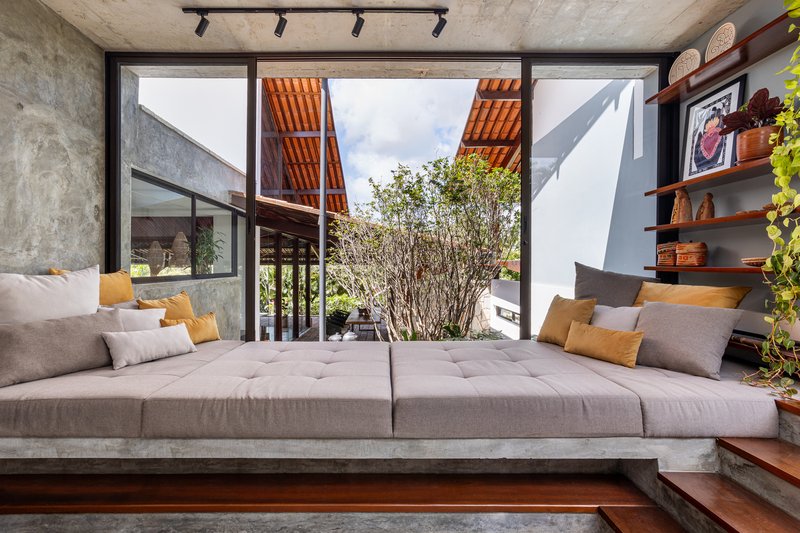
One of the most striking aspects of the design is the reading corner located between the social and bedroom areas. This special space offers a serene view of a jaboticaba tree and serves as a tranquil retreat. The open corridor, defined on one side by an imposing rammed earth wall, flows effortlessly into the garden, allowing the space to dissolve boundaries and invite the outdoors in. This design rejects the notion of the enclosed corridor, offering instead a fluid spatial experience that connects the residents with nature.
Material Choices and Craftsmanship
The house makes extensive use of clay-based materials, which play a recurring role in both the interior and exterior. The rammed earth walls in the bedrooms serve as the main structural elements of the home, while the living room features the same technique, adding texture and warmth to the space. Industrial bricks, ceramic tiles, and handmade painted bricks add to the tactile richness of the house, while cobogós (decorative ventilation blocks) in the bathrooms introduce an additional layer of detail.
The materials are not only locally sourced but also chosen for their sustainability and timelessness, ensuring the home remains both functional and beautiful for years to come.
Architecture That Embraces Life
In Discreet House, Jirau Arquitetura has crafted a space that feels like a sanctuary. The design is both sculptural and functional, with an emphasis on natural materials, local craftsmanship, and sustainability. The house is not merely a place to live—it is a place to experience life in its truest, most authentic form. From the carefully considered layout to the thoughtful integration with nature, Discreet House is a reflection of the clients' values and the architects' commitment to creating meaningful spaces.



Popular Articles
Popular articles from the community


Solar Steam: A Climate-Responsive Architecture That Redefines the Monument
A climate-responsive memorial architecture that transforms heat, decay, and time into a living system reflecting humanity’s ecological impact.
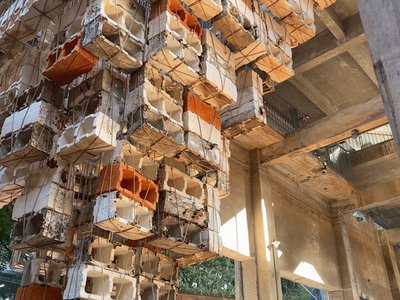
Inverted Architecture Installation by Studio Link-Arc: Exploring the Intersection of Architecture and Living Organisms
Inverted Architecture Installation by Studio Link-Arc blends mycelium, sustainability, inverted design, ecological cycles, and urban adaptive architecture in Shenzhen.
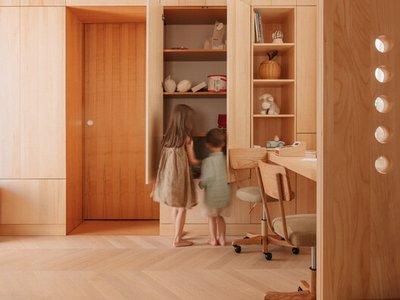
Treehouse Apartment: A Warm Timber Interior Blending Craft, Play, and Contemporary Living
Warm timber apartment with integrated treehouse, combining natural materials, craftsmanship, and playful design to create a flexible, family-oriented living environment.
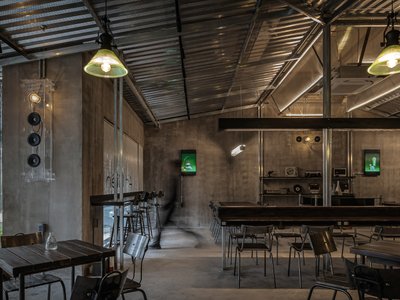
An Miên Lumière Cafe by xưởng xép, Ho Chi Minh City, Vietnam
An industrial-inspired café where layered steel and warm light create a dynamic, immersive environment shaped by reflection, depth, and perception.


Similar Reads
You might also enjoy these articles


The Ken Roberts Memorial Delineation Competition (Krob)
As the most senior architectural drawing competition currently in operation anywhere in the world, it draws hundreds of entries each year, awarding the very best submissions in a series of medium-based categories.

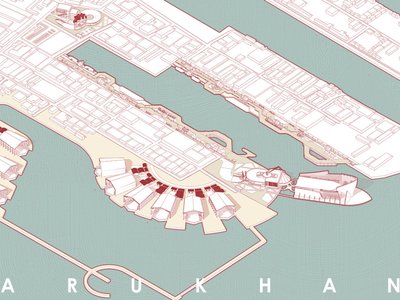
Waterfront Redevelopment and Urban Revitalization in Mumbai: Forging a New Dawn for Darukhana
A transformative waterfront redevelopment project reimagining Darukhana’s shipbreaking heritage into an inclusive urban future.

OUT-OF-MAP: A Call for Postcards on Feminist Narratives of Public Space
Rhizoma Design and Research Lab invites artists, designers, architects, researchers, and students to reflect on how feminist perspectives can reshape public space. Selected works will be exhibited in Barcelona, October 2026. Submissions open until 15 April 2026.


Documentation Work on Buddhist Wooden Temple
Architectural syncretism and cultural hybridity: A comparative study of the Buddhist temples in Chattogram Hill tracks


Explore Architecture Competitions
Discover active competitions in this discipline




The International Standard for Design Portfolios


The Global Benchmark for Architecture Dissertation Awards


The Global Benchmark for Graduation Excellence


Challenge to reimagine the Iron Throne
Comments (0)
Please login or sign up to add comments
No comments yet. Be the first to comment!