
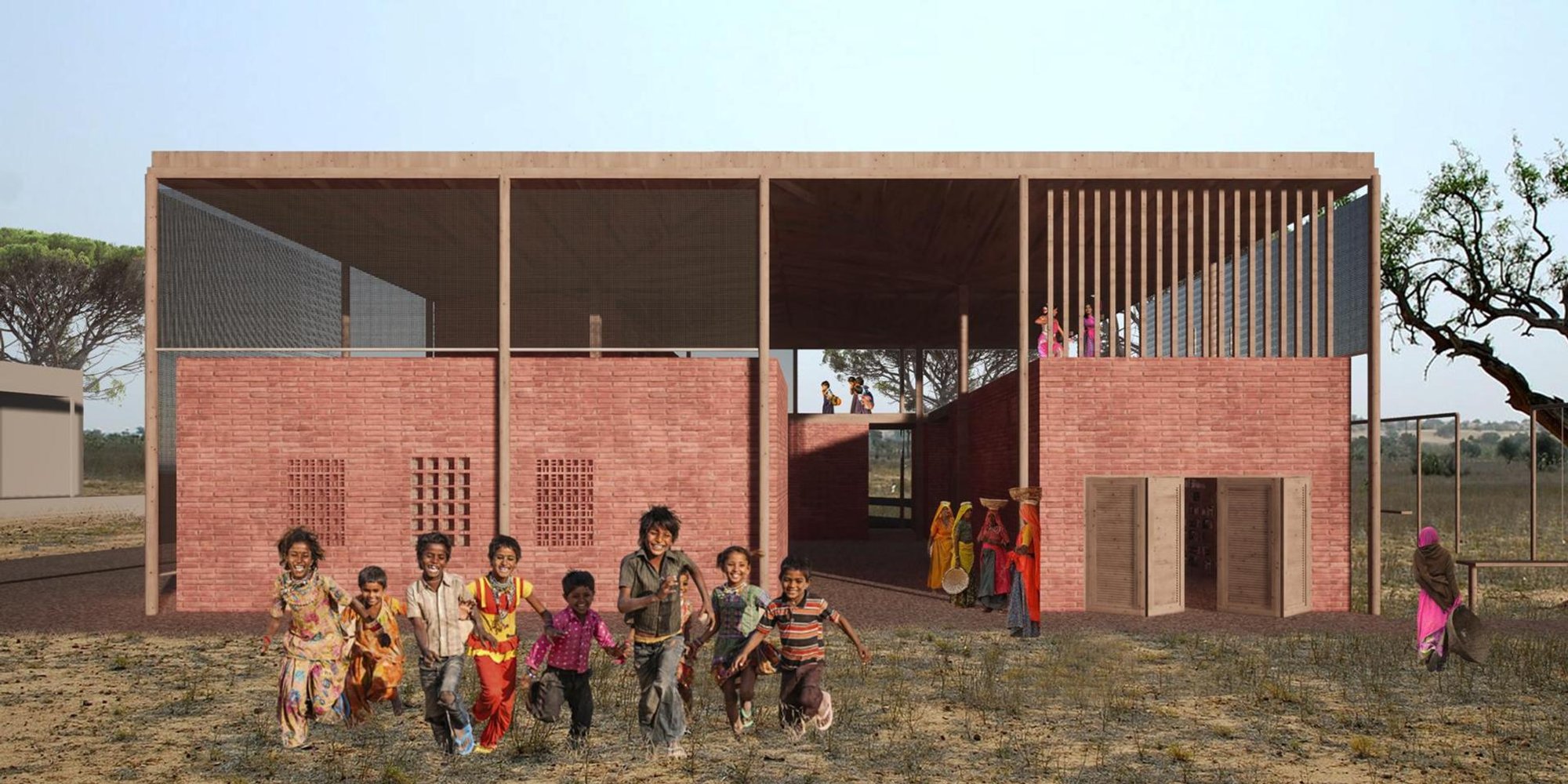
Empowering rural education: Modular library design to provide educational access to children in Rajasthan
Results for ‘Bookmark 2.0’ - Educational Building design competition out now

The world has come to a standstill during this pandemic, forcing people to lay back at home and rely on digital interfaces to fulfill their daily needs. It is not just a platform used for amusement anymore, but other aspects of life such as work, education, and even social events have been pushed to depend on technology. Despite the pandemic, the need for people to march on with their regular grind has not changed. But individuals belonging to certain sections of society are struggling more than others, to cope with this pandemic trend of online living.
Education has started moving forward through a different medium, but those who are far from it are left stranded. For the ones that depended on public libraries and schools to access education, transferring online has been a struggle. Children are made to depend on digital classroom methods and some of them belonging to the lower-income class, do not have access to the Internet or even a basic cell phone network.
They are the ones getting the short end of the stick and are forced to discontinue or simply sit back and wait for the unpredictable pandemic to be over.
The shift to online work and education trend is said to have been coming for a long time. The remotest villages of every country, however, still remain unreported as to how they are handling the disconnect from their regular lifestyle. The majority of the students in remote villages are not able to continue with their online studies, unlike their peers due to their inability to acquire devices needed to access them.
The lack of resources is a major issue that is propelled by the loss of jobs and income owing to the pandemic. With lockdowns, mandatory school closures have been announced for an indefinite period. Self-learning, as the last resort, is not possible due to the insufficient infrastructure in rural areas. These actions affect their mental health and put their future in jeopardy.
Education is often considered a luxury for people for the underprivileged, and the pandemic adds even more weight to these limitations.
How can design tip the balance in the remote regions with setups that empower children when the pandemic is over?
How can design create learning hotspots within remote regions that promote learning for the willing? When schools close down, how can this vast information pool available to us reach these under-served regions?
Brief: The goal was to design a modular reading and learning space that is safe, compact, and socially conscious, built for children in a rural area.
The facility is supposed to have a design scheme that is easy to use and durable in the long run. The context of the rural site requires attention since its economic, socio-cultural, and environmental aspects must be responded to. Local materials and techniques must be used to design in a way that resonates with the people of the locality. The construction must be agile and independent with minimal resource requirements, for it to be an economical design.
The aim of the design was to promote education and its access to the local community. The rural library will have more extensive activities that can be accommodated in multi-functional spaces. It must be a modular design that can be replicated in similar contexts around the world.
The jury for the competition consisted of esteemed designers, professionals, and academicians from around the world. The Lead Jurors for the competitions were as follows:
Manoj Patel, Principal Architect, Manoj Patel Design Studio, India
Meeta Jain, Founder/Chief Architect, Meeta Jain Architects, India
Sandeep Khosla, Founder & Principal, Khosla Associates, Bangalore, India

Some of the Best of competition projects are as follows:
Winning Project: Rural Bookmark
By: Justyna Pater
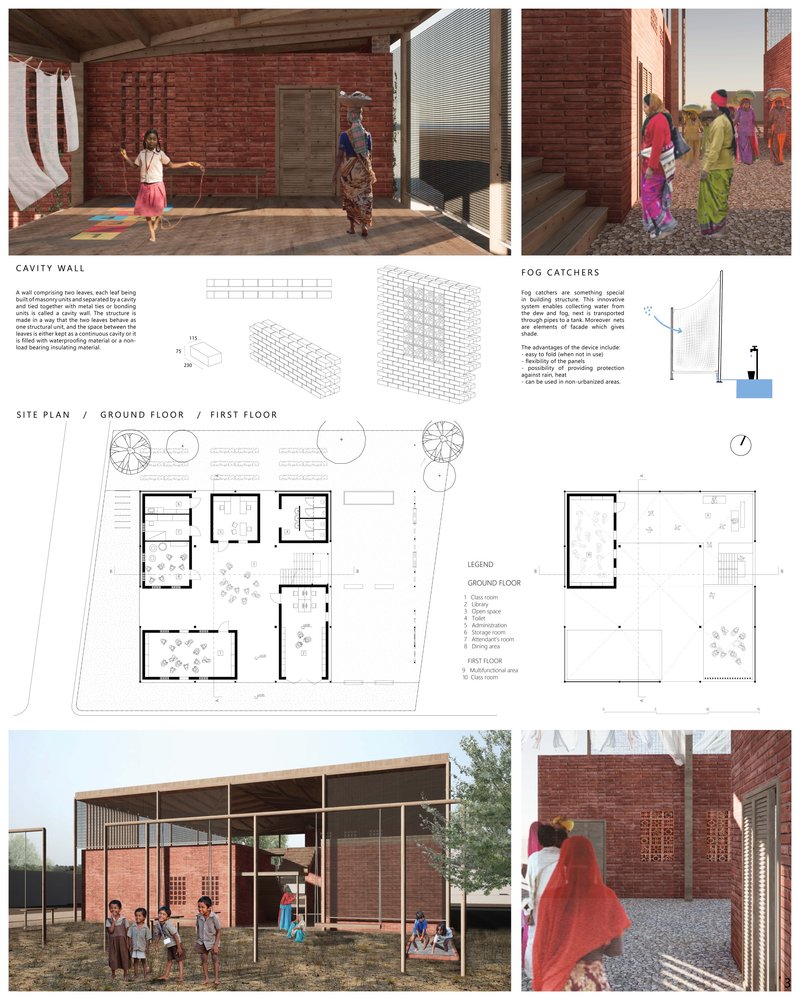
Fig: 1 Site Plan, Interior image and exterior image
Description: This is a safe place in the rural areas that makes opportunities to develop for everyone. The project idea is to create a library for children in rural regions of India, which will provide them with access to both analog and digital educational material. Due to the increasing development of technology, peoples in the poorest regions of the country are without a source of knowledge, which is often only available in digital form.
-----------------------
People’s Choice: Dislocate
By: Alisha Menezes, SHRUTI SAHASRABUDHE, Bhumika Suthar & Ronak Shahm
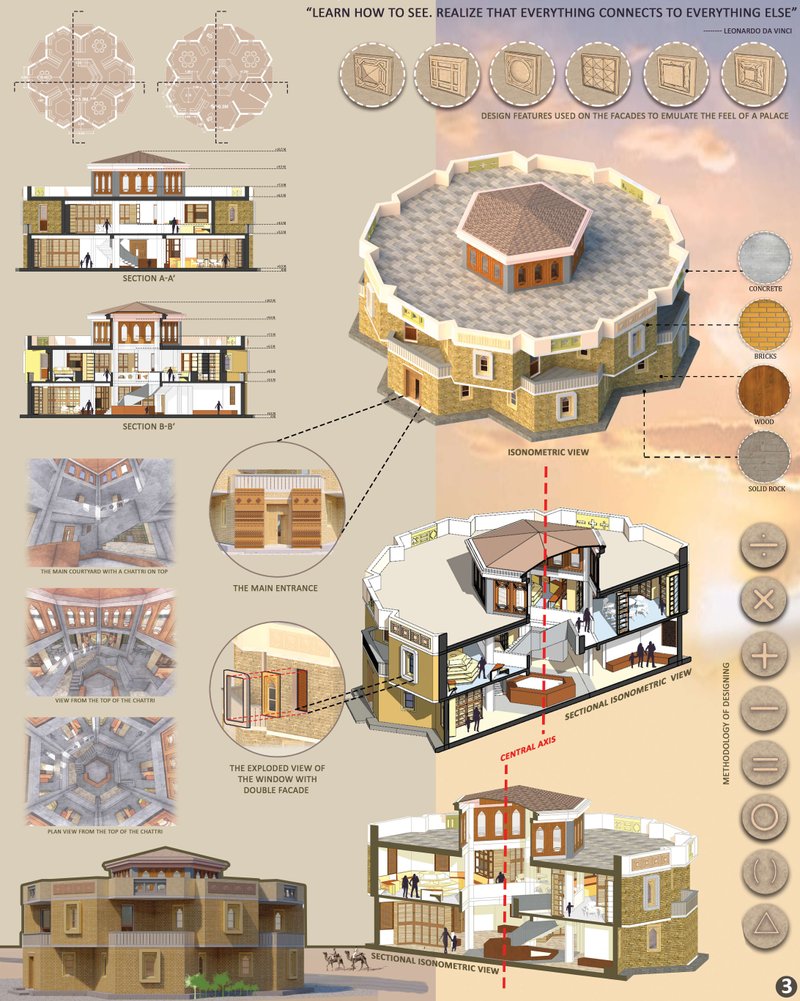
Fig: 2 Section Plan and sectional isometric view
Description: The “DIS-LOCATE” aims to foster a sense of learning through the creation of an interactive learning space. The aim was to create spaces that invite children to explore and learn simultaneously and stimulate them to engage in “reading” as a fun activity, irrespective of language.
----------------------
Editor’s Choice: Jharokha
By: Smriti Sharma, Anannya Dagadkar, Akshat bhagat & Suvan Bhagat
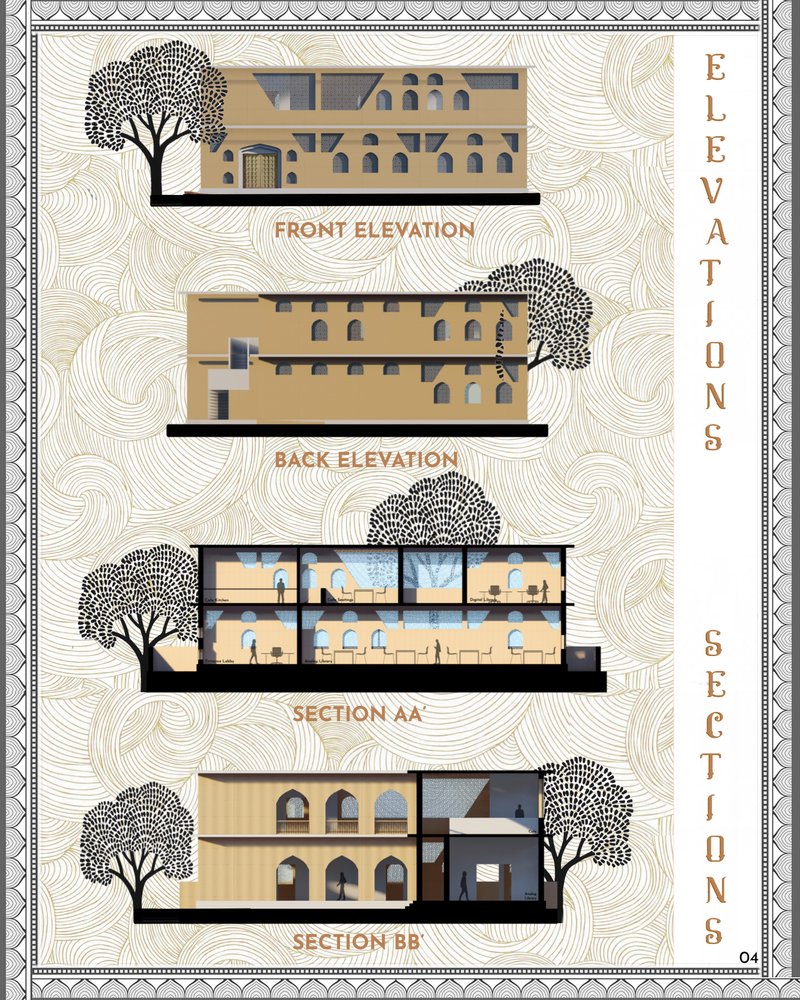
Fig: 3 Sectional elevation
Description: An education hub that sticks to the roots of Rajasthani Culture and reflects the achievements in astronomy that old structures from Jantar Mantar are reputed for. Jharokha is an education hub that sticks to the roots of Rajasthani Culture and reflects the achievements in astronomy that old structures from Juntar Mantar are reputed for.
------------------------
Editor’s Choice: Aarohan
By: Manasi Talkar
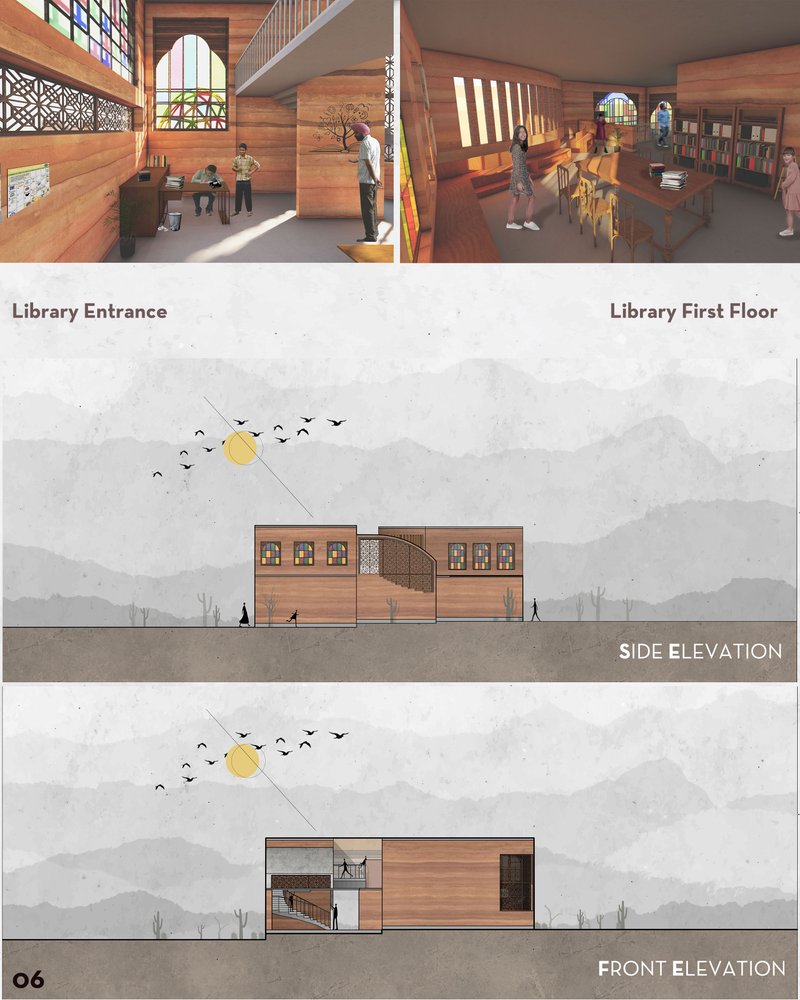
Fig: 4 Elevational plan and interior view
Description: A library where learning is an experience. The conceptual idea is adhering to the main objective of the project, which is to design a library for rural children to overcome the difficulties of online education due to the unavailability of resources. The concept ‘Aarohan’ - means to ascend towards a destination, this library serves that purpose. The library ‘Aarohan’ is a space with dynamic as well as subtle features - just like a child’s mind.
------------------------
Editor’s Choice: INTERWEAVE
By: Shugeetha Chandran, Hebah Fathima, Shamana M & Deeksha Gopal
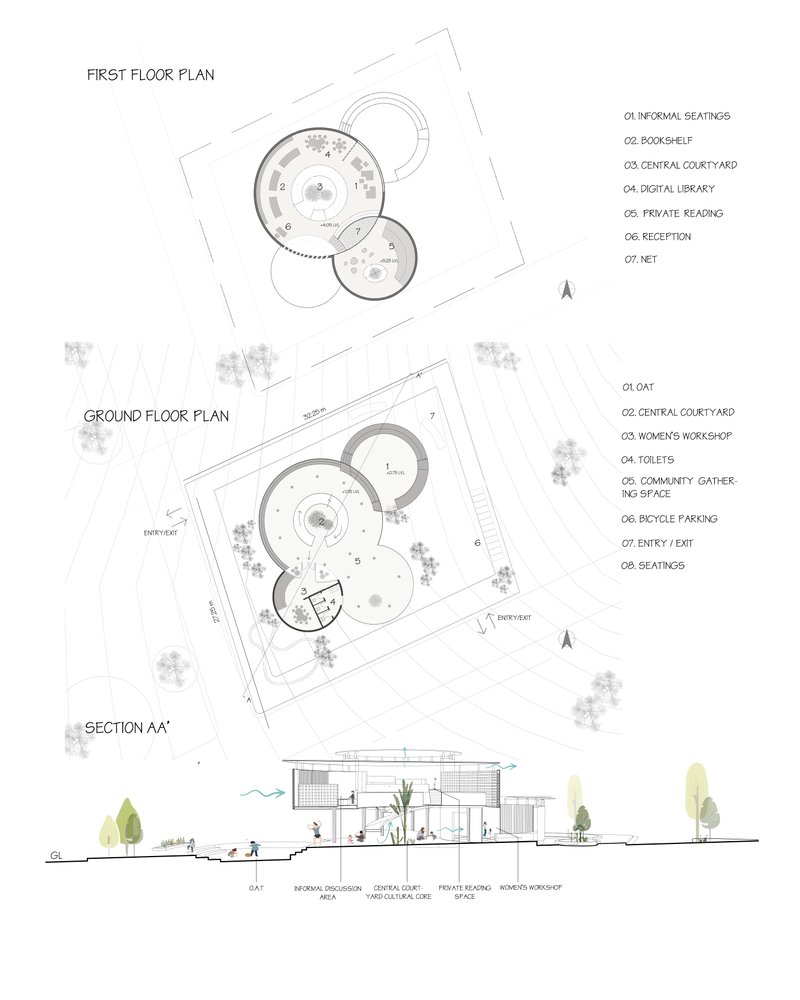
Fig: 5 Section plan
Description: Interweave is a modular and compact library design that is not just a learning forum, but a platform where people exchange ideas, knowledge and where people are given the freedom to express themselves. The project is an amalgamation of knowledge from all aspects of life-like cultural, social, and academics.
------------------------
Editor’s Choice: MILAN
By: Saideep Goud, Bhati Divyansh, Gaddale Sushma & Duvvuru Manikanth Reddy
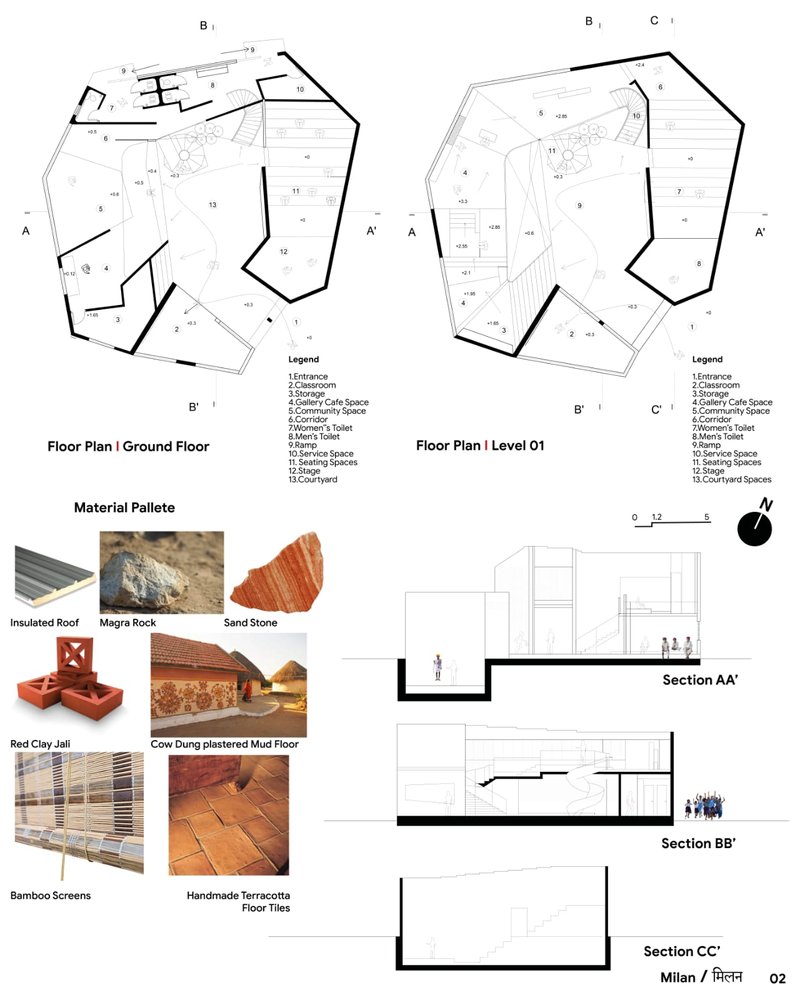
Fig: 6 Floor and section plan
Description: The Role of the Rural Public Library in Community Development and Empowerment It is believed that a rural library has an advantage over other communication channels such as media and printed materials in that it can deliver highly personalized services to the village people.
------------------------
Follow us on social media: Facebook | Instagram | LinkedIn | Twitter | Youtube
References (3)



Popular Articles
Popular articles from the community


Solar Steam: A Climate-Responsive Architecture That Redefines the Monument
A climate-responsive memorial architecture that transforms heat, decay, and time into a living system reflecting humanity’s ecological impact.
A Contemporary Take on Iranian Residential Architecture
A modern interior design in Mashhad that reinterprets brick, light, and spatial flow to create a warm, contemporary residential architecture.
Atelier Macri Concept Store Interior Design by CASE-REAL
Atelier Macri store features a "ko" counter, walnut wood details, cork displays, blending retail, gallery, and seamless customer experiences.
An Miên Lumière Cafe by xưởng xép, Ho Chi Minh City, Vietnam
An industrial-inspired café where layered steel and warm light create a dynamic, immersive environment shaped by reflection, depth, and perception.


Similar Reads
You might also enjoy these articles
ORACLE: A Sustainable Memorial Architecture Responding to Climate Urgency
A sustainable memorial architecture in Cairo that transforms climate urgency into spatial experience, urging collective reflection and action
Suspended: Reimagining Paris Through Adaptive Reuse Architecture
A suspended intervention transforms abandoned Paris railways into inclusive, adaptive reuse architecture bridging heritage, mobility, and public life.
Solar Steam: A Climate-Responsive Architecture That Redefines the Monument
A climate-responsive memorial architecture that transforms heat, decay, and time into a living system reflecting humanity’s ecological impact.
Rolly: A Modular Approach to Urban Regeneration Architecture on Paris’ Petite Ceinture
A modular urban regeneration architecture project transforming Paris’ abandoned railway into a dynamic, movable and community-driven public space

Explore Educational Building Competitions
Discover active competitions in this discipline




The Global Benchmark for Architecture Dissertation Awards


Challenge to design public laboratory
Comments (0)
Please login or sign up to add comments
No comments yet. Be the first to comment!