
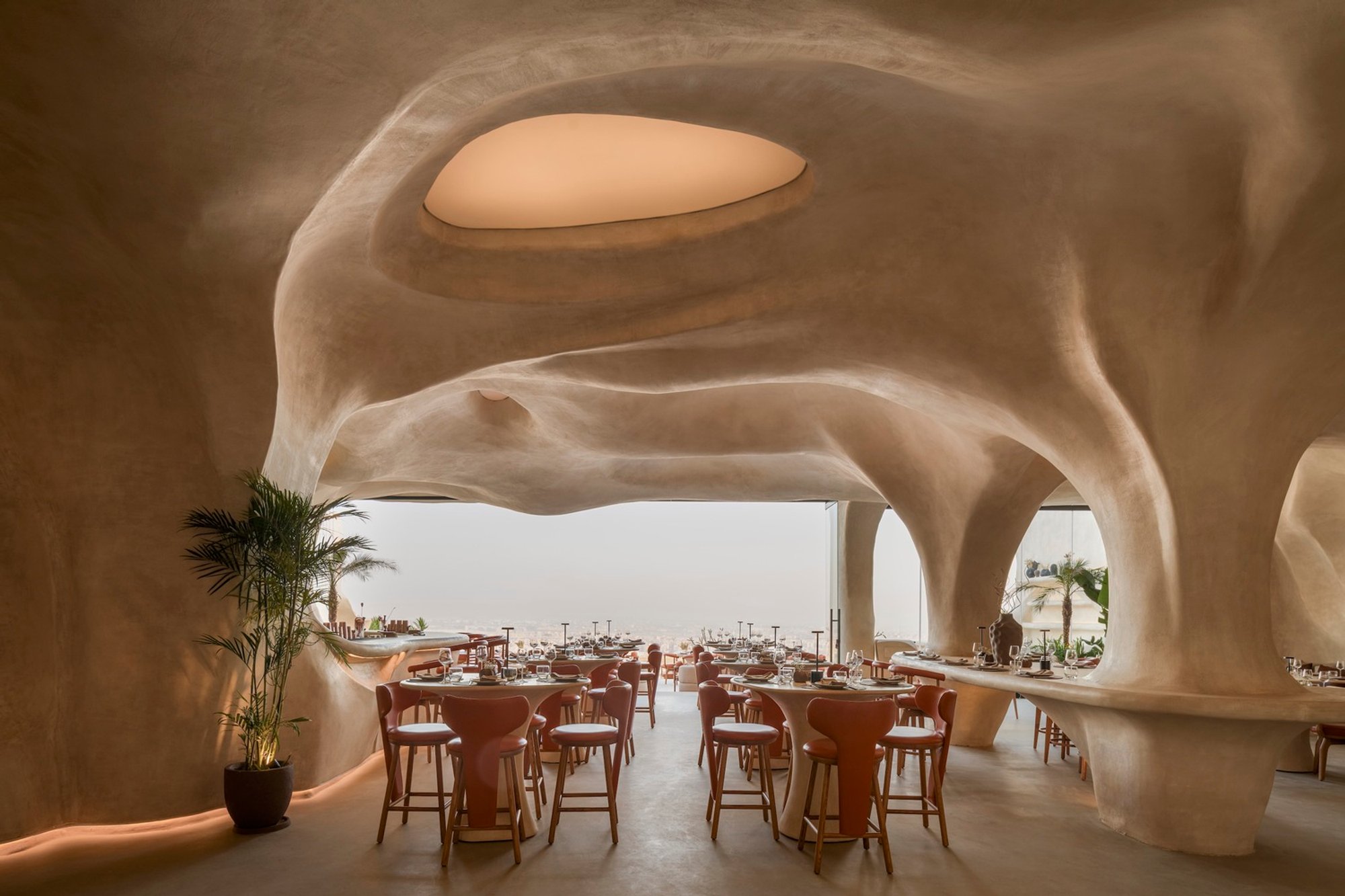
ESCĀ CUEVA Restaurant by Badie Architects: A Sculptural Interior Redefining Dining in Egypt
Sculptural restaurant interior blends organic curves, cave-like forms, and immersive lighting, transforming dining into a sensory, architectural experience in Egypt.

A New Spatial Language for Contemporary Restaurant Design
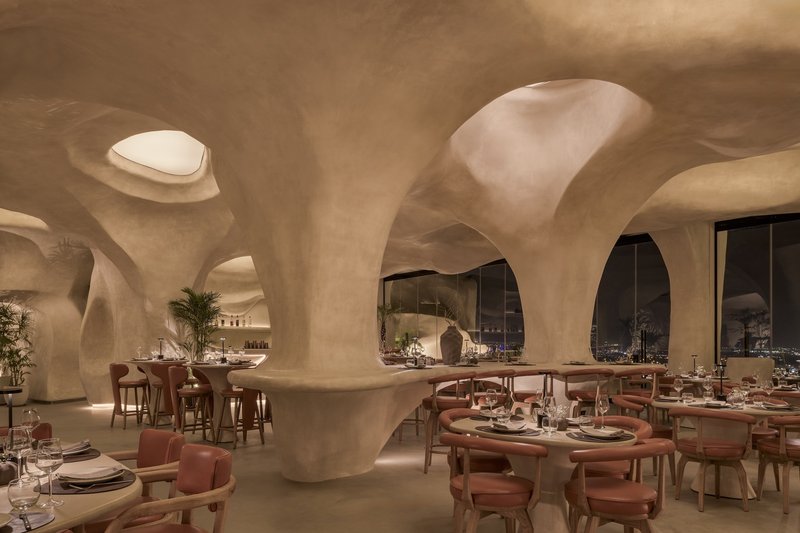
ESCĀ CUEVA Restaurant, designed by Badie Architects, introduces a bold and immersive approach to restaurant interior architecture in Egypt. Completed in 2024 and spanning 500 square meters, the project reimagines the dining environment as a sculpted, sensory experience that dissolves conventional architectural boundaries. Shortlisted for the Restaurant and Bar Design Awards and featured in AD Middle East, the restaurant stands as a compelling example of how architecture can actively shape human behavior and perception.
Located in Egypt, ESCĀ CUEVA is not merely a place to dine but an architectural environment that invites guests to disconnect from the external world and engage with space on a visceral level.
Organic Inspiration and the Human Body as Architecture
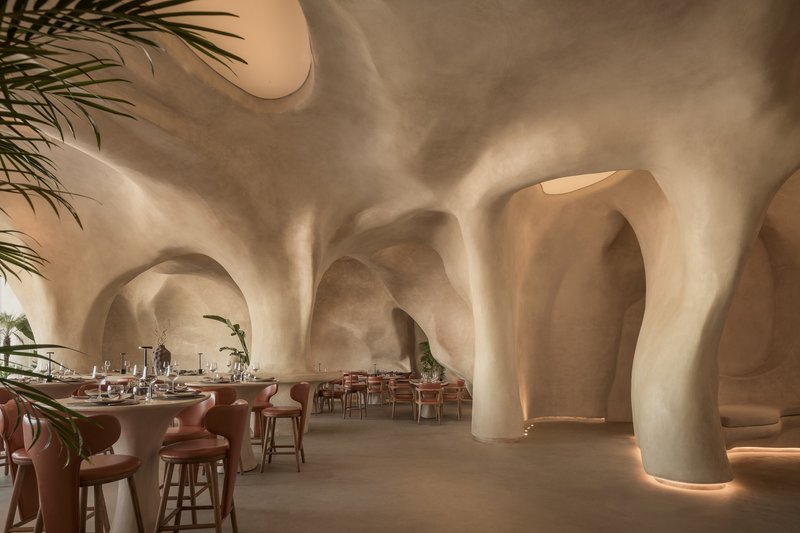
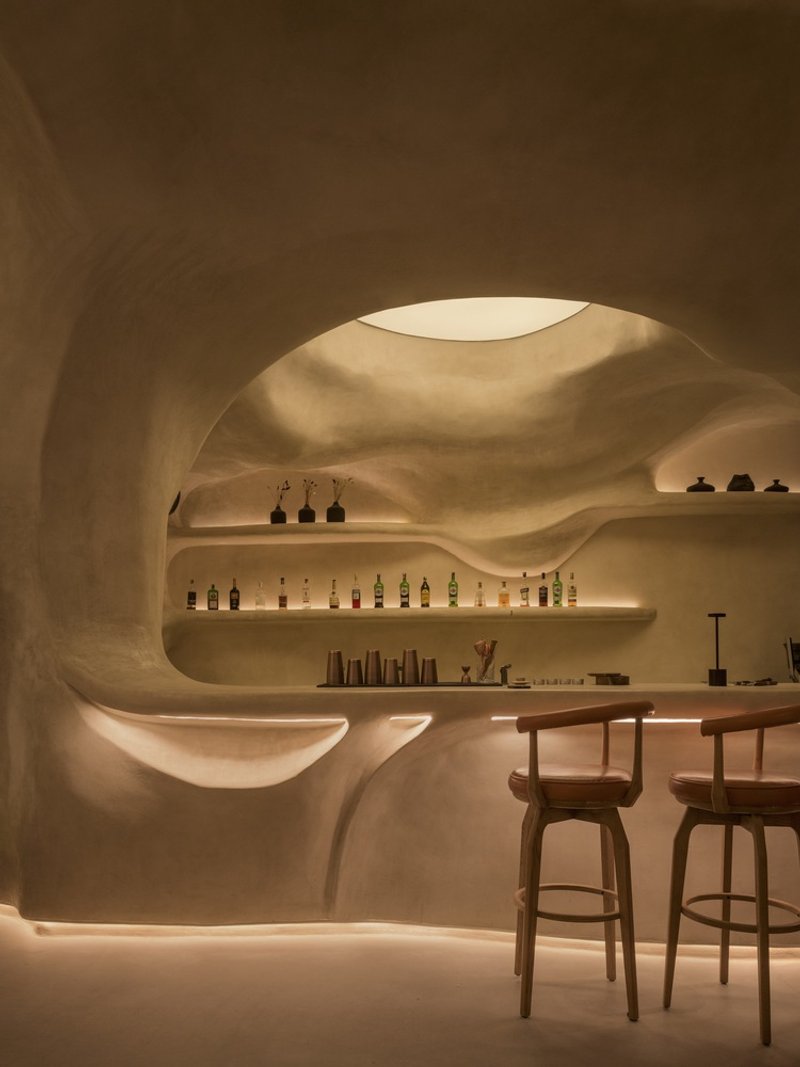
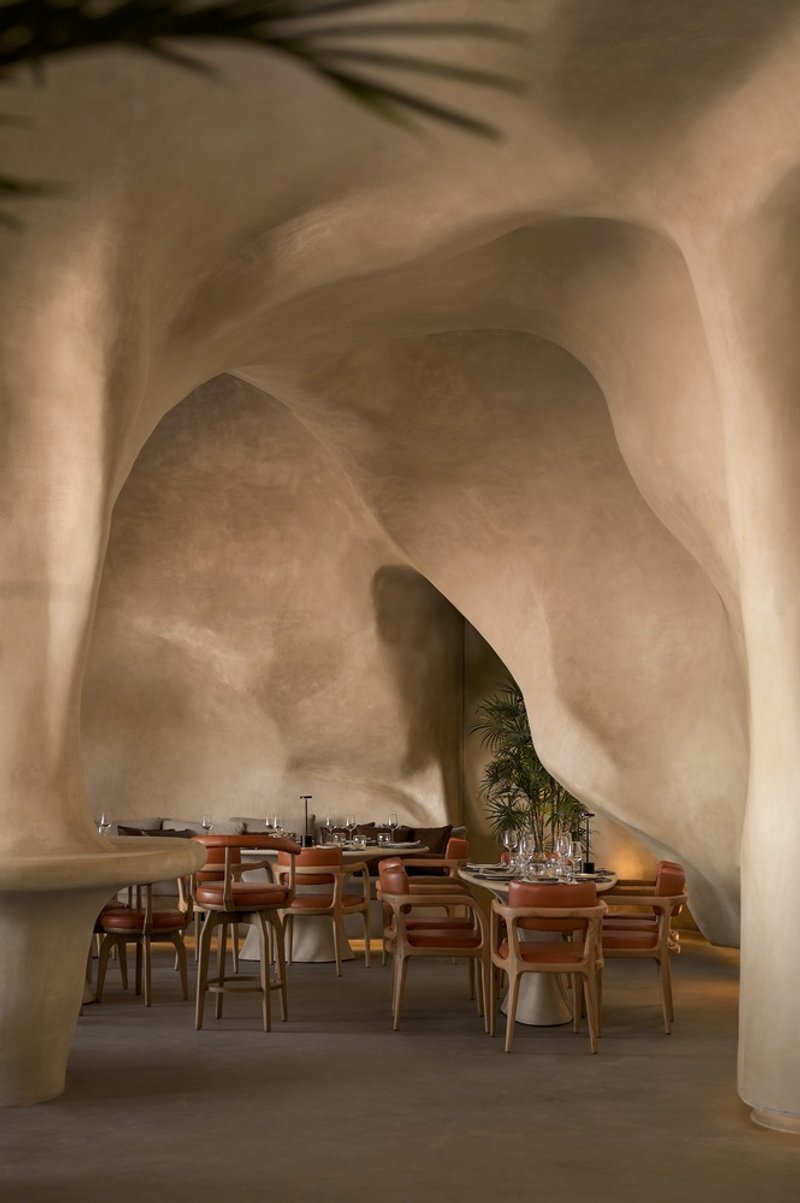
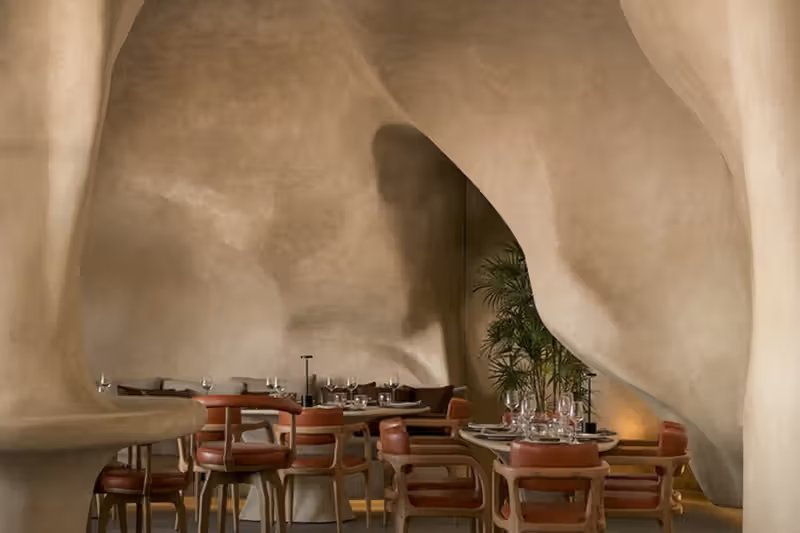
The design concept draws its primary inspiration from the organic curves and complexity of the female body, translating natural forms into a rationalized architectural language. Rather than applying ornamentation, Badie Architects embed curvature, softness, and flow directly into the spatial structure. This approach transforms the restaurant’s previously rigid Cartesian layout into a fluid, cave-like interior, where architecture feels carved rather than constructed.
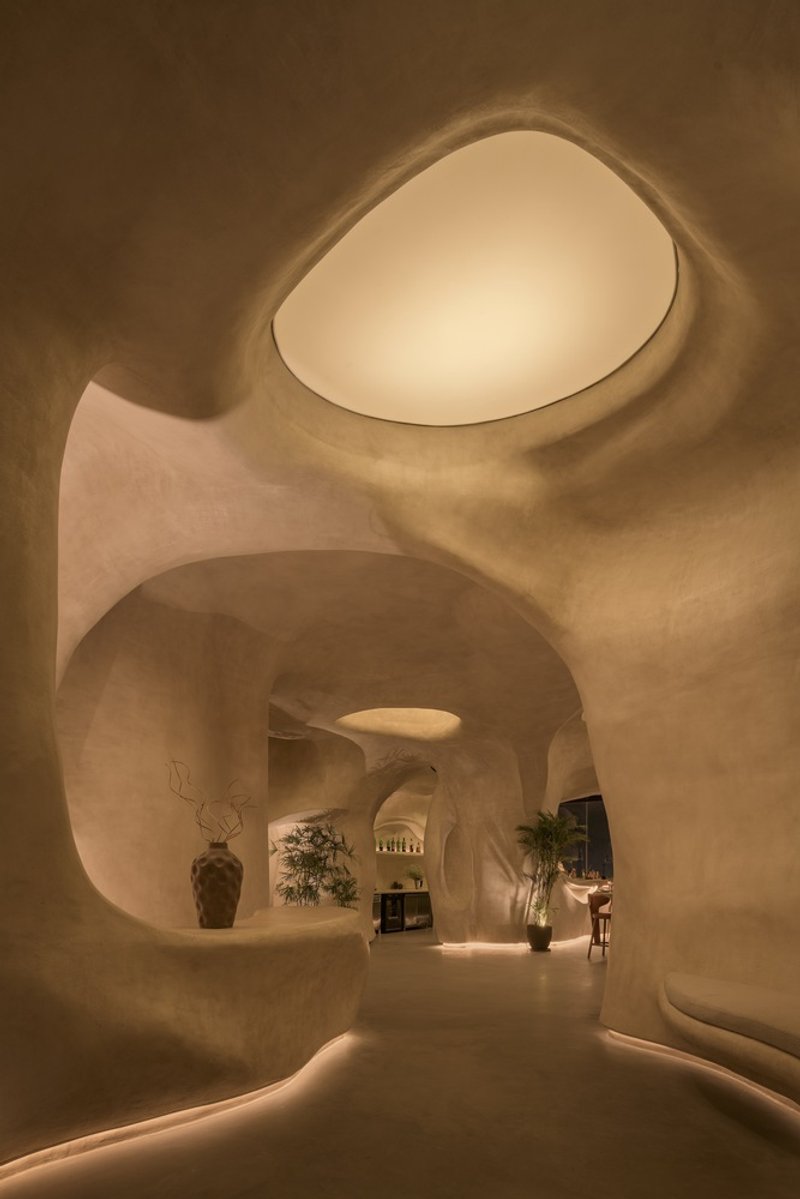
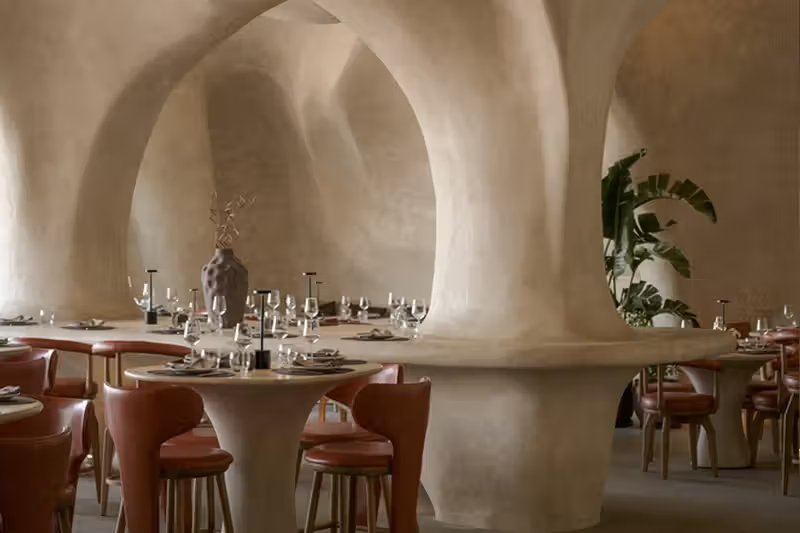
Through continuous surfaces, arches, depressions, and creases, the interior blurs distinctions between walls, ceilings, and furniture. The result is a space that feels simultaneously intimate and expansive, encouraging calm, curiosity, and sensory awareness.
Blurring Boundaries Between User and Space
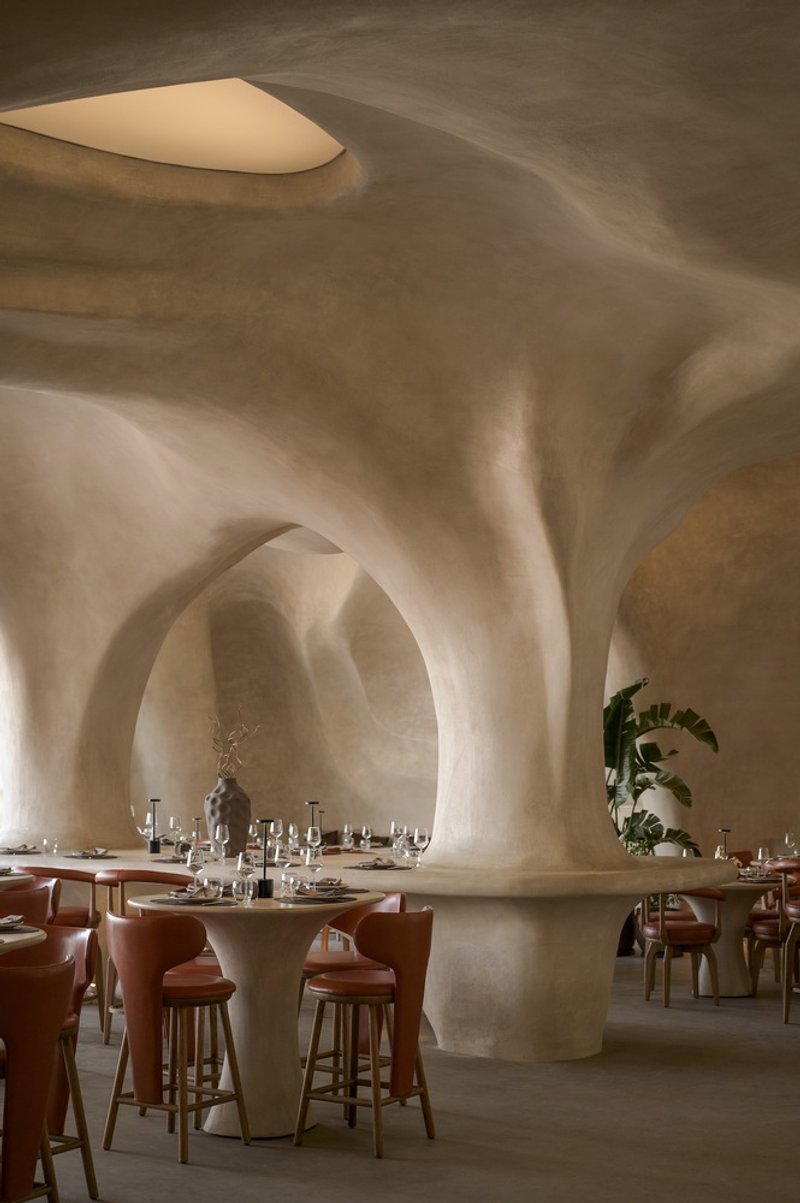
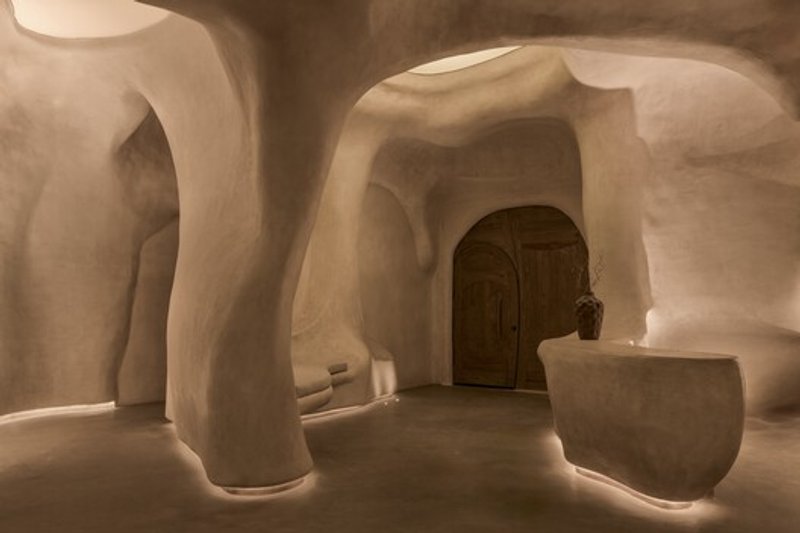
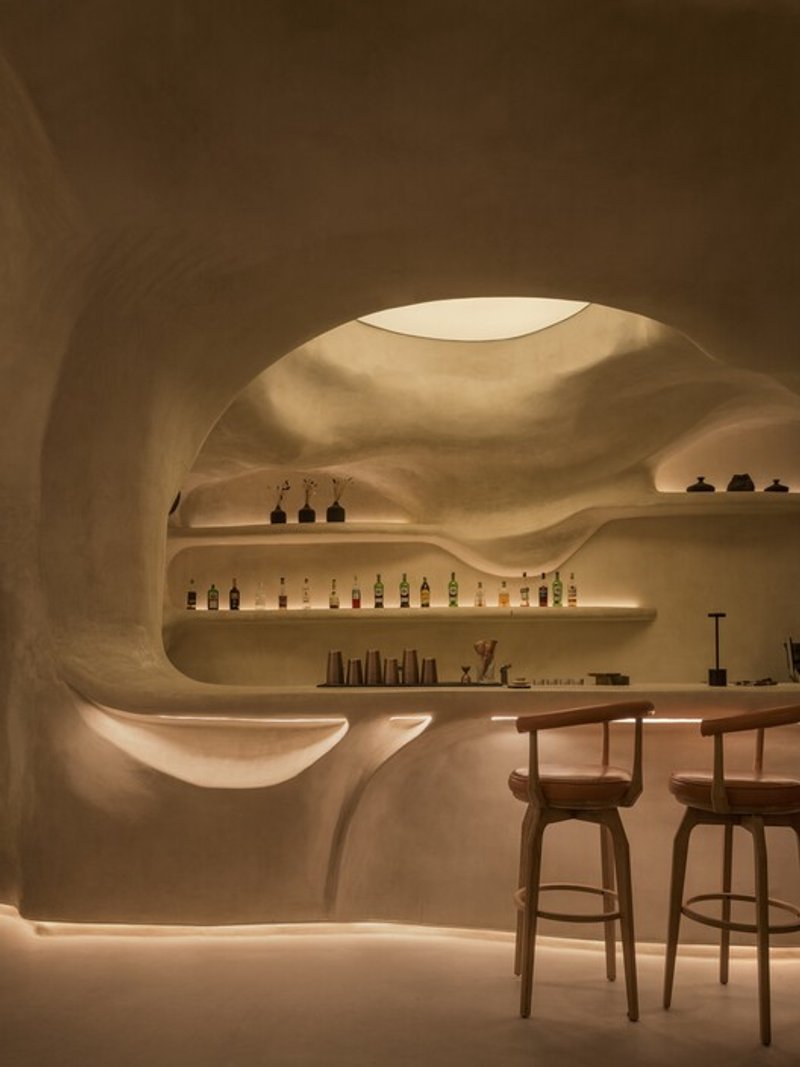
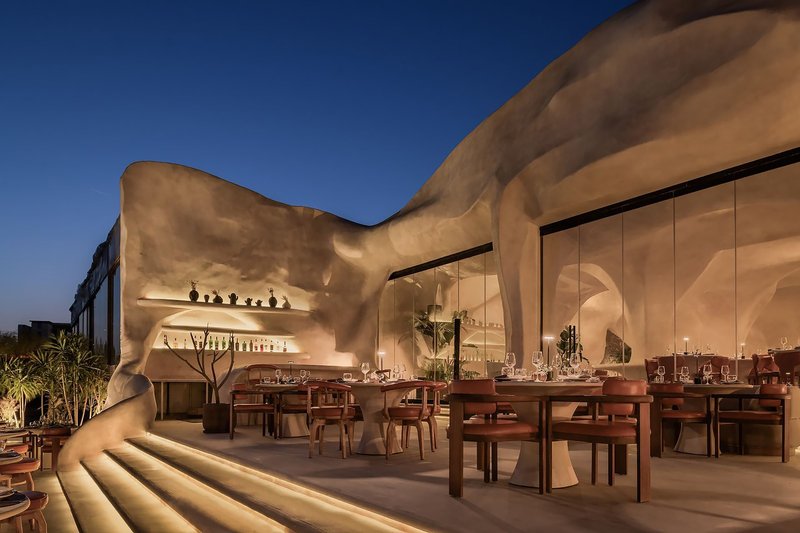
One of the defining qualities of ESCĀ CUEVA Restaurant is the way it dissolves the separation between the user and their surroundings. The sculpted interior envelopes guests, creating a sense of enclosure that enhances focus and presence. Carefully positioned artificial lighting accentuates the curvature of surfaces, highlighting textures and depth while reinforcing the organic narrative.
This choreography of form and light establishes visual rhythm and spatial continuity, generating a tranquil yet powerful atmosphere that contrasts sharply with conventional restaurant interiors.
Computational Design and Advanced Fabrication
The realization of ESCĀ CUEVA relied heavily on advanced 3D modeling and computational design tools. Multiple digital platforms were used to refine the organic geometry, allowing the architects to simulate natural processes such as erosion and weathering. These influences are visible in the creases, folds, and textured surfaces that give the space its tactile quality.
The digital model became the foundation for the project’s steel exoskeleton, which defined the structural framework of the interior. This skeleton was fabricated and assembled by local skilled artisans, reinforcing the connection between advanced technology and traditional craftsmanship.
Materiality, Craft, and Construction Precision
Once the steel structure was completed, layers of stucco were applied to achieve seamless continuity across surfaces. Constant coordination between designers, engineers, and builders ensured that material limitations were respected while preserving the integrity of the original design intent.
By anticipating construction challenges early in the process, Badie Architects minimized on-site modifications, allowing for a smooth transition from digital concept to built reality. This precise execution highlights the project’s success in bridging the gap between computational design and physical construction.
A Transformative Dining Experience
ESCĀ CUEVA Restaurant demonstrates the transformative power of architecture on human behavior. Guests’ initial reactions upon entering—marked by curiosity, slowed movement, and heightened awareness—underscore how spatial design can influence emotional and physical experience. The interior encourages disconnection from external distractions, fostering deeper engagement with food, conversation, and atmosphere.




Popular Articles
Popular articles from the community


Solar Steam: A Climate-Responsive Architecture That Redefines the Monument
A climate-responsive memorial architecture that transforms heat, decay, and time into a living system reflecting humanity’s ecological impact.
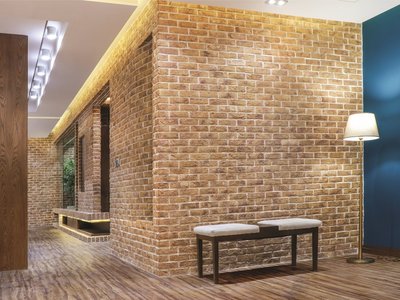
A Contemporary Take on Iranian Residential Architecture
A modern interior design in Mashhad that reinterprets brick, light, and spatial flow to create a warm, contemporary residential architecture.
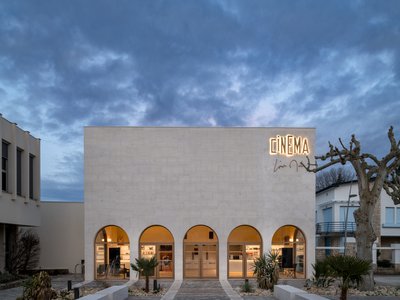
Louis Malle Cinema: A Limestone Cultural Landmark Revitalizing Community Life in Prayssac
Limestone cinema extension with public forecourt, blending heritage and modern design to create flexible cultural spaces and strengthen community interaction.
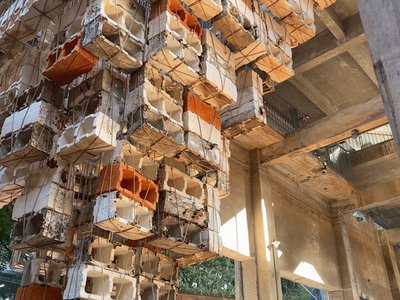
Inverted Architecture Installation by Studio Link-Arc: Exploring the Intersection of Architecture and Living Organisms
Inverted Architecture Installation by Studio Link-Arc blends mycelium, sustainability, inverted design, ecological cycles, and urban adaptive architecture in Shenzhen.


Similar Reads
You might also enjoy these articles


The Ken Roberts Memorial Delineation Competition (Krob)
As the most senior architectural drawing competition currently in operation anywhere in the world, it draws hundreds of entries each year, awarding the very best submissions in a series of medium-based categories.


Waterfront Redevelopment and Urban Revitalization in Mumbai: Forging a New Dawn for Darukhana
A transformative waterfront redevelopment project reimagining Darukhana’s shipbreaking heritage into an inclusive urban future.

OUT-OF-MAP: A Call for Postcards on Feminist Narratives of Public Space
Rhizoma Design and Research Lab invites artists, designers, architects, researchers, and students to reflect on how feminist perspectives can reshape public space. Selected works will be exhibited in Barcelona, October 2026. Submissions open until 15 April 2026.


Documentation Work on Buddhist Wooden Temple
Architectural syncretism and cultural hybridity: A comparative study of the Buddhist temples in Chattogram Hill tracks

Explore Architecture Competitions
Discover active competitions in this discipline




The International Standard for Design Portfolios


The Global Benchmark for Architecture Dissertation Awards


The Global Benchmark for Graduation Excellence


Challenge to reimagine the Iron Throne
Comments (0)
Please login or sign up to add comments
No comments yet. Be the first to comment!