

Felix Residential Building by Studio Jan Vermeulen: Revitalizing Koekelberg’s Urban Fabric
Felix Residential Building in Koekelberg revitalizes an industrial site with brick façades, sustainable design, communal gardens, versatile apartments, and contemporary urban living.


Located in the vibrant mixed-use quarter of Koekelberg, Brussels, the Felix Residential Building by Studio Jan Vermeulen stands as a striking example of contemporary urban residential architecture. Completed in 2024, this five-story residential project revitalizes a previously derelict industrial site, transforming it into a dynamic, community-oriented living space spanning 2,221 m².


Harmonizing with the Neighborhood Context
Inspired by the interwar residential and industrial buildings in the area, the brick façade establishes a strong dialogue with Koekelberg’s architectural heritage. The building’s large, rhythmically arranged windows, robust roofline, and a distinctive entrance canopy contribute to a lively streetscape, breaking the monotony of neighboring façades. To echo the textures and patterns of surrounding buildings, the architects designed a bespoke stacked brick bond for the northern street façade, creating a visually engaging pattern suspended from a cornice of vertically bonded headers. Sandblasted concrete accents, including the entrance canopy and subtly recessed lintels, further refine the building’s composition.

Flexible and Social Apartment Layouts
The Felix Residential Building features four apartments per floor, ranging from studios to three-bedroom units, organized around a compact central staircase and elevator core. The larger apartments are designed with front-to-back living areas that maximize natural light and ventilation, while a generous, daylit circulation space encourages social interaction among residents. This thoughtful layout promotes a sense of community and fosters daily encounters in shared spaces, blending privacy with sociability.

Sustainable and Climate-Responsive Design
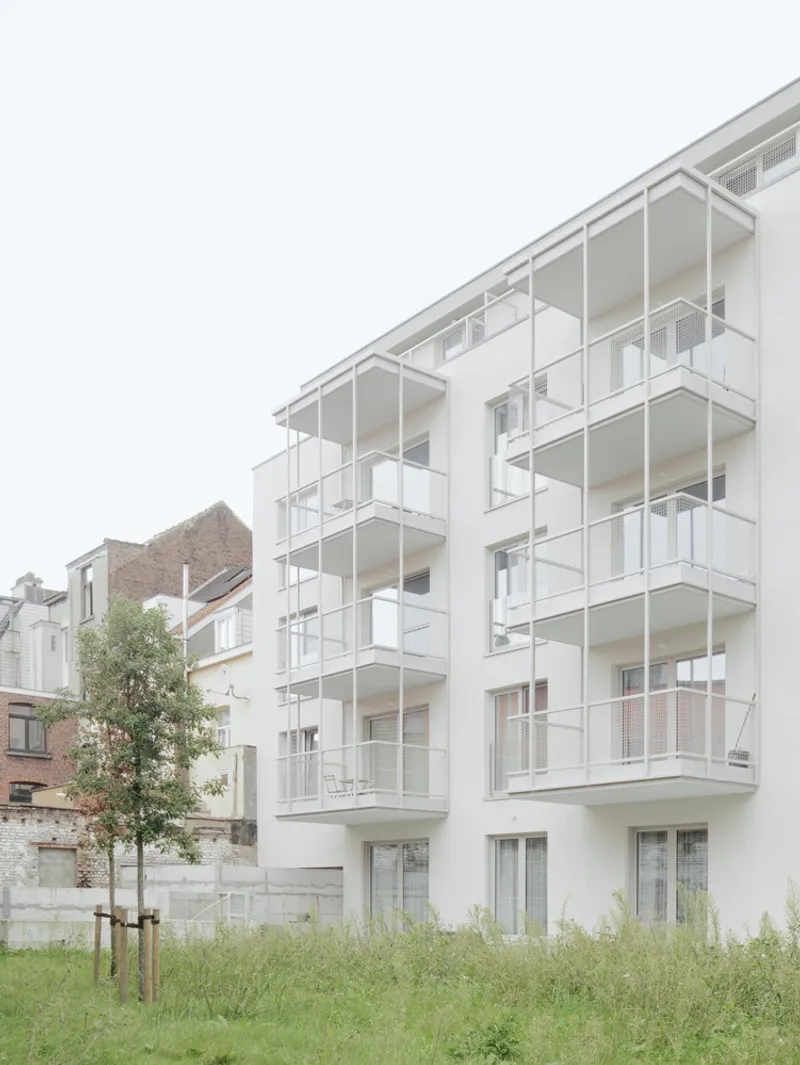
The ground floor connects residents to a communal garden, designed as a multifunctional space for relaxation, play, and social gatherings. Dense summer plantings provide shade and a cool retreat, addressing the urban heat island effect. On the southern rear façade, reflective, light-colored renderings and vertically stacked balconies ensure sun protection while maintaining privacy between apartments. Balusters and vertical steel posts complement the design, balancing aesthetic appeal with functionality.

Materiality and Craftsmanship
High-quality materials were carefully selected to enhance both durability and visual impact. Brick, sandblasted concrete, wood, and steel combine to create a refined, contemporary aesthetic that resonates with Koekelberg’s architectural heritage. Collaborations with manufacturers such as Geberit, Unilin, Agrob Buchthal, SAPA Building Systems, Schwepa, and VANDERSANDEN ensured meticulous craftsmanship throughout.


The Felix Residential Building exemplifies how residential architecture can revitalize urban areas, integrating heritage-inspired façades, sustainable design principles, and vibrant communal spaces. Studio Jan Vermeulen’s sensitive approach transforms a former industrial site into a thriving, contemporary residential landmark.
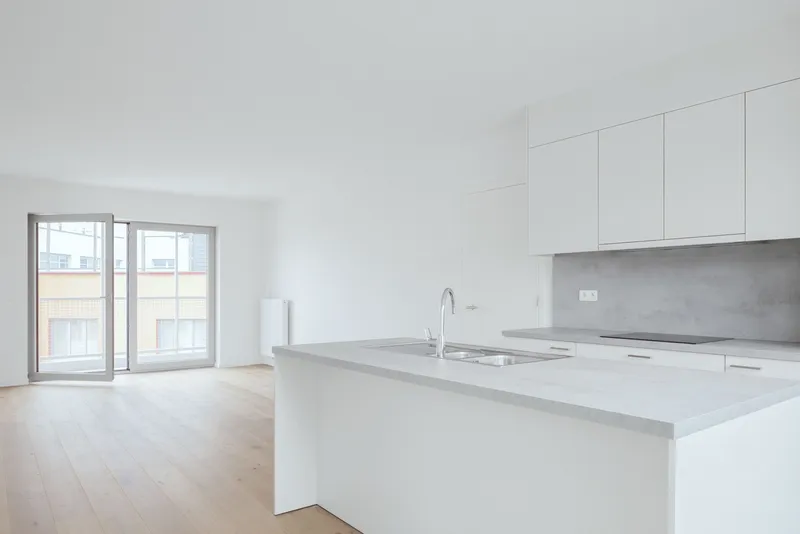
All photographs are works of Pieter Rabijns




Popular Articles
Popular articles from the community


Conexión: Biophilic Design Reimagines High-Rise Living in Hong Kong
Conexión reimagines high-rise living in Hong Kong through biophilic design, green facades, shared spaces, daylight, water and nature within.

Hill & Cross Opera: Sculptural Opera House Architecture Shaped by Tallinn’s Landscape and Identity
Hill & Cross Opera reimagines opera house architecture in Tallinn through its sculptural hill, civic plaza, glass wave and a luminous cross.

Co-life: Sustainable Architecture for Age-Friendly Community Living
Co-life reimagines sustainable architecture for seniors through courtyards, rammed earth, shared gardens, and spaces designed for belonging.

The Earth Pod: 3D Printed Homes for Resilient Refugee Communities
The Earth Pod reimagines refugee housing through 3D printed homes made from clay, combining resilience, self-sufficiency, and rapid shelter.


Similar Reads
You might also enjoy these articles


Hodi-Mandai Geram
Project Function: Preservation and revitalization of the Intangible heritage and socio-spatial identity of the Hodi by Housing, Cultural Memory Center, Sacred Grove, landscape, local tourism economy


Olio Towers: A Mid-Rise for Performers That Fuses Housing, Rehearsal, and Stage
Located blocks from Houston's Theater District, this modular tower stacks living units around a central performance atrium.

Oasis: Modular Green Housing Carved into Dhaka's Urban Fabric
A shortlisted Plugin Housing entry reclaims unauthorized settlements in Dhaka with stepped concrete volumes, green roofs, and ventilation-driven design.

Black Hole: A Floating Megastructure for the Post-Physical Era
Emiliano Mazzarotto envisions a spherical, self-scaling arena where e-sports, digital hotels, and holographic stadiums replace traditional public space.

Explore Residential Building Competitions
Discover active competitions in this discipline


Challenge to design mud housing for contemporary communities


Challenge to reimagine the Iron Throne


Photograph architecture without architects


Illustrate the lost glory of Angkor Wat - Render Challenge
Comments (0)
Please login or sign up to add comments
No comments yet. Be the first to comment!