
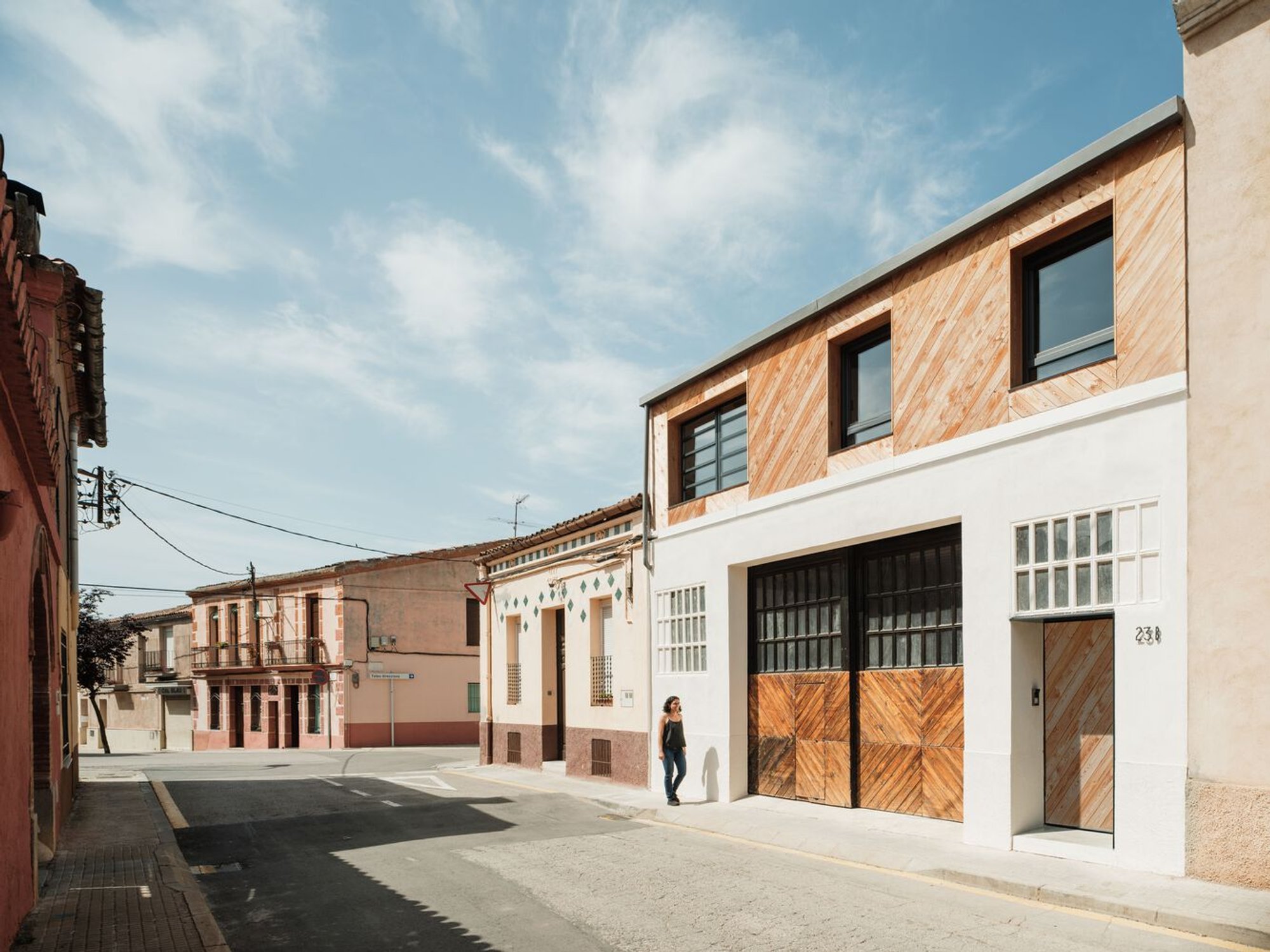
Garage to House Conversion by Judit Falgueras Arquitectura: A Sustainable Renovation
A sustainable renovation by Judit Falgueras Arquitectura, transforming an industrial garage into a modern, eco-friendly family home.

In the heart of a rural village, a small industrial building that once served as a warehouse, mechanic’s workshop, and parking lot underwent a significant transformation. Judit Falgueras Arquitectura has masterfully converted this humble 1960s structure into a contemporary family home, blending the old with the new and achieving an eco-friendly, sustainable design. This project serves as a prime example of adaptive reuse, where architectural creativity meets practicality to restore a building’s original charm while offering a modern living space.
A Revitalized Industrial Building Turned Home
The industrial building, originally built by a local businessman specializing in wood extraction, had stood for nearly 60 years before the decision was made to convert it into a house. The structure was simple, functional, and unadorned, reflecting the era and its industrial purpose. By 2022, a family new to the area saw the potential in this space, recognizing the opportunity to transform the aging warehouse into a home that embraces both its past and future.
Architectural Intervention: Key Structural Changes
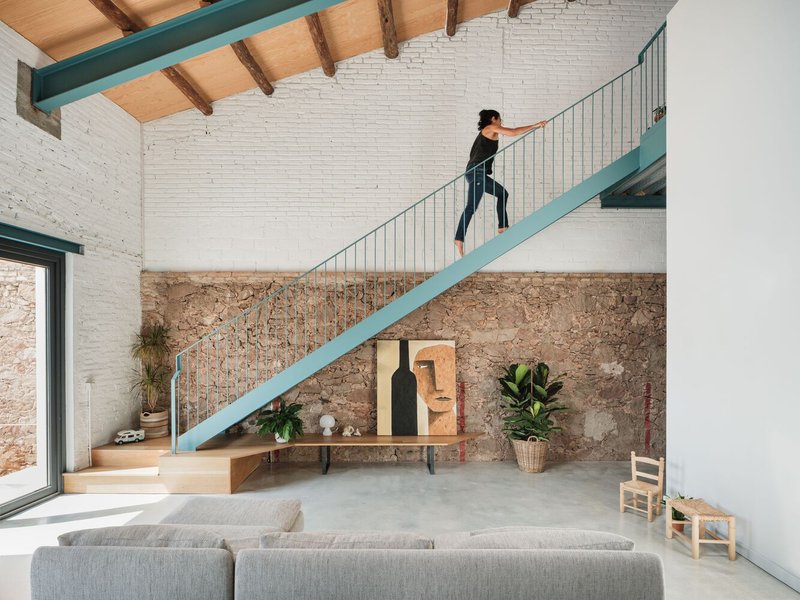
The conversion of the old garage into a home required significant interventions. A crucial aspect of the renovation was the introduction of a new metal framework that provided the foundation for the first-floor slab. The original truss, having fallen into disrepair, was replaced with a Vierendel beam, which illuminated the distributor/study area on the second floor.
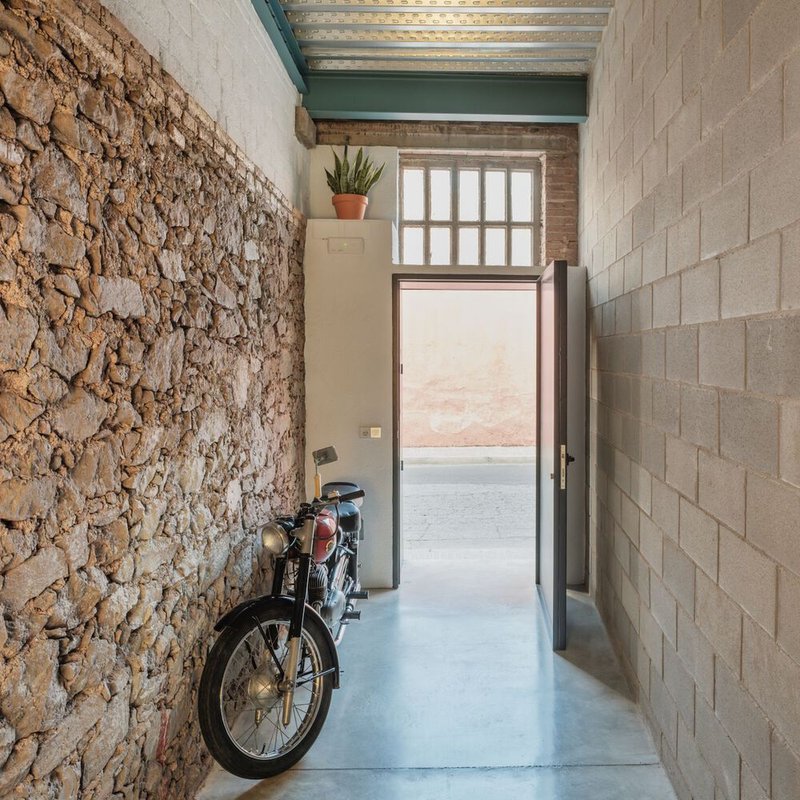
The new structure was designed to minimize its environmental impact, supported by the existing party walls and two points on the basement walls. This approach avoided the need for re-cementing the building, preserving the integrity of the original structure while introducing a more efficient and balanced design.
Sustainable Design Features
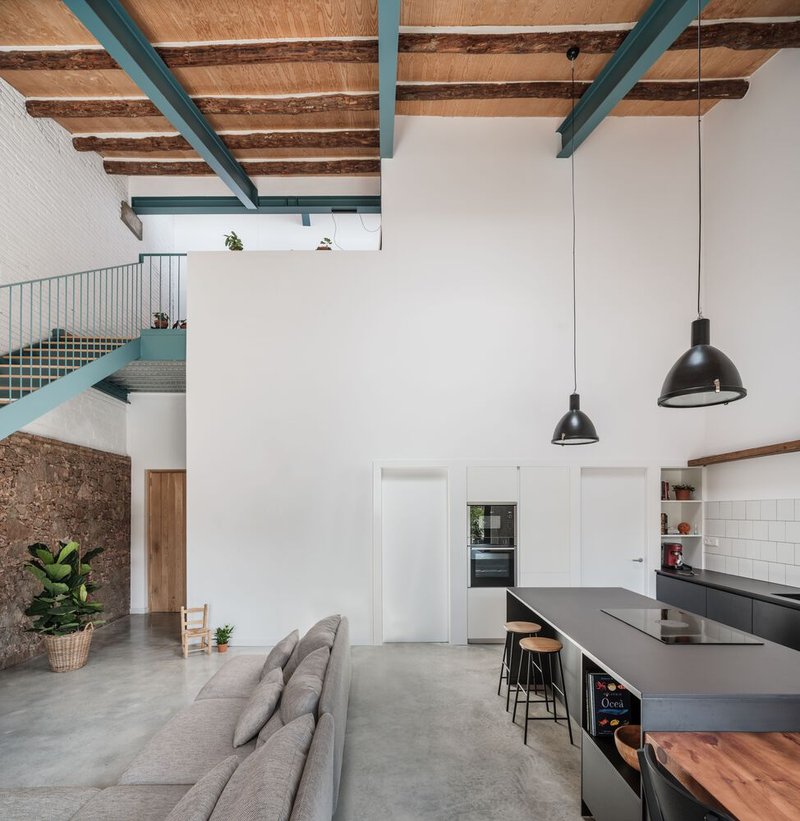
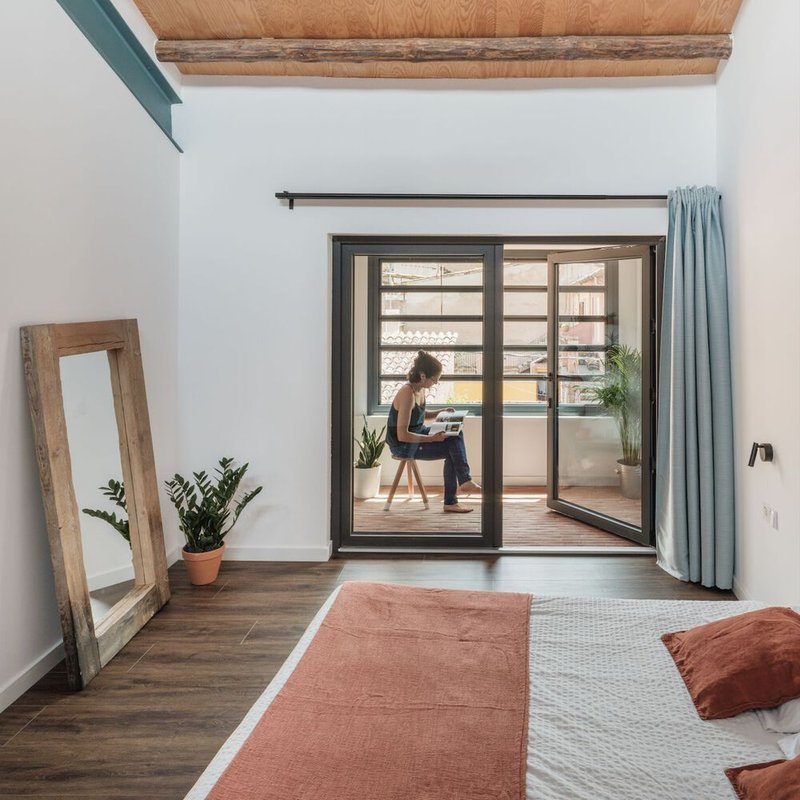
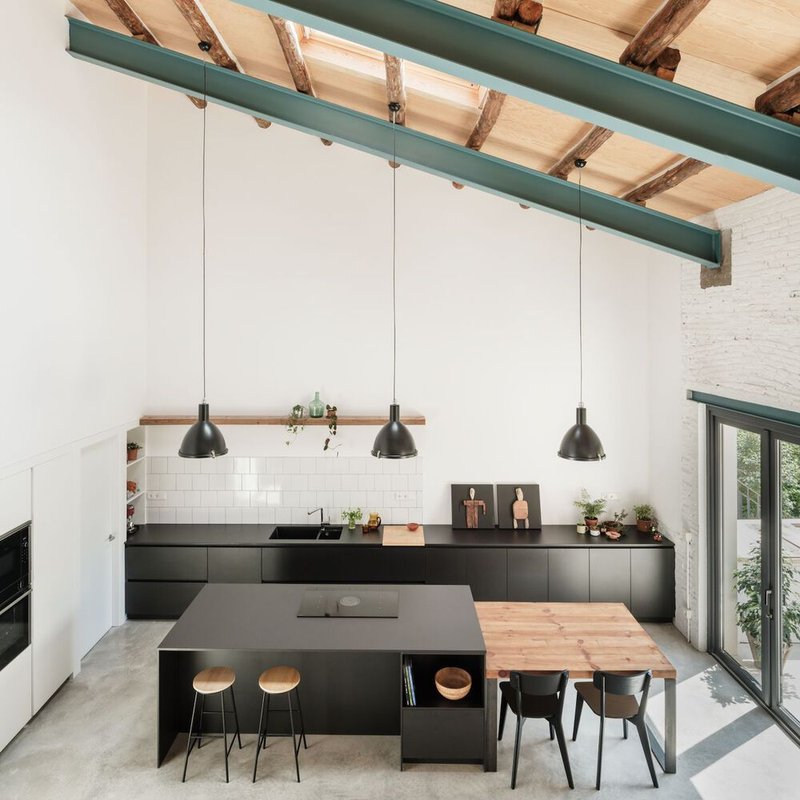
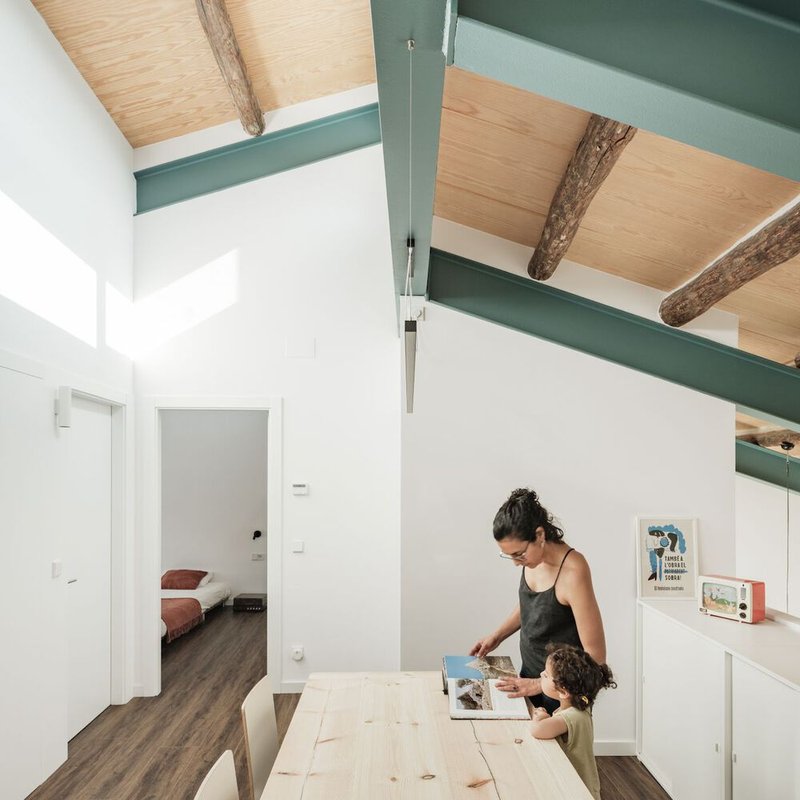
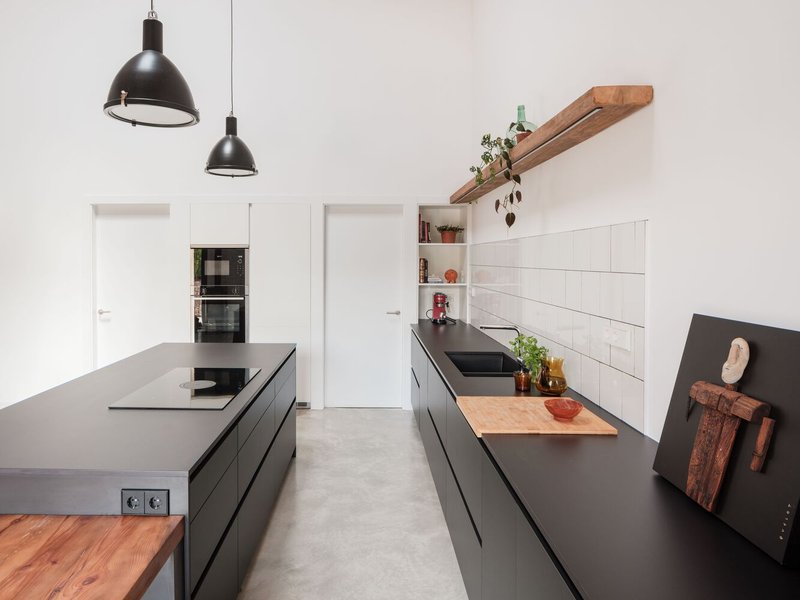
Sustainability was central to the design strategy. The team preserved the original wooden beams, which had been extracted from the nearby forest by the builder. These reclaimed beams were reused in the new roof structure, and wood from the old truss was repurposed into furniture, including the kitchen table, shelves, and bathroom cabinet on the ground floor. This not only added a personal touch to the home but also contributed to minimizing waste.
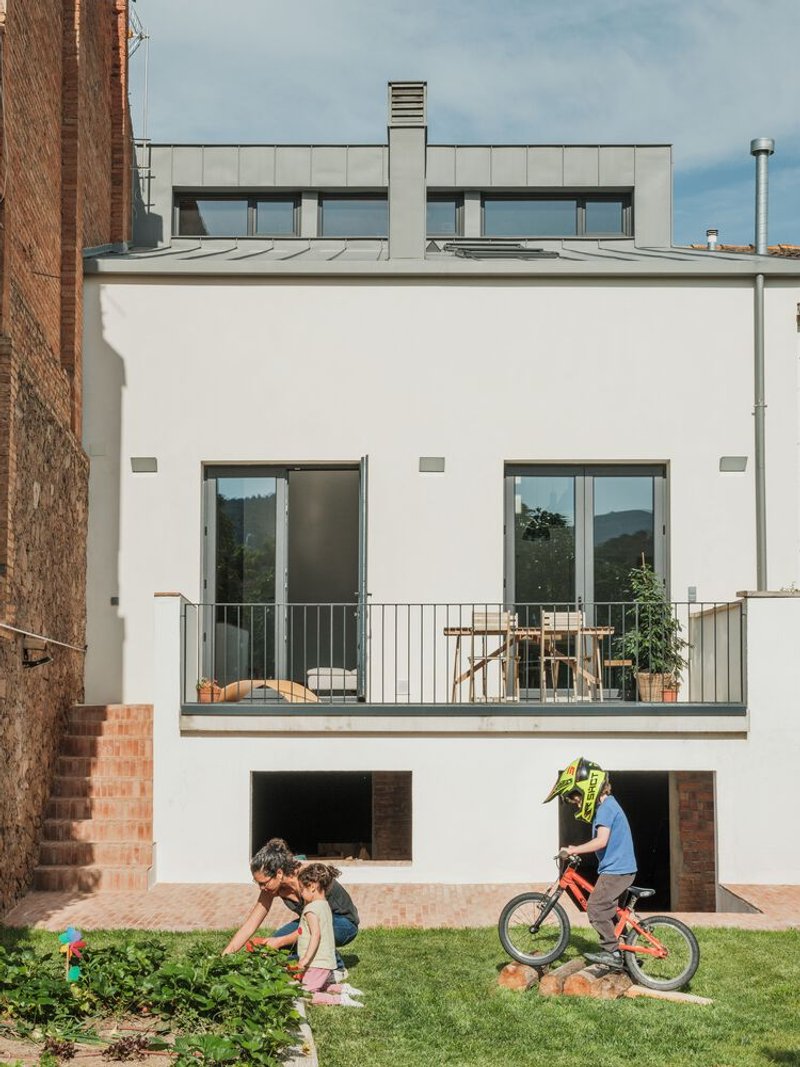
In terms of energy efficiency, the project utilized thoughtful insulation of the backyard facade and party walls, creating a thermal envelope that limits energy demand. The installation of strategic openings in the roof promoted natural cross-ventilation, ensuring that the spaces benefit from natural airflow and passive cooling, further enhancing the home’s eco-friendly design.
Functional and Open Floor Plan
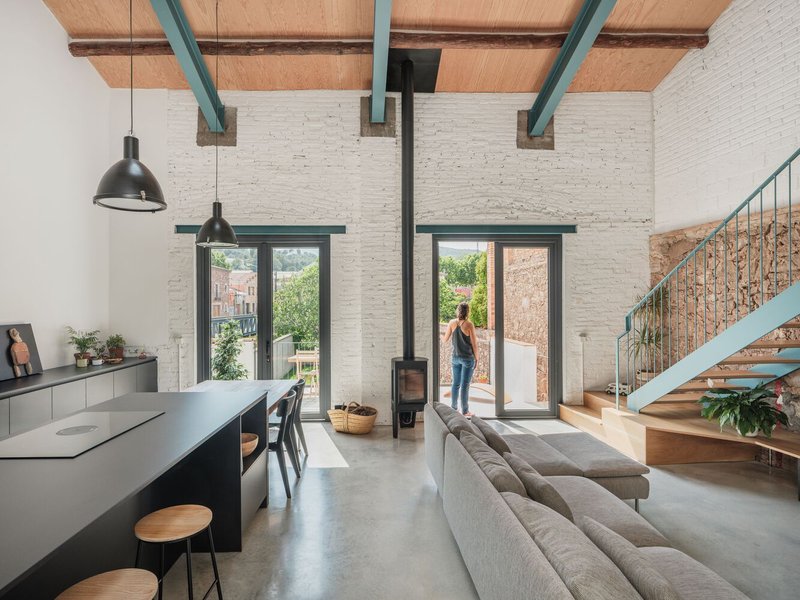
The interior of the house was designed with a focus on openness and connectivity to the outdoors. The ground floor houses the garage, a spacious living area, a dining room, and a kitchen, all of which are seamlessly connected. A bathroom and pantry are included, with the pantry cleverly converted into a storage space for the garage. The living-dining-kitchen area retains the essence of the original warehouse: open, airy, and diaphanous. Large windows on the new terrace and patio invite abundant natural light, creating a harmonious connection between the indoor and outdoor spaces.
The first floor was organized around the new structural framework, with spaces carefully allocated for a distributor/study area, three bedrooms, a gallery, and a bathroom. The entire design emphasizes openness and flow, making it feel like an evolved version of the original, industrial building while offering all the modern amenities of a contemporary home.
Blending Past and Present
The Garage to House project by Judit Falgueras Arquitectura is a remarkable example of adaptive reuse, where an old industrial building is reimagined into a functional and beautiful home. The careful preservation of original elements, combined with a sustainable design approach and innovative structural changes, allows the building to retain its historical character while offering a comfortable and energy-efficient living space. This conversion exemplifies how thoughtful architectural intervention can breathe new life into even the most humble of structures, creating a home that embraces both past and future.
All Photographs are works of Joan Guillamat




Popular Articles
Popular articles from the community

A Contemporary Take on Iranian Residential Architecture
A modern interior design in Mashhad that reinterprets brick, light, and spatial flow to create a warm, contemporary residential architecture.
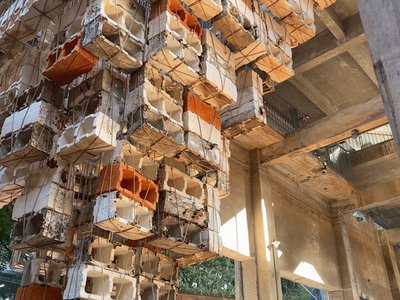
Inverted Architecture Installation by Studio Link-Arc: Exploring the Intersection of Architecture and Living Organisms
Inverted Architecture Installation by Studio Link-Arc blends mycelium, sustainability, inverted design, ecological cycles, and urban adaptive architecture in Shenzhen.

Solar Steam: A Climate-Responsive Architecture That Redefines the Monument
A climate-responsive memorial architecture that transforms heat, decay, and time into a living system reflecting humanity’s ecological impact.
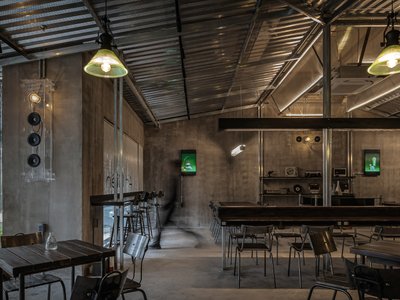
An Miên Lumière Cafe by xưởng xép, Ho Chi Minh City, Vietnam
An industrial-inspired café where layered steel and warm light create a dynamic, immersive environment shaped by reflection, depth, and perception.


Similar Reads
You might also enjoy these articles


The Ken Roberts Memorial Delineation Competition (Krob)
As the most senior architectural drawing competition currently in operation anywhere in the world, it draws hundreds of entries each year, awarding the very best submissions in a series of medium-based categories.


Waterfront Redevelopment and Urban Revitalization in Mumbai: Forging a New Dawn for Darukhana
A transformative waterfront redevelopment project reimagining Darukhana’s shipbreaking heritage into an inclusive urban future.

OUT-OF-MAP: A Call for Postcards on Feminist Narratives of Public Space
Rhizoma Design and Research Lab invites artists, designers, architects, researchers, and students to reflect on how feminist perspectives can reshape public space. Selected works will be exhibited in Barcelona, October 2026. Submissions open until 15 April 2026.


Documentation Work on Buddhist Wooden Temple
Architectural syncretism and cultural hybridity: A comparative study of the Buddhist temples in Chattogram Hill tracks


Explore Architecture Competitions
Discover active competitions in this discipline




The International Standard for Design Portfolios


The Global Benchmark for Architecture Dissertation Awards


The Global Benchmark for Graduation Excellence


Challenge to reimagine the Iron Throne
Comments (0)
Please login or sign up to add comments
No comments yet. Be the first to comment!