
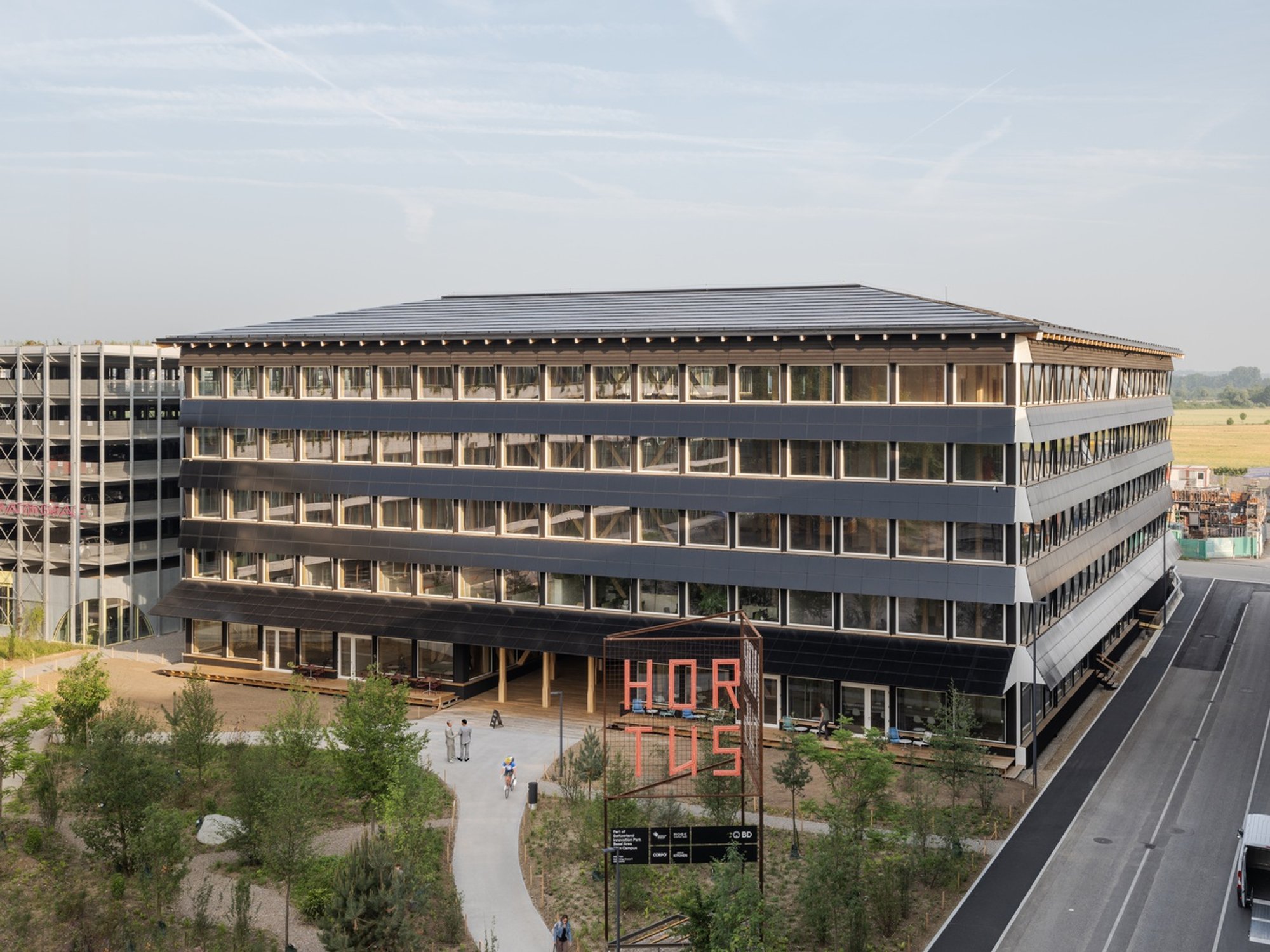
Hortus Allschwil by Herzog & de Meuron: A New Benchmark in Sustainable Office Architecture
Hortus Allschwil by Herzog & de Meuron is a timber-built, energy-positive office promoting circular design, renewable materials, and biophilic workspaces.

A New Benchmark for Sustainable Workspaces in Switzerland
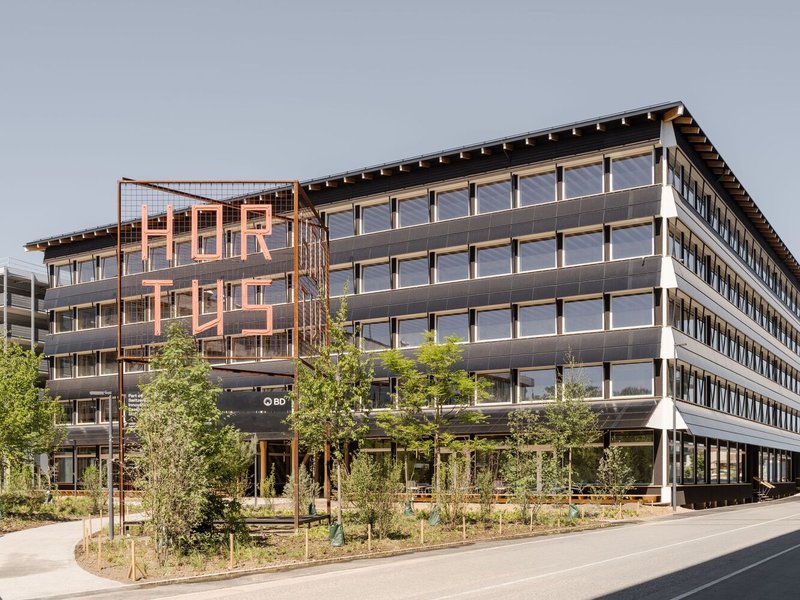
Located in the Switzerland Innovation Park in Allschwil, Hortus Allschwil by Herzog & de Meuron represents a pioneering model of sustainable office design. Commissioned by developer Senn, the 14,100-square-meter building redefines what it means to create a climate-positive and energy-efficient workspace for the life sciences and technology industries emerging in the Basel region.
Designed with the ambition to minimize embodied carbon, optimize operational energy, and achieve long-term energy surplus, the project embodies the convergence of architecture, ecology, and innovation. Over a span of 31 years, Hortus will completely offset the energy used in its own construction—making it one of the most sustainable office buildings in the German-speaking world.
A Living Laboratory for Sustainable Design
Located in the Switzerland Innovation Park in Allschwil near Basel, Hortus Allschwil by Herzog & de Meuron redefines the future of sustainable office architecture. Designed for Senn, the building serves as a pioneering model of ecological innovation, combining renewable materials, advanced energy systems, and a human-centered working environment for the life sciences community.
Hortus—an acronym for House of Research, Technology, Utopia, and Sustainability—embodies a radical approach to building design. Every aspect, from its material palette to its energy systems, is optimized for minimal environmental impact. The result is one of the most sustainable office buildings in the German-speaking world, offering around 600 workplaces within a structure that will fully offset its construction energy within 31 years.
Atrium as a Green Oasis
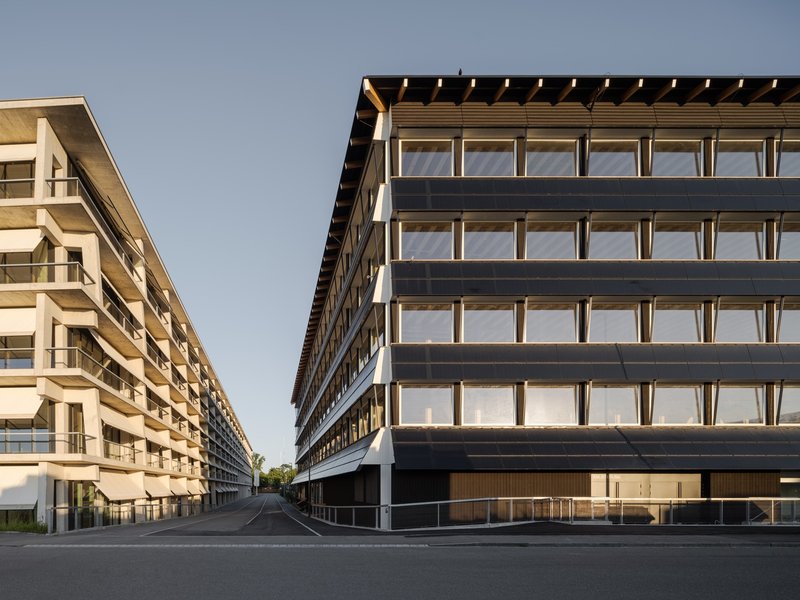
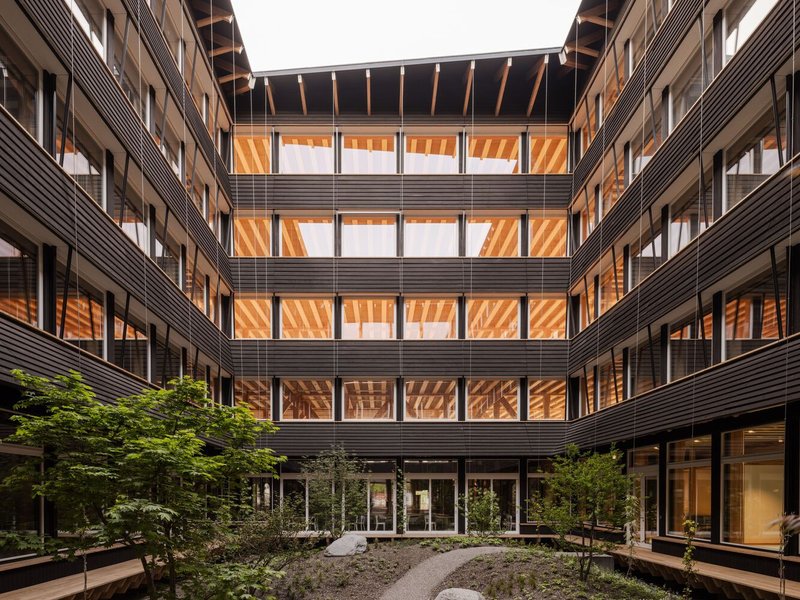
At the heart of Hortus lies a lush, plant-filled atrium, designed as both a biophilic retreat and social hub. The four-story timber-frame structure wraps around this central courtyard, which acts as a living ecosystem with tall grasses, shrubs, flowering perennials, and climbing plants envisioned by landscape architect Piet Oudolf.
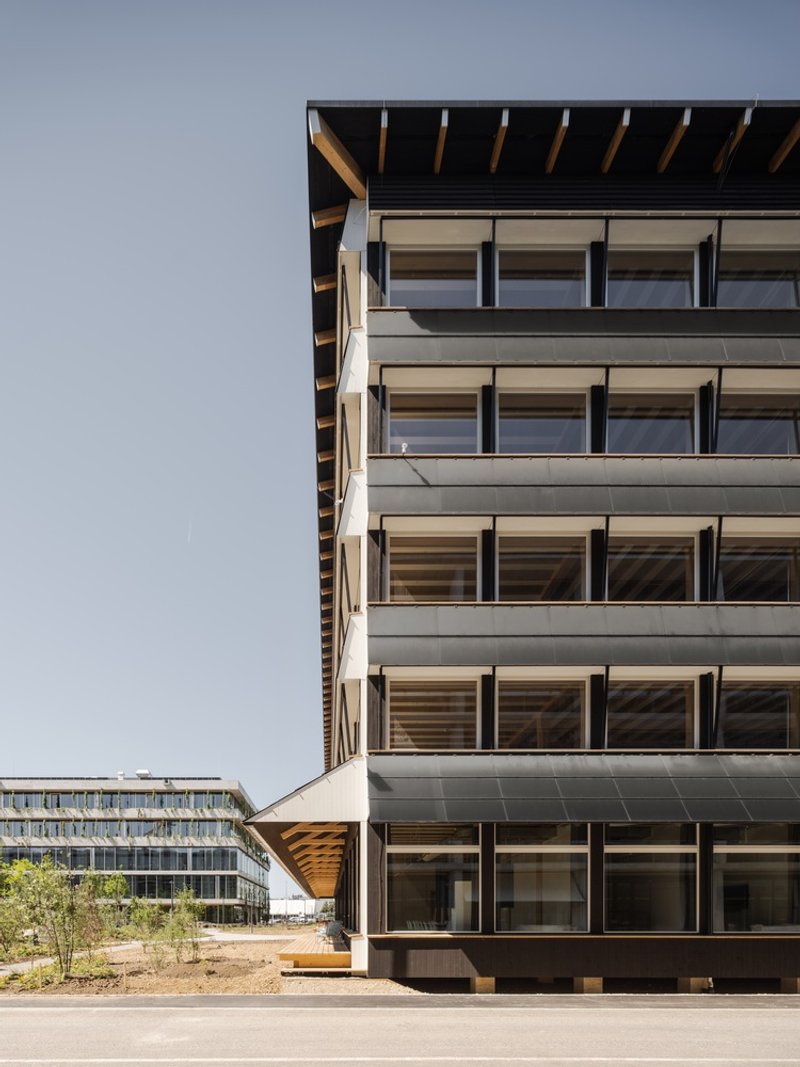
The building, slightly elevated on stilts, allows air to flow underneath, maintaining a stable microclimate. A rainwater collection system beneath the garden supplies irrigation and sanitary facilities, ensuring closed-loop water management.
The veranda and open courtyard invite employees and visitors to pause, relax, and connect with nature. Public amenities on the ground floor—such as a restaurant, gym, café bar, and rental meeting spaces—foster an atmosphere of openness and collaboration within the innovation park.
Flexible and Collaborative Workspaces
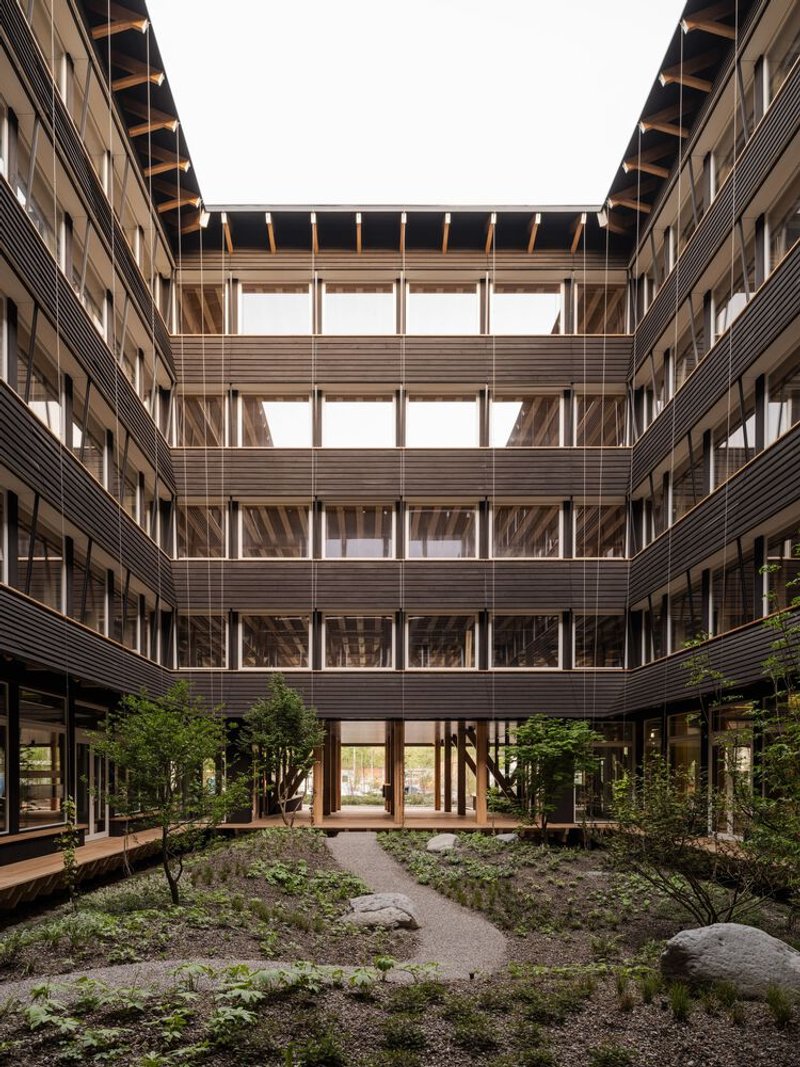
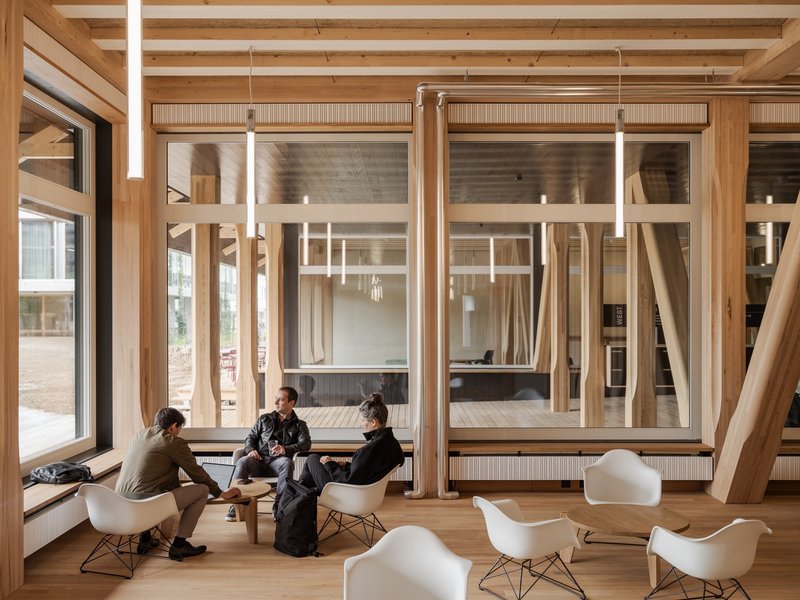
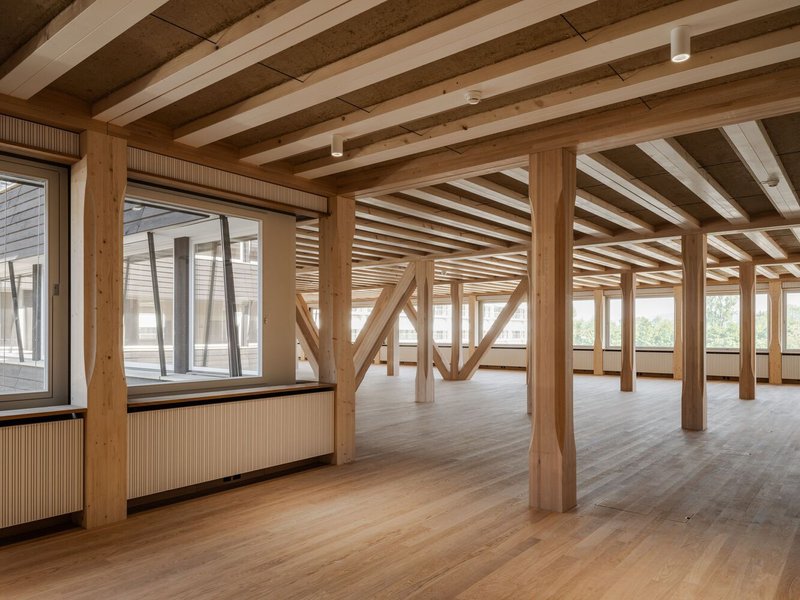
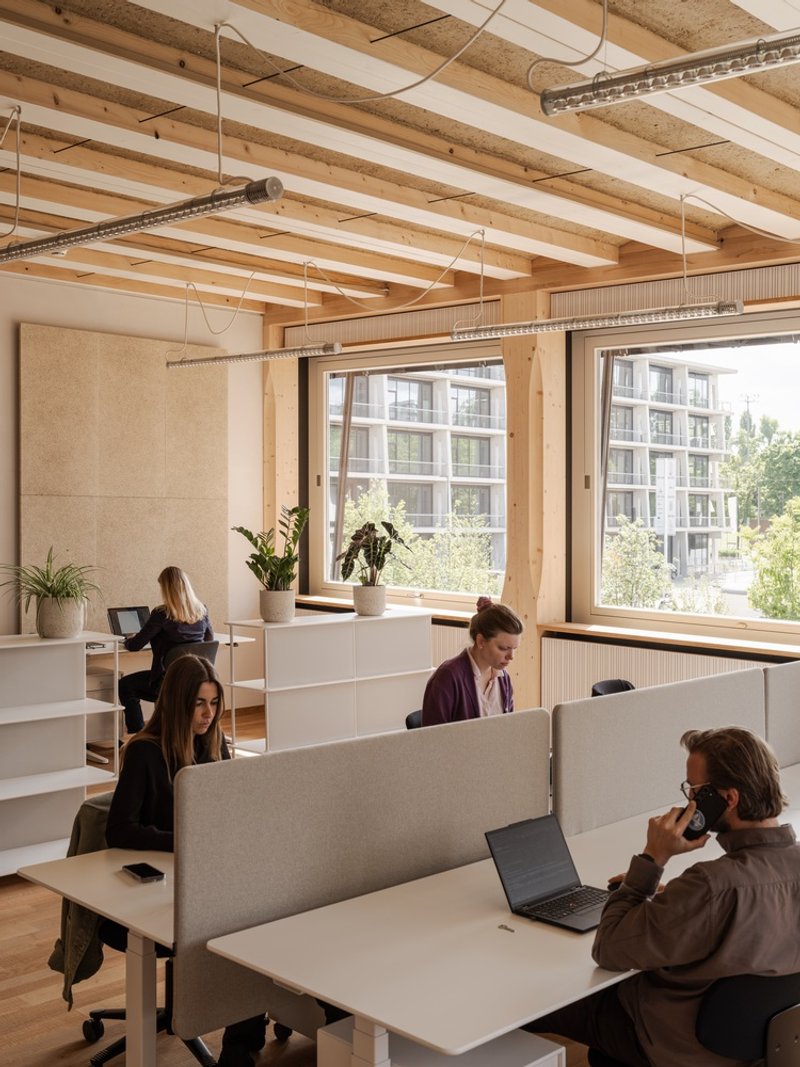
The four upper levels of Hortus provide nearly 10,000 m² of adaptable office space, designed to encourage interaction and collaboration among teams. Open-plan layouts allow for multiple spatial configurations, accommodating both private zones and open meeting areas.
Each floor features shared lounges, kitchenettes, and access to outdoor verandas, ensuring that users experience a blend of privacy, community, and connection to nature. The design blurs boundaries between inside and outside, turning every workspace into an extension of the landscape.
Circular Materiality: Building for Reuse
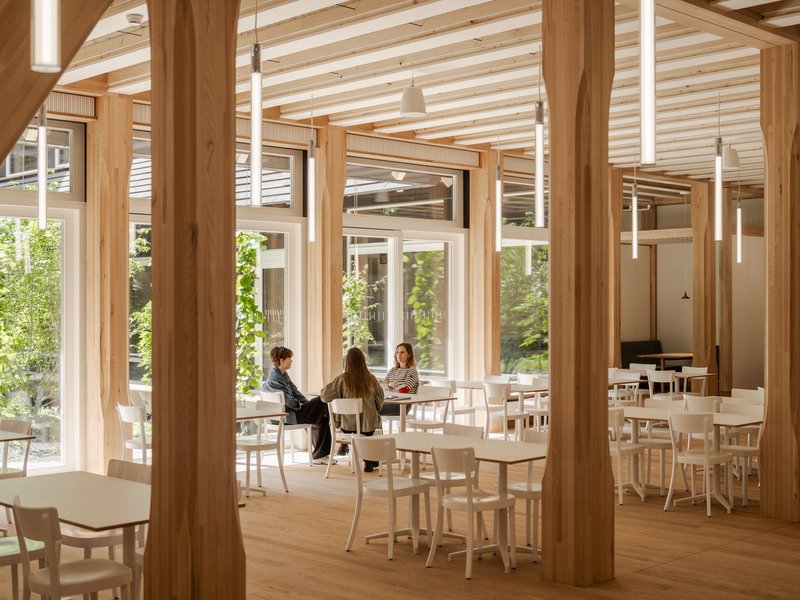
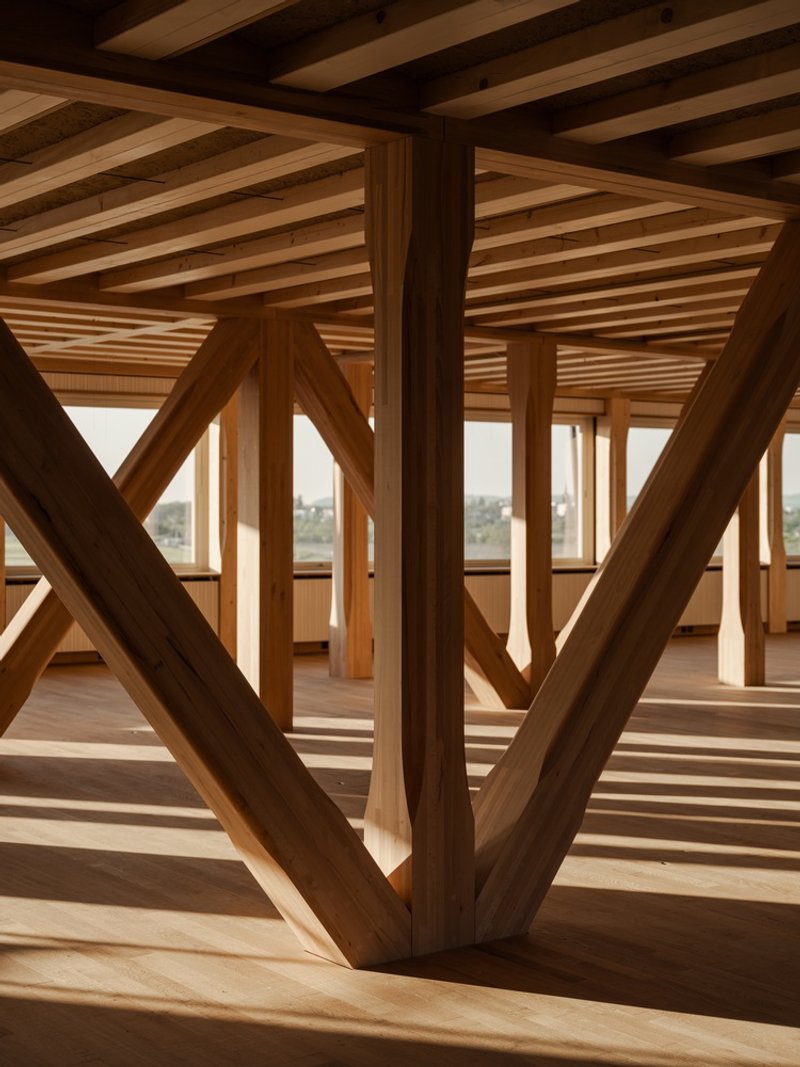
Hortus sets a new standard for circular construction. Following the “cradle-to-cradle” principle, all components are cataloged for future reuse. Natural and renewable materials—such as timber, compressed clay, and cellulose—form the foundation of the design, emphasizing resource conservation and low embodied carbon.
The clay used in ceiling modules can be returned directly to the ground, while timber joinery replaces metal fastenings, allowing for easy disassembly and recycling. Every element contributes to the building’s vision as a closed ecological system, where materials circulate within nature’s cycle.
Innovative Clay-Timber Floor System
In partnership with ZPF Engineers and Blumer Lehmann, Herzog & de Meuron developed a hybrid floor structure combining timber frames with compressed clay vaults. The clay, sourced directly from the construction site, was locally processed and tamped into prefabricated wooden modules.
This clay-timber system not only provides thermal mass and fire resistance but also reduces carbon emissions to a tenth of those in conventional concrete slabs. By producing the components nearby, transportation emissions were minimized, aligning with the building’s regional material sourcing strategy.
Energy-Positive and Carbon-Reducing Design
Hortus aims to generate more energy than it consumes, positioning itself as an energy-positive building. Its compact volume reduces heat loss, while geothermal systems and natural air circulation beneath the raised structure maintain comfortable temperatures year-round.
A 5,000 m² photovoltaic system on the roof and parapets supplies renewable electricity, producing a net energy surplus from day one. The absence of a concrete basement further minimizes embodied carbon, while SIA 2040 environmental standards are exceeded across the board.
Within three decades, the building will have completely offset its construction emissions, achieving a remarkable balance between operational efficiency and environmental responsibility.
Herzog & de Meuron’s Philosophy of Holistic Sustainability
For Herzog & de Meuron, sustainability is not a stylistic choice but an integrated design philosophy. The firm sees architecture as a means to harmonize environmental, economic, and social conditions, addressing the global challenge of reducing the construction sector’s carbon footprint—responsible for nearly 40% of global raw material and energy consumption.
The architects emphasize that climate-responsive, material-conscious design requires both innovation and contextual sensitivity. Each project becomes an opportunity to rethink architectural norms and develop new aesthetic languages born from ecological necessity.
“Sustainability should be at the forefront of everything we produce,” says Jacques Herzog. “It’s a challenge, but also a creative opportunity—one that can lead to new forms of beauty.”
Senior Partner Stefan Marbach adds:
“Hortus demonstrates how modular, circular architecture can create healthy, inspiring work environments that connect people with nature.”
A Blueprint for Future Architecture
Hortus Allschwil is more than an office building—it’s a prototype for the future of sustainable construction. By merging timber innovation, ecological systems, and social design, Herzog & de Meuron have created a living organism of architecture—one that breathes, regenerates, and inspires.
It challenges the industry to see buildings not as static structures, but as dynamic ecosystems that evolve with their environment and occupants. In doing so, it defines a new aesthetic of radical sustainability, proving that architecture can be both technically advanced and deeply humane.
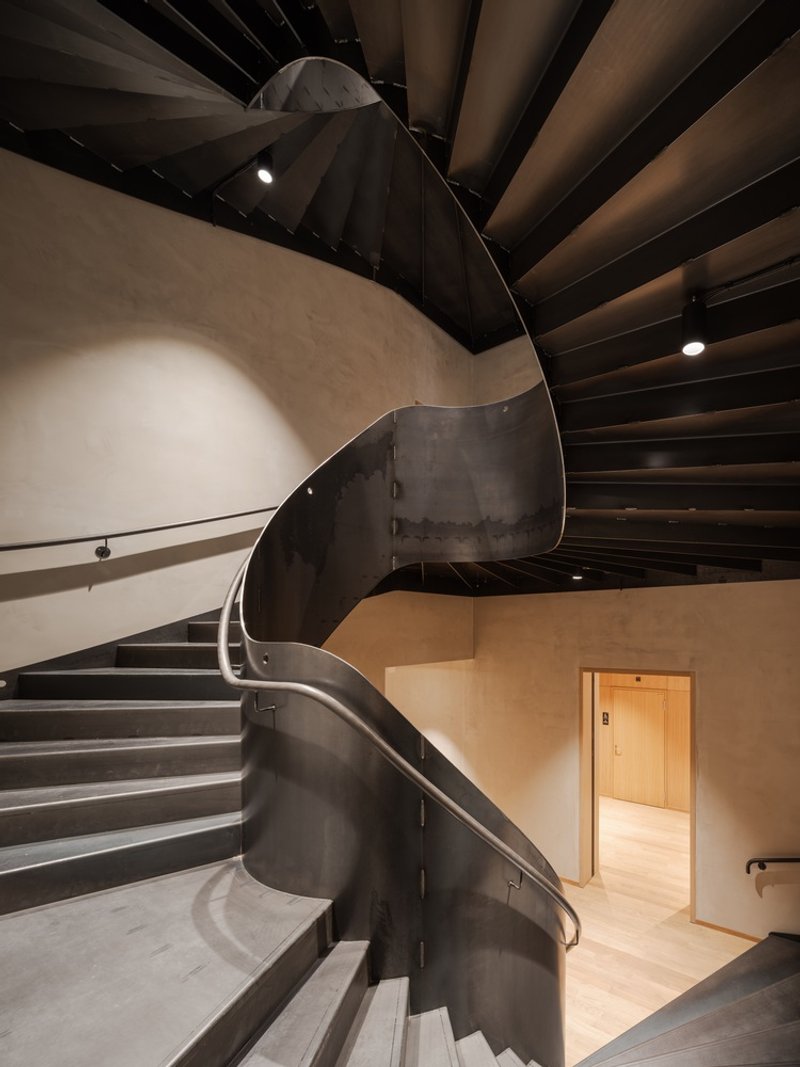
Hortus Allschwil by Herzog & de Meuron is a groundbreaking sustainable office building in Switzerland, featuring renewable materials, circular design, and energy-positive performance.
All photographs are works of Maris Mezulis




Popular Articles
Popular articles from the community

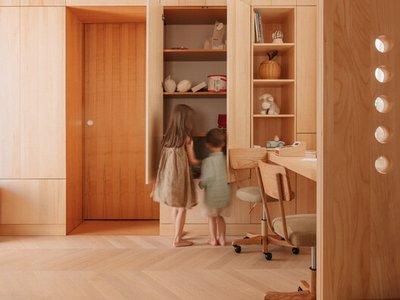
Treehouse Apartment: A Warm Timber Interior Blending Craft, Play, and Contemporary Living
Warm timber apartment with integrated treehouse, combining natural materials, craftsmanship, and playful design to create a flexible, family-oriented living environment.
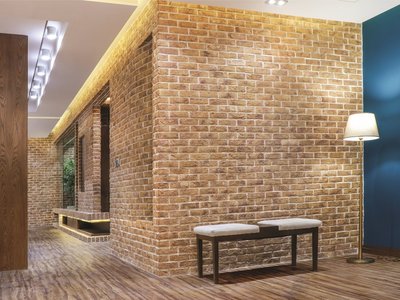
A Contemporary Take on Iranian Residential Architecture
A modern interior design in Mashhad that reinterprets brick, light, and spatial flow to create a warm, contemporary residential architecture.
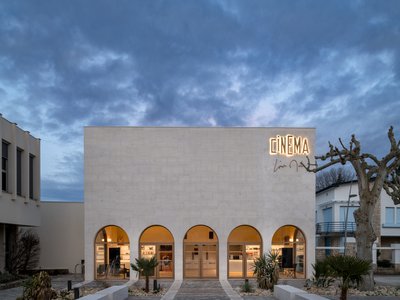
Louis Malle Cinema: A Limestone Cultural Landmark Revitalizing Community Life in Prayssac
Limestone cinema extension with public forecourt, blending heritage and modern design to create flexible cultural spaces and strengthen community interaction.
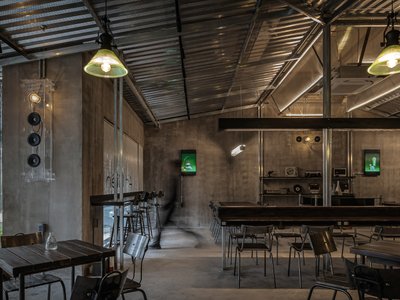
An Miên Lumière Cafe by xưởng xép, Ho Chi Minh City, Vietnam
An industrial-inspired café where layered steel and warm light create a dynamic, immersive environment shaped by reflection, depth, and perception.

Similar Reads
You might also enjoy these articles
The Ken Roberts Memorial Delineation Competition (Krob)
As the most senior architectural drawing competition currently in operation anywhere in the world, it draws hundreds of entries each year, awarding the very best submissions in a series of medium-based categories.

Waterfront Redevelopment and Urban Revitalization in Mumbai: Forging a New Dawn for Darukhana
A transformative waterfront redevelopment project reimagining Darukhana’s shipbreaking heritage into an inclusive urban future.
OUT-OF-MAP: A Call for Postcards on Feminist Narratives of Public Space
Rhizoma Design and Research Lab invites artists, designers, architects, researchers, and students to reflect on how feminist perspectives can reshape public space. Selected works will be exhibited in Barcelona, October 2026. Submissions open until 15 April 2026.

Documentation Work on Buddhist Wooden Temple
Architectural syncretism and cultural hybridity: A comparative study of the Buddhist temples in Chattogram Hill tracks

Explore Office Building Competitions
Discover active competitions in this discipline




The International Standard for Design Portfolios


The Global Benchmark for Architecture Dissertation Awards


The Global Benchmark for Graduation Excellence


Challenge to reimagine the Iron Throne
Comments (0)
Please login or sign up to add comments
No comments yet. Be the first to comment!