
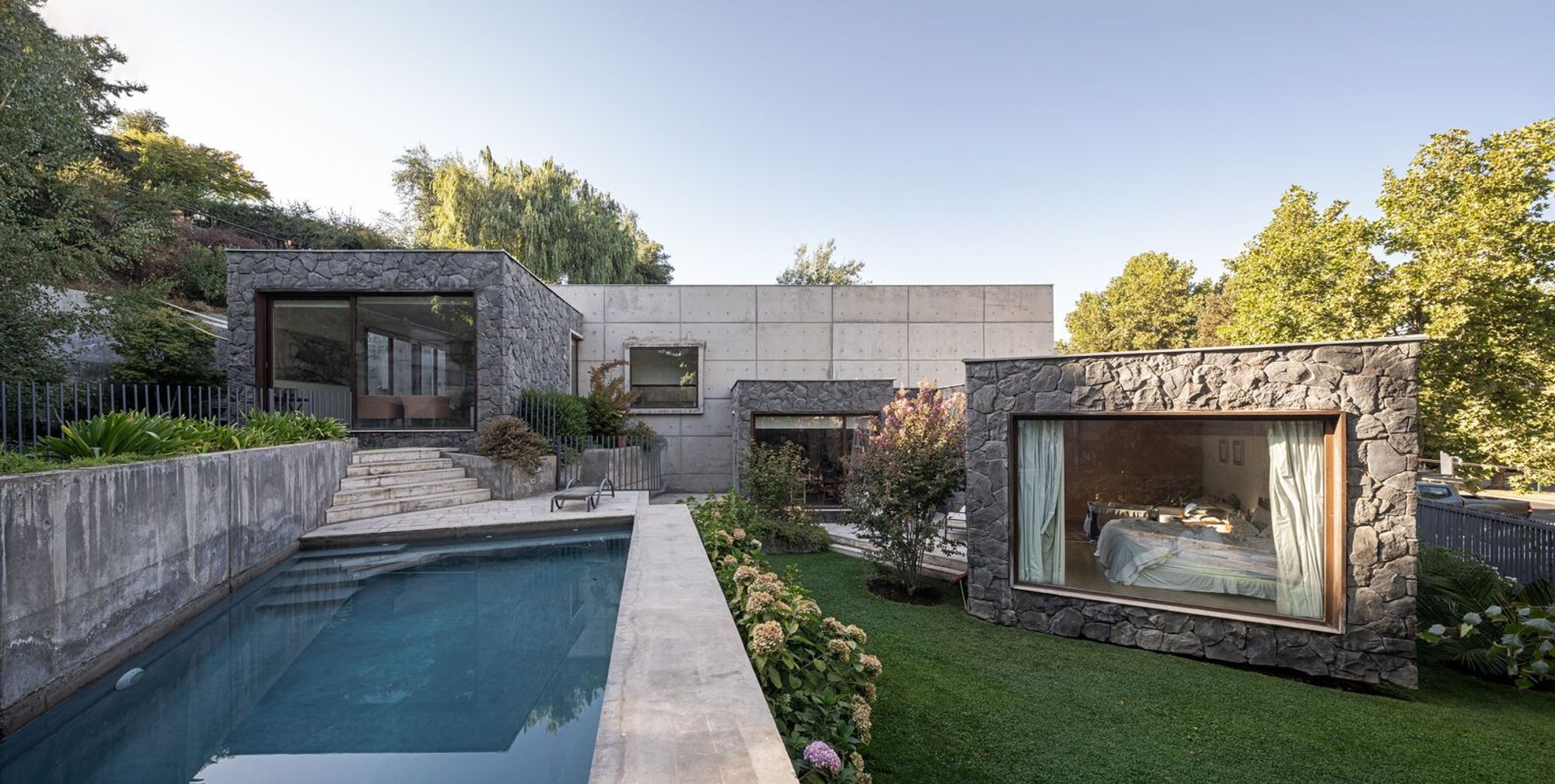
House Trapenses by Rodrigo de la Cerda Arquitecto
House Trapenses blends stone and concrete on a hillside, balancing privacy, natural light, gardens, and terraces with contemporary Chilean architecture.

Located in Lo Barnechea, Santiago, Chile, House Trapenses by Rodrigo de la Cerda Arquitecto is a contemporary hillside residence designed for a couple seeking privacy, comfort, and strong integration with the natural terrain. Completed in 2021, the 192 m² home carefully responds to the steep slope of its site while shielding the interiors from the noise and visibility of Los Trapenses Avenue.
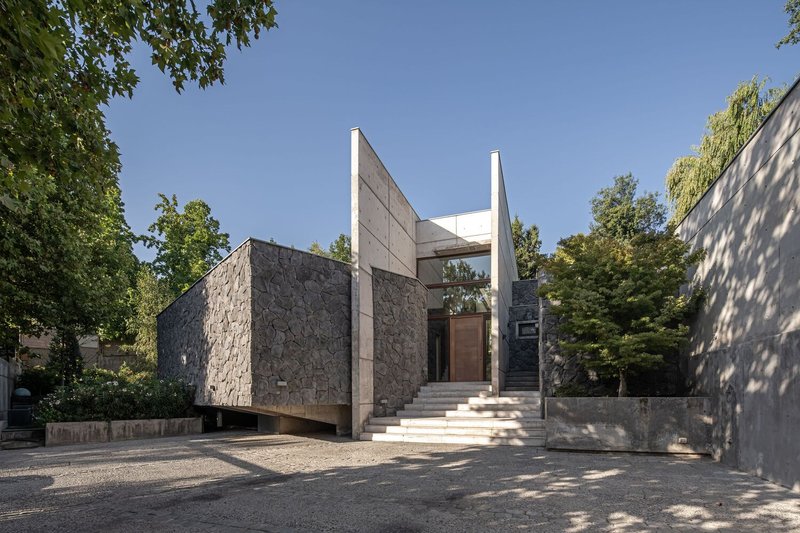
The design challenge was twofold: to create a protective façade facing the busy avenue and to adapt the house harmoniously to the topography. The solution was a composition of stone and concrete volumes distributed across four levels, establishing a gradual relationship between the courtyard, gardens, terraces, and living spaces.
Site Strategy and Outdoor Design
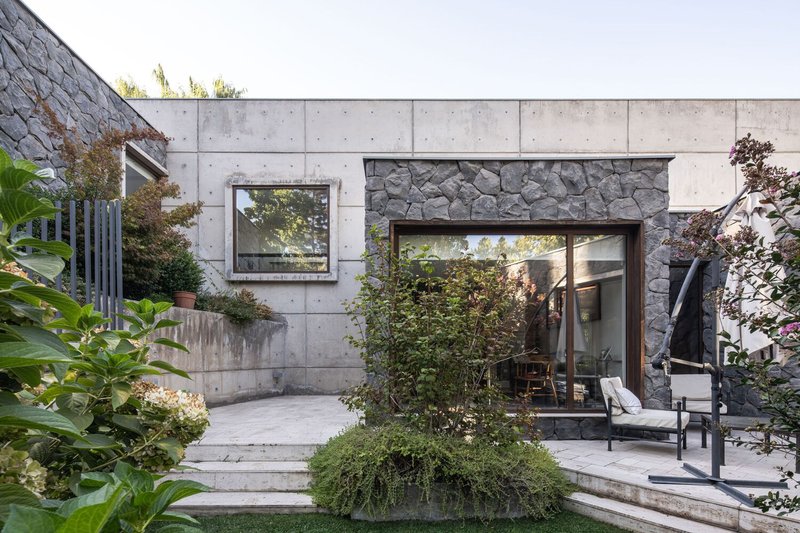
The first level opens with a stone-paved courtyard that functions as both an entry and parking space. From there, the terrain is terraced into multiple levels, each offering unique outdoor experiences. A swimming pool plays a central role in connecting the upper and lower gardens, while a terrace with a built-in grill extends the living and dining areas into the landscape. This layered design reinforces the dialogue between architecture and topography, creating a private retreat that still embraces its natural surroundings.
Interior Organization and Spatial Experience
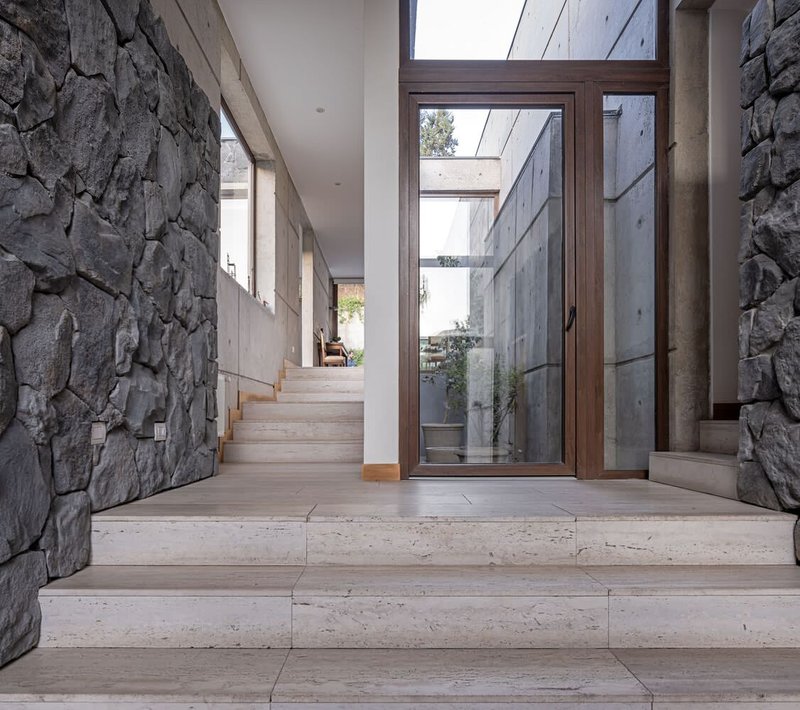
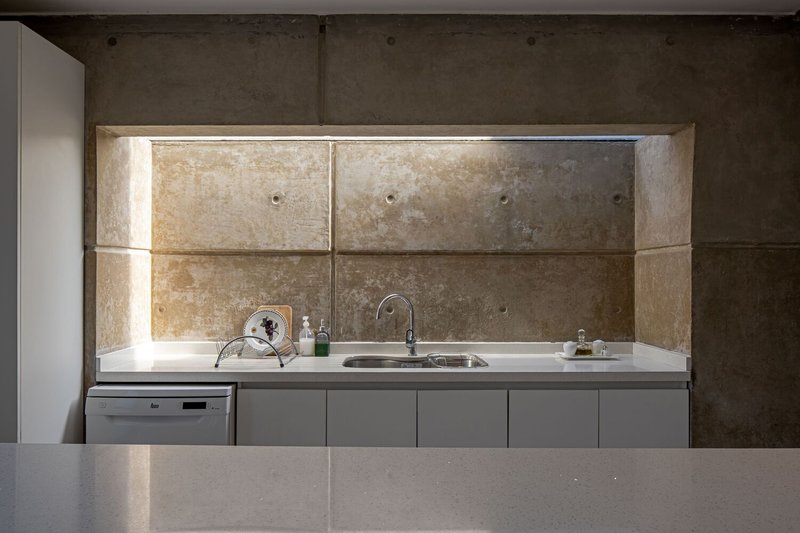
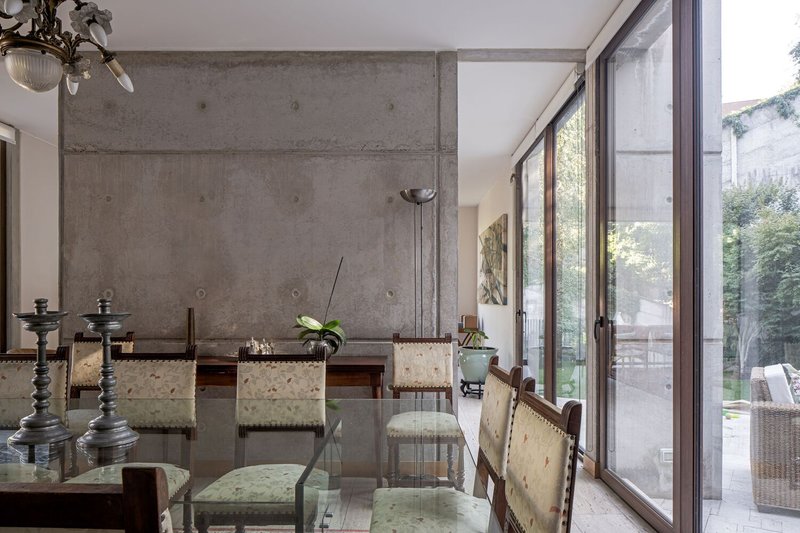
Inside, the home is structured along a central axis that ascends with the terrain. This axis is defined by a concrete volume with a light-filled courtyard, which not only meets regulatory requirements but also introduces natural light, transparency, and spatial depth. The courtyard doubles as a vertical skylight, illuminating the kitchen and common areas, while offering a moment of openness within the compact footprint.
Functional zoning is achieved by placing service areas to the south and primary living spaces—such as the master bedroom, office, and social areas—to the northeast, where they can benefit from garden views and daylight. Reinforced brickwork clad in engineered stone ensures both thermal efficiency and aesthetic continuity, while the stone and concrete palette creates a strong material identity.
Architectural Expression
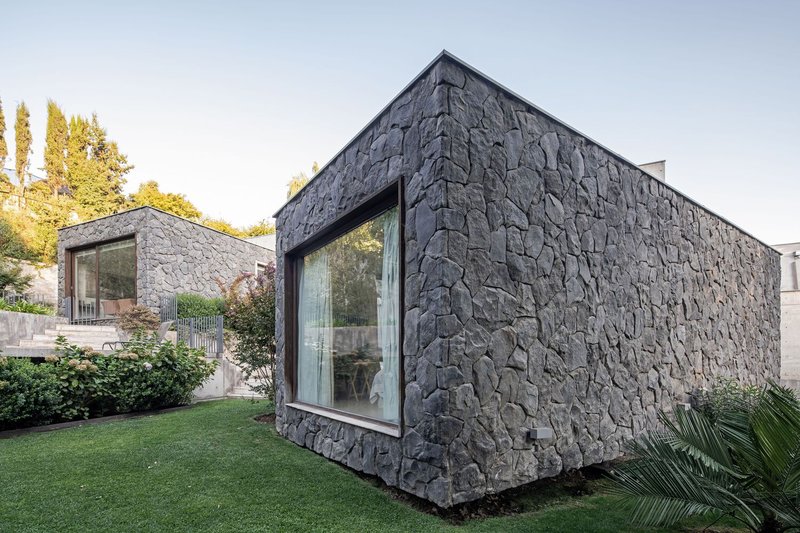
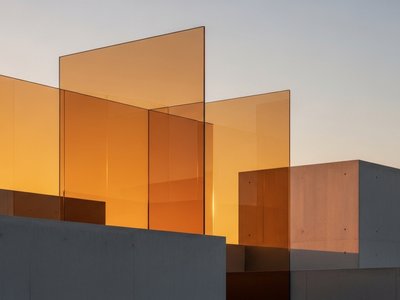
The volumetric composition is a play of contrasting materials: robust stone masses embedded into a larger concrete framework. This creates a visual rhythm and reinforces the dialogue between interior and exterior. The most striking gesture is the suspended stone volume housing the master bedroom, designed with a blind façade to block the avenue while projecting outward above the entry courtyard. Supported by diagonal concrete beams, it achieves both privacy and a sense of architectural lightness.
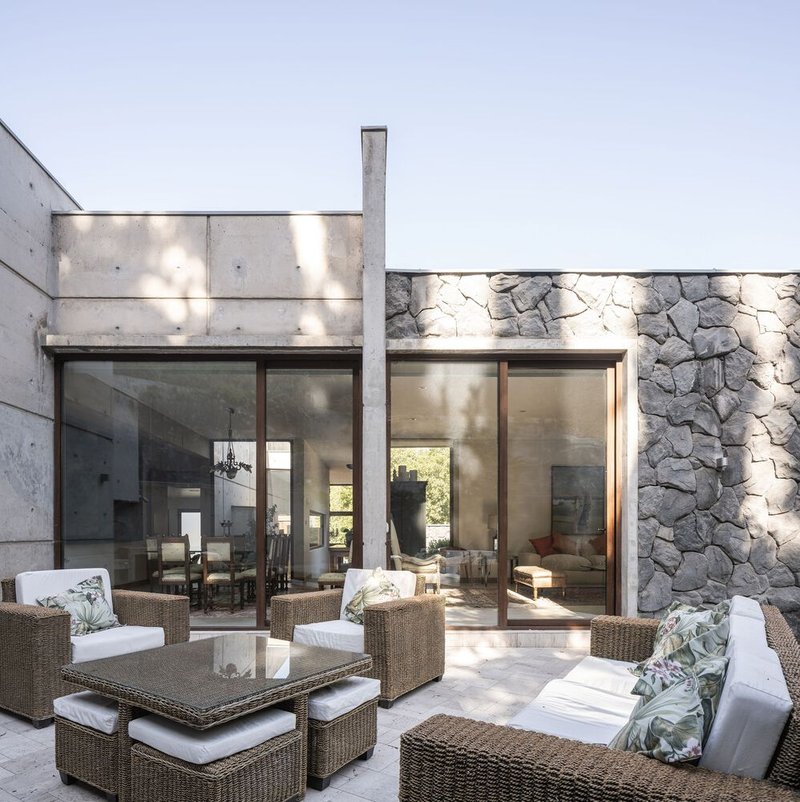
Through its sensitive handling of terrain, materiality, and light, House Trapenses demonstrates how contemporary Chilean architecture can balance urban privacy, natural integration, and expressive form.
All Photographs are works of Nico Saieh




Popular Articles
Popular articles from the community


Solar Steam: A Climate-Responsive Architecture That Redefines the Monument
A climate-responsive memorial architecture that transforms heat, decay, and time into a living system reflecting humanity’s ecological impact.


The Ken Roberts Memorial Delineation Competition (Krob)
As the most senior architectural drawing competition currently in operation anywhere in the world, it draws hundreds of entries each year, awarding the very best submissions in a series of medium-based categories.



Free Architecture Competitions You Can Enter Right Now
No entry fees, real prizes. Here are the best free architecture competitions open for submissions in 2026.


Similar Reads
You might also enjoy these articles
The Ken Roberts Memorial Delineation Competition (Krob)
As the most senior architectural drawing competition currently in operation anywhere in the world, it draws hundreds of entries each year, awarding the very best submissions in a series of medium-based categories.

Waterfront Redevelopment and Urban Revitalization in Mumbai: Forging a New Dawn for Darukhana
A transformative waterfront redevelopment project reimagining Darukhana’s shipbreaking heritage into an inclusive urban future.

OUT-OF-MAP: A Call for Postcards on Feminist Narratives of Public Space
Rhizoma Design and Research Lab invites artists, designers, architects, researchers, and students to reflect on how feminist perspectives can reshape public space. Selected works will be exhibited in Barcelona, October 2026. Submissions open until 15 April 2026.


Documentation Work on Buddhist Wooden Temple
Architectural syncretism and cultural hybridity: A comparative study of the Buddhist temples in Chattogram Hill tracks


Explore Architecture Competitions
Discover active competitions in this discipline




The International Standard for Design Portfolios


The Global Benchmark for Architecture Dissertation Awards


The Global Benchmark for Graduation Excellence


Challenge to reimagine the Iron Throne
Comments (0)
Please login or sign up to add comments
No comments yet. Be the first to comment!