
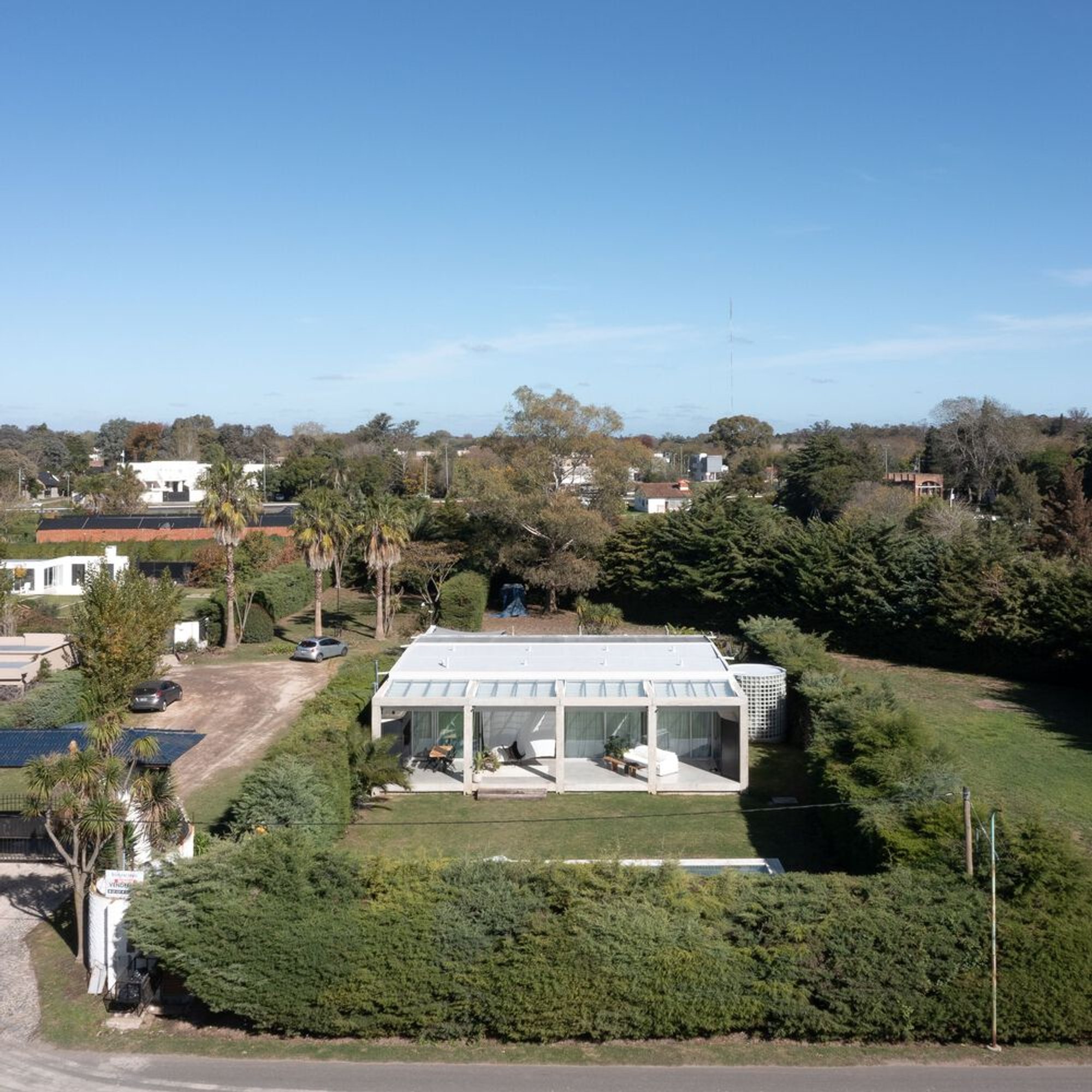
House with Columns: A Modern Architectural Masterpiece
House with Columns is a modular, prefabricated concrete home blending indoor and outdoor spaces through a flexible, grid-based architectural design.

Innovative Residential Design in Villa Elisa, Argentina
Located in Villa Elisa, near Parque Pereyra on the outskirts of La Plata, House with Columns by Iñaki Harosteguy redefines modern residential architecture with its structural purity and spatial flexibility. Though rooted in a specific location, its autonomous and timeless design makes it easy to imagine in various settings.
Architectural Concept: A Playful Yet Ordered System
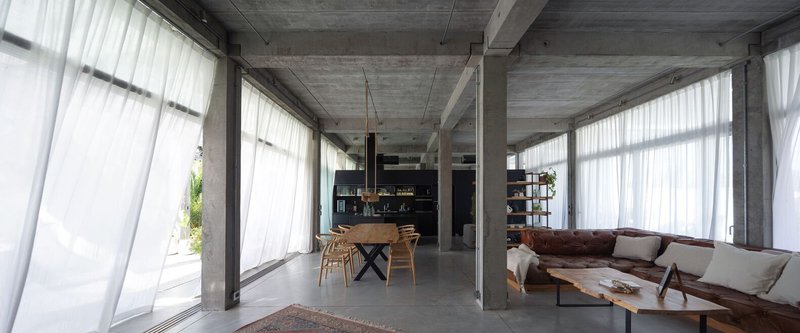
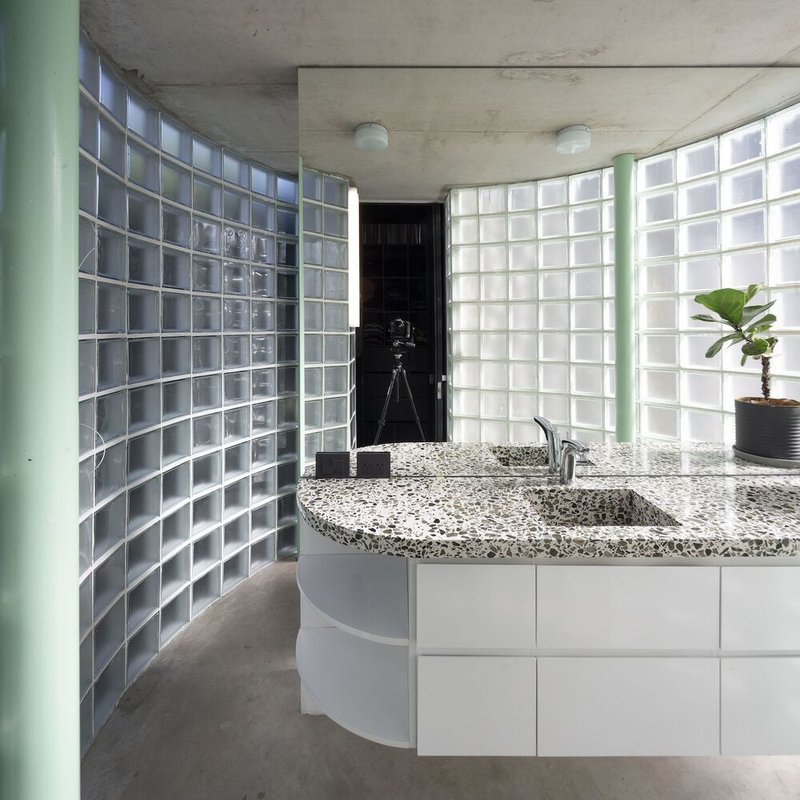
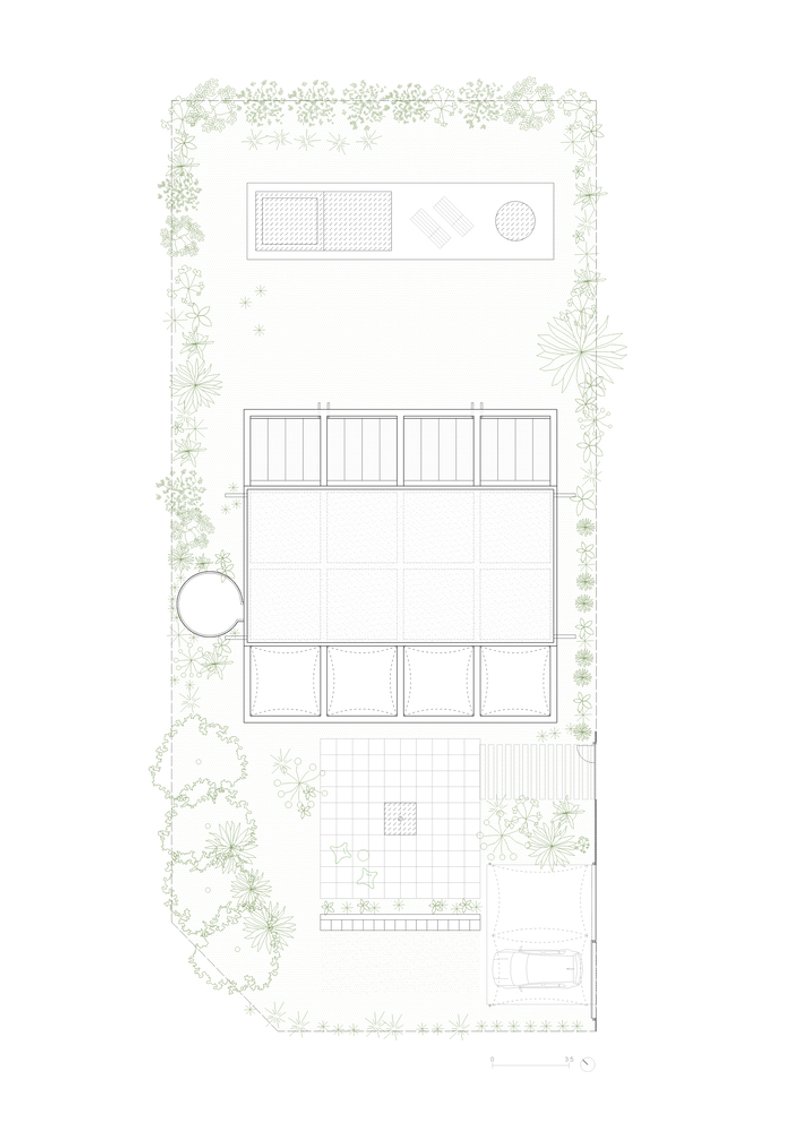
This 210 m² residence, completed in 2022, embodies an experimental approach to composition. The project is conceived as a structured yet open-ended design game, where strict architectural rules generate freedom rather than impose limitations. Inspired by classical principles, the house explores a grid-based layout, transitioning from the canonical Nine Squares to a more non-hierarchical Sixteen Squares system.
Structural Elements: Prefabricated Concrete and Modular Grid
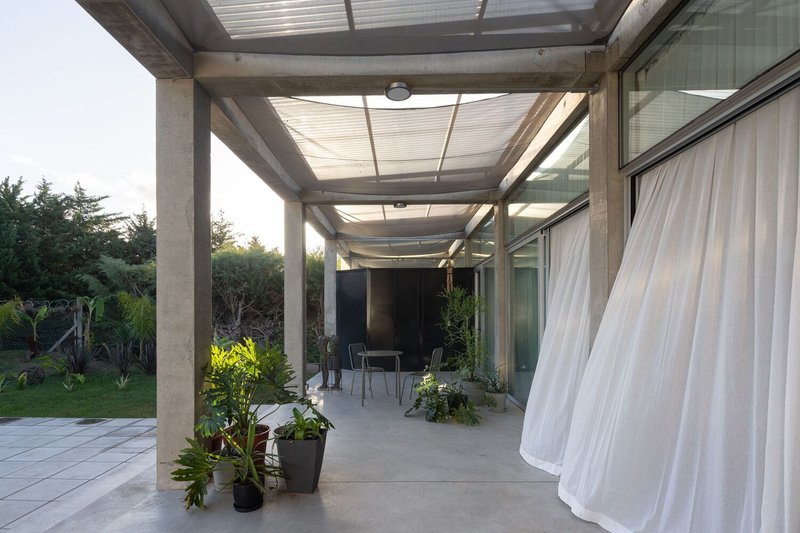
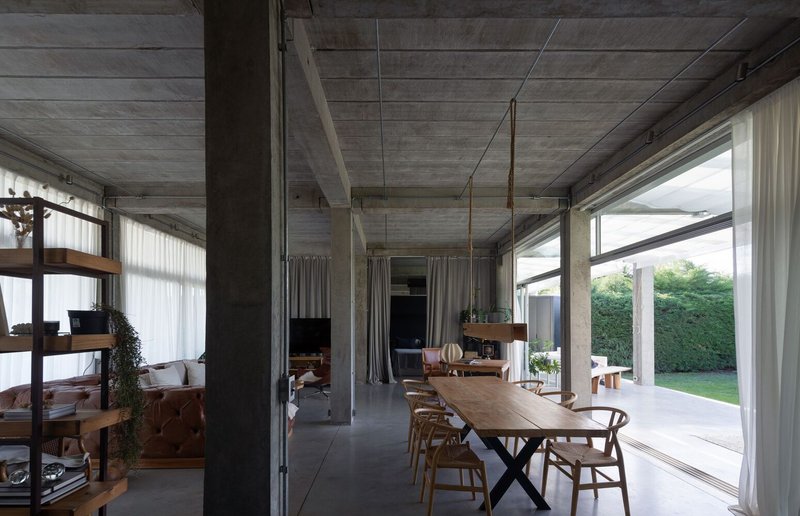
At the core of the design is a Sol LeWitt-inspired structural system, composed of prefabricated concrete columns and beams arranged in a 3.5-meter modular grid. This grid establishes a hypostyle hall, an abstract forest of vertical supports that defines both form and function. The equidistant pillars and simply supported beams create a rhythmic, visually dynamic space that encourages interaction between occupants and their surroundings.
A Dynamic Interaction Between Interior and Exterior Spaces
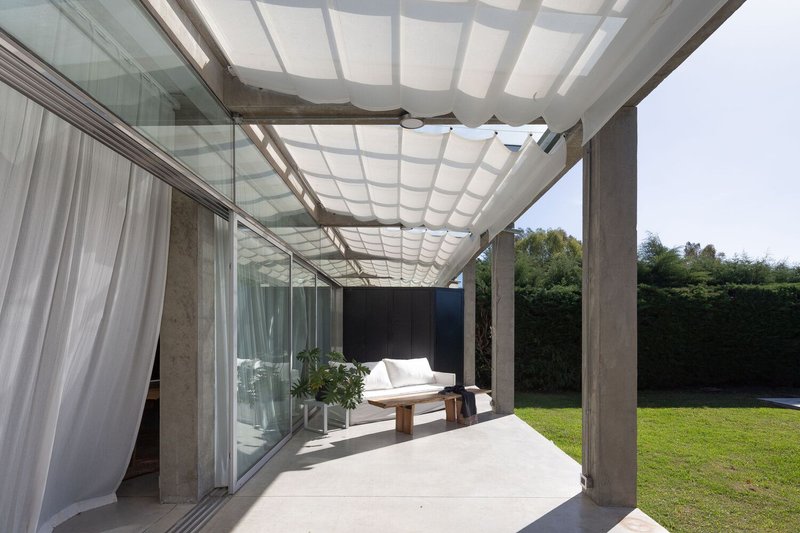
A key aspect of the house is its blurring of boundaries between indoor and outdoor environments. Instead of rigid enclosures, the design incorporates temporary, flexible skins and accumulative filters, allowing for passive climate control and an ever-evolving spatial experience. Covered patios and diffuse atmospheres create intermediate zones, where natural elements seamlessly integrate with built forms.
A Living, Evolving Space: Open to Interpretation
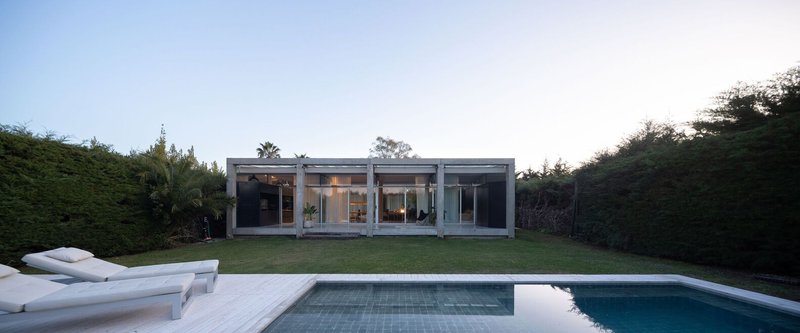
Unlike traditional residential architecture, the House with Columns remains deliberately open-ended, ready to adapt to different uses and interpretations. The design recalls the utopian visions of Archizoom, where architectural frameworks serve as platforms for dynamic human activity rather than fixed spatial programs. This “No-Stop” isotropic space creates endless perceptual and functional possibilities, making the house both a shelter and a stage for life.
A Contemporary Hypostyle Hall for Modern Living
Ultimately, Iñaki Harosteguy’s House with Columns functions as a skeptical hypostyle hall, where architecture is reduced to its fundamental role of ordering space while embracing the natural disorder of life. Through its modular grid, prefabricated elements, and open-ended configuration, the house presents an architectural paradox—rigid yet fluid, structured yet flexible—creating an environment where design and spontaneity coexist in perfect balance.
All Photographs are works of Javier Agustín Rojas




Popular Articles
Popular articles from the community

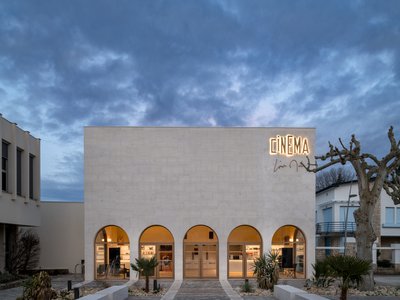
Louis Malle Cinema: A Limestone Cultural Landmark Revitalizing Community Life in Prayssac
Limestone cinema extension with public forecourt, blending heritage and modern design to create flexible cultural spaces and strengthen community interaction.
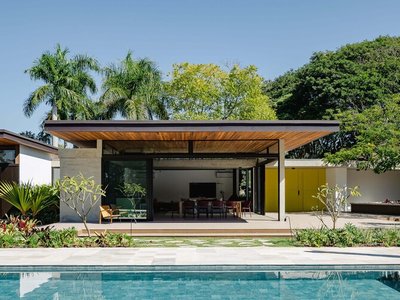
Flamboyant House by Juliana Camargo + Prumo Projetos
Modern Brazilian house integrating existing tree, pool, and volumes with glass, wood, and transitional spaces blending interior, exterior, and landscape seamlessly.
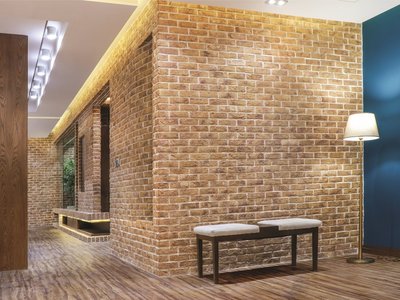
A Contemporary Take on Iranian Residential Architecture
A modern interior design in Mashhad that reinterprets brick, light, and spatial flow to create a warm, contemporary residential architecture.
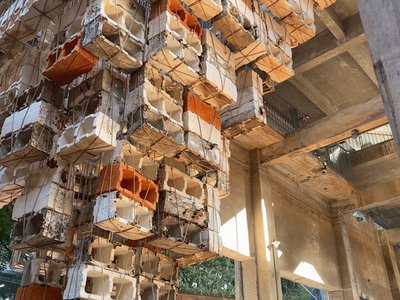
Inverted Architecture Installation by Studio Link-Arc: Exploring the Intersection of Architecture and Living Organisms
Inverted Architecture Installation by Studio Link-Arc blends mycelium, sustainability, inverted design, ecological cycles, and urban adaptive architecture in Shenzhen.


Similar Reads
You might also enjoy these articles


The Ken Roberts Memorial Delineation Competition (Krob)
As the most senior architectural drawing competition currently in operation anywhere in the world, it draws hundreds of entries each year, awarding the very best submissions in a series of medium-based categories.

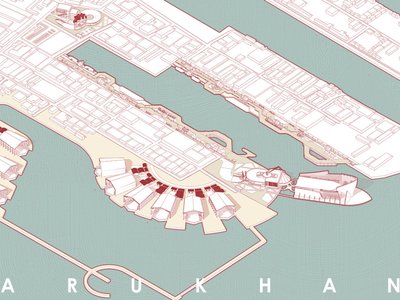
Waterfront Redevelopment and Urban Revitalization in Mumbai: Forging a New Dawn for Darukhana
A transformative waterfront redevelopment project reimagining Darukhana’s shipbreaking heritage into an inclusive urban future.

OUT-OF-MAP: A Call for Postcards on Feminist Narratives of Public Space
Rhizoma Design and Research Lab invites artists, designers, architects, researchers, and students to reflect on how feminist perspectives can reshape public space. Selected works will be exhibited in Barcelona, October 2026. Submissions open until 15 April 2026.


Documentation Work on Buddhist Wooden Temple
Architectural syncretism and cultural hybridity: A comparative study of the Buddhist temples in Chattogram Hill tracks


Explore Architecture Competitions
Discover active competitions in this discipline




The International Standard for Design Portfolios


The Global Benchmark for Architecture Dissertation Awards


The Global Benchmark for Graduation Excellence


Challenge to reimagine the Iron Throne
Comments (0)
Please login or sign up to add comments
No comments yet. Be the first to comment!