
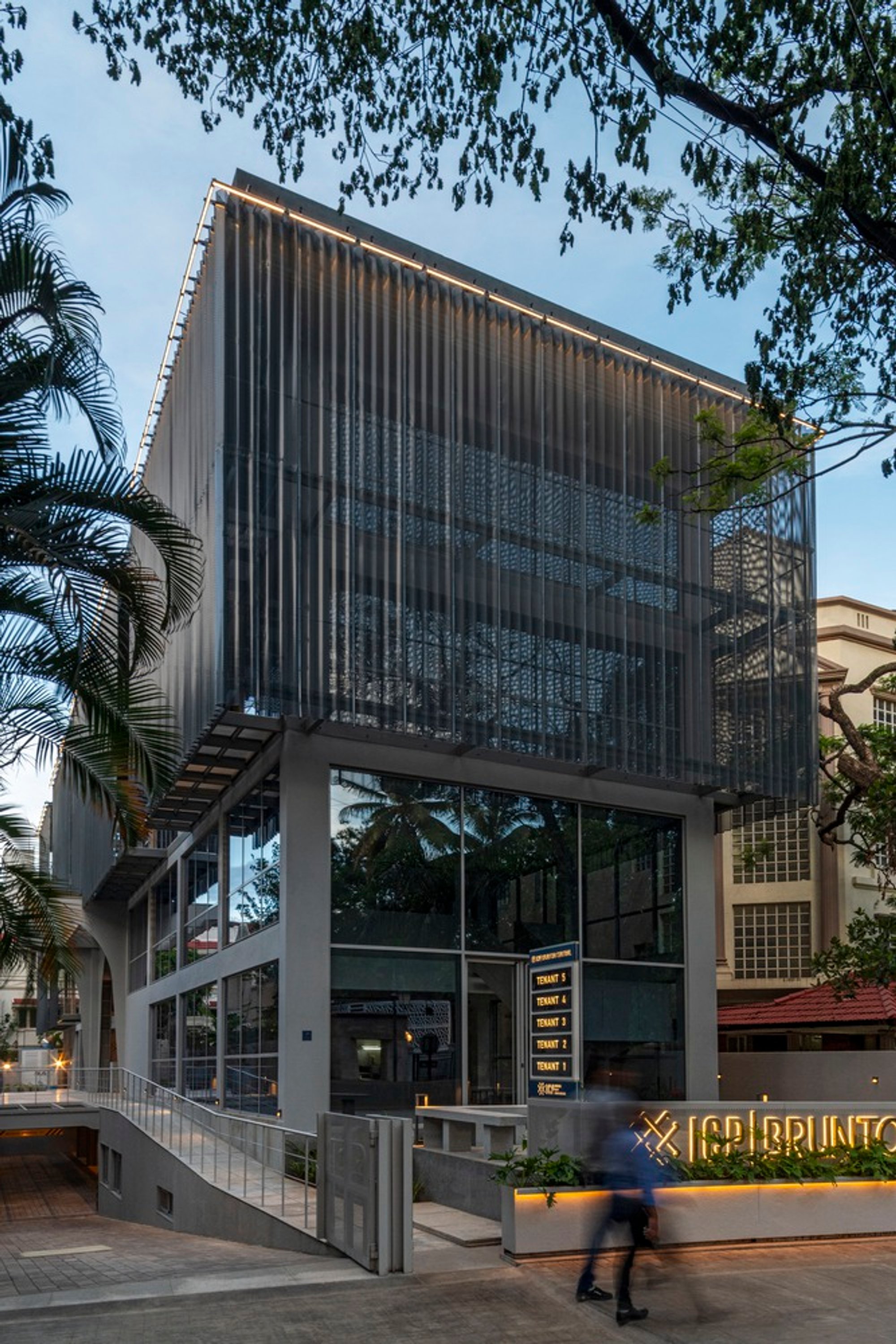
ICP Brunton Central: Adaptive Reuse and Sustainable Commercial Architecture in Bengaluru
Sustainable commercial renovation in Bengaluru reuses existing structure with a modern façade, improved circulation, and energy-efficient, adaptive design strategies.

By Mathew and Ghosh Architects
Location: Bengaluru, India Typology: Commercial Office Building, Mixed-Use Development Project Area: 20,846 ft² Completion Year: 2023 Architects: Mathew and Ghosh Architects Photographers: Suryan//Dang, Soumitro Ghosh
Contextual Transformation in the Heart of Bengaluru
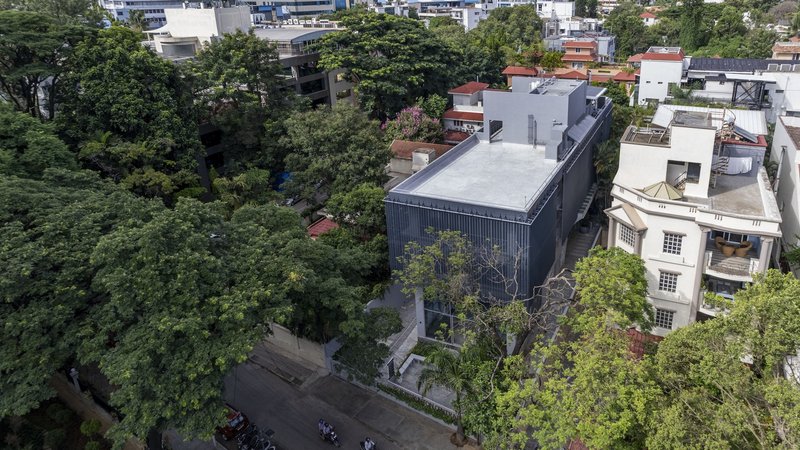
ICP Brunton Central is a forward-thinking architectural renovation project situated in a rapidly transforming district of Bengaluru. Originally a quiet residential villa zone with mid-20th century homes, the area evolved into a vibrant commercial corridor with the rise of India’s IT sector. Its proximity to the city’s Central Business District (CBD) and the new metro connectivity catalyzed the shift, making it ideal for commercial redevelopment.
Sustainable Adaptive Reuse as a Design Ethos
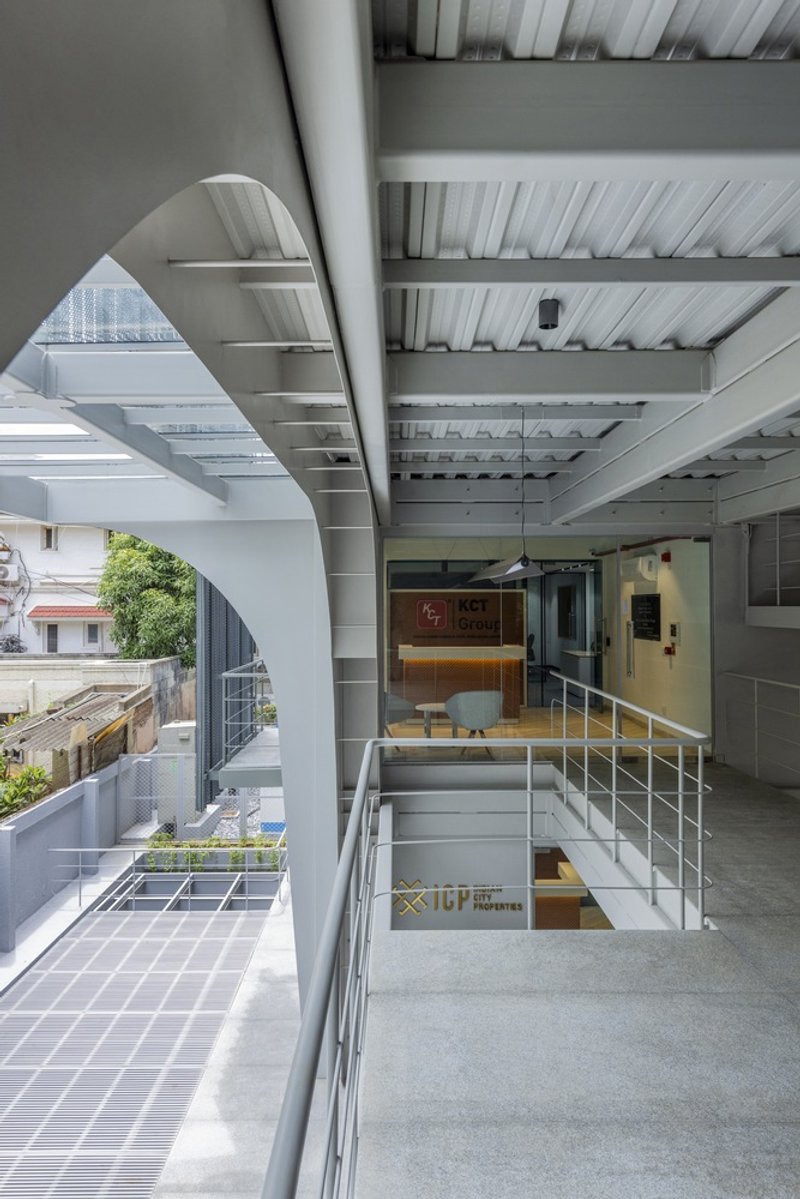
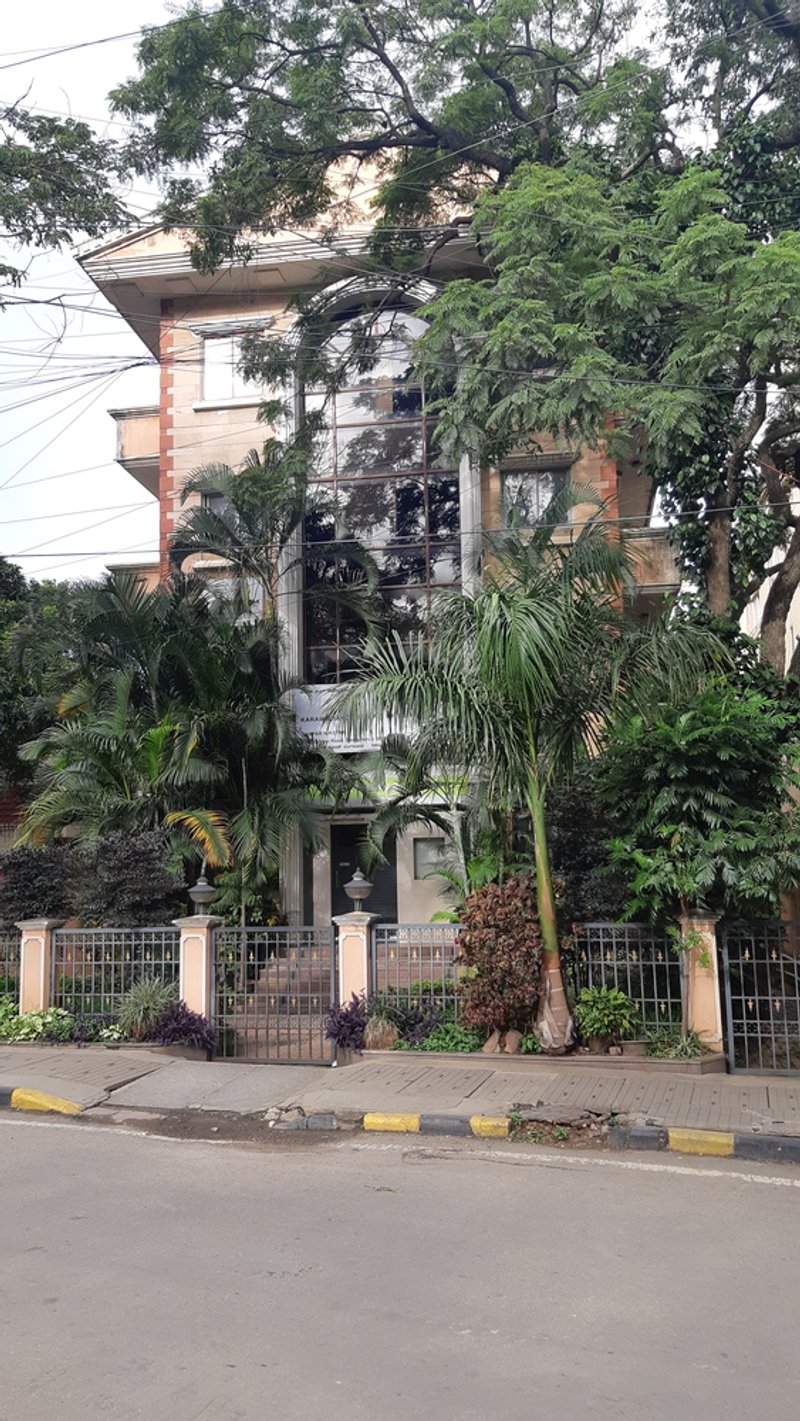
In response to the client’s desire to reposition the property for the rental market, Mathew and Ghosh Architects approached the project through the lens of adaptive reuse. The existing structure—nearly four decades old—was retained and reimagined with minimal demolition, in line with the philosophy that “the most sustainable building is the one that is already built” (Carl Elefante).
Rather than a complete teardown, the design strategy revolved around restoring and upgrading the old RCC (reinforced concrete cement) frame with targeted interventions. This sustainable architecture approach not only conserved resources but also honored the legacy of the site.
Reimagining Circulation and Light
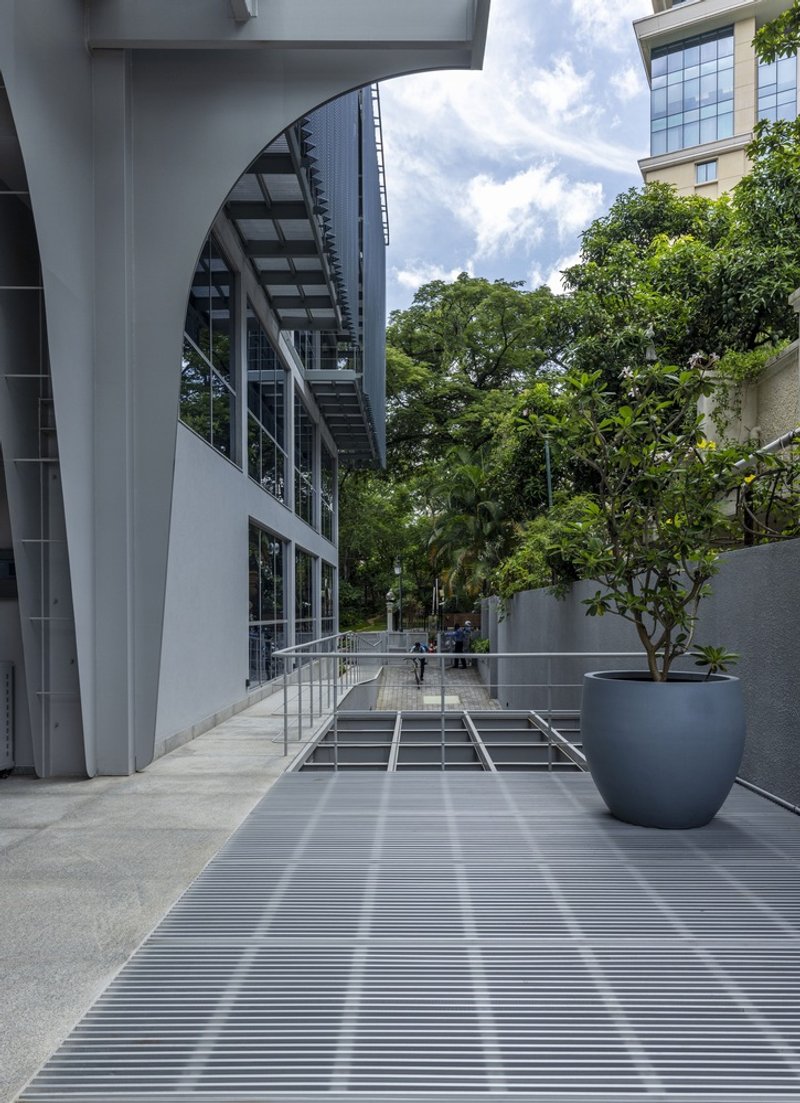
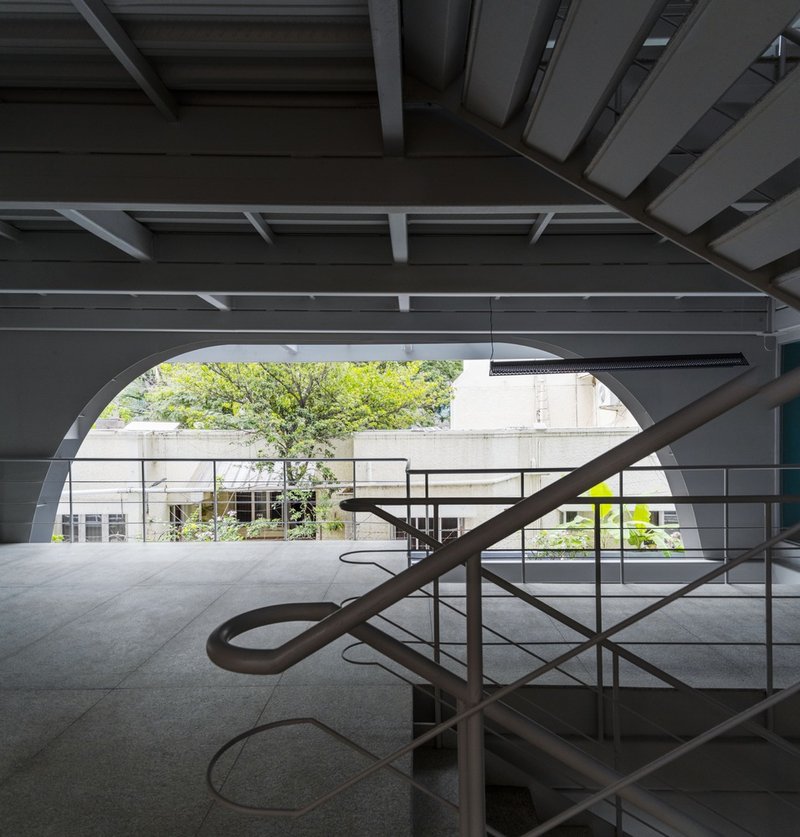
A significant design challenge was transforming the outdated, constrained vertical circulation core. Originally equipped with a small elevator and narrow staircase, the circulation zone was expanded by adding a new structural bay. The redesigned lobby now functions as a light-filled communal space that fosters informal interaction and connection with the outdoors—well-suited to Bengaluru’s pleasant climate.
Spatial Strategy: Division and Integration
The intervention split the existing volume into a front and rear zone, united by a new vertical core that acts as both hinge and bridge. This new structural link integrates the old basement and above-ground RCC components into a cohesive whole.
The front section of the ground floor, designed for retail or café use, features a dramatic double-height space created by removing a slab bay—offering direct visibility and interaction with the street. The rest of the building maintains the original RCC slabs, preserving structural continuity while updating usability.
Structural Reinforcements and Basement Waterproofing
Basement spaces were also upgraded to suit modern demands. Water ingress had previously compromised the usability of the lower level. To resolve this, the original granite stone masonry walls were reinforced with a concrete waterproofing layer, making the basement resilient to groundwater pressure. Additionally, the retaining wall adjoining a neighboring elevated plot was structurally stabilized using a new steel cross-frame system.
Modernized Façade with Energy Efficiency in Focus
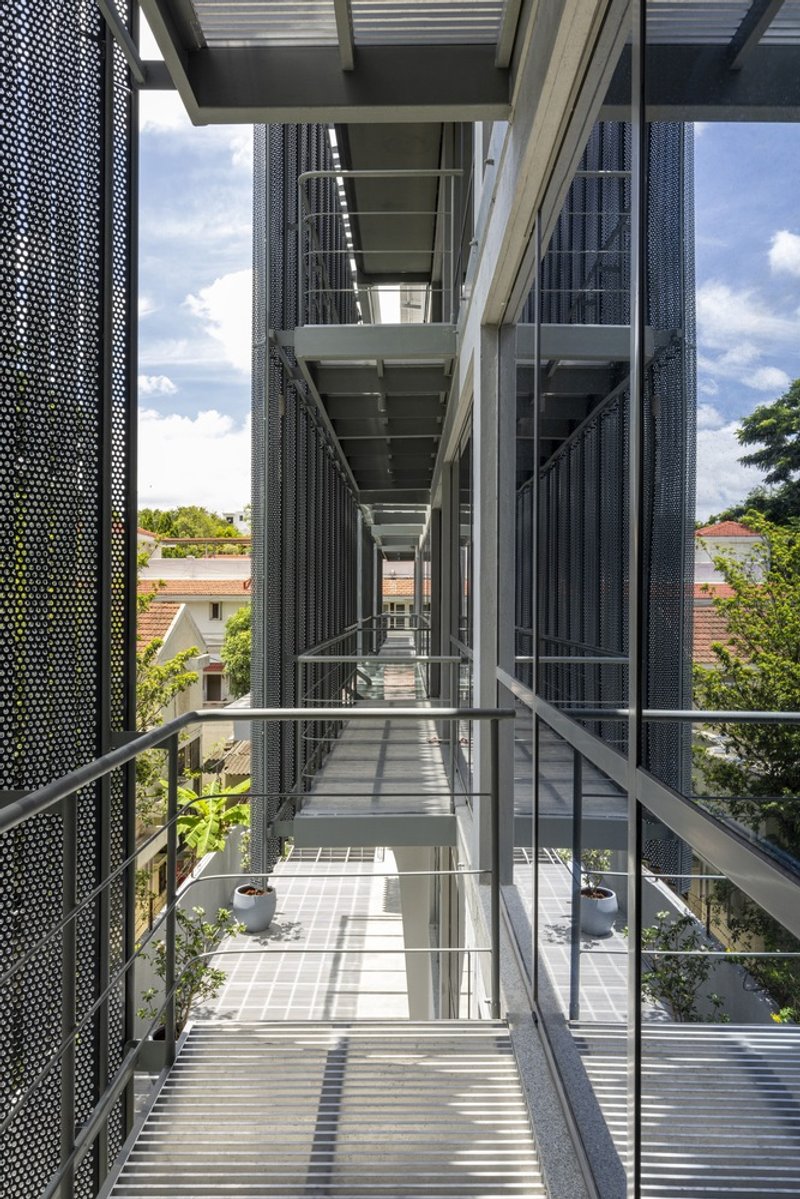
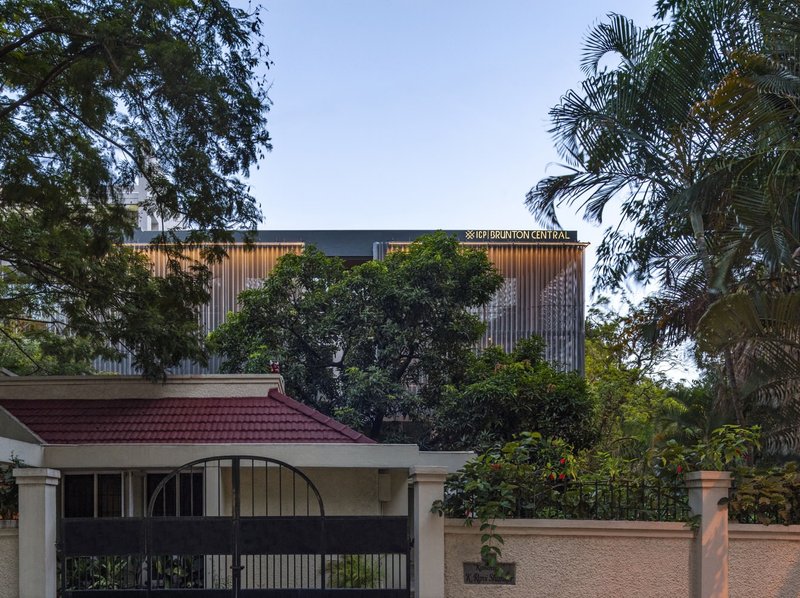
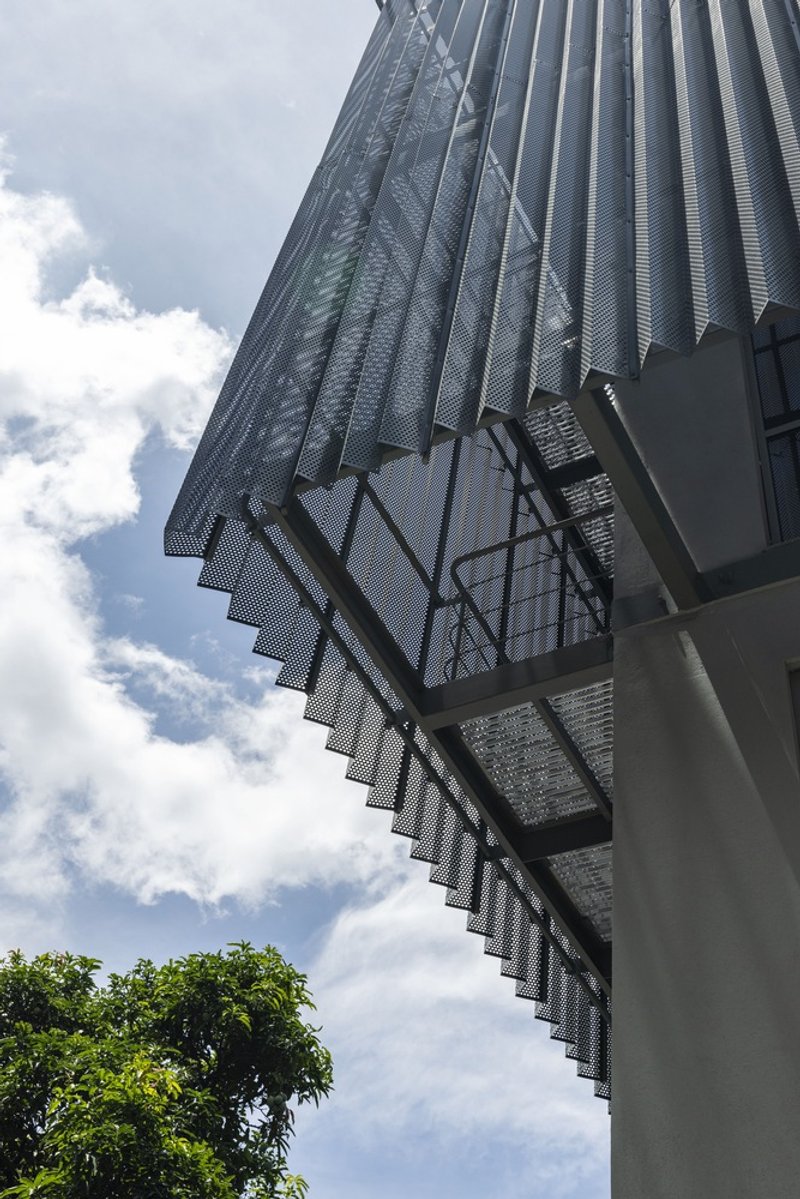
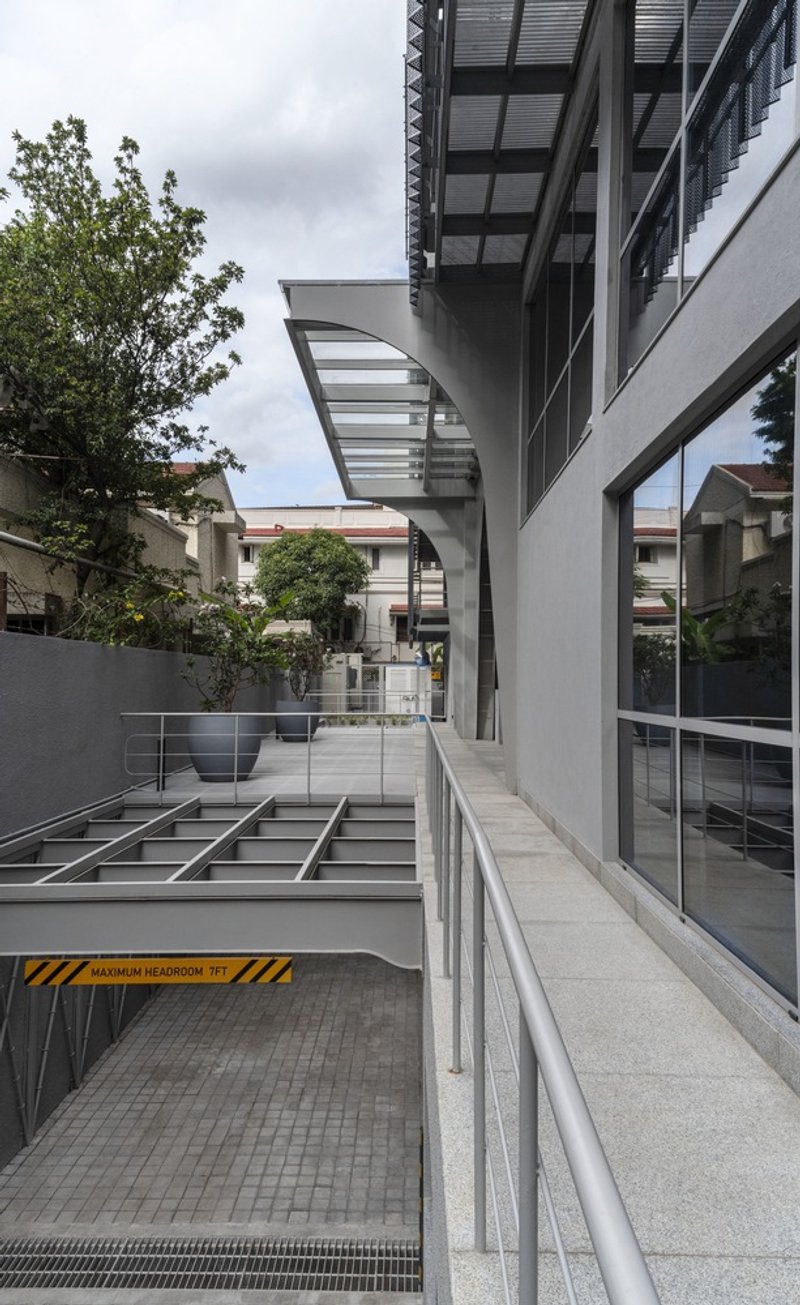
The outdated masonry façade was replaced with a dynamic combination of fixed and openable glazing systems, while old RCC balconies were substituted with aluminum slat balconies supported by mild steel frames. A striking new façade of perforated, folded aluminum-coated metal sheets was added—serving multiple functions:
- Structural Strength via folding geometry
- Solar Shading for internal climate regulation
- Visual Transparency allowing filtered views of trees and sky
- Energy Savings by reducing cooling loads
This modern architectural skin connects directly to the building’s steel-framed balconies and railings, enhancing stability and offering a unified aesthetic.
Environmentally Responsible Design Outcomes
The project exemplifies circular construction and frugal innovation. By preserving the core structural elements and focusing on intelligent upgrades, ICP Brunton Central minimizes new construction and environmental impact. Key sustainable features include:
- Material reuse of existing RCC structures
- Reduced construction waste and debris
- Shaded glazing for thermal comfort
- Rainwater reuse systems
- Minimal tree removal on site
These thoughtful interventions align the project with long-term urban sustainability goals in dense commercial districts.
Project Credits
Electrical Contractor: Minchu Landscape Contractor: Sai Landscapes Material Partners: Saint-Gobain, Green Facade Solutions, Hybec, Kajaria, Kohler
All photographs are works of
Suryan//Dang, Soumitro Ghosh




Popular Articles
Popular articles from the community

Inverted Architecture Installation by Studio Link-Arc: Exploring the Intersection of Architecture and Living Organisms
Inverted Architecture Installation by Studio Link-Arc blends mycelium, sustainability, inverted design, ecological cycles, and urban adaptive architecture in Shenzhen.
Treehouse Apartment: A Warm Timber Interior Blending Craft, Play, and Contemporary Living
Warm timber apartment with integrated treehouse, combining natural materials, craftsmanship, and playful design to create a flexible, family-oriented living environment.
On the Brooks House by Monsoon Collective – A Contemporary Kerala Home Rooted in Tradition
Kerala home blending tradition and modernity with water-inspired design, brick architecture, courtyard planning, and sustainable rainwater harvesting strategies.

Solar Steam: A Climate-Responsive Architecture That Redefines the Monument
A climate-responsive memorial architecture that transforms heat, decay, and time into a living system reflecting humanity’s ecological impact.


Similar Reads
You might also enjoy these articles


The Ken Roberts Memorial Delineation Competition (Krob)
As the most senior architectural drawing competition currently in operation anywhere in the world, it draws hundreds of entries each year, awarding the very best submissions in a series of medium-based categories.

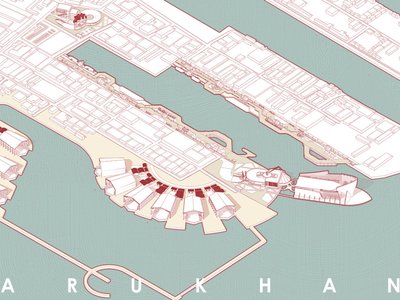
Waterfront Redevelopment and Urban Revitalization in Mumbai: Forging a New Dawn for Darukhana
A transformative waterfront redevelopment project reimagining Darukhana’s shipbreaking heritage into an inclusive urban future.
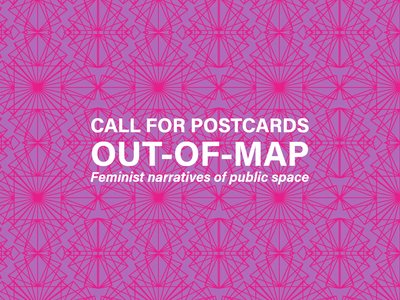
OUT-OF-MAP: A Call for Postcards on Feminist Narratives of Public Space
Rhizoma Design and Research Lab invites artists, designers, architects, researchers, and students to reflect on how feminist perspectives can reshape public space. Selected works will be exhibited in Barcelona, October 2026. Submissions open until 15 April 2026.

Documentation Work on Buddhist Wooden Temple
Architectural syncretism and cultural hybridity: A comparative study of the Buddhist temples in Chattogram Hill tracks


Explore Office Building Competitions
Discover active competitions in this discipline




The International Standard for Design Portfolios


The Global Benchmark for Architecture Dissertation Awards


The Global Benchmark for Graduation Excellence


Challenge to reimagine the Iron Throne
Comments (0)
Please login or sign up to add comments
No comments yet. Be the first to comment!