
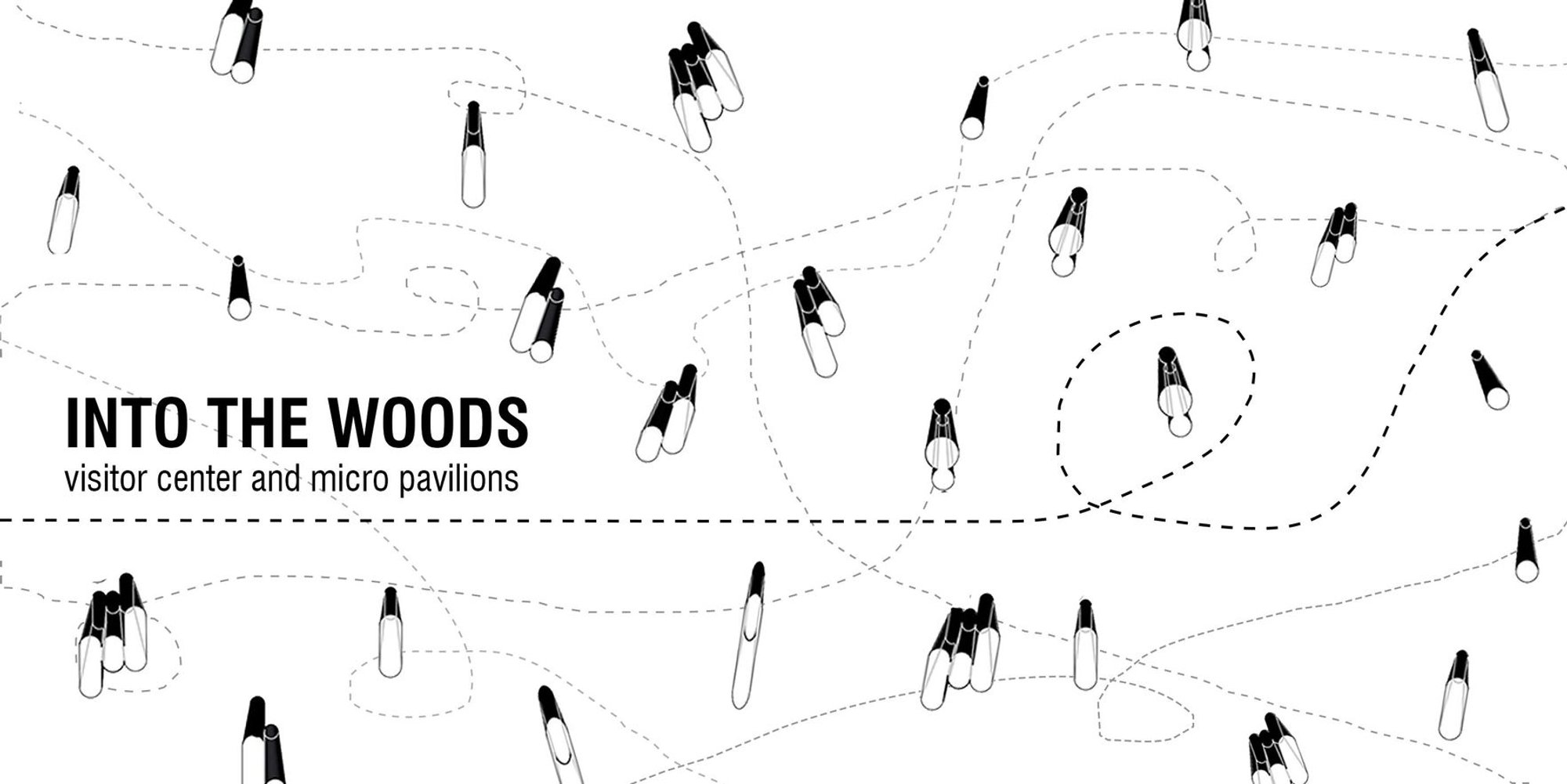
INTO THE WOODS – A Folklore-Inspired Eco-Architecture Visitor Center
Where folklore meets eco-architecture — a visitor center that preserves nature, inspires imagination, and celebrates sustainable design.

INTO THE WOODS visitor center and micro pavilions, a shortlisted entry in the WIC competition by Vedrana Djonic, blends the realms of fantasy literature and environmentally conscious design. Deeply influenced by J.R.R. Tolkien’s The Hobbit and The Lord of the Rings, this architectural project channels the author’s rich imagination, rooted in the British countryside where he spent his formative years. Tolkien’s vivid depictions of verdant meadows, dark woodlands, misty wetlands, and rustic villages come to life here through a visitor center that bridges myth, memory, and modern eco-architecture.
As Tolkien mourned the industrialization of Birmingham and found solace in his stories, this project similarly finds peace in the union of architecture and landscape. It transforms the tension between nature and human development into an opportunity for harmony, using sustainable and adaptive design principles to honor both ecological systems and the narrative imagination.
A Landscape Narrated Through Design
The initial design process mirrored Tolkien’s own cartographic practice—hand-drawing maps to uncover hidden topographies and conceptual possibilities. This journey began with identifying natural features like the Mystic Lake, Field of Grass, Valley of the Trees, and Wetland Region—each representing a different mood and story point within the greater landscape. These landmarks informed the architecture’s spatial distribution and experiential sequence.
Key architectural elements inspired by Tolkien’s world include:
- Vaulted ceilings resembling Hobbit-hole interiors, creating a sculptural, cave-like shelter
- Meandering forest paths that suggest spontaneity and exploration
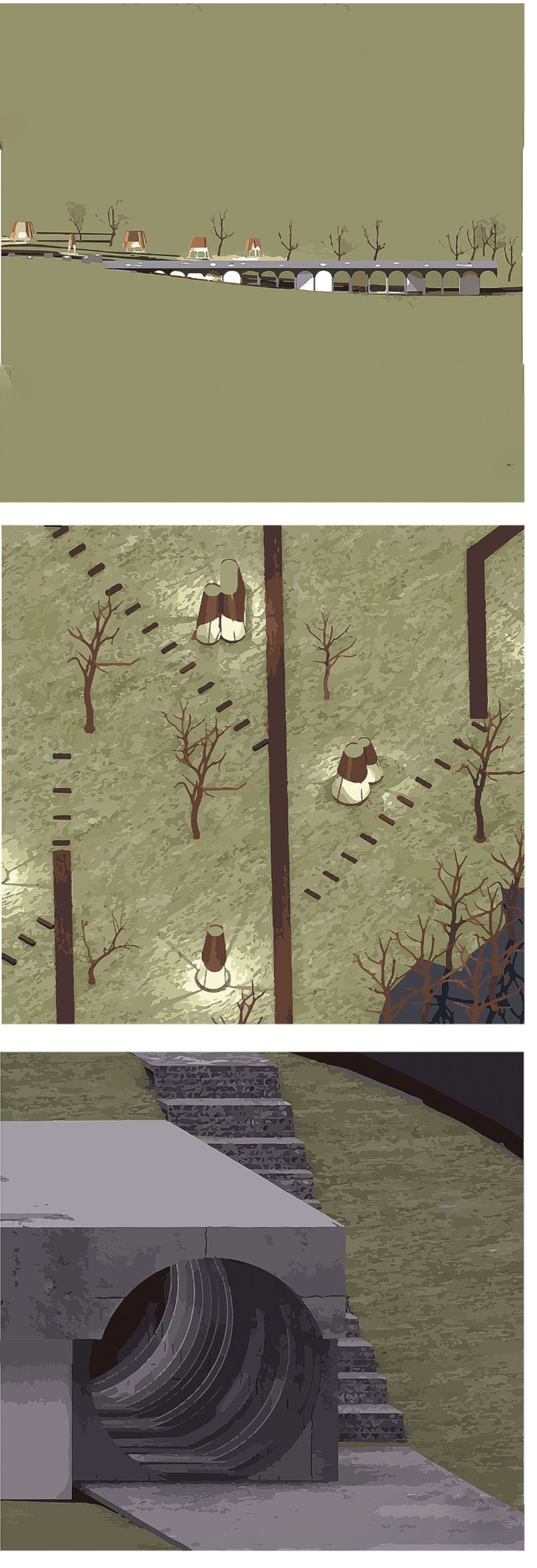
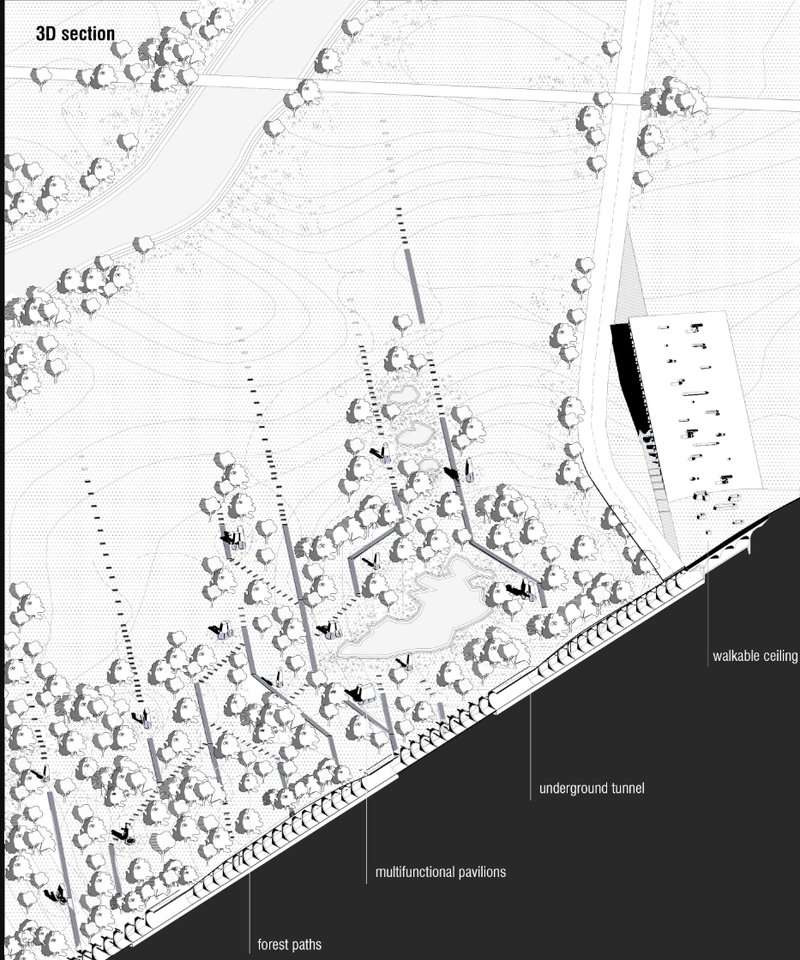
- Circular tunnels referencing secret passageways that guide visitors across the site’s two zones
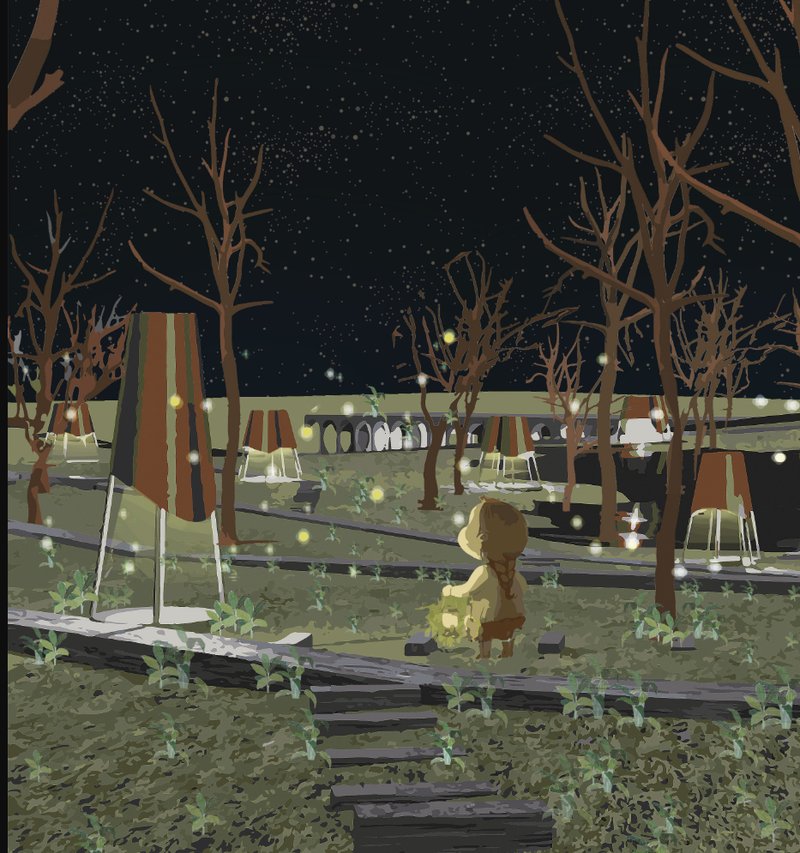
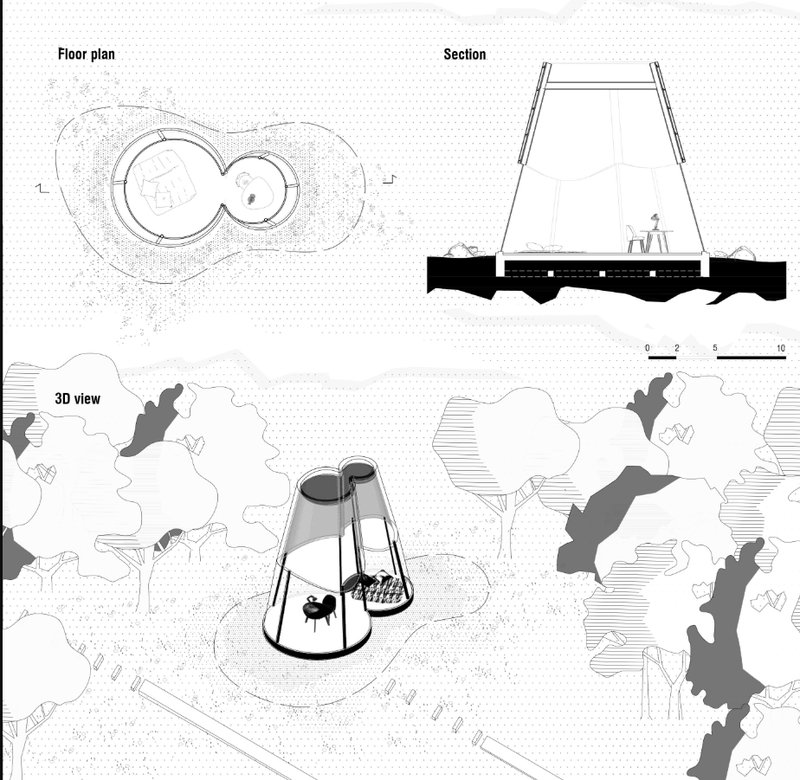
- Micro-pavilions evoking the idea of hidden sanctuaries or hideouts discovered during an epic journey
These components were iterated through sketches and digital modeling, developing a design language that is both functionally efficient and emotionally resonant.
Phased Architectural Evolution
The construction unfolds in two primary phases that reflect both practical constraints and narrative logic.
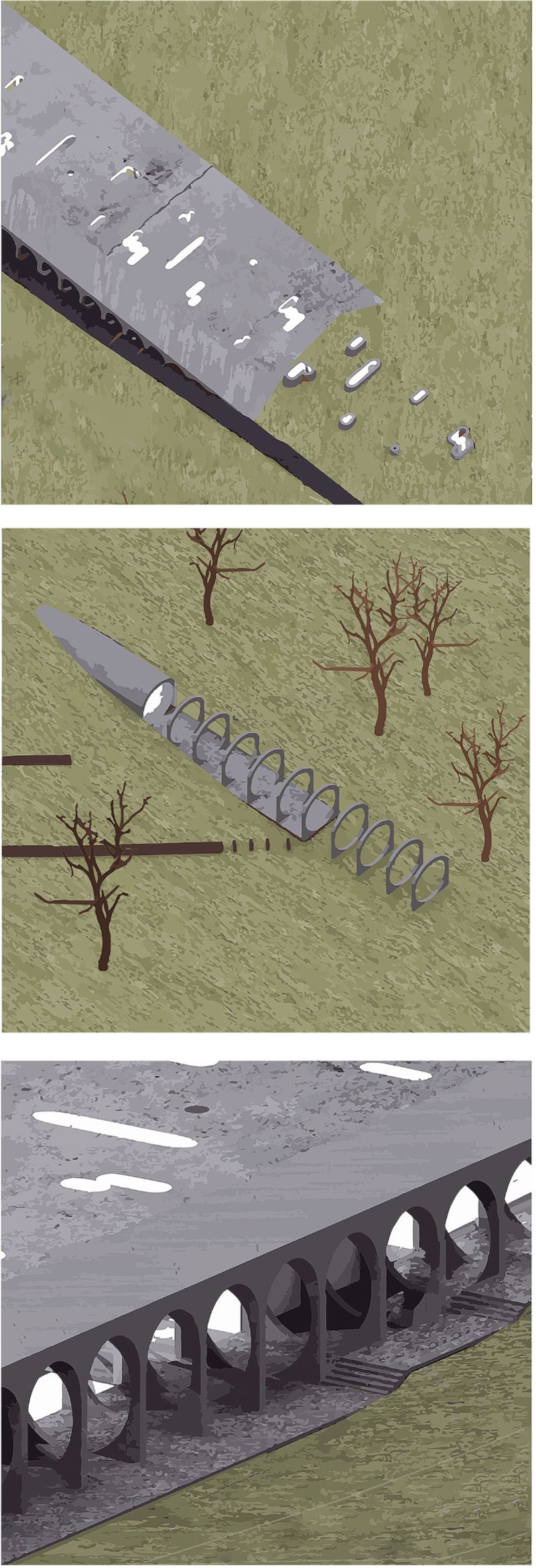
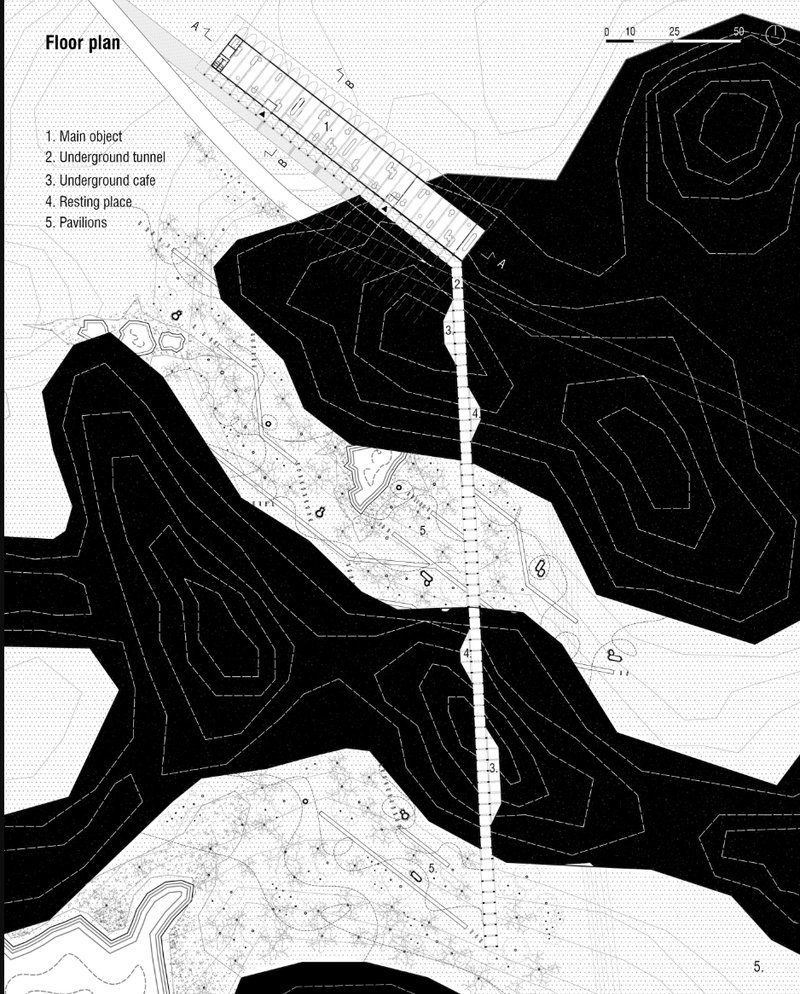
Phase 1 features the primary structure of the visitor center. This long, linear volume is semi-submerged, following the contours of the natural topography. The vaulted ceiling—cast in concrete and shaped by forms extracted from wetland textures—rises sculpturally above the meadow. Its roof is walkable, blending building and terrain, while full-length glazing on two sides dissolves the boundaries between interior and the surrounding scenery.
Phase 2 expands the project into the forest with a network of small-scale pavilions, placed with minimal ecological impact. These are built using prefabricated wooden panels and translucent membranes that allow natural light to permeate while maintaining harmony with the setting. An underground tunnel—beginning as a surface-level porch at the visitor center—transforms into a hidden walkway beneath the terrain, connecting to the pavilions with pauses for rest zones and cafés that mimic Tolkien’s “burrows” of safety and warmth.
A Modular, Adaptive Program for Contemporary Use
The program is designed for adaptability and long-term sustainability, aligning with core values of eco-architecture:
- The visitor center hosts a café, souvenir shop, gallery, flexible workspaces, and a multifunctional event hall.
- The space accommodates diverse use cases: from daily co-working and educational seminars to ecological research and cultural exhibitions.
- Pavilions can transform from quiet meditation shelters to art galleries or scientific labs, supporting nature-focused residencies or public events.
This multi-use, modular planning makes the architecture resilient and expandable, able to evolve alongside both environmental changes and user needs.
Sustainable Materials & Minimal Environmental Disruption
Material choices and construction techniques prioritize low-impact, high-performance solutions:
- Concrete: Molded into expressive forms to create the vaulted ceiling and tunnel, offering durability and sculptural integrity
- Glass: Used along the visitor center’s longitudinal walls to establish transparency and continuous visual contact with nature
- Wooden trails: Designed to disappear intermittently, minimizing footprint and letting vegetation reclaim space
- Prefabricated wood panels: Ensure quick, low-disruption assembly for the forest pavilions
- Textile membranes: Colored in earthy tones, these reduce visual intrusion and enhance the immersive woodland experience
At night, pavilions softly glow through spot lighting, transforming into points of mystery and magic amid the darkness—an architectural metaphor for wayfinding in a mythical landscape.
Celebrating Eco-Architecture through Storytelling
Into the Woods reveals how narrative and architectural form can merge to foster a deeper connection to place. It is more than a visitor center; it’s an open-ended stage for personal and collective stories that unfold across seasons. Each journey through its tunnel, paths, and pavilions invites reflection on our relationship with nature.
Visitors don’t simply observe the environment—they inhabit it as characters in a living fairytale. The project champions eco-architecture as not just a method of sustainable building, but as a philosophy of presence, stewardship, and imagination.
"If you really want to know what Middle-earth is based on, it's my wonder and delight in the earth as it is, particularly the natural earth." – J.R.R. Tolkien



Popular Articles
Popular articles from the community

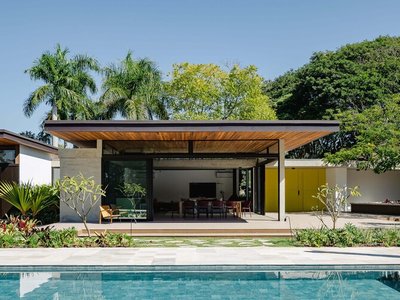
Flamboyant House by Juliana Camargo + Prumo Projetos
Modern Brazilian house integrating existing tree, pool, and volumes with glass, wood, and transitional spaces blending interior, exterior, and landscape seamlessly.
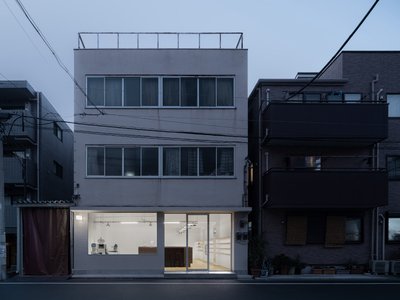
Atelier Macri Concept Store Interior Design by CASE-REAL
Atelier Macri store features a "ko" counter, walnut wood details, cork displays, blending retail, gallery, and seamless customer experiences.
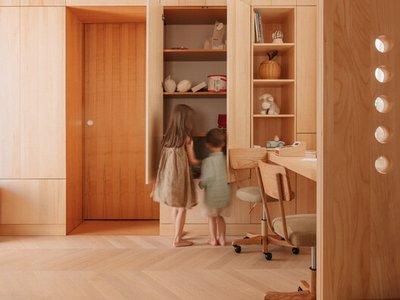
Treehouse Apartment: A Warm Timber Interior Blending Craft, Play, and Contemporary Living
Warm timber apartment with integrated treehouse, combining natural materials, craftsmanship, and playful design to create a flexible, family-oriented living environment.
On the Brooks House by Monsoon Collective – A Contemporary Kerala Home Rooted in Tradition
Kerala home blending tradition and modernity with water-inspired design, brick architecture, courtyard planning, and sustainable rainwater harvesting strategies.

Similar Reads
You might also enjoy these articles


The Ken Roberts Memorial Delineation Competition (Krob)
As the most senior architectural drawing competition currently in operation anywhere in the world, it draws hundreds of entries each year, awarding the very best submissions in a series of medium-based categories.

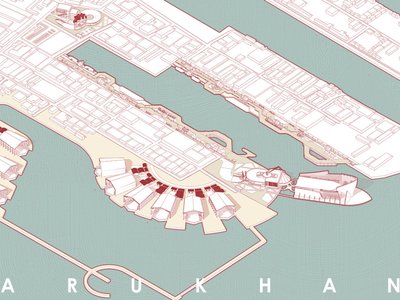
Waterfront Redevelopment and Urban Revitalization in Mumbai: Forging a New Dawn for Darukhana
A transformative waterfront redevelopment project reimagining Darukhana’s shipbreaking heritage into an inclusive urban future.
OUT-OF-MAP: A Call for Postcards on Feminist Narratives of Public Space
Rhizoma Design and Research Lab invites artists, designers, architects, researchers, and students to reflect on how feminist perspectives can reshape public space. Selected works will be exhibited in Barcelona, October 2026. Submissions open until 15 April 2026.

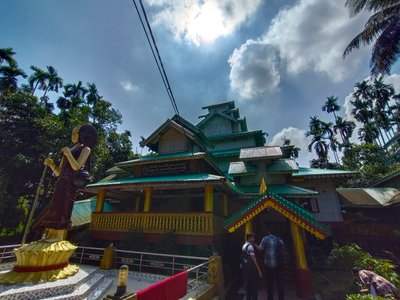
Documentation Work on Buddhist Wooden Temple
Architectural syncretism and cultural hybridity: A comparative study of the Buddhist temples in Chattogram Hill tracks

Explore Educational Building Competitions
Discover active competitions in this discipline




The Global Benchmark for Architecture Dissertation Awards


Challenge to design public laboratory


Design challenge to reuse E-waste
Comments (0)
Please login or sign up to add comments
No comments yet. Be the first to comment!