
Jinqiao Caojiagou Riverfront Renewal Design: A Modern Transformation of Urban Space
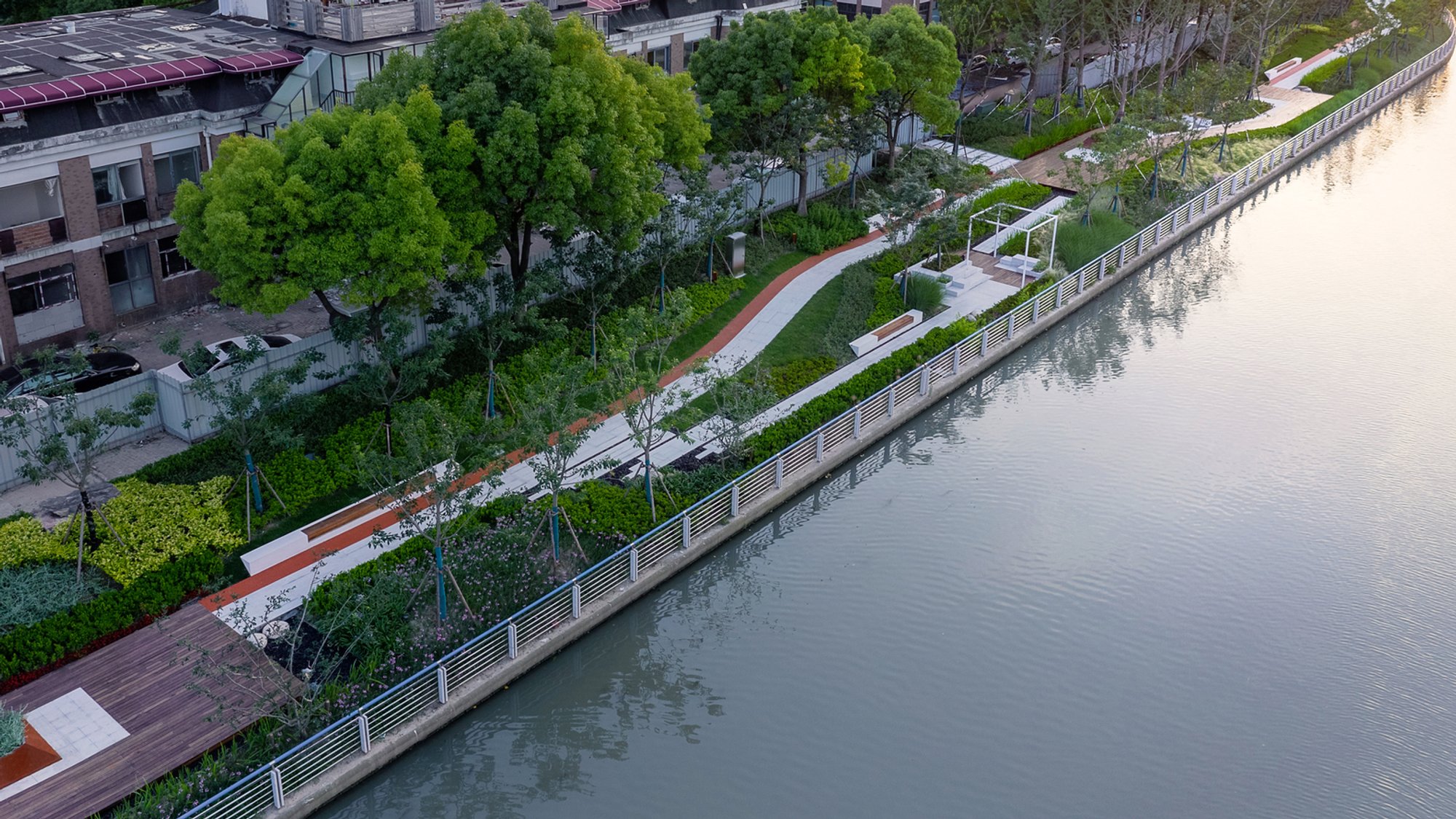
Jinqiao Caojiagou Riverfront Renewal transforms a neglected urban space into a vibrant, interactive, and sustainable community-centered public area.

The Jinqiao Caojiagou Riverfront Renewal design, conceived by VIASCAPE Design, marks a pivotal moment in the revitalization of an underused and neglected urban space in Shanghai, China. The project transforms the once desolate Caojiagou Riverfront, a tributary of the Huangpu River, into an interactive, accessible, and vibrant public space. This design process is an exploration of how to reconnect urban landscapes with daily life and create a functional, engaging environment for the local community.
The Need for Renewal
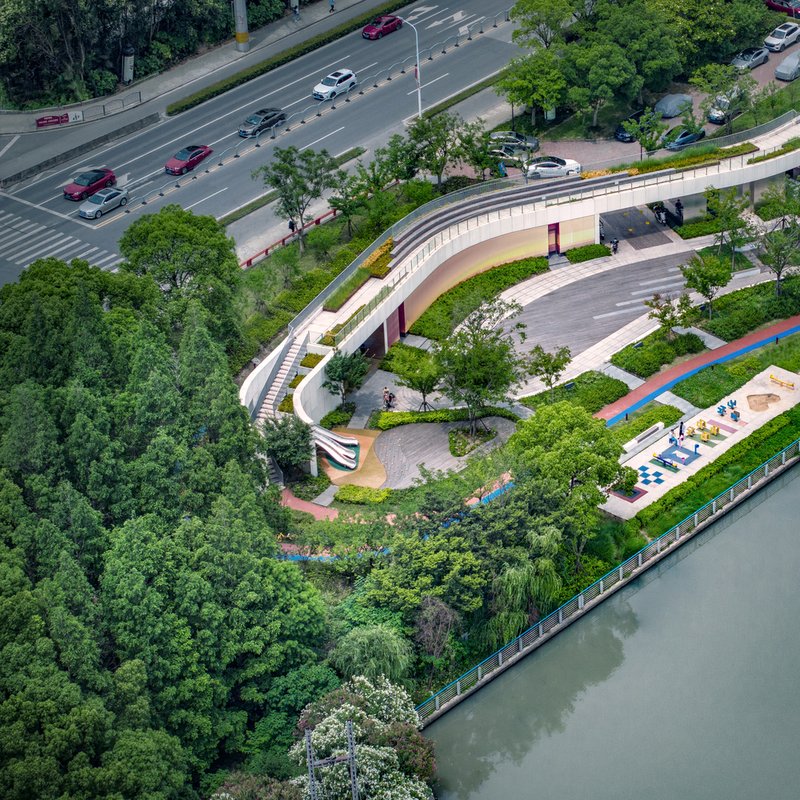
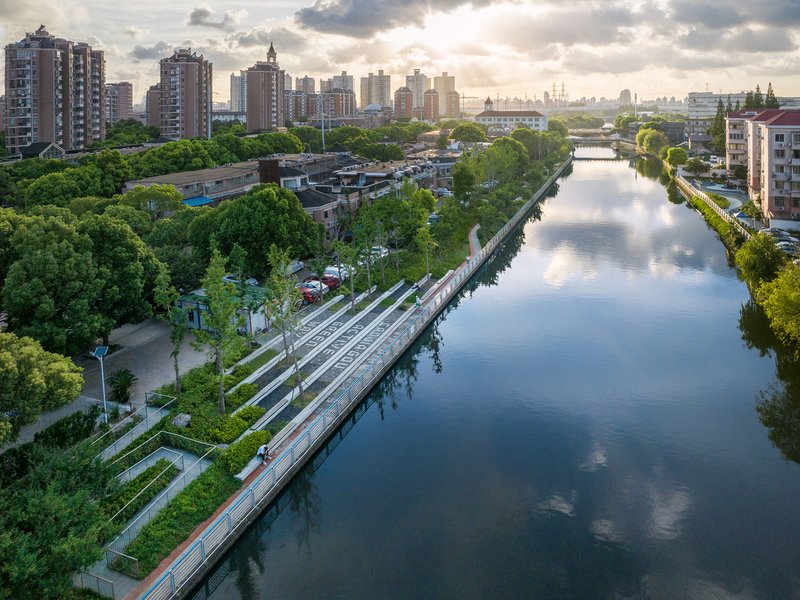
Before the renewal, the Caojiagou Riverfront, in stark contrast to the bustling Huangpu River or Suzhou Creek, was isolated from the rest of the city’s urban fabric. The space was poorly maintained and lacked both functionality and public engagement. The area, measuring approximately 560 meters in length, had limited 12-meter wide spaces and was overwhelmed by abandoned infrastructure and unused pathways. VIASCAPE's challenge was to transform this space from the urban "backside" into an engaging, functional, and inviting public space.
Design Strategy: Breaking the Line into Pockets
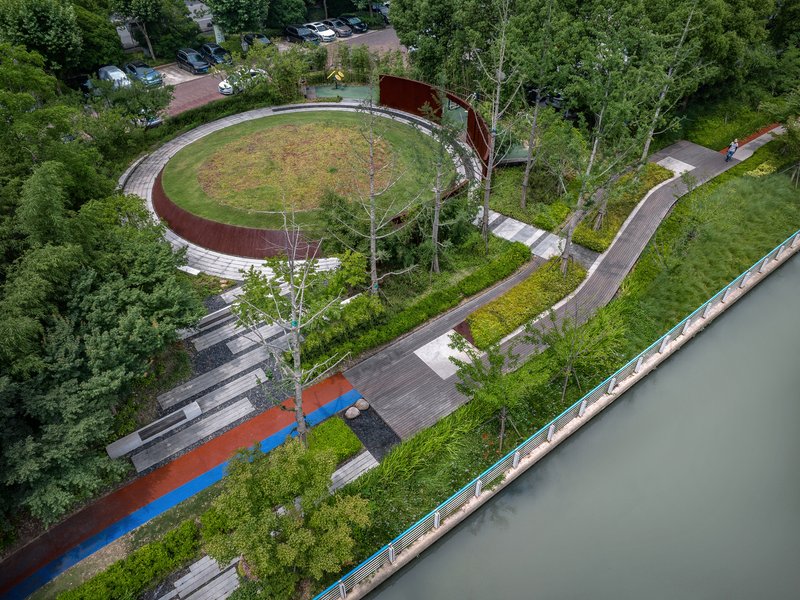
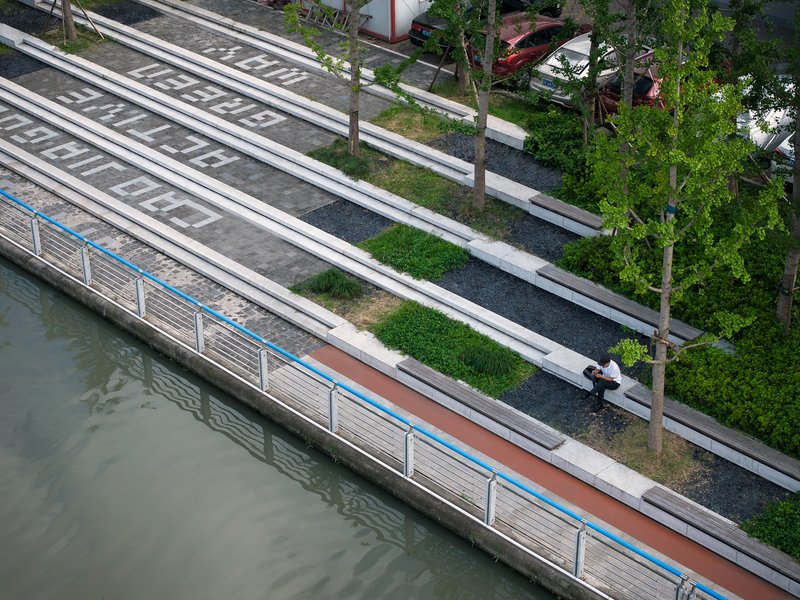
The design strategy centers around breaking the continuous linear riverfront into multiple "pocket" spaces. This design approach addresses the narrowness of the site while creating dynamic, flexible zones for recreation and community interaction. These "pocket nodes" become focal points along the walking path, encouraging users to stop, explore, and engage with the space.
Two large pocket park areas are incorporated within the design. These parks are not only spaces for relaxation but also include cultural displays, fitness zones, multi-age recreational areas, and community service spaces. The overall concept of the design is rooted in creating a green corridor along the waterfront, complemented by these vibrant pocket parks.
Linear Design Language: Functionality and Aesthetic Integration
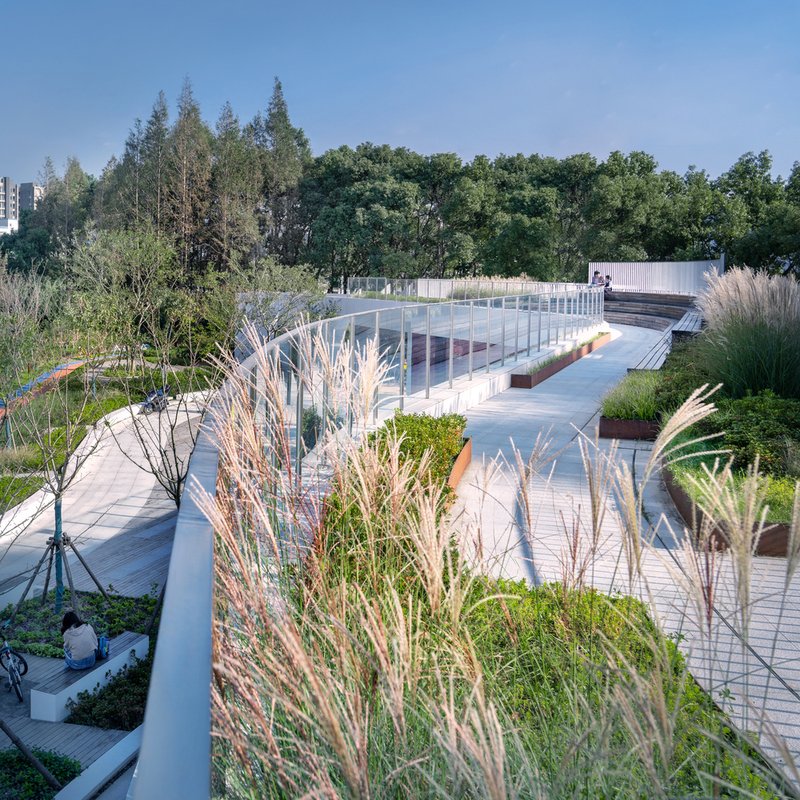
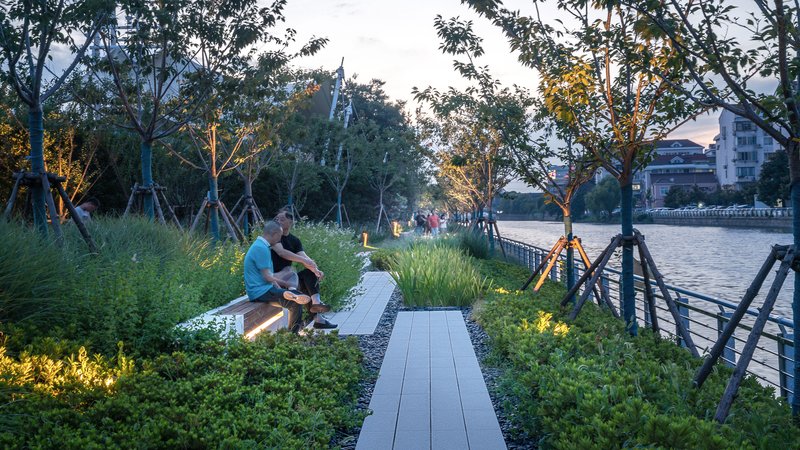
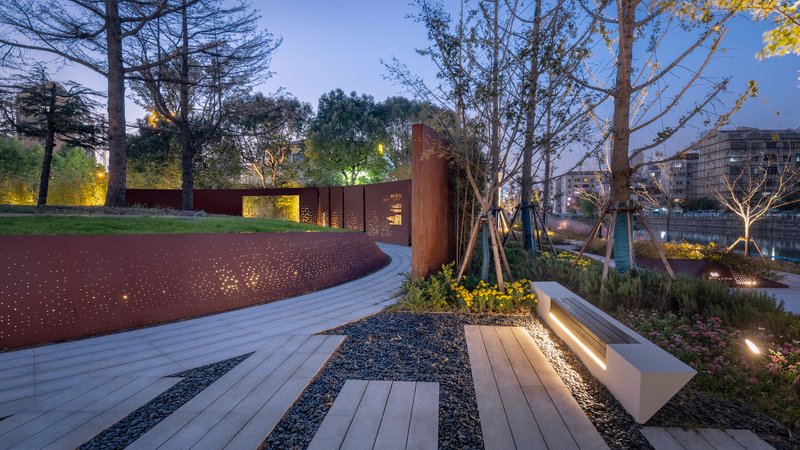
The linear design elements define the visual and functional flow of the space. From linear paving, stepping stones, and benches to strategically placed plants and shrubs, the design integrates both natural and built elements to create a harmonious space. This structured approach, used successfully in VIASCAPE’s previous projects, ensures that the riverfront remains cohesive, functional, and aesthetically consistent.
The "linear language" is extended through various aspects of the project, including the landscaping, the built structures, and the lighting. This uniformity brings a sense of rhythm and coherence to the space, guiding visitors through an immersive experience along the riverfront. The linear lighting, in particular, highlights the contours of the space and reinforces the continuity of the design.
The Community Bridge: A Hub for Interaction
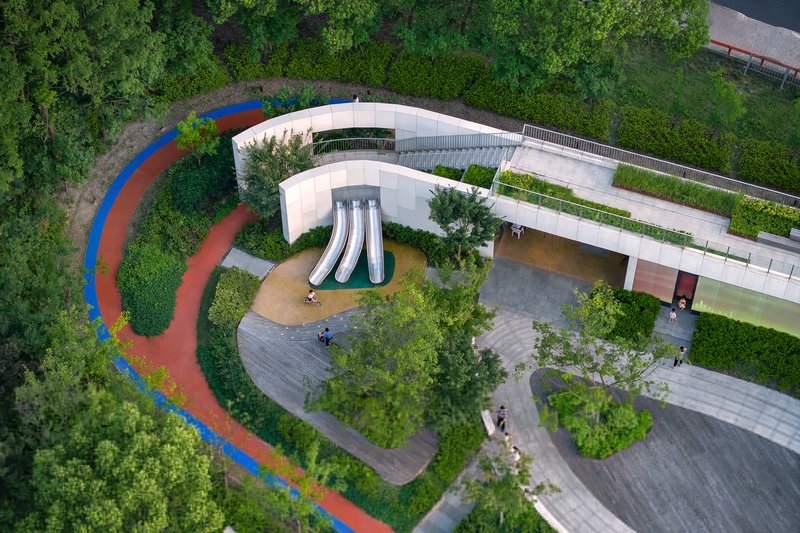
At the heart of the Jinqiao Caojiagou Riverfront Renewal design is the community bridge, a key feature intended to connect the site’s various elements and provide a space for social interaction. This bridge, "hanging" over the riverfront, serves multiple functions. It acts as a barrier from traffic noise, a space for public activities, and a focal point for the community. The bridge incorporates various facilities, including a public toilet, MEP rooms, and maintenance spaces, ensuring its longevity and usability.
The bridge is designed as an interactive space, with a staircase that leads to a rooftop garden, offering panoramic views of the river and the surrounding landscape. Beneath the bridge, a grey space is transformed into a multifunctional area with swings, ropes, and slides, making it a vibrant spot for visitors of all ages. The design focuses on providing a seamless transition between the pocket parks, play areas, and viewing spaces, creating a complete 3D recreational experience for users.
Planting Strategy: Symbiosis of Nature and Community
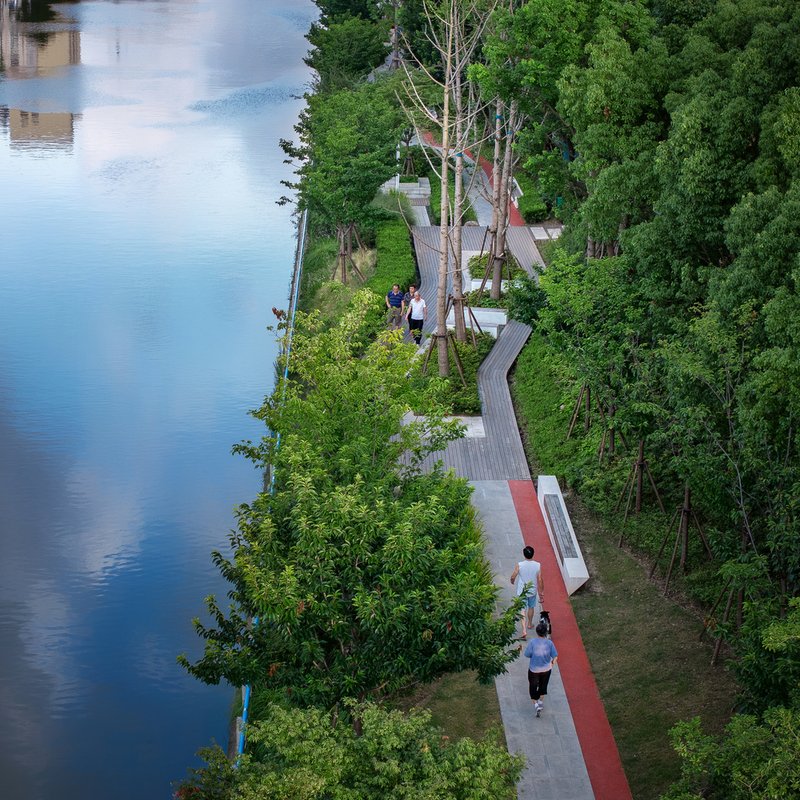
A key element of the design is the integration of near-natural plant communities along the riverfront. The strategic use of low-maintenance manicured shrubs, ornamental grasses, and ground covers ensures the space remains inviting and sustainable. The design balances the need for an organized, neat environment with the benefits of natural growth, allowing for a harmonious blend of nature and urban life.
The design also preserves existing trees and integrates them into the overall landscape, fostering a sense of continuity with the site's natural history. This creates a symbiotic relationship between nature and culture, offering a space where both can coexist and thrive.
A Sustainable Urban Transformation
The Jinqiao Caojiagou Riverfront Renewal Design is a testament to the power of thoughtful urban planning and design. VIASCAPE's approach not only revitalizes a neglected space but transforms it into a thriving, community-centric environment. Through a mix of innovative design solutions, including the breaking of linear space into pockets, the creation of multifunctional areas like the community bridge, and the integration of natural elements, the Caojiagou Riverfront now stands as a model for sustainable urban renewal. It redefines the relationship between the river, the city, and its inhabitants, ensuring that this once-forgotten space is now a vibrant part of everyday life.


Popular Articles
Popular articles from the community

Free Architecture Competitions You Can Enter Right Now
No entry fees, real prizes. Here are the best free architecture competitions open for submissions in 2026.

Atelier Macri Concept Store Interior Design by CASE-REAL
Atelier Macri store features a "ko" counter, walnut wood details, cork displays, blending retail, gallery, and seamless customer experiences.
Gads Hill Early Learning Center by JGMA: Adaptive Reuse Shaping Community-Focused Educational Architecture
Adaptive reuse transforms fragmented structure into vibrant early learning center with playful façade, natural light, and community-focused sustainable design.
Fifth NRE Jazz Club – De Bever Architecten: Eindhoven’s Revitalized Cultural Hub
Historic gas factory transformed into Fifth NRE Jazz Club blending modern sustainability, jazz culture, dining, and heritage architecture seamlessly.

Similar Reads
You might also enjoy these articles


The Ken Roberts Memorial Delineation Competition (Krob)
As the most senior architectural drawing competition currently in operation anywhere in the world, it draws hundreds of entries each year, awarding the very best submissions in a series of medium-based categories.
Waterfront Redevelopment and Urban Revitalization in Mumbai: Forging a New Dawn for Darukhana
A transformative waterfront redevelopment project reimagining Darukhana’s shipbreaking heritage into an inclusive urban future.
OUT-OF-MAP: A Call for Postcards on Feminist Narratives of Public Space
Rhizoma Design and Research Lab invites artists, designers, architects, researchers, and students to reflect on how feminist perspectives can reshape public space. Selected works will be exhibited in Barcelona, October 2026. Submissions open until 15 April 2026.

Documentation Work on Buddhist Wooden Temple
Architectural syncretism and cultural hybridity: A comparative study of the Buddhist temples in Chattogram Hill tracks

Explore Architecture Competitions
Discover active competitions in this discipline




The International Standard for Design Portfolios


The Global Benchmark for Architecture Dissertation Awards


The Global Benchmark for Graduation Excellence


Challenge to reimagine the Iron Throne
Comments (0)
Please login or sign up to add comments
No comments yet. Be the first to comment!