
Kingway Brewery Renovation by URBANUS: Reviving Shenzhen’s Industrial Heritage into a Cultural Landmark
The Kingway Brewery Renovation by URBANUS transforms Shenzhen’s industrial heritage into a cultural landmark, blending memory, adaptive reuse, and urban regeneration.

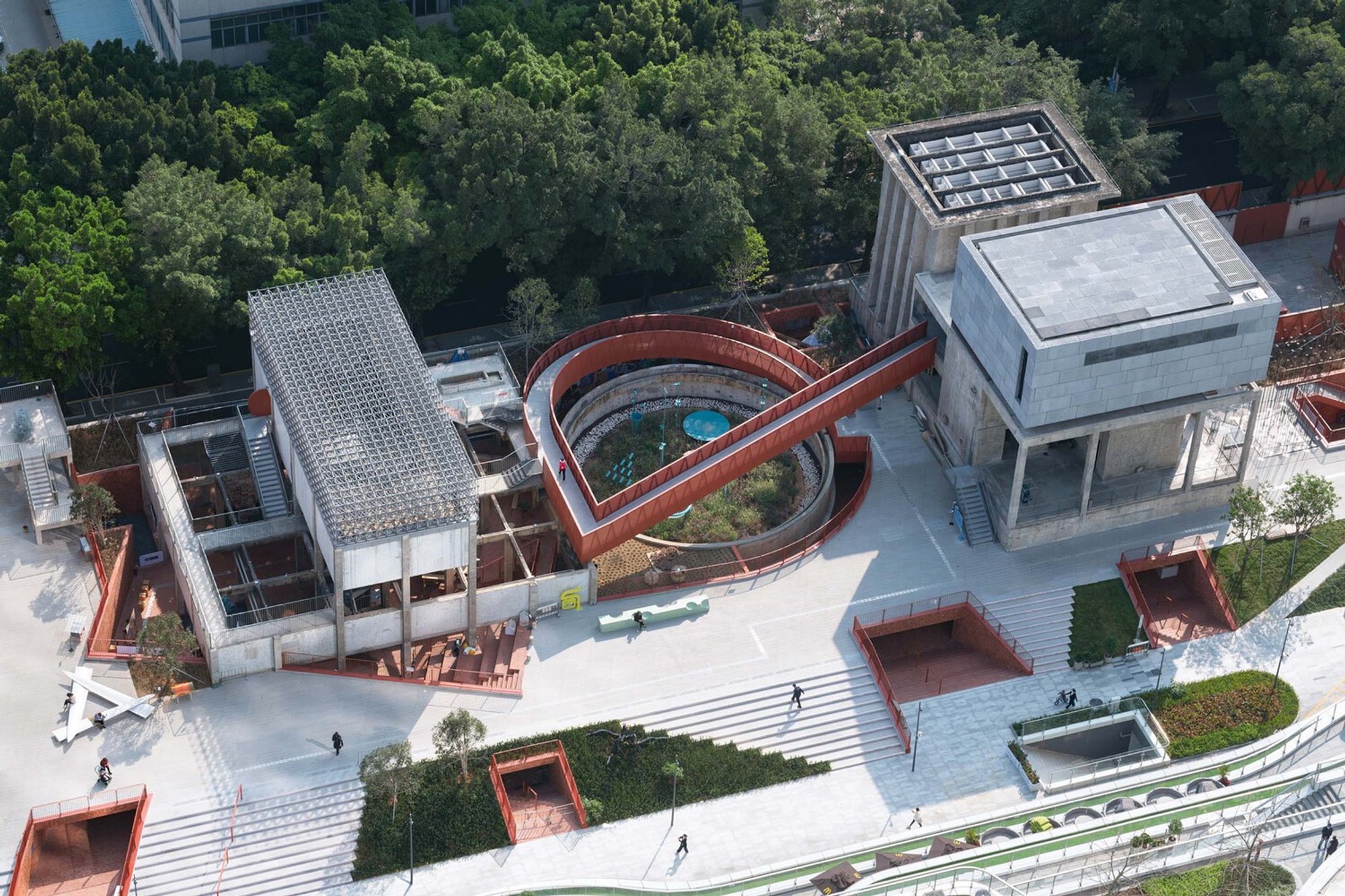
The Kingway Brewery Renovation by MENG YAN | URBANUS is a transformative urban regeneration project in Shenzhen, China, completed in 2022. Once a hub of industrial production and collective memory, the site has been reborn as a vibrant cultural and exhibition space. Through adaptive reuse, URBANUS preserves the spirit of Shenzhen’s pioneering past while shaping a new identity for its urban future.
Preserving Industrial Heritage
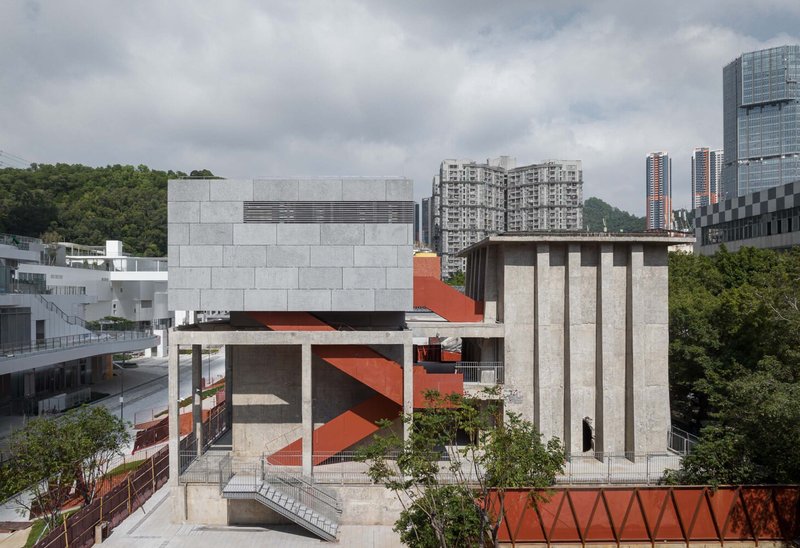
URBANUS believes that industrial sites are more than obsolete factories—they are living archives of collective memory. The Kingway Brewery, once a household name in Shenzhen, symbolized the dreams of migrants who came to the city during China’s reform era. Instead of treating it as a relic of consumption, the design reactivates its industrial architecture and reimagines it as a public cultural platform.
The design concept, “making on-site,” preserves original aesthetics while creating new urban narratives. By integrating history, spatial interventions, and contemporary functions, the project ensures that Shenzhen’s industrial past continues to inspire new generations.
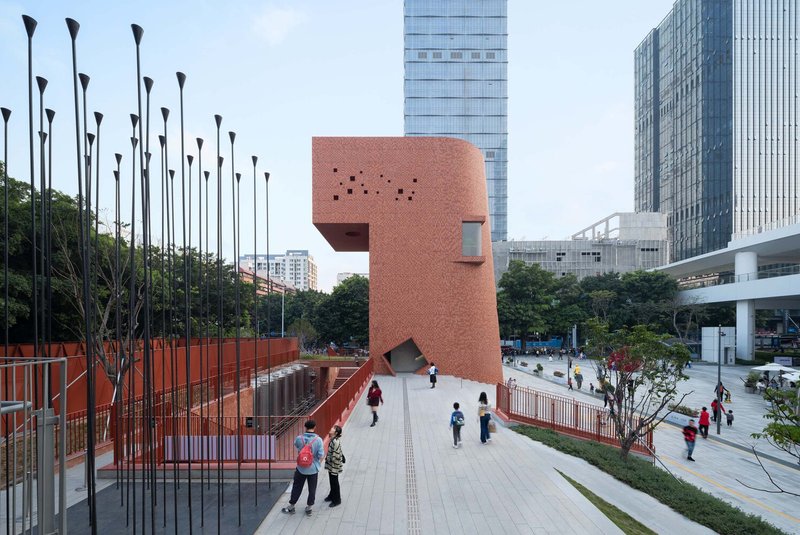
Site Transformation and Spatial Strategy
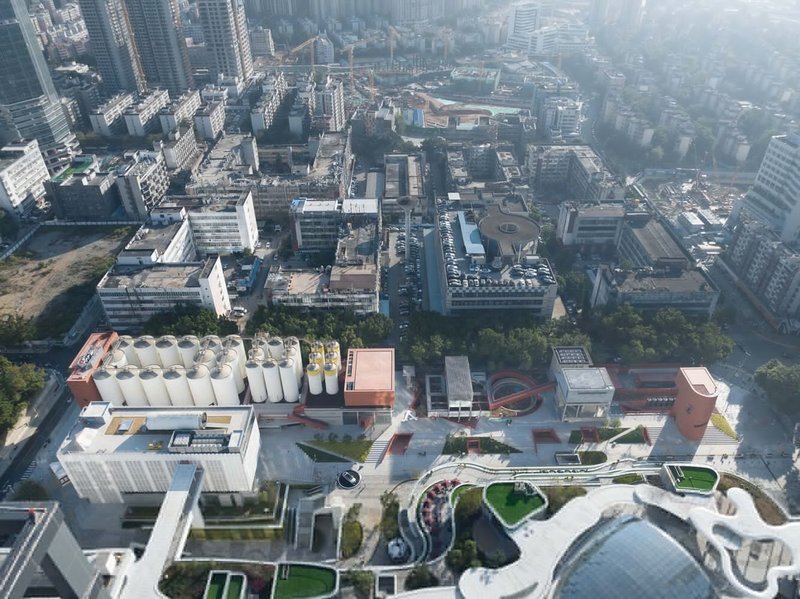
The brewery once spanned a rectilinear site of 11,600 square meters, with scattered industrial structures. URBANUS consolidated these remnants through three key strategies:
- Integration – Unifying fragmented buildings into a coherent urban sequence.
- Plugging In – Inserting new structures and pathways into existing forms.
- Intervention – Carving out courtyards, exhibition zones, and public squares.
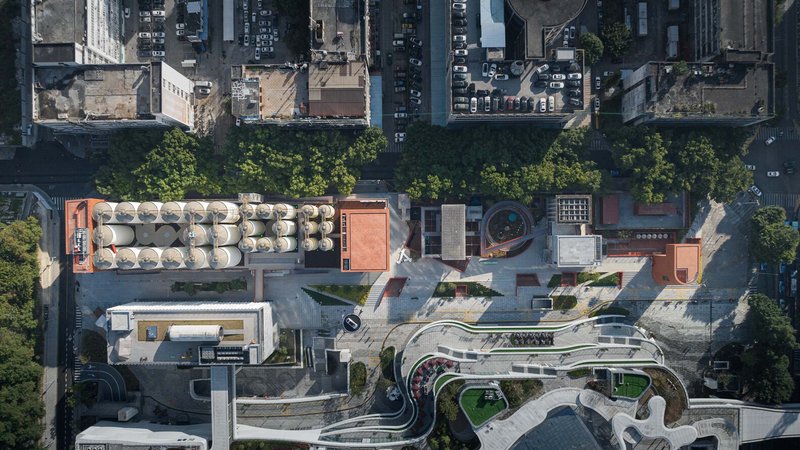
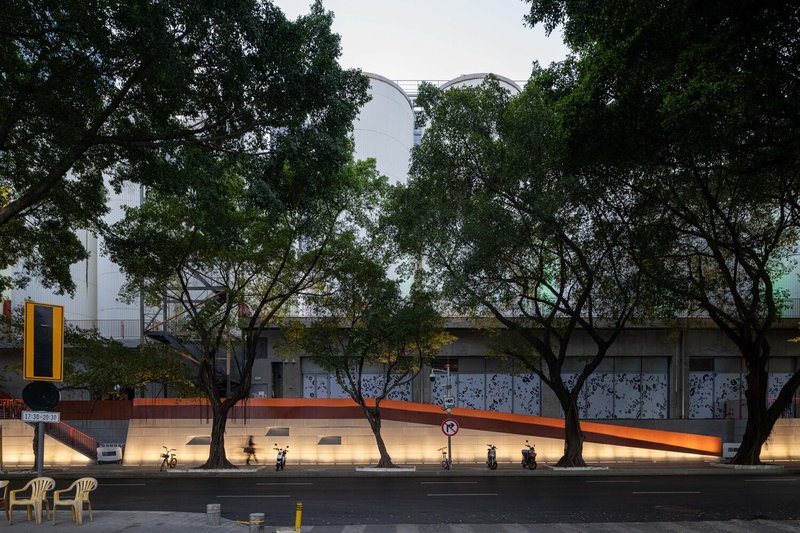
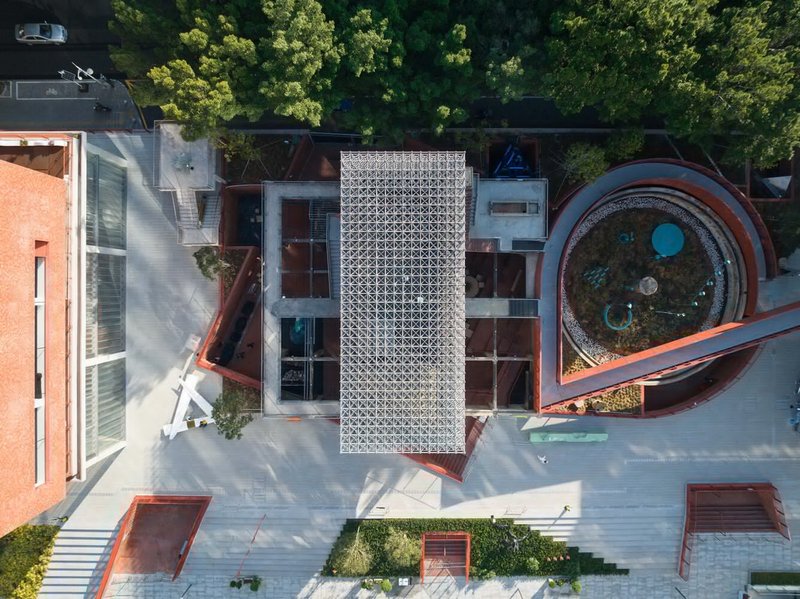
The elevated plinth, rising 1.65–3 meters above street level, was transformed into an exhibition platform. Featuring outdoor gardens, courtyards, and passageways, it creates a dynamic narrative along a 266-meter-long urban street that connects south and north plazas.
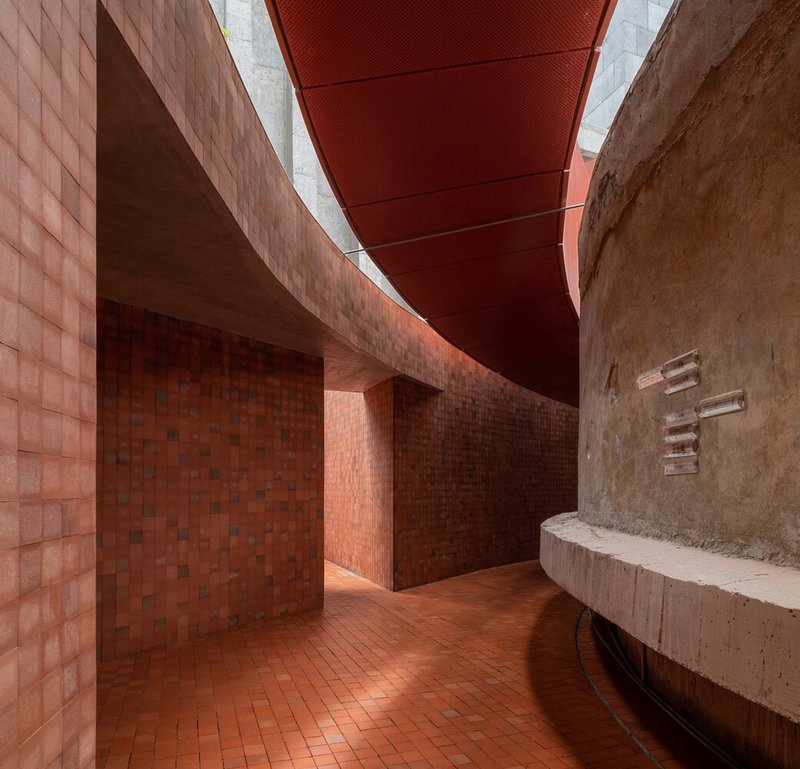
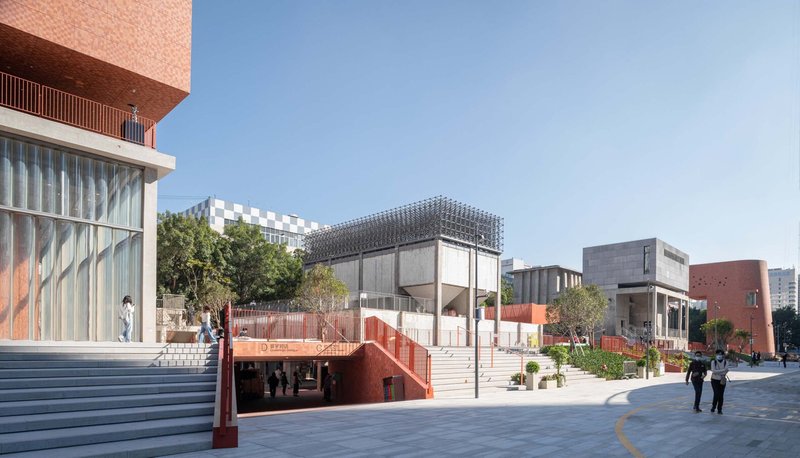
Architectural Highlights
Building A – The Observation Tower
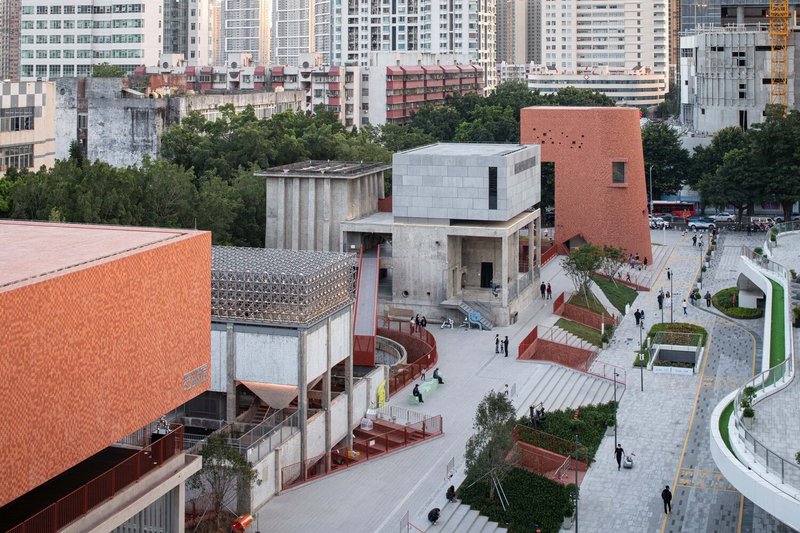
A symbolic Mnemosyne landmark, echoing the memory of a demolished water tower, greets visitors at the south square with panoramic urban views.
Building B – Wastewater Pool & Exhibition Hall
The sealed wastewater pool was uncovered, exposing raw concrete surfaces. A 300 m² metal exhibition hall with foamed aluminum cladding crowns the structure, harmonizing with its industrial base.
Building C – Aeration Tank
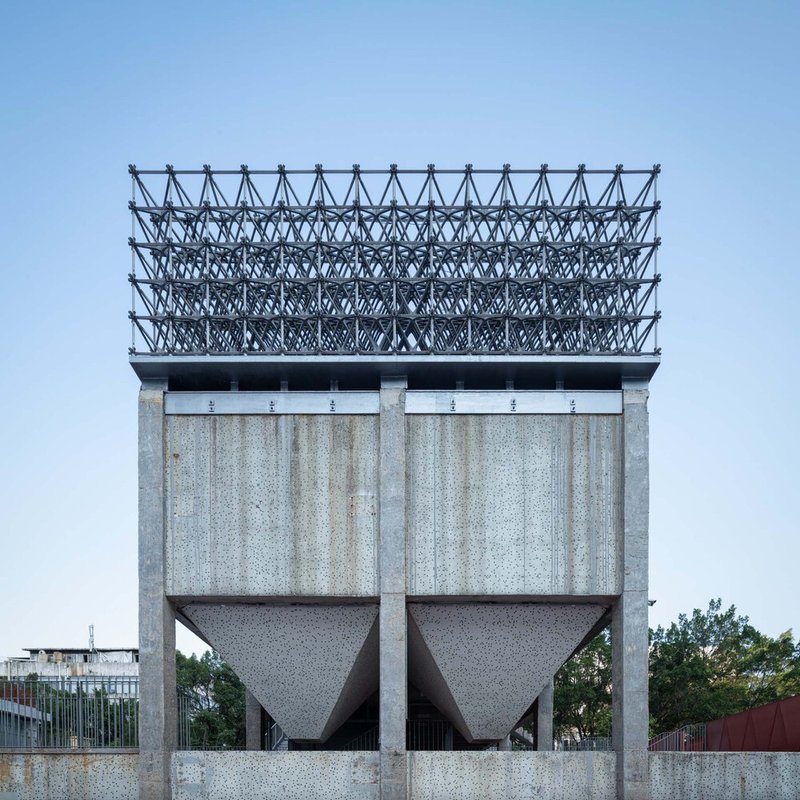
The aeration tank’s exposed form now hosts a glowing aluminum structure, reminiscent of beer bubbles rising—merging symbolism with architecture.
Sedimentation Tank Garden
An 18-meter-diameter concrete shell has been transformed into a secret scenic garden, with aerial walkways and peek-through concrete walls offering visitors a spatial journey through memory.
Building D – Fermentation Tanks
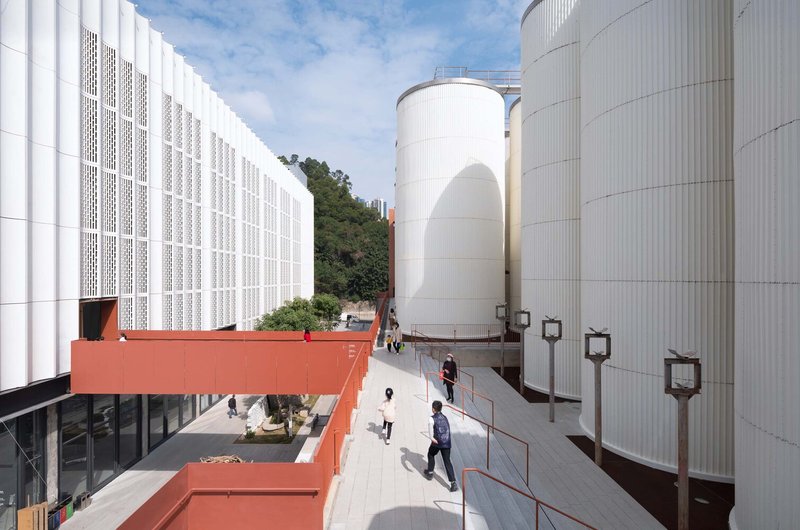
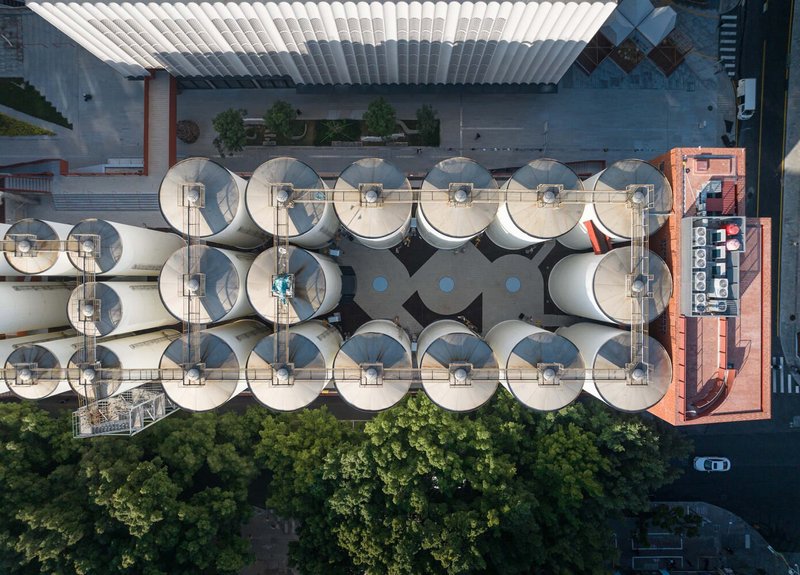
The most iconic structure, with 33 stainless steel fermentation tanks, was reimagined:
- D1: Auditorium with multi-functional use.
- D2/D3: Exhibition spaces with preserved tanks and a new bar.
- D4: Open-air rooftop theater within former silos.
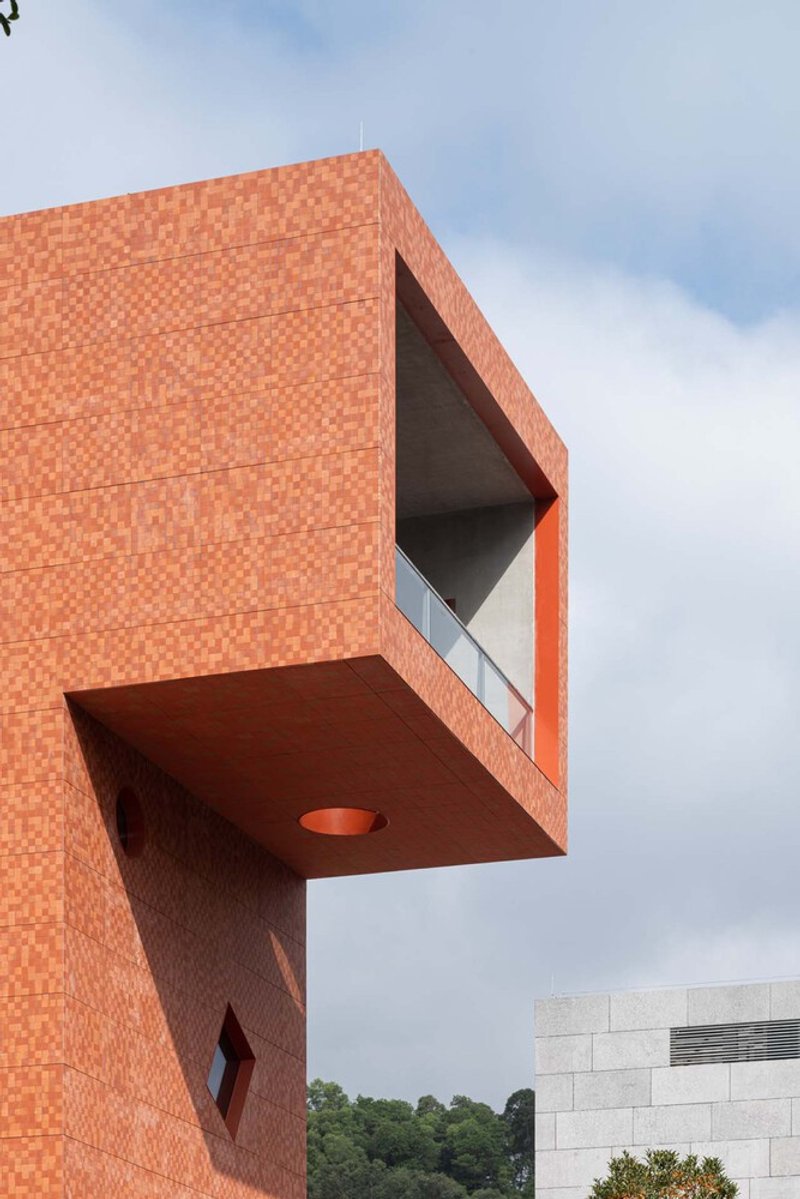
- D5: Yeast line converted into display/resting areas, topped by a red-tiled steel box with panoramic views.
Each intervention redefines the industrial legacy into an interactive cultural experience.
Cultural and Urban Impact
The renovated brewery became the main venue of the 9th Shenzhen-Hong Kong Bi-City Biennale of Urbanism/Architecture (UABB) in 2022. Hosting exhibitions such as Making On Site and Space/Time Agency, the project immediately positioned itself as a living landmark of culture, art, and community engagement.
As Shenzhen’s urban core shifts westward, the renewal of Luohu District through this project provides a model for balancing rapid modernization with heritage conservation.
The Kingway Brewery Renovation by URBANUS is a masterpiece of adaptive reuse and industrial heritage regeneration. It preserves Shenzhen’s cultural identity while offering new spaces for art, exhibitions, and public life. By celebrating memory and innovation, the project bridges the past and future—ensuring that the legacy of Shenzhen’s pioneering spirit continues to inspire.




Popular Articles
Popular articles from the community

Inverted Architecture Installation by Studio Link-Arc: Exploring the Intersection of Architecture and Living Organisms
Inverted Architecture Installation by Studio Link-Arc blends mycelium, sustainability, inverted design, ecological cycles, and urban adaptive architecture in Shenzhen.
Treehouse Apartment: A Warm Timber Interior Blending Craft, Play, and Contemporary Living
Warm timber apartment with integrated treehouse, combining natural materials, craftsmanship, and playful design to create a flexible, family-oriented living environment.
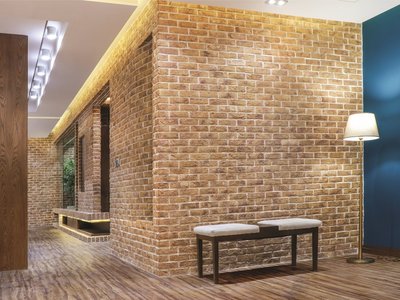
A Contemporary Take on Iranian Residential Architecture
A modern interior design in Mashhad that reinterprets brick, light, and spatial flow to create a warm, contemporary residential architecture.
On the Brooks House by Monsoon Collective – A Contemporary Kerala Home Rooted in Tradition
Kerala home blending tradition and modernity with water-inspired design, brick architecture, courtyard planning, and sustainable rainwater harvesting strategies.

Similar Reads
You might also enjoy these articles


The Ken Roberts Memorial Delineation Competition (Krob)
As the most senior architectural drawing competition currently in operation anywhere in the world, it draws hundreds of entries each year, awarding the very best submissions in a series of medium-based categories.


Waterfront Redevelopment and Urban Revitalization in Mumbai: Forging a New Dawn for Darukhana
A transformative waterfront redevelopment project reimagining Darukhana’s shipbreaking heritage into an inclusive urban future.

OUT-OF-MAP: A Call for Postcards on Feminist Narratives of Public Space
Rhizoma Design and Research Lab invites artists, designers, architects, researchers, and students to reflect on how feminist perspectives can reshape public space. Selected works will be exhibited in Barcelona, October 2026. Submissions open until 15 April 2026.


Documentation Work on Buddhist Wooden Temple
Architectural syncretism and cultural hybridity: A comparative study of the Buddhist temples in Chattogram Hill tracks

Explore Architecture Competitions
Discover active competitions in this discipline




The International Standard for Design Portfolios


The Global Benchmark for Architecture Dissertation Awards


The Global Benchmark for Graduation Excellence


Challenge to reimagine the Iron Throne
Comments (0)
Please login or sign up to add comments
No comments yet. Be the first to comment!