

Brew Together
Brewed Bali Competition Submission

What was the concept behind the project?
The concept behind the project was a reflection of the traditional courthouse typology in Bali architecture. In traditional Bali courthouse architecture, all the pavilions face inwards towards a central court which is used as a communal living room. The programme of the housing is then split among the pavilions. Drawing from that point of inspiration, the cafe is organized such that the four volumes have distinct programming into the following areas: a space for private seating, a space for a coffee workshop and a coffee bar/seating, a space for dancing and a bakery/kitchen, and a quiet garden area. The circulation on the first floor revolves around maximizing points on interaction in the courtyard. The majority of the second floor seating also is organized to draw attention to the courtyard below. These two methods set up the courtyard to act as the communal living room/heart of the project.
Wijaya, Made. Architecture of Bali: A Sourcebook of Traditional and Modern Forms. Editions Didier Millet, 2016.
What are the connections between the interior and the exterior of the project?
The project approach to interior vs. exterior revolves around a seamless blend between the interior and exterior, taking full advantage of the site’s natural features. Each of the volumes are split such that half of each are directing their views outside. This is created by a consistent beam structure combined with roof glazing or an open roof that directs the eyes upwards and outwards in each respective areas. The view for the private seating area is towards the main entrance where people from the beach and street would be entering from. The view for the dancing and bakery/kitchen area is directed towards the beach especially on the second floor where there is a balcony seating area completely outdoors. The view for the garden area is directed towards the vegetation growing on the south side of the site. This connects the internal garden with the pre existing site conditions and takes advantage of the majority of the sunlight coming from the south for growing the plants. The view for the coffee workshop/bar area is slightly different from the rest as it is directed towards the street condition created by the perforated brick wall and path towards the garden. As the site constraints do not allow for the cafe to be directly beside the street, this street condition was created to replicate the “grab-and-go”/street coffee coffee culture in bali by connecting the coffee car to this area. The sliding glass doors on the interior of the cafe also allow for the cafe to be fully exposed to the outside to capitalize on Bali weather.
"Coffee Culture." Remarkable Indonesian Coffee.
http://www.remarkableindonesiancoffee.com/coffee-culture-1.
What/How were the materials chosen?
The materials and furniture have been chosen through analysis of the surrounding buildings situated near the site and Balinese architecture, mainly consisting of wood, brick, and terracotta roof tiles. The perforated brick wall is not only a decorative feature which creates a serene atmosphere, but also allows for natural ventilation and unique lighting conditions. The pitched roof results from traditional Balinese architecture, tying the building visually to the buildings in the area. The material palette of the architecture also reflects the mainly natural palettes of Balinese architecture. Majority of furniture materials in the café are minimal and delicate, resembling the surrounding natural landscape. Due to much of the architectural palette being darker in colour, the furniture material palette is lighter in colour as to not darken the interior too much. The furniture in the dancing area can be easily moved around as well to provide space for dance groups varying in size.
How was the programme condensed into final?
Much of the programme considerations were based heavily on the tourist leaning demographic of the area as well as varied experiences for varied types of customers. The programming for tourist activities include the coffee workshop and dancing areas. Since Bali has a rich history about coffee production and coffee preparation, the workshop portion was created for coffee classes to be held teaching about this history and for coffee demonstrations. This area is connected to the coffee bar/ordering portion of the cafe for program continuity. Noting resorts around the cafe that feature music and dancing areas, this was included in the program. This area is in the volume facing the beach on the first floor and it acts as a transition between the movement and activity on the beach and the interior of the cafe. This area also allows for flexible programming because of the movable furniture. The cafe also provides private and calmer areas for visitors looking for such experiences. These areas include the cozy and compressed volumes for seating at the north east portion of the cafe, the garden, and the second floor. With areas accounting for all types of visitors, the cafe is inviting to all!

Popular Articles
Popular articles from the community


LT2A and OPEN Architectes Thread a Brick and Glass High School Through a Wooded Belgian Campus
In Braine-l'Alleud, a 3,000 m² wing for Collège Cardinal Mercier pairs pale brick with a glazed colonnade, deferring to a small chapel and a dense wood.

graciastudio Turns a Viewless Tijuana Lot Inward Around a Courtyard of Concrete, Timber and Trees
In Tijuana, Jorge Gracia's GA2 House stacks a timber-clad private floor over exposed concrete and replaces a missing view with a planted interior patio.


Aquadapt: An Underwater Habitat That Rewrites Its Rooms by the Hour
Curved modules ring the seabed while one shell shifts from breakfast room to cinema, farm and football pitch as residents' needs change.

David Ortega Stacks a Two-Story Mexico City Penthouse Around a Steel Stair and a Pergola-Shaded Roof Terrace
In Colonia Roma, a 300 m² penthouse uses oak joinery, a planted steel stair and a slatted roof pergola to make a new-build apartment feel like a house.

Similar Reads
You might also enjoy these articles

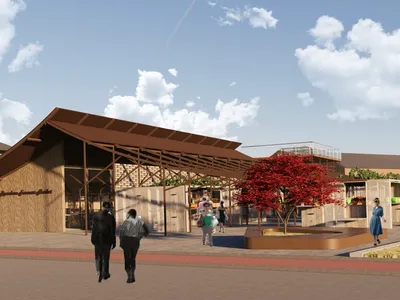
The Rhythm of Seasons
A Farmers' Market Connecting Nature and the City
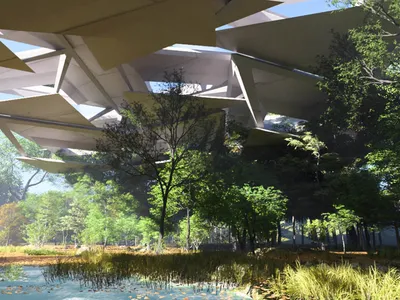

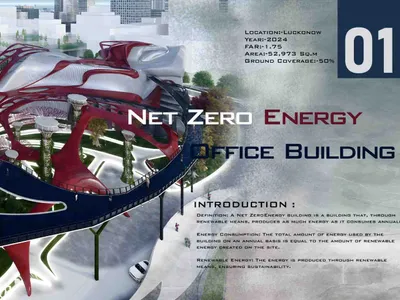
More Than a Building-Designing a Living System
More Than a Building-Designing a Living System
Base Beyond
DESERT COMPOUND ARID: TOURISM OF ABSENCE AND ABUNDANCE

Explore Cafe and Restaurant Design Competitions
Discover active competitions in this discipline


Challenge to design luxury tourism on rails

VR headsets Storefront design competition

Designing a staircase for a client
Comments (0)
Please login or sign up to add comments
No comments yet. Be the first to comment!