
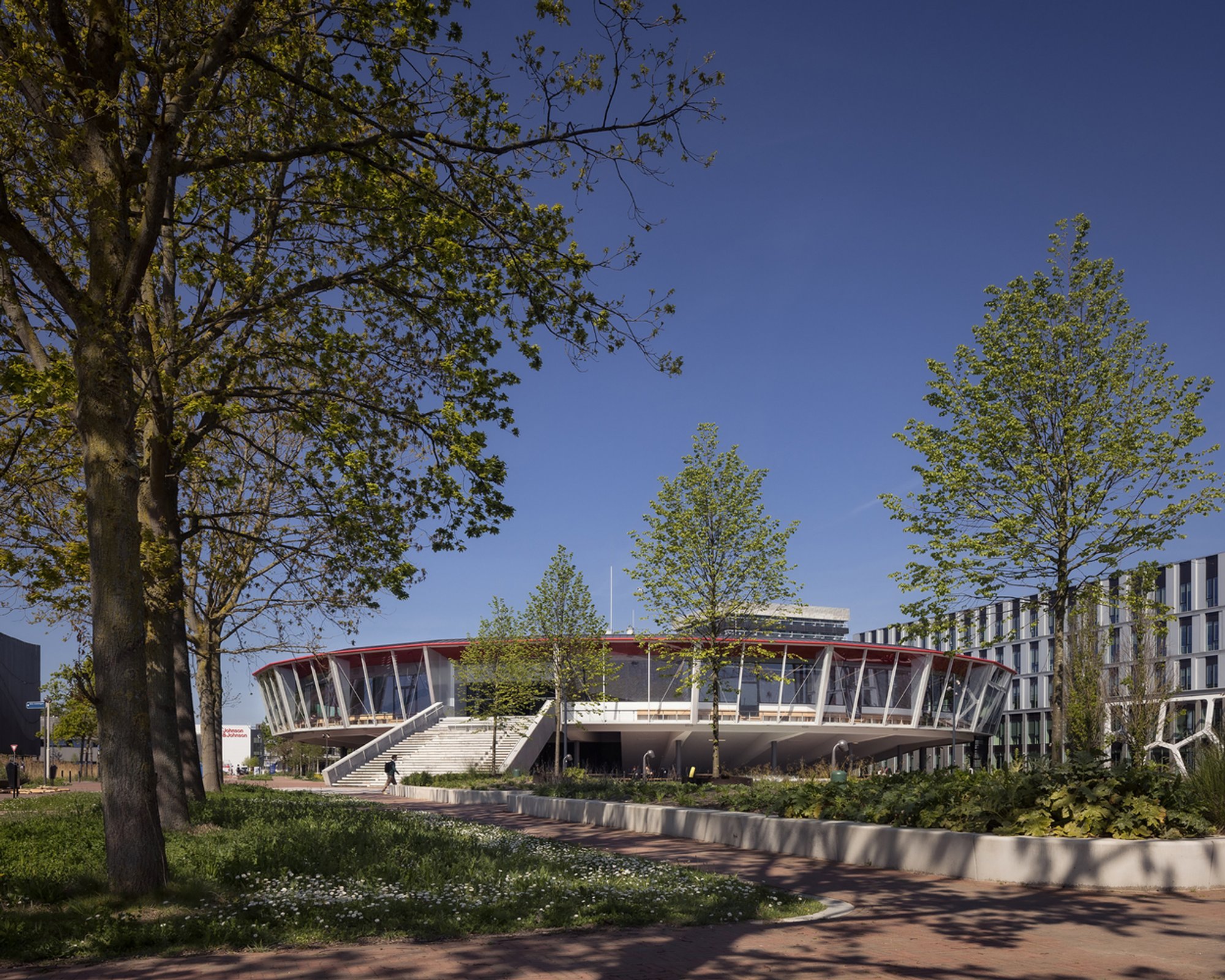
Leiden University Lecture Hall by Civic Architects
Civic Architects transform Leiden University’s modernist lecture hall into a sustainable, climate-responsive education hub with winter gardens and renewed campus connections.

Revitalizing a Modernist Icon at Leiden Bio Science Park
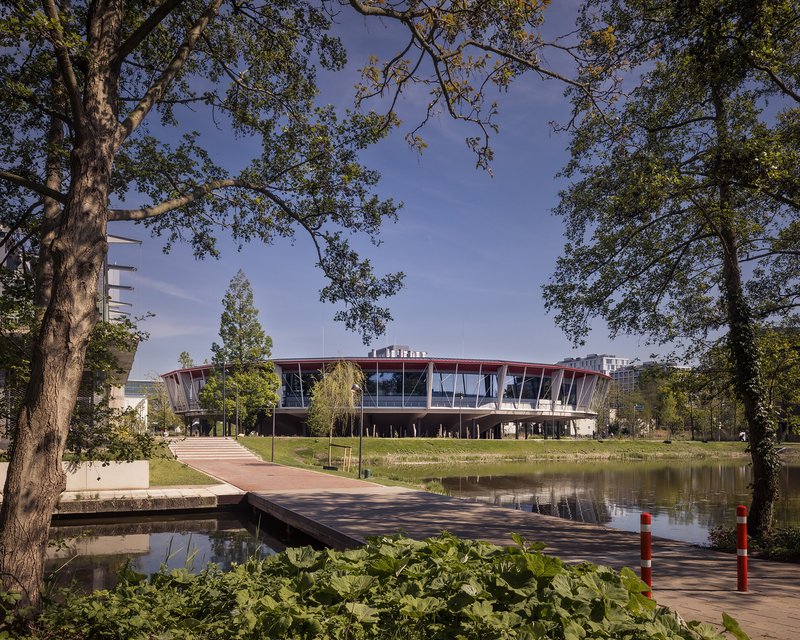
Leiden University, the Netherlands’ oldest university founded in 1575, has long been a symbol of intellectual and architectural heritage. While its historic city-centre buildings are well-known, the university’s Gorlaeus complex, established in the mid-20th century, represents a bold step into modernism. Today, this legacy continues with the renovation and transformation of the Leiden University Lecture Hall, also known as “The Saucer”, into a sustainable and connected learning environment designed by Civic Architects.
A Transformation Rooted in Modernism
Originally designed by Drexhage, Sterkenburg, Bodon & Venstra (DSBV), the Gorlaeus Lecture Hall embodied the experimental and optimistic spirit of modernist architecture—characterized by an elevated podium, expansive glass façades, and structural expressiveness. Civic Architects reinterprets this “hyperfunctionalism” through a contemporary lens, evolving it into a model of adaptive reuse and climate-conscious design.
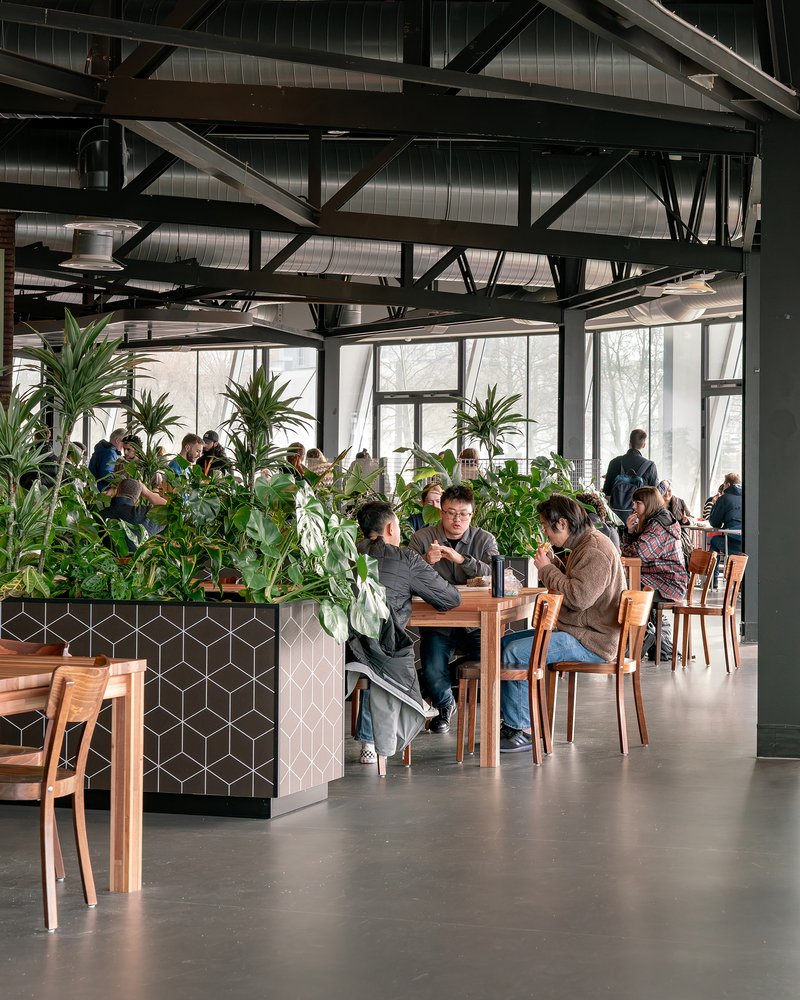
The new Lecture Hall integrates workspaces, study areas, a 400-seat restaurant, and four lecture theatres accommodating 250 to 700 students each. Its design balances architectural preservation with technological innovation, ensuring the building meets modern educational and environmental standards while celebrating its mid-century identity.
Reconnecting the Building to Campus Life
A New Urban Presence
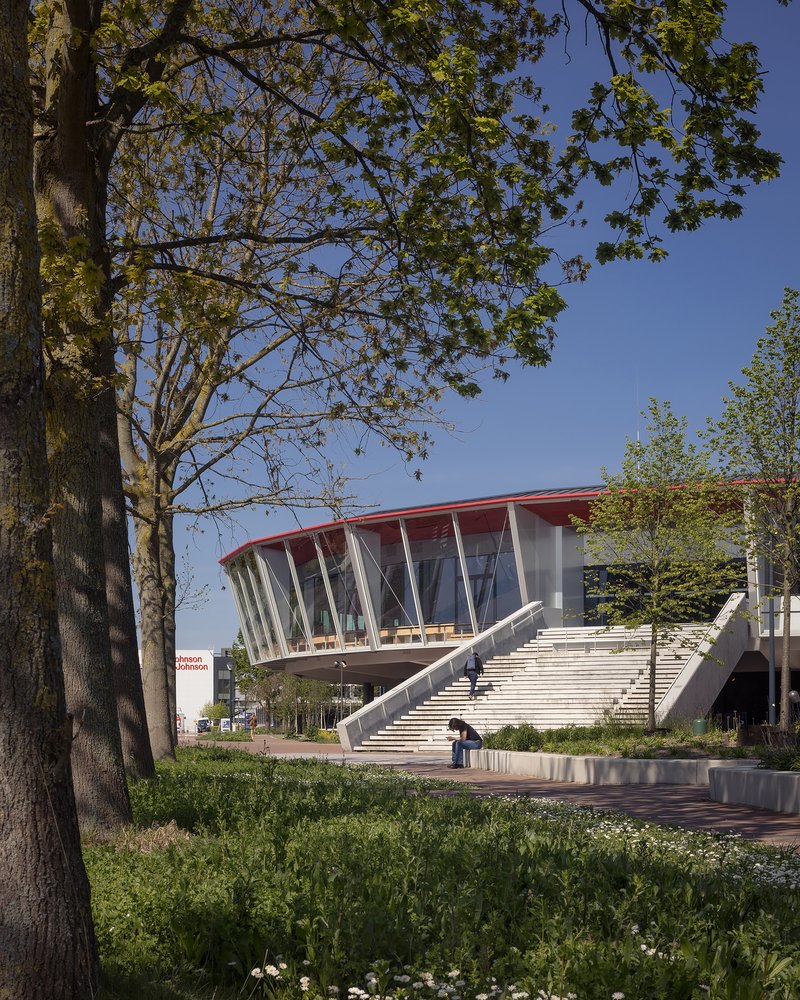
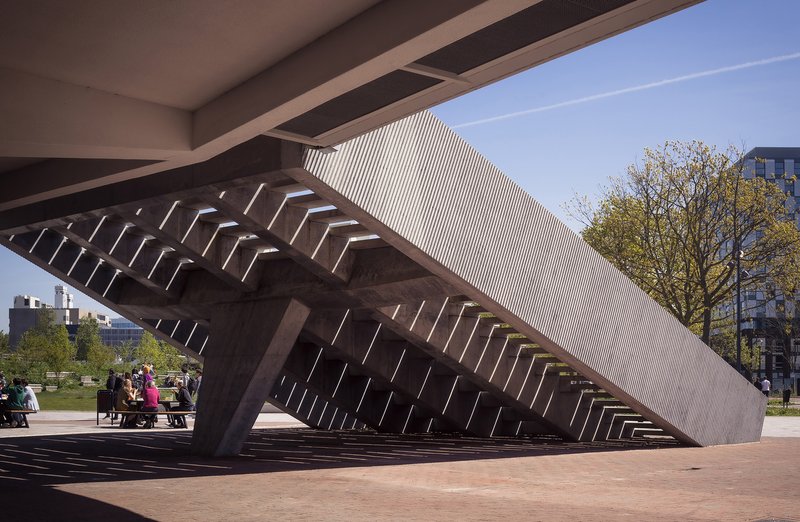
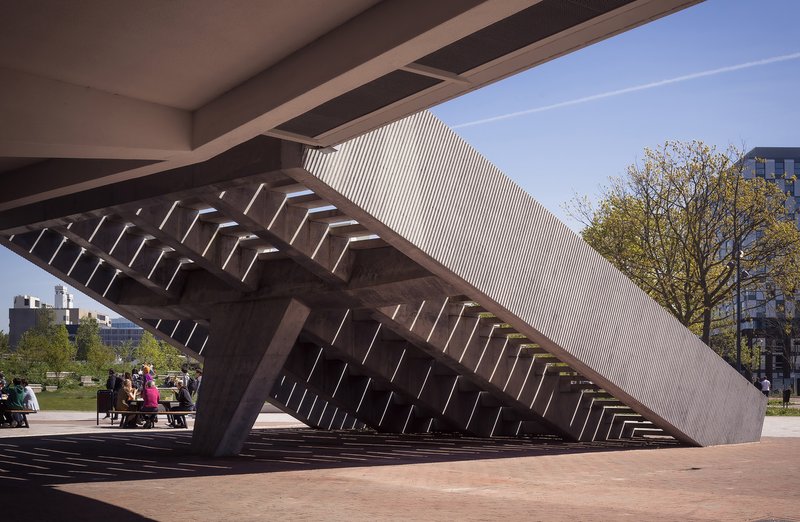
The renovation begins with a simple yet transformative gesture: removing the annex that once obscured the entrance. This act liberates the building, allowing it to fully engage with its surroundings. A newly introduced broad concrete staircase establishes a direct connection between the elevated main level and the ground, creating a dynamic public interface between the lecture hall and the Leiden Bio Science Park.
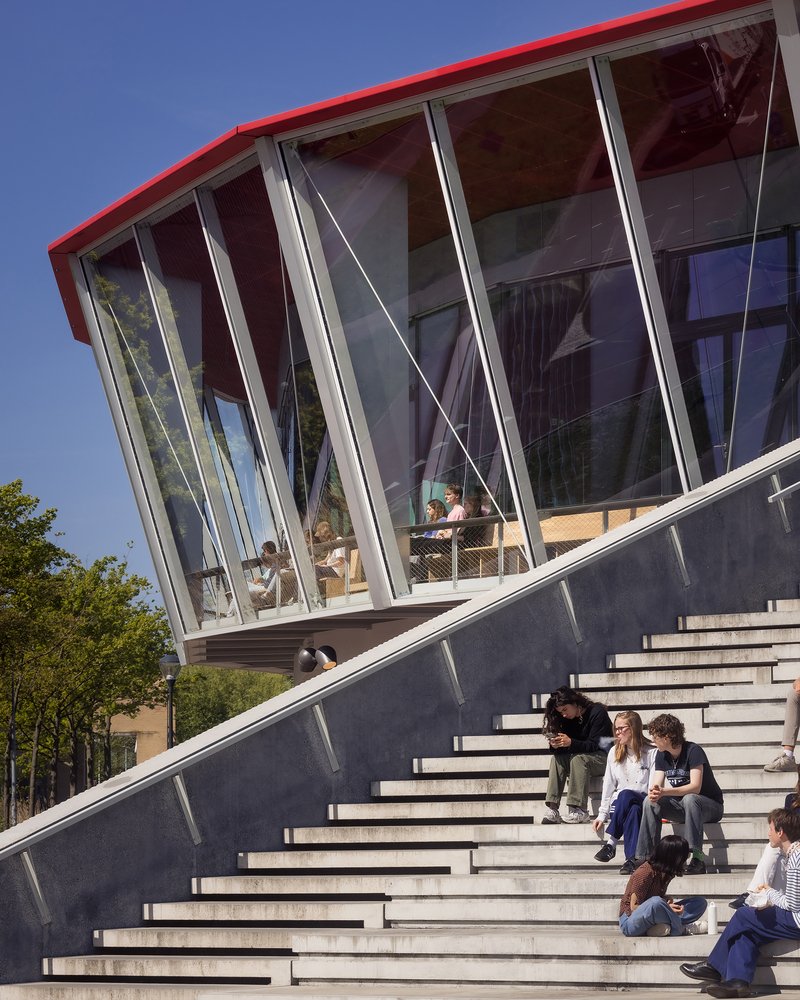
This sculptural staircase not only forms a striking new entrance but also functions as an outdoor amphitheatre and informal gathering space, encouraging student interaction and open-air study sessions. From this elevated landing, visitors access a circular corridor ring linking the lecture halls, the restaurant, and multipurpose study zones that overlook the revitalized campus square.
Reversing and Reimagining the Façade
One of the project’s most distinctive interventions is the reversal of the façade orientation. The building’s former maintenance walkways have been reimagined as functional balconies that invite visual and physical connection. The once-defensive upward tilt of the façade is now mirrored downward, creating transparency and engagement between the building’s interior and its environment.
The result is a softer, more interactive architectural expression—a dialogue between the historic concrete structure and the renewed glass surfaces. The building’s circular form retains its iconic nickname, “The Saucer,” but now projects openness rather than isolation.
Climate-Responsive Winter Gardens
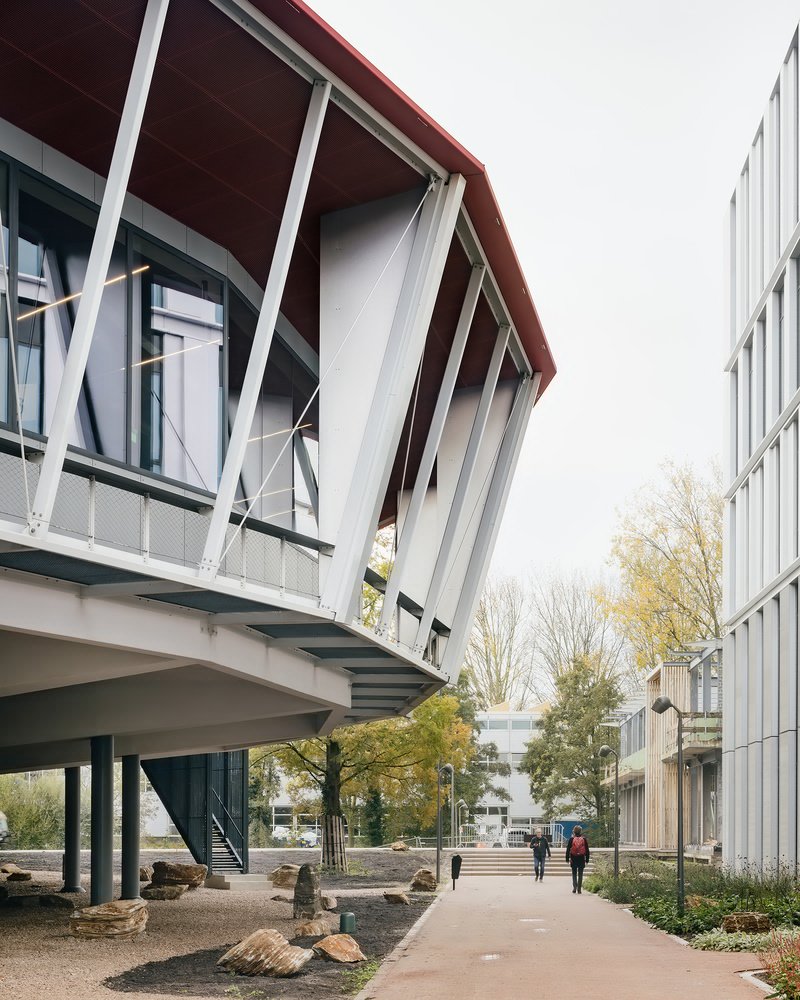
Civic Architects took cues from DSBV’s original climate-aware façade design to introduce energy-efficient “winter gardens”—a ring of heat-buffering conservatories that wrap the structure. These spaces not only improve insulation and natural ventilation but also enhance user experience through seasonal adaptability.
On the south and east façades, these winter gardens double as informal lounges and study zones, allowing students to work or relax while enjoying panoramic campus views. Conversely, the north and west façades incorporate canopies and new emergency stairs, minimizing solar gain and improving maintenance access.
This adaptive façade strategy underscores the building’s evolution from static monument to living, breathing ecosystem, responsive to both climate and community.
Intelligent Construction and Phased Renewal
Given its importance as the university’s main lecture facility, the building remained operational during renovation. Civic Architects implemented an innovative phased construction strategy, aligning each step with the academic calendar.
Large 10-metre-wide façade segments were prefabricated and suspended between the radial trusses, allowing sections of the building to be completed sequentially while keeping other lecture halls functional. This precision logistics approach minimized disruption and exemplified the project’s commitment to both design excellence and operational continuity.
A Contemporary Model for Academic Architecture
The Leiden University Lecture Hall renovation reflects a growing architectural ethos—reusing, rethinking, and re-engaging modernist structures to meet contemporary needs. Civic Architects’ intervention transforms an emblem of post-war functionalism into a vibrant, climate-conscious academic hub, redefining what it means to build for education in the 21st century.



Popular Articles
Popular articles from the community

Louis Malle Cinema: A Limestone Cultural Landmark Revitalizing Community Life in Prayssac
Limestone cinema extension with public forecourt, blending heritage and modern design to create flexible cultural spaces and strengthen community interaction.
Treehouse Apartment: A Warm Timber Interior Blending Craft, Play, and Contemporary Living
Warm timber apartment with integrated treehouse, combining natural materials, craftsmanship, and playful design to create a flexible, family-oriented living environment.


The Ken Roberts Memorial Delineation Competition (Krob)
As the most senior architectural drawing competition currently in operation anywhere in the world, it draws hundreds of entries each year, awarding the very best submissions in a series of medium-based categories.
An Miên Lumière Cafe by xưởng xép, Ho Chi Minh City, Vietnam
An industrial-inspired café where layered steel and warm light create a dynamic, immersive environment shaped by reflection, depth, and perception.
Similar Reads
You might also enjoy these articles
The Ken Roberts Memorial Delineation Competition (Krob)
As the most senior architectural drawing competition currently in operation anywhere in the world, it draws hundreds of entries each year, awarding the very best submissions in a series of medium-based categories.

Waterfront Redevelopment and Urban Revitalization in Mumbai: Forging a New Dawn for Darukhana
A transformative waterfront redevelopment project reimagining Darukhana’s shipbreaking heritage into an inclusive urban future.

OUT-OF-MAP: A Call for Postcards on Feminist Narratives of Public Space
Rhizoma Design and Research Lab invites artists, designers, architects, researchers, and students to reflect on how feminist perspectives can reshape public space. Selected works will be exhibited in Barcelona, October 2026. Submissions open until 15 April 2026.

Documentation Work on Buddhist Wooden Temple
Architectural syncretism and cultural hybridity: A comparative study of the Buddhist temples in Chattogram Hill tracks


Explore Architecture Competitions
Discover active competitions in this discipline




The International Standard for Design Portfolios


The Global Benchmark for Architecture Dissertation Awards


The Global Benchmark for Graduation Excellence


Challenge to design public laboratory
Comments (0)
Please login or sign up to add comments
No comments yet. Be the first to comment!