
Mobility Hub by archipelago + POLO: A Sustainable Urban Gateway in Mechelen
A sustainable mobility hub in Mechelen integrating parking, offices, retail, and public terraces, promoting shared transport and urban transition.

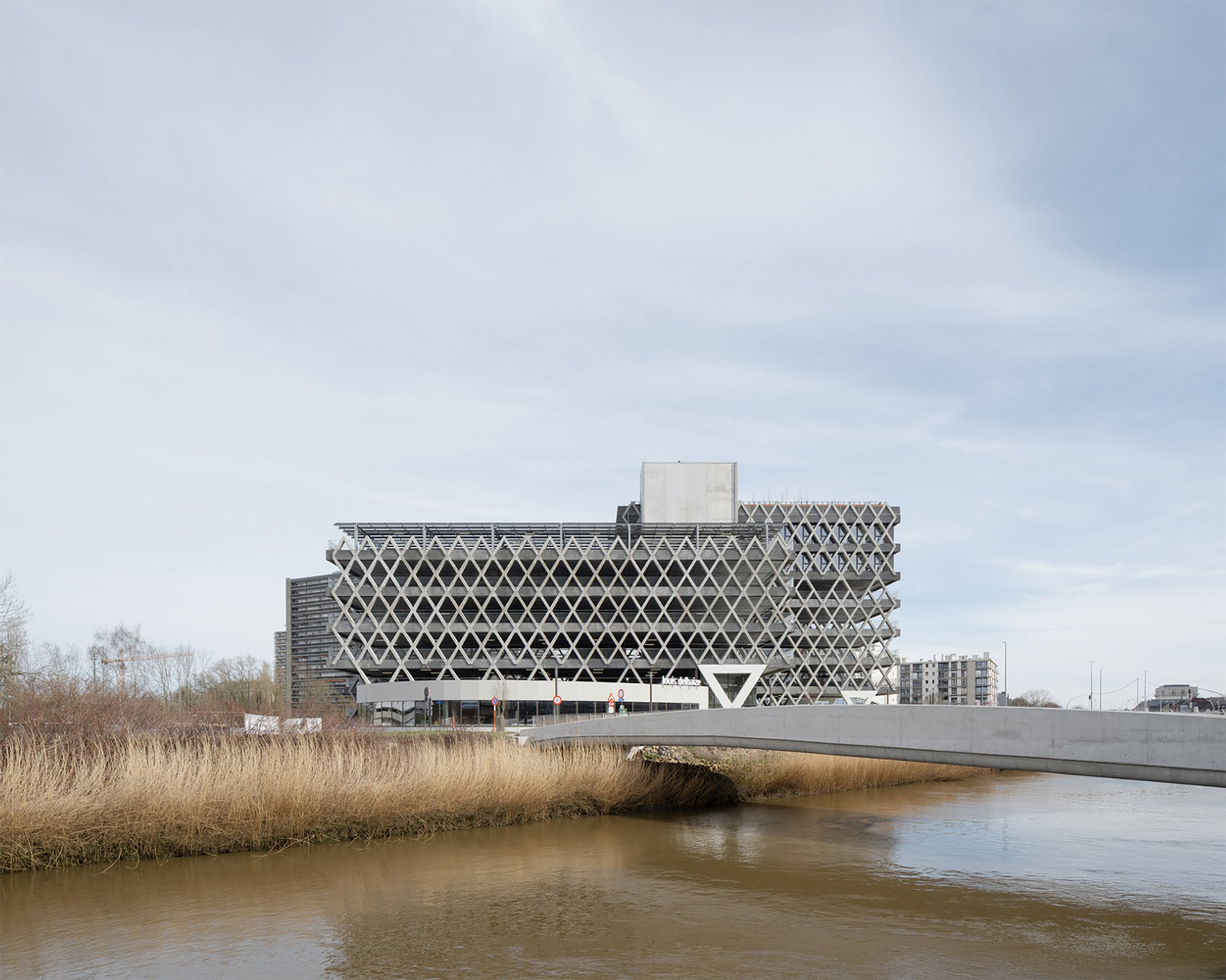
In the heart of Mechelen, Belgium, a revolutionary model of urban infrastructure has emerged — the Mobility Hub at Eandistip, a collaborative architectural project by archipelago and POLO Architects. Designed as a forward-thinking response to evolving transportation needs, this 19,400-square-meter structure is far more than a car park — it is a multifunctional, sustainable mobility center that integrates architecture, public space, and innovative mobility strategies.
Reimagining the Future of Parking Infrastructure
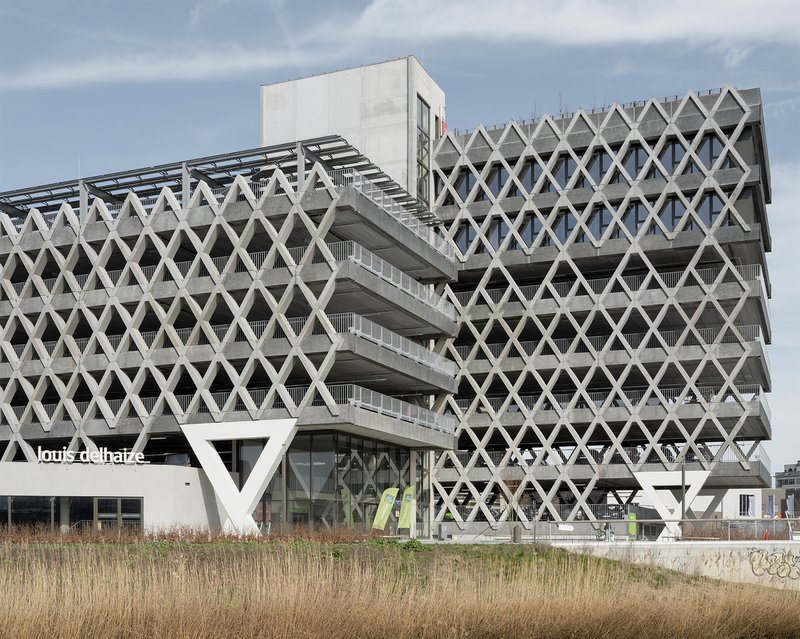
Conceived as part of a broader urban development strategy, the Mobility Hub represents a new typology for parking facilities, designed to support a gradual transition toward shared mobility and autonomous vehicles. Its compact yet flexible parking configuration anticipates the reduced need for traditional parking, creating additional room for complementary programs such as box-in-box office spaces, a local supermarket, and rooftop public terraces.
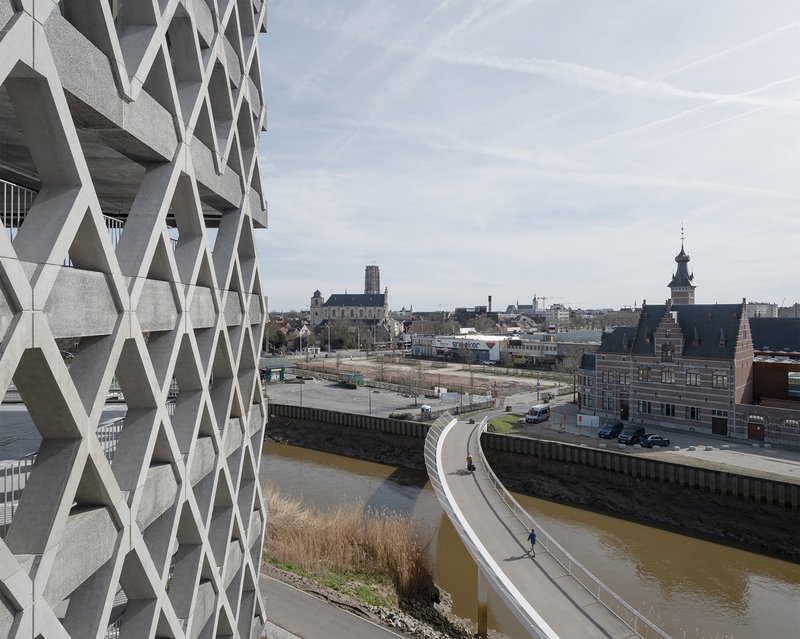
Situated strategically between Mechelen’s historic city center and its outer districts, the hub functions as a dynamic threshold — a transition zone that mediates urban movement. This vision aligns with a broader modal shift in transportation, prioritizing public and sustainable mobility over individual car use.
Adaptability at its Core: Circular and Modular Design
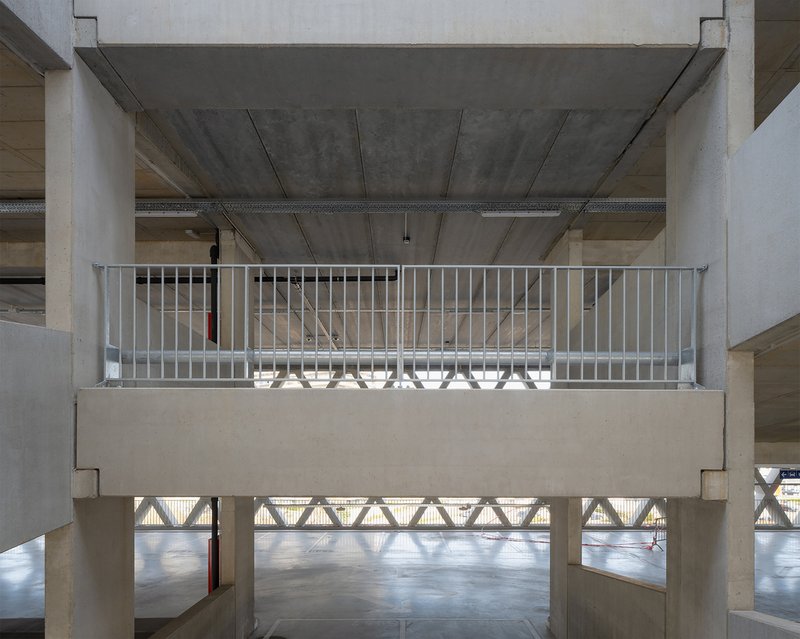
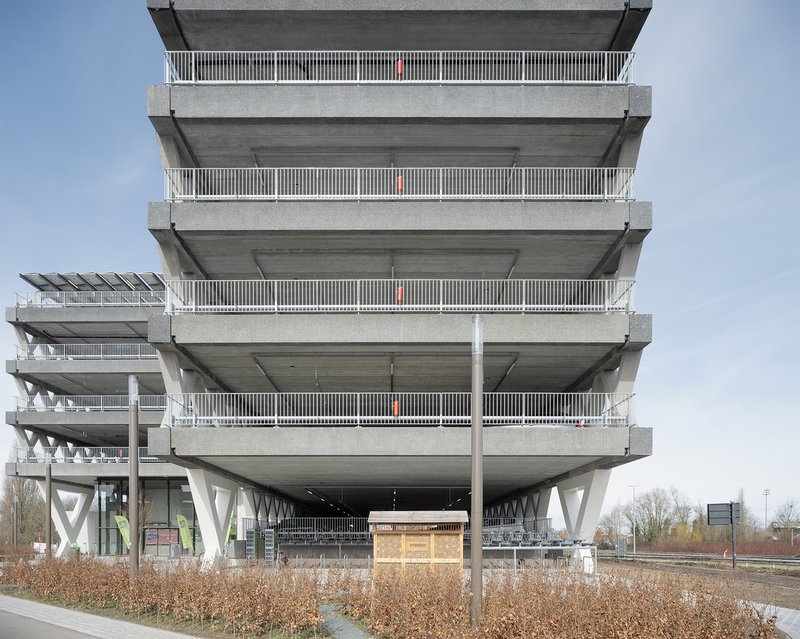
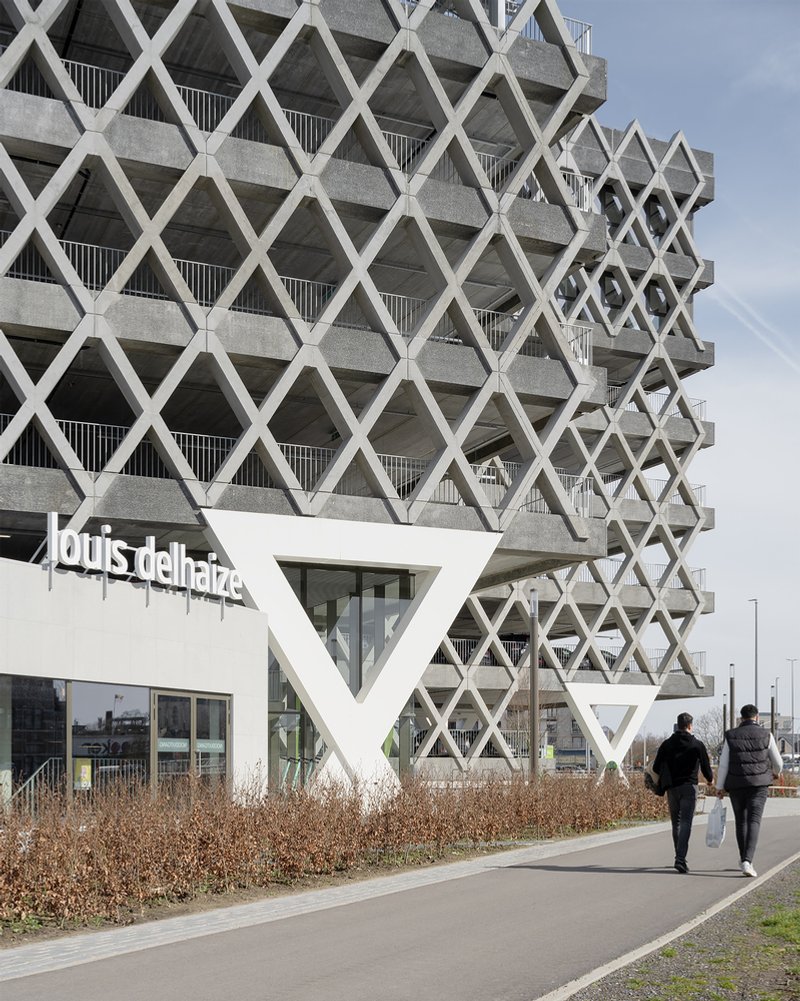
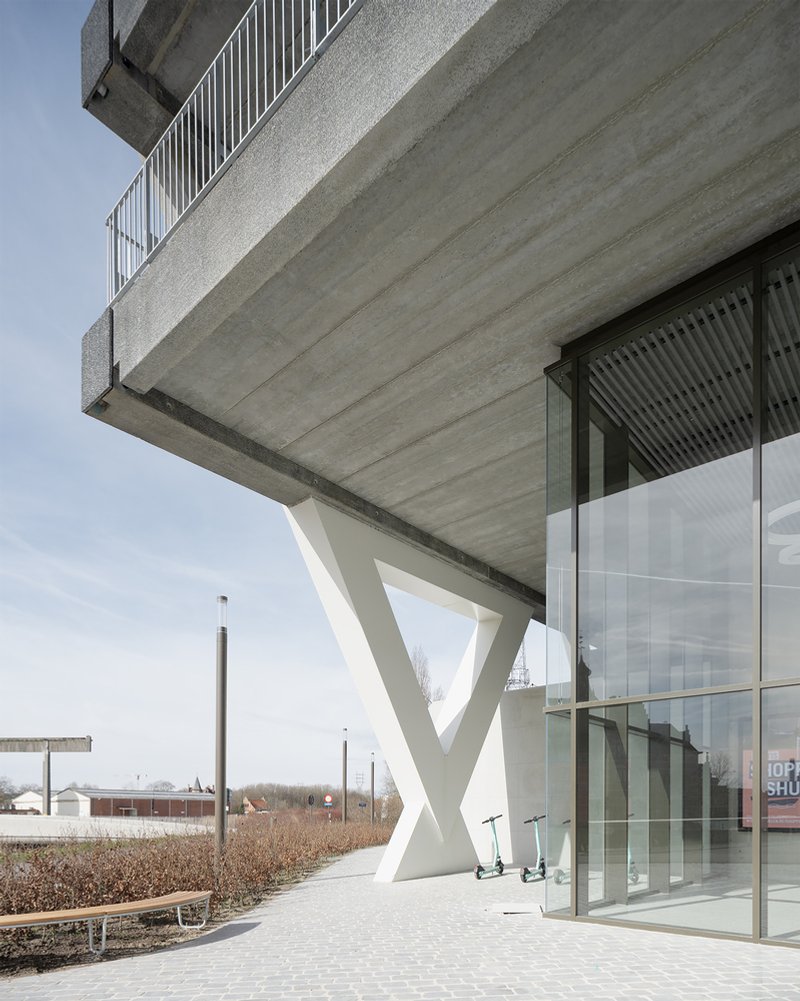
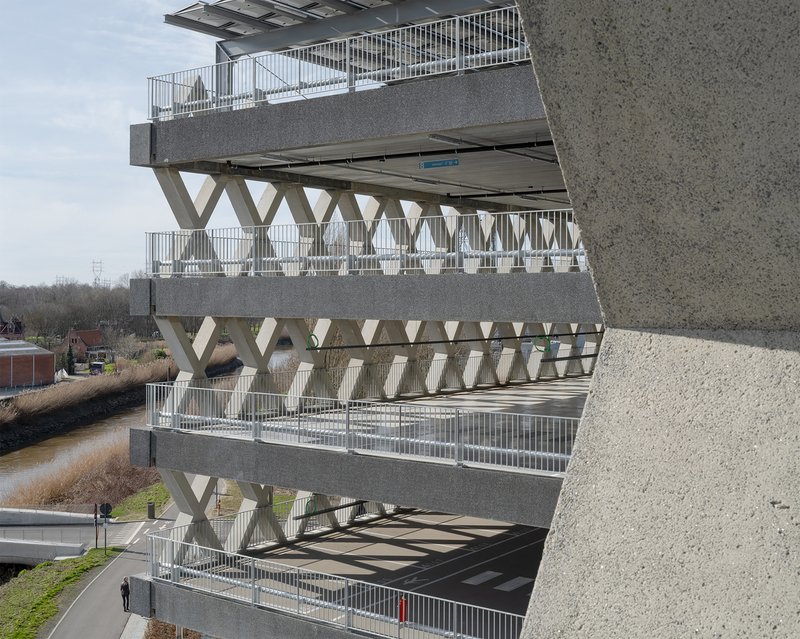
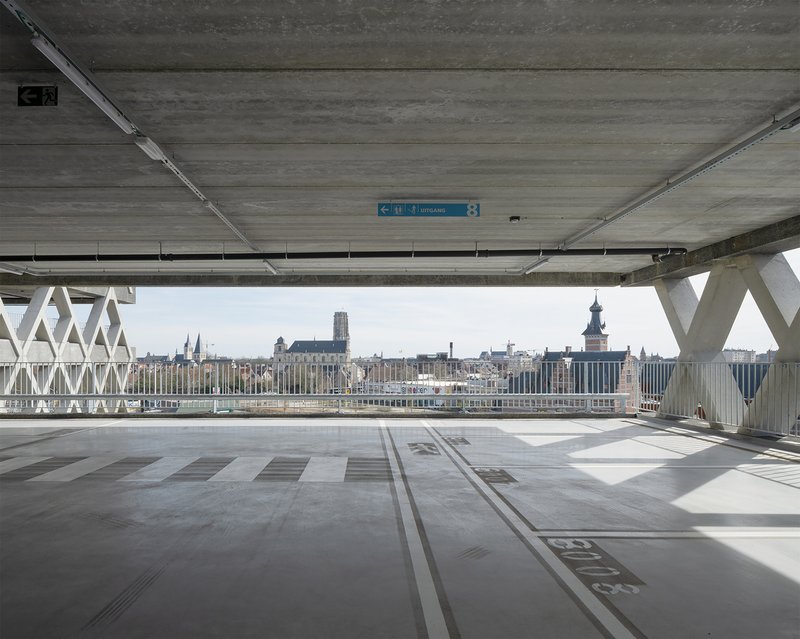
The architectural approach was driven by the need for flexibility and long-term adaptability. The structure is composed of load-bearing, prefabricated concrete X-elements, forming a robust facade grid of parallelograms that support completely open floor plans. With generous floor heights of 336 cm and the absence of protruding beams, the interior volumes allow for programmatic flexibility — a critical element in the evolving urban fabric.
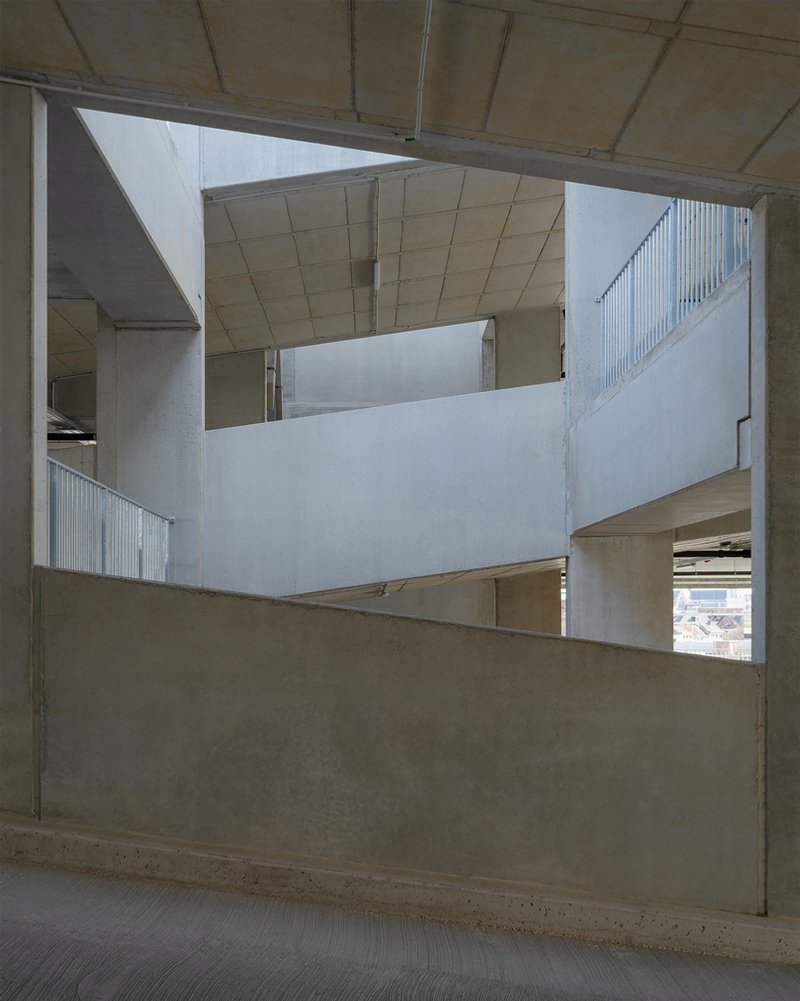
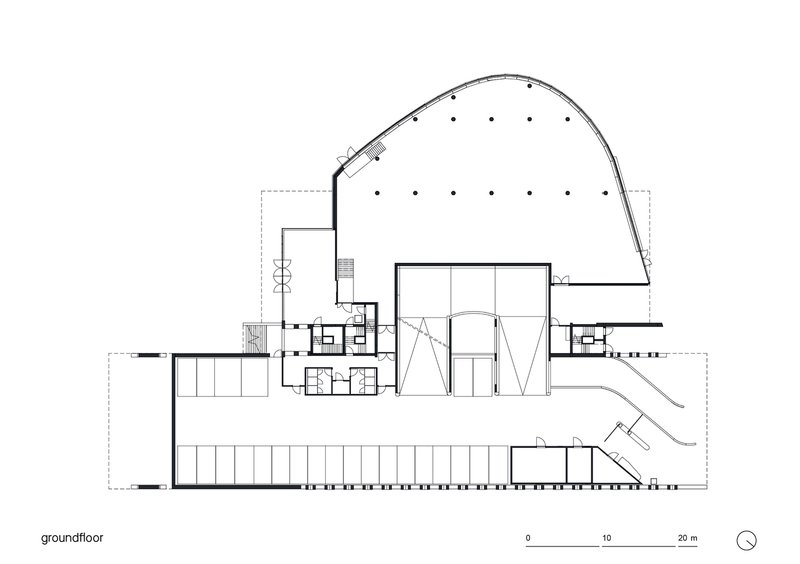
A central circulation core, placed strategically between the two main volumes, ensures smooth access to various program areas while minimizing spatial disruption. The staircases feature split-level landings, a design move that not only facilitates circulation but also allows for potential future conversion into a compact, automated parking system.
The use of the box-in-box principle for insulated interior programs — especially the upper-level offices — allows for responsive spatial arrangements and thermal efficiency, embodying principles of circular construction and sustainable architecture.
Supporting the Modal Shift: From Cars to Collective Mobility
The Mobility Hub is a key player in the city’s ambition to decentralize car traffic and promote environmentally conscious commuting. Located on the edge of the city, it invites drivers to park their vehicles and switch to public transportation, cycling, or walking — effectively removing car pressure from the historic center.
The design inherently supports various modes of future mobility, including electric vehicles, shared cars, and self-driving vehicles. By embracing such flexibility, the hub underscores its role as a catalyst for behavioral change, supporting a broader modal shift and enabling the evolution of mobility infrastructure in Belgian cities.
A Hybrid Public Space for the Community
Beyond its mobility function, the Mobility Hub acts as a community-oriented public facility. At street level, the Welkomstplein (Welcome Square) connects the hub to a growing residential neighborhood, fostering a seamless transition between transportation infrastructure and everyday urban life. This pedestrian plaza enhances community interaction and enriches the public realm.
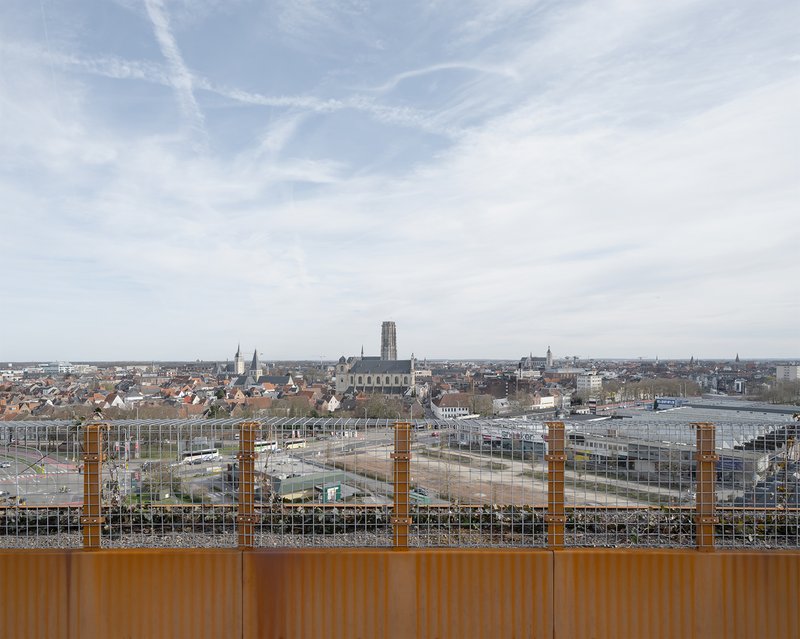
Two expansive rooftop terraces offer panoramic views over Mechelen, serving dual purposes: as informal recreational zones for office workers during the day and as public venues for events and gatherings by night or on weekends. Over time, the uppermost terrace will evolve into a green rooftop garden populated with mature trees — a clear signal of the project’s commitment to urban biodiversity and green infrastructure.
Integrated Collaboration and Sustainable Execution
The success of the Mobility Hub is grounded in an interdisciplinary collaboration. Structural engineering was led by B.A.S., with Ara and Vogt Landscape contributing to the landscape architecture. Sustainability was a core principle, championed by DUSS-Explorers, while BAM Interbuild served as the main contractor. Key material and product partners include Hunter Douglas Architectural (Europe), Bateig, Florim, and Zoontjens — all contributing to the project's durability and material expressiveness.
All Photographs are works of Johnny Umans




Popular Articles
Popular articles from the community

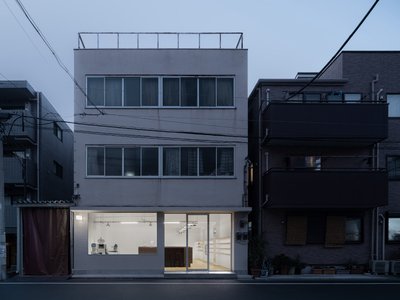
Atelier Macri Concept Store Interior Design by CASE-REAL
Atelier Macri store features a "ko" counter, walnut wood details, cork displays, blending retail, gallery, and seamless customer experiences.
On the Brooks House by Monsoon Collective – A Contemporary Kerala Home Rooted in Tradition
Kerala home blending tradition and modernity with water-inspired design, brick architecture, courtyard planning, and sustainable rainwater harvesting strategies.
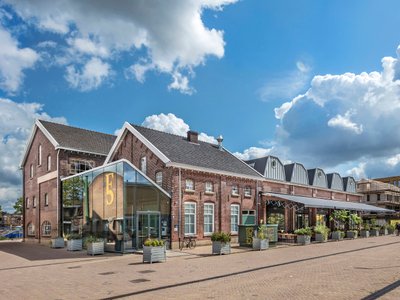
Fifth NRE Jazz Club – De Bever Architecten: Eindhoven’s Revitalized Cultural Hub
Historic gas factory transformed into Fifth NRE Jazz Club blending modern sustainability, jazz culture, dining, and heritage architecture seamlessly.
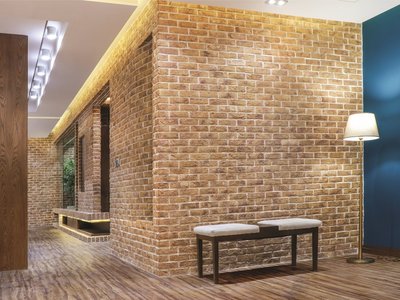
A Contemporary Take on Iranian Residential Architecture
A modern interior design in Mashhad that reinterprets brick, light, and spatial flow to create a warm, contemporary residential architecture.


Similar Reads
You might also enjoy these articles


The Ken Roberts Memorial Delineation Competition (Krob)
As the most senior architectural drawing competition currently in operation anywhere in the world, it draws hundreds of entries each year, awarding the very best submissions in a series of medium-based categories.


Waterfront Redevelopment and Urban Revitalization in Mumbai: Forging a New Dawn for Darukhana
A transformative waterfront redevelopment project reimagining Darukhana’s shipbreaking heritage into an inclusive urban future.

OUT-OF-MAP: A Call for Postcards on Feminist Narratives of Public Space
Rhizoma Design and Research Lab invites artists, designers, architects, researchers, and students to reflect on how feminist perspectives can reshape public space. Selected works will be exhibited in Barcelona, October 2026. Submissions open until 15 April 2026.


Documentation Work on Buddhist Wooden Temple
Architectural syncretism and cultural hybridity: A comparative study of the Buddhist temples in Chattogram Hill tracks
Explore Architecture Competitions
Discover active competitions in this discipline




The International Standard for Design Portfolios


The Global Benchmark for Architecture Dissertation Awards


The Global Benchmark for Graduation Excellence


Challenge to reimagine the Iron Throne
Comments (0)
Please login or sign up to add comments
No comments yet. Be the first to comment!