
Multi-Roof Villa Design: Ninefold Roof by T2P Architects in Karuizawa
The Ninefold Roof villa by T2P Architects showcases multi-roof villa design, harmonizing contemporary architecture with nature in Karuizawa, Japan

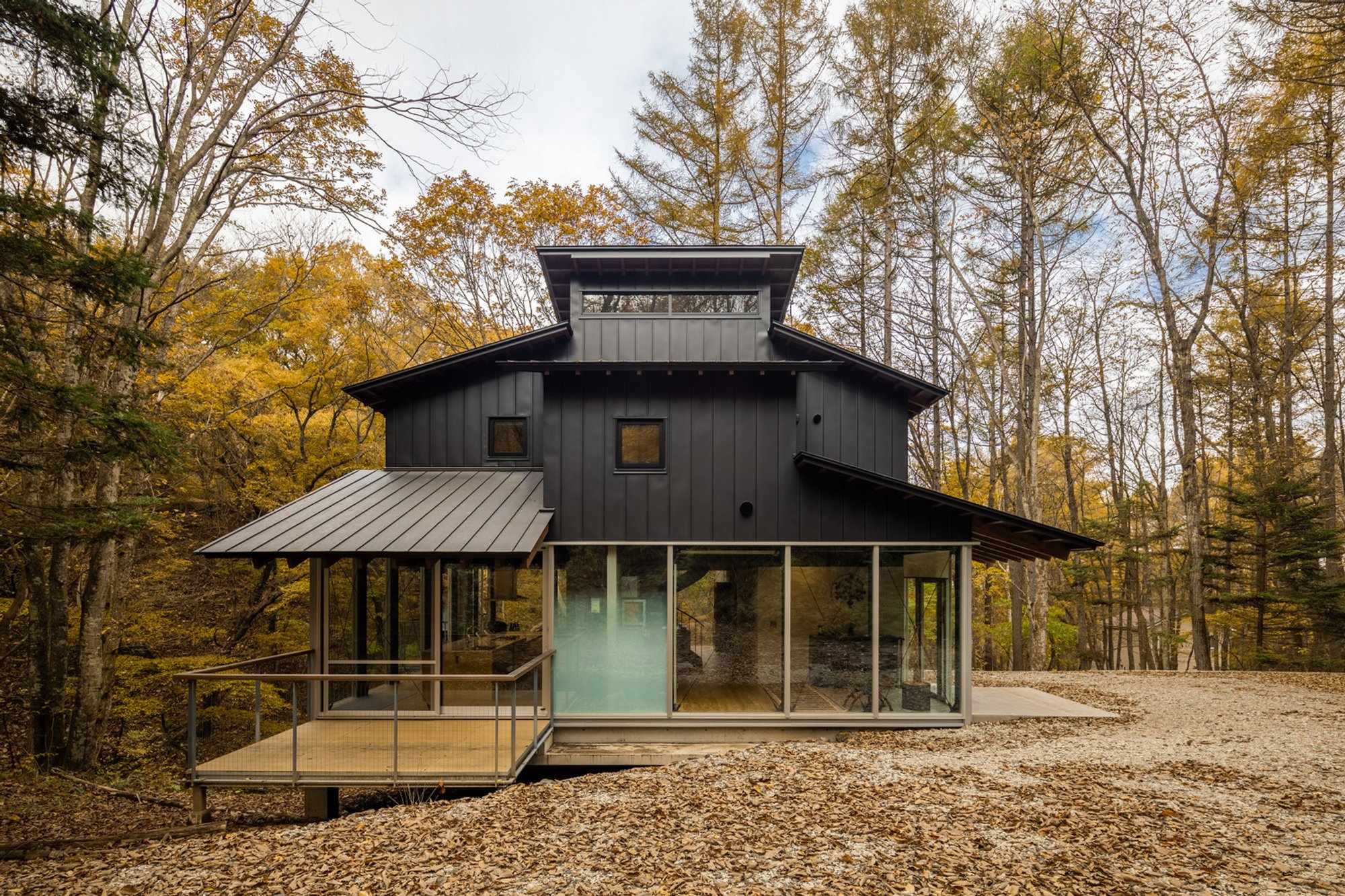
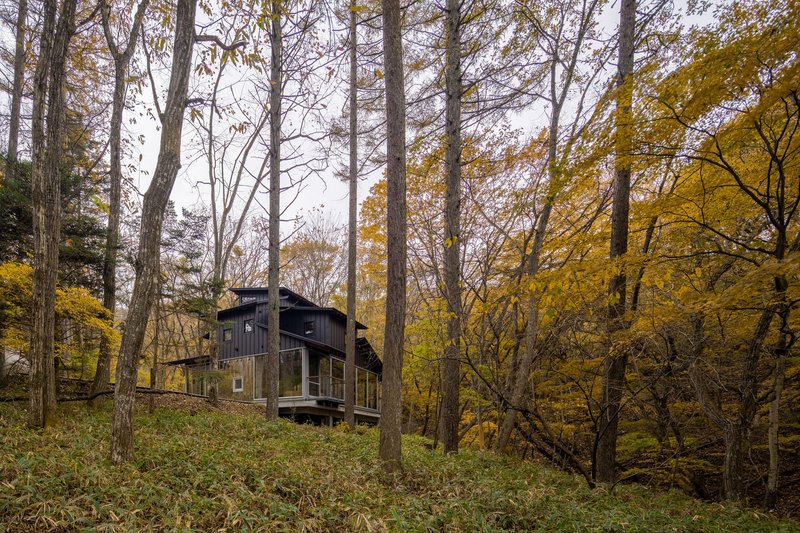
The Ninefold Roof villa, designed by T2P Architects, is a striking example of multi-roof villa design that harmonizes with the natural landscape of Karuizawa, Japan. Situated on a sloping site on Mt. Happu, the villa is designed as a retreat for four families, offering both communal and private spaces within a dynamic architectural composition. The unique structure floats lightly above the ground, minimizing its environmental impact while creating a visually compelling presence in the forested surroundings.
Architectural Concept: A Floating Sanctuary in Nature
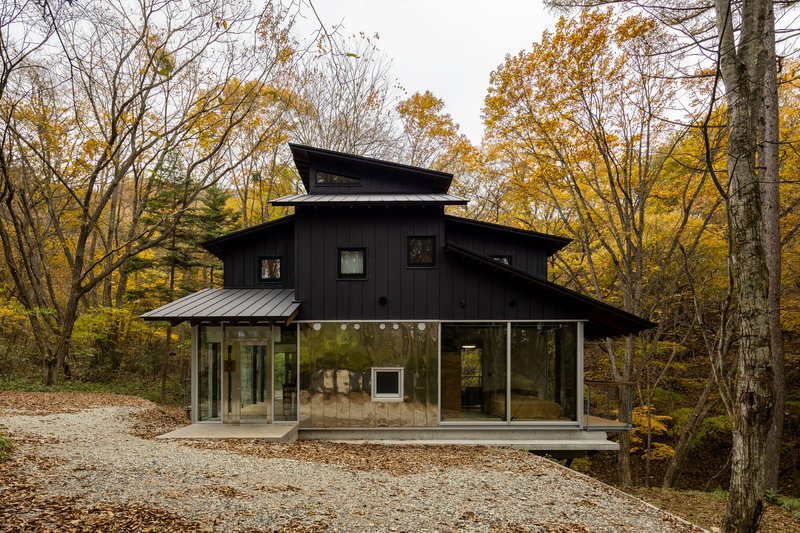
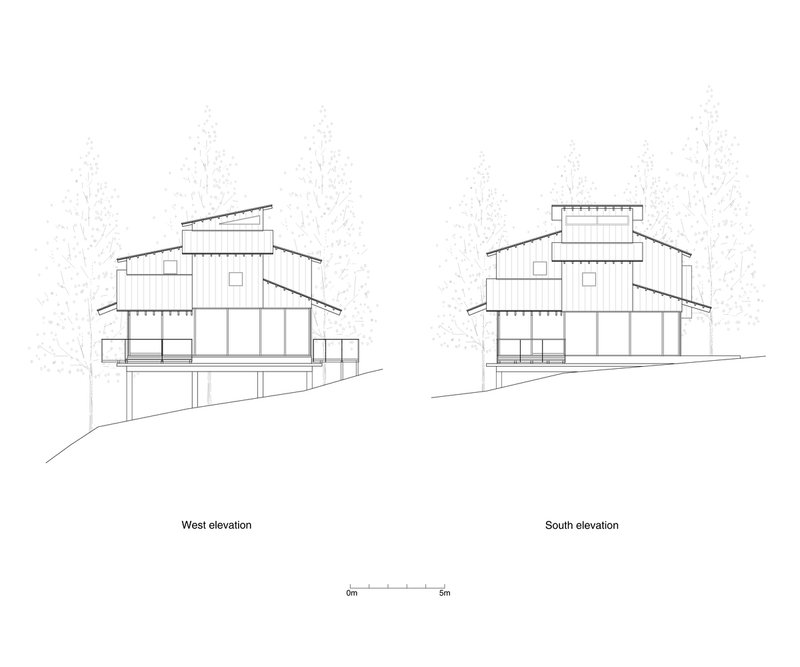
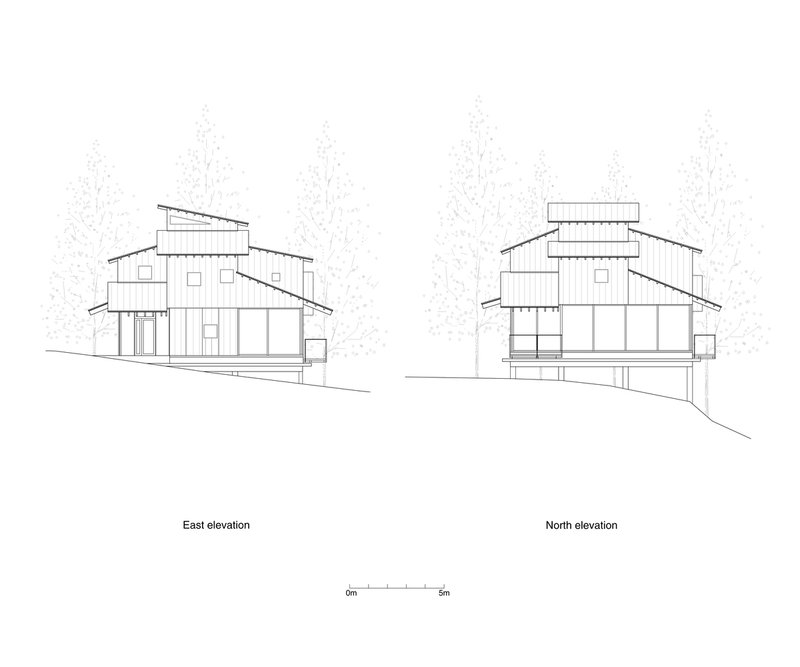
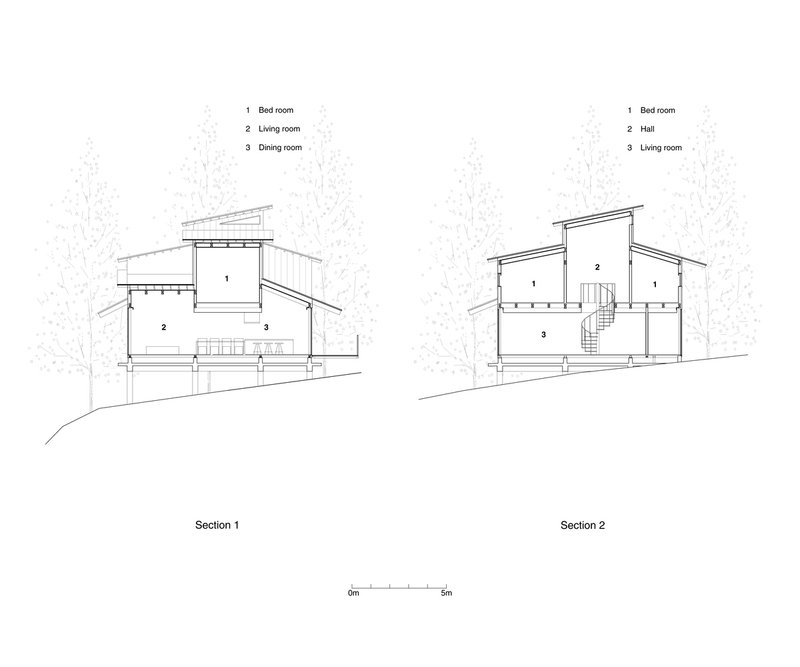
The villa’s design responds to the topography, allowing the structure to sit gently above the land on an independent foundation. This floating effect reduces disruption to the site and enhances the connection between the built environment and the natural world. The architecture consists of multiple interconnected volumes, each capped with a sloping roof that contributes to a quiet, low-profile aesthetic.
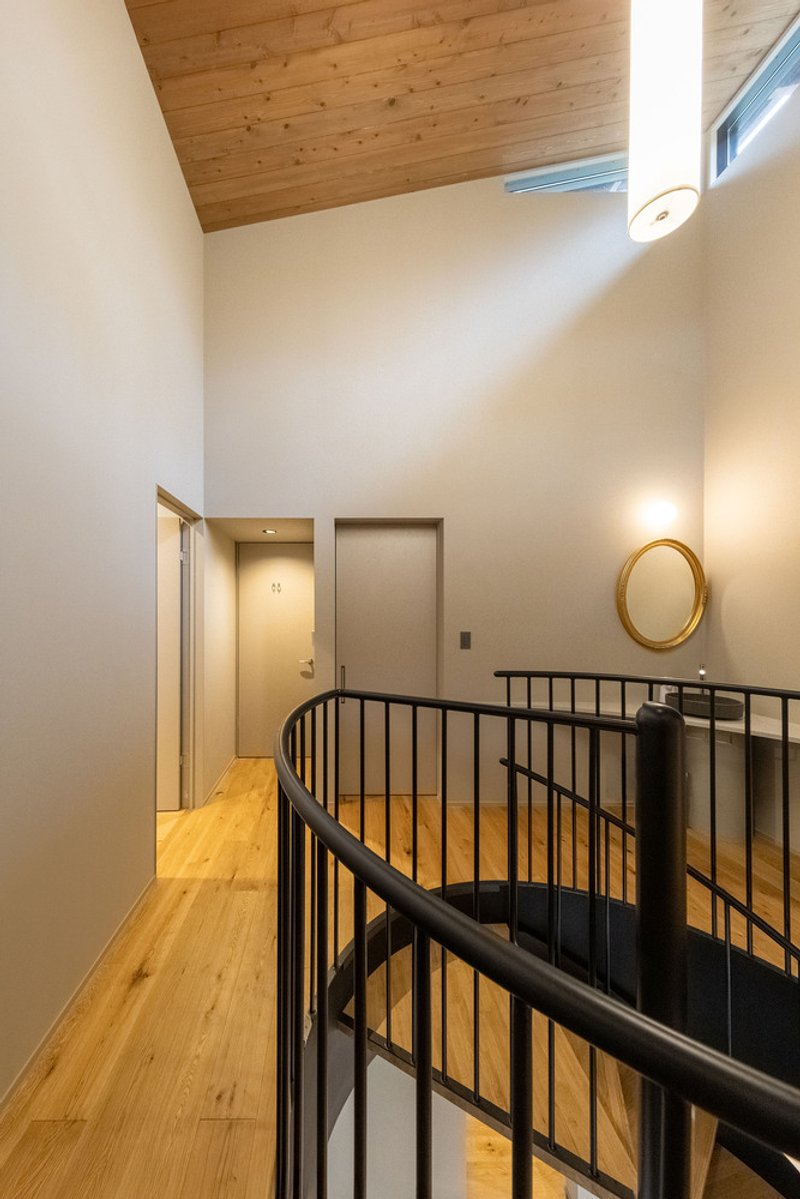
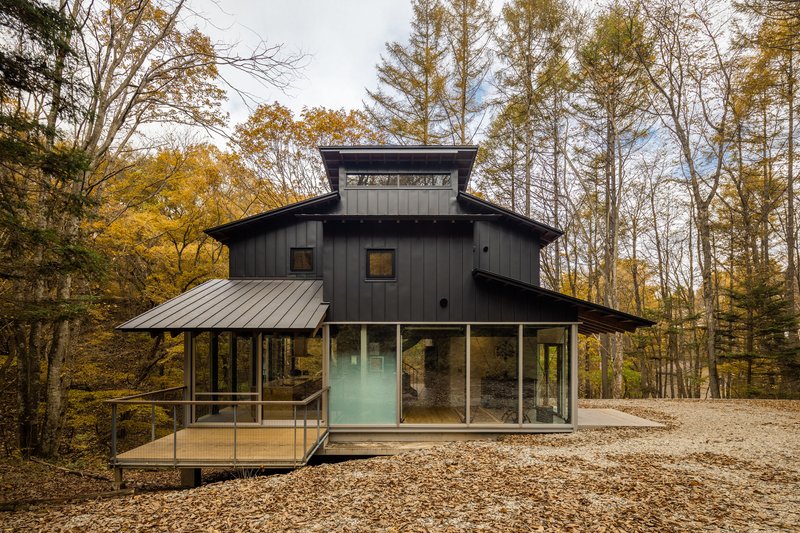
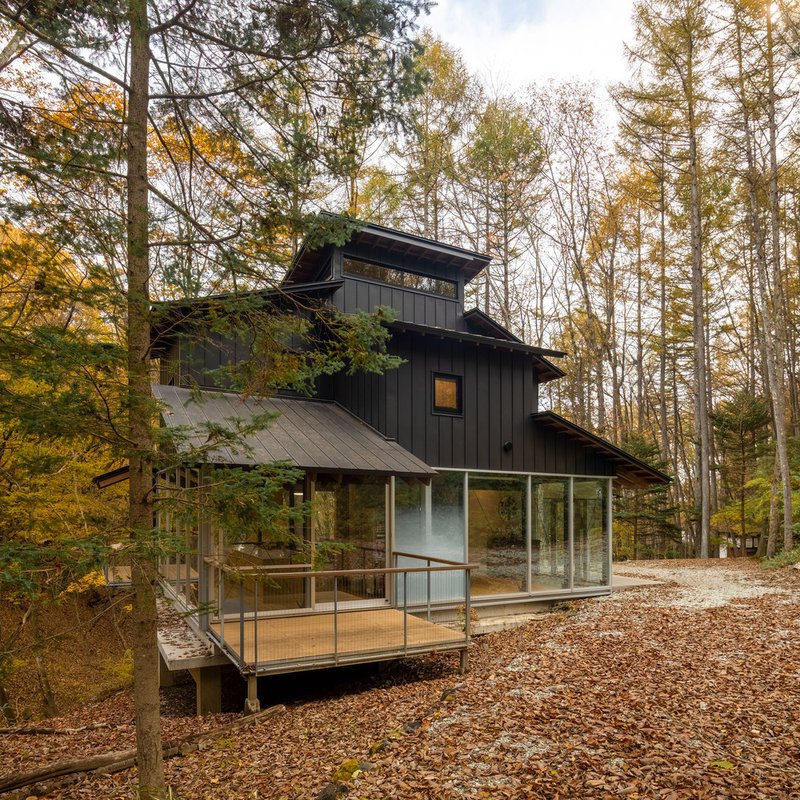
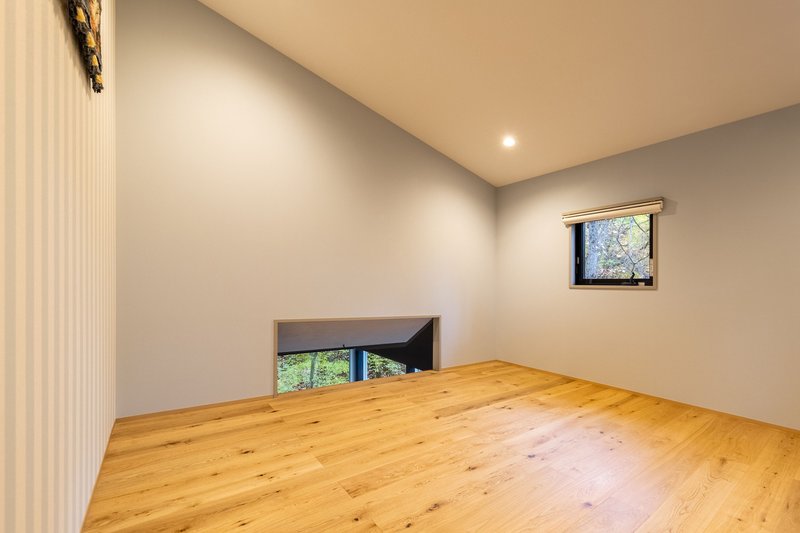
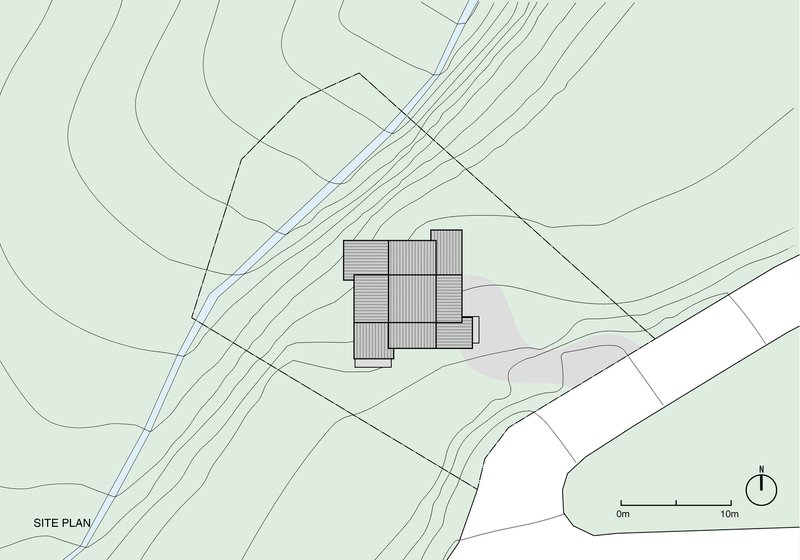
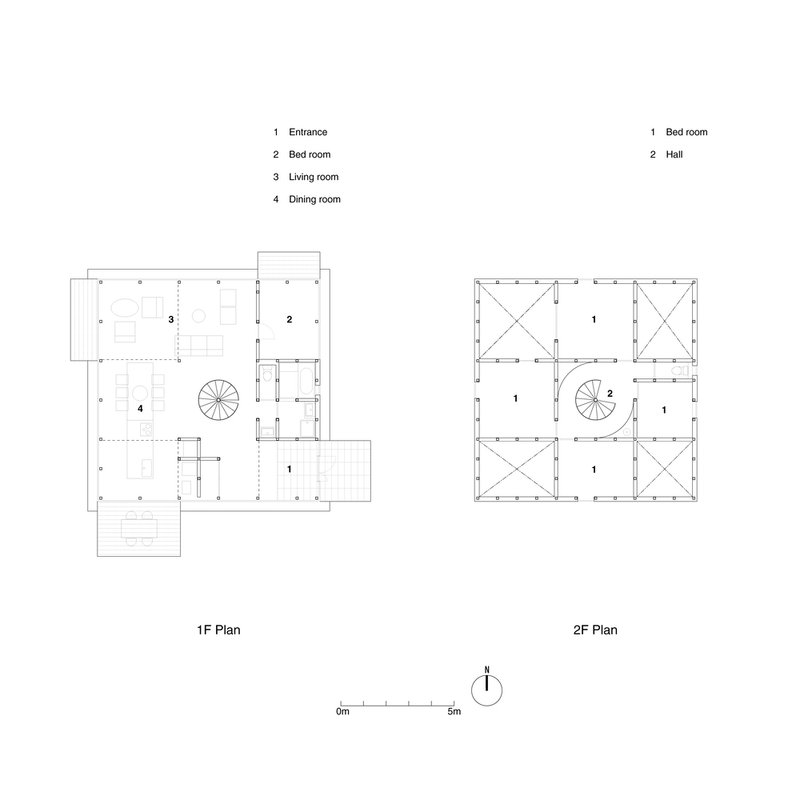
The square-shaped floor plan is divided into nine sections, creating a spatial organization that balances openness and privacy. The first floor serves as the communal hub, enclosed by glass walls that offer panoramic views of the surrounding forest and valley. The second floor contains four private rooms arranged in a crisscross layout, with high ceilings at the intersections to enhance vertical spaciousness.
Ninefold Roof: A Multi-Layered Architectural Expression
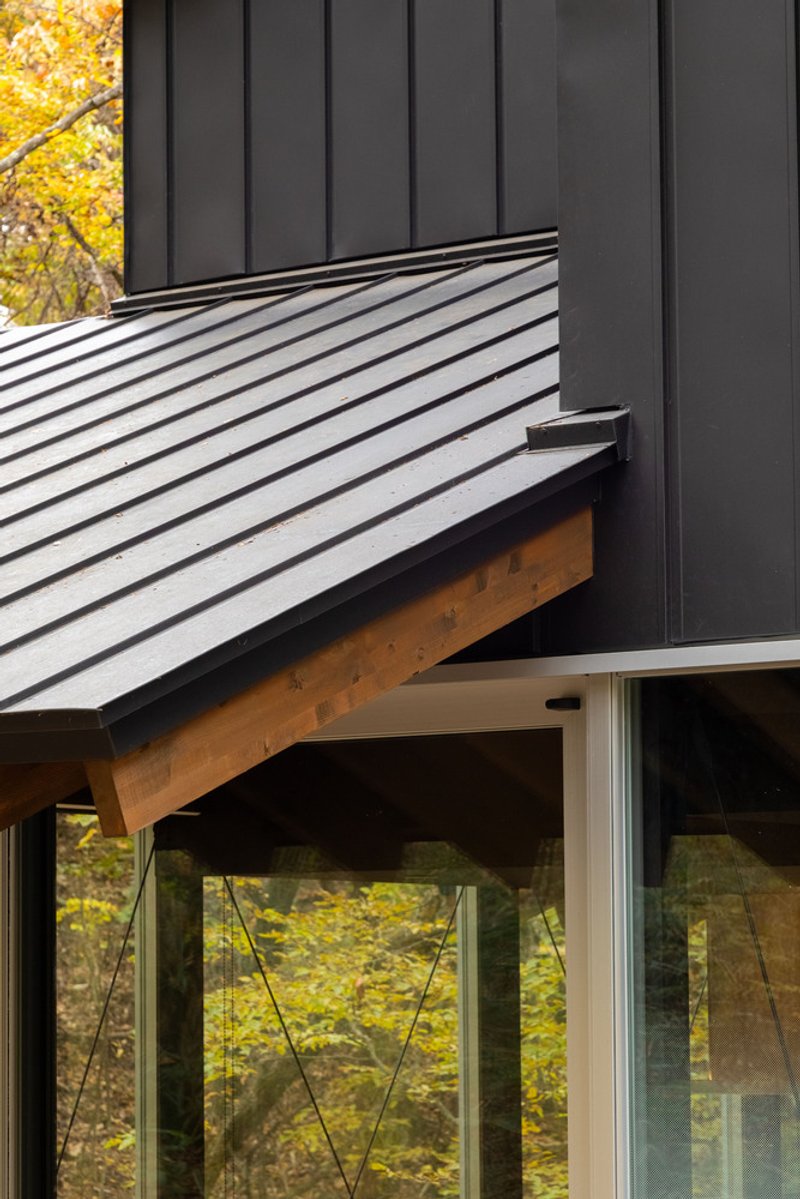
The defining feature of the villa is its distinctive ninefold roof, a composition of nine overlapping roofs with varying slopes and orientations. These layers rise toward the center, creating a visually dynamic structure that shifts in height and form. At each of the four corners, the roof extends beyond the exterior walls in a swastika-like formation, sheltering the terraces connected to key living areas such as the entrance, kitchen, living room, and master bedroom.
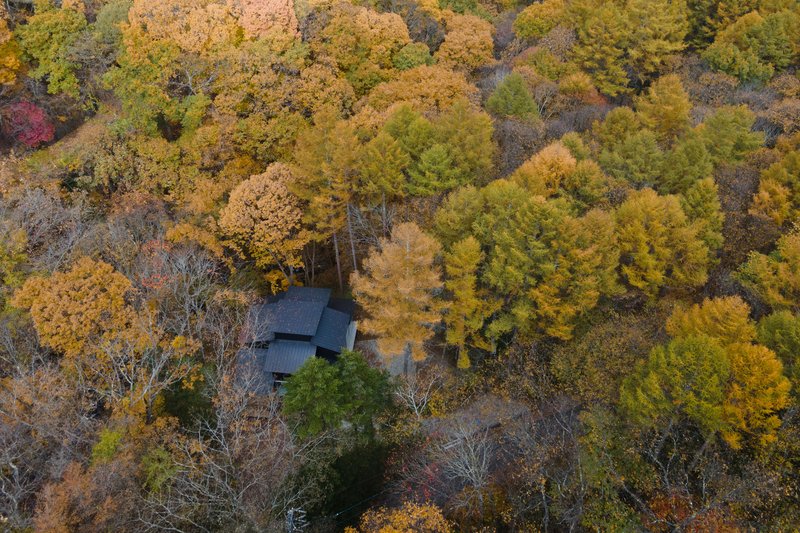
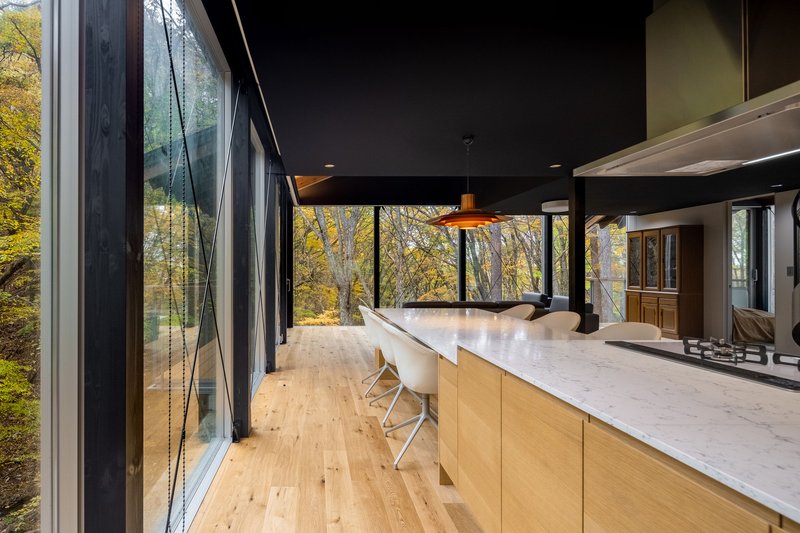
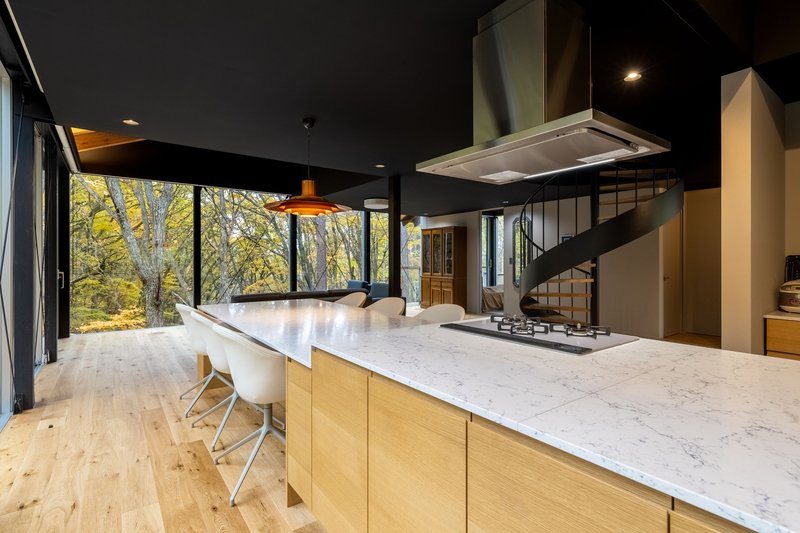
This extension of the roof blurs the boundary between indoor and outdoor spaces, allowing the living environment to flow seamlessly into nature. The terraces serve as transitional zones where residents can engage with the landscape while remaining sheltered, reinforcing the villa’s integration with its surroundings.
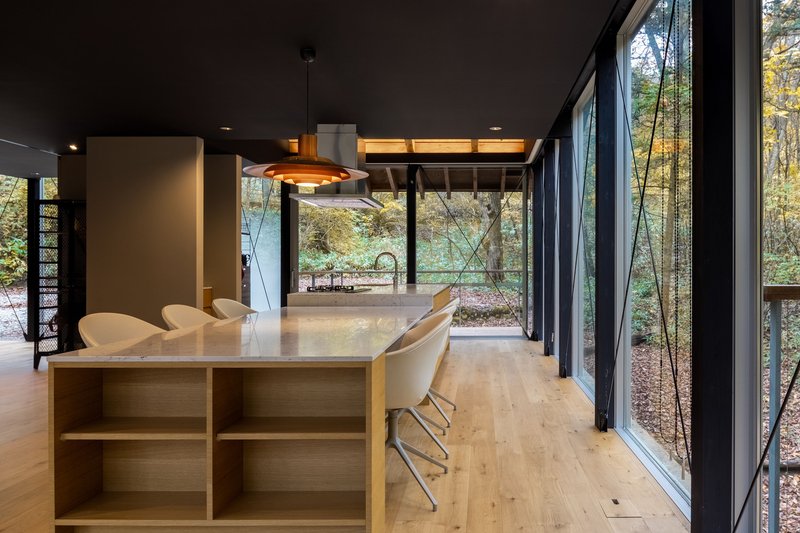
Interior Design: A Play of Light and Space
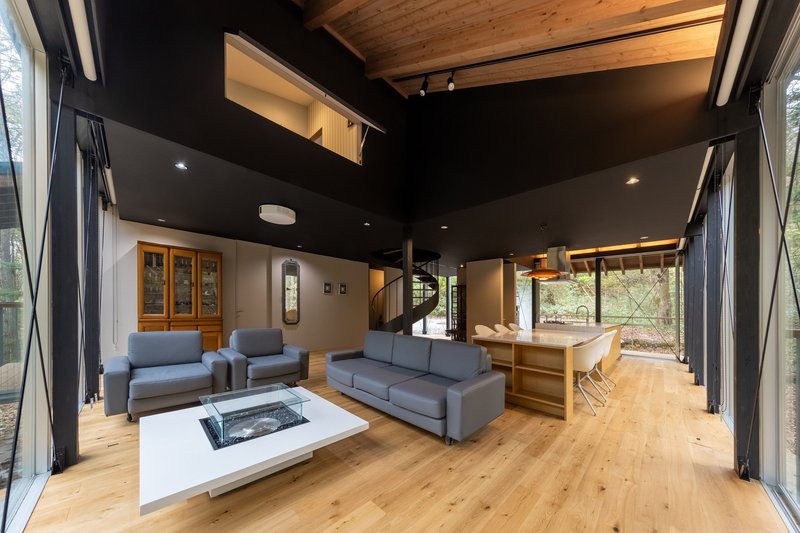
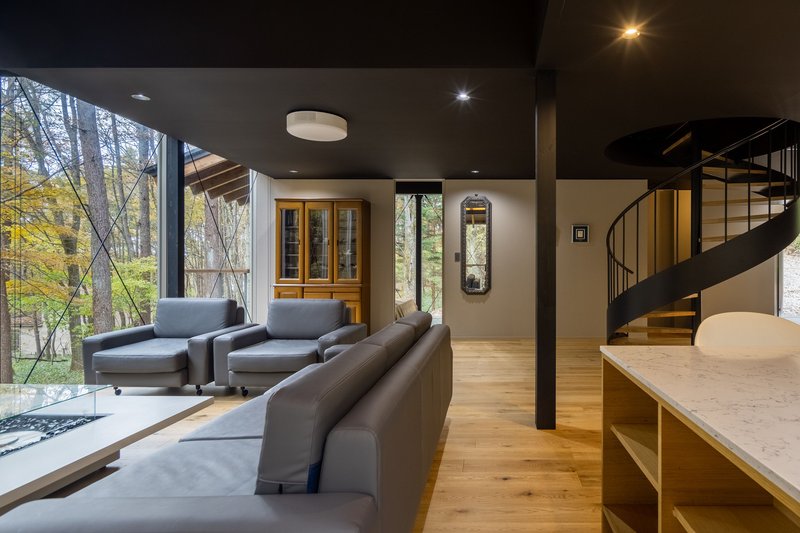
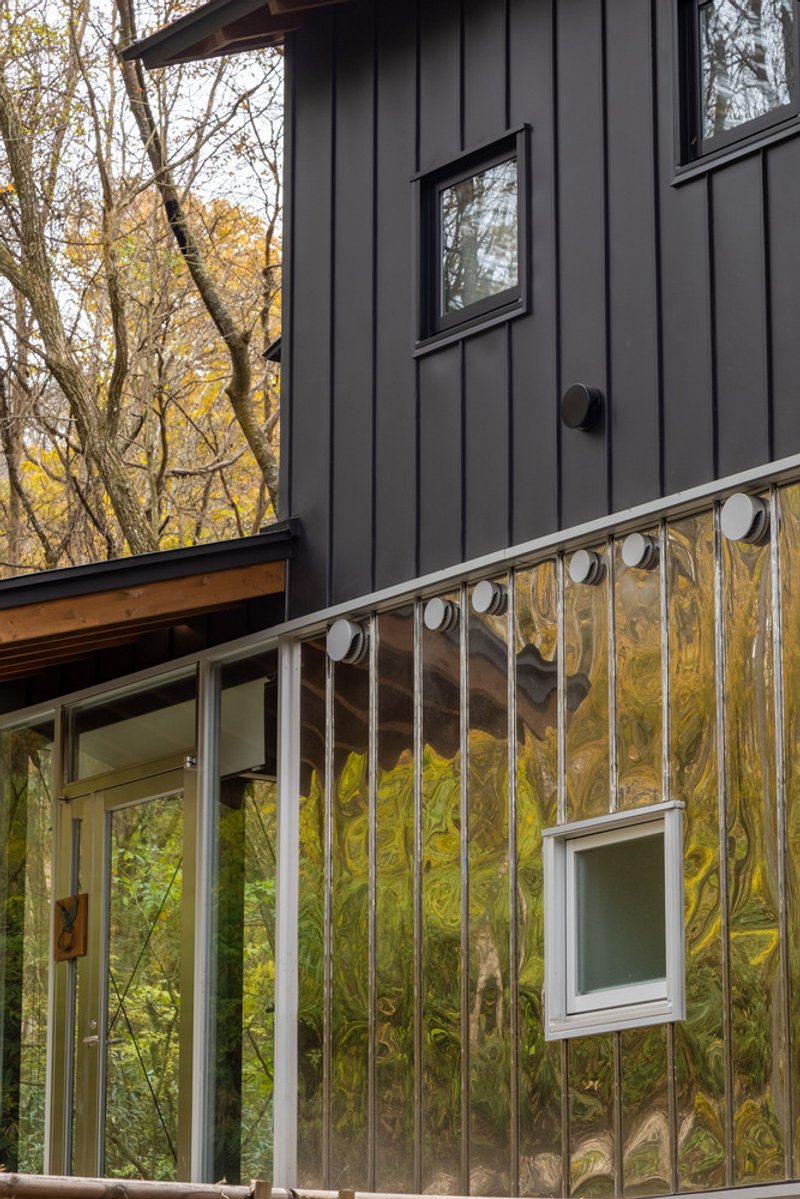
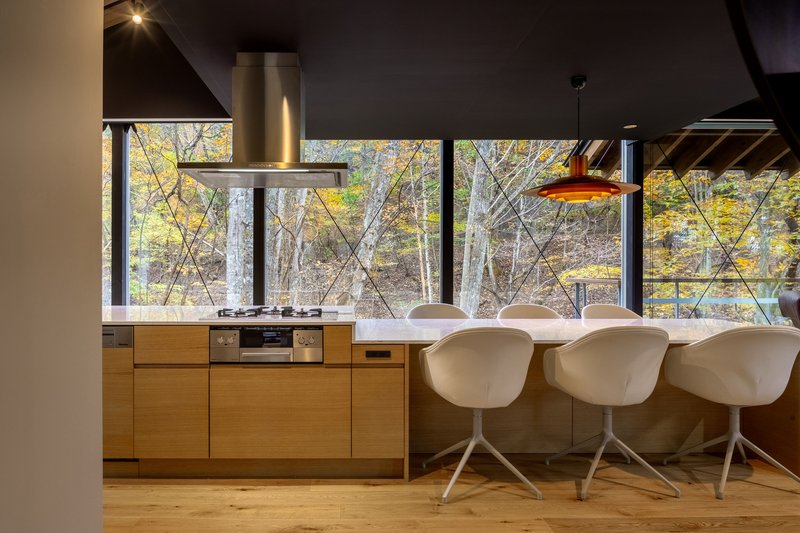
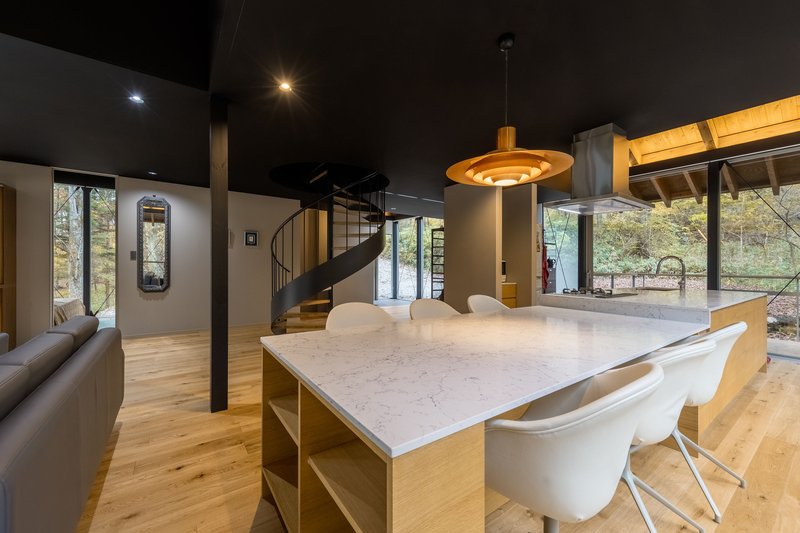
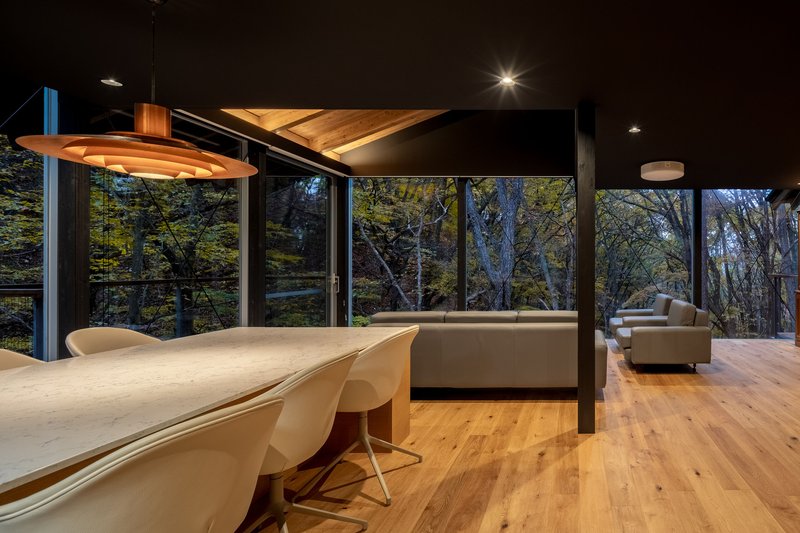
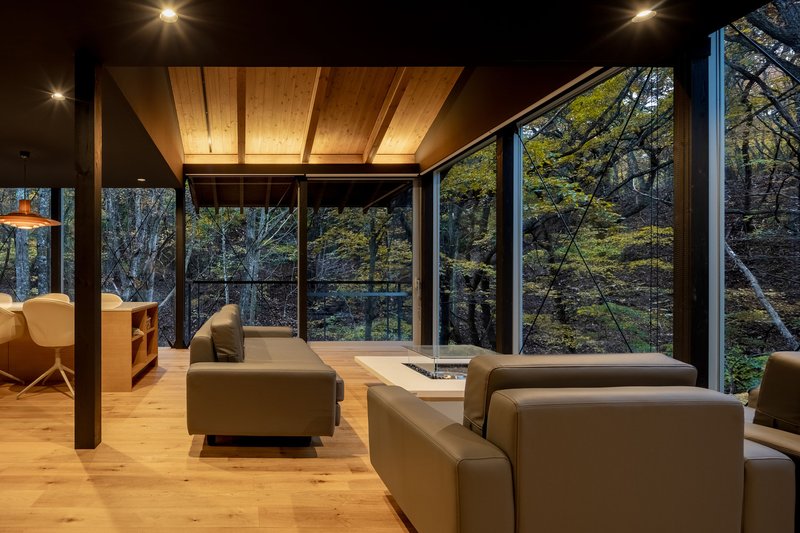
Inside, the villa maintains a simple yet profound spatial composition. Natural wood and glass dominate the material palette, creating a warm and airy atmosphere that reflects the natural setting. The use of glass walls enhances transparency, inviting abundant natural light while maintaining a strong visual connection to the forest outside.
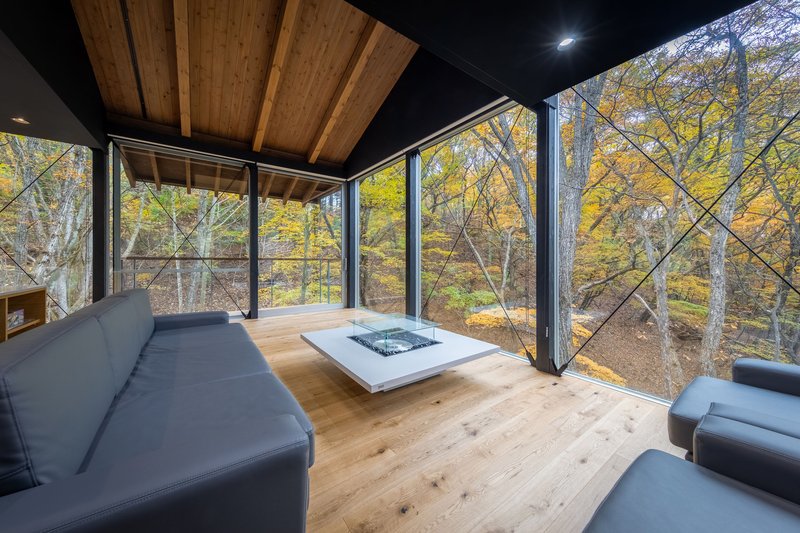
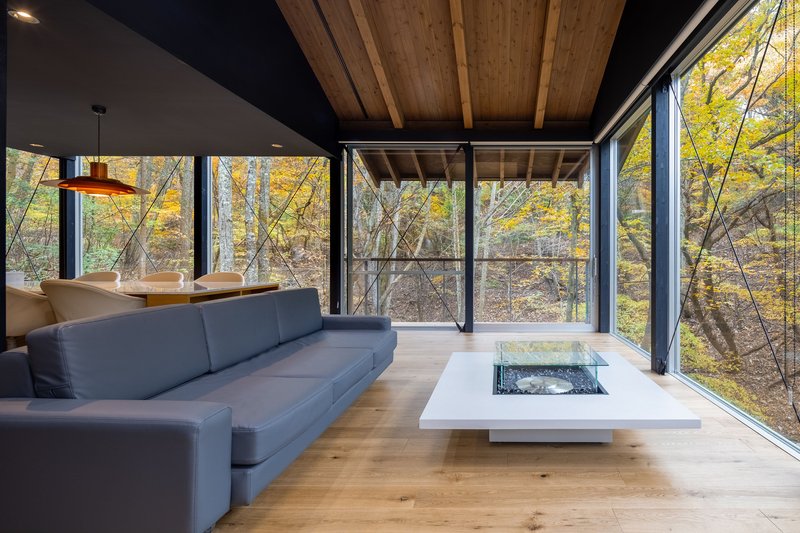
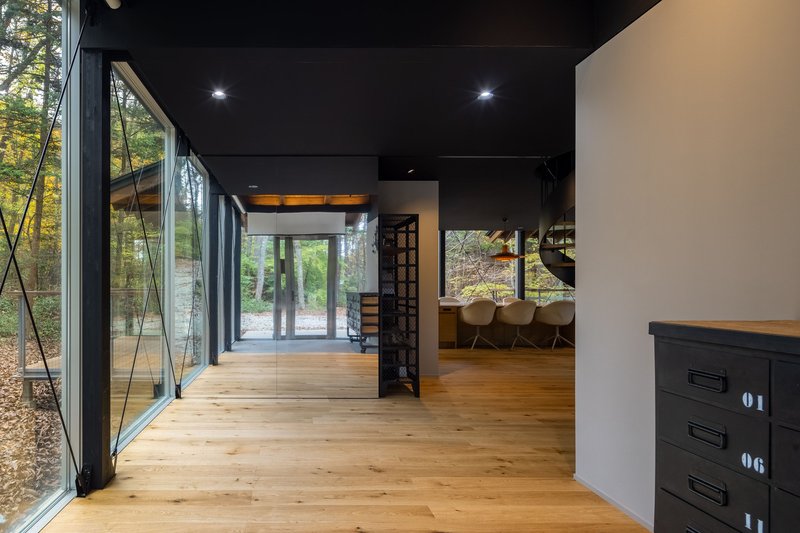
The multi-roof villa design ensures a sense of enclosure without feeling confined. The varying roof heights create dynamic interior spaces where light filters through different angles, casting shifting patterns throughout the day. The open-plan first floor fosters interaction among family members, while the private rooms on the upper level provide personal retreats within the shared home.
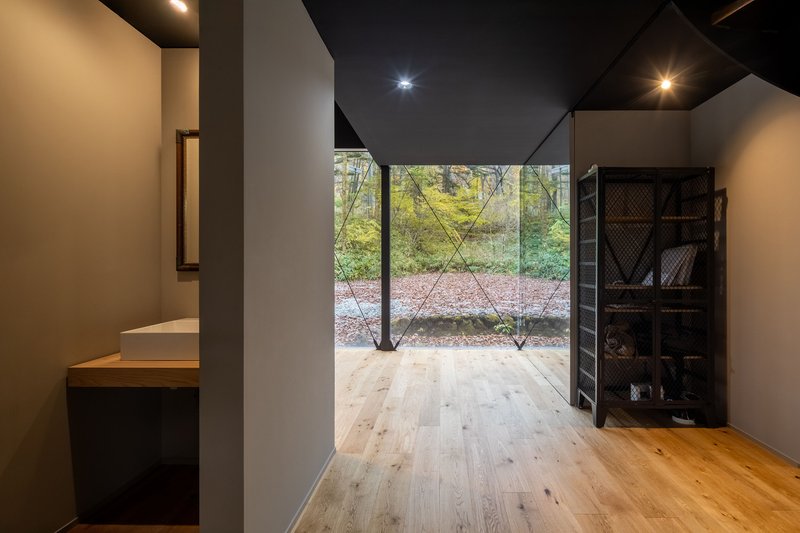
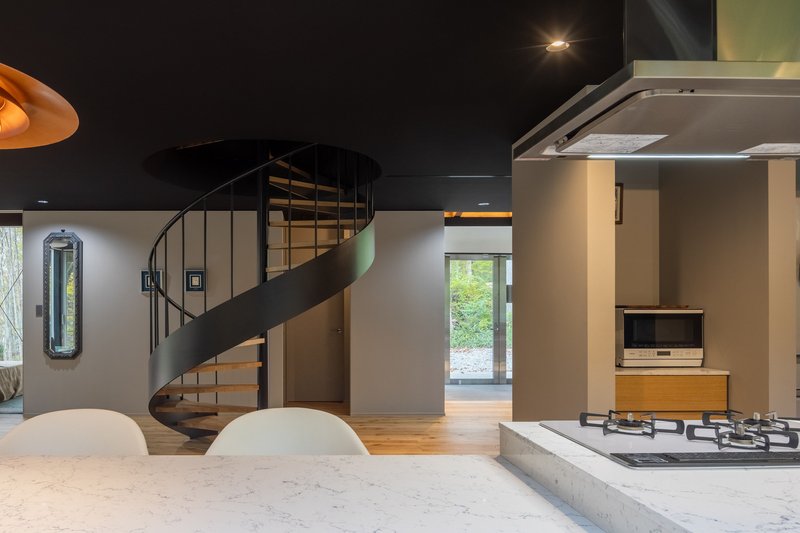
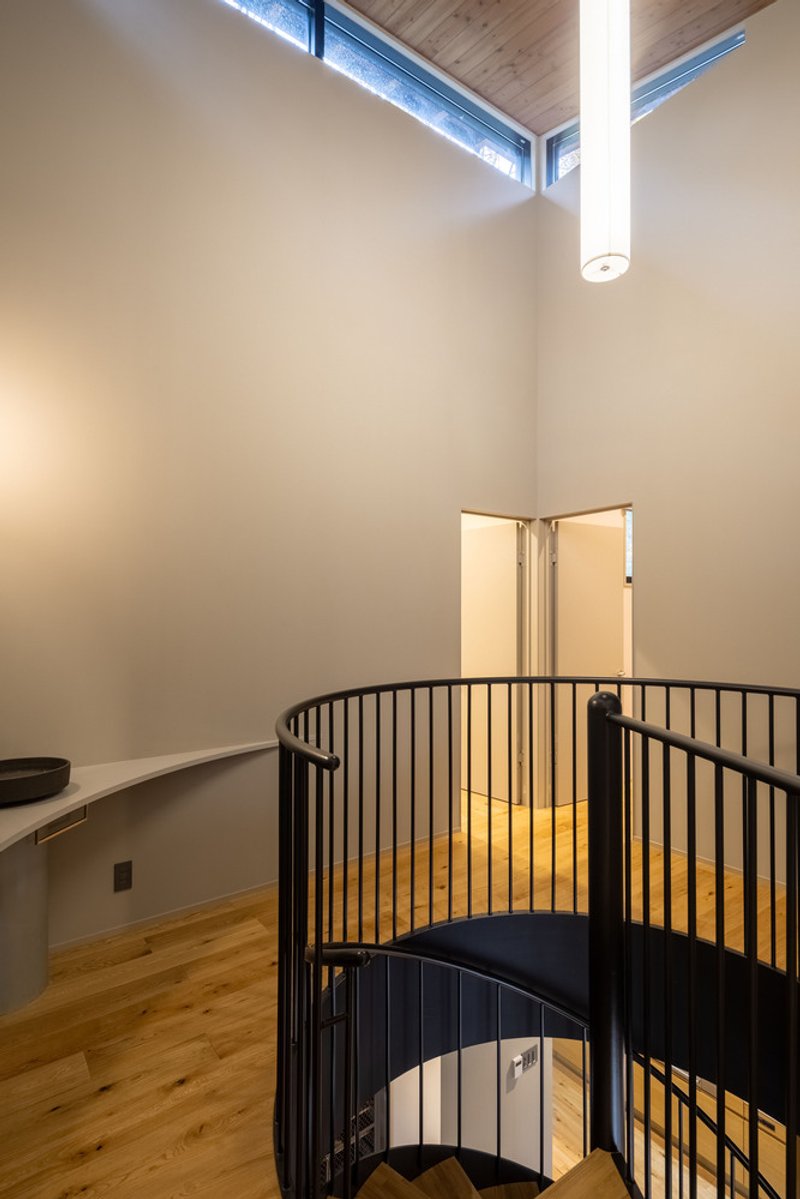
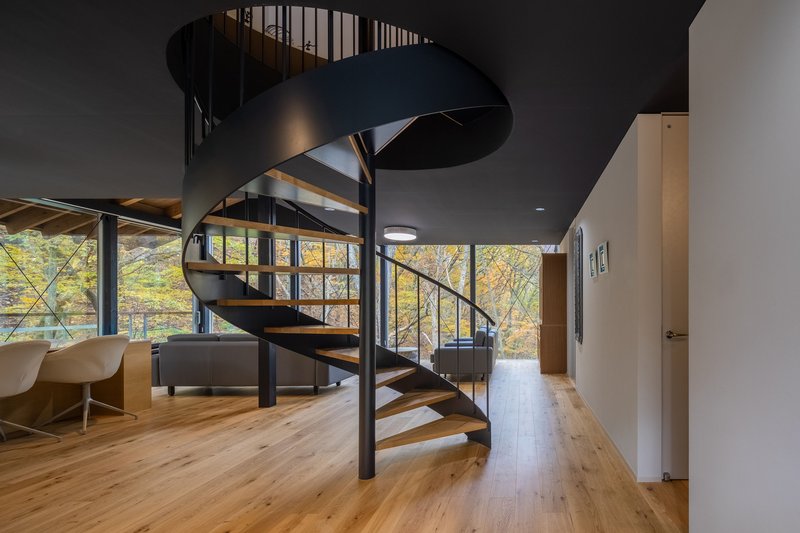
A central staircase acts as the core of the interior circulation, connecting the levels while maintaining an open and flowing spatial arrangement. The inclusion of wooden handrails and natural finishes enhances the tactile experience of moving through the house, reinforcing the villa’s organic architectural language.
Harmonizing with Nature and Generational Living
Beyond its aesthetic and functional considerations, the Ninefold Roof villa is designed as a multi-generational retreat. By accommodating four families within a single architectural framework, the villa fosters intergenerational bonding while preserving individual privacy. The thoughtful layout encourages diverse activities, from communal gatherings in the open living areas to quiet reflection in the secluded rooms and terraces.
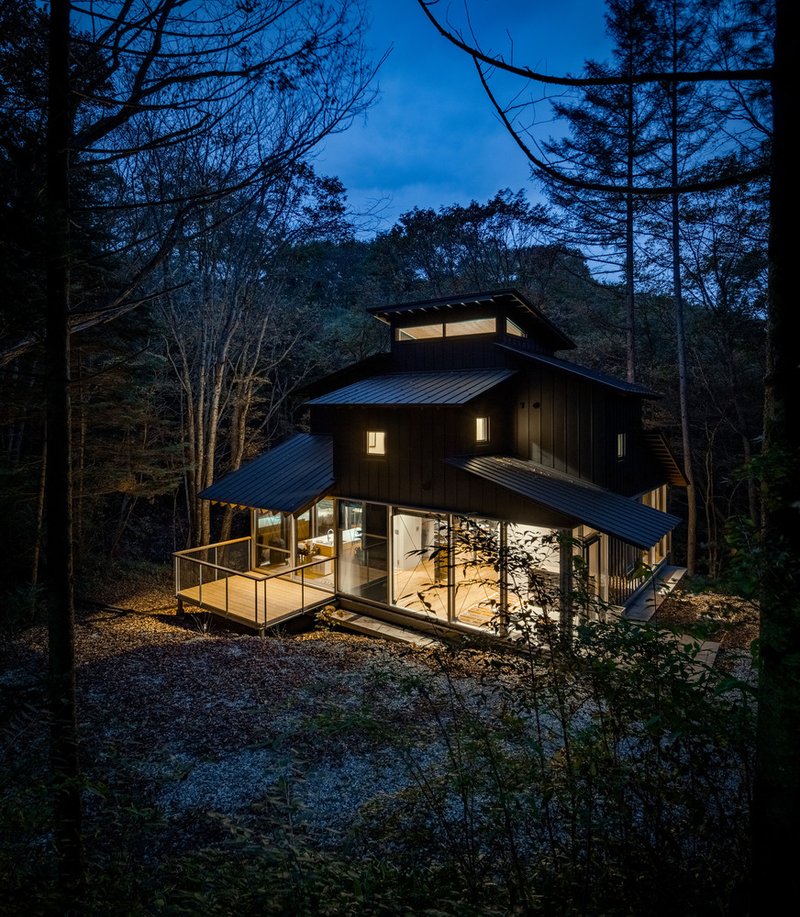
The villa’s relationship with nature extends beyond its physical footprint. Its elevated construction reduces site disturbance, while the orientation of the roofs and glass panels optimizes natural ventilation and daylighting. These design strategies contribute to an environmentally responsive architecture that respects and enhances the surrounding ecosystem.
The Ninefold Roof villa by T2P Architects exemplifies the possibilities of multi-roof villa design in contemporary architecture. By layering sloping roofs and integrating indoor and outdoor spaces, the villa achieves a seamless connection with its natural surroundings. This project demonstrates how architecture can embrace complexity while maintaining simplicity, creating a space that evolves with the lives of its residents. As a retreat for multiple families, it serves as both a sanctuary in nature and a model for sustainable, multi-generational living.
All Photographs are works of Vincent Hecht




Popular Articles
Popular articles from the community

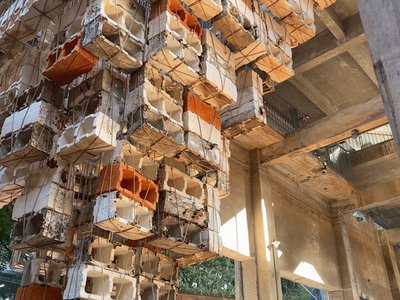
Inverted Architecture Installation by Studio Link-Arc: Exploring the Intersection of Architecture and Living Organisms
Inverted Architecture Installation by Studio Link-Arc blends mycelium, sustainability, inverted design, ecological cycles, and urban adaptive architecture in Shenzhen.


The Ken Roberts Memorial Delineation Competition (Krob)
As the most senior architectural drawing competition currently in operation anywhere in the world, it draws hundreds of entries each year, awarding the very best submissions in a series of medium-based categories.
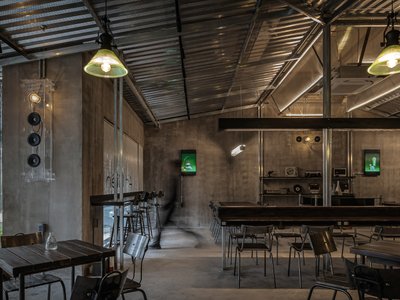
An Miên Lumière Cafe by xưởng xép, Ho Chi Minh City, Vietnam
An industrial-inspired café where layered steel and warm light create a dynamic, immersive environment shaped by reflection, depth, and perception.
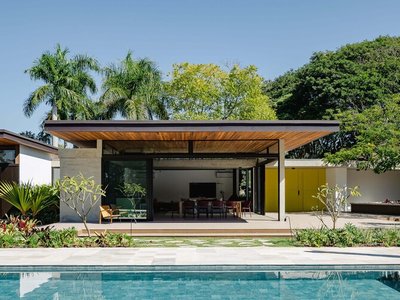
Flamboyant House by Juliana Camargo + Prumo Projetos
Modern Brazilian house integrating existing tree, pool, and volumes with glass, wood, and transitional spaces blending interior, exterior, and landscape seamlessly.


Similar Reads
You might also enjoy these articles

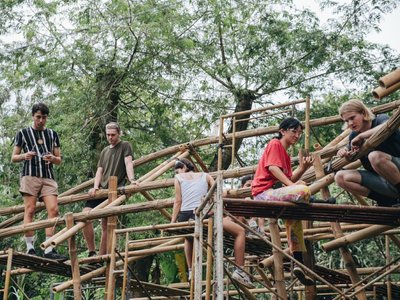
Bamboo Housing Challenge 2026: Design Affordable, Sustainable Homes Using Bamboo
An international design competition by Bamboo U and IBUKU inviting architects and designers to reimagine affordable housing using bamboo — with the winning design built full-scale in Bali.

Computational Design & Education: Beegraphy Design Awards Introduces 7th Category (Featuring Jiyun's Innovative Approach)
Dive into Beegraphy’s 7th Design Awards category, where computational design meets education to create immersive, interactive learning tools, inspired by Jiyun’s work.

From Parametric Lighting to Urban Furniture: Join the 2nd Workshop in Beegraphy’s Computational Design Series
Dive into Cutting-Edge Design Techniques and Practical Applications with Industry Experts

Introducing Sphere by UNI: Pioneering a New Era in AEC Industry
Unlocking Global Potential with BIM and Agile Management


Explore Architecture Competitions
Discover active competitions in this discipline




The International Standard for Design Portfolios


The Global Benchmark for Architecture Dissertation Awards


The Global Benchmark for Graduation Excellence


Challenge to reimagine the Iron Throne
Comments (0)
Please login or sign up to add comments
No comments yet. Be the first to comment!