
Musical Center "Hòa Âm": A Symphony of Sustainable Design and Vietnamese Culture
An in-depth exploration of the Musical Center "Hòa Âm," focusing on sustainable architecture and cultural integration.


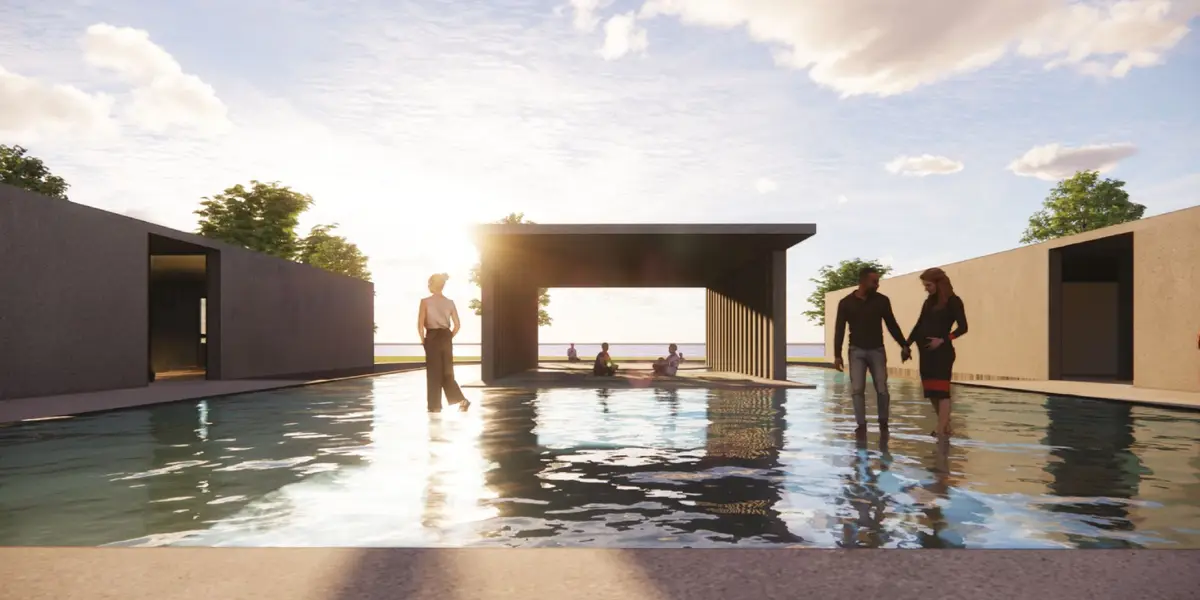
The Musical Center "Hòa Âm," designed by Daniela Pachacama and shortlisted entry in the Save Song Competition, is a remarkable example of how contemporary architecture can harmonize with its natural surroundings while promoting local culture. This article delves into the project's innovative design, emphasizing its sustainable architecture, functional adaptability, and cultural significance.

Architectural Concept
The design of the Musical Center "Hòa Âm" is rooted in the desire to seamlessly integrate with the surrounding landscape. The project's primary goal is to adapt to the needs of its users while maximizing the use of natural resources. Water plays a pivotal role in the design, not only as a visual element but also as a means to create a sense of lightness and fluidity within the concrete structures. The incorporation of urban voids and courtyards establishes a visual connection between Lake Tây Hồ and Lake Đầm Trị, enhancing the site's natural beauty.
Sustainable Design Elements
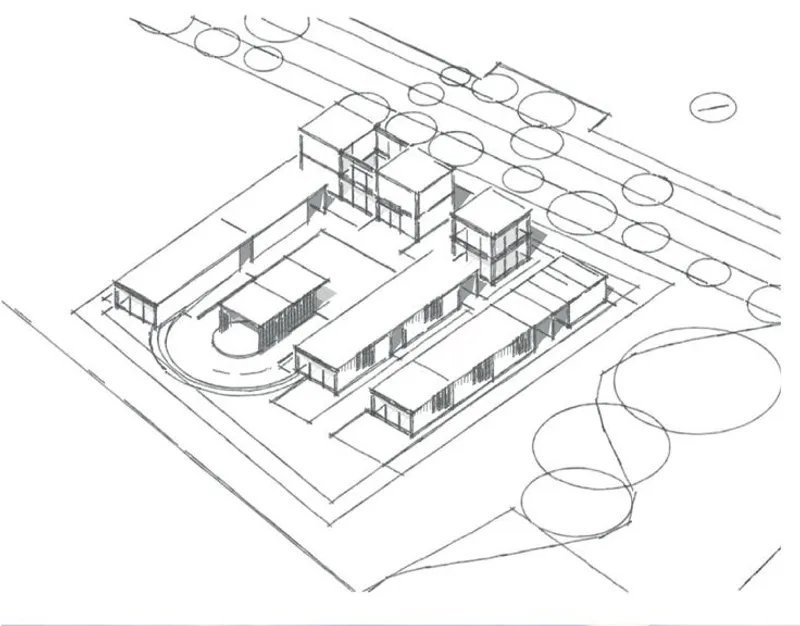
The project's sustainable design is evident in its use of water and vegetation. Various water features are strategically placed to give the impression that the buildings float, reducing the visual weight of the concrete. Additionally, water bodies at different levels diversify the use of this resource, contributing to the building's environmental harmony. A detailed vegetation study ensured that the plant species chosen would enhance the site's aesthetic and provide shade, reflecting the project's commitment to environmental sustainability.

Functional Composition
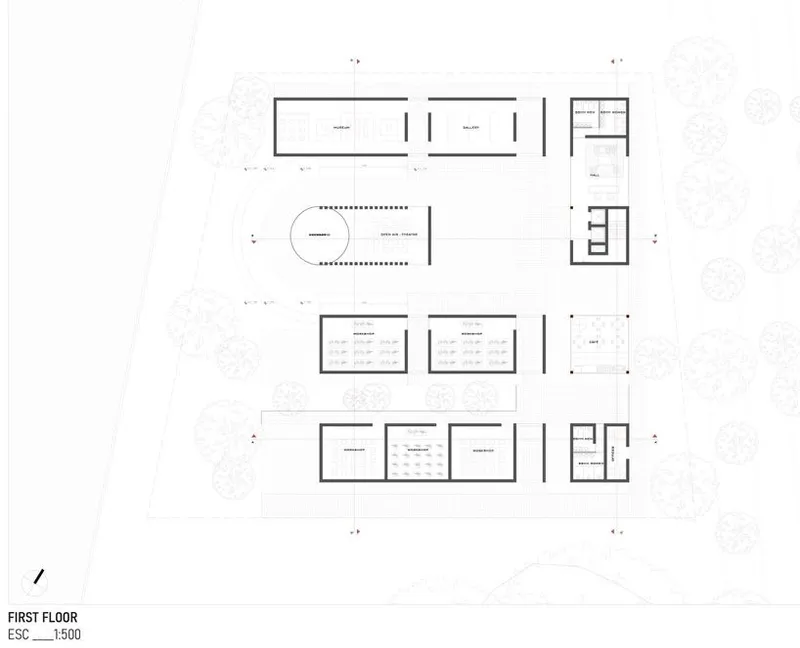
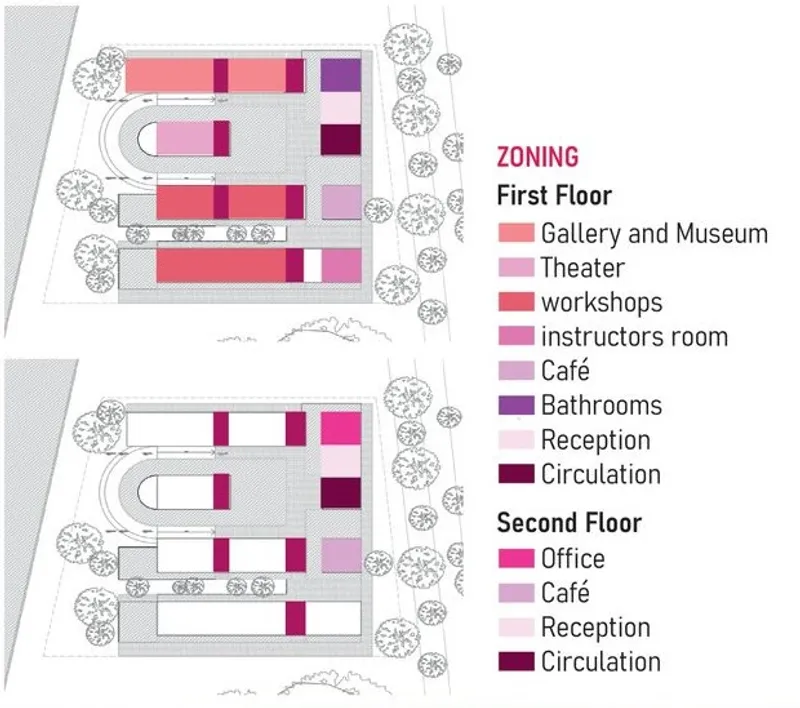
The functional composition of the Musical Center is meticulously planned to support the revival and promotion of the Ca trù musical tradition. The center includes dedicated spaces for teaching and performing this unique Vietnamese art form. Key facilities include workshops with interior decorations inspired by Hanoi's culture, a museum, and a gallery for both permanent and temporary exhibitions. An open-air theater surrounded by an aquarium, an underground auditorium, and a recording studio are also integral parts of the design, all tailored to enhance the cultural experience of visitors.

Materiality and Aesthetic
The choice of materials plays a fundamental role in the project’s aesthetic and environmental integration. Exposed concrete facades are complemented by metal framing and glass, creating a modern yet harmonious look that blends with the natural surroundings. The interiors feature contemporary wooden furniture and artworks that add warmth and character to the space, creating inviting environments for both cultural activities and relaxation.

Architectural Organization
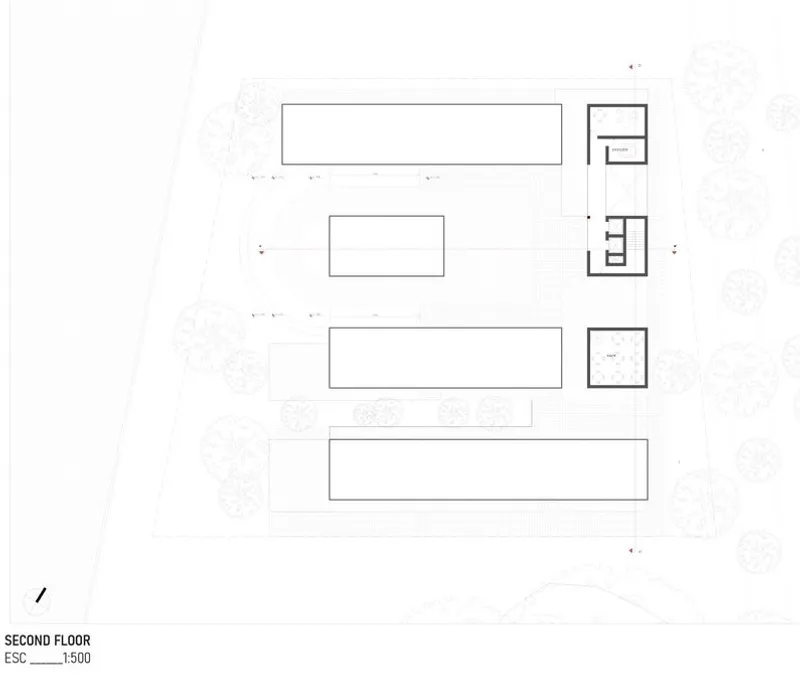
Modularity and simplicity in circulation are key aspects of the architectural organization. Single-story longitudinal elements define interior courtyards, which serve as both circulation and external viewing spaces. The east wing, featuring two-story buildings with glass facades, marks the main entrances and integrates the interior spaces with the surrounding environment. Underground areas, such as the auditorium and recording studios, are designed to function efficiently without natural light, utilizing a longitudinal corridor that benefits from natural light redirected from the main water feature above.
Solar Utilization and Light Management
The design includes strategically placed façade and roof perforations to maximize natural light penetration. These elements are designed to ensure that both direct and indirect light enhances the interior spaces, creating a peaceful and harmonious atmosphere. The main courtyard's water feature further facilitates natural light entry into the underground areas, showcasing a thoughtful approach to light management.
Cultural and Tourism Impact
The Musical Center "Hòa Âm" aims to be a multifunctional space that adapts to the evolving needs of its users. As one of the few cultural centers designed in Hanoi, it is expected to attract both local residents and tourists, thereby boosting cultural engagement and tourism in the city. The project's design ensures that it remains relevant and functional, contributing to the ongoing evolution of architecture and culture.

The Musical Center "Hòa Âm" stands as a testament to the harmonious integration of sustainable architecture and cultural promotion. By blending innovative design with environmental consciousness, Daniela Pachacama has created a space that not only serves its functional purpose but also enhances the cultural and natural landscape of Hanoi. This project exemplifies how sustainable architecture can pave the way for future developments that respect and enhance their surroundings while fostering cultural heritage.


Popular Articles
Popular articles from the community


Lunar Spiral: Space Architecture Shaped by the Mathematics of the Universe
Lunar Spiral reimagines space architecture through Fibonacci geometry, lunar regolith, levitating habitats, and self-sustaining Moon living.

The Musturak Paradise: Senior Living Architecture for a Connected Future in Temara, Morocco
The Musturak Paradise reimagines senior living architecture in Temara via private homes, social spaces, culture, community, and shared care.

Co-Life: Senior Housing Design That Reconnects Older Adults With the City
Co-Life reimagines senior housing design through healing gardens, shared streets, workshops, and a sustainable community across generations.

Play: Fragments of Their World
Familiar architecture becomes modular playground design, creating safe spaces where displaced children can learn, connect, imagine and play.

Similar Reads
You might also enjoy these articles

Day and Night Park: A Time-Based Urban Newsstand in Beijing
A temporary urban newsstand in Beijing blending travel, light, and reading through poetic colors, compact form, and community-focused design.

Modernist Patio Renovation in El Masnou, Barcelona by Oliver Segura Arquitectura + Cebrià Arquitectura
Modernist patio renovation blending tradition and innovation with a movable pool, leveled floors, and Catalan materials in El Masnou.

Alto Residencial Coop: Cooperative Housing Development in Santiago de Compostela by Carbajo Barrios Arquitectos
A linear cooperative housing complex blending white volumes and perforated metal façades, enhancing community living, natural light, privacy, and urban integration.
Vil Genis School by BPA ARCHITECTURE – Massy, France
Vil Genis School in Massy, France, features sustainable design, south-facing classrooms, community integration, accessible spaces, and modern educational architecture.

Explore Sustainable Design Competitions
Discover active competitions in this discipline

Challenge to reimagine the Iron Throne

Photograph architecture without architects

Illustrate the lost glory of Angkor Wat - Render Challenge

Design challenge to reuse E-waste
Comments (0)
Please login or sign up to add comments
No comments yet. Be the first to comment!