
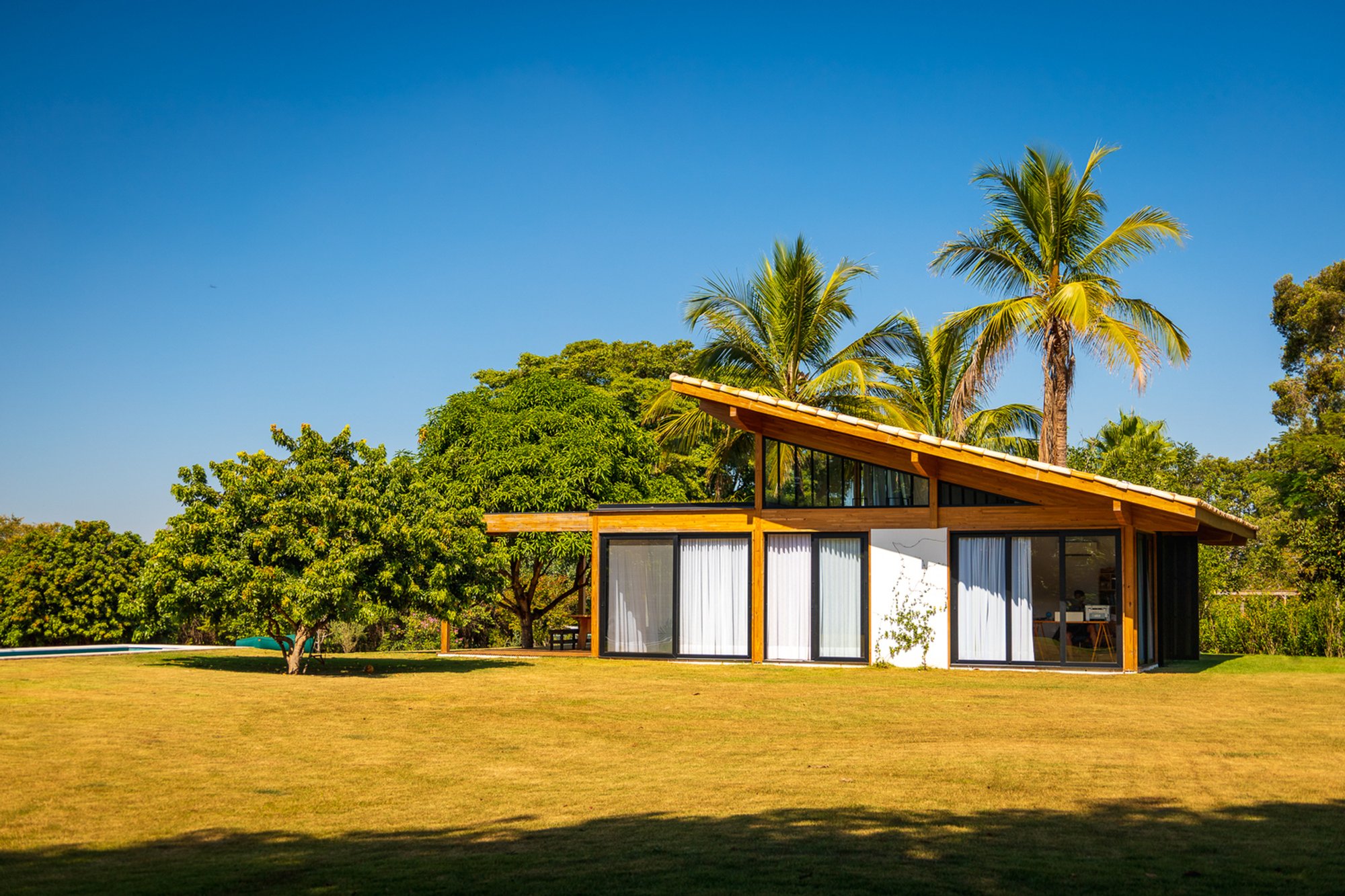
Muxarabi House by 24 7 Arquitetura
Muxarabi House blends sustainable timber construction with natural surroundings, offering a serene, flexible family retreat in rural Brazil.

Context & Vision
The Muxarabi House by 24 7 Arquitetura emerges as the inaugural phase of a larger residential masterplan spanning over 600 m² of built space. It began as a transitional dwelling for a family relocating from São Paulo, intended to host friends and family, while they plan the construction of their primary residence. Though temporary in conception, this compact home encapsulates potent ideas of sustainable architecture, deep site integration, and refined spatial economy—qualities that ensure its value beyond any temporal context.
Respecting Site & Nature
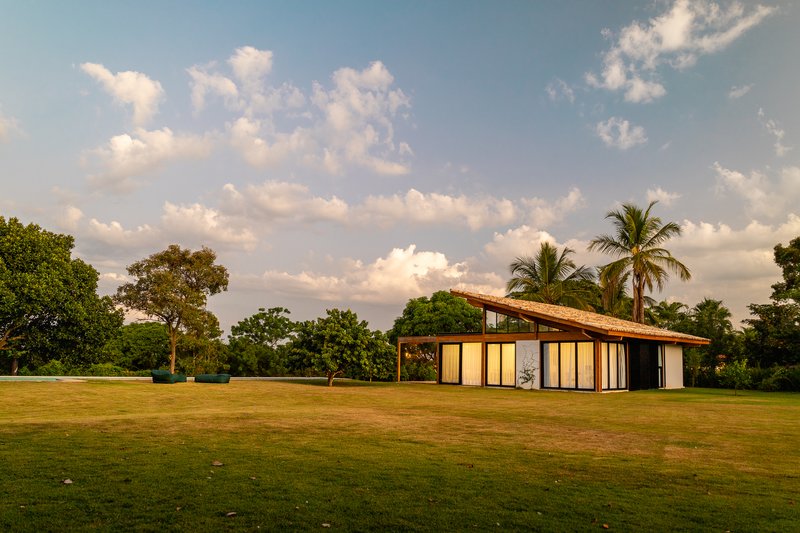
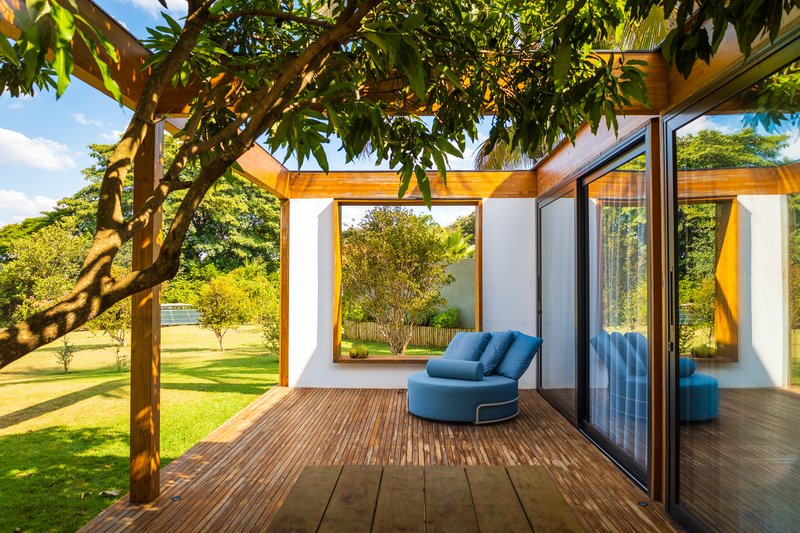
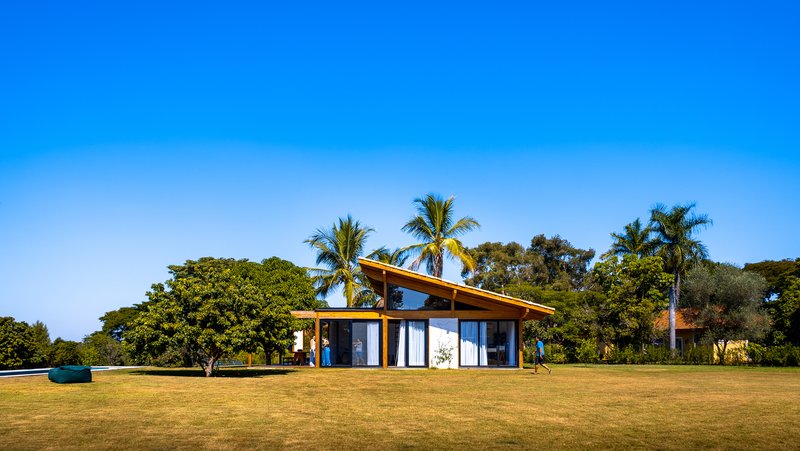
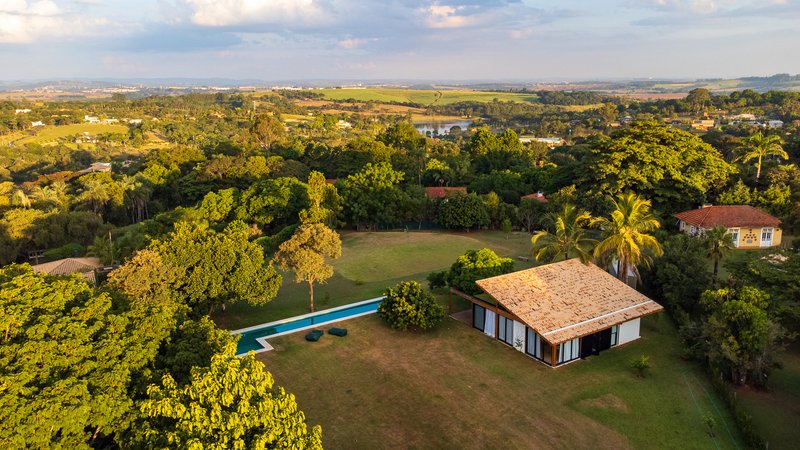
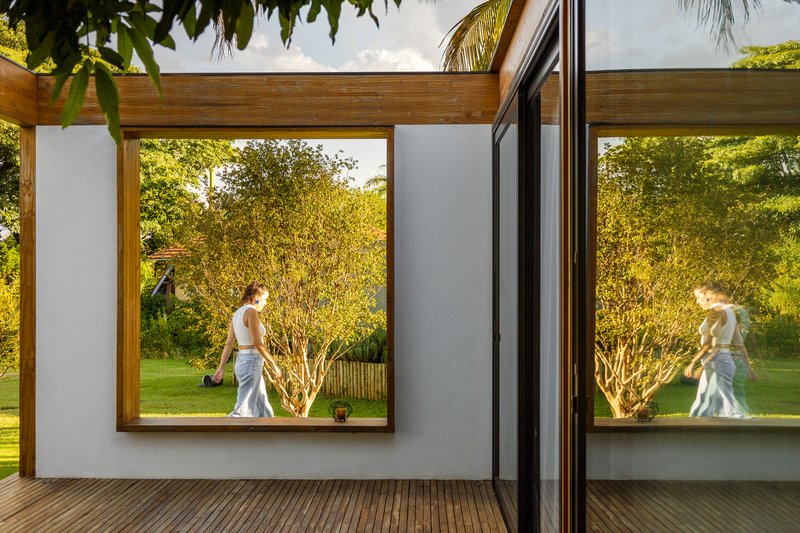
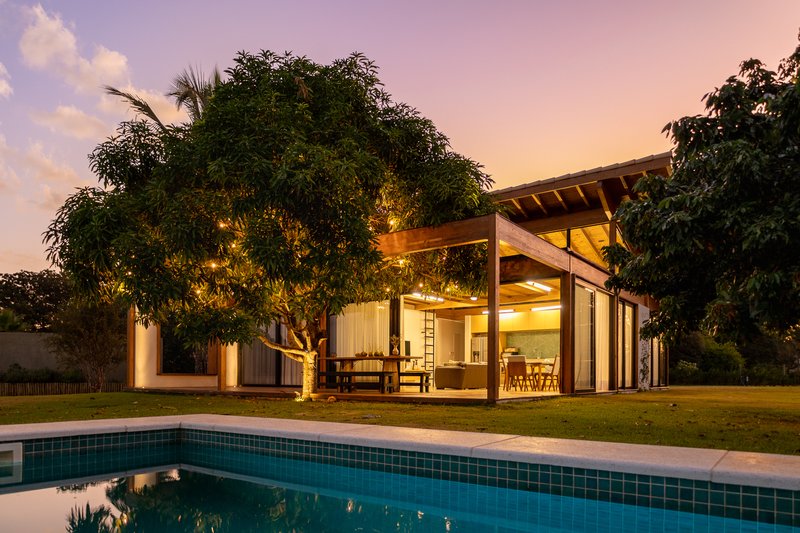
Situated on a generously sized, flat plot exceeding 5,000 m², the property already featured a mature canopy of trees and a play-ready treehouse. From the outset, the design prioritized the preservation of these natural fixtures. The placement of the house was carefully orchestrated to avoid disrupting mature vegetation, allowing the trees to frame the home and provide natural shade. This strategic positioning not only minimizes environmental impact but also encourages a seamless indoor–outdoor dialogue, where daily life unfolds in harmony with the surrounding landscape.
Construction System & Sustainable Approach
Architects selected glue-laminated pine timber (glulam) for beams and support pillars, married to a traditional ceramic-tiled roof. This hybrid structural system offers a lightweight, renewable, and industrially prefab approach. Off-site prefabrication reduced on-site waste and construction duration, offering a responsible and streamlined building process. Importantly, the use of engineered timber underscores the home’s low carbon footprint, reinforcing 24 7 Arquitetura’s climate-sensitive design ethos.
Spatial Organization & Flexibility
Despite its compact size, the house offers a thoughtful spatial flow:
- Two private suites
- Powder room
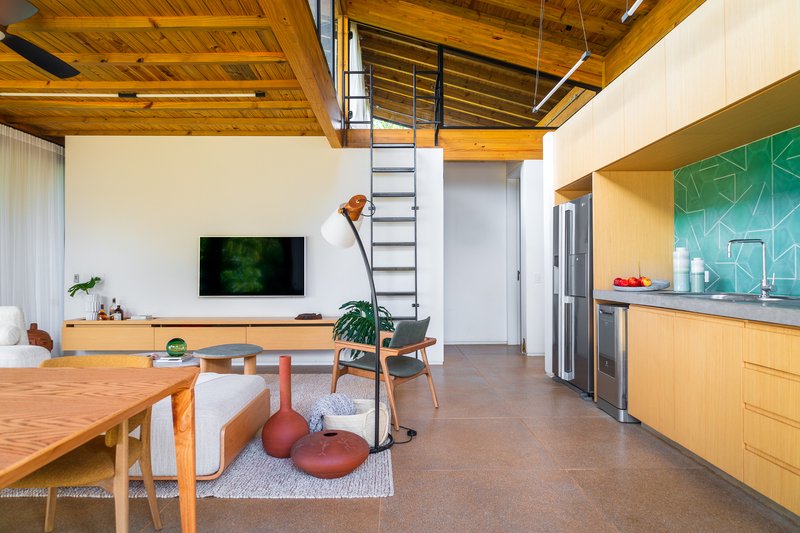
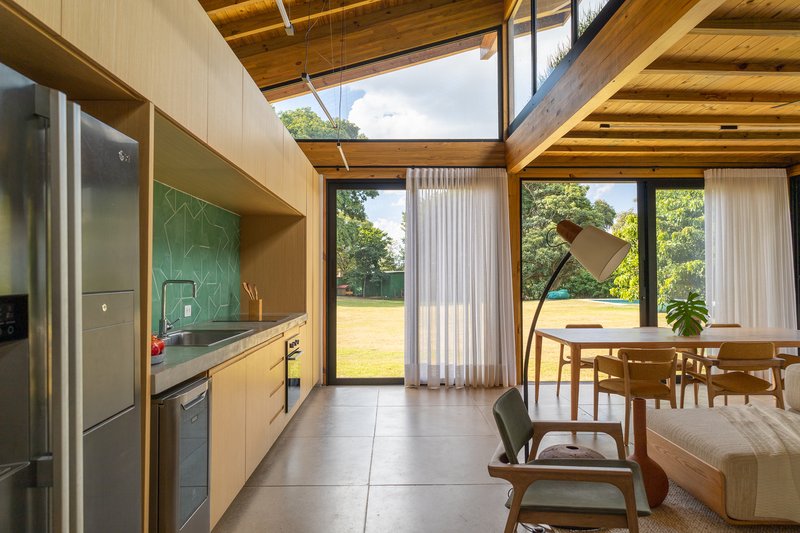
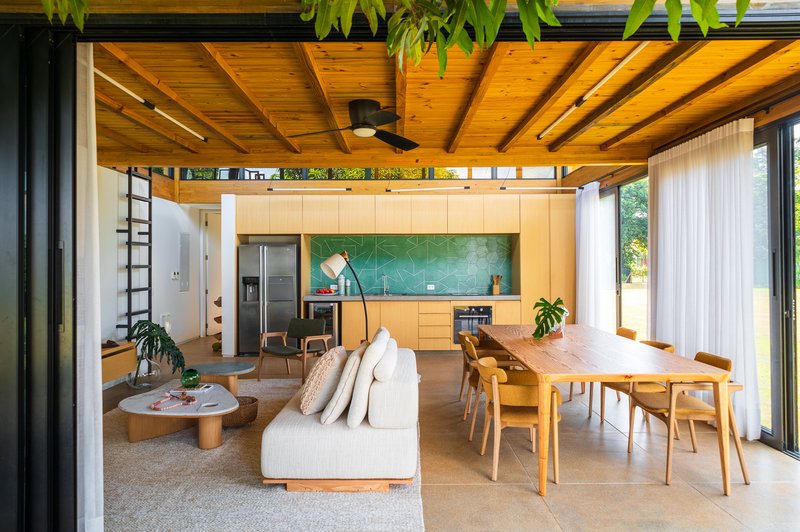
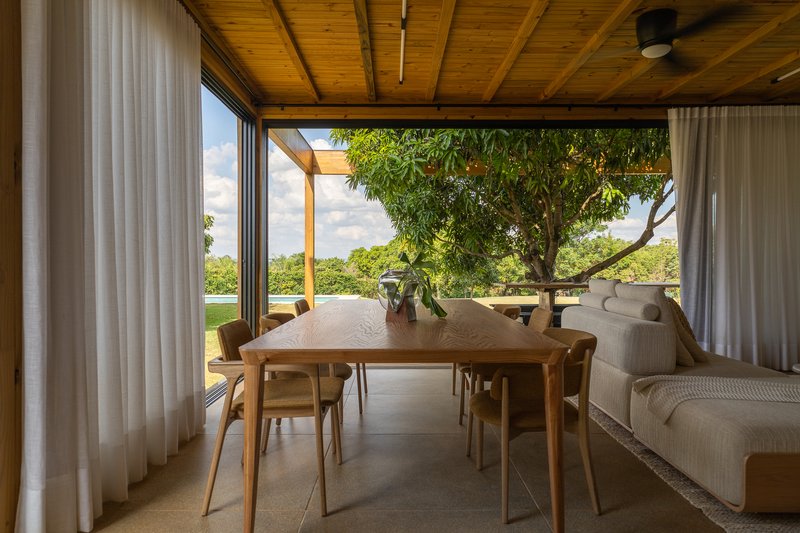
- Open-plan kitchen, dining, and living area
- Laundry niche
- Home office corner
Each room is designed with future adaptability in mind—once the main house is built, these spaces can repurpose to accommodate guests, helpers, or household functions, ensuring longevity beyond their initial use.
Materiality & Interior Palette
The interior finishes marry texture and tactility:
- Exposed timber ceilings and structural beams enhance warmth
- Terrazzo flooring emphasizes visual richness and Mediterranean durability
- Concrete countertops create a sleek, tactile contrast
- Classic ceramic tiles bolster kitchen functionality and nostalgia
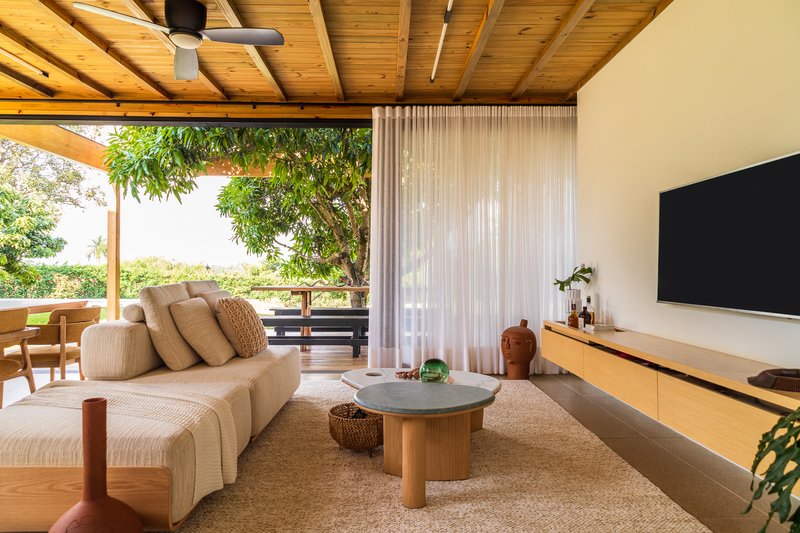
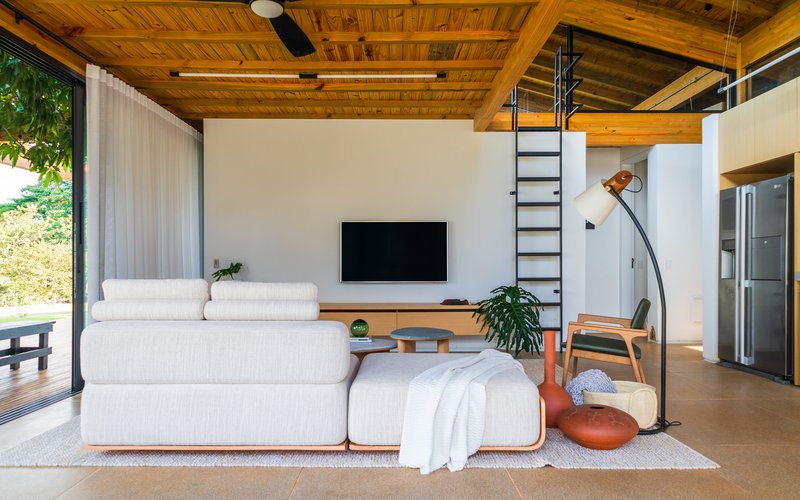
The resulting material palette celebrates a modern-vernacular aesthetic: simple yet powerful, grounded yet expressive. Custom and timeless furniture—selected or crafted with intention—nurtures an environment that feels curatorial and lived-in.
Landscape Integration & Outdoor Life
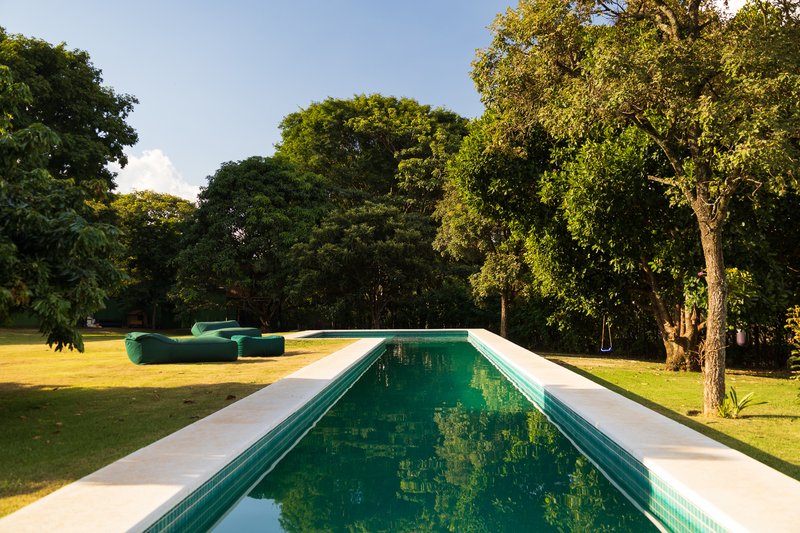
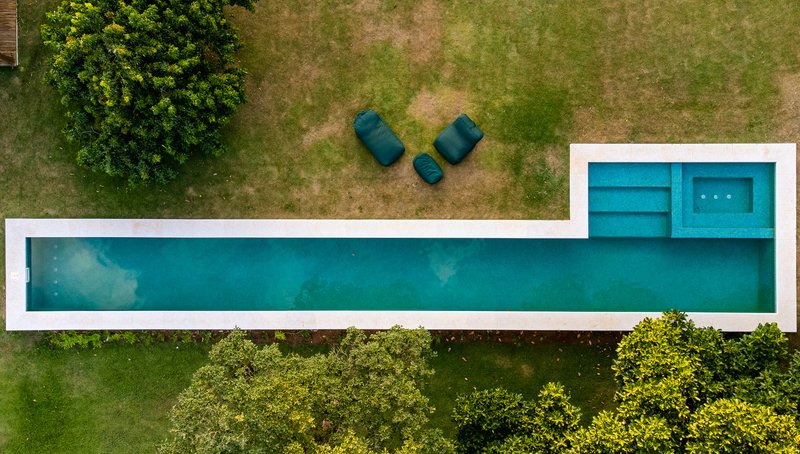
Set under a mature jackfruit tree, a 25 m lap pool doubles as a visual and functional axis within the garden. A nearby wooden deck invites day-to-day outdoor relaxation and family gatherings. Notably, a treehouse remains, awaiting use by the young residents, reinforcing the ethos of spontaneity and childhood exploration.
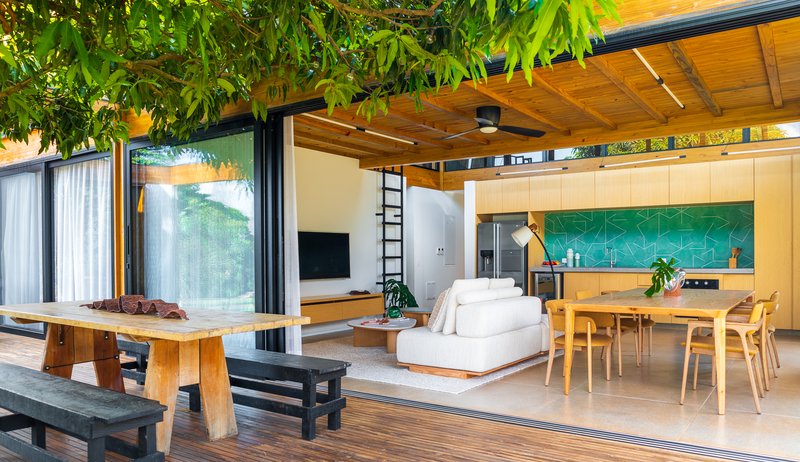
Landscaping is similarly low-intervention: existing vegetation is largely preserved, while planting includes native species suited for dry seasons, ensuring biodiversity support and minimal maintenance. The landscape architecture complements the home’s geometry and enhances its relationship with the wider site.
Long-Term Identity
Although conceived as a temporary structure, Muxarabi House transcends that role through its architectural integrity, sustainability credentials, and spatial adaptability. It stands as a self-sufficient, nature-attuned refuge, a compelling prototype for rural living. Its sensitive execution—balancing industrial prefabrication with natural materials, compact efficiency, and environmental awareness—reveals how modest dwellings can leave meaningful legacies.
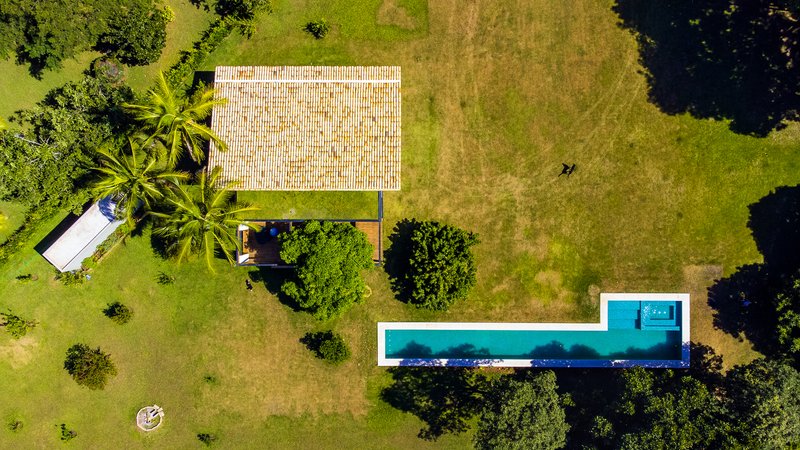
All the photographs are works of Adriano Pacelli




Popular Articles
Popular articles from the community

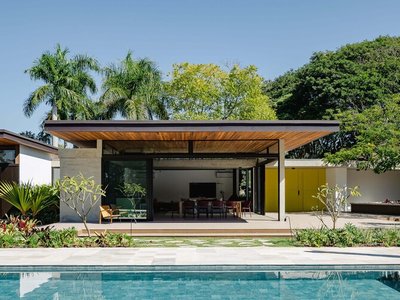
Flamboyant House by Juliana Camargo + Prumo Projetos
Modern Brazilian house integrating existing tree, pool, and volumes with glass, wood, and transitional spaces blending interior, exterior, and landscape seamlessly.


The Ken Roberts Memorial Delineation Competition (Krob)
As the most senior architectural drawing competition currently in operation anywhere in the world, it draws hundreds of entries each year, awarding the very best submissions in a series of medium-based categories.
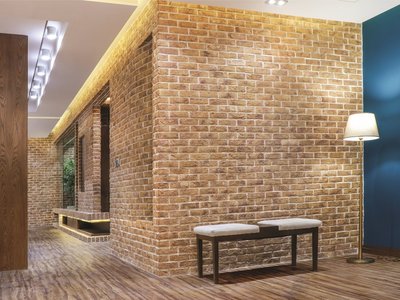
A Contemporary Take on Iranian Residential Architecture
A modern interior design in Mashhad that reinterprets brick, light, and spatial flow to create a warm, contemporary residential architecture.
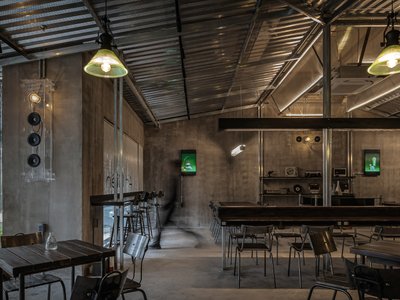
An Miên Lumière Cafe by xưởng xép, Ho Chi Minh City, Vietnam
An industrial-inspired café where layered steel and warm light create a dynamic, immersive environment shaped by reflection, depth, and perception.


Similar Reads
You might also enjoy these articles
The Ken Roberts Memorial Delineation Competition (Krob)
As the most senior architectural drawing competition currently in operation anywhere in the world, it draws hundreds of entries each year, awarding the very best submissions in a series of medium-based categories.


Waterfront Redevelopment and Urban Revitalization in Mumbai: Forging a New Dawn for Darukhana
A transformative waterfront redevelopment project reimagining Darukhana’s shipbreaking heritage into an inclusive urban future.

OUT-OF-MAP: A Call for Postcards on Feminist Narratives of Public Space
Rhizoma Design and Research Lab invites artists, designers, architects, researchers, and students to reflect on how feminist perspectives can reshape public space. Selected works will be exhibited in Barcelona, October 2026. Submissions open until 15 April 2026.


Documentation Work on Buddhist Wooden Temple
Architectural syncretism and cultural hybridity: A comparative study of the Buddhist temples in Chattogram Hill tracks


Explore Architecture Competitions
Discover active competitions in this discipline




The International Standard for Design Portfolios


The Global Benchmark for Architecture Dissertation Awards


The Global Benchmark for Graduation Excellence


Challenge to reimagine the Iron Throne
Comments (0)
Please login or sign up to add comments
No comments yet. Be the first to comment!