
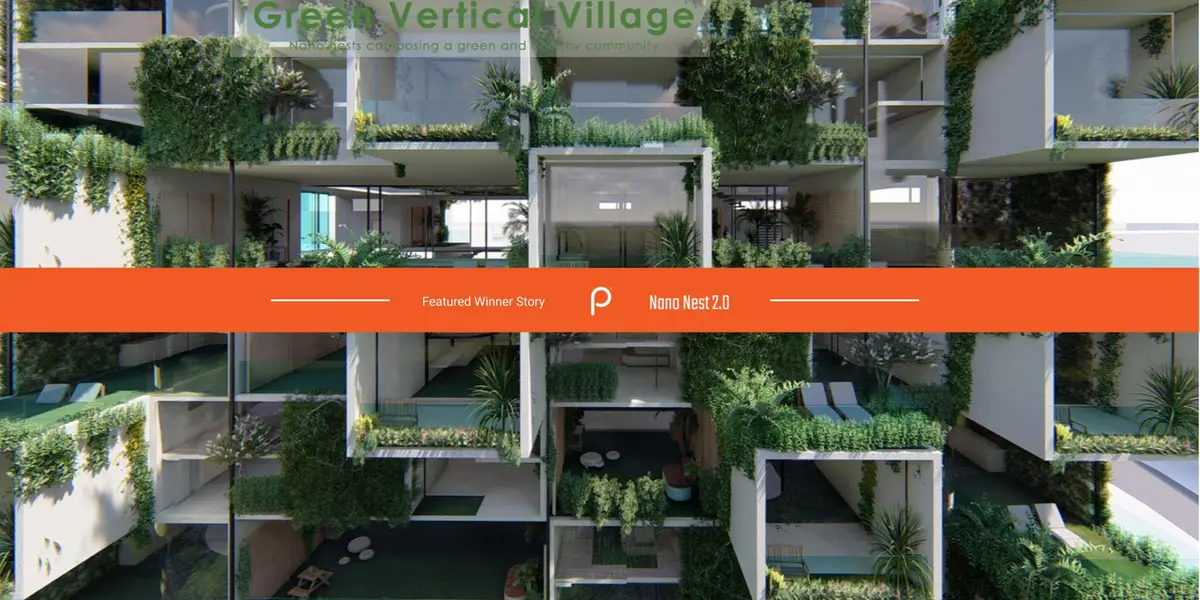
Designing a modern-day way of life
Nano Nest 2.0 - Result Story


With more and more people shifting to the cities, real estate prices have been on a hike. These prices rise exponentially as we move closer to the city center. However, with this price increase, the carpet area we get in return does not increase. In fact, it may decrease.
In the current scenario, time has become equivalent to money for many. Thus, living closest to work becomes a priority.
However, this shouldn’t mean that we compromise on our living spaces.
Design a ‘Living Space’ for 3 people (participants are free to choose these people). Based on this, propose a modern way of living in a tiny Apartment Typology for them.
The focus should be given to the transforming nature of the spaces proposed. Space should be flexible enough to accommodate for different scenarios such as a guest staying over or a house party or group study or exercising etc. (depending on the character sketch of the users).
How is the designed space capable of adapting to such dynamic changes will be important for this challenge.
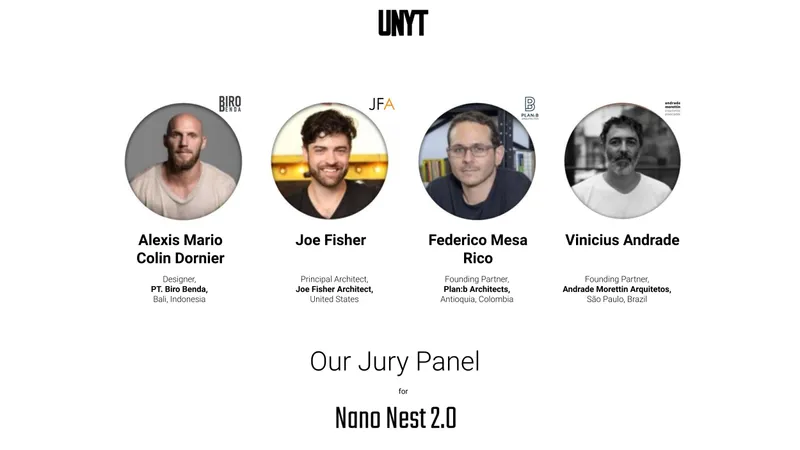
The jury for the competition consisted of esteemed designers, professionals, and academicians from around the world. The Lead Jurors for the competitions were as follows:
Alexis Mario Colin Dornier, Designer, PT. Biro Benda, Bali, Indonesia
Joe Fisher, Principal Architect, Joe Fisher Architect, United States
Federico Mesa Rico, Founding Partner, Plan:b Architects, Antioquia, Colombia
Vinicius Andrade, Founding Partner, Andrade Morettin Arquitetos, São Paulo, Brazil
Some of the Best of competition projects are:
Winning Project: Saghan House
By: Sukriti Jain & Aditi Agrawal
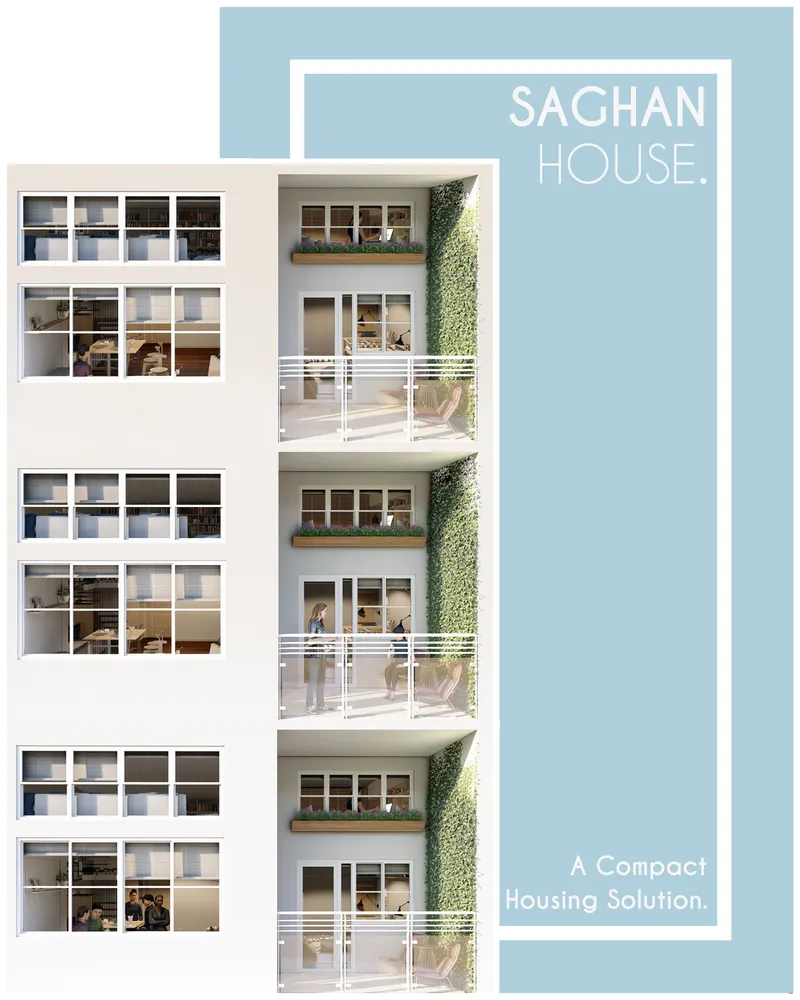
Description: The entire house is in an open plan with louvered sliding folding partitions to separate out spaces when privacy is required. As much open space with maximum natural ventilation and lighting has been provided to minimize electricity use. The furniture design accommodates each individual's personality and further opens up to comfortably accommodate six people.
------------------
People Choice: Green Vertical Village
By: Misak Terzibasiyan
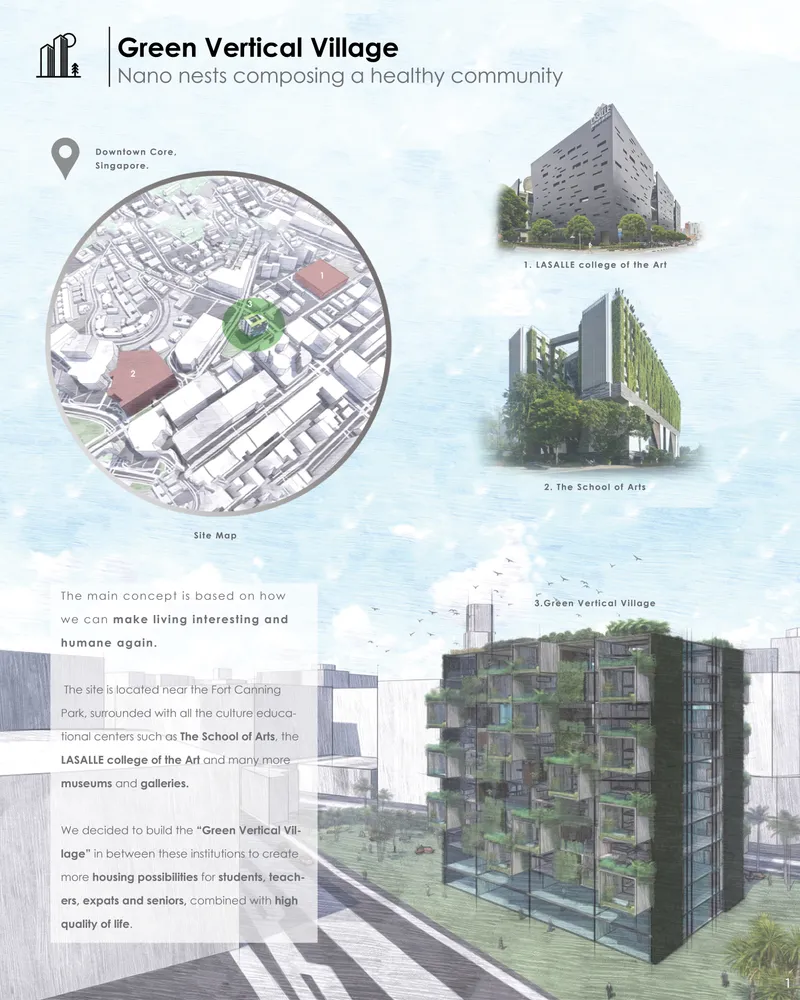
Description: Nano nests composing a green and healthy community. The main concept is based on how we can make living interesting and humane again. It is a fact that most metropolitan cities are in high demand for housing.
-----------------------
Editor’s Choice: habitaculum
By: Catarina Cameira & Mirto Krasaki
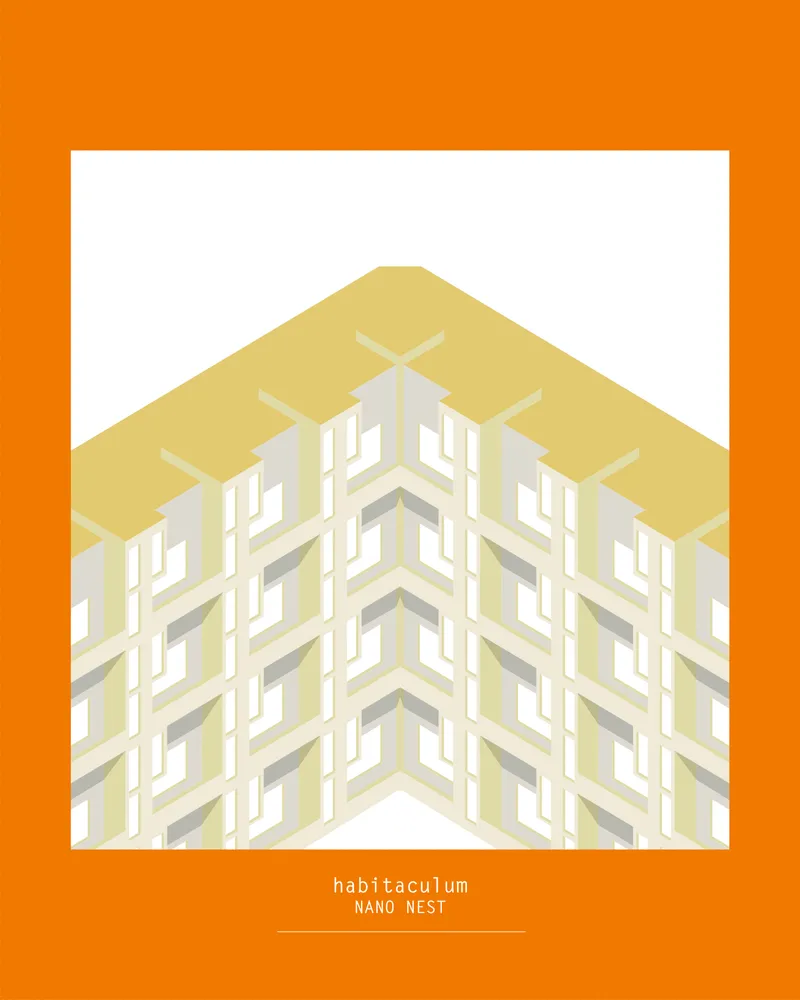
Description: The thought of a cell (house) that when connected to more of the same cells, creates a common organism (aggregated houses), and like that a materialized community of characters inhabiting within that same system/organism. The House/Cell - 125m3, organized through a core and heights.
--------------------
Editor’s Choice: Nano Nest 2.0
By: Sahar Salkhordeh
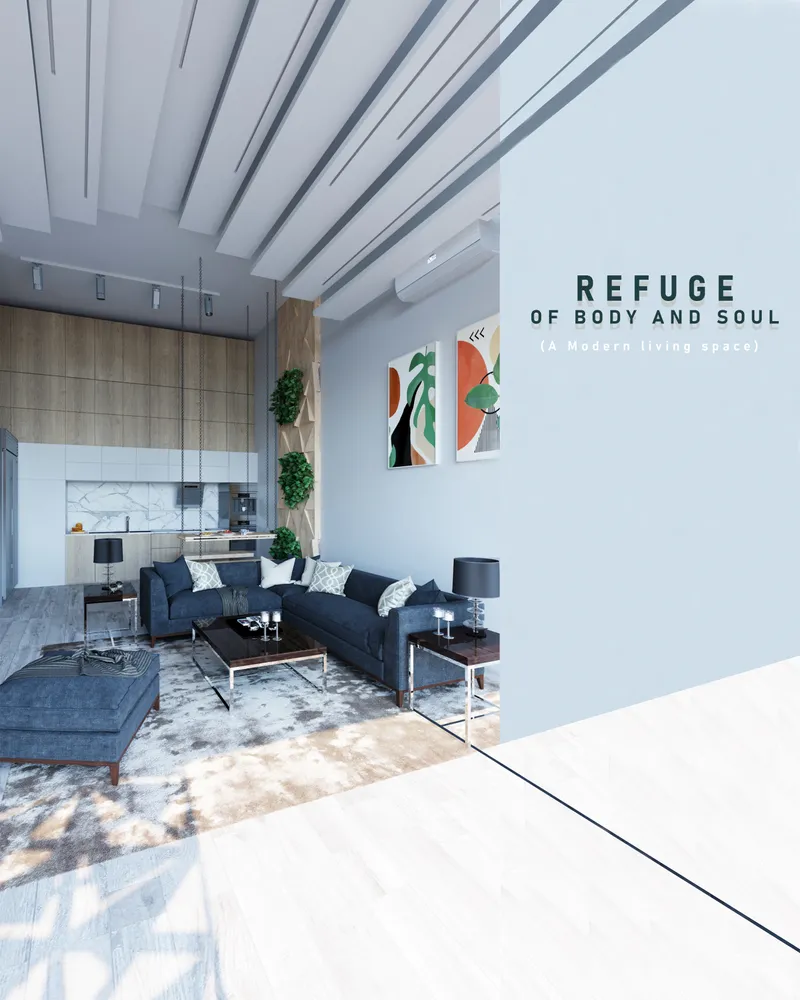
Description: "Living space must be designed to meet the changing needs of human beings." Considering that it shows the flexibility of long term thinking in the process of architectural design, in this project, the living space is designed based on the principle of "fixed but variable" and in the form of Iranian geometry with the participation of residents.
--------------------
Discover the design brief here: https://uni.xyz/competitions/nano-nest-20/info/about
Discover the full results here: https://uni.xyz/competitions/nano-nest-20/entries
Follow us on social media: Facebook | Instagram | LinkedIn | Twitter | Youtube
Discover other design competitions to participate here: https://uni.xyz/competitions


Popular Articles
Popular articles from the community


Play: Fragments of Their World
Familiar architecture becomes modular playground design, creating safe spaces where displaced children can learn, connect, imagine and play.

Conexión: Biophilic Design Reimagines High-Rise Living in Hong Kong
Conexión reimagines high-rise living in Hong Kong through biophilic design, green facades, shared spaces, daylight, water and nature within.

ALGAL REALM: A Bio-Integrated Lunar Habitat Design for Life Beyond Earth
ALGAL REALM reimagines lunar habitat design with algae-powered life support, 3D-printed regolith, and vertical living for a lunar future.

Little Red Riding Hood: Architectural Design as a Journey Through Fear, Light, and Storytelling
Little Red Riding Hood reimagines the fairy tale through architectural design shaped by fear, light, scale, memory, uncertainty, and choice.

Similar Reads
You might also enjoy these articles
ALGAL REALM: A Bio-Integrated Lunar Habitat Design for Life Beyond Earth
ALGAL REALM reimagines lunar habitat design with algae-powered life support, 3D-printed regolith, and vertical living for a lunar future.

Cinema Futurismo: Futuristic Architecture Reimagining the Future of Cinema
Cinema Futurismo merges futuristic architecture, holographic projection, intimate seating, and landscape into a new social cinema.
Little Red Riding Hood: Architectural Design as a Journey Through Fear, Light, and Storytelling
Little Red Riding Hood reimagines the fairy tale through architectural design shaped by fear, light, scale, memory, uncertainty, and choice.
Playducation: Modular Architecture That Turns Play Into a Space for Learning
Playducation transforms modular architecture into a flexible world of play, learning, and healing for children in refugee settlements.

Comments (0)
Please login or sign up to add comments
No comments yet. Be the first to comment!