
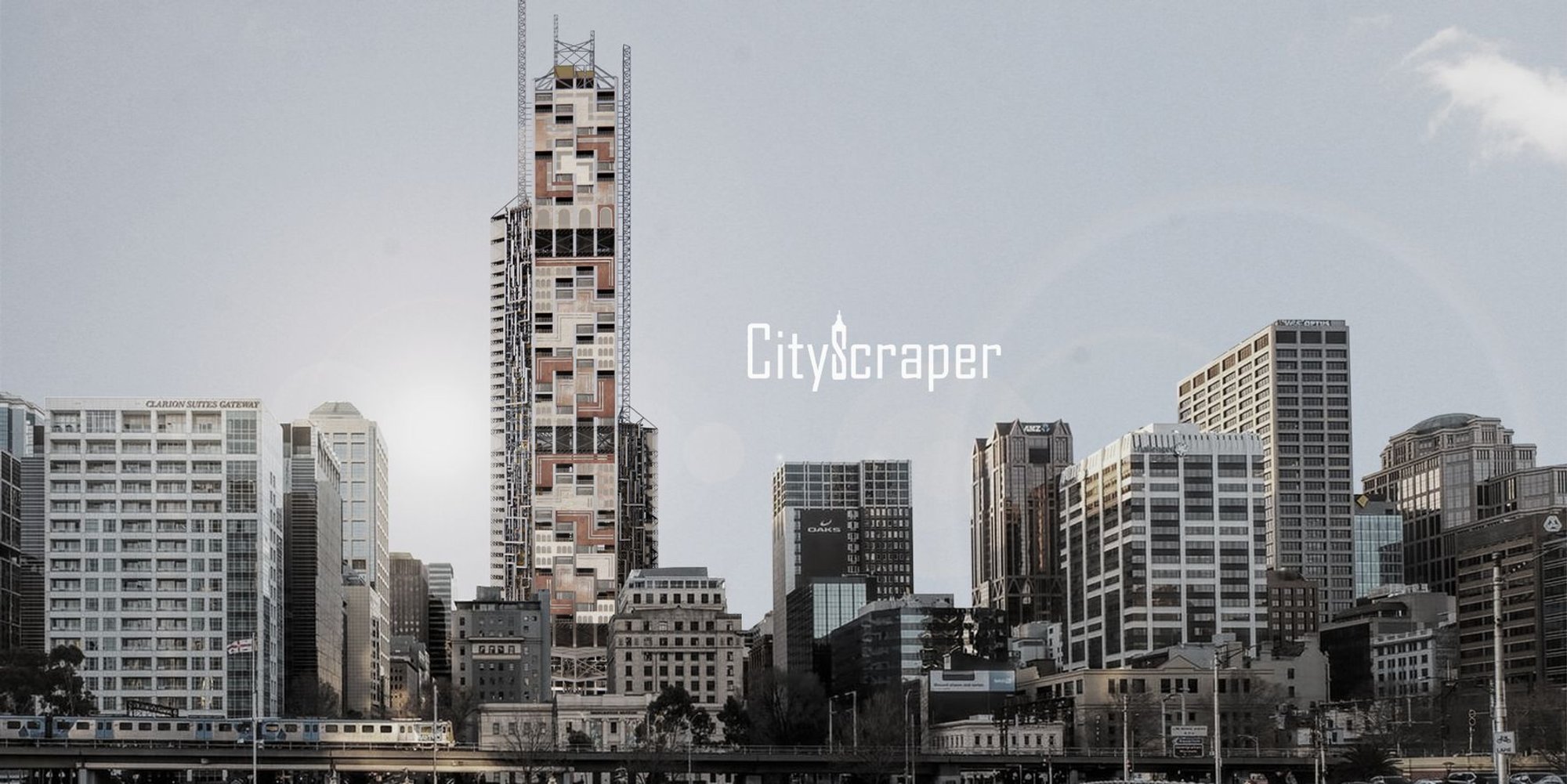
New Metabolism Tower
Reimagining refugee integration and adaptive architecture through sustainable high-rise design in Melbourne.

Mention entry of CityScraper by Siyuan Liu, JT
Adaptive Architecture for Urban Integration: New Metabolism Tower
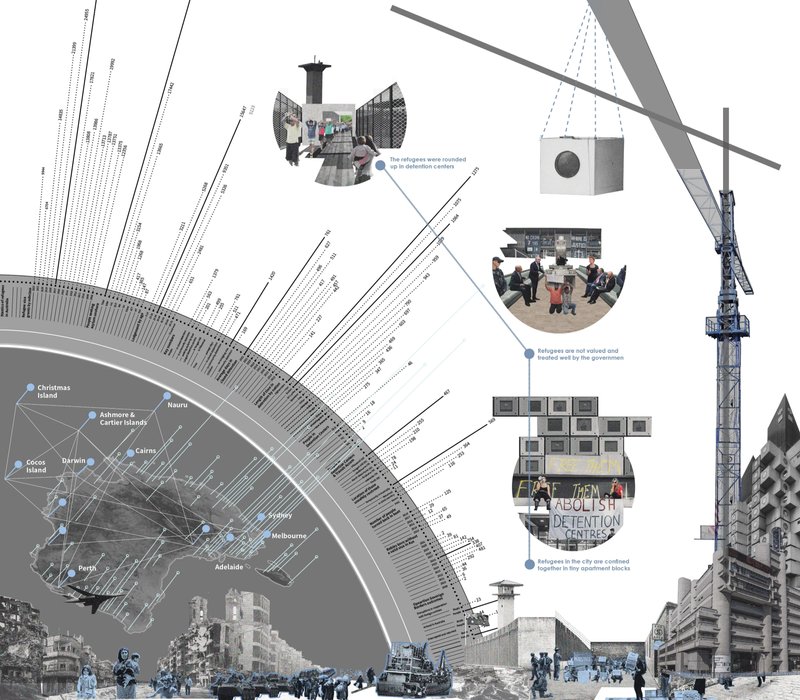
As Melbourne’s population continues to grow—adding over 200,000 people annually—the city faces heightened urban density, increasing housing shortages, and growing civic strain. This rapid expansion puts immense pressure on infrastructure, public services, and the quality of life within the urban core. Compounding these issues are global crises—ranging from geopolitical conflict to environmental disasters—that continue to displace tens of thousands of people annually. Many of these displaced individuals, often seeking safety and stability, arrive in Australia as refugees and are frequently relocated to Melbourne’s city center, where they are housed in high-rise apartment blocks, often in isolation and without clear paths toward social inclusion.
The New Metabolism Tower addresses this dual crisis—urban overcrowding and refugee integration—through the lens of adaptive architecture, offering an innovative response rooted in the principles of metabolism. Originally conceptualized in post-war Japan during the 1960s and 70s, metabolic architecture emphasized modularity, flexibility, prefabrication, and adaptability to societal and environmental shifts. While the original movement ultimately faltered, this project revives and reinterprets its ideals to create an inclusive and future-forward architectural solution for Melbourne’s pressing challenges.
Reimagining the Skyscraper
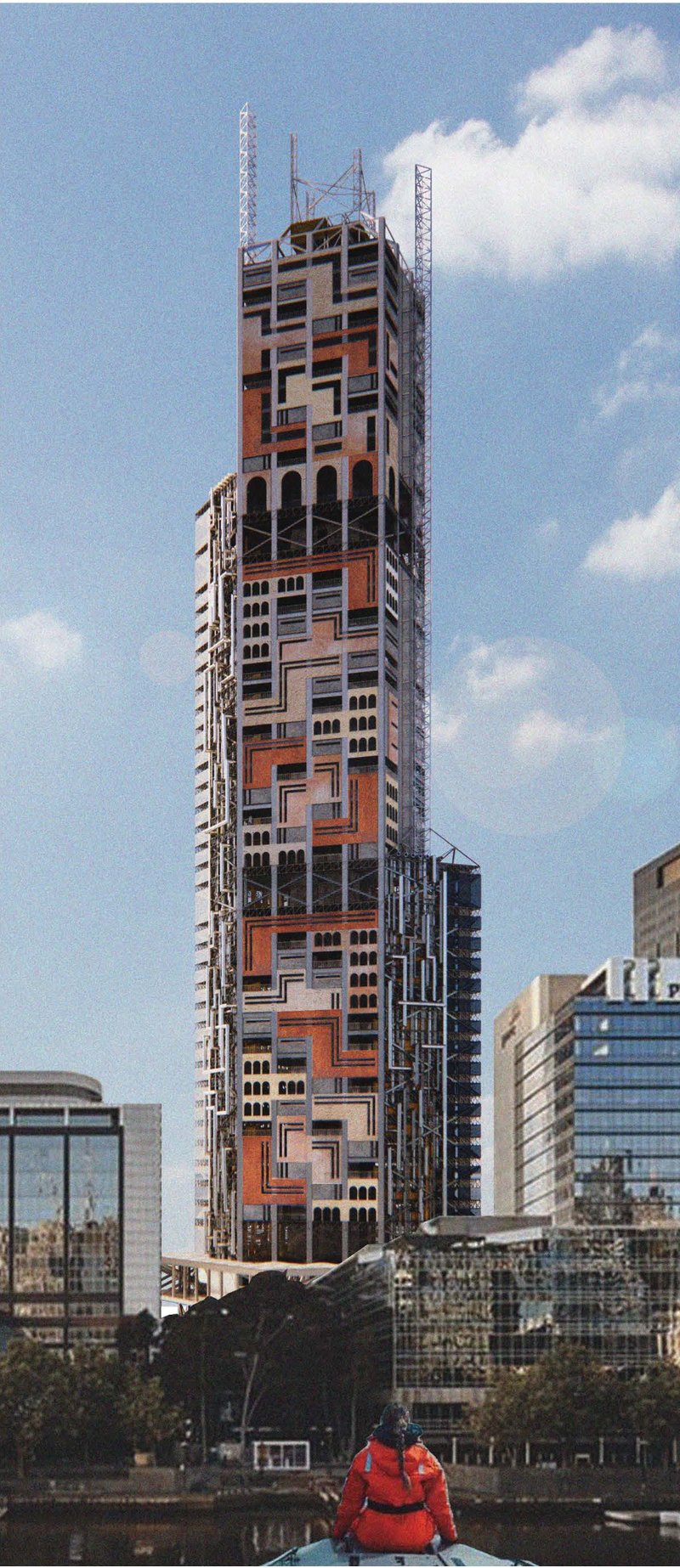
Unlike conventional skyscrapers designed solely for commercial gain or aesthetic distinction, the New Metabolism Tower offers a critical reevaluation of the typical high-rise model. Most contemporary towers in Melbourne’s skyline reflect an international style—sleek, repetitive, and disconnected from their cultural or social surroundings. These buildings often alienate inhabitants from the urban fabric, and for refugees, they become spaces of further marginalization. Their backgrounds, cultures, and individual needs are rendered invisible.
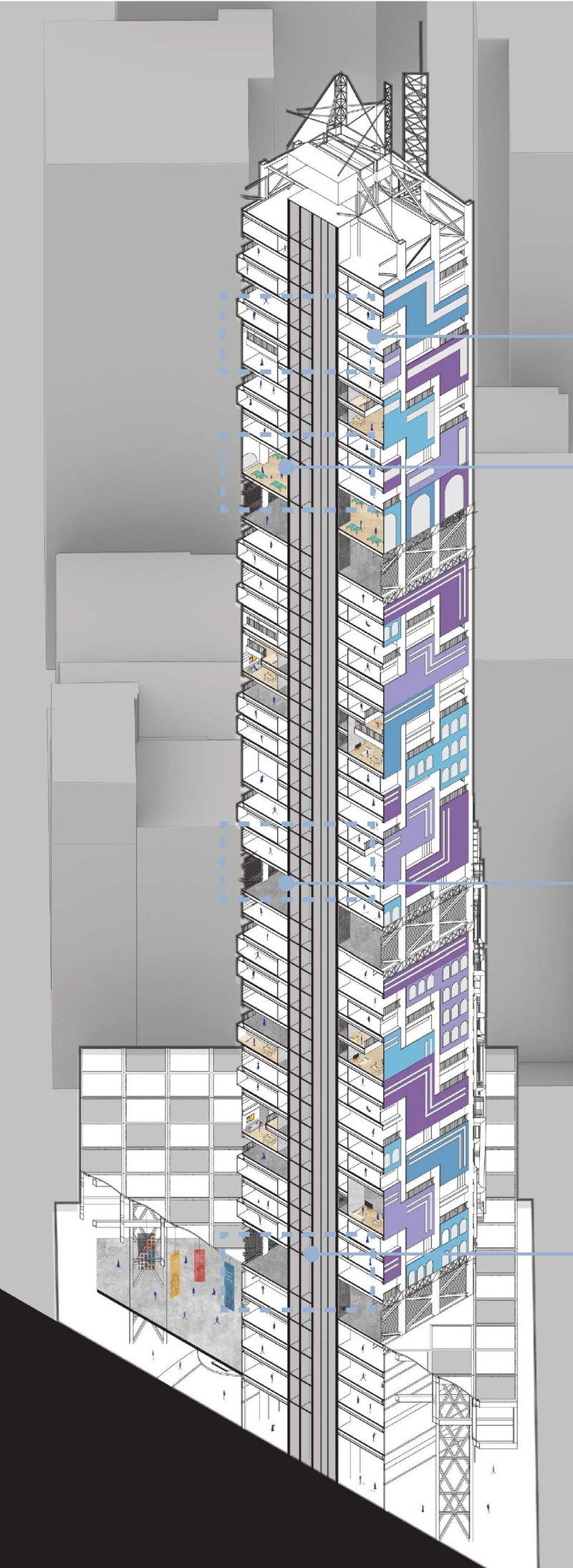
This project counters that trend by envisioning a culturally responsive skyscraper—one that is as much about community and adaptability as it is about scale and density. The building integrates dual-use programming: on one side, it provides commercial spaces such as office and hotel functions; on the other, it includes public programs like refugee housing, cultural workshops, education centers, and common gathering areas. The structure is designed to evolve in direct response to social needs, political shifts, and ecological changes—without requiring demolition or replacement.
Metabolism Reborn: New Foundations for Adaptive Architecture
Learning from the shortcomings of the original metabolism movement, this project updates the framework with lessons in sustainability, cultural sensitivity, and contemporary engineering:
- Flexible, modular structures that accommodate shifting functions over time
- Reconfigurable facades that visually express changing community dynamics
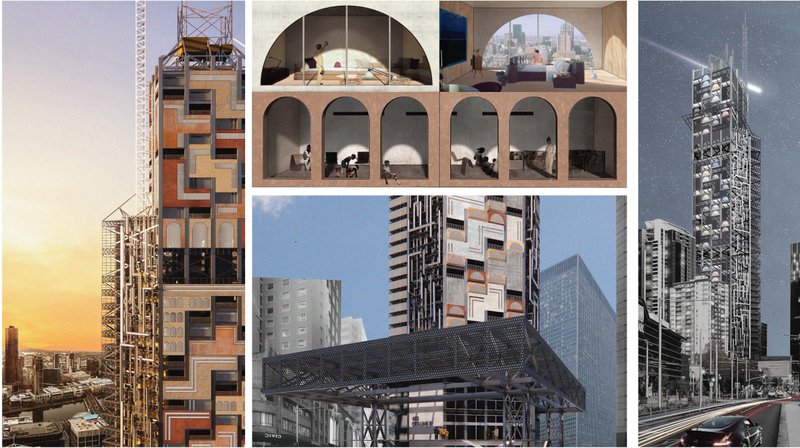
- Local material integration, including stone, sand, and rammed earth, to reinforce place-based identity
- Exposed infrastructure systems that enhance spatial efficiency and architectural honesty
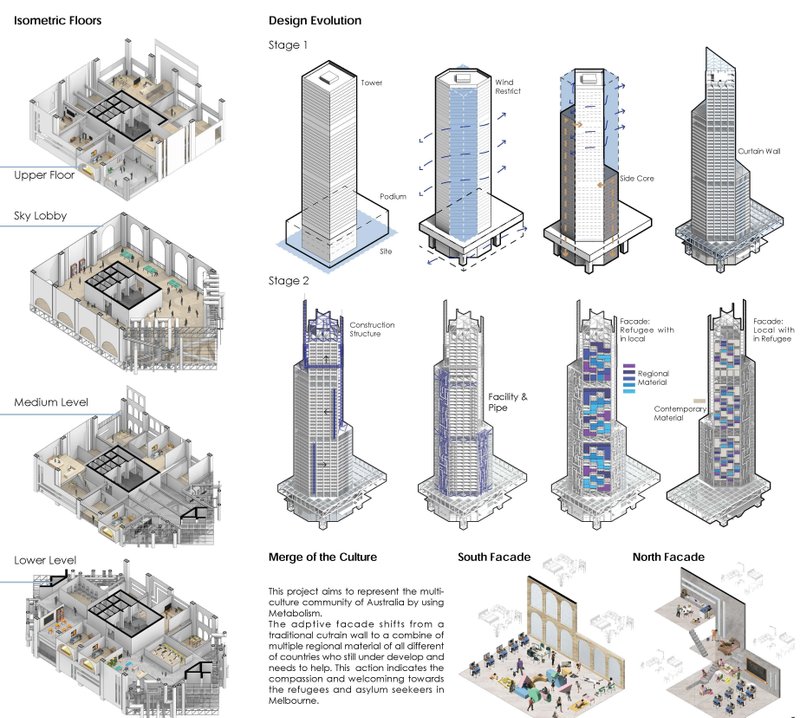
A key structural innovation is the transition from a single central core to three distributed circulation cores, improving movement patterns and allowing for increased adaptability over time. The design brings pipes, ventilation ducts, and utility lines to the facade—normally hidden within walls—freeing up internal space and celebrating the building’s metabolic flexibility.
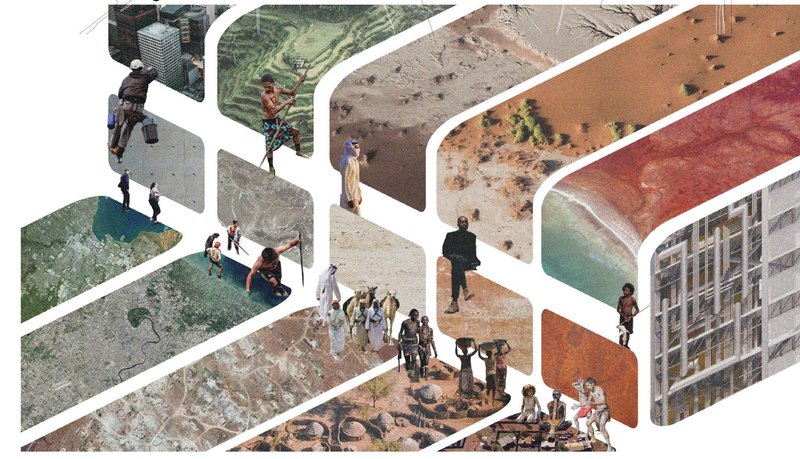
The Facade as Social Commentary
Architecture becomes a visual and tactile narrative tool. The north and south facades are composed with intentional symbolism:
- Concrete, used more dominantly on the northern side, represents local Australians—solid, grounded, and supportive
- Natural, earthy materials—such as rammed earth and reclaimed timber—used more extensively on the southern facade, reference the cultures and histories of refugee populations
This juxtaposition of materiality reflects both the tension and the promise of multicultural coexistence. On one side, it communicates protection and stability; on the other, it expresses diversity, resilience, and renewal. The interplay between the two materials symbolizes mutual dependence and cultural integration.
Architecture as Living Dialogue
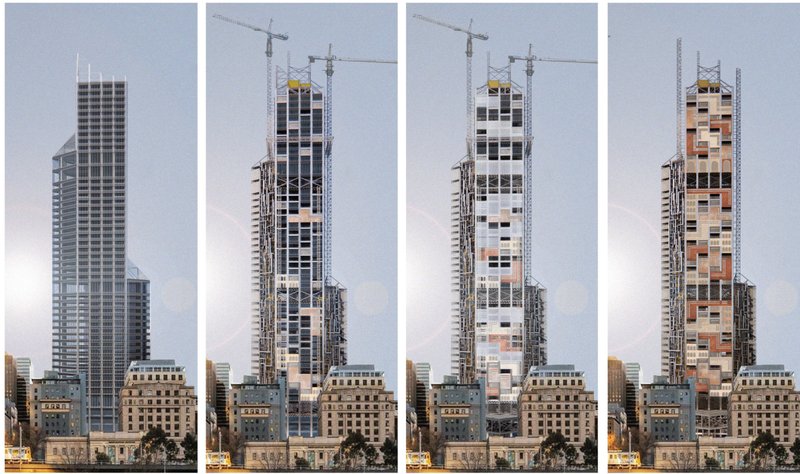
The New Metabolism Tower is not a fixed entity. It is a living architectural system, capable of evolving with time. Through a phased metabolic process, the building can shift programs and functions in response to demographic changes, climate events, or new urban policies. For example, commercial spaces can be repurposed for emergency shelter or community support hubs, and residential modules can be swapped or modified without interrupting overall operations.
This evolutionary design approach avoids the carbon-heavy cycle of demolition and reconstruction, offering a sustainable path for cities to remain livable while continuously adapting to emerging needs. The building’s adaptability also fosters a stronger sense of ownership and identity among residents, encouraging deeper integration between refugees and long-standing communities.
Toward a More Humane Vertical City
At its core, the New Metabolism Tower proposes a new way of thinking about high-rise living in high-density cities. Rather than isolating people behind walls and floors, it opens vertical space to multicultural dialogue, public service, and architectural empathy. It challenges outdated typologies by blending public and private realms and creating an infrastructure that is both socially inclusive and environmentally conscious.
As Melbourne continues to struggle with spatial injustice, systemic displacement, and housing inaccessibility, this project offers a visionary—yet pragmatic—prototype for future urban development. Adaptive architecture is no longer a choice, but a necessity in designing cities that are equitable, regenerative, and humane.



Popular Articles
Popular articles from the community

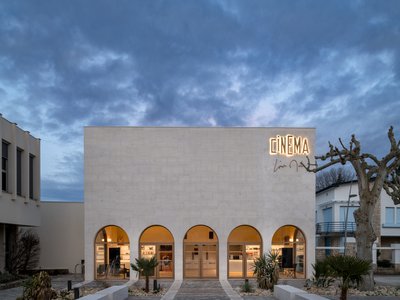
Louis Malle Cinema: A Limestone Cultural Landmark Revitalizing Community Life in Prayssac
Limestone cinema extension with public forecourt, blending heritage and modern design to create flexible cultural spaces and strengthen community interaction.
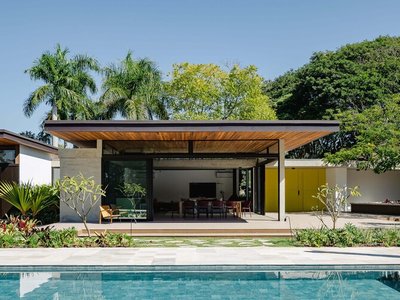
Flamboyant House by Juliana Camargo + Prumo Projetos
Modern Brazilian house integrating existing tree, pool, and volumes with glass, wood, and transitional spaces blending interior, exterior, and landscape seamlessly.
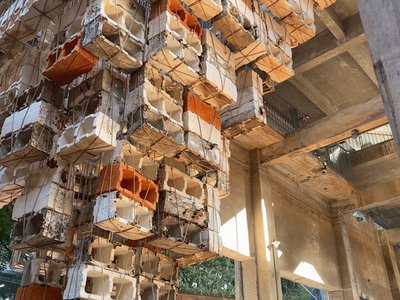
Inverted Architecture Installation by Studio Link-Arc: Exploring the Intersection of Architecture and Living Organisms
Inverted Architecture Installation by Studio Link-Arc blends mycelium, sustainability, inverted design, ecological cycles, and urban adaptive architecture in Shenzhen.
A Contemporary Take on Iranian Residential Architecture
A modern interior design in Mashhad that reinterprets brick, light, and spatial flow to create a warm, contemporary residential architecture.


Similar Reads
You might also enjoy these articles

The Ken Roberts Memorial Delineation Competition (Krob)
As the most senior architectural drawing competition currently in operation anywhere in the world, it draws hundreds of entries each year, awarding the very best submissions in a series of medium-based categories.

Waterfront Redevelopment and Urban Revitalization in Mumbai: Forging a New Dawn for Darukhana
A transformative waterfront redevelopment project reimagining Darukhana’s shipbreaking heritage into an inclusive urban future.
OUT-OF-MAP: A Call for Postcards on Feminist Narratives of Public Space
Rhizoma Design and Research Lab invites artists, designers, architects, researchers, and students to reflect on how feminist perspectives can reshape public space. Selected works will be exhibited in Barcelona, October 2026. Submissions open until 15 April 2026.

Documentation Work on Buddhist Wooden Temple
Architectural syncretism and cultural hybridity: A comparative study of the Buddhist temples in Chattogram Hill tracks

Explore Cultural Architecture Competitions
Discover active competitions in this discipline




The Global Benchmark for Architecture Dissertation Awards


The Global Benchmark for Graduation Excellence


Challenge to design an urban locus of culture and heritage

Bring back Drive In's
Comments (0)
Please login or sign up to add comments
No comments yet. Be the first to comment!