
NEW STAGE
for Caminantes
Caminantes – this is what the refugees from Venezuela are calling Colombia. The socio-political situation forced them to escape from their country. Venezuela is seeking asylum in many South American countries, but not all are so open to their arrival. According to UN data, around 5,2 million Venezuela have left their country. By March 2020, the border with Colombia was open, and now migrants are crossing borders illegally across the river bridges – the border closure is explained by the COVID-19 pandemic. The camps are overcrowded, crime is increasing and drug trafficking is growing.
The solution is to create organized refugee camps. These camps, unlike non-organized camps, are intended to ensure decent living conditions, to wake up in the people who come to live in a new society, to develop and not to enter into conflicts with the law. They are intended to enable skills to develop and acquire new skills for work and mobility in a new environment.
The idea of an organized camp is correct, but the nomenclature is associated with a closed place without rights and fully controlled - a place that is not to serve lost people. Therefore, the designation of an estate, a place associated with security, but which is open to external life, should be used.
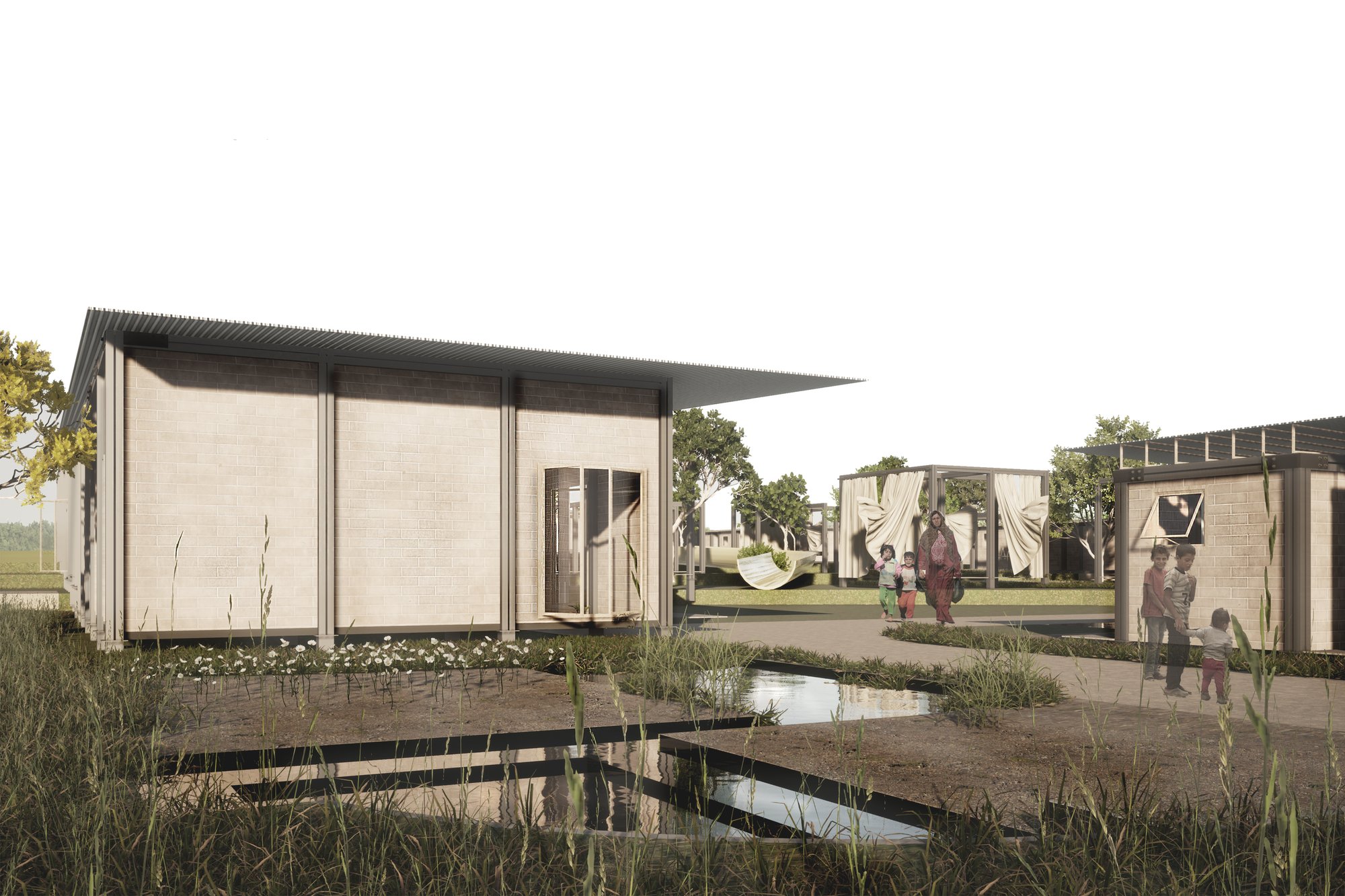
The project envisages the creation of an estate for refugees from Venezuela, which will give them a substitute for normal life and will cover social, professional and educational activities at a difficult stage. The city center - Maico is 4.5km (8 minutes by car, 40 minutes by walk).
Based on the Sphere Handbook, site absorbency was determined. A plot of 10 056 m2 will allow the construction of 80 temporary houses, each for a 4-person family with the possibility of growing or combining homes for multi-generation and multi-family families. On the basis of analyzes and sources, it was considered that the optimal design would be for 7 teams, which would link up to 12 temporary house. The building was based on the site's sculpture, the desire to keep as many existing trees as possible, and the creation of semi-public spaces to enhance human ties. Two women and men's sanitaritors are designed for each team, providing total comfort and hygiene. Buildings are accessible from the service road around the plot that the wastewater will be collected through the asenization truck. The units have been spread in such a way as to create a natural drop of land for the rainwater that will fall from the roofs into concrete gutters on the ground and then to open water retention tanks at garden. In the rain, the water-filled turf will look like rivers and in the dry weather will serve to feed the crop. Such gardens are designed to teach the principles of cooperation. Each house will have its own photovoltaic panel on the roof to provide access to electricity. In the middle of the team there will be a common kitchen, a place to discover other inhabitants of the estate. Cooking mothers will see children in the playground on the market, in the center of the estate.
The market is connected settlement and community center. There are facilities that can transform into semi-private spaces. The curtains will unseat the space, create semi-public spaces and provide protection against overheating and sun.
The Community center is the gateway to the estate and dominates the visual axes after leaving the settlement. The place is to invite residents. Three buildings connected by the roof were designed to create spaces in and out of the air. Each building has a different task – the central administration is the main entrance. Here the Caminantes will get help, accommodation allocation and any information about workshops. In the above-mentioned building, an open space was designed with the possibility to separate curtain walls with the main function of recreational and leisure facilities. It is a place with the potential to create kindergarten by the local community and recreation of the youngest. Connected to the fields and external terraces.
On the second edge, a building is proposed where workshops and education can be organized. The gardening workshops will take place near the building . Inside, you will be able to divide into rooms of the size required by the class program and the number of participants.
The main objective was to meet the needs and help to solve the social problems of the population. An important aspect of the project was the choice of low-cost and easy-to-use materials. The plastic bricks produced in Bogotá at the factory. This will clean the nearby streets of the city from excess debris, and it is both cheap and easy to use. The main tool for building folding will be a rubber breaker, which will pick up the individual plastic bricks. The entire construction of the end-to-end grid with blacktop, while the illumination will provide cheaper and safer tilting windows with plastic filling.


Popular Articles
Popular articles from the community

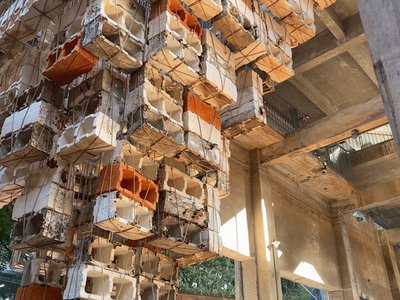
Inverted Architecture Installation by Studio Link-Arc: Exploring the Intersection of Architecture and Living Organisms
Inverted Architecture Installation by Studio Link-Arc blends mycelium, sustainability, inverted design, ecological cycles, and urban adaptive architecture in Shenzhen.
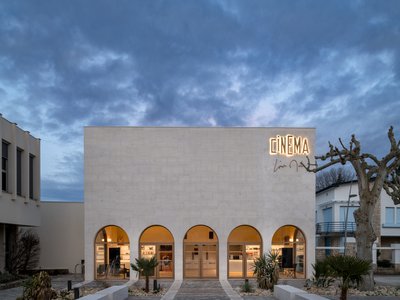
Louis Malle Cinema: A Limestone Cultural Landmark Revitalizing Community Life in Prayssac
Limestone cinema extension with public forecourt, blending heritage and modern design to create flexible cultural spaces and strengthen community interaction.
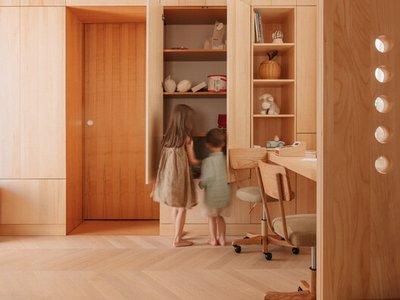
Treehouse Apartment: A Warm Timber Interior Blending Craft, Play, and Contemporary Living
Warm timber apartment with integrated treehouse, combining natural materials, craftsmanship, and playful design to create a flexible, family-oriented living environment.
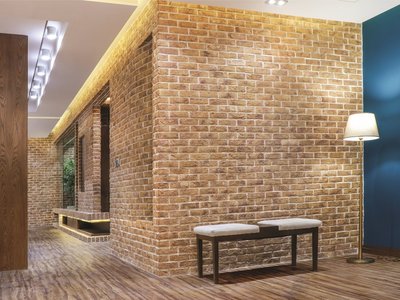
A Contemporary Take on Iranian Residential Architecture
A modern interior design in Mashhad that reinterprets brick, light, and spatial flow to create a warm, contemporary residential architecture.

Similar Reads
You might also enjoy these articles


The Ken Roberts Memorial Delineation Competition (Krob)
As the most senior architectural drawing competition currently in operation anywhere in the world, it draws hundreds of entries each year, awarding the very best submissions in a series of medium-based categories.
A Contemporary Take on Iranian Residential Architecture
A modern interior design in Mashhad that reinterprets brick, light, and spatial flow to create a warm, contemporary residential architecture.
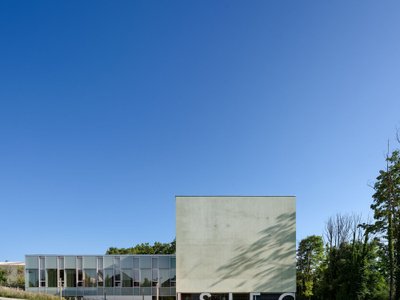
Franche-Comté Advanced School of Engineering by Dominique Coulon & associés, Besançon
A flexible engineering school immersed in woodland, combining concrete minimalism, adaptable spaces, and natural light to support evolving educational environments.


Waterfront Redevelopment and Urban Revitalization in Mumbai: Forging a New Dawn for Darukhana
A transformative waterfront redevelopment project reimagining Darukhana’s shipbreaking heritage into an inclusive urban future.

Explore Architecture Competitions
Discover active competitions in this discipline




The International Standard for Design Portfolios


The Global Benchmark for Architecture Dissertation Awards


The Global Benchmark for Graduation Excellence


Challenge to reimagine the Iron Throne
Comments (0)
Please login or sign up to add comments
No comments yet. Be the first to comment!