
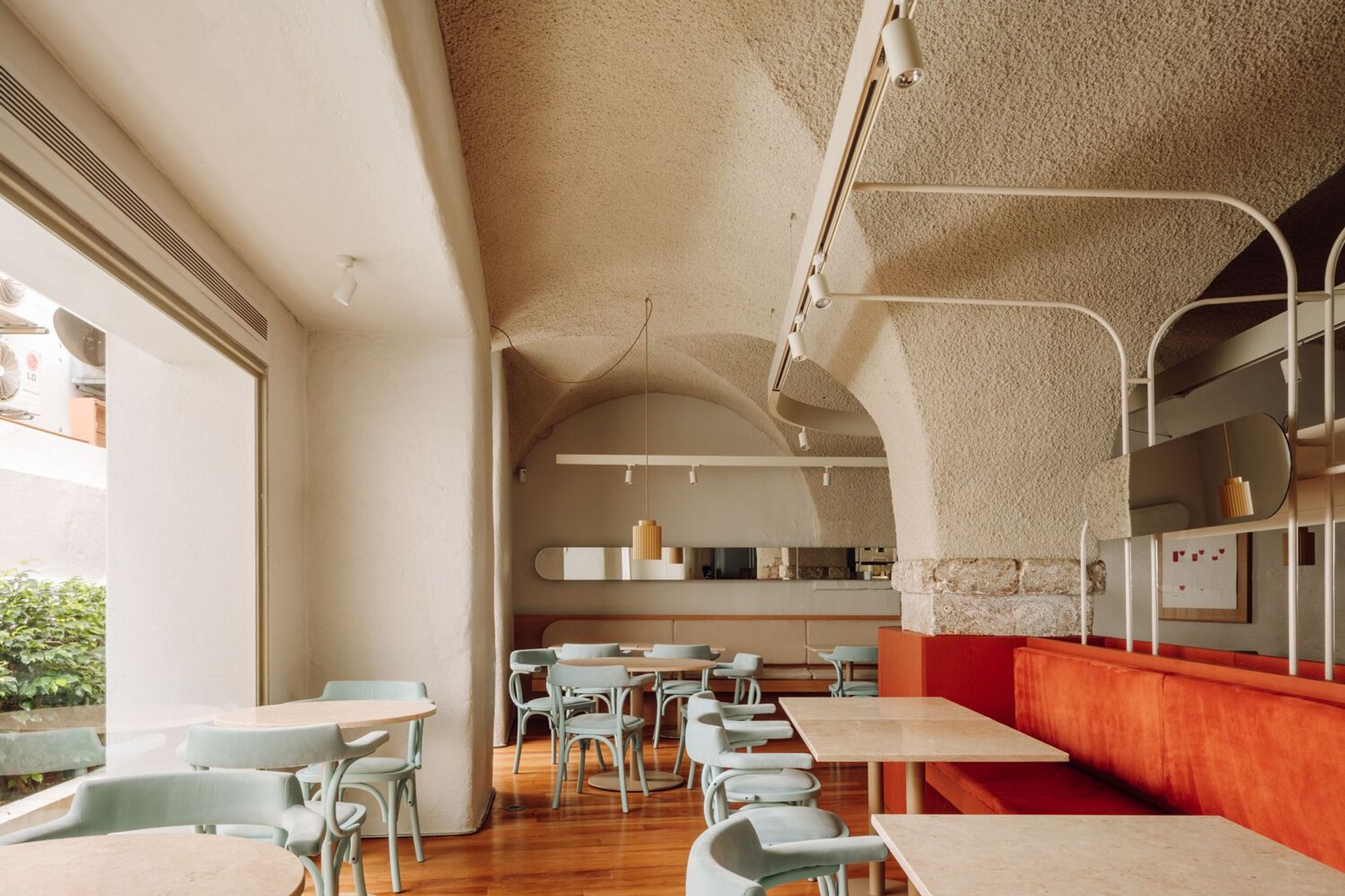
Ofício – Tasco Atípico: A Contemporary Tasca Restaurant Design by Spacegram in Lisbon
A fresh take on Portuguese tasca culture through sustainable materials and communal spatial design by Spacegram in Lisbon’s Chiado district.

Reviving Tradition with a Modern Twist in the Heart of Chiado
In the vibrant Chiado district of Lisbon, Ofício – Tasco Atípico emerges as a bold reinterpretation of Portugal’s beloved tasca culture. Designed by Spacegram in 2021, this 180-square-meter restaurant captures the spirit of the traditional tasca—casual, communal, and unpretentious—while embracing a fresh, contemporary restaurant design. This project exemplifies the evolution of the contemporary tasca restaurant design trend, blending social memory, architectural innovation, and sustainability.
The Spirit of the Tasca Reimagined for Today
The tasca has long served as a cornerstone of Portuguese dining culture—an informal space for conversation, shared “petiscos,” and vibrant social energy. Spacegram’s vision was to retain this ethos while reinventing the spatial experience. The design responds directly to the longing for togetherness and vibrancy that resurfaced in the aftermath of the pandemic, offering a joyful and flexible environment for families, friends, and strangers alike.
Spatial Strategy: From Vaults to Community Tables
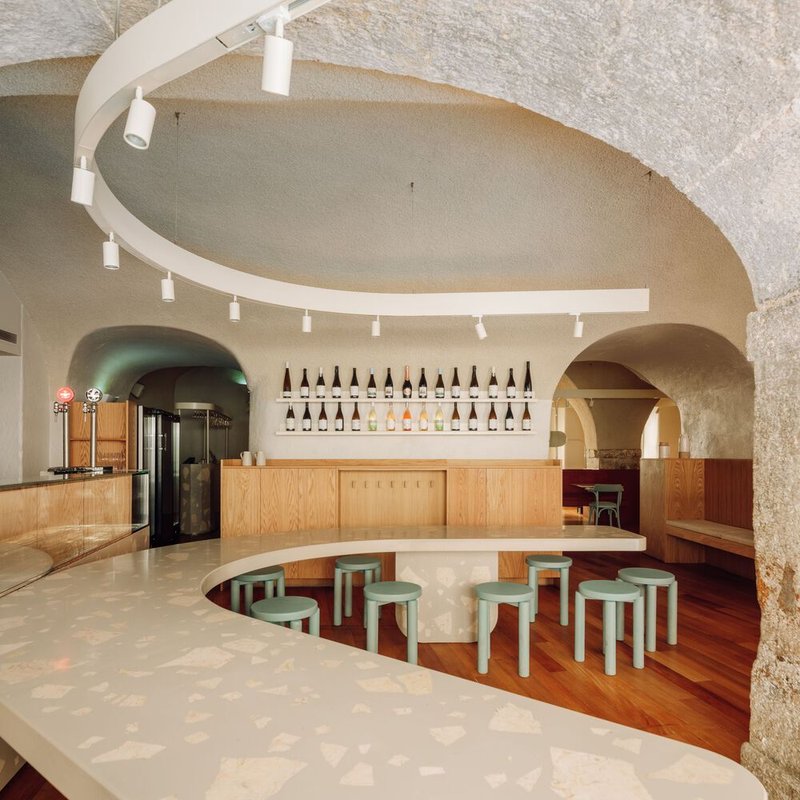
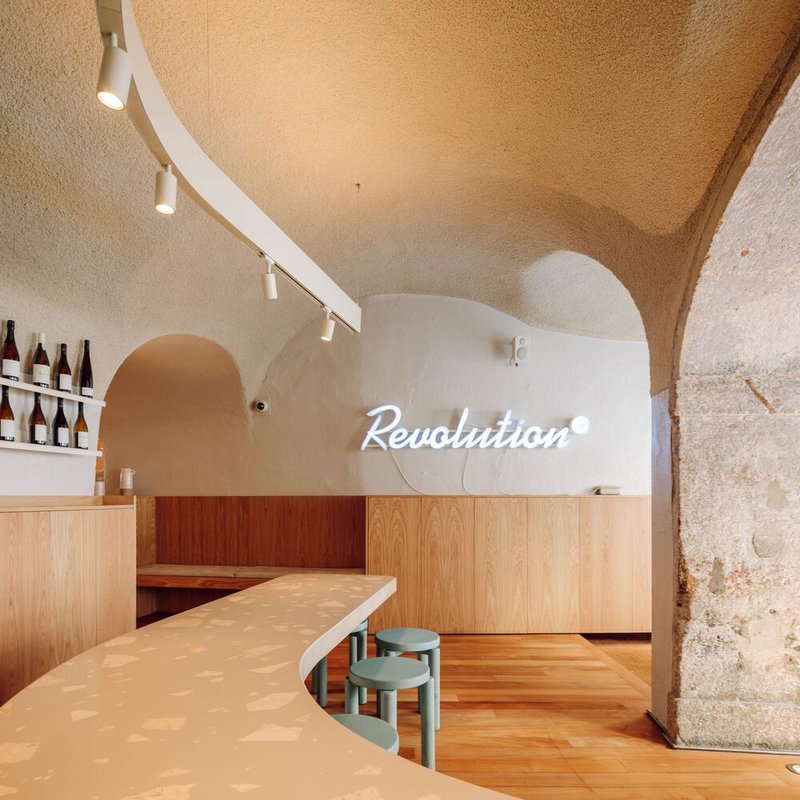
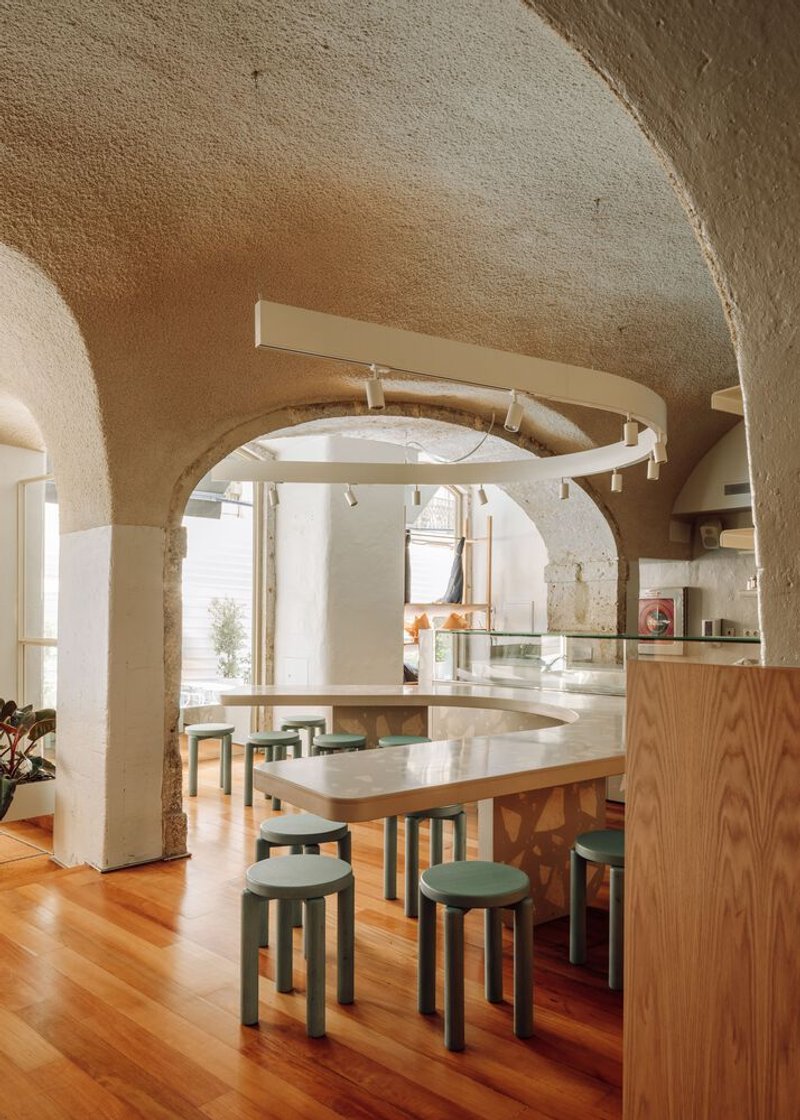
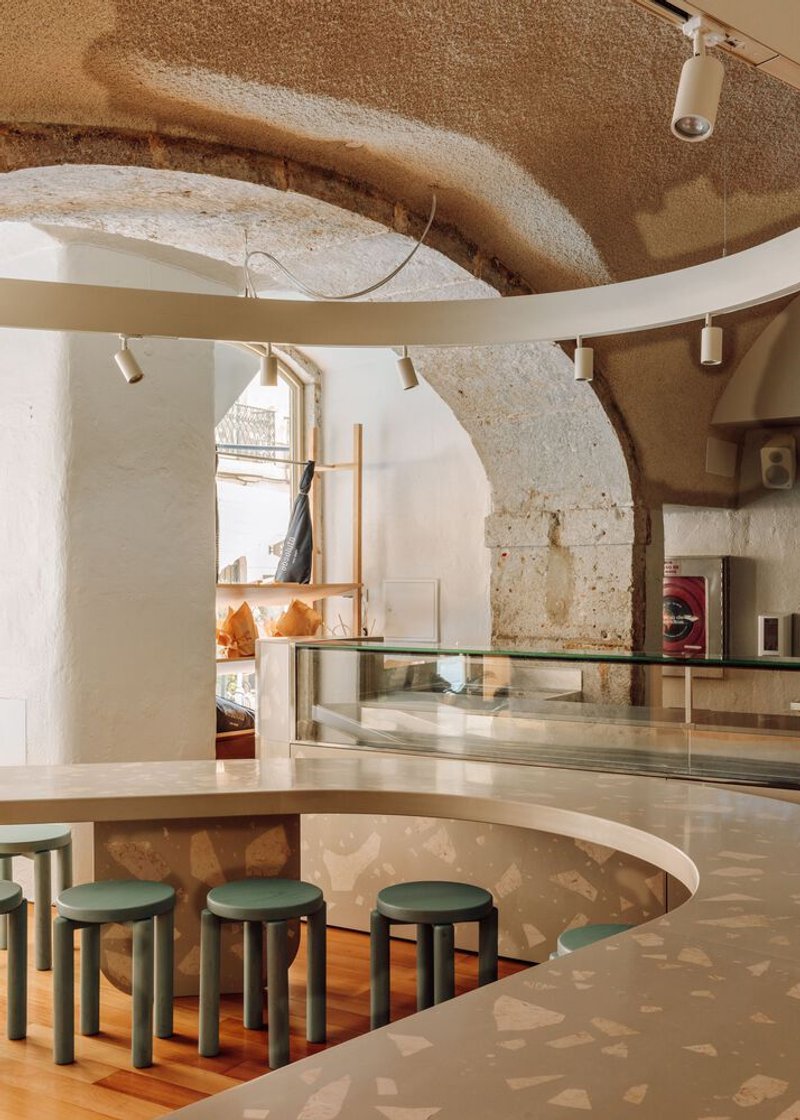
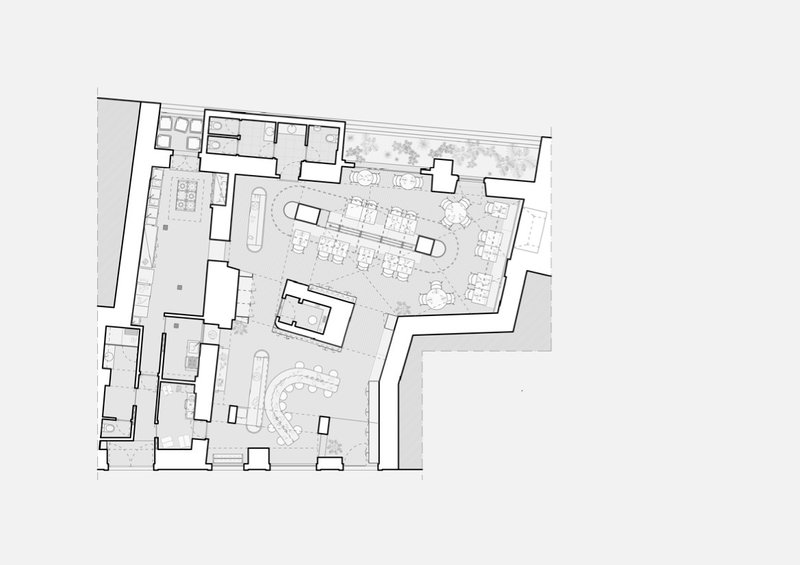
Housed within a historic vaulted space, the architecture respects the original structure while carving out zones for different communal experiences. At the front of the restaurant, a U-shaped 14-seat table anchors the main dining area. Designed to mimic the tasca counter, it encourages spontaneous additions—visitors can simply scoot over to make room for another guest. Stools instead of fixed chairs enhance this flexibility, creating a casual, ever-adaptable space of interaction.
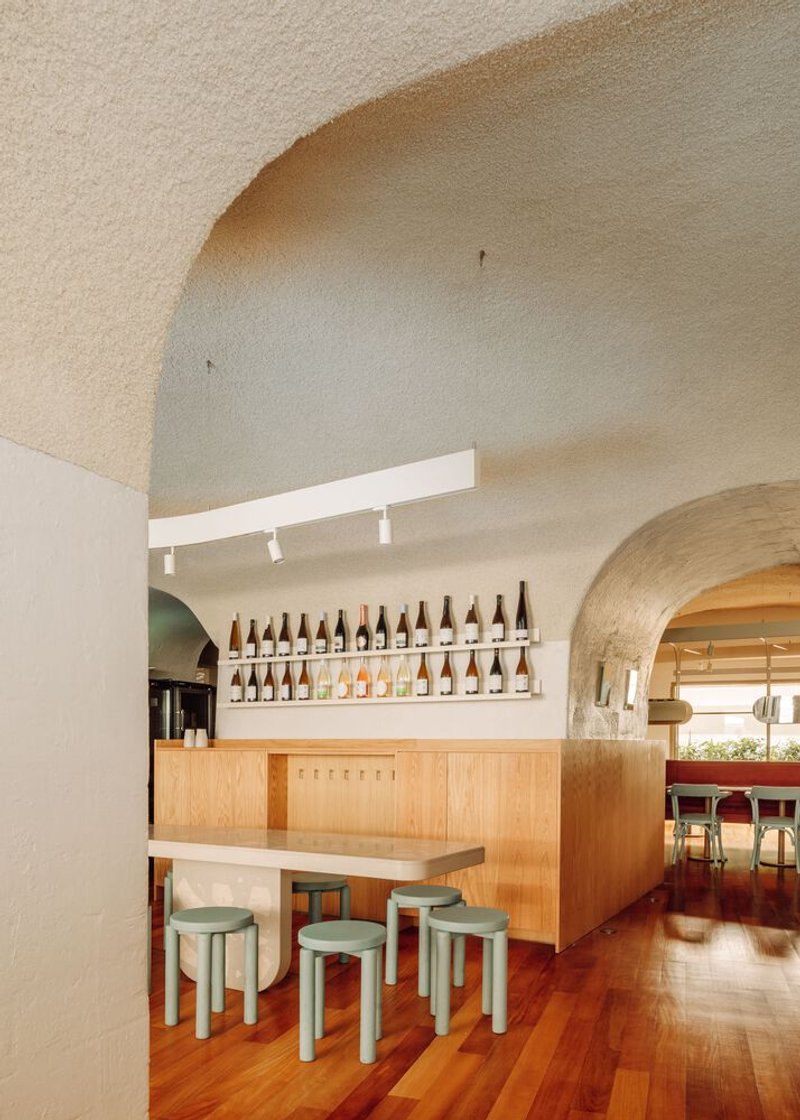
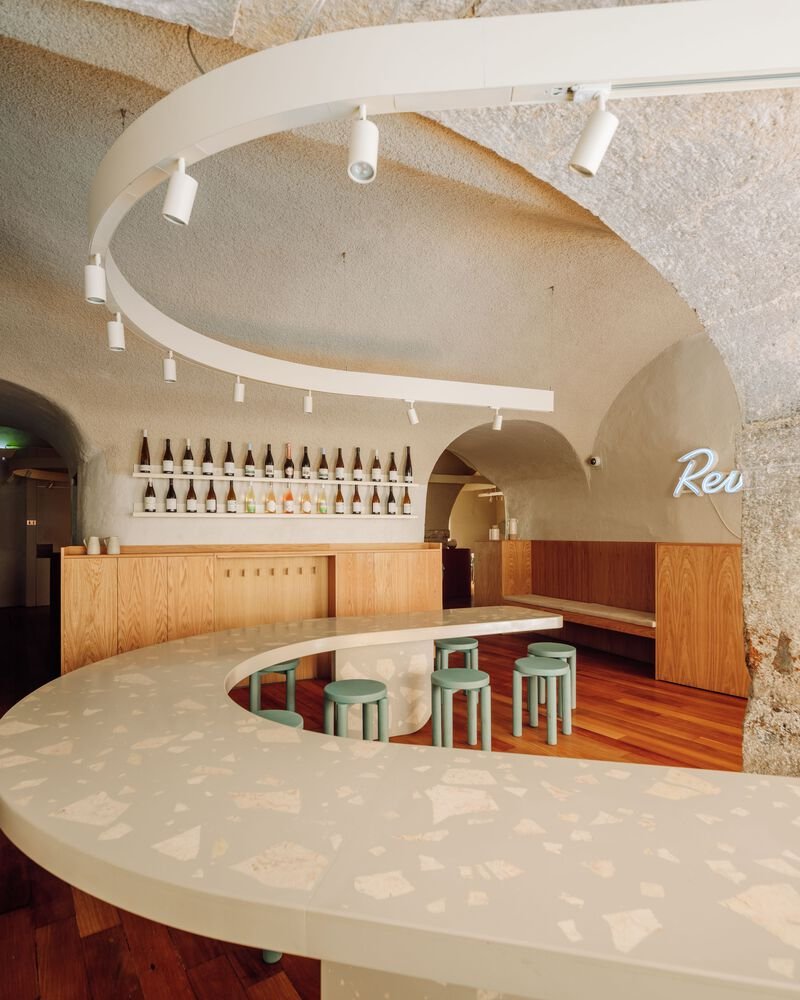
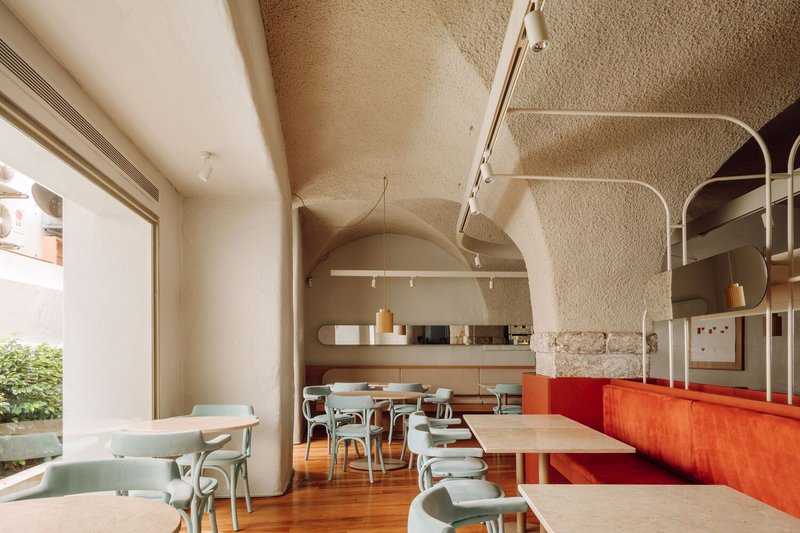
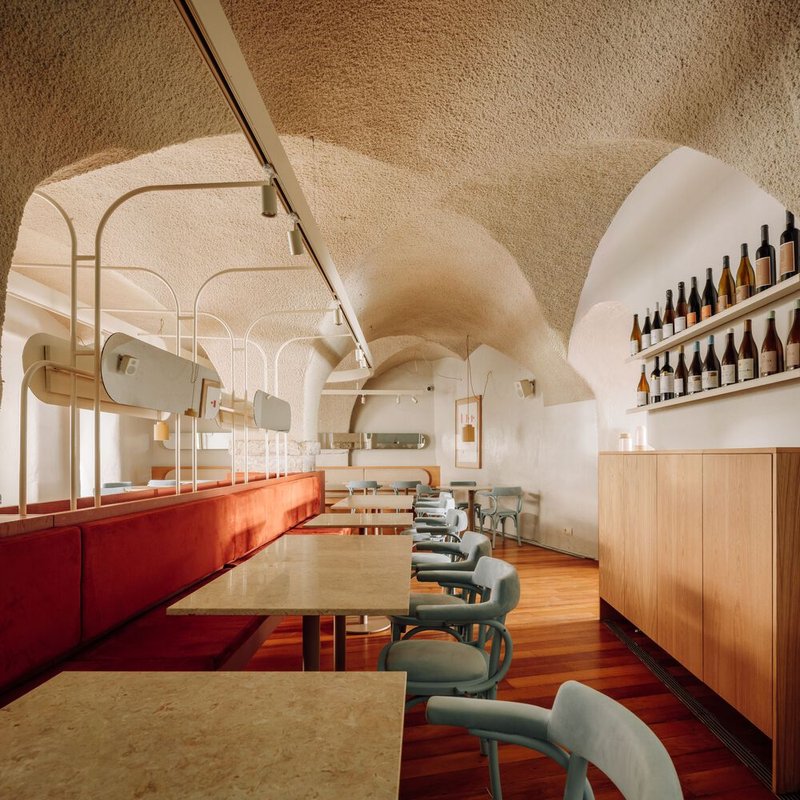
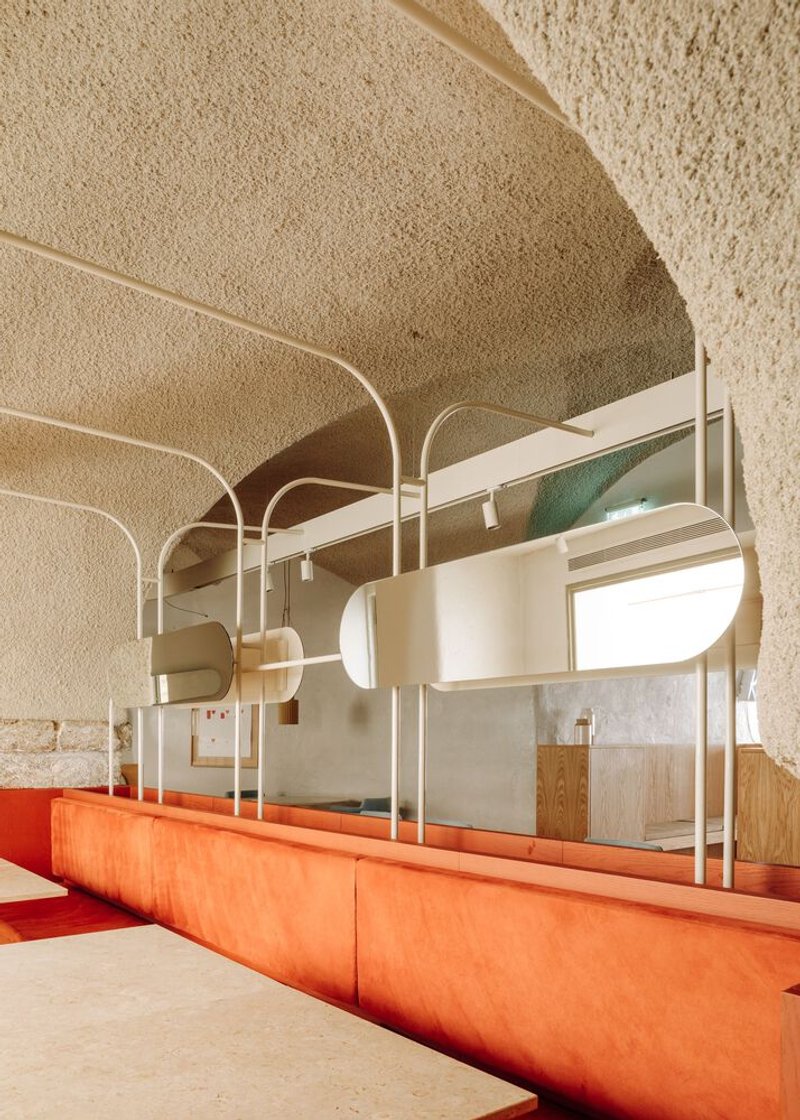
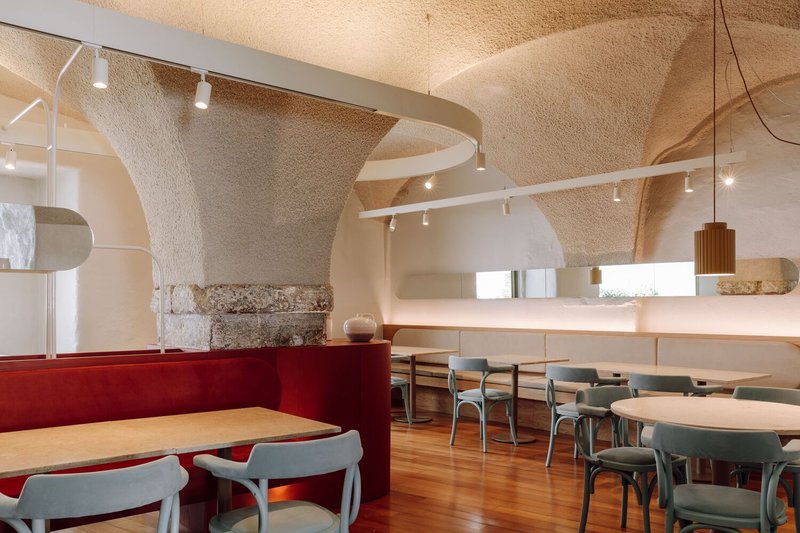
In the rear dining area, Spacegram introduces a central terracotta-colored bench that flows around two columns, structuring the room into a circular dining path. Separate tables orbit this bench, maintaining intimacy within a communal setting. The bar counter at one end and a secondary bench at the other complete the loop, reinforcing the movement of guests through a soft, rhythmic spatial narrative.
Material Palette: Soft Tactility and Ecological Intention
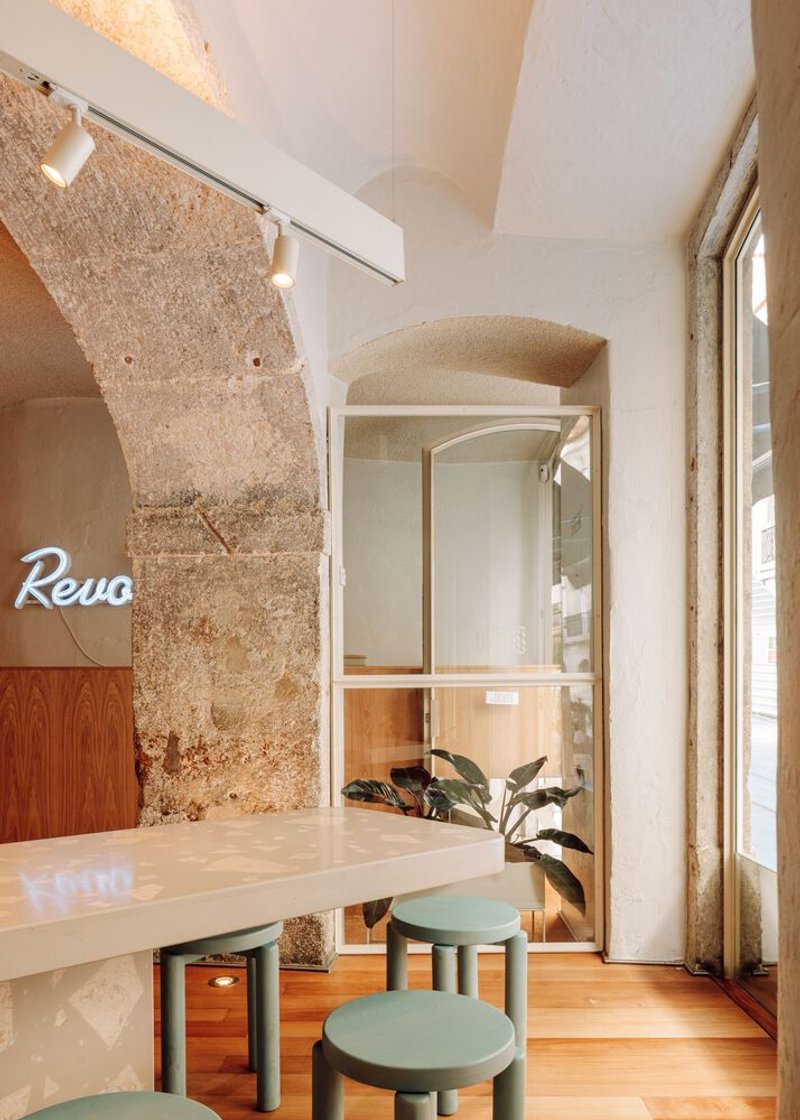
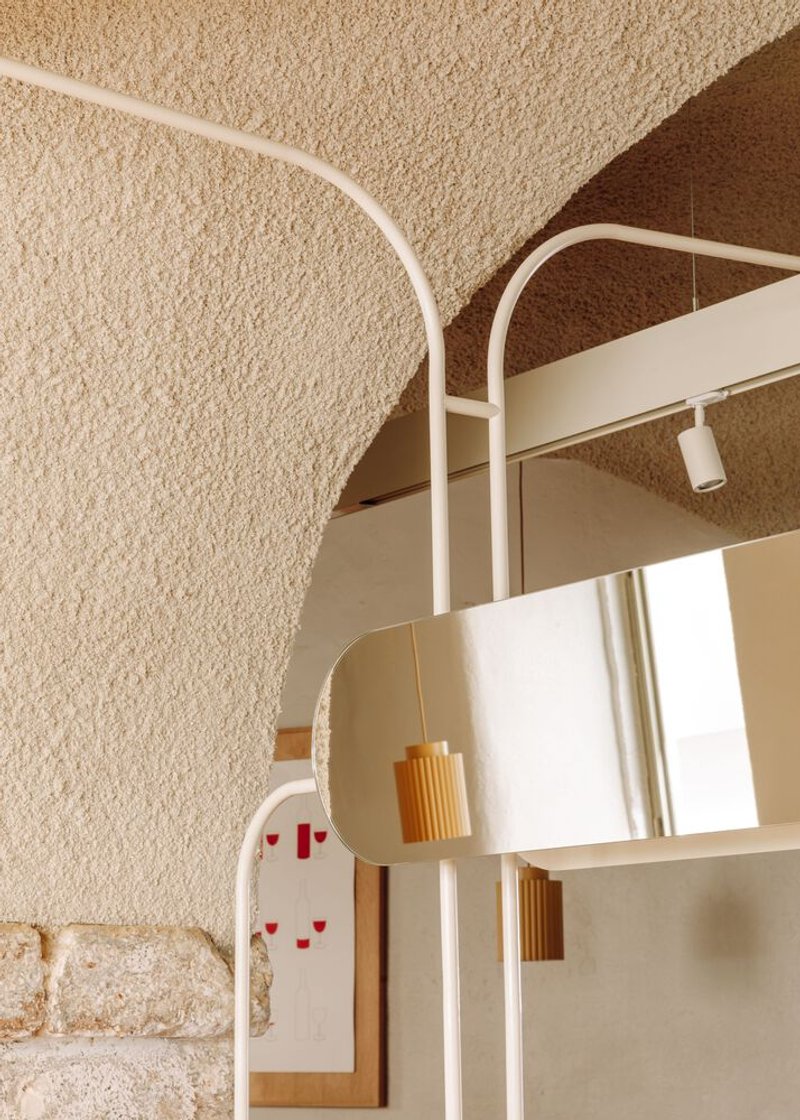
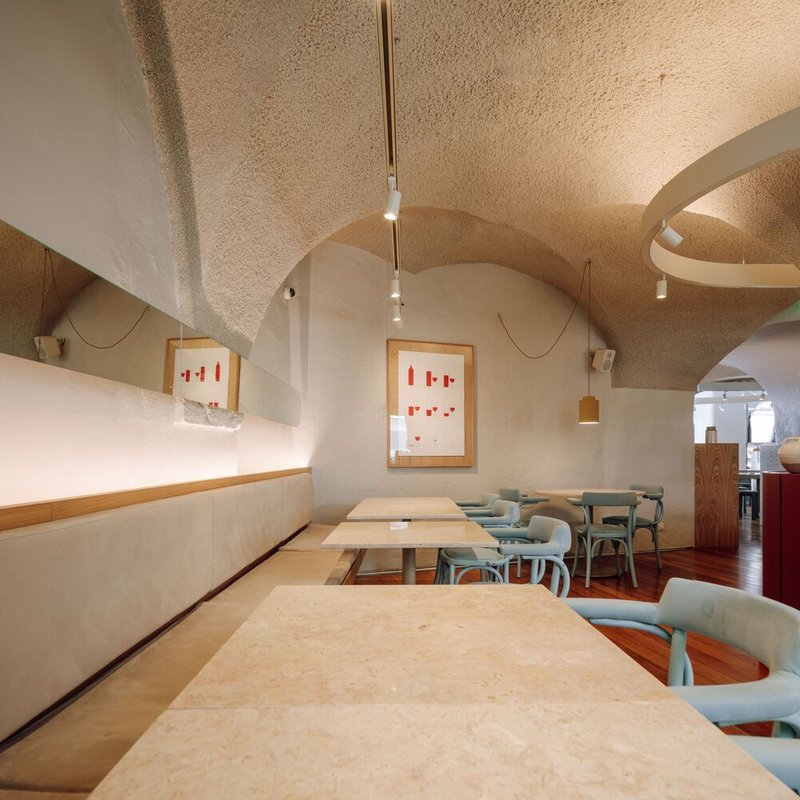
Texture and warmth define the atmosphere. An eco-certified projected cellulose fiber material, chosen for both acoustic absorption and tactile interest, covers the ceiling and upper walls. Without added pigment, the material achieves its muted tone through selective sourcing, lending authenticity and ecological consciousness to the palette.
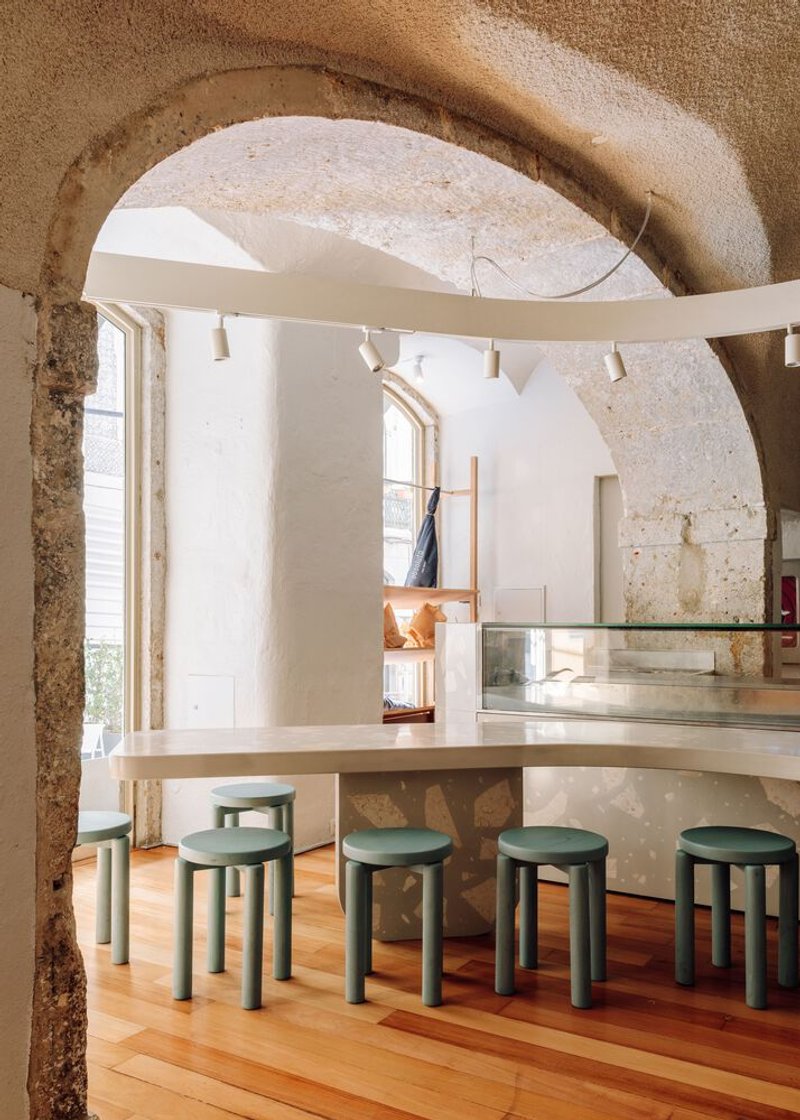
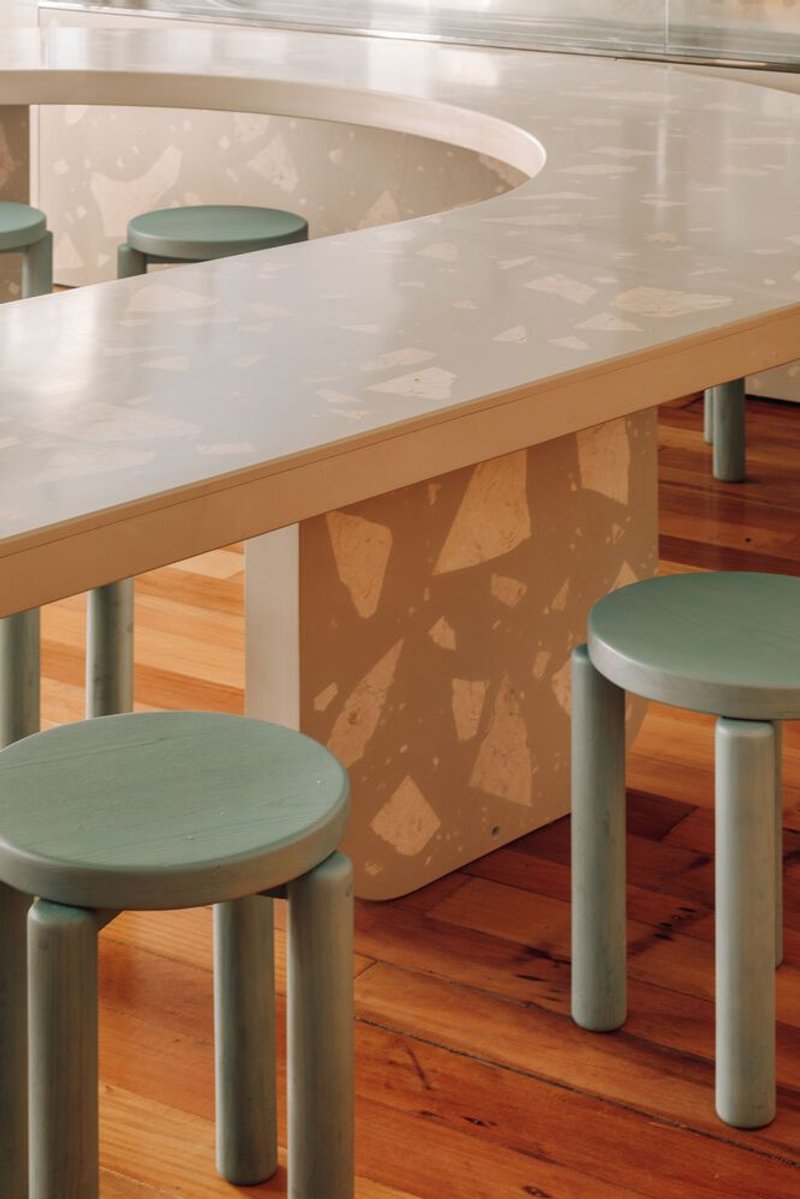
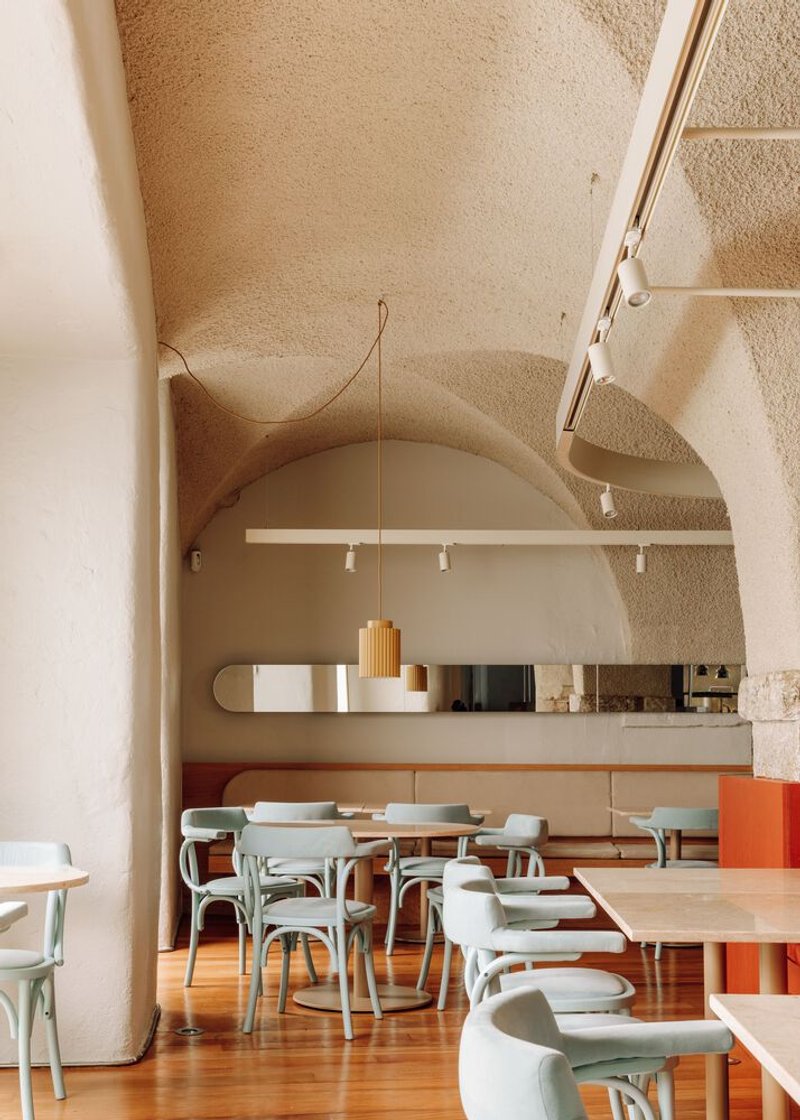
Chairs from the former restaurant were upcycled—a quiet act of sustainability that aligns with the project's broader environmental values. Reupholstered in soft blue velvet with a vegan suede texture, they contribute a refined softness to the space without erasing its legacy. Color themes such as terracotta and milk foam enrich the ambiance, evoking comfort without nostalgia.
Architectural Elements That Shape Identity
Throughout the restaurant, Spacegram strategically uses mirrors and arches to expand perception and frame intimate scenes. In the rear room, mirrors mounted between benches subtly increase the sense of space while also integrating seamlessly with the lighting fixtures through a unified arched structure nested inside the existing vaults.
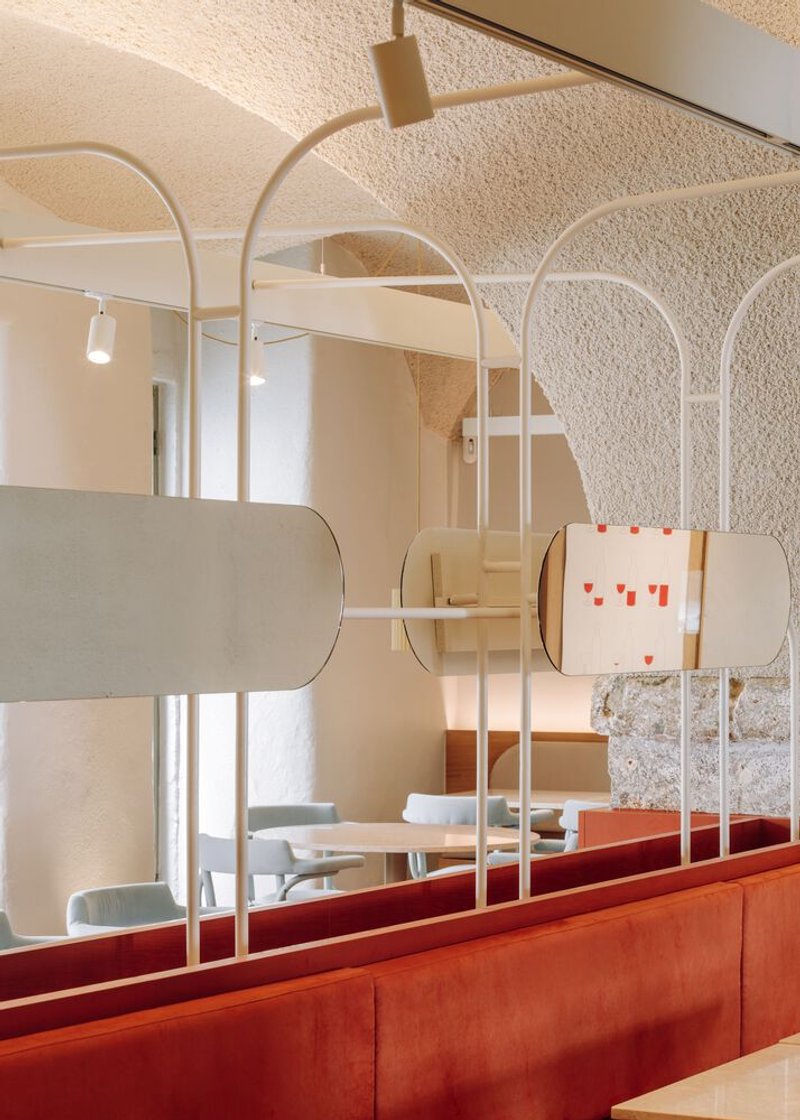
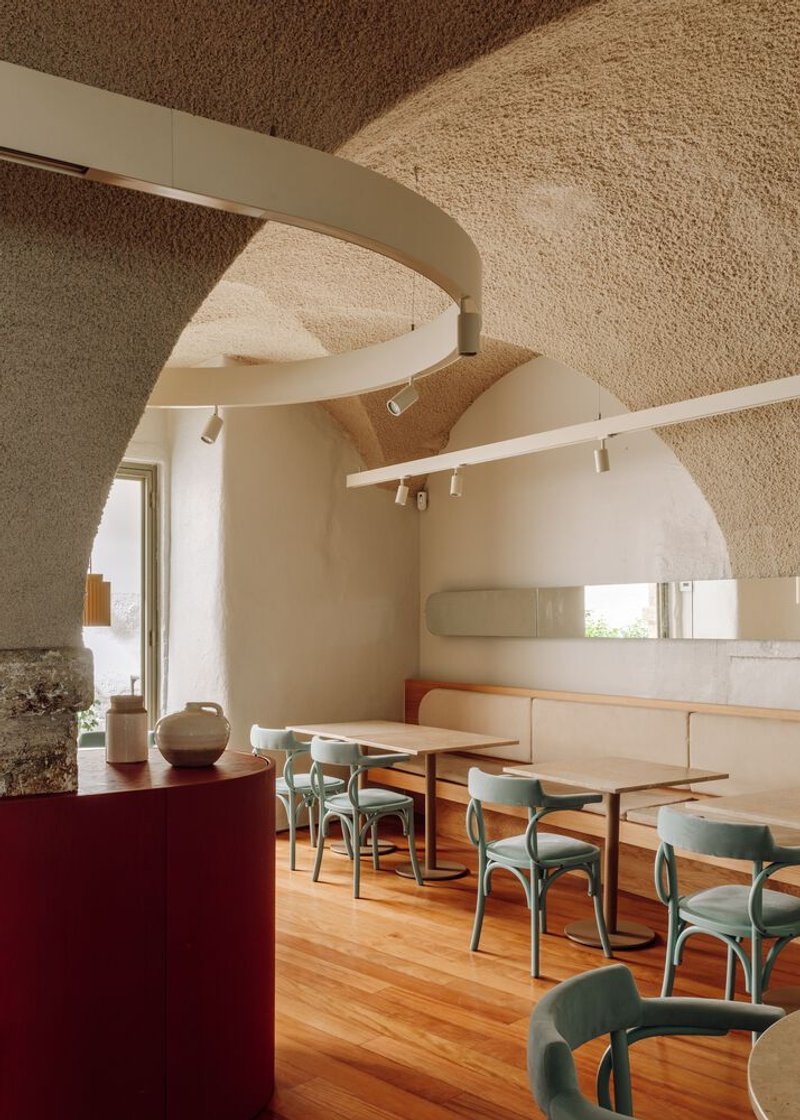
Wainscoting guides the eye and helps define sections within the open-plan volume. These gentle delineations, paired with a palette of warm materials and soft light, support a relaxed yet cohesive dining experience. Rather than compete with the original architecture, the design amplifies it, bringing the past forward into a dynamic present.
A Model for Contemporary Tasca Restaurant Design
Ofício – Tasco Atípico reflects a growing design ethos in Portugal and globally: honoring cultural heritage while embracing modern needs and environmental responsibility. Its reinterpretation of tasca culture transcends nostalgia—it reclaims communal rituals in a form that speaks to today’s rhythms and expectations.
This project stands as a compelling case study in contemporary tasca restaurant design, not only for its spatial and material intelligence but also for its emotional and cultural sensitivity. It is a place where design meets delight, where every seat invites participation, and where Portuguese identity is both remembered and reinvented.
All Photographs are works of Francisco Nogueira




Popular Articles
Popular articles from the community

On the Brooks House by Monsoon Collective – A Contemporary Kerala Home Rooted in Tradition
Kerala home blending tradition and modernity with water-inspired design, brick architecture, courtyard planning, and sustainable rainwater harvesting strategies.
Treehouse Apartment: A Warm Timber Interior Blending Craft, Play, and Contemporary Living
Warm timber apartment with integrated treehouse, combining natural materials, craftsmanship, and playful design to create a flexible, family-oriented living environment.
Louis Malle Cinema: A Limestone Cultural Landmark Revitalizing Community Life in Prayssac
Limestone cinema extension with public forecourt, blending heritage and modern design to create flexible cultural spaces and strengthen community interaction.
Flamboyant House by Juliana Camargo + Prumo Projetos
Modern Brazilian house integrating existing tree, pool, and volumes with glass, wood, and transitional spaces blending interior, exterior, and landscape seamlessly.


Similar Reads
You might also enjoy these articles

Bamboo Housing Challenge 2026: Design Affordable, Sustainable Homes Using Bamboo
An international design competition by Bamboo U and IBUKU inviting architects and designers to reimagine affordable housing using bamboo — with the winning design built full-scale in Bali.
Computational Design & Education: Beegraphy Design Awards Introduces 7th Category (Featuring Jiyun's Innovative Approach)
Dive into Beegraphy’s 7th Design Awards category, where computational design meets education to create immersive, interactive learning tools, inspired by Jiyun’s work.
From Parametric Lighting to Urban Furniture: Join the 2nd Workshop in Beegraphy’s Computational Design Series
Dive into Cutting-Edge Design Techniques and Practical Applications with Industry Experts
Introducing Sphere by UNI: Pioneering a New Era in AEC Industry
Unlocking Global Potential with BIM and Agile Management

Explore Architecture Competitions
Discover active competitions in this discipline




The International Standard for Design Portfolios


The Global Benchmark for Architecture Dissertation Awards


The Global Benchmark for Graduation Excellence


Challenge to reimagine the Iron Throne
Comments (0)
Please login or sign up to add comments
No comments yet. Be the first to comment!