
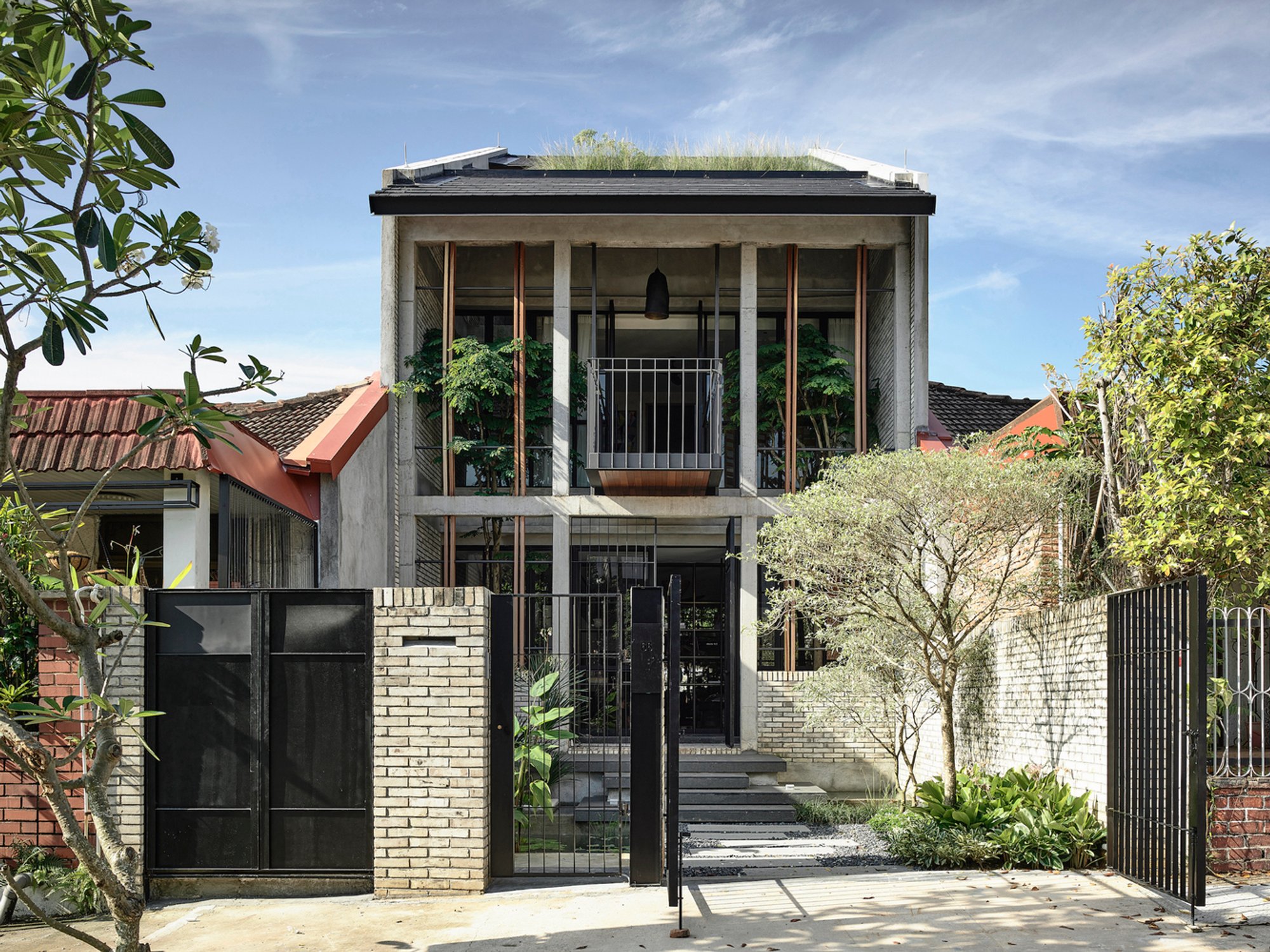
Oku House by Freight Architects: A Contemporary Reinterpretation of the Shophouse Typology
Oku House by Freight Architects blends Japanese wabi-sabi aesthetics with modern shophouse design, featuring natural materials and passive cooling strategies.

A Harmonious Fusion of Japanese Philosophy and Contemporary Design
Nestled in Singapore, Oku House by Freight Architects is a masterful embodiment of spatial depth and inward exploration. Drawing inspiration from the Japanese concept of "oku," meaning "inwardness," this architectural masterpiece invites visitors to journey through a series of layered spaces, heightening the experience of discovery.
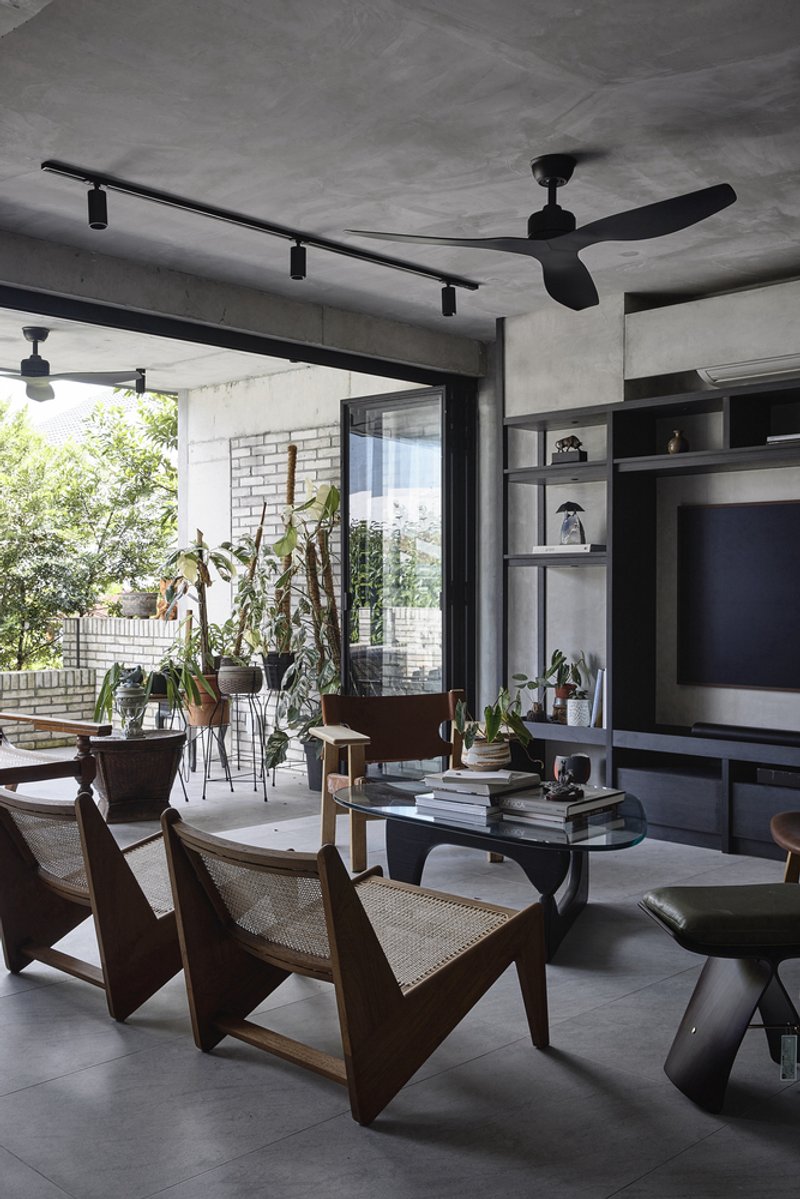
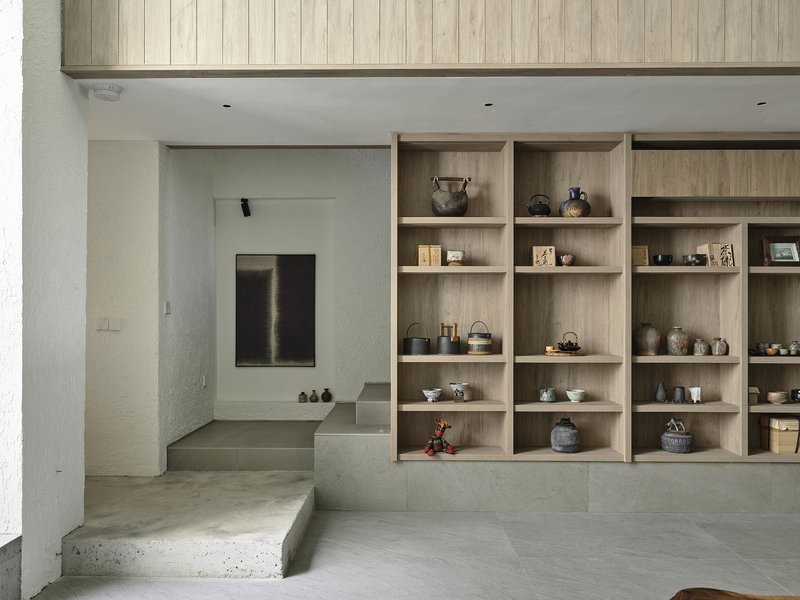
Designed for a pair of avid art collectors with a deep appreciation for Japanese culture, the home seamlessly integrates the principles of wabi-sabi—an aesthetic philosophy that embraces imperfection and the passage of time. This is reflected in the carefully curated selection of materials, including smoked bricks, raw concrete, and balau timber, which are deliberately left to age naturally, enhancing the home’s evolving character.
Reimagining the Shophouse for a Modern Lifestyle
The residence is situated on an unusually deep and narrow plot, reminiscent of Singapore’s traditional shophouse typology. Inspired by the client’s fascination with these historic structures, Freight Architects reinterpreted the classic shophouse layout by introducing fluid circulation pathways and a series of openings that organically unfold throughout the space. The result is a contemporary sanctuary that retains the spatial poetry of a historic typology while embracing modern functionality.
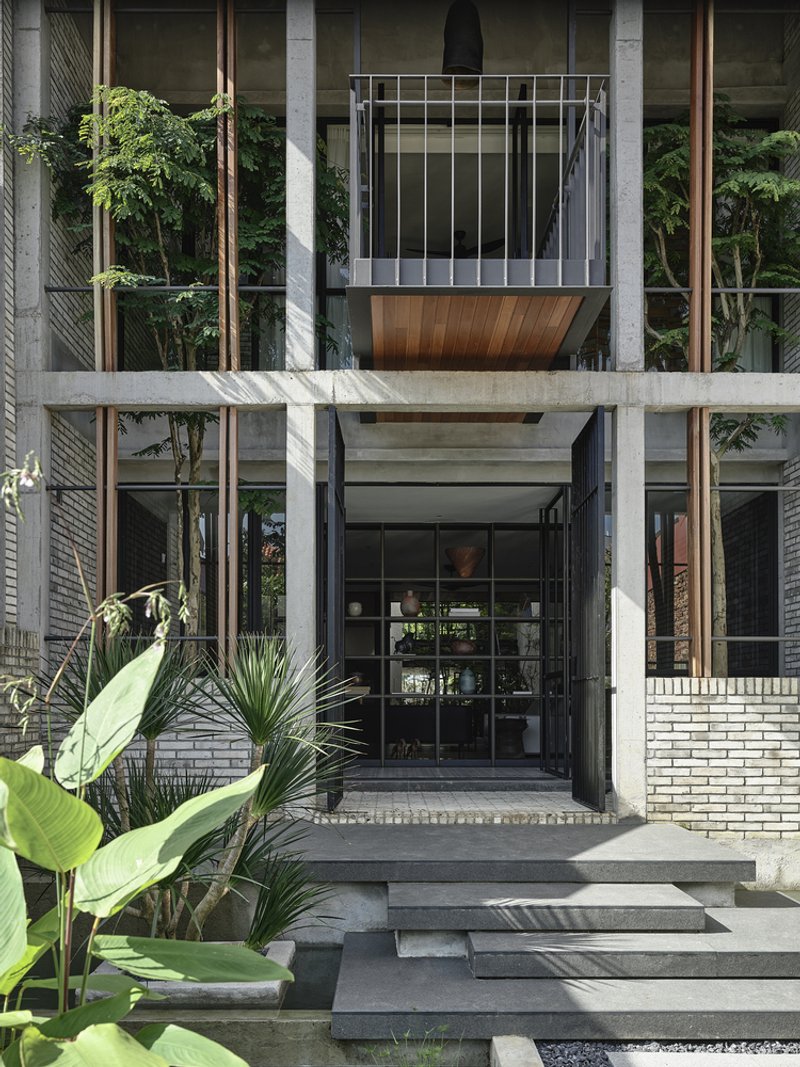
At the front façade, symmetry and balance are achieved through the careful placement of two majestic leopard trees, which provide natural shading and enhance privacy. These elements not only echo the traditional shophouse aesthetic but also reinforce the homeowners’ passion for landscaping. Planters are seamlessly integrated along the circulation paths, creating a continuous dialogue between architecture and nature.
A Seamless Transition Between Indoors and Outdoors
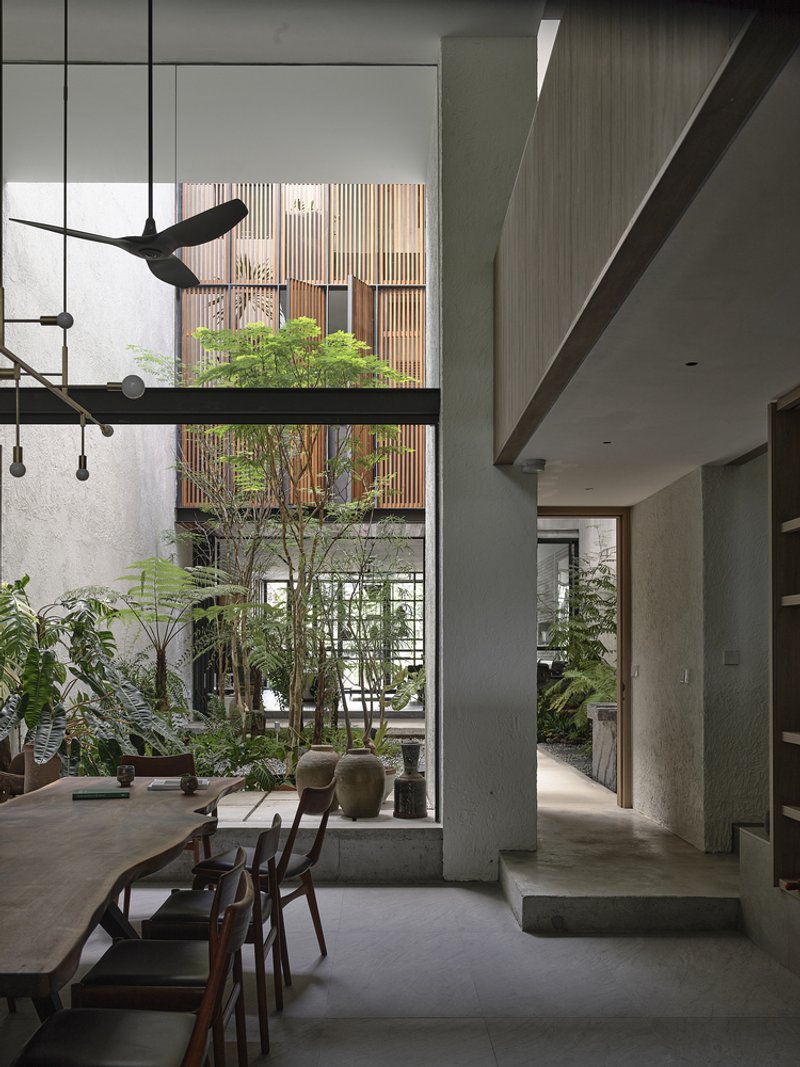
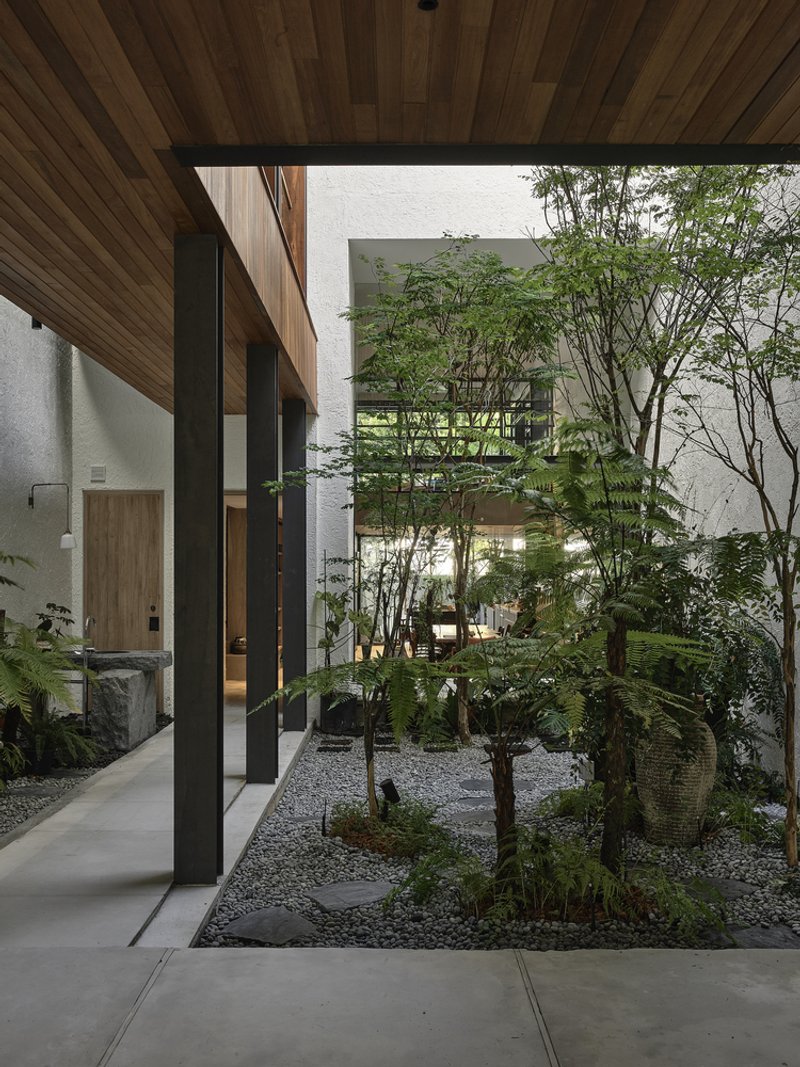
A water lily garden at the entrance serves as a serene prelude to the home’s interior, guiding visitors into a thoughtfully designed foyer that acts as a transition between the exterior and the living spaces. As one steps inside, the open courtyard gradually unveils itself—serving as the heart of the home.
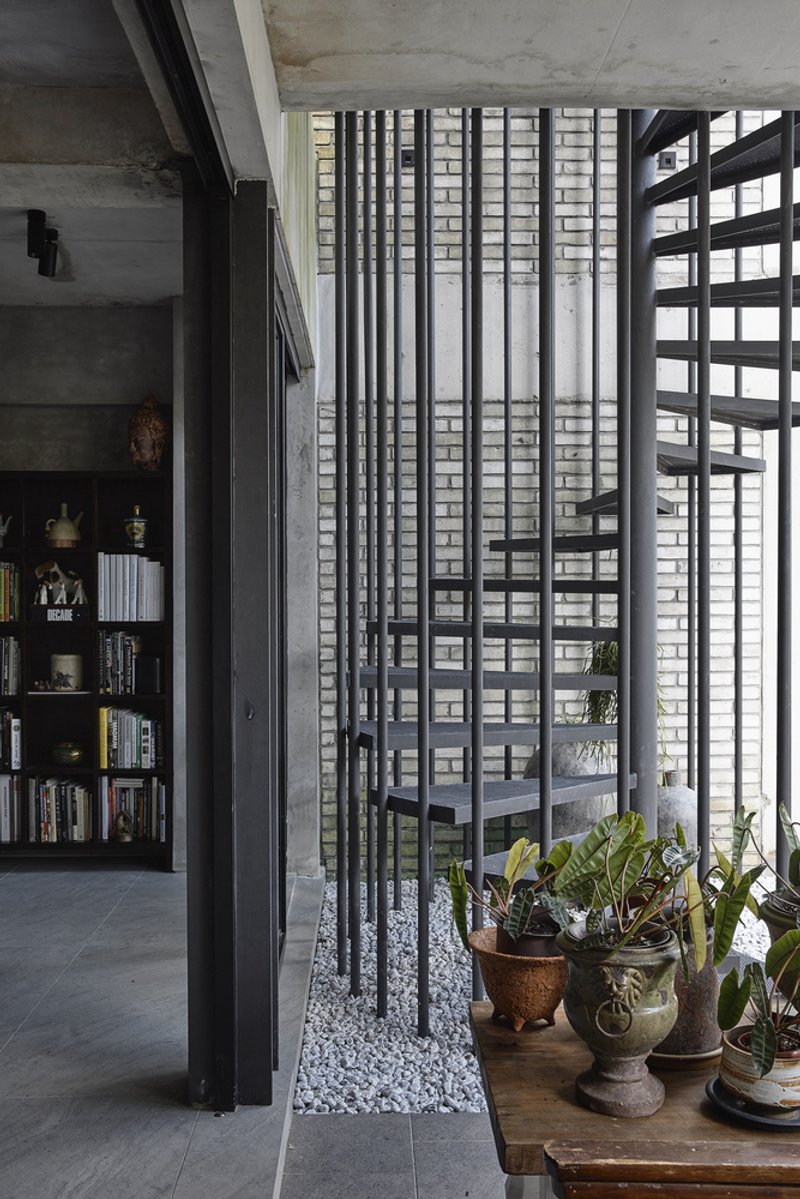
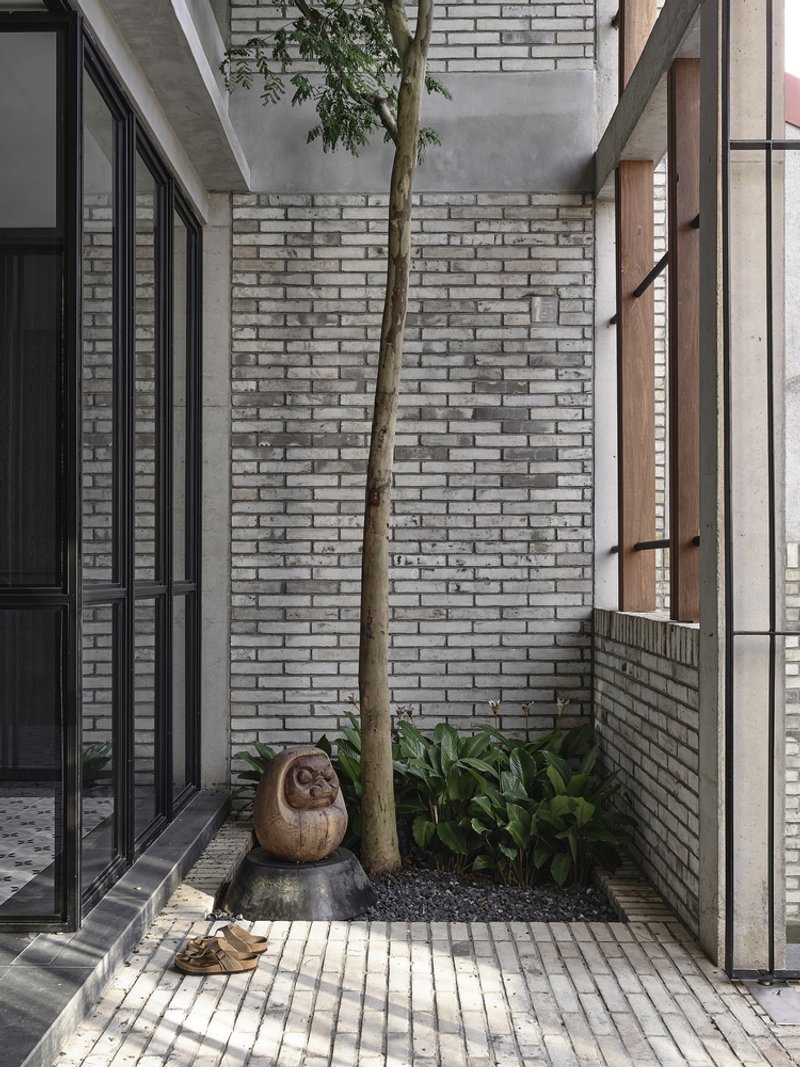
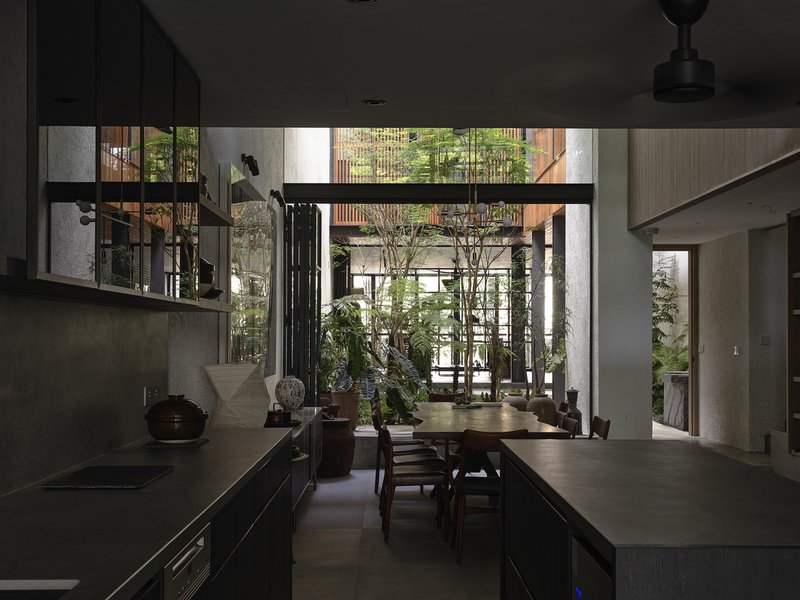
More than just a design feature, the courtyard plays a critical role in passive cooling strategies, functioning as an air well that enhances natural ventilation. By allowing sunlight and rain to filter into the home, it fosters a microclimate that promotes thermal comfort, an essential consideration in Singapore’s tropical environment. The courtyard’s trees, shrubs, and strategically placed stepping stones further help to regulate rainfall, preventing excessive runoff while fostering a sense of tranquility.
Materiality and Craftsmanship: A Dialogue Between Past and Present
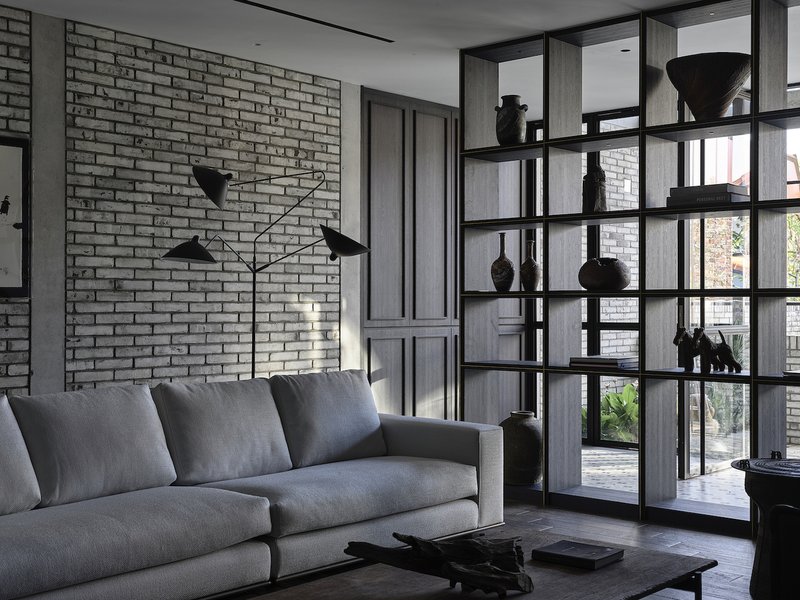
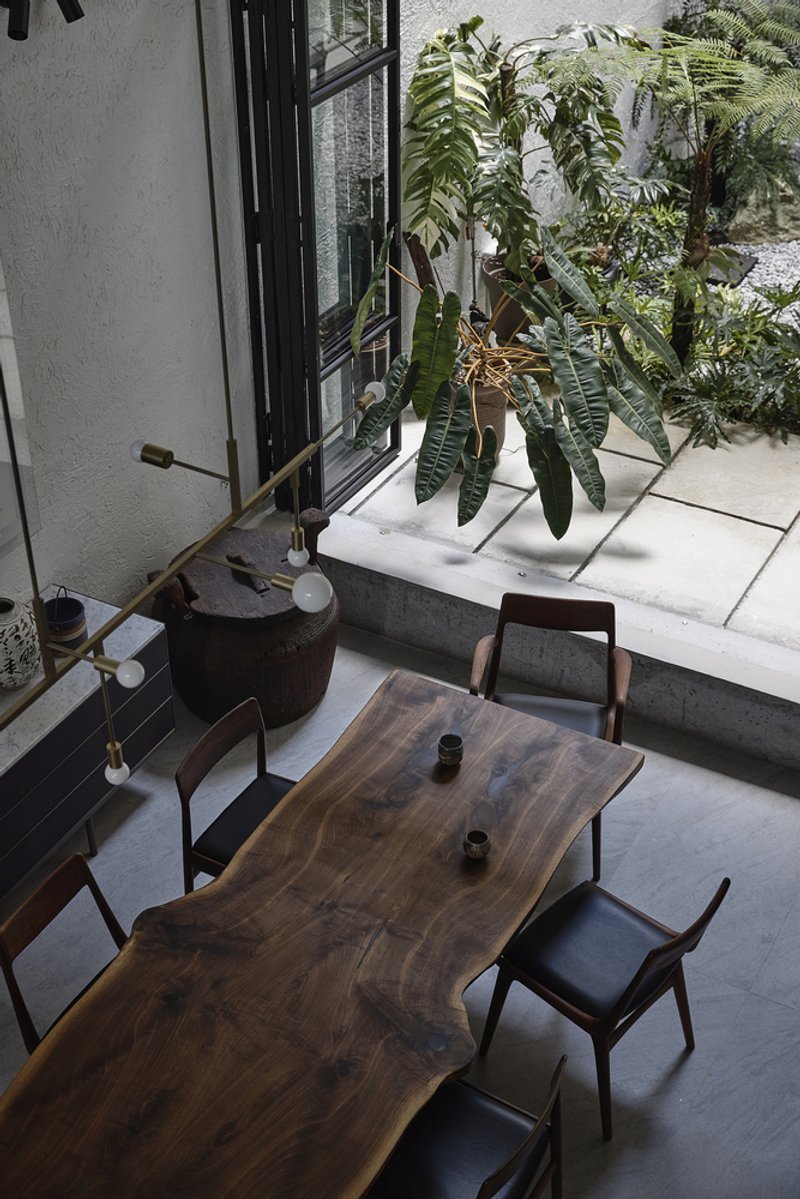
Throughout Oku House, the meticulous selection of materials underscores a reverence for craftsmanship and the beauty of organic textures. Smoked bricks add a tactile richness, while concrete surfaces reveal subtle imperfections that celebrate the passage of time. Balau timber, known for its resilience, lines key areas of the home, allowing for a warm contrast against the raw industrial elements.
To complement this material palette, interior furnishings are carefully curated from renowned manufacturers such as Made & Make, Malford, Minotti, and Rubik Material Laboratory. These selections reflect a refined yet understated elegance, ensuring that the architectural intent remains at the forefront.
Oku House: A Testament to Thoughtful, Timeless Design
Oku House is more than a residential project—it is a narrative of cultural appreciation, spatial exploration, and timeless craftsmanship. By embracing the principles of wabi-sabi, passive design, and nature integration, Freight Architects have crafted a home that not only serves as a sanctuary for its residents but also as a profound architectural statement in the heart of Singapore.
All Photographs are works of Derek Swalwell




Popular Articles
Popular articles from the community


VEIVE Architects Builds a Mountain Hostel That Disappears into a Hangzhou Hillside
On the Huihang Ancient Trail in Xiangjian Village, a shelter of wood, steel, and rammed earth roots itself in the rural landscape.
Constanti Architects Builds a Fortress of Privacy in Nicosia with House 345
A concrete and timber residence in Cyprus reinterprets the traditional introverted courtyard house for a new urban landscape.
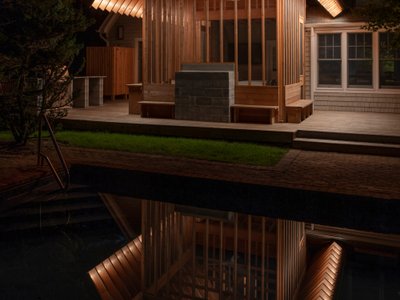
BLDUS Turns a 250-Square-Foot Screened Porch into a Pine Forest Temple in East Hampton
A gabled cedar pavilion mimics the rhythm of surrounding pines, anchoring a 1990s wooded home to its hollow in Long Island.
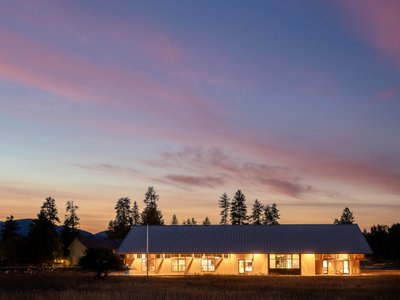
Johnston Architects Reimagines the Methow Valley Hay Barn as a Small-Town Library in Winthrop
A 7,300-square-foot timber library channels the region's agrarian vernacular to serve a rural Washington community of 400 year-round residents.


Similar Reads
You might also enjoy these articles

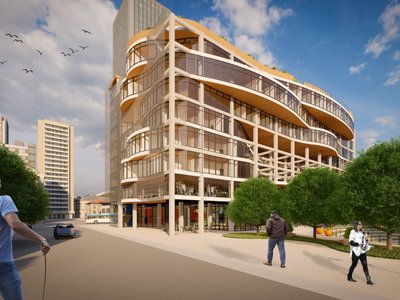
Olio Towers: A Mid-Rise for Performers That Fuses Housing, Rehearsal, and Stage
Located blocks from Houston's Theater District, this modular tower stacks living units around a central performance atrium.

Oasis: Modular Green Housing Carved into Dhaka's Urban Fabric
A shortlisted Plugin Housing entry reclaims unauthorized settlements in Dhaka with stepped concrete volumes, green roofs, and ventilation-driven design.

Black Hole: A Floating Megastructure for the Post-Physical Era
Emiliano Mazzarotto envisions a spherical, self-scaling arena where e-sports, digital hotels, and holographic stadiums replace traditional public space.
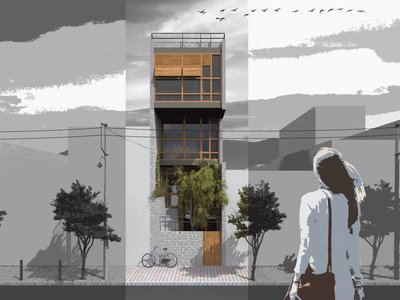
Compact & Sustainable Living in Piraeus: A Four-Level Family Home Built Around Light and Air
A narrow townhouse in one of Greece's densest port cities uses a central atrium and passive strategies to house three generations under one roof.


Explore Architecture Competitions
Discover active competitions in this discipline




The International Standard for Design Portfolios


The Global Benchmark for Architecture Dissertation Awards


The Global Benchmark for Graduation Excellence


Challenge to reimagine the Iron Throne
Comments (0)
Please login or sign up to add comments
No comments yet. Be the first to comment!