
Oyaki Farm Factory by Tono Mirai Architects: Sustainable Architecture Rooted in Tradition and Nature
Oyaki Farm Factory in Nagano blends sustainable Japanese architecture, traditional craftsmanship, local materials, and nature-inspired design for café, factory, and cultural experience.

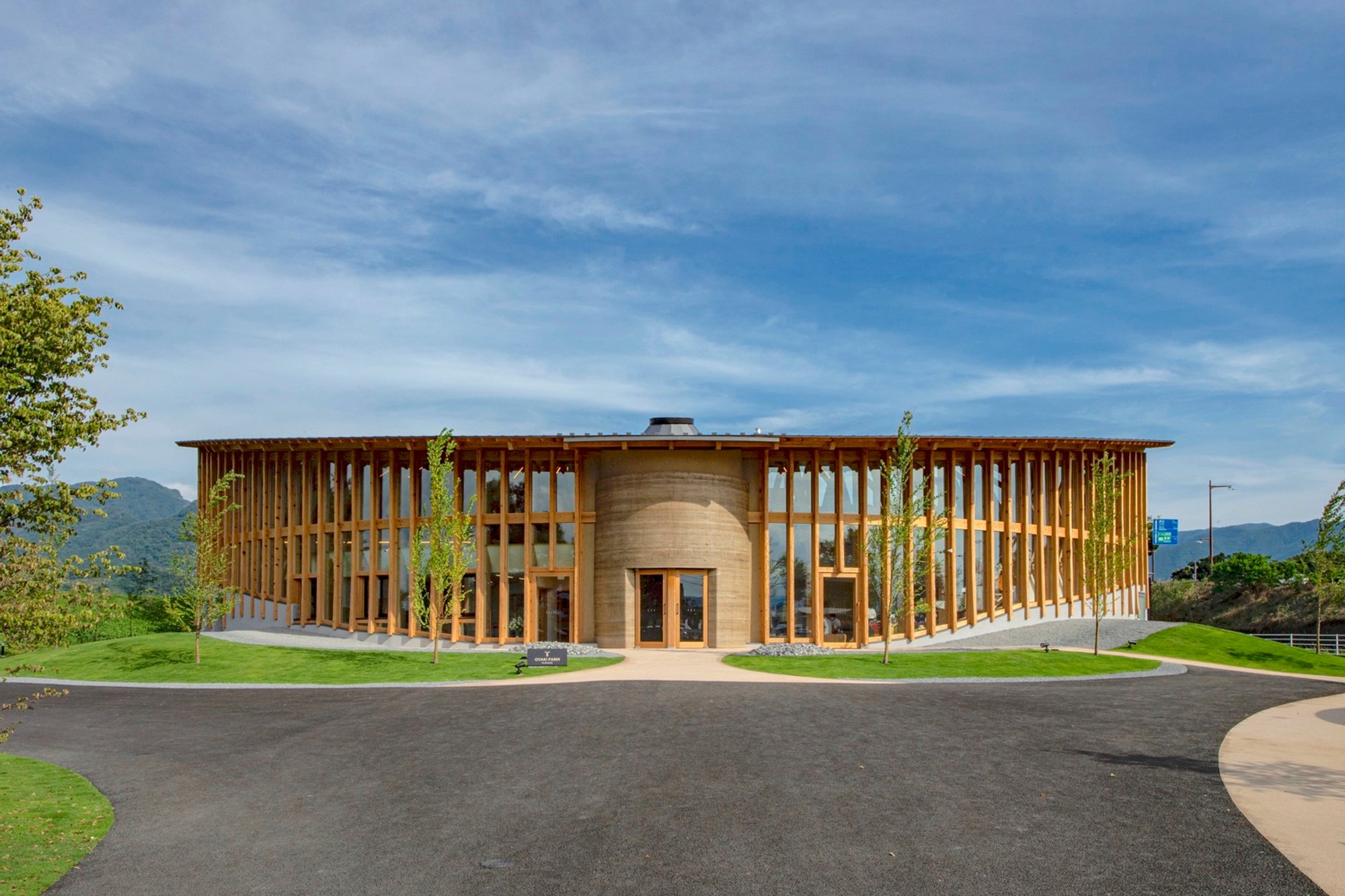
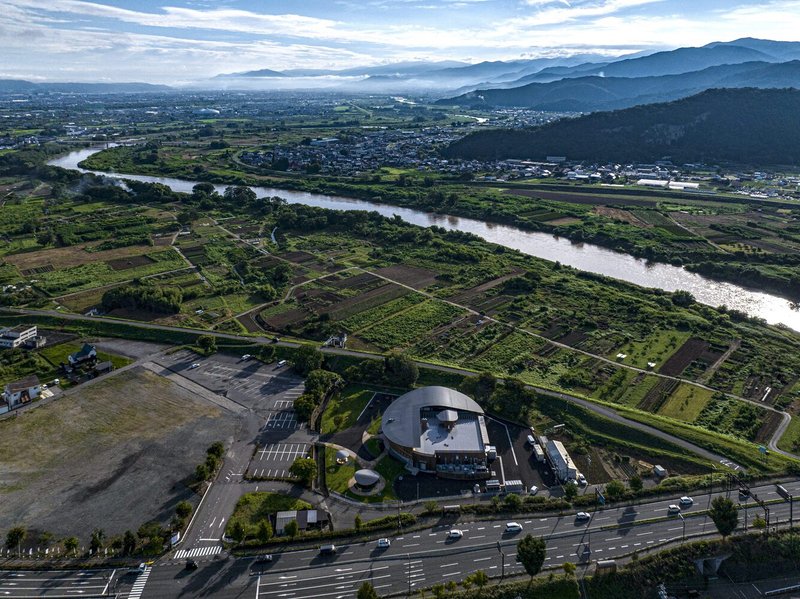
Located in Nagano, Japan, the Oyaki Farm Factory by Tono Mirai Architects redefines what a contemporary food factory and café can be. Designed as a cultural and ecological landmark, the project merges traditional craftsmanship, local materials, and forward-looking sustainability standards. The result is not just a factory, but a living, breathing architectural organism that resonates with the land and its people.
Honoring the Tradition of Oyaki
The factory was commissioned as a new facility for Iroha-do, a long-established producer of Oyaki, a baked dumpling made from wheat and vegetables that has been part of Shinshu’s food culture since the Jomon period. This building embodies that heritage, positioning itself as a place that grows from the earth and, over thousands of years, will ultimately return to it.
By connecting ancient food traditions with contemporary ecological architecture, the Oyaki Farm Factory offers visitors more than a café and direct sales store—it creates an immersive cultural experience where food, nature, and architecture meet.
Design Concept: Architecture as a Living Organism
The guiding principles behind the project were shaped around five core ideas:
- Memories of the Earth (Genius Loci): Respecting the spirit of place and natural context.
- Local Natural Materials & Traditional Techniques: Using cedar, cypress, and rammed earth sourced from the region.
- Collaboration Between Design & Craftsmanship: Blending architectural vision with skilled local construction.
- A Place Connected to the Earth: Symbolizing uplift, growth, and return.
- Movement as a Living Organism: Architecture that embodies creation, change, and circulation.
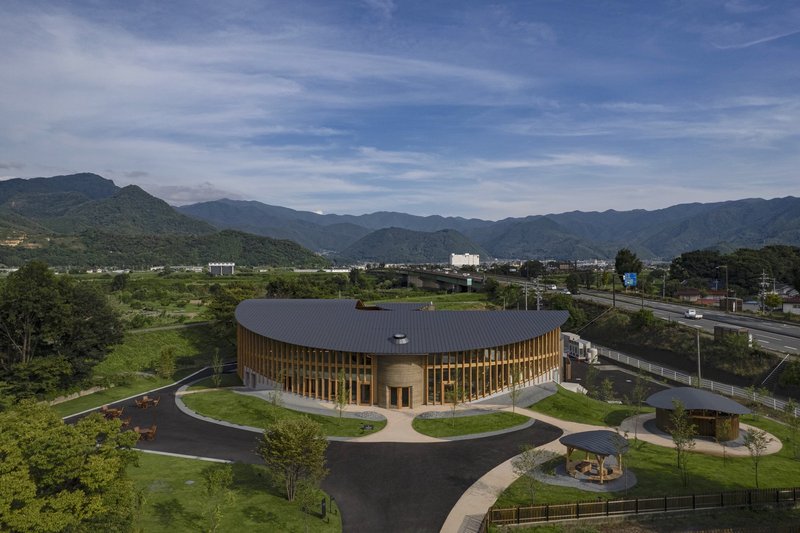
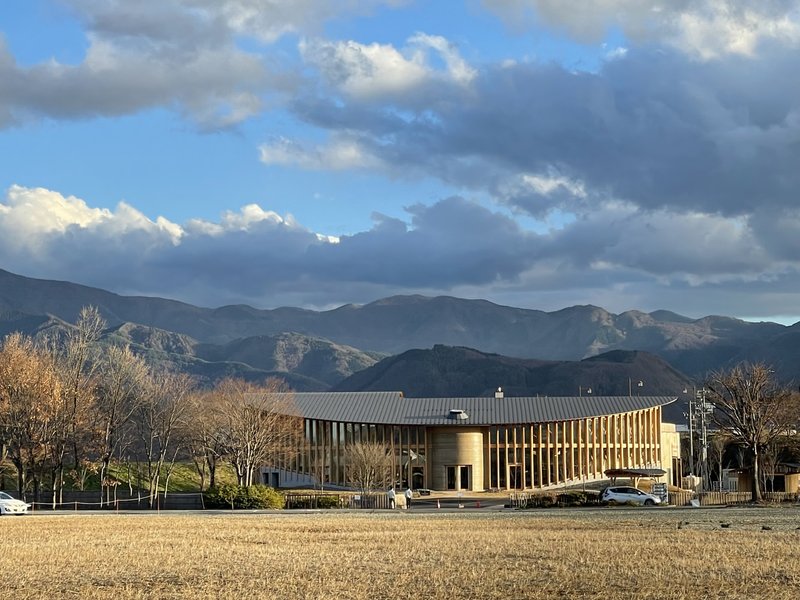
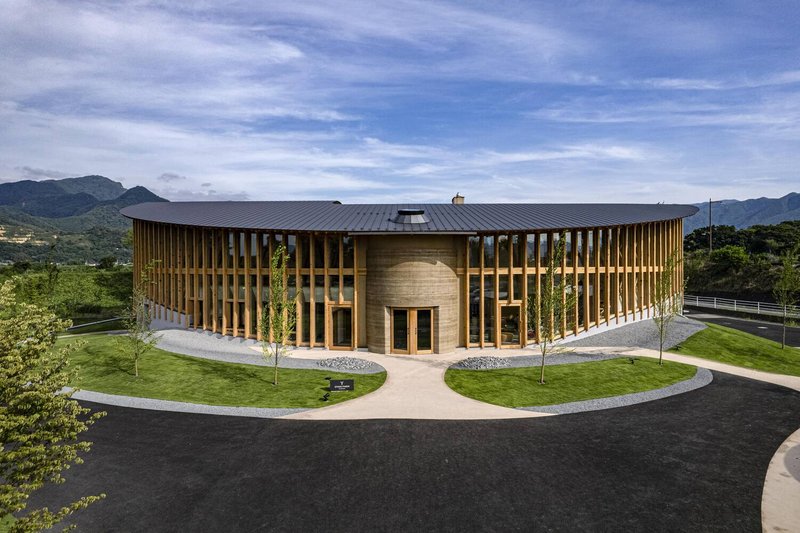
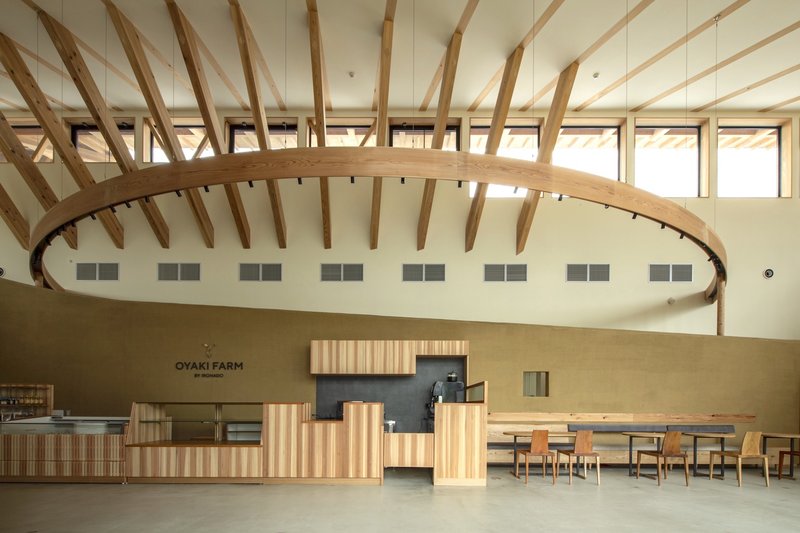
These principles shaped the factory into a semi-fire-resistant wooden structure spanning 1,415 m², built with prefectural lumber and soil reclaimed from construction sites. The arc-shaped roof mirrors the surrounding mountain ranges, while the overlapping circles of the café and factory symbolize the harmony between society and region.
Structural Innovation and Craftsmanship
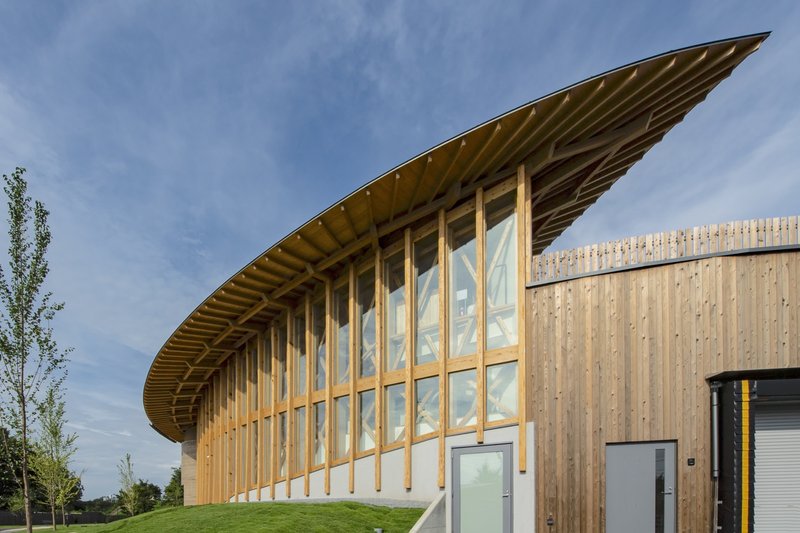
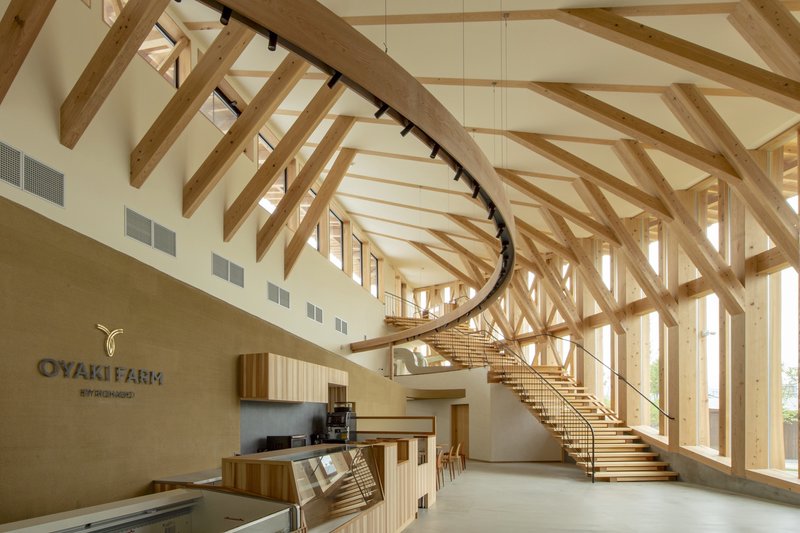
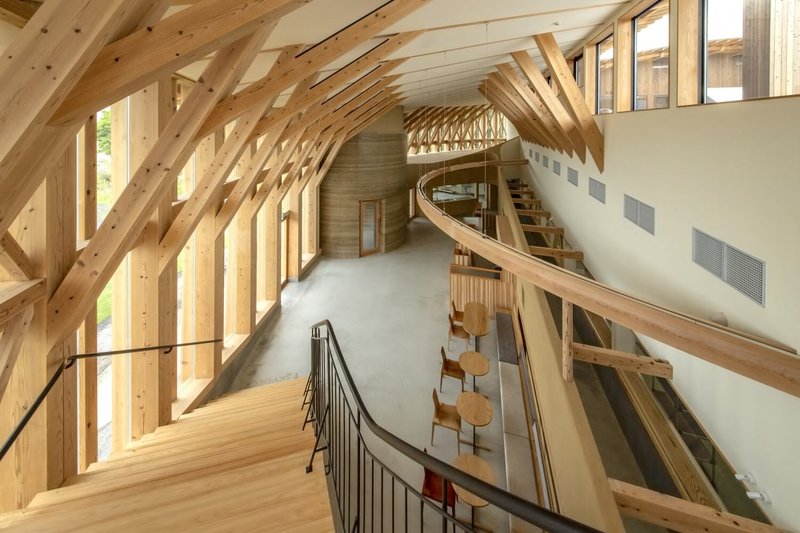
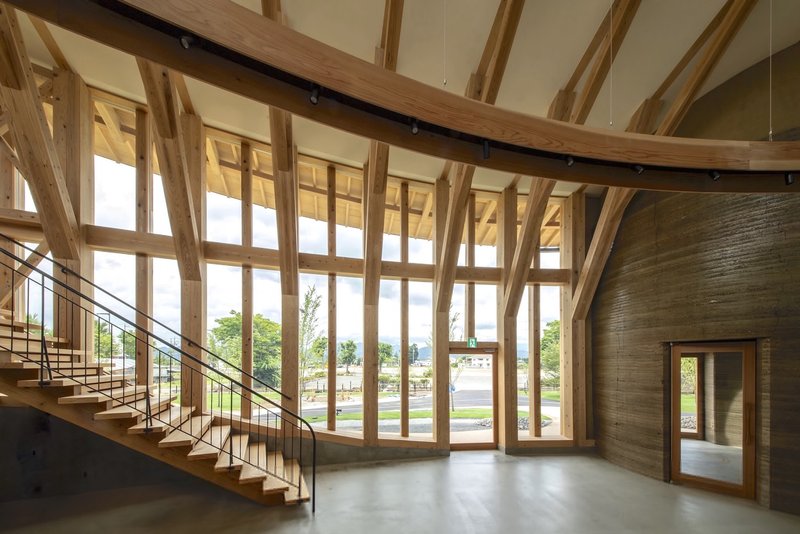
The north façade is defined by a striking glass curtain wall supported by cedar drum pillars, some reaching up to 7 meters in length. Inside, cedar beams and cypress rafters form a rhythm of radiating structures, topped with handcrafted fan rafters—a nod to Japanese traditional carpentry.
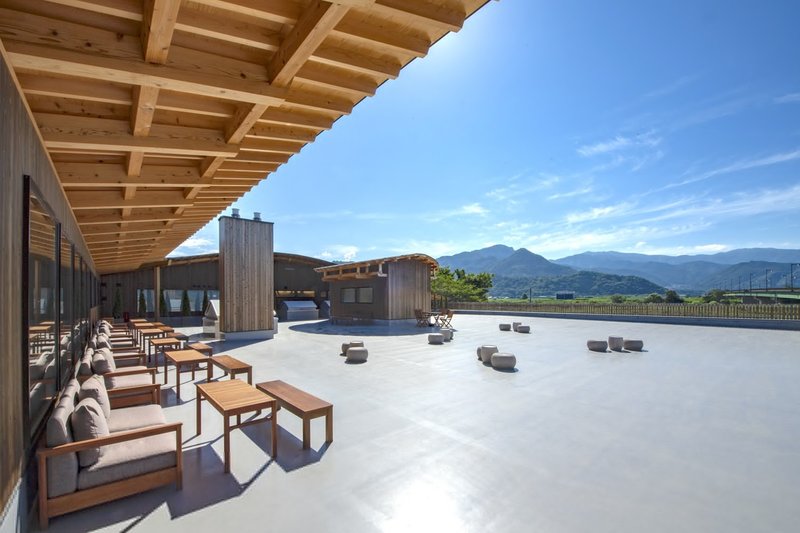
Notably, the roof’s 3-meter overhanging eaves were carved entirely by local carpenters, without relying on scaffolding, exemplifying craftsmanship passed down through generations.
Sustainable Features and Environmental Integration
The Oyaki Farm Factory is deeply rooted in sustainability, aiming to reduce CO₂ emissions and foster natural cycles:
- Rammed Earth Walls: Reused soil creates thermal mass and a direct connection to the earth.
- Toplights & Natural Ventilation: Allow daylight to filter into the hall while promoting passive airflow.
- Rainwater Systems: Channel falling rain from the roof to nurture the landscape.
- Primary Energy Standards Compliance: Built to meet Japan’s strict energy efficiency benchmarks.
Through these strategies, the building acts as a regenerative architectural system, blurring boundaries between sky, land, and human activity.
A Place Where Architecture, Nature, and Community Unite
The Oyaki Farm Factory is more than a production space—it is a cultural gathering point where locals and visitors engage with food, tradition, and environment. By merging craft, sustainability, and storytelling, the project becomes an example of how architecture can restore ecological balance while celebrating regional identity.
All photographs are works of takeshi noguchi



Popular Articles
Popular articles from the community

On the Brooks House by Monsoon Collective – A Contemporary Kerala Home Rooted in Tradition
Kerala home blending tradition and modernity with water-inspired design, brick architecture, courtyard planning, and sustainable rainwater harvesting strategies.
Inverted Architecture Installation by Studio Link-Arc: Exploring the Intersection of Architecture and Living Organisms
Inverted Architecture Installation by Studio Link-Arc blends mycelium, sustainability, inverted design, ecological cycles, and urban adaptive architecture in Shenzhen.
Flamboyant House by Juliana Camargo + Prumo Projetos
Modern Brazilian house integrating existing tree, pool, and volumes with glass, wood, and transitional spaces blending interior, exterior, and landscape seamlessly.
An Miên Lumière Cafe by xưởng xép, Ho Chi Minh City, Vietnam
An industrial-inspired café where layered steel and warm light create a dynamic, immersive environment shaped by reflection, depth, and perception.


Similar Reads
You might also enjoy these articles


The Ken Roberts Memorial Delineation Competition (Krob)
As the most senior architectural drawing competition currently in operation anywhere in the world, it draws hundreds of entries each year, awarding the very best submissions in a series of medium-based categories.


Waterfront Redevelopment and Urban Revitalization in Mumbai: Forging a New Dawn for Darukhana
A transformative waterfront redevelopment project reimagining Darukhana’s shipbreaking heritage into an inclusive urban future.

OUT-OF-MAP: A Call for Postcards on Feminist Narratives of Public Space
Rhizoma Design and Research Lab invites artists, designers, architects, researchers, and students to reflect on how feminist perspectives can reshape public space. Selected works will be exhibited in Barcelona, October 2026. Submissions open until 15 April 2026.


Documentation Work on Buddhist Wooden Temple
Architectural syncretism and cultural hybridity: A comparative study of the Buddhist temples in Chattogram Hill tracks

Explore Architecture Competitions
Discover active competitions in this discipline




The International Standard for Design Portfolios


The Global Benchmark for Architecture Dissertation Awards


The Global Benchmark for Graduation Excellence


Challenge to reimagine the Iron Throne
Comments (0)
Please login or sign up to add comments
No comments yet. Be the first to comment!