
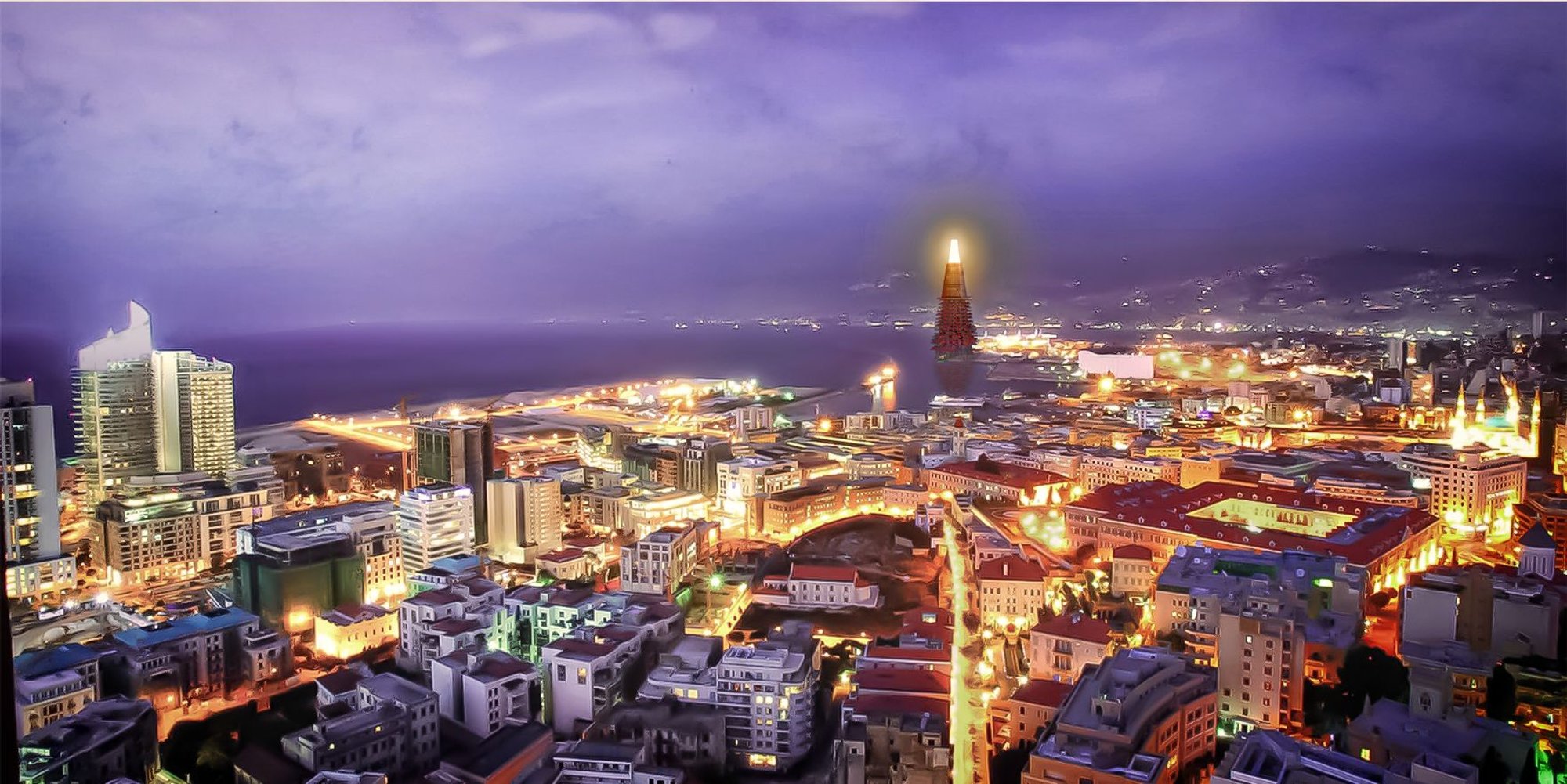
Port Tower – A Vertical Urban Regeneration Model
Port Tower transforms Beirut’s port into a vertical civic hub—blending urban regeneration, sustainability, and public space in one icon.

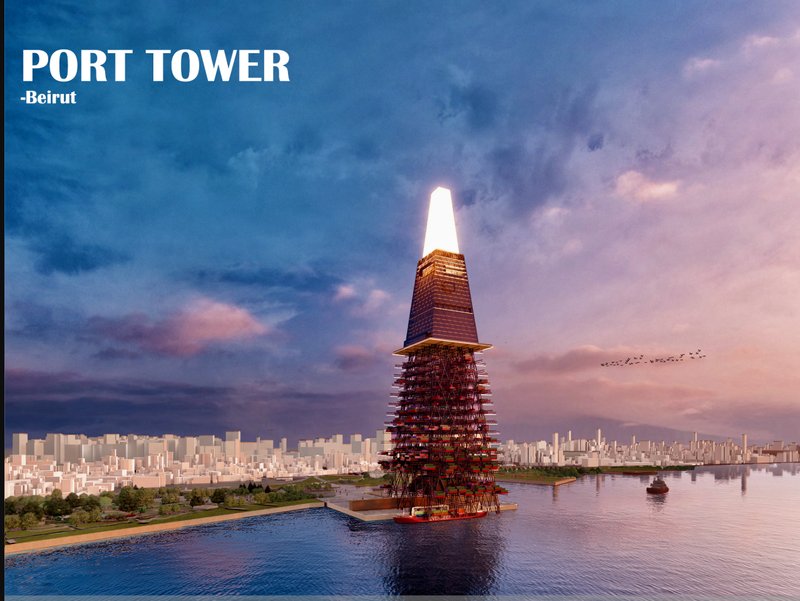
Port Tower – BeirutA
People's Choice Award entry of CityScraper by Civgin Cumbul and Deniz Yalcinkaya
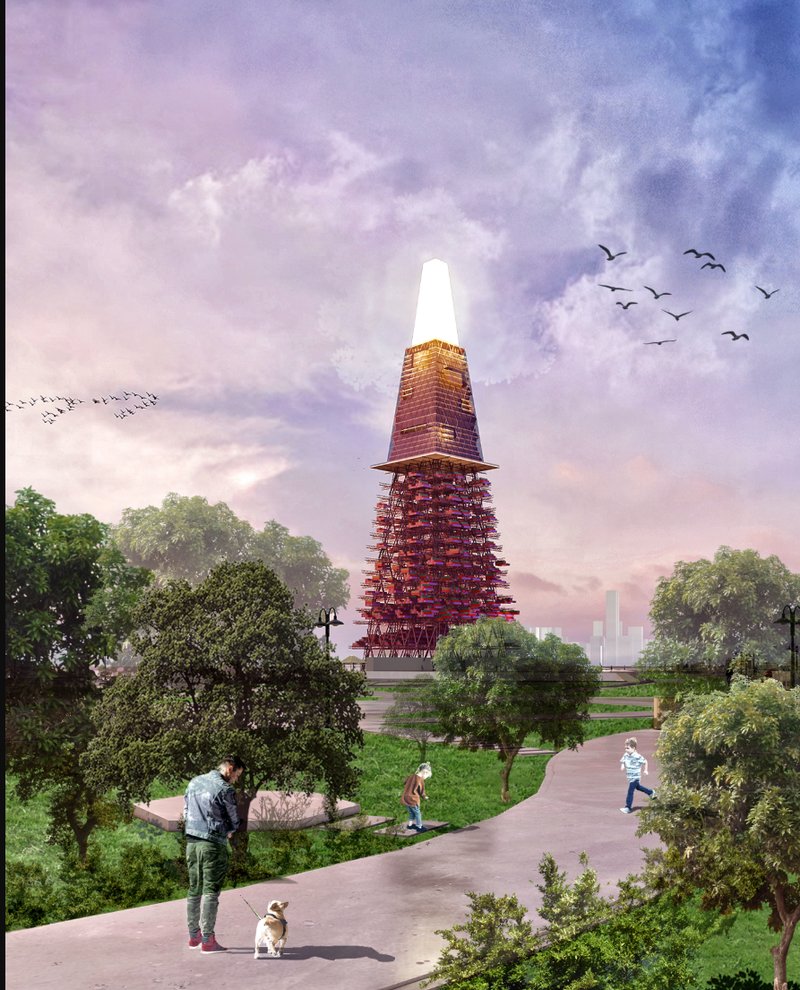
The Port Tower is a transformative concept in urban regeneration architecture that reimagines the Beirut container port as a vertical urban landmark and civic destination. Instead of existing as a linear industrial facility that divides the city from its seafront, the project turns the port into an integrative vertical spine where industrial operations, social infrastructure, and civic programming intersect. This vertical reorganization challenges traditional notions of maritime infrastructure by embedding public life into logistical operations. It proposes a new model for cities grappling with fragmented waterfronts and underutilized port zones—demonstrating how industrial redevelopment can be reconfigured for urban healing, sustainability, and inclusivity.
Introduction
Beirut, Lebanon’s capital and one of the oldest continuously inhabited cities in the world, is layered with centuries of cultural memory and political turbulence. Its strategic geographic position has historically made it a commercial and cultural bridge between East and West. Yet, over time, this advantage has also exposed the city to waves of internal conflict, inequality, and infrastructural decay. The consequences of civil wars, sectarian divisions, and urban sprawl have resulted in fractured public spaces and weakened communal ties. In such a context, architecture has the potential to address spatial injustice and civic alienation.
The Port Tower addresses this need by reclaiming a key urban asset—the port—as a shared space. In doing so, it acknowledges the importance of both memory and function. Beirut’s urban story is one of contrasts, and this project seeks to harmonize those contradictions: commerce and community, monumentality and modularity, functionality and openness. In an increasingly privatized and segregated city, Port Tower imagines a new typology of vertical public space.
Concept & Site Selection
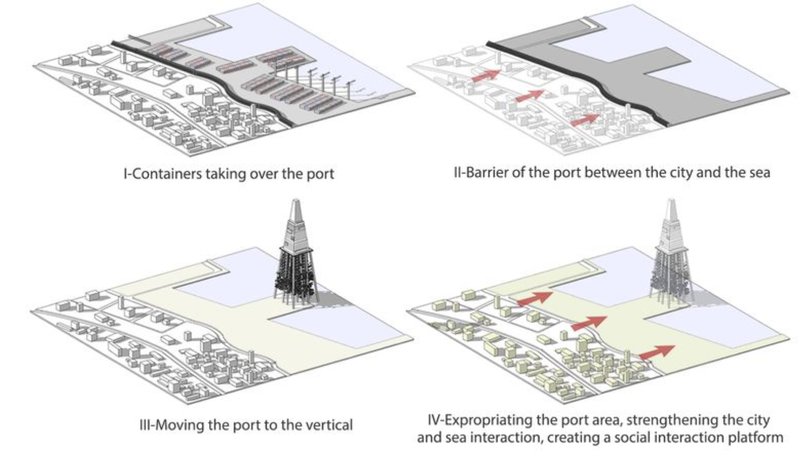
The concept for Port Tower emerged from the idea of reappropriating industrial land for urban regeneration. Beirut’s port, though vital to trade, exists as a sterile and inaccessible barrier along the coastline, isolating citizens from their waterfront and limiting cross-community interaction. Port Tower subverts this model by proposing a vertical container city—one where the infrastructural processes of port logistics are not hidden but celebrated, integrated with social, educational, and cultural functions.
This approach takes inspiration from historic lighthouses—symbols of navigation, security, and continuity in maritime cities. The design draws specifically from the ancient Lighthouse of Alexandria, reimagining its form as a dynamic vertical structure that combines symbolic presence with practical functionality. The site selection thus leverages the symbolic and geographic potency of the port while challenging the invisibility of industrial operations in civic life.
By translating port functions into vertical layers, the tower opens up physical and visual access to the sea while creating a multi-use platform where daily life unfolds across logistics, leisure, learning, and living.
Design Strategy
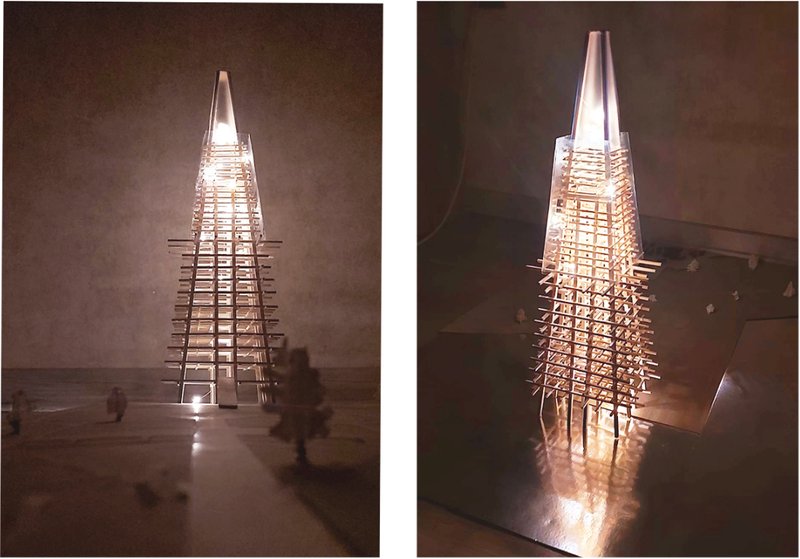
The tower is composed of four functional strata that embody the principles of adaptive reuse, human-centric design, and ecological integration. These interlocking zones create a cohesive and responsive ecosystem:
- Port (Ground to Lower Mid Levels):The logistical operations traditionally spread across vast ground planes are condensed into stacked compartments. Shipping containers are hoisted by cranes into designated vertical tracks. Within the structure, container storage, loading/unloading, inspection, and maintenance are managed by automated and semi-automated systems, including cranes, conveyors, and smart elevators. Visibility is paramount—glass cladding and open platforms allow citizens to observe the real-time functioning of the port. It turns infrastructure into performance and transparency into trust.
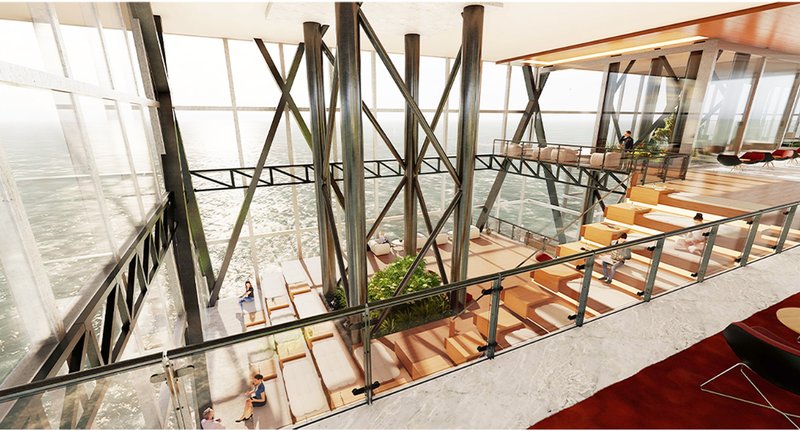
- Office (Mid Levels):These zones host port-related administrative functions, research institutes, logistics companies, and training centers. Open-plan co-working environments encourage collaboration between industry professionals and visiting scholars. Green terraces and biophilic interiors mitigate the industrial atmosphere, turning office floors into breathable urban habitats. Informal gathering spaces, meeting lounges, and shared kitchens support a vibrant professional community.
- Accommodation (Upper Mid Levels):Residences for temporary workers, scholars, and civic visitors are embedded in upper tiers, offering safe, quiet spaces with sea views and access to amenities like lounges, fitness zones, gardens, and communal dining areas. The vertical stacking minimizes noise and pollution interference from the port operations below while strengthening the building’s mixed-use character. These levels reflect a new type of worker housing—dignified, integrated, and adaptable.
- Lighthouse & Observatory (Topmost Levels):At the summit, the structure culminates in a glowing beacon visible from across the city—symbolic of guidance and unity. Below it lies an observatory and exhibition space that hosts public events, history archives, and temporary art installations. It offers panoramic views of the sea and the city, encouraging reflection on Beirut’s urban trajectory.
Sustainability Approach
Sustainability lies at the core of the Port Tower’s value system, not as a stylistic addition but as an embedded strategy across spatial, material, ecological, and social dimensions:
- Circular Material Use: Thousands of decommissioned shipping containers are inspected, retrofitted, and reused, reducing material waste while honoring the site’s existing assets.
- Minimal Land Footprint: The vertical format dramatically reduces surface area usage, leaving space for coastal parks, public plazas, and open-air event spaces.
- Energy & Water Efficiency: The building incorporates passive design elements including cross-ventilation, solar shading, rainwater harvesting, and greywater recycling. Photovoltaic surfaces on the tower’s upper shell contribute to energy self-sufficiency.
- Biodiversity & Green Infrastructure: The integration of plant-filled terraces and green buffers provides urban cooling, bird habitats, and air purification. Climbers and vertical gardens cascade down the façade.
- Social Ecology: By integrating industrial, residential, and civic domains, Port Tower reduces spatial segregation, promotes mixed-use vitality, and reinforces civic participation.
The Port Tower stands as a manifesto for urban regeneration architecture that merges industrial utility with social purpose. It is a bridge between past and future, between the individual and the collective, between the land and the sea. More than a project, it is a statement: that architecture can do more than shelter—it can unify.
In a city scarred by division, Port Tower becomes a site of convergence, offering visibility into the city’s logistical engine while offering citizens a place to gather, learn, reflect, and build new memories. It reimagines a dormant waterfront as a dynamic civic forum, proving that the vertical city can be participatory, ecological, and culturally resonant.
In its ambition and execution, Port Tower exemplifies how architecture, when informed by context and driven by inclusivity, can become a tool for urban revival and collective identity.




Popular Articles
Popular articles from the community

An Miên Lumière Cafe by xưởng xép, Ho Chi Minh City, Vietnam
An industrial-inspired café where layered steel and warm light create a dynamic, immersive environment shaped by reflection, depth, and perception.
A Contemporary Take on Iranian Residential Architecture
A modern interior design in Mashhad that reinterprets brick, light, and spatial flow to create a warm, contemporary residential architecture.
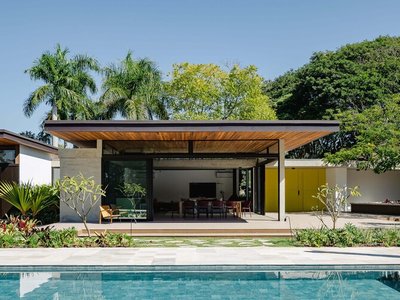
Flamboyant House by Juliana Camargo + Prumo Projetos
Modern Brazilian house integrating existing tree, pool, and volumes with glass, wood, and transitional spaces blending interior, exterior, and landscape seamlessly.
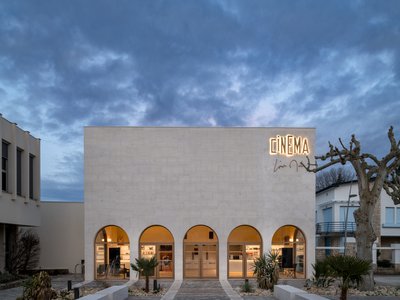
Louis Malle Cinema: A Limestone Cultural Landmark Revitalizing Community Life in Prayssac
Limestone cinema extension with public forecourt, blending heritage and modern design to create flexible cultural spaces and strengthen community interaction.


Similar Reads
You might also enjoy these articles

Top 15 Architecture Competitions to Enter in 2026
From student-friendly idea competitions to prestigious international awards, here are the best architecture competitions open for entries in 2026. Updated regularly.

DIY & Engineering in Computational Design : Enter the BeeGraphy Design Awards
Showcase Your Creativity with Computational Design and Open Source Projects
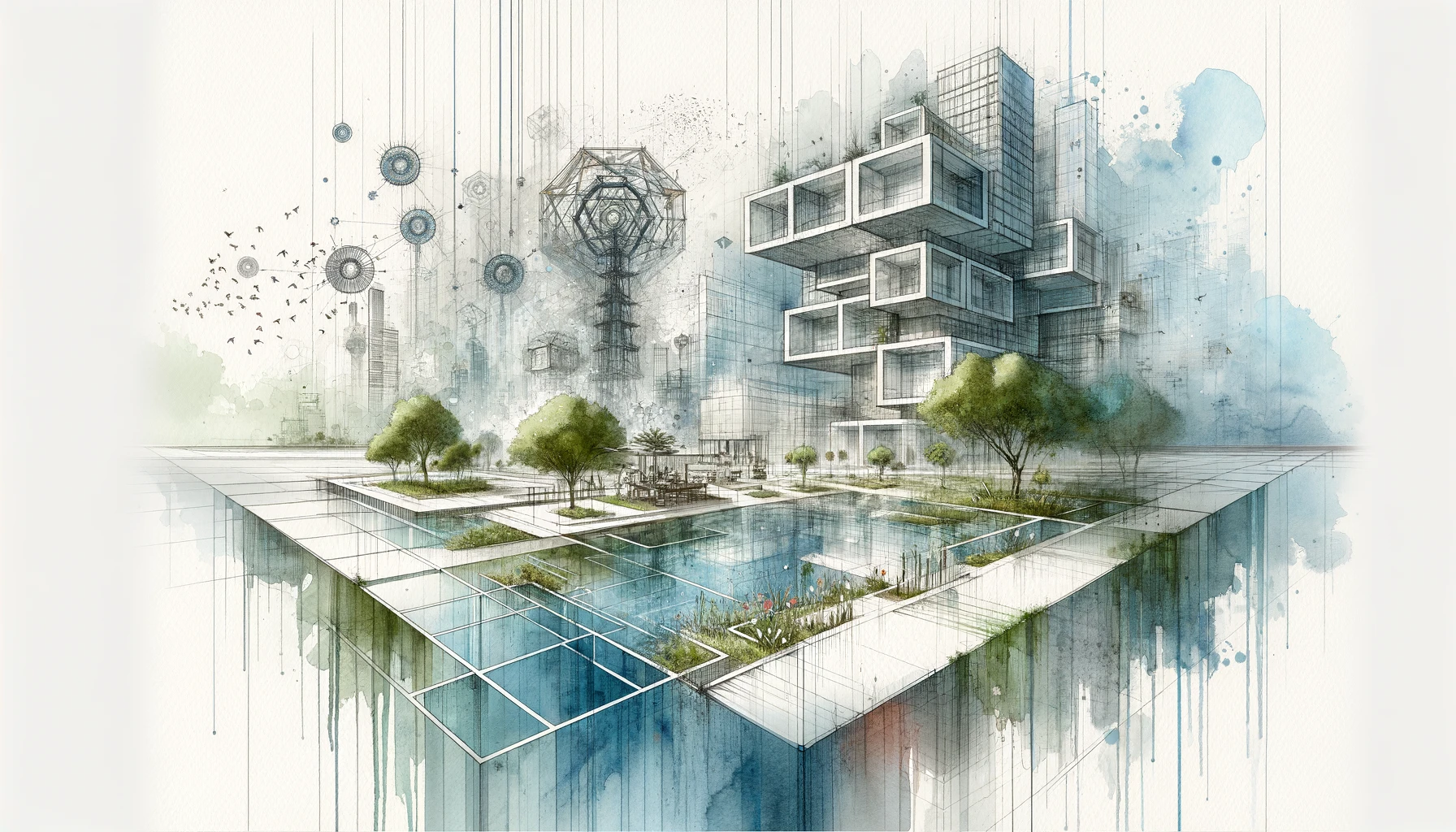
Innovative Design Solutions: Award-Winning Projects from Recent Architecture Competitions
Exploring award-winning architectural projects shaping the future of design, sustainability, and community.







Comments (0)
Please login or sign up to add comments
No comments yet. Be the first to comment!