
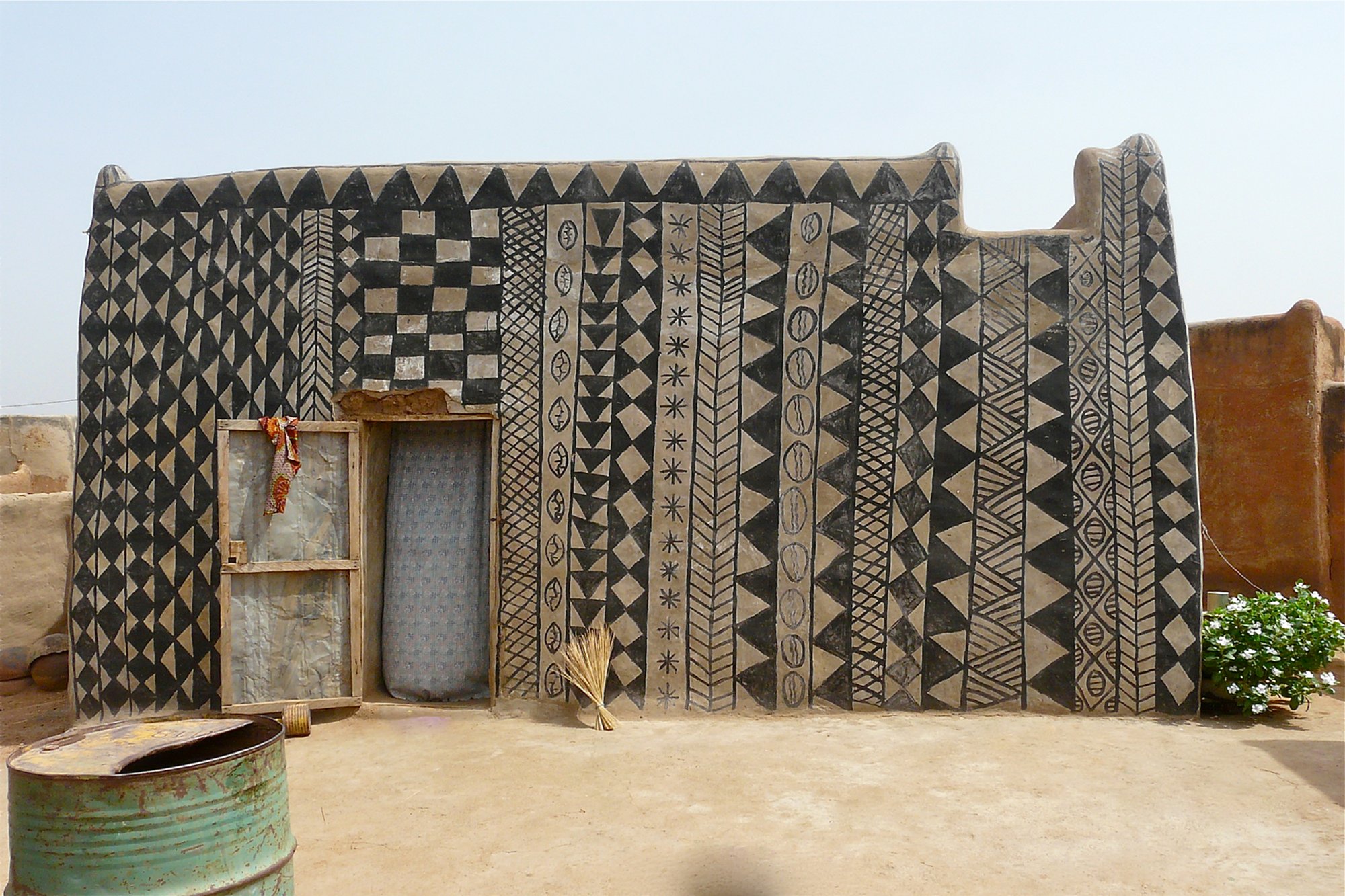
Preserving Cultural Heritage Through Community Artistry: Exploring the Painted Houses of Tiébélé
What Makes the Painted Houses of Tiébélé a Remarkable Example of Communal Collaboration?

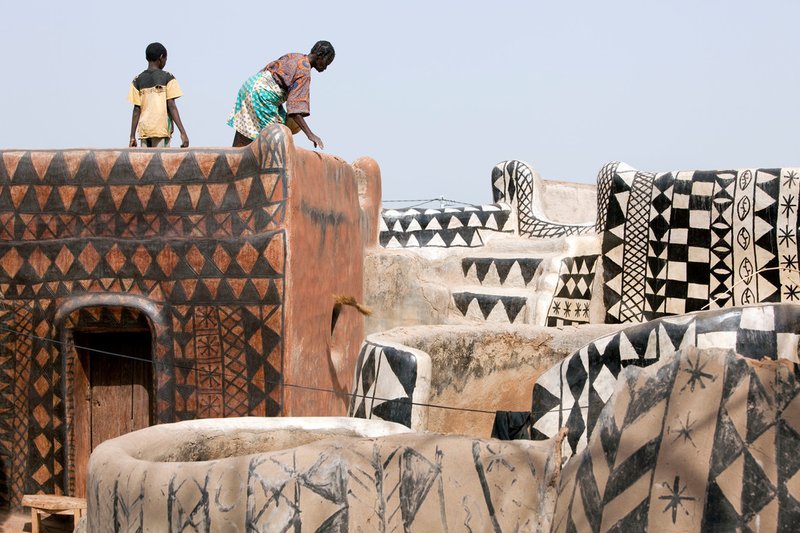
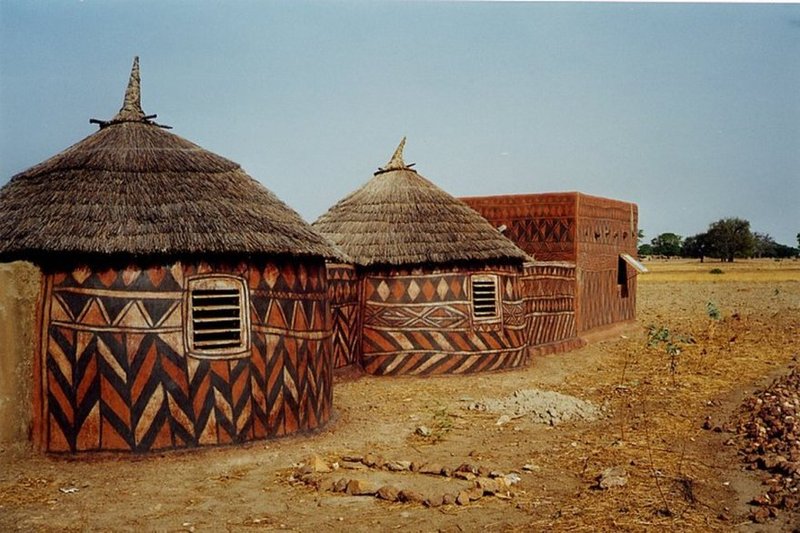
In the heart of Burkina Faso lies Tiébélé, a quaint village that serves as a living testament to the extraordinary power of communal collaboration. Nestled along the border of Ghana, this village stands as a vibrant showcase of circular and rectangular structures adorned with intricate, symbol-laden painted walls. Rooted in the cultural heritage of the Kassena tribe, Tiébélé's architectural marvels have become a model for the seamless integration of communal efforts, fostering a sense of unity and preserving the rich traditions of this ancient West African ethnic group.
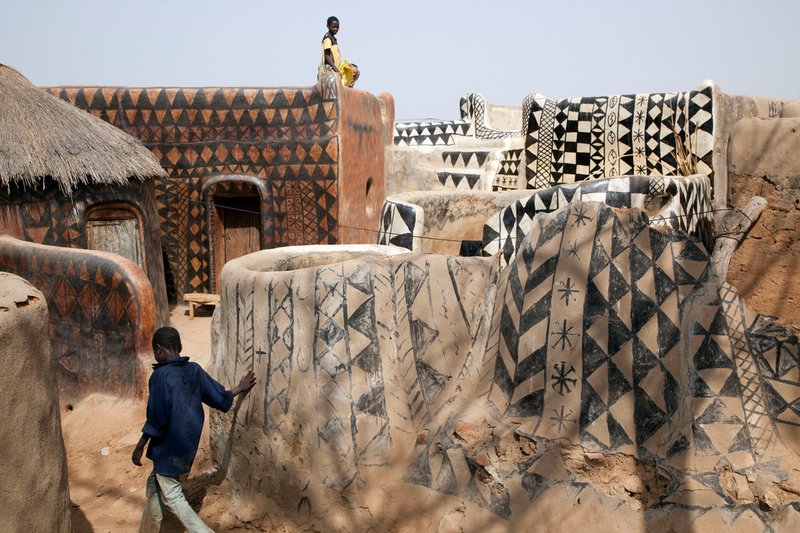
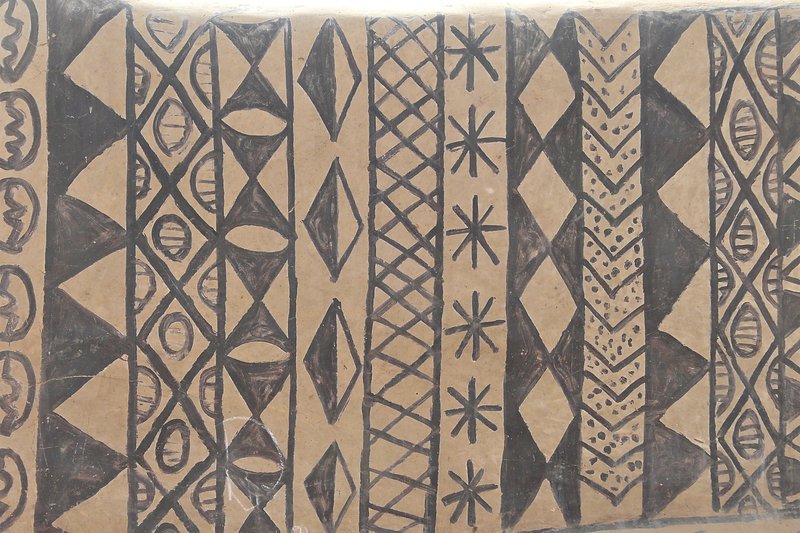
Dating back to the 15th century, Tiébélé's vernacular houses exude a distinct character, with their vibrant wall decorations acting as a canvas for geometric shapes and symbols steeped in local folklore. This unique architectural style serves as a medium for expressing the tribe's history and cultural heritage, while also transcending generations through a practice of communal transmission.
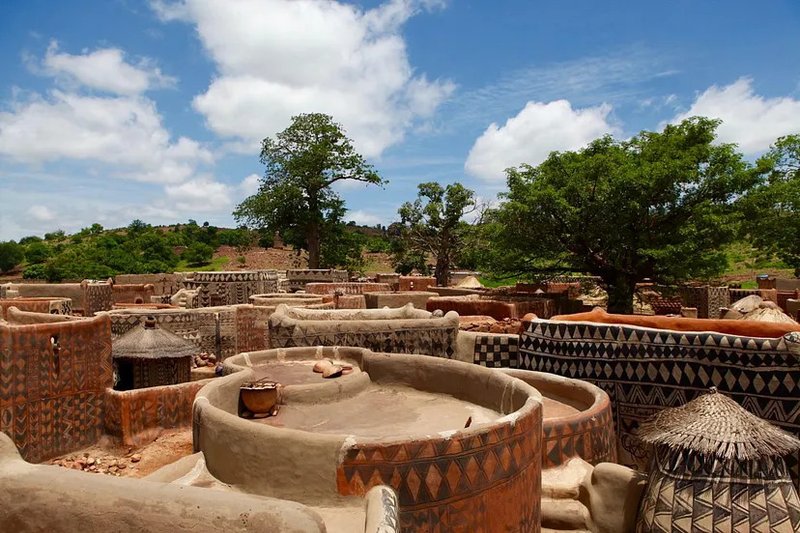
The craftsmanship displayed in Kassena society finds its roots in centuries-old traditions, reflecting customary duties, hierarchical positions, and indigenous customs. The royal court, situated at the village's core, showcases the epitome of decorative artistry. As new families emerge, Tiébélé's fractal structure expands outward from the court, with each household bearing its own variations of the captivating wall decorations. The village, comprising 54 native families tracing their lineage back to Loumbila near Ouagadougou, remains a testament to the vibrant history, traditions, and architectural craft of the Kassena people.
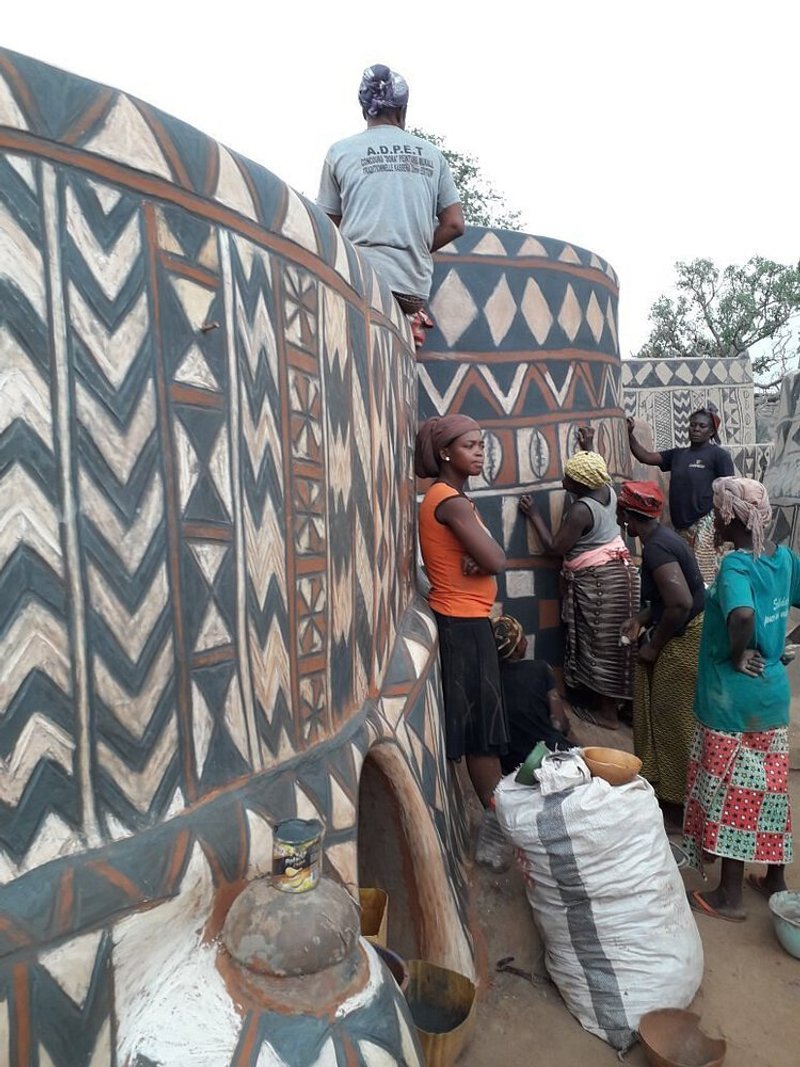
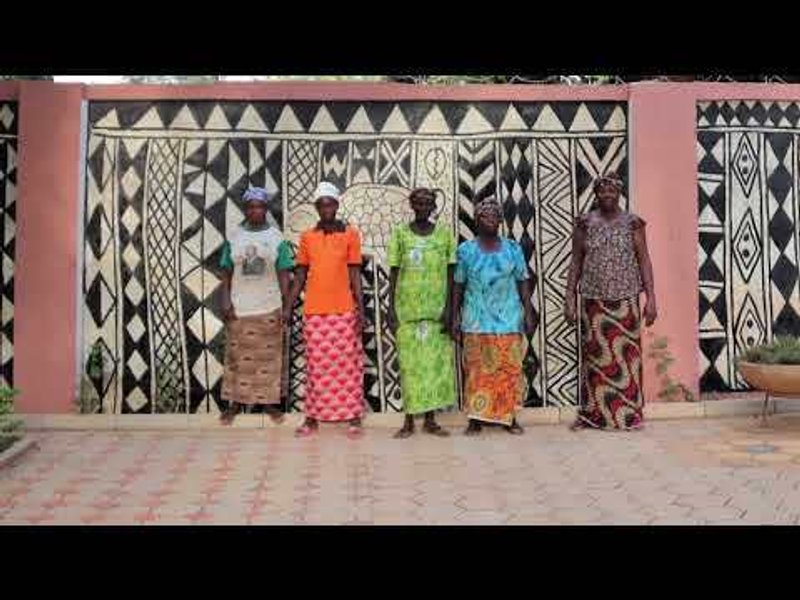
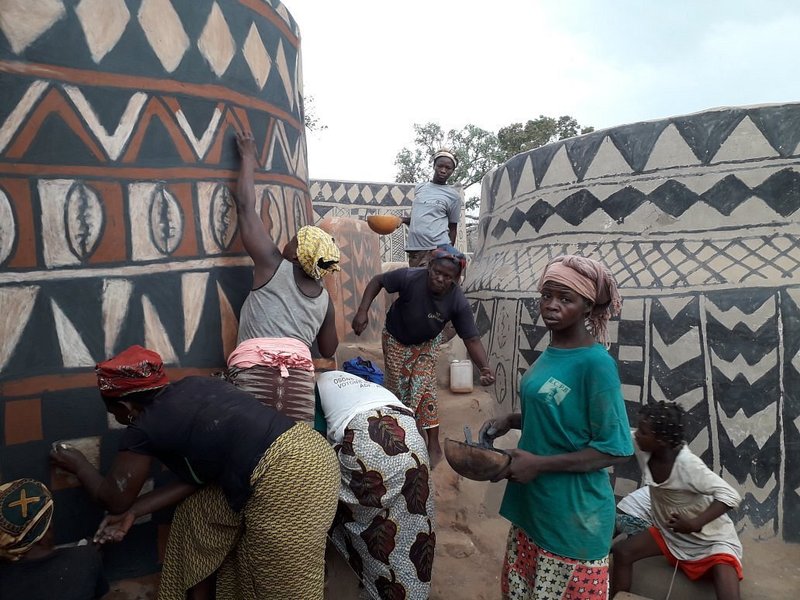
Constructed entirely from local materials such as earth, wood, straw, and cow dung, Tiébélé's houses, known as sukhala, boast walls that are 30cm thick. This architectural feature not only ensures a favourable interior climate for occupants but also serves as a defence mechanism against external threats. The building process follows a communal practice deeply ingrained in Kassena society. Men laboriously construct the houses during the dry season, while the women take charge of the intricate decorations just before the arrival of the rainy season. These decorations not only protect the mud walls but have also evolved into a remarkable art form, utilizing motifs and symbols to convey the customs, religion, and beliefs of the community.
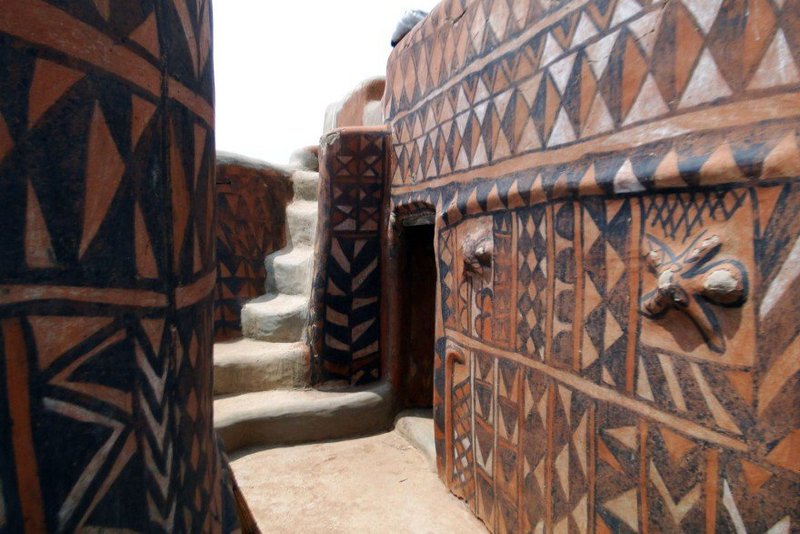
A captivating aspect of Tiébélé's architectural tradition lies in the communal construction method. When a house is due for decoration, the entire community is summoned, with the appeal accompanied by offerings of food and drinks. Led by the eldest woman in the village, the women masterfully carry out the intricate tasks, employing traditional gestures and coordination passed down through generations. The process of embellishing the mud walls is highly intricate, requiring meticulous preparation, local colour application, and surface treatments using traditional tools like brooms, pebbles, and feathers. The involvement of all women not only ensures efficiency but also fosters intergenerational gatherings, serving as a pivotal point for the transmission of Kassena culture. The women's expertise in century-old practices enables them to create a myriad of motifs, each laden with unique meanings.
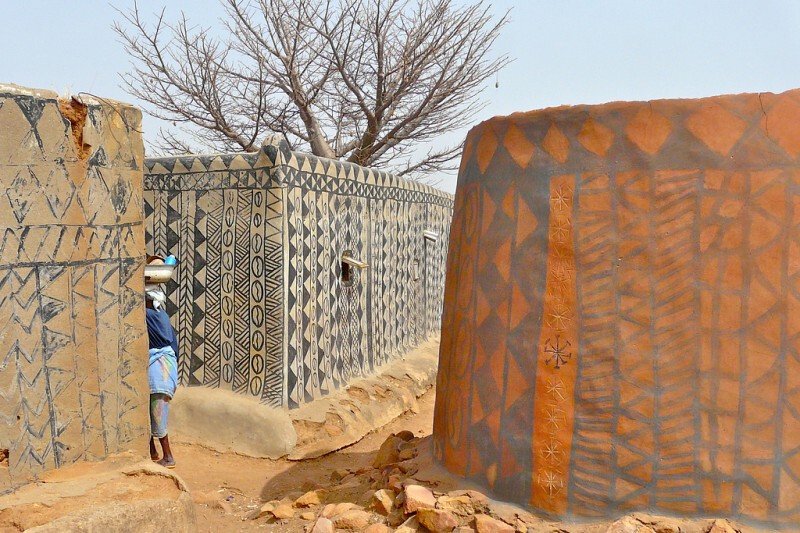
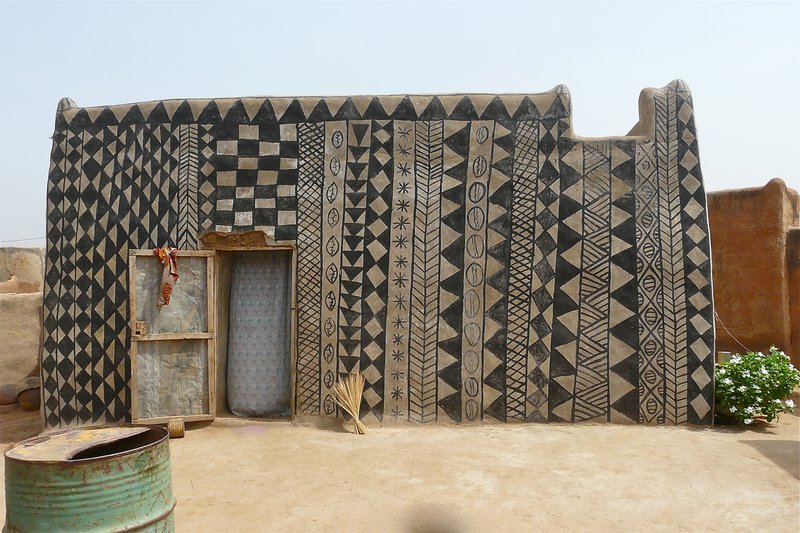
The decoration techniques employed in Kassena architecture encompass three methods: freehand painting, engravings, and reliefs. Freehand painting involves directly drawing signs onto the surface using brushes, while engravings are created by making incisions on fresh plaster with a specially shaped roller. Reliefs, on the other hand, project patterns out of the earth's walls, creating a visually striking effect. Once the decorations are complete, colours are added using natural elements such as laterite for red, Kaolin clay for white, and graphite for black. Each colour holds profound symbolism within Kassena culture: red signifies courage, white represents honesty and purity, and black embodies the night and the




Popular Articles
Popular articles from the community

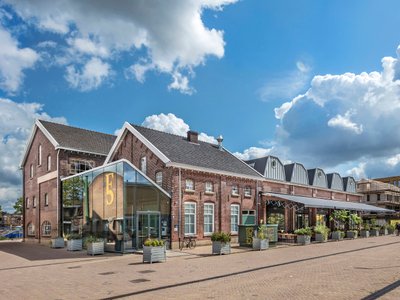
Fifth NRE Jazz Club – De Bever Architecten: Eindhoven’s Revitalized Cultural Hub
Historic gas factory transformed into Fifth NRE Jazz Club blending modern sustainability, jazz culture, dining, and heritage architecture seamlessly.
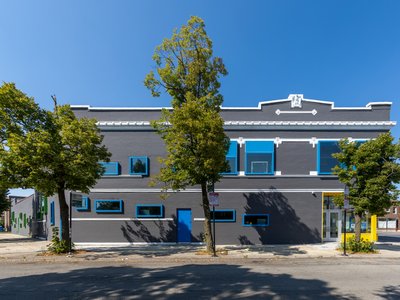
Gads Hill Early Learning Center by JGMA: Adaptive Reuse Shaping Community-Focused Educational Architecture
Adaptive reuse transforms fragmented structure into vibrant early learning center with playful façade, natural light, and community-focused sustainable design.
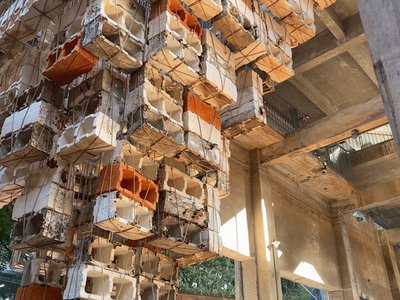
Inverted Architecture Installation by Studio Link-Arc: Exploring the Intersection of Architecture and Living Organisms
Inverted Architecture Installation by Studio Link-Arc blends mycelium, sustainability, inverted design, ecological cycles, and urban adaptive architecture in Shenzhen.

On the Brooks House by Monsoon Collective – A Contemporary Kerala Home Rooted in Tradition
Kerala home blending tradition and modernity with water-inspired design, brick architecture, courtyard planning, and sustainable rainwater harvesting strategies.


Similar Reads
You might also enjoy these articles


The Ken Roberts Memorial Delineation Competition (Krob)
As the most senior architectural drawing competition currently in operation anywhere in the world, it draws hundreds of entries each year, awarding the very best submissions in a series of medium-based categories.
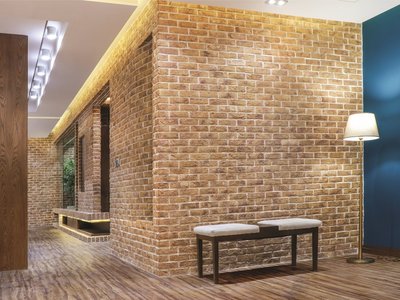
A Contemporary Take on Iranian Residential Architecture
A modern interior design in Mashhad that reinterprets brick, light, and spatial flow to create a warm, contemporary residential architecture.
Franche-Comté Advanced School of Engineering by Dominique Coulon & associés, Besançon
A flexible engineering school immersed in woodland, combining concrete minimalism, adaptable spaces, and natural light to support evolving educational environments.


Documentation Work on Buddhist Wooden Temple
Architectural syncretism and cultural hybridity: A comparative study of the Buddhist temples in Chattogram Hill tracks


Explore Architecture Competitions
Discover active competitions in this discipline




The International Standard for Design Portfolios


The Global Benchmark for Architecture Dissertation Awards


The Global Benchmark for Graduation Excellence


Challenge to design an urban locus of culture and heritage
Comments (0)
Please login or sign up to add comments
No comments yet. Be the first to comment!