
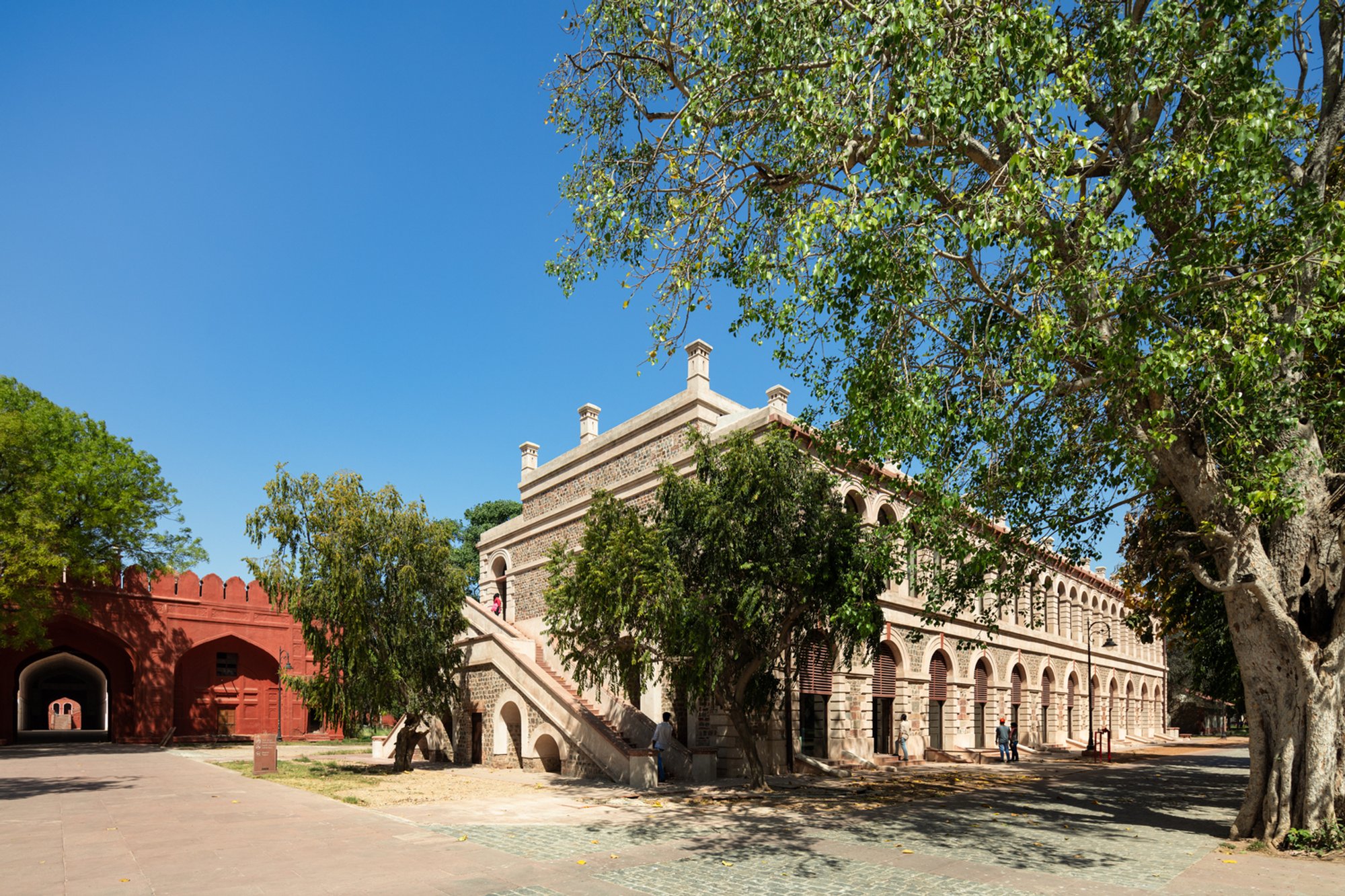
Red Fort Center by Design Factory India: Breathing New Life into a Heritage Landmark
Red Fort Center transforms a colonial barrack into an immersive visitor hub, blending heritage restoration with interactive, contemporary cultural storytelling.

A Gateway to Rediscovery: Reinterpreting the Red Fort Legacy
Nestled within the UNESCO World Heritage Site of the Red Fort in New Delhi, the Red Fort Center by Design Factory India stands as a monumental effort to bridge the past with the present. Commissioned by Dalmia Bharat under the government's Adopt a Heritage initiative, this project reimagines a colonial-era military barrack into a contemporary visitor center, carefully interwoven with layers of Mughal and British architectural history.
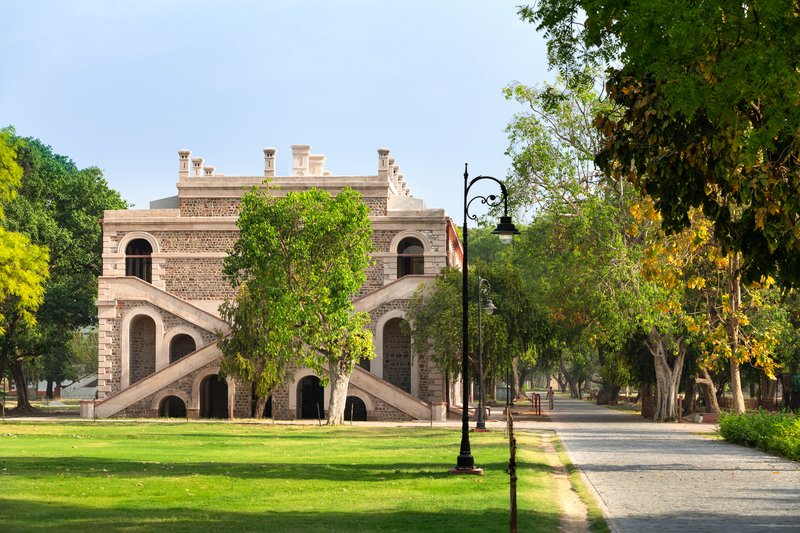
Built by the British after the 1857 First War of Independence—an act that involved demolishing Mughal-era structures—the barracks had remained underutilized since India's independence. Design Factory India embraced the challenge of adaptive reuse and architectural restoration, unveiling intricately carved stones hidden beneath decaying plaster. These rediscovered Mughal fragments now serve as the historical bedrock upon which the new design narrative is constructed.
Contextual Conservation: Where Design Meets Storytelling
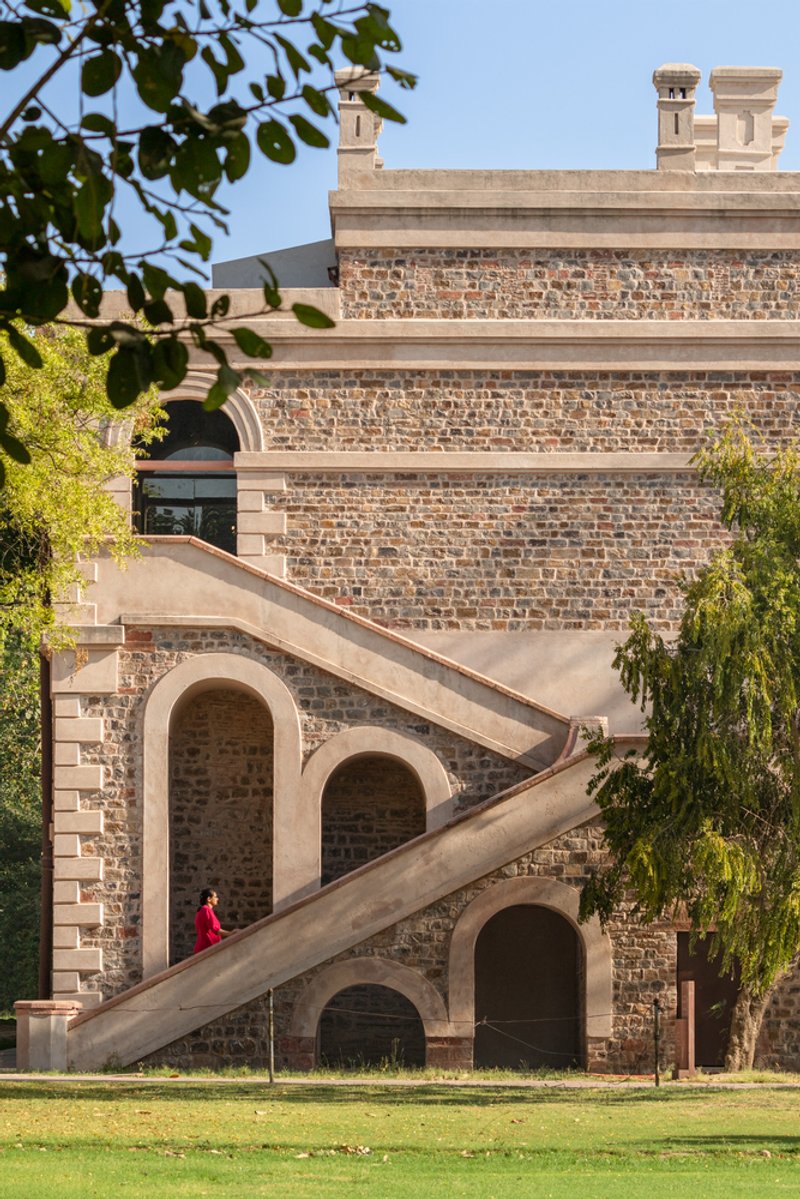
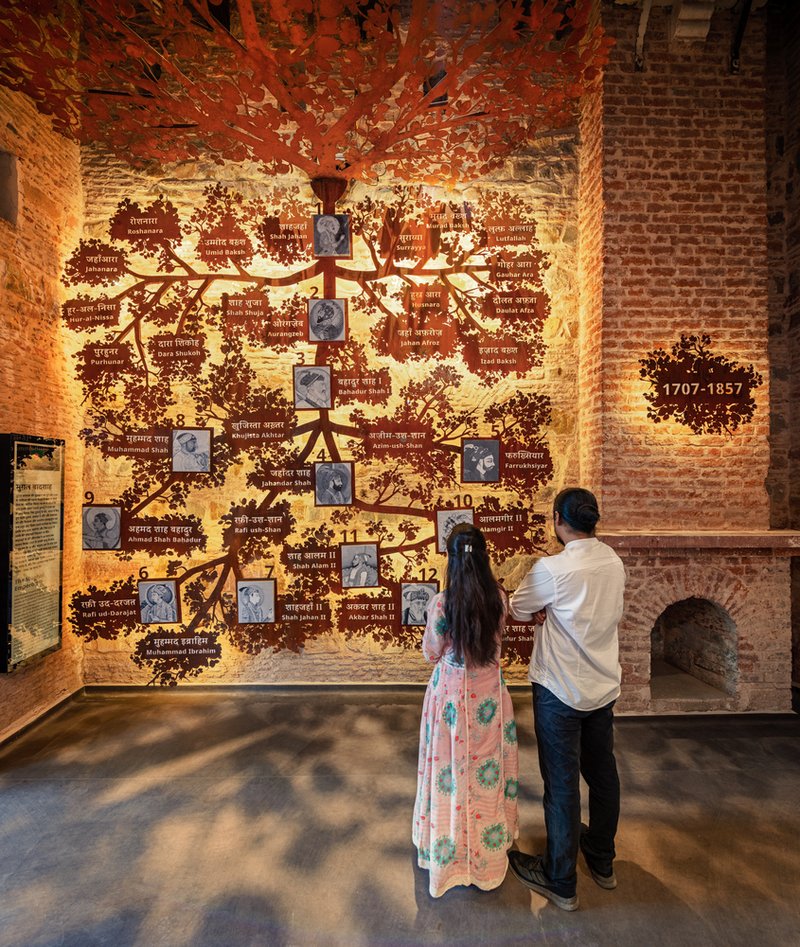
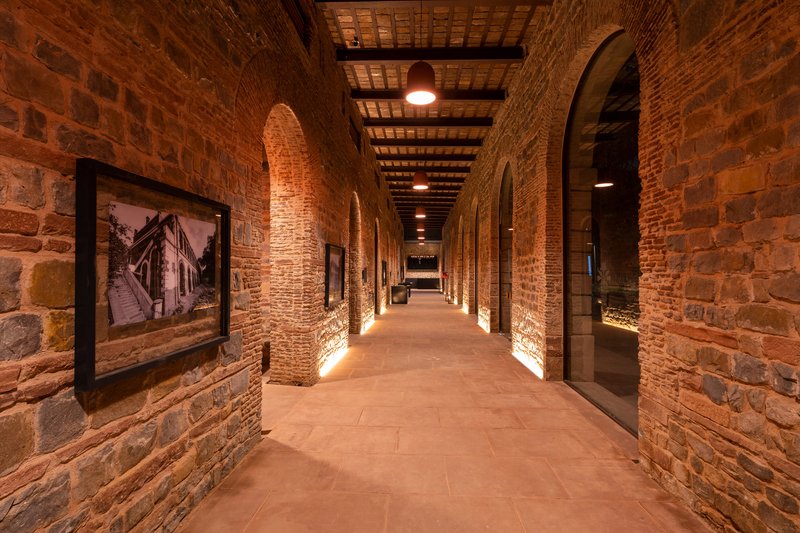
The design strategy honors the multi-layered heritage of the Red Fort without resorting to pastiche or superficial grandeur. Instead, it embraces material authenticity, understated intervention, and experiential storytelling. The use of custom-designed bricks, Red Agra sandstone, and lime-surkhi plaster evokes the textures of the fort’s original construction, seamlessly blending new with old.
Every architectural decision—from scenography to lighting and furniture design—is meticulously crafted to preserve spatial memory while creating an engaging environment for today’s visitors. The palette is warm yet muted, with grey-toned furnishings and red oxide accents that highlight the natural beauty of historic brick and stone. Glazed corridors filter daylight like crystalline shafts, enhancing the immersive spatial experience.
Crafting with Local Wisdom: Materials and Techniques Rooted in Tradition
At the heart of this restoration project lies a strong emphasis on local craftsmanship and sustainable practices. The customized bricks, 1.5 times the size of standard ones, were handmade in electric kilns using materials sourced from Meerut and Moradabad. Red Agra sandstone from Dholpur—the same source used in the original fort—forms the flooring, adding continuity in texture and color.
A conscious mix of Badarpur sand, surkhi, and seasoned hardwoods like teak and sagwan contribute to both visual harmony and longevity. The reinterpretation of pendant lighting in the corridors juxtaposes modern forms with heritage context, symbolizing the dialogue between past and present.
Designed for Discovery: A Multifunctional Cultural Experience
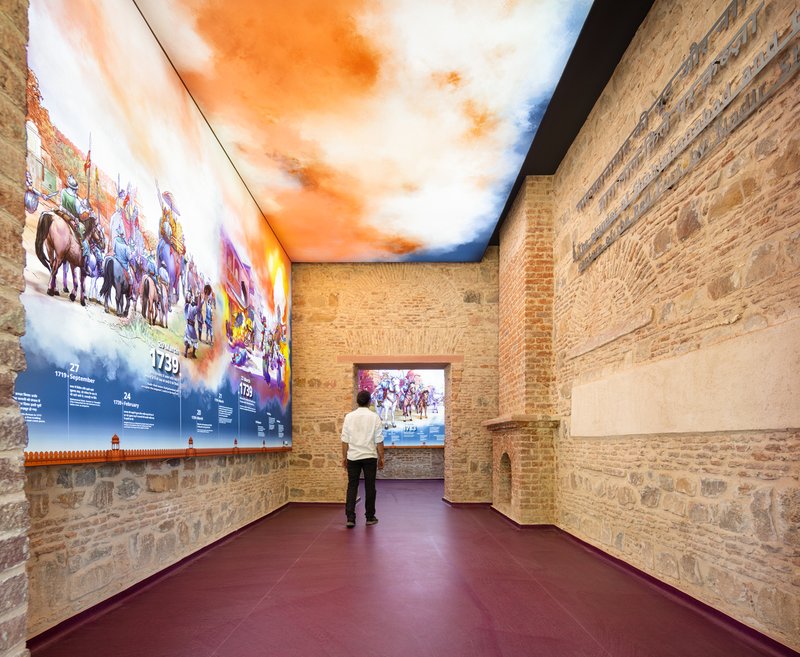
Divided into two main levels—the Red Fort Center on the ground floor and Afsana: The Red Fort Story on the first floor—the space offers a blend of recreational, educational, and immersive experiences. The ground level features Delhi’s only cafeteria within the Red Fort, retail outlets, and a 360-degree projection theater that introduces visitors to the site's cultural depth.
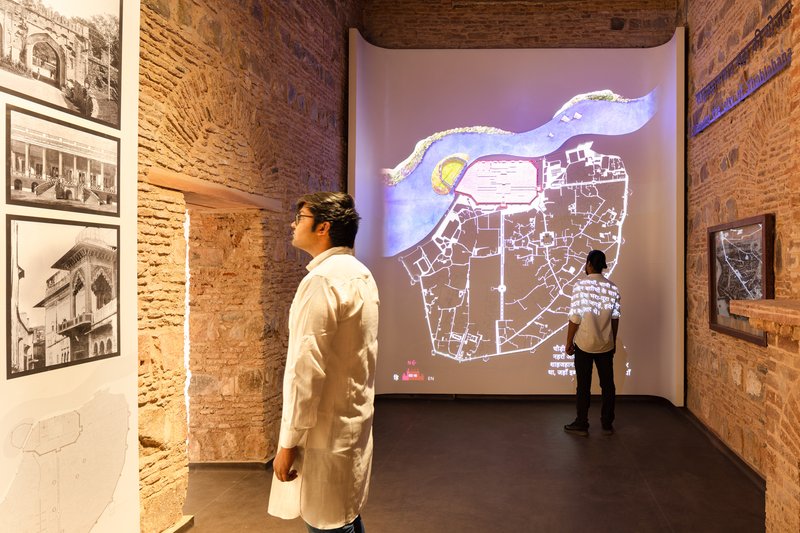
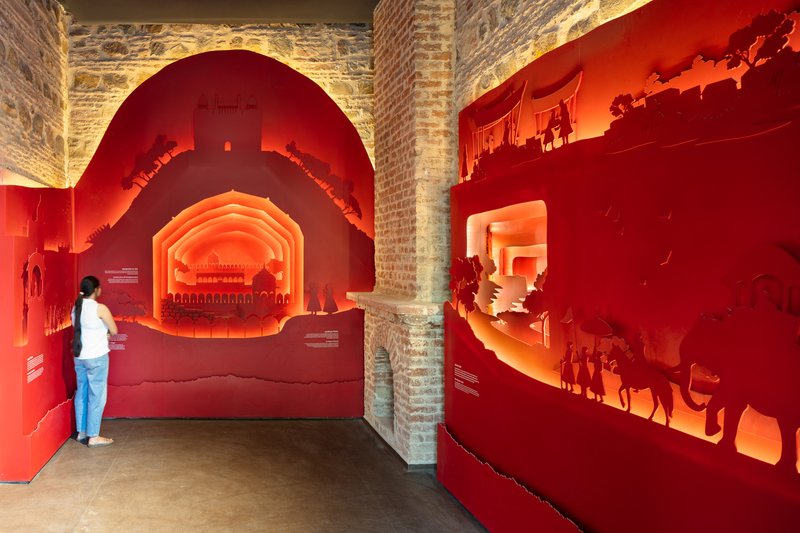
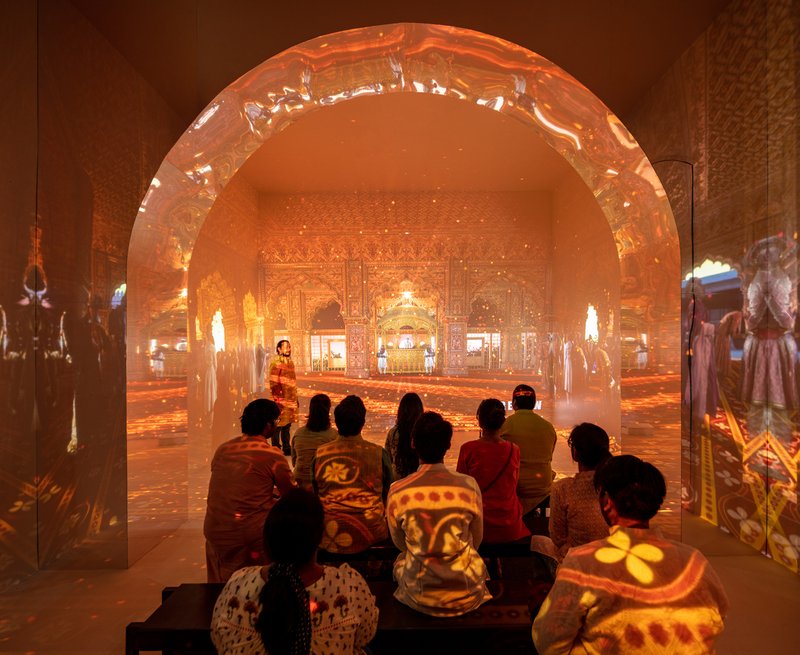
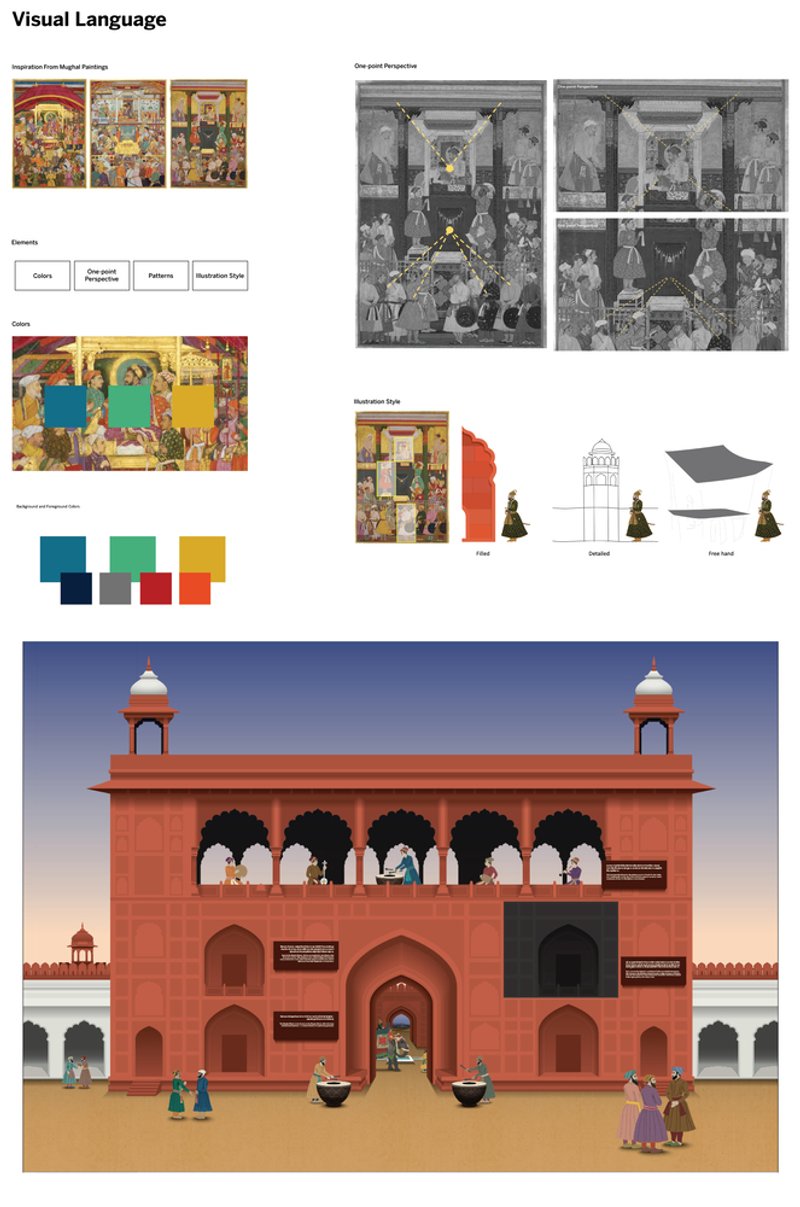
"Afsana" on the first floor invites guests on a digital journey through time, from the planning of Shahjahanabad to the independence movement. Using augmented reality, holography, projection mapping, and scale models, this level vividly narrates the evolution of the fort and its enduring significance as a symbol of India's resilience and sovereignty.
Celebrating Indian Identity Through Immersive Installations
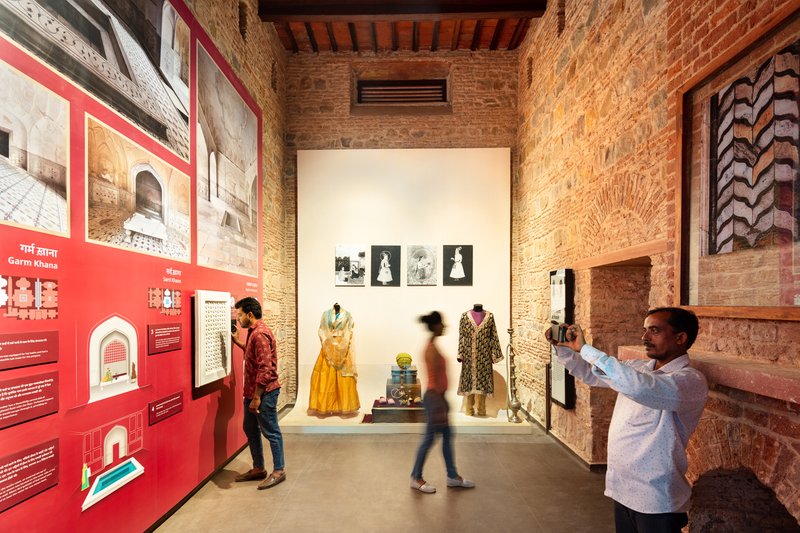
One of the most striking features is the Infinity Room, designed with mirrored walls and etched Ashok Chakras that create a kaleidoscopic space of reflection and identity. Diorama installations, interactive glass exhibits, and large-scale magnetic boards allow for tactile and visual engagement, especially for younger audiences.
Socially conscious design is also embedded in the project. Visitors are guided in small groups to maintain a respectful distance from historical artifacts, while floor markings and guided pathways promote social distancing and a collective sense of awareness. A live-band installation with the pledge "I pledge to clean India and build a New India" reinforces the center’s role as a space for civic reflection.
A Model for Heritage-Led Urban Renewal
More than just a visitor facility, the Red Fort Center is an architectural exemplar of how conservation, design, and technology can intersect to revitalize cultural heritage. It accommodates up to 12,000 visitors per day, offering an inclusive, educational, and sensorial journey through one of India's most iconic monuments.
By transforming a derelict colonial relic into a vibrant cultural anchor, Design Factory India has not only preserved the tangible layers of history but also infused the site with new life, making it relevant for contemporary audiences while staying deeply rooted in its original spirit.
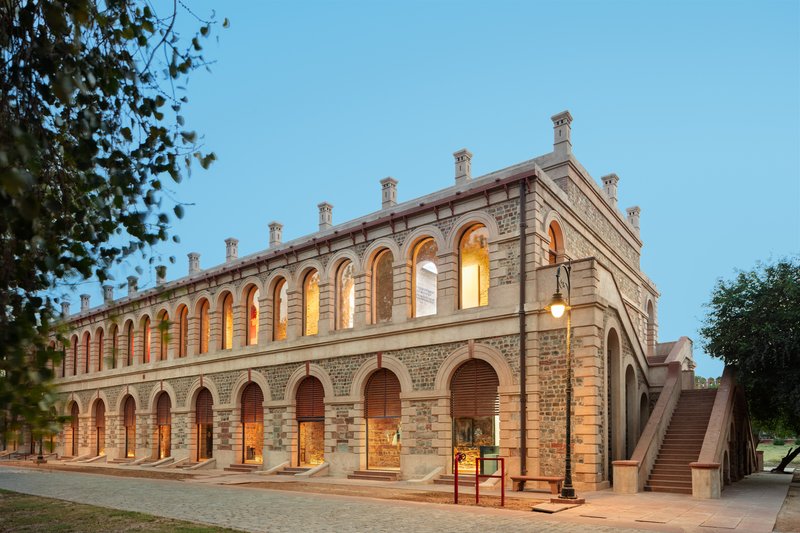
All Photographs are works of Andre J. Fanthome




Popular Articles
Popular articles from the community

Atelier Macri Concept Store Interior Design by CASE-REAL
Atelier Macri store features a "ko" counter, walnut wood details, cork displays, blending retail, gallery, and seamless customer experiences.
Flamboyant House by Juliana Camargo + Prumo Projetos
Modern Brazilian house integrating existing tree, pool, and volumes with glass, wood, and transitional spaces blending interior, exterior, and landscape seamlessly.
A Contemporary Take on Iranian Residential Architecture
A modern interior design in Mashhad that reinterprets brick, light, and spatial flow to create a warm, contemporary residential architecture.
Louis Malle Cinema: A Limestone Cultural Landmark Revitalizing Community Life in Prayssac
Limestone cinema extension with public forecourt, blending heritage and modern design to create flexible cultural spaces and strengthen community interaction.

Similar Reads
You might also enjoy these articles


The Ken Roberts Memorial Delineation Competition (Krob)
As the most senior architectural drawing competition currently in operation anywhere in the world, it draws hundreds of entries each year, awarding the very best submissions in a series of medium-based categories.


Waterfront Redevelopment and Urban Revitalization in Mumbai: Forging a New Dawn for Darukhana
A transformative waterfront redevelopment project reimagining Darukhana’s shipbreaking heritage into an inclusive urban future.

OUT-OF-MAP: A Call for Postcards on Feminist Narratives of Public Space
Rhizoma Design and Research Lab invites artists, designers, architects, researchers, and students to reflect on how feminist perspectives can reshape public space. Selected works will be exhibited in Barcelona, October 2026. Submissions open until 15 April 2026.

Documentation Work on Buddhist Wooden Temple
Architectural syncretism and cultural hybridity: A comparative study of the Buddhist temples in Chattogram Hill tracks
Explore Architecture Competitions
Discover active competitions in this discipline




The International Standard for Design Portfolios


The Global Benchmark for Architecture Dissertation Awards


The Global Benchmark for Graduation Excellence


Challenge to design an urban locus of culture and heritage
Comments (0)
Please login or sign up to add comments
No comments yet. Be the first to comment!