
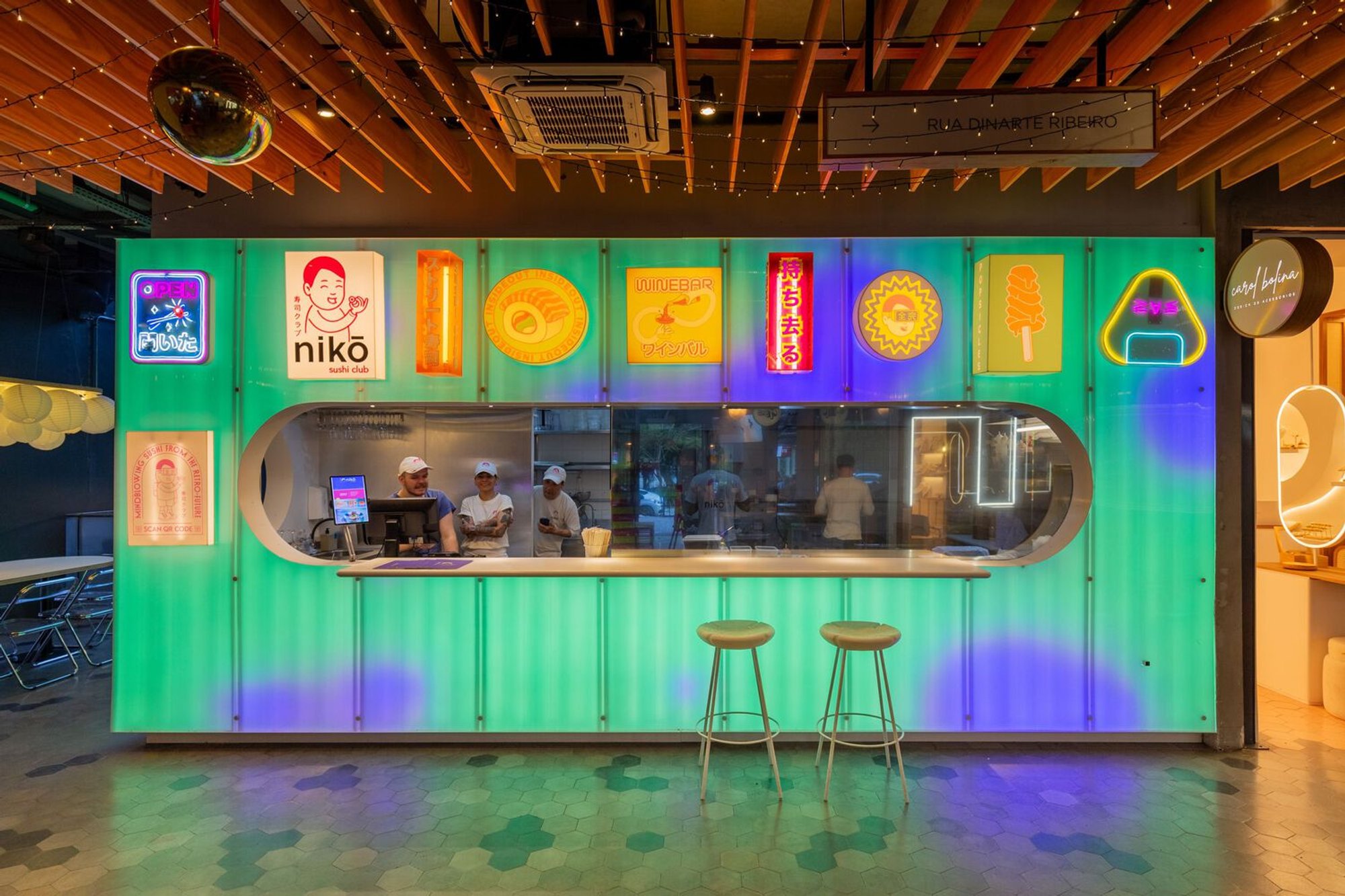
Restaurant Niko: A Fusion of Minimalist and "Over" Design by URBANODE Arquitetura
Restaurant Niko blends minimalist Japanese architecture with dynamic urban aesthetics for a vibrant and immersive dining experience.

Restaurant Niko, located in Porto Alegre, Brazil, exemplifies the harmonious fusion of tradition and futurism within its architectural design. Designed by URBANODE Arquitetura, this compact 22 m² Japanese restaurant balances contemporary Japanese minimalism with the bustling and visually stimulating aesthetic of street culture. Through innovative use of materials, strategic lighting, and a thoughtful spatial layout, the architecture successfully encapsulates the restaurant’s dynamic identity. This article explores how the design translates the interplay of tradition, modernity, and street-inspired vibrancy into a cohesive dining experience.
The Vision Behind Restaurant Niko’s Design
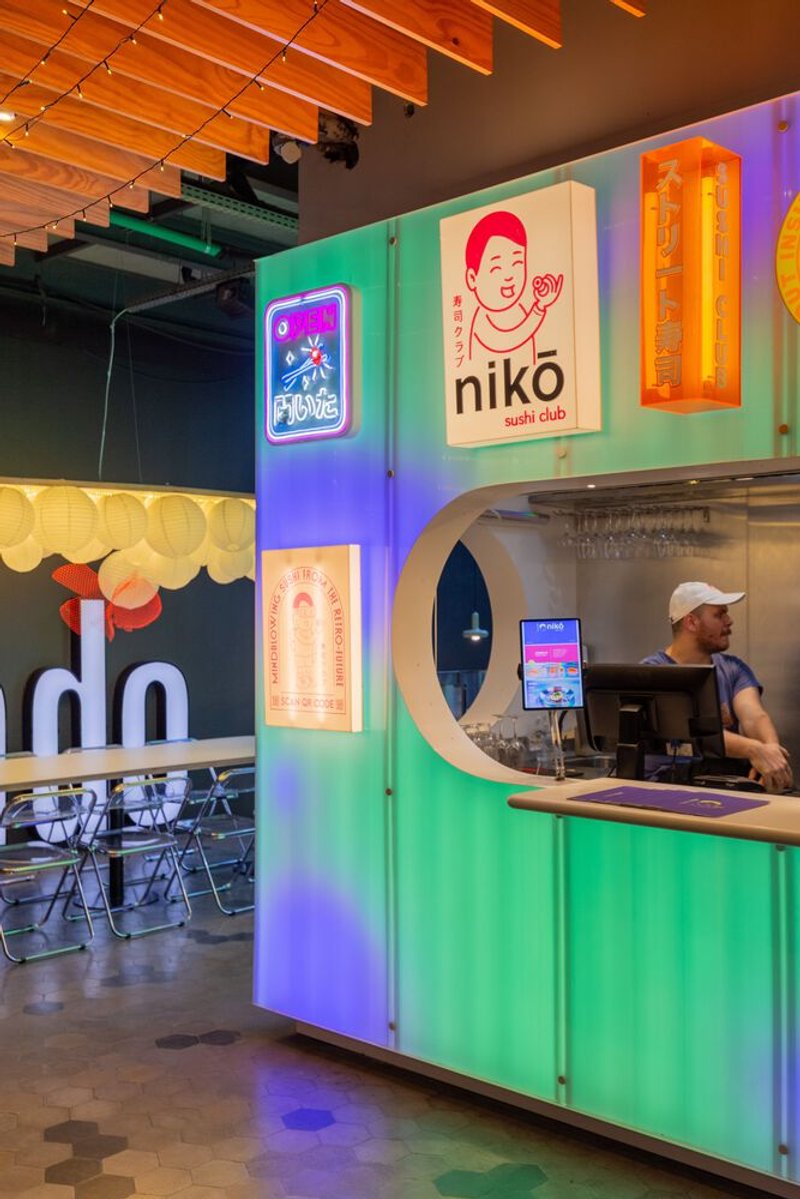
Restaurant Niko's design concept reflects the juxtaposition of contrasting elements: the minimalism characteristic of Japanese contemporary design and the "over" aesthetic of urban street culture. The architects at URBANODE sought to materialize this vision by creating a space that simultaneously respects simplicity and embraces visual complexity. The result is a restaurant that feels both serene and energetic, bridging traditional values with modern technological advances.
Facade Design: A Striking First Impression
The facade of Restaurant Niko serves as the primary visual anchor for the restaurant. It is constructed using translucent polycarbonate sheets, which create a unique interplay of light and texture. Behind the polycarbonate, strategically placed LED lights provide a dynamic visual experience, with app-controlled programming allowing for customizable lighting effects.
Superimposed on the facade are small luminous boxes, adding a layer of visual complexity to the minimalist polycarbonate backdrop. This deliberate "clutter" challenges traditional minimalism, reflecting the vibrant and chaotic nature of urban streets.
Spatial Layout: Maximizing Functionality in a Small Space
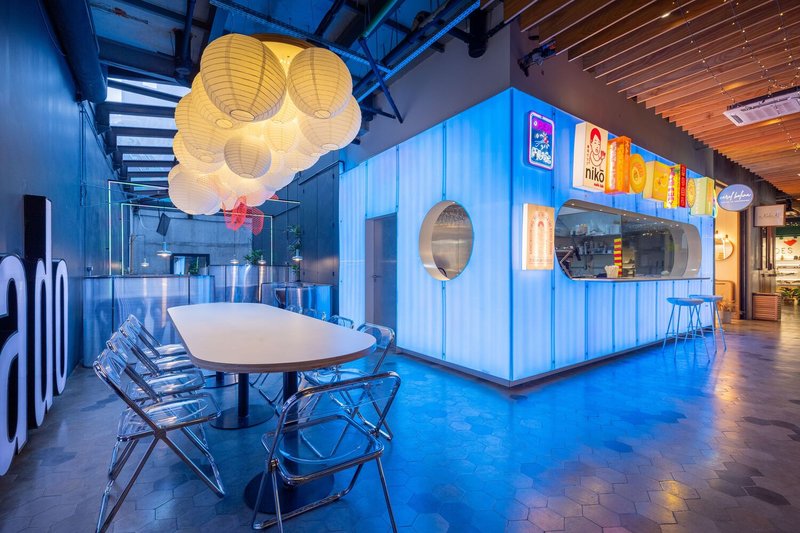
Despite its modest size, the 22 m² restaurant is designed for efficiency and functionality. The main facade features an elongated horizontal opening that reveals much of the restaurant’s interior. This design choice creates a sense of transparency and accessibility, enticing passersby to explore the space.
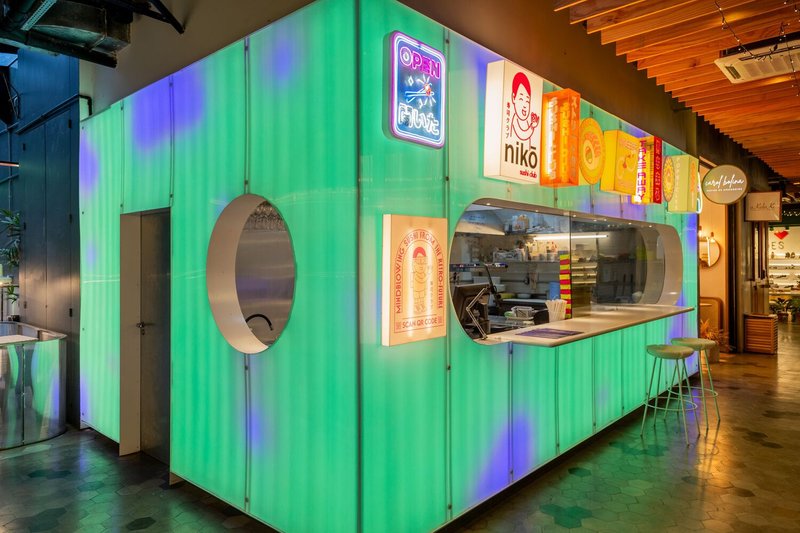
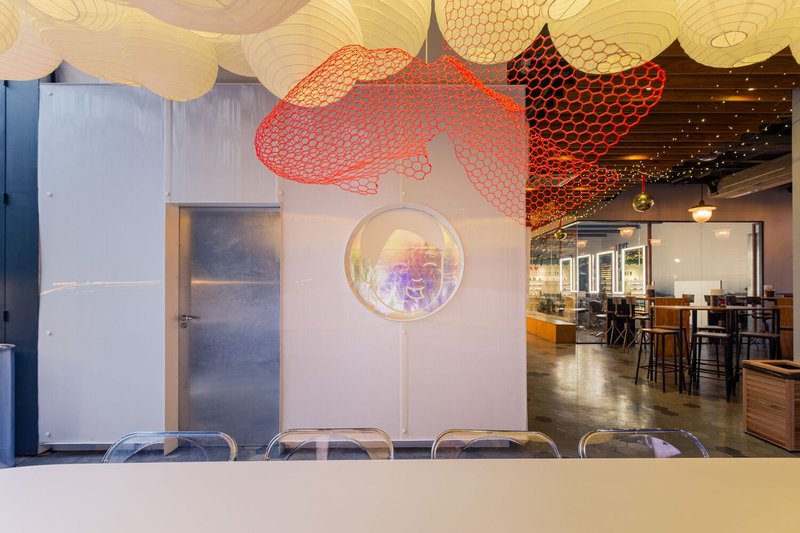
The left side of the interior houses the client service area, while the right side, separated by filmed glass, contains the kitchen. The use of a circular opening on the secondary facade complements the main facade’s design, creating a dialogue between the two sides and enhancing spatial continuity.
Materiality: A Modern Interpretation of Japanese Minimalism
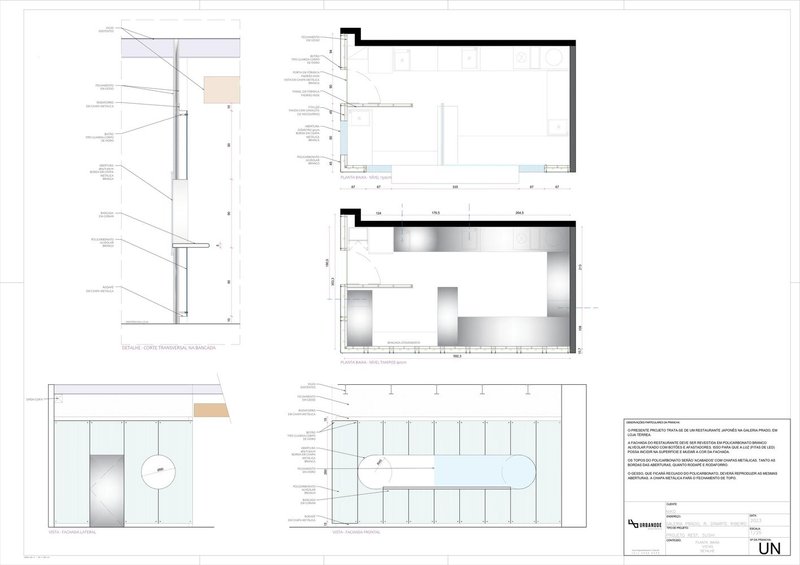
The choice of materials plays a critical role in achieving the desired balance between minimalism and street-inspired design. The facade's polycarbonate sheets are supported by a combination of MDF closures and metallic elements, providing both structural integrity and visual appeal. The interior walls feature a drywall structure clad in tiles for practicality in the kitchen area.
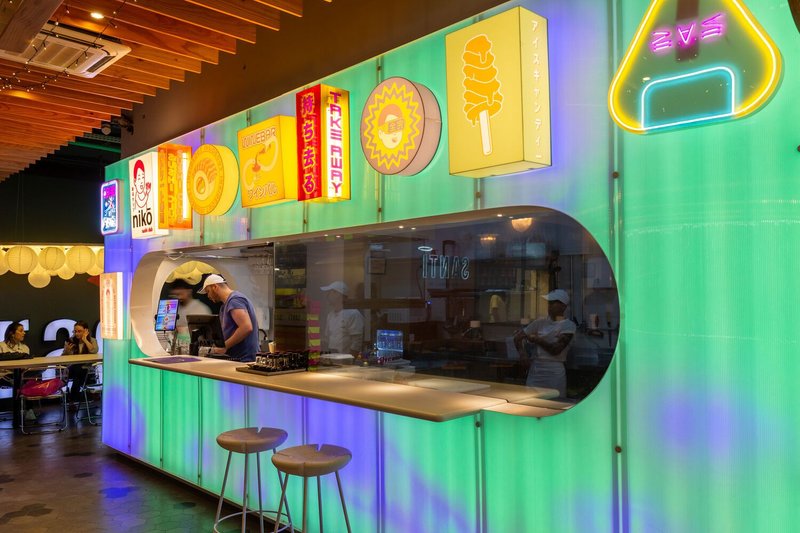
The integration of metallic tubes and lids for fixing the polycarbonate, along with custom-designed light boxes, exemplifies the meticulous attention to detail in the project. These elements not only serve functional purposes but also contribute to the high-standard aesthetic that defines the restaurant’s design.
Lighting Design: The Intersection of Art and Technology
Lighting is a defining feature of Restaurant Niko’s architecture. The LED system behind the polycarbonate facade creates an ever-changing display of light and color, enhancing the restaurant’s visual appeal. The ability to program the lighting via an app adds a technological dimension to the design, aligning with the futuristic aspect of the concept.
The "Over" Aesthetic: Redefining Minimalism
URBANODE’s decision to incorporate the "over" aesthetic alongside minimalist principles sets Restaurant Niko apart. The superimposed luminous boxes, deliberately misaligned with the polycarbonate modules, introduce a sense of organized chaos. This design choice pays homage to the vibrant energy of urban streets while maintaining the elegance of minimalist design.
Restaurant Niko exemplifies how architecture can embody the fusion of tradition and modernity. Through its innovative use of materials, dynamic lighting, and bold design choices, the restaurant creates an immersive experience that reflects the cultural richness of Japanese cuisine and the bustling energy of urban life. URBANODE Arquitetura’s thoughtful approach transforms this compact space into a visually striking and functional environment, making Restaurant Niko a true architectural gem.
All Photographs are works of MARCELO DONADUSSI


Popular Articles
Popular articles from the community

An Miên Lumière Cafe by xưởng xép, Ho Chi Minh City, Vietnam
An industrial-inspired café where layered steel and warm light create a dynamic, immersive environment shaped by reflection, depth, and perception.
Treehouse Apartment: A Warm Timber Interior Blending Craft, Play, and Contemporary Living
Warm timber apartment with integrated treehouse, combining natural materials, craftsmanship, and playful design to create a flexible, family-oriented living environment.
Flamboyant House by Juliana Camargo + Prumo Projetos
Modern Brazilian house integrating existing tree, pool, and volumes with glass, wood, and transitional spaces blending interior, exterior, and landscape seamlessly.
Atelier Macri Concept Store Interior Design by CASE-REAL
Atelier Macri store features a "ko" counter, walnut wood details, cork displays, blending retail, gallery, and seamless customer experiences.


Similar Reads
You might also enjoy these articles


The Ken Roberts Memorial Delineation Competition (Krob)
As the most senior architectural drawing competition currently in operation anywhere in the world, it draws hundreds of entries each year, awarding the very best submissions in a series of medium-based categories.


Waterfront Redevelopment and Urban Revitalization in Mumbai: Forging a New Dawn for Darukhana
A transformative waterfront redevelopment project reimagining Darukhana’s shipbreaking heritage into an inclusive urban future.

OUT-OF-MAP: A Call for Postcards on Feminist Narratives of Public Space
Rhizoma Design and Research Lab invites artists, designers, architects, researchers, and students to reflect on how feminist perspectives can reshape public space. Selected works will be exhibited in Barcelona, October 2026. Submissions open until 15 April 2026.


Documentation Work on Buddhist Wooden Temple
Architectural syncretism and cultural hybridity: A comparative study of the Buddhist temples in Chattogram Hill tracks


Explore Architecture Competitions
Discover active competitions in this discipline




The International Standard for Design Portfolios


The Global Benchmark for Architecture Dissertation Awards


The Global Benchmark for Graduation Excellence


Challenge to reimagine the Iron Throne
Comments (0)
Please login or sign up to add comments
No comments yet. Be the first to comment!