
San Mateo County Navigation Center Modular Supportive Housing: A New Model for Transitional Housing Solutions
The San Mateo County Navigation Center offers a modular supportive housing model, providing privacy, community, and essential services to aid residents' transition.

A Vision for Supportive Modular Housing
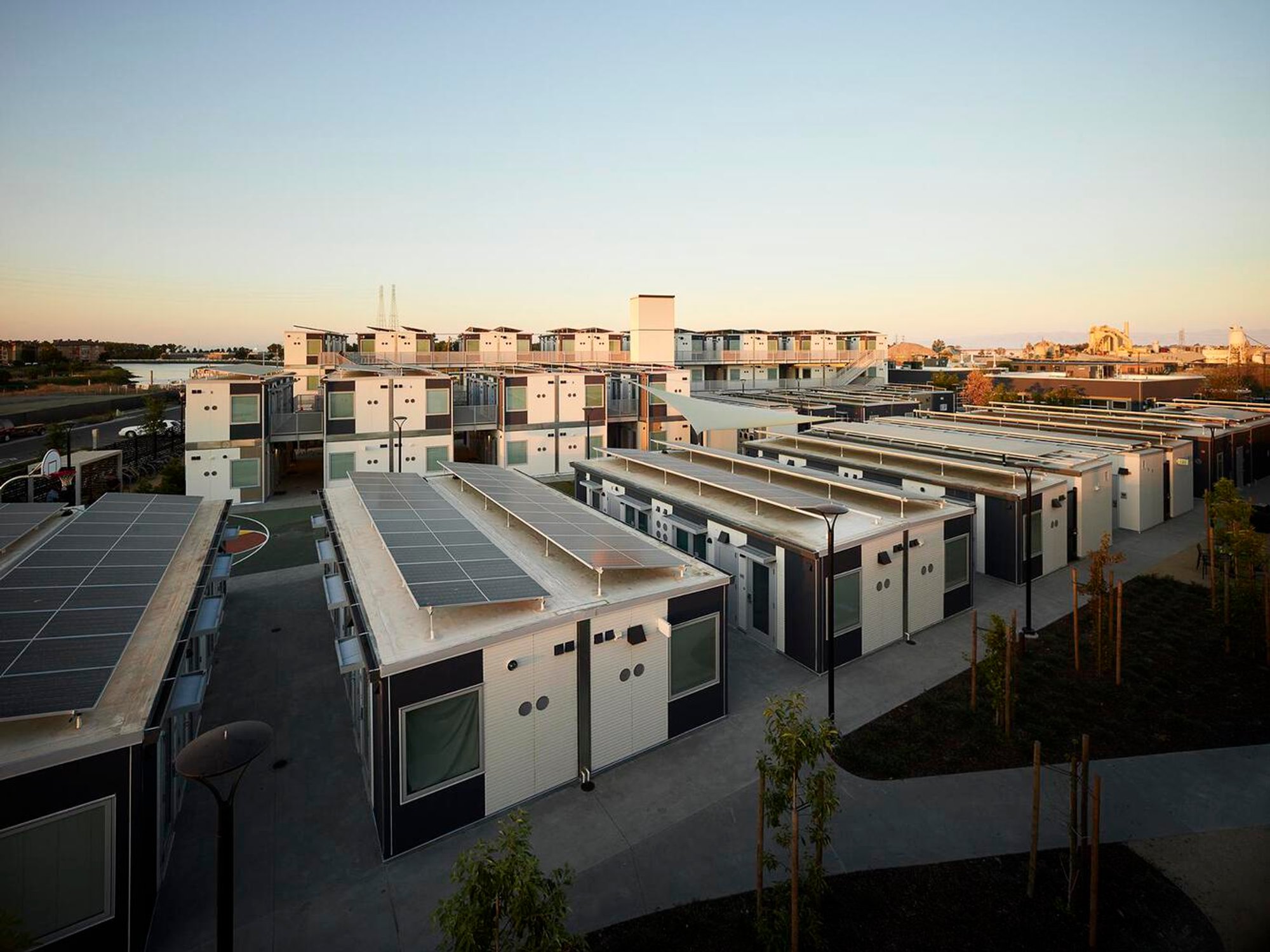
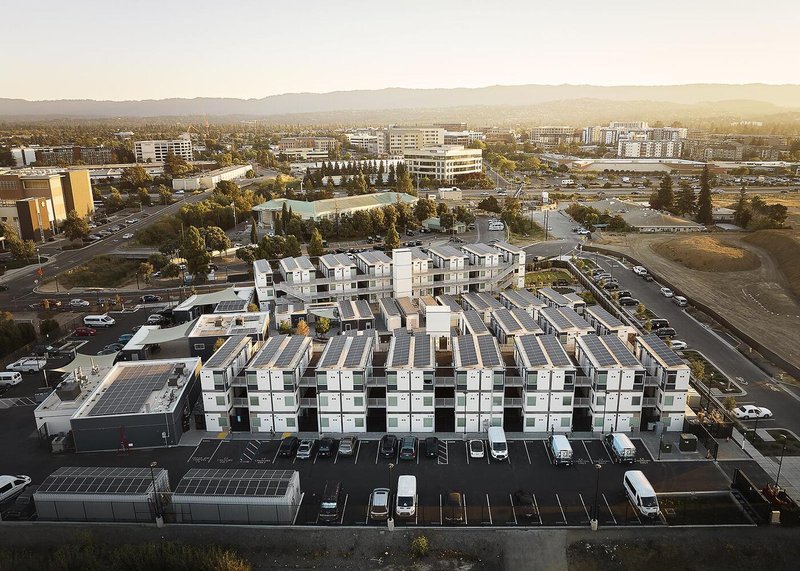
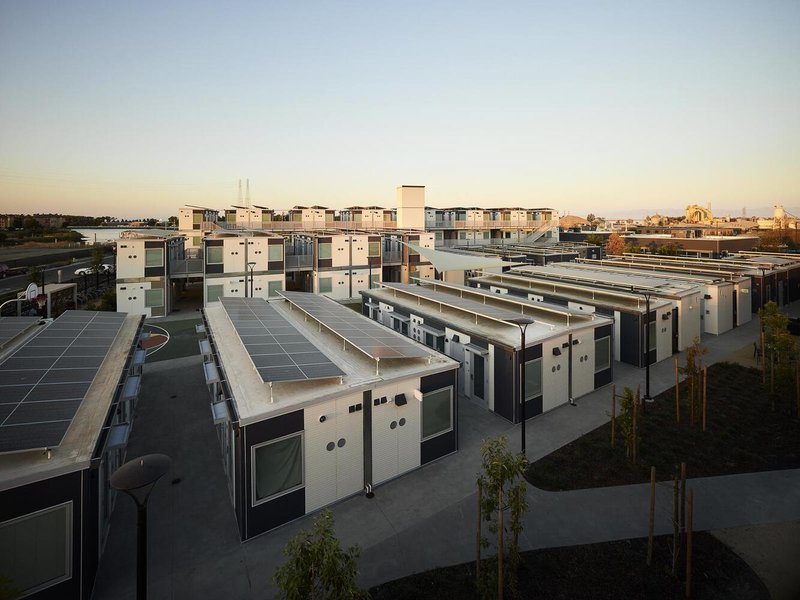
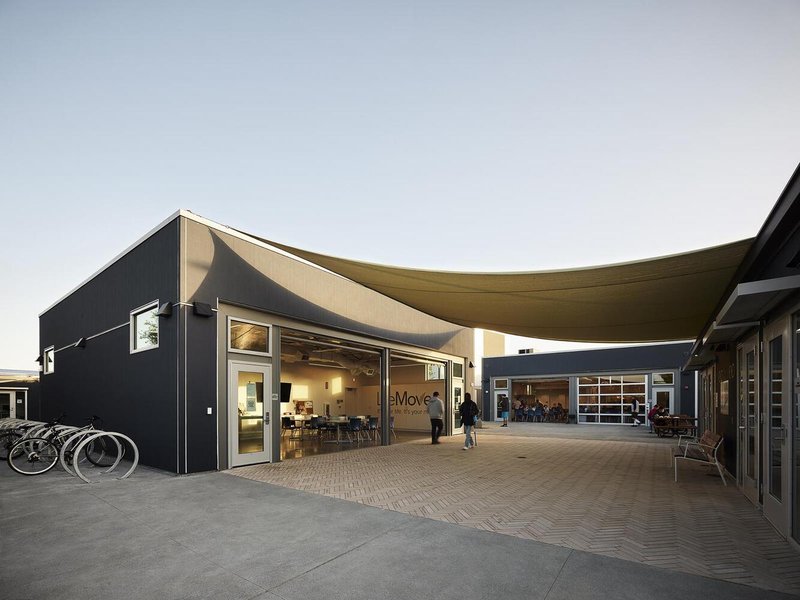
The San Mateo County Navigation Center in Redwood City, California, designed by The Office of Charles F. Bloszies, is a pioneering facility that uses a modular system to deliver supportive housing. Built in 2023, this 12449 m² navigation center houses approximately 260 formerly unhoused individuals at a time, providing not just shelter, but a supportive community to aid residents' transition to stable housing. Developed from the award-winning “Step(1)” modular concept by Bloszies, this center incorporates prefabricated units, efficient construction, and functional spaces that foster privacy, community, and self-sufficiency.
Modular Design Concept: Addressing Urgent Housing Needs
Step(1) Modular System for Transitional Housing
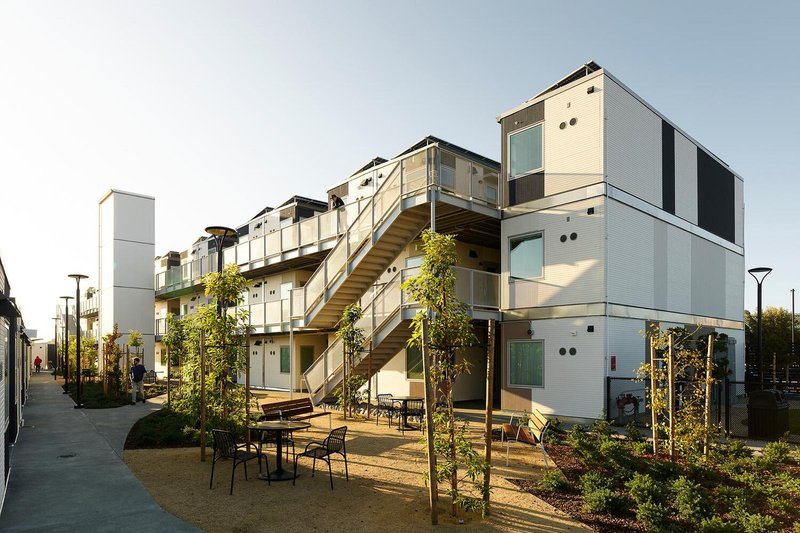
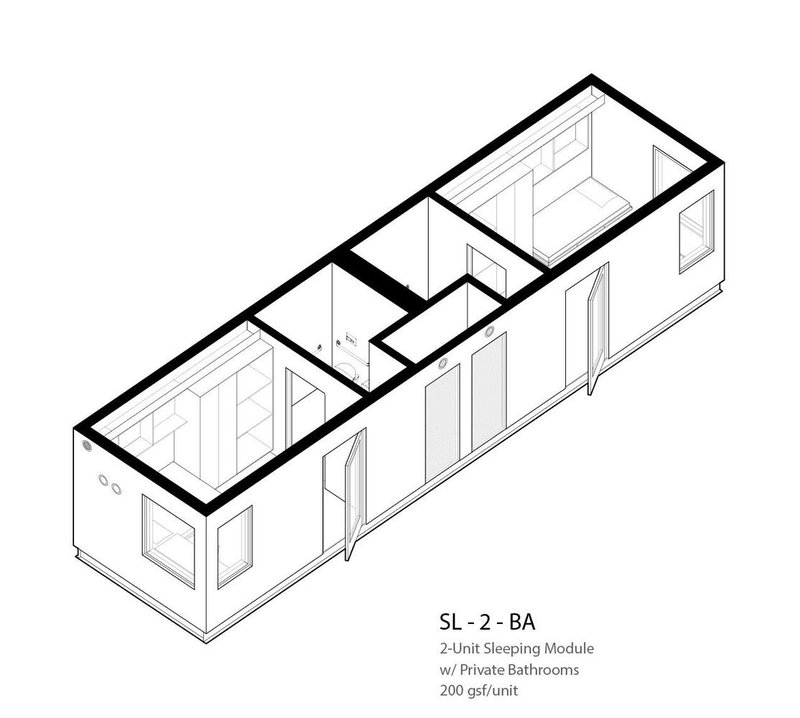
The Step(1) modular system, initially tested in the Mountain View Homekey facility, serves as the backbone for the San Mateo County Navigation Center. Rather than “tiny homes,” each prefabricated unit here includes private sleeping quarters with shared amenities and spaces for community interaction. This modular approach ensures a secure, dignified space for residents, enhancing their autonomy and providing a solid foundation for eventual transition to permanent housing.
Efficient Prefabrication and On-Site Construction
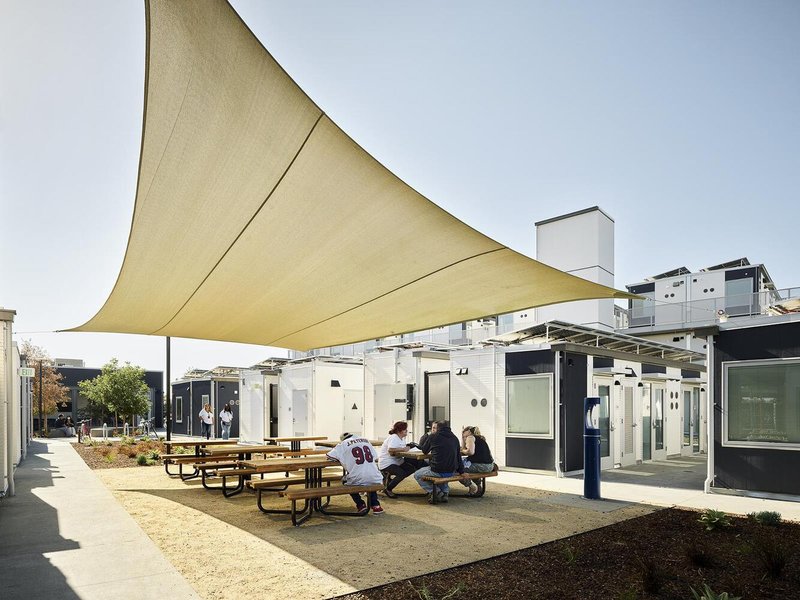
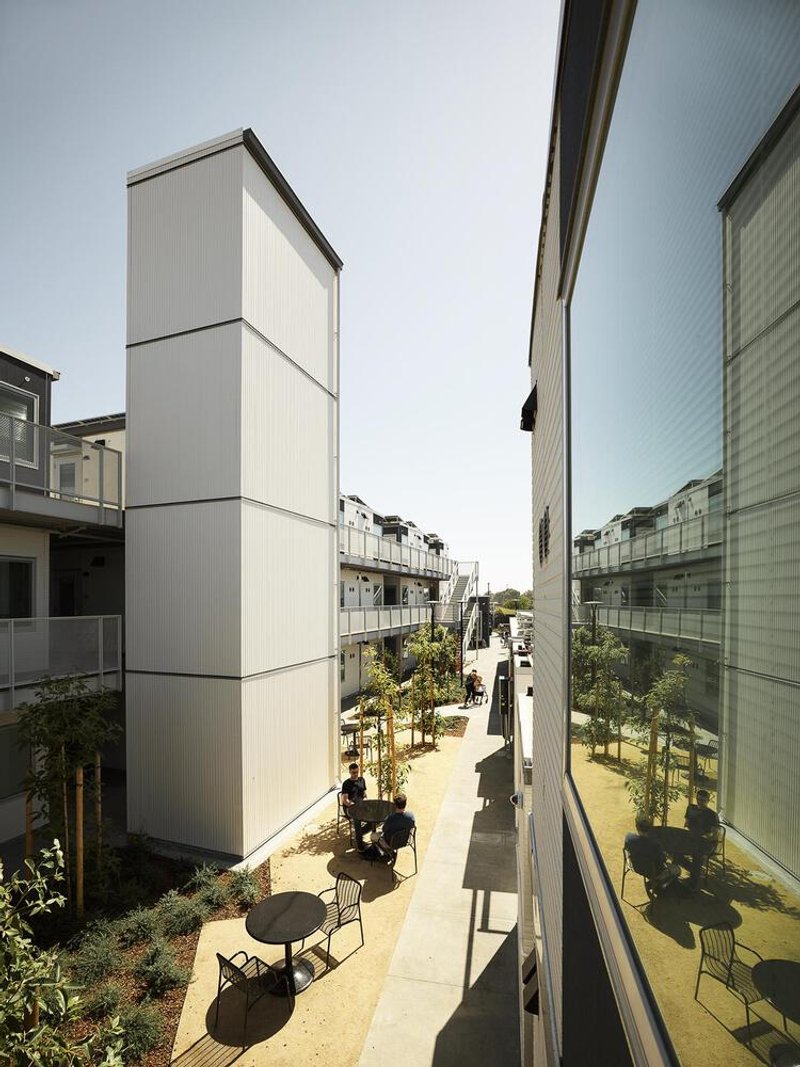
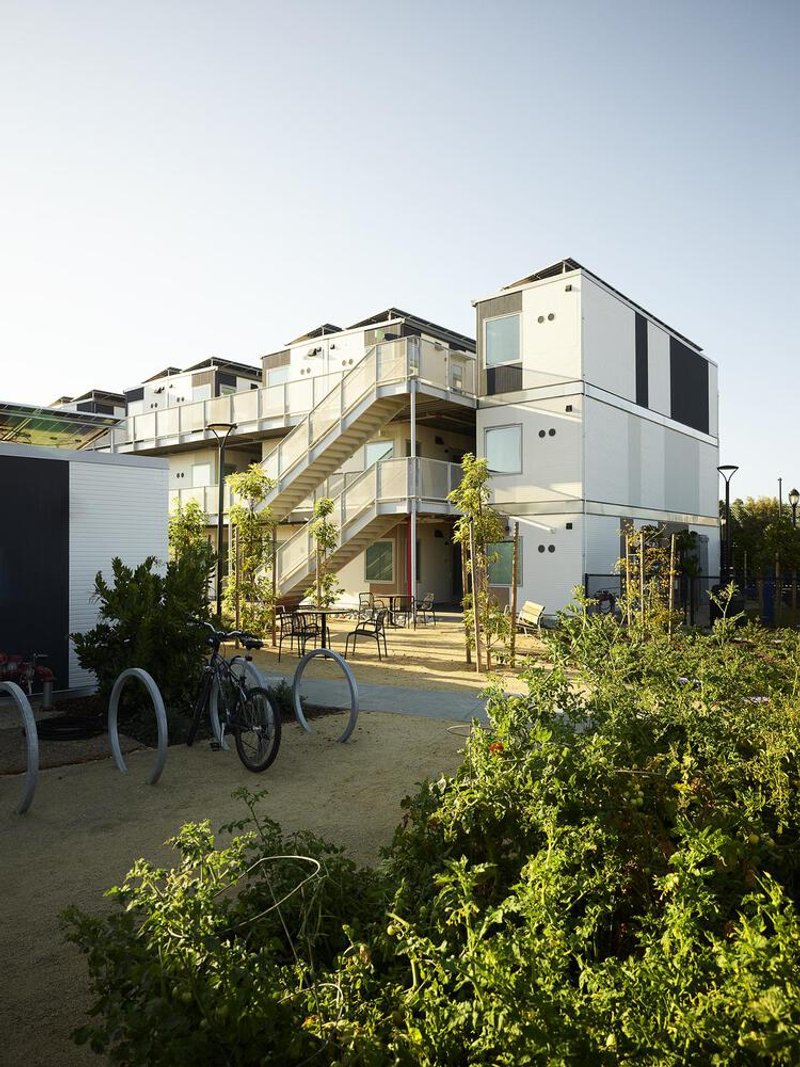
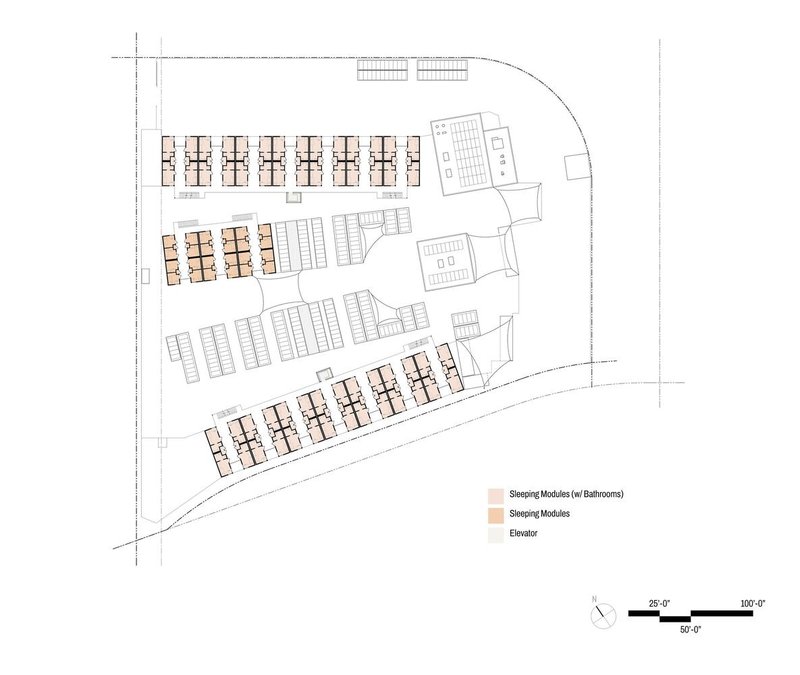
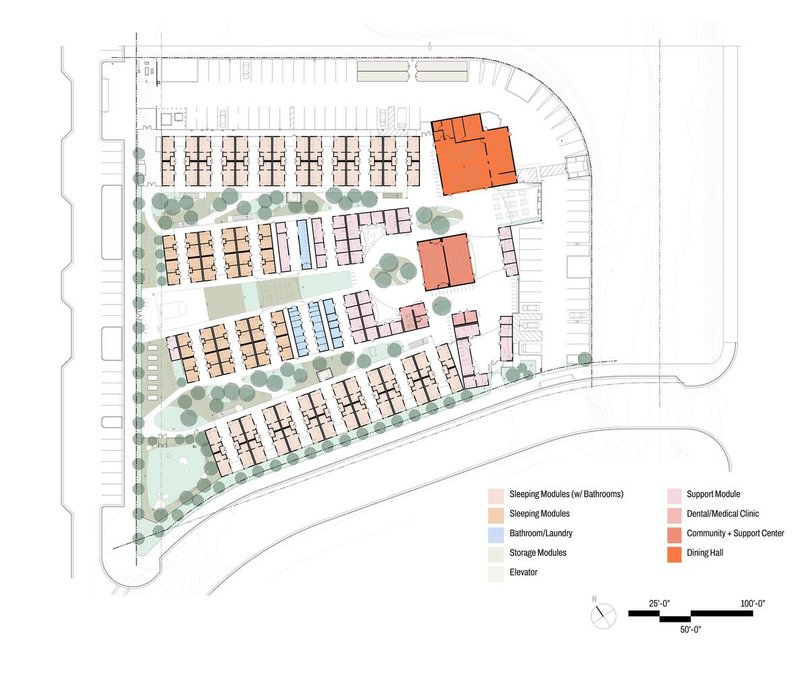
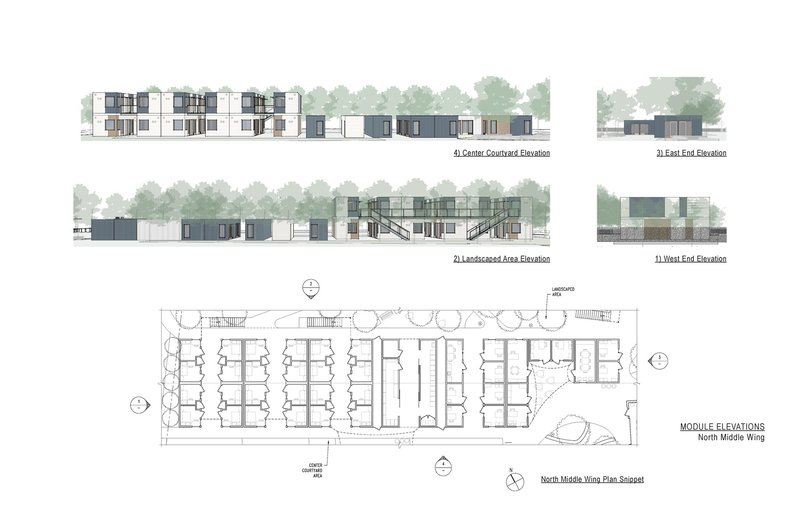
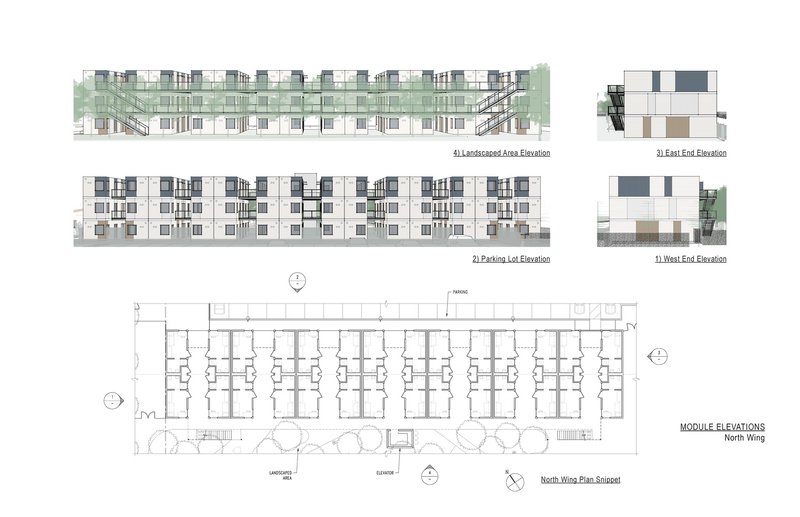
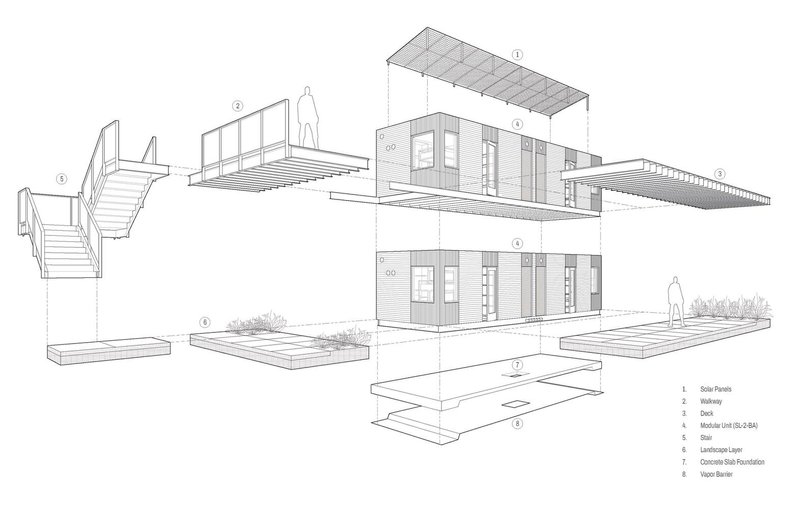
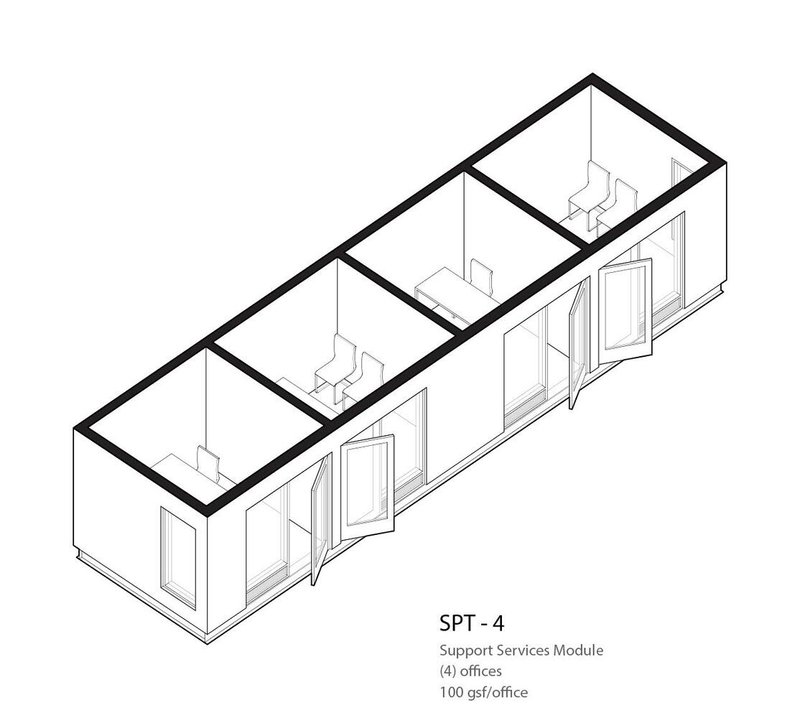
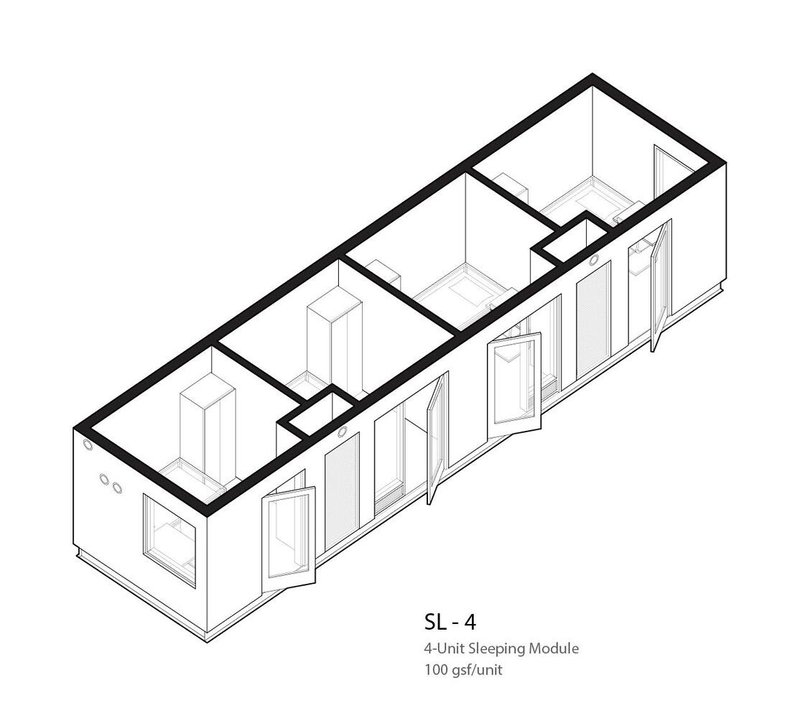
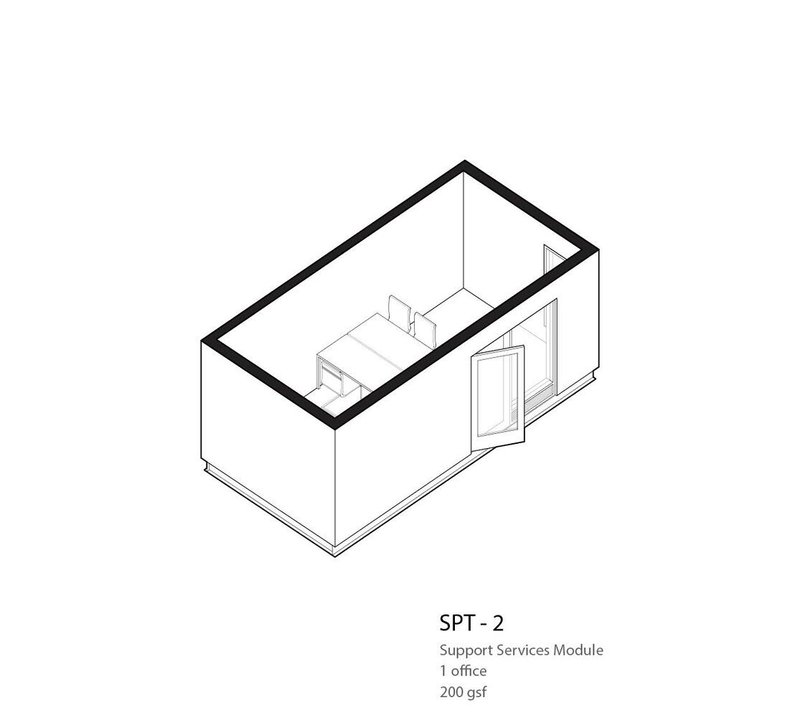
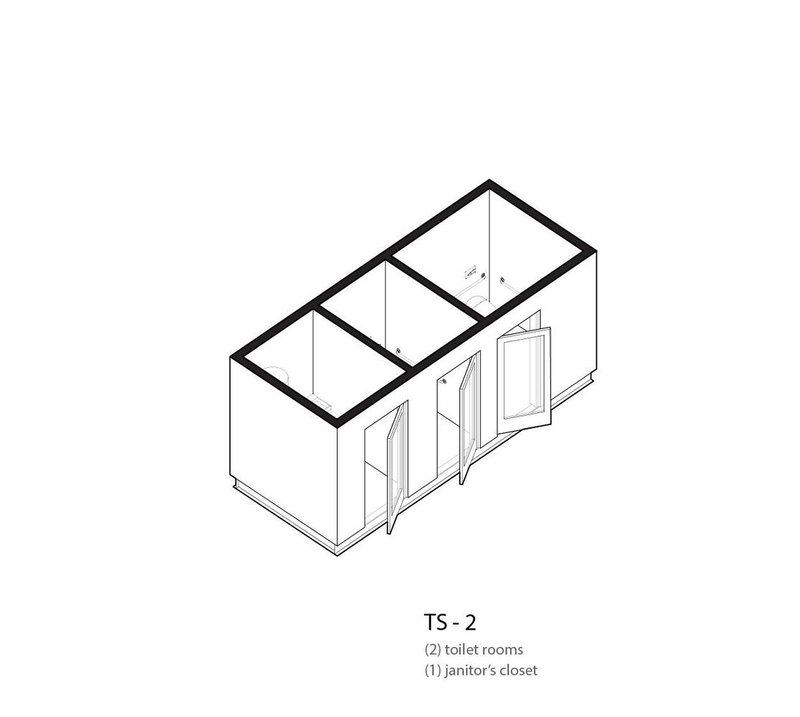
To maximize cost-effectiveness and minimize construction time, most buildings in the center were prefabricated off-site and then assembled on the 2.5-acre plot. While prefabricated modules house the private rooms, offices, bathrooms, and storage areas, two larger structures for dining and communal spaces were built traditionally on-site. By manufacturing modules off-site and preparing foundations simultaneously, the center achieved an efficient build time of just over one year, all at a cost-effective price of approximately $240,000 per unit.
Facility Layout: Balancing Privacy and Community
Private Living Spaces with Essential Amenities
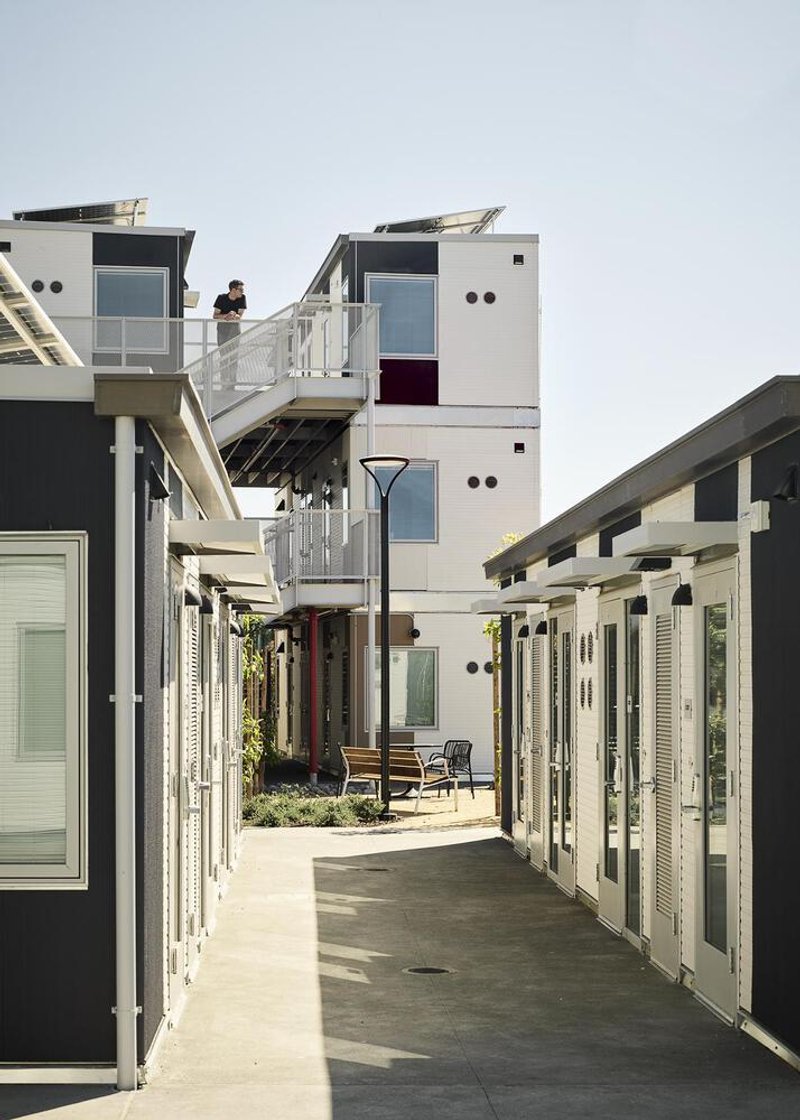
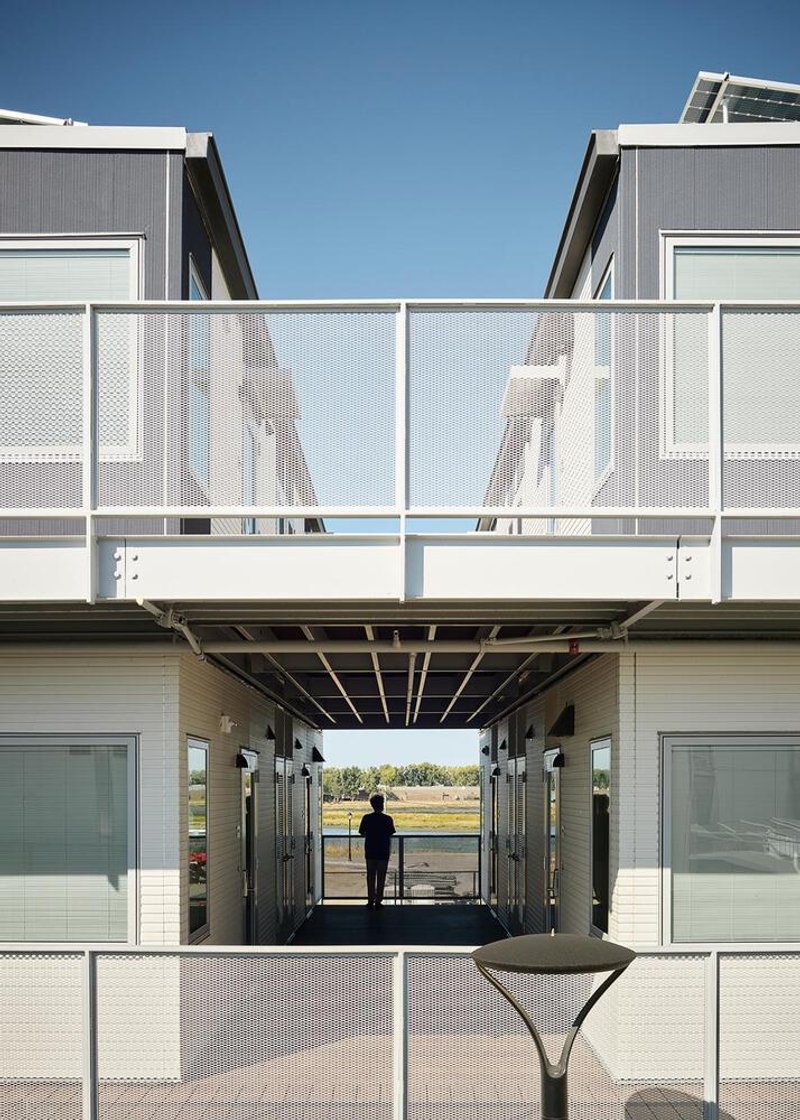
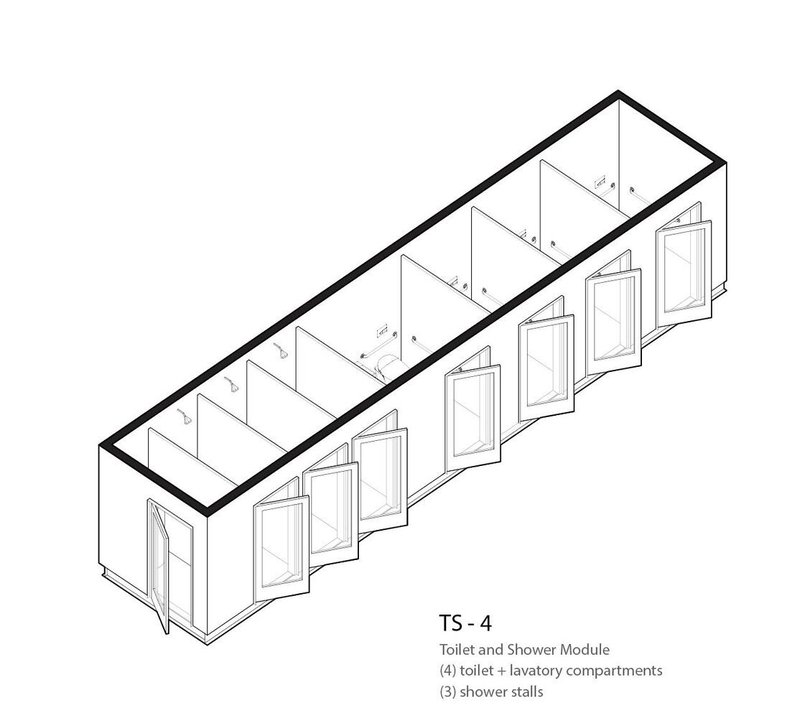
Aiming to provide a secure and dignified environment, the Navigation Center includes private rooms, each equipped with storage to help residents feel at ease. Most units offer en-suite bathrooms, while others have access to shared restroom modules with individual shower and toilet stalls. This range of options allows each resident to find a secure, comfortable space.
Community Spaces for Interaction and Support
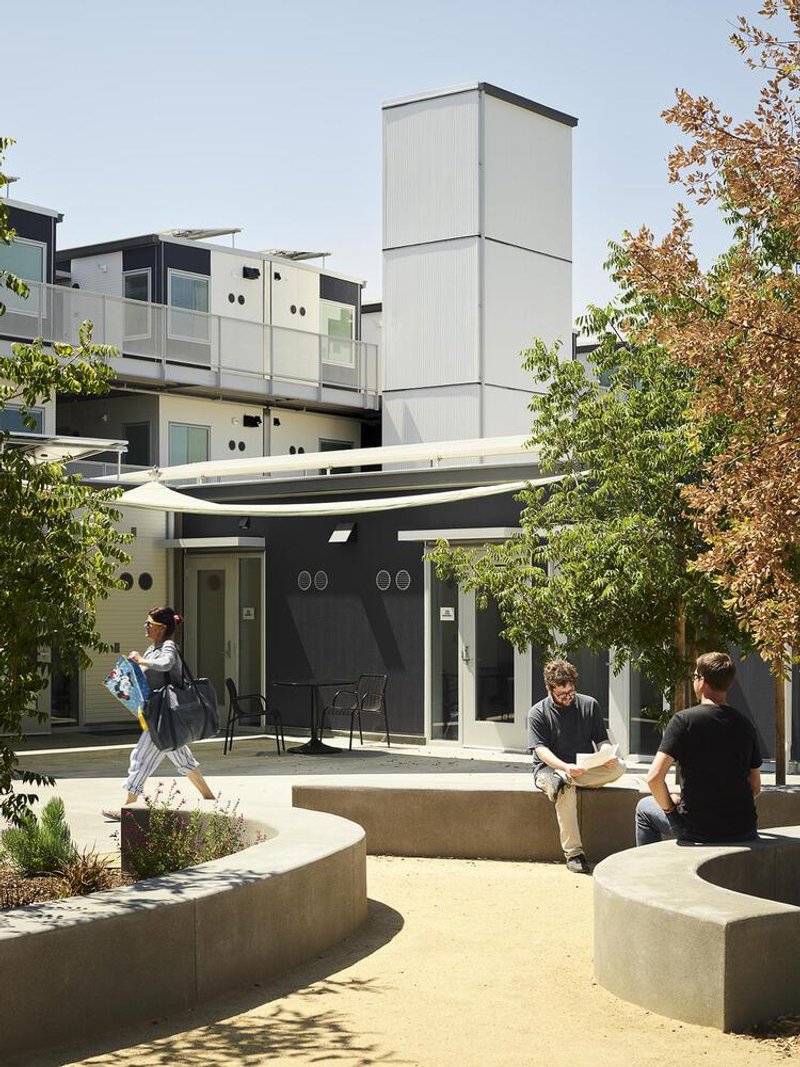
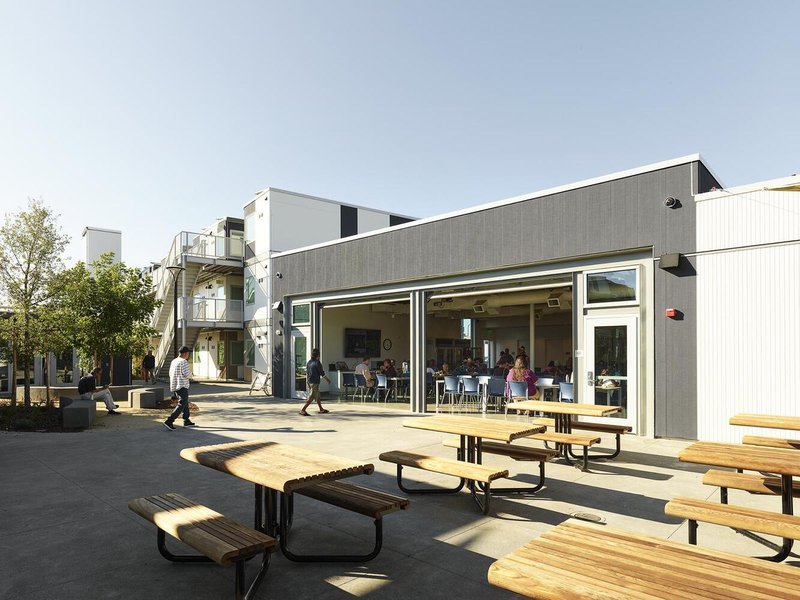
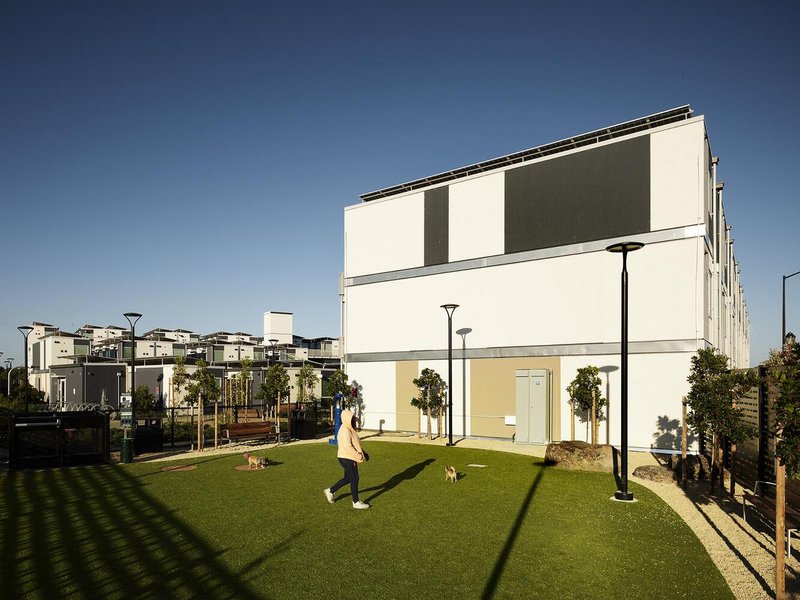
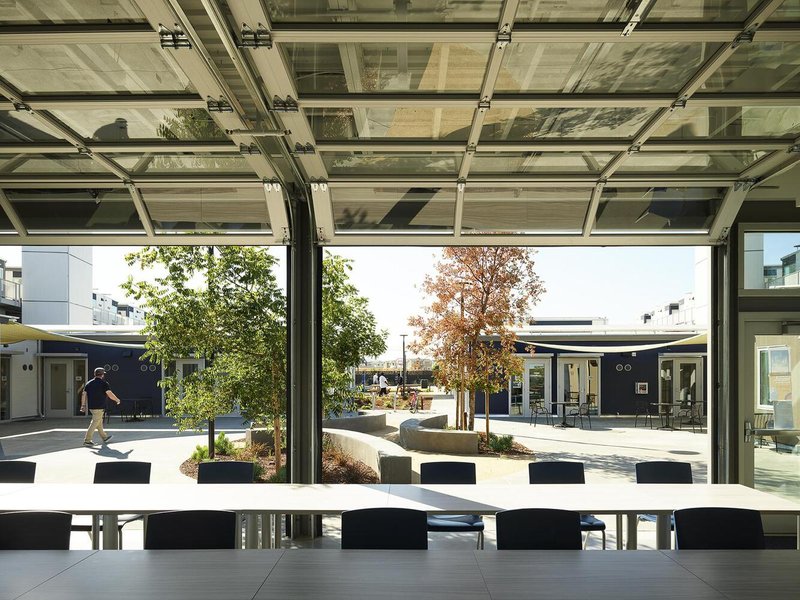
The layout encourages residents to step outside their private rooms and engage with others. The center includes communal dining areas, landscaped plazas, and various outdoor spaces that range from quiet and private to more open and social, catering to a wide variety of personal preferences. By designing for interaction, the center facilitates community building and access to supportive services from staff members, case managers, and peer residents.
Specialized Facilities: Fostering Self-Sufficiency and Skill Building
Culinary Training and Employment Opportunities
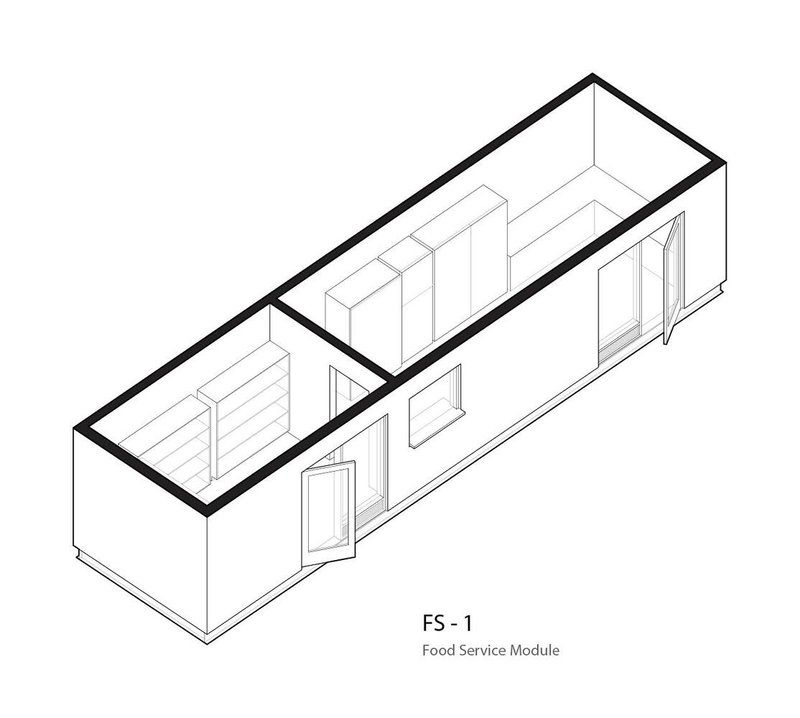
The dining hall includes a commercial kitchen where residents can receive training for employment in the culinary industry, addressing both immediate needs and long-term self-sufficiency goals. This kitchen will also support other facilities run by the center’s operator in the area, providing essential services while equipping residents with valuable skills and job prospects for future stability.
Healthcare and Social Services
The navigation center also includes on-site medical clinics, laundry rooms, and dedicated storage for client belongings, ensuring that residents’ immediate needs are met. These services, combined with the structured yet welcoming environment, aim to provide holistic support that extends beyond housing, fostering overall well-being and aiding in recovery from life on the streets.
Sustainable and Cost-Effective Approach
Modular Construction for Affordability
Using modular construction not only reduced the timeline of the build but also kept costs low, enabling the center to be developed at a fraction of traditional housing costs. Each unit’s average construction cost, approximately $240,000 per door, represents significant savings over conventional builds, while the modular design also reduces material waste and environmental impact, aligning with sustainable building practices.
Landscape Design for Therapeutic Benefits
Landscape architects CMG Landscape Architecture created thoughtfully designed outdoor spaces that promote mental and physical health. Residents can choose from serene gardens for quiet reflection or larger, communal outdoor areas for social interaction. This integration of therapeutic landscapes is essential to creating a healing environment, allowing residents to feel connected with nature in a secure and nurturing space.
A Scalable Model for Transitional Housing
The San Mateo County Navigation Center demonstrates how modular construction, community-focused design, and thoughtful amenities can come together to address the urgent need for supportive housing. Through its balance of privacy, community interaction, and services, it provides a stable foundation for formerly unhoused individuals, helping them recover, rebuild, and transition into permanent housing. As the first realization of the Step(1) modular system, this center offers a scalable and replicable model for municipalities and organizations nationwide looking to address homelessness in a sustainable and impactful way.
All photographs are work of Matthew Millman


Popular Articles
Popular articles from the community

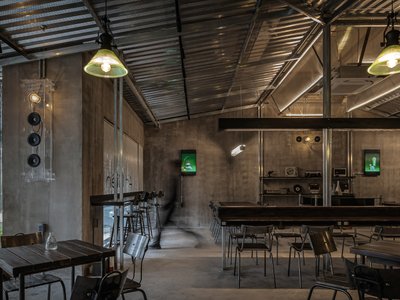
An Miên Lumière Cafe by xưởng xép, Ho Chi Minh City, Vietnam
An industrial-inspired café where layered steel and warm light create a dynamic, immersive environment shaped by reflection, depth, and perception.
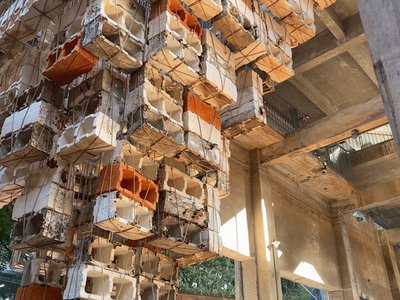
Inverted Architecture Installation by Studio Link-Arc: Exploring the Intersection of Architecture and Living Organisms
Inverted Architecture Installation by Studio Link-Arc blends mycelium, sustainability, inverted design, ecological cycles, and urban adaptive architecture in Shenzhen.
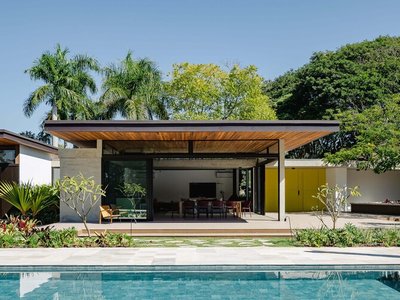
Flamboyant House by Juliana Camargo + Prumo Projetos
Modern Brazilian house integrating existing tree, pool, and volumes with glass, wood, and transitional spaces blending interior, exterior, and landscape seamlessly.
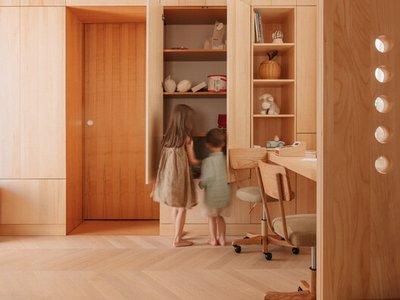
Treehouse Apartment: A Warm Timber Interior Blending Craft, Play, and Contemporary Living
Warm timber apartment with integrated treehouse, combining natural materials, craftsmanship, and playful design to create a flexible, family-oriented living environment.


Similar Reads
You might also enjoy these articles


The Ken Roberts Memorial Delineation Competition (Krob)
As the most senior architectural drawing competition currently in operation anywhere in the world, it draws hundreds of entries each year, awarding the very best submissions in a series of medium-based categories.


Waterfront Redevelopment and Urban Revitalization in Mumbai: Forging a New Dawn for Darukhana
A transformative waterfront redevelopment project reimagining Darukhana’s shipbreaking heritage into an inclusive urban future.

OUT-OF-MAP: A Call for Postcards on Feminist Narratives of Public Space
Rhizoma Design and Research Lab invites artists, designers, architects, researchers, and students to reflect on how feminist perspectives can reshape public space. Selected works will be exhibited in Barcelona, October 2026. Submissions open until 15 April 2026.


Documentation Work on Buddhist Wooden Temple
Architectural syncretism and cultural hybridity: A comparative study of the Buddhist temples in Chattogram Hill tracks


Explore Architecture Competitions
Discover active competitions in this discipline




The International Standard for Design Portfolios


The Global Benchmark for Architecture Dissertation Awards


The Global Benchmark for Graduation Excellence


Challenge to reimagine the Iron Throne
Comments (0)
Please login or sign up to add comments
No comments yet. Be the first to comment!