
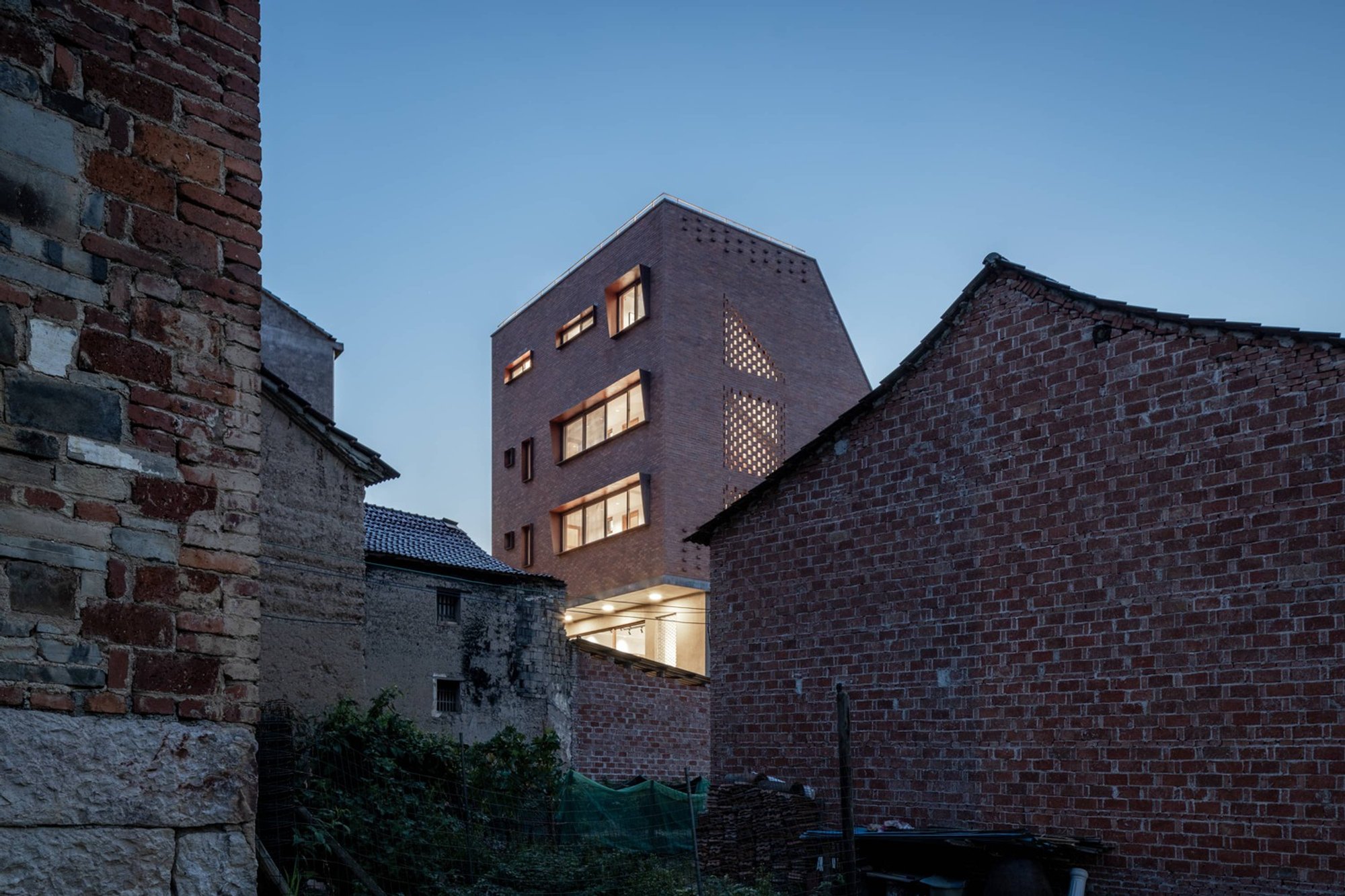
Shanxia Cultural Station: A New Architectural Landmark in Rural China
Shanxia Cultural Station blends tradition and modernity, serving as a cultural hub and architectural landmark in rural China.

Located at the foot of Maoqian Mountain in Yongkang, Zhejiang, China, the Shanxia Cultural Station by MUFU Architectural Performance Studio redefines rural architecture by blending tradition with modern functionality. This 418 m² cultural hub, completed in 2024, serves as a dynamic space for community engagement while preserving the rich heritage of the village.
Preserving Tradition in a Modernizing Landscape
Shanxia Village, renowned for its scenic beauty and cultural depth, has witnessed the gradual erosion of its traditional charm due to modernization. However, the village's iconic Bench Dragon Lantern Festival, an annual ritual held on the seventeenth day of the first lunar month, remains a unifying force. Positioned near the festival's main performance area and the historic Houyanta Hill, the Shanxia Cultural Station was conceived as a public-oriented space to enhance the viewing experience and provide a hub for local cultural activities.
Architectural Strategy: Harmonizing with the Landscape
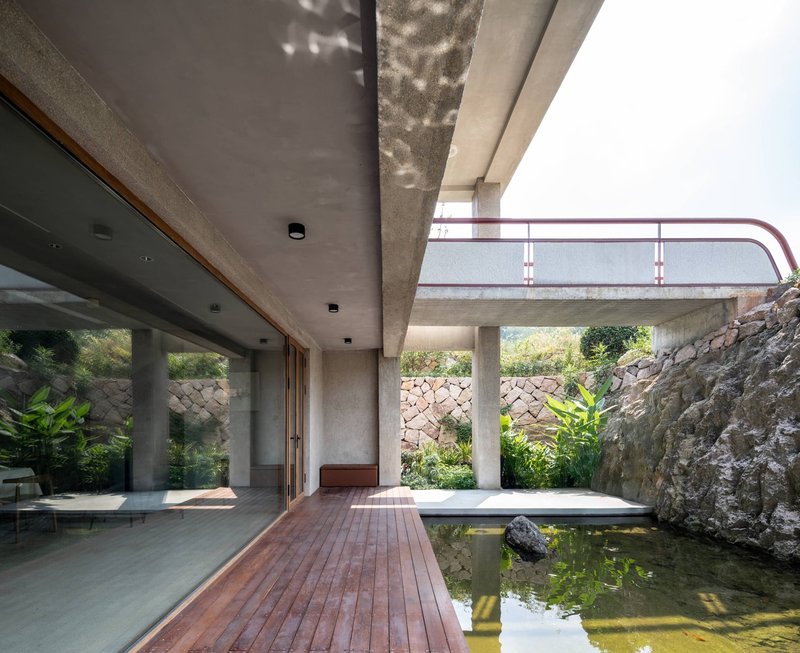
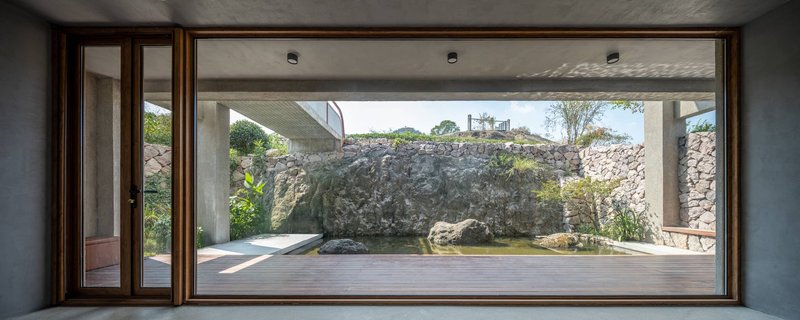
The site’s constraints and cultural significance influenced the architectural design. Local traditions dictated that the structure should not be lower than the surrounding residences, resulting in a multi-level building that seamlessly integrates with the village’s fabric. To mitigate its visual impact on Houyanta Hill, the design employs a slanted cut strategy, reducing the structure's bulk while creating a courtyard space that fosters a harmonious relationship between architecture and nature.
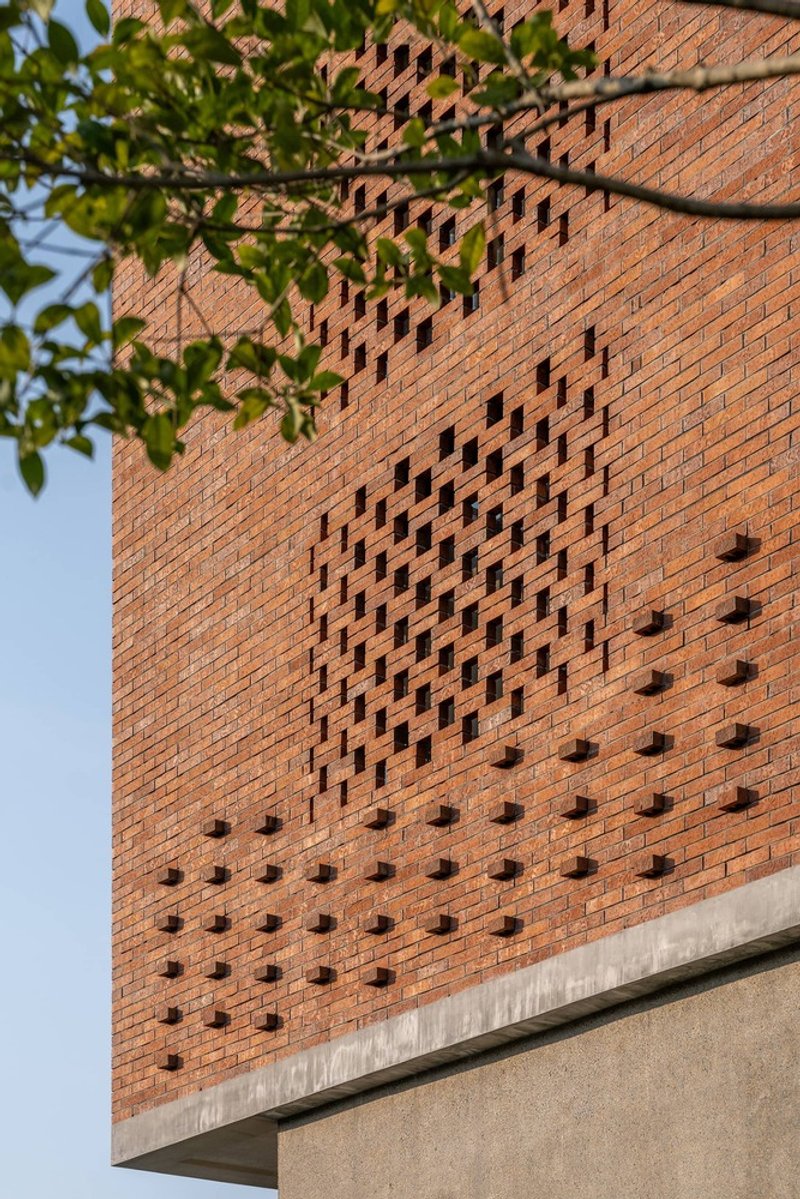
A mix of red terracotta bricks, pebble-dash, and glass bricks strengthens the dialogue between the building and its environment, ensuring both aesthetic and functional coherence. These materials reflect the village’s traditional architecture while offering a contemporary reinterpretation suited for its evolving needs.
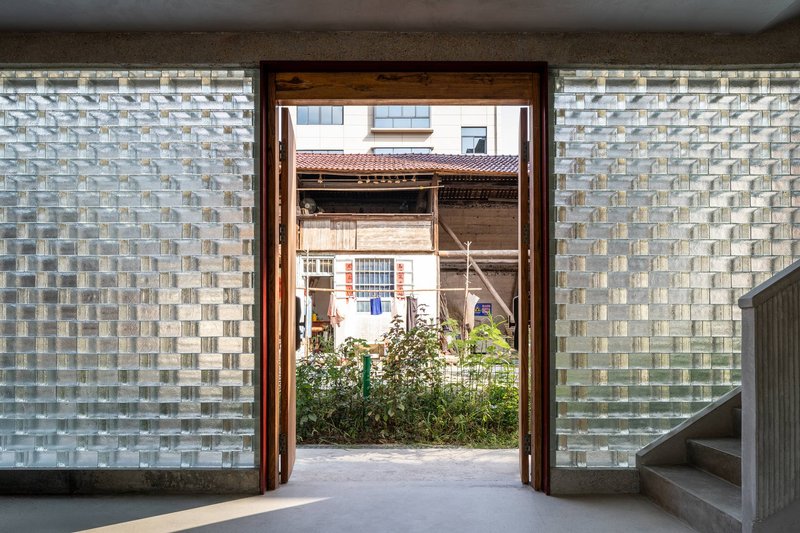
A Multi-Functional Cultural Hub
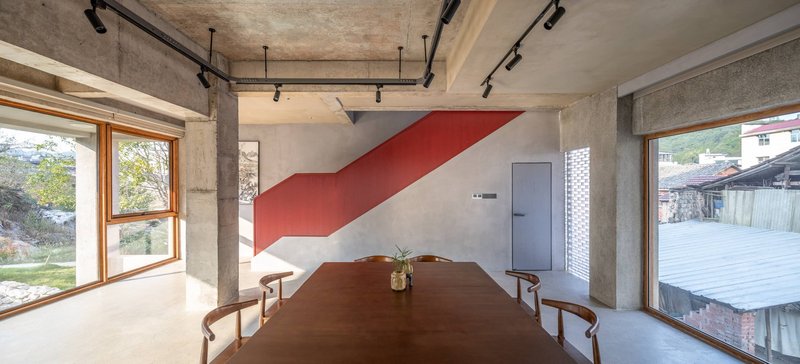
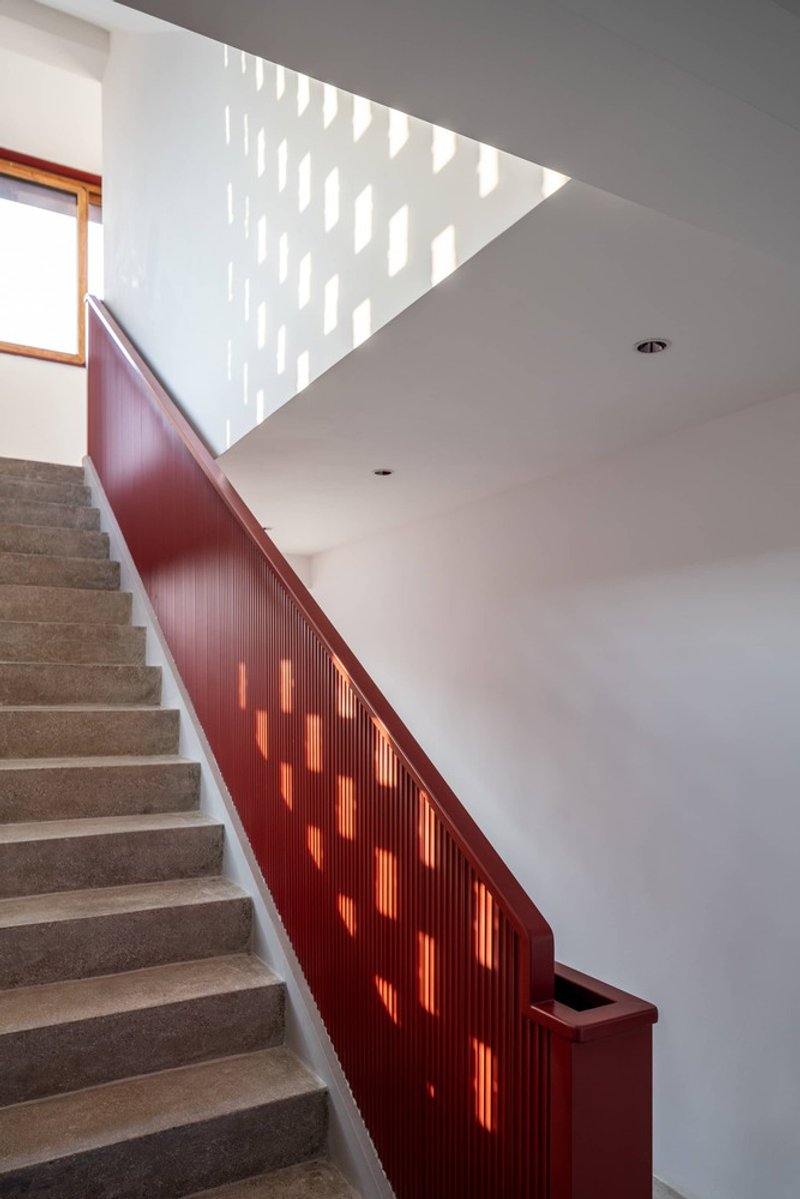
The Shanxia Cultural Station is designed for diverse public engagement. The building features two entrances—a southern entrance aligned with the village’s traditional layout and a northern entrance connecting to the natural hillside. Inside, it is structured as follows:
- First & Second Floors: Public activity spaces, including a dining hall, kitchen, courtyard, and multifunctional hall for community gatherings.
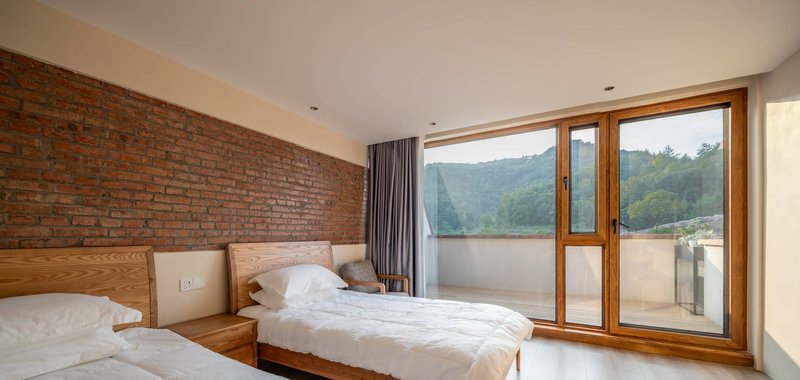
- Third to Fifth Floors: Accommodation spaces hosting resident artists and scholars, which can also transform into public viewing platforms during the Bench Dragon Lantern Festival.
This flexibility ensures that the building remains a vibrant center for cultural exchange throughout the year.
A New Cultural and Social Catalyst
Beyond serving as a venue for the annual festival, the Shanxia Cultural Station has evolved into a cultural incubator, hosting exhibitions, theater workshops, and academic seminars. Its presence encourages a reexamination of rural cultural identity and development, positioning it as a key driver for community revitalization.
As a new architectural landmark, the project embodies the spirit of collective wisdom and innovation. Inspired by the Bench Dragon Lantern tradition, it injects fresh vitality into rural life, offering new possibilities for cultural sustainability.
All Photographs are works of Chen Xi Studio



Popular Articles
Popular articles from the community


Solar Steam: A Climate-Responsive Architecture That Redefines the Monument
A climate-responsive memorial architecture that transforms heat, decay, and time into a living system reflecting humanity’s ecological impact.
Treehouse Apartment: A Warm Timber Interior Blending Craft, Play, and Contemporary Living
Warm timber apartment with integrated treehouse, combining natural materials, craftsmanship, and playful design to create a flexible, family-oriented living environment.
Louis Malle Cinema: A Limestone Cultural Landmark Revitalizing Community Life in Prayssac
Limestone cinema extension with public forecourt, blending heritage and modern design to create flexible cultural spaces and strengthen community interaction.
An Miên Lumière Cafe by xưởng xép, Ho Chi Minh City, Vietnam
An industrial-inspired café where layered steel and warm light create a dynamic, immersive environment shaped by reflection, depth, and perception.


Similar Reads
You might also enjoy these articles


The Ken Roberts Memorial Delineation Competition (Krob)
As the most senior architectural drawing competition currently in operation anywhere in the world, it draws hundreds of entries each year, awarding the very best submissions in a series of medium-based categories.


Waterfront Redevelopment and Urban Revitalization in Mumbai: Forging a New Dawn for Darukhana
A transformative waterfront redevelopment project reimagining Darukhana’s shipbreaking heritage into an inclusive urban future.

OUT-OF-MAP: A Call for Postcards on Feminist Narratives of Public Space
Rhizoma Design and Research Lab invites artists, designers, architects, researchers, and students to reflect on how feminist perspectives can reshape public space. Selected works will be exhibited in Barcelona, October 2026. Submissions open until 15 April 2026.


Documentation Work on Buddhist Wooden Temple
Architectural syncretism and cultural hybridity: A comparative study of the Buddhist temples in Chattogram Hill tracks

Explore Architecture Competitions
Discover active competitions in this discipline




The International Standard for Design Portfolios


The Global Benchmark for Architecture Dissertation Awards


The Global Benchmark for Graduation Excellence

Challenge to design an urban locus of culture and heritage
Comments (0)
Please login or sign up to add comments
No comments yet. Be the first to comment!