
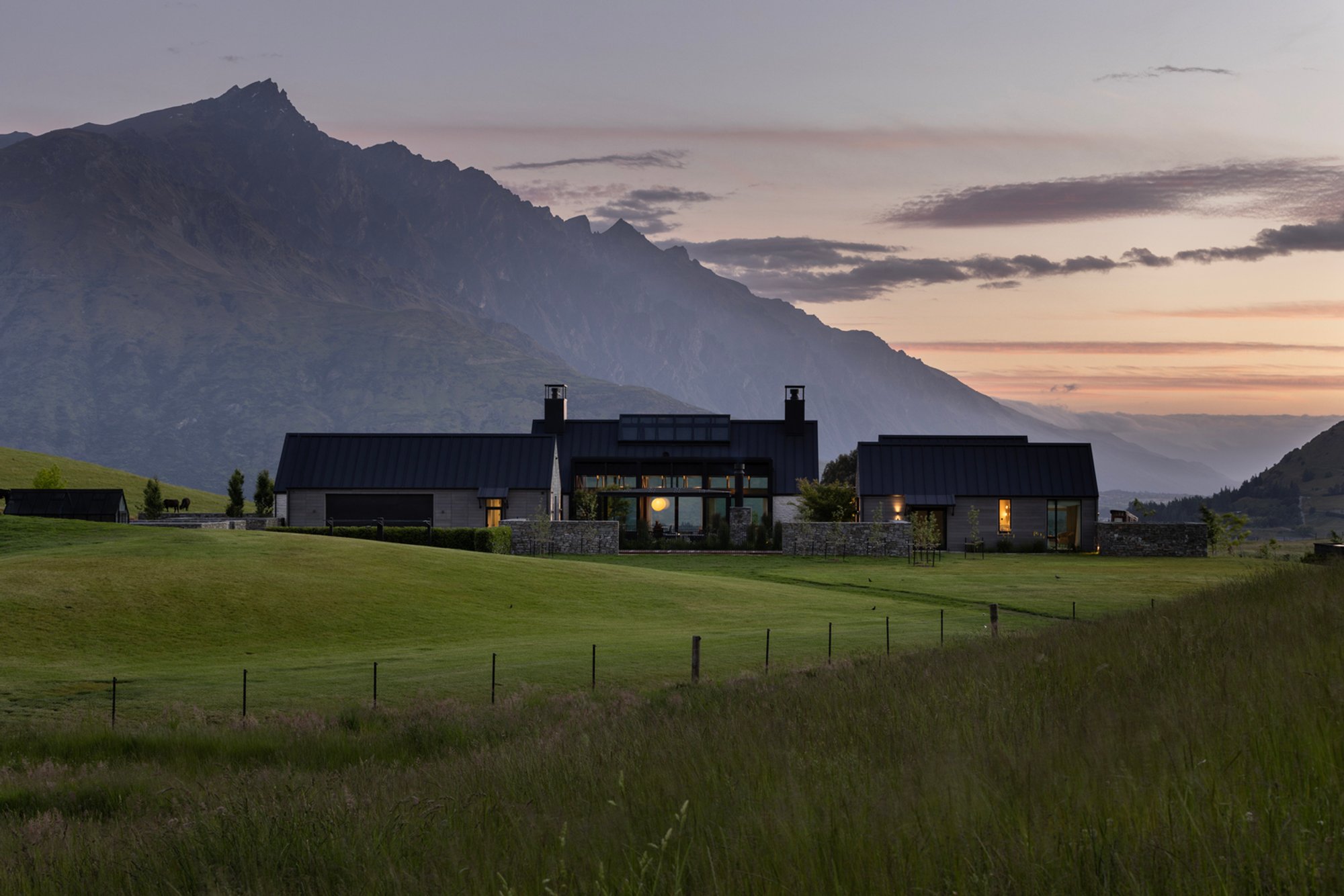
Speargrass House: A Rural Modern House Design by Sumich Chaplin Architects in Queenstown
Speargrass House by Sumich Chaplin Architects is a rural modern house design blending traditional materials with contemporary architecture in Queenstown.

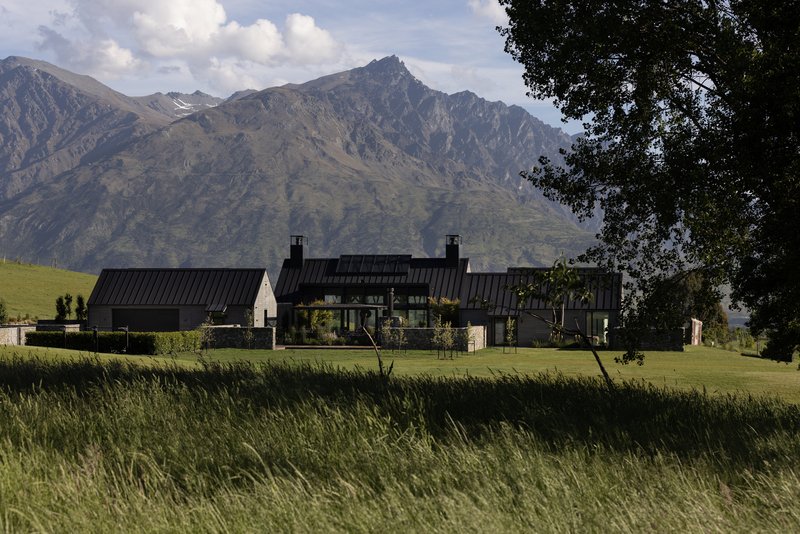
Perched above the majestic Wakatipu Basin in Queenstown, New Zealand, the Speargrass House is a stunning example of rural modern house design. Designed by Sumich Chaplin Architects and completed in 2024, this 625-square-meter family home harmonizes with its rugged alpine surroundings while embracing contemporary architectural principles.
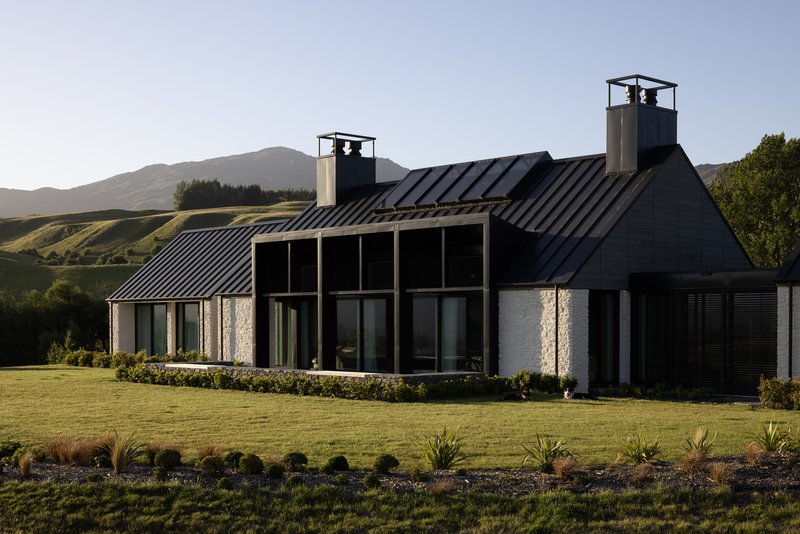
The house was created for a family relocating from Sydney, Australia, seeking to immerse themselves in a rural lifestyle. The architectural response integrates traditional forms with modern materials, resulting in a residence that resonates with both history and the future.
Context and Landscape Integration
The site occupies 35 hectares along Speargrass Flat Road, offering panoramic views of Coronet Peak to the north and The Remarkables mountain range to the south. Elevated on a natural plateau accessed via a steep incline, the home is carefully positioned to maximize these breathtaking vistas.
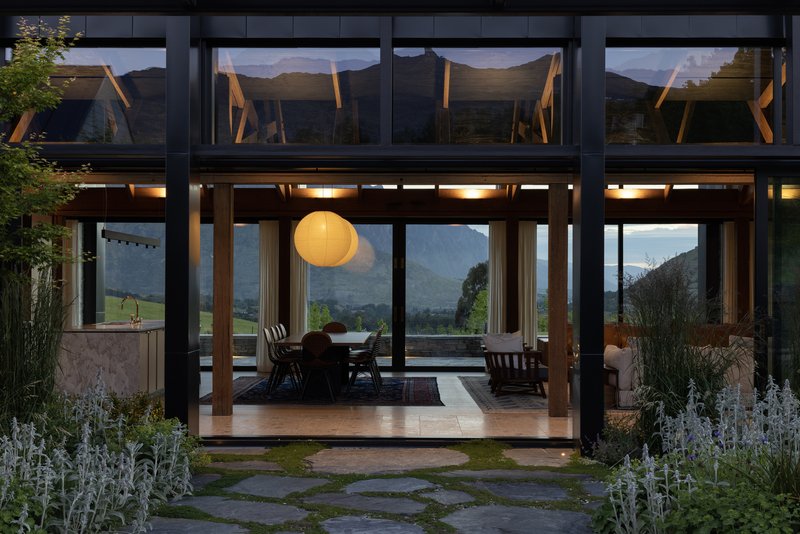
The house embraces the landscape, with the architecture intentionally designed to blend into its environment rather than dominate it. This sensitivity to the rural setting is a defining characteristic of the rural modern house design approach employed by Sumich Chaplin Architects.
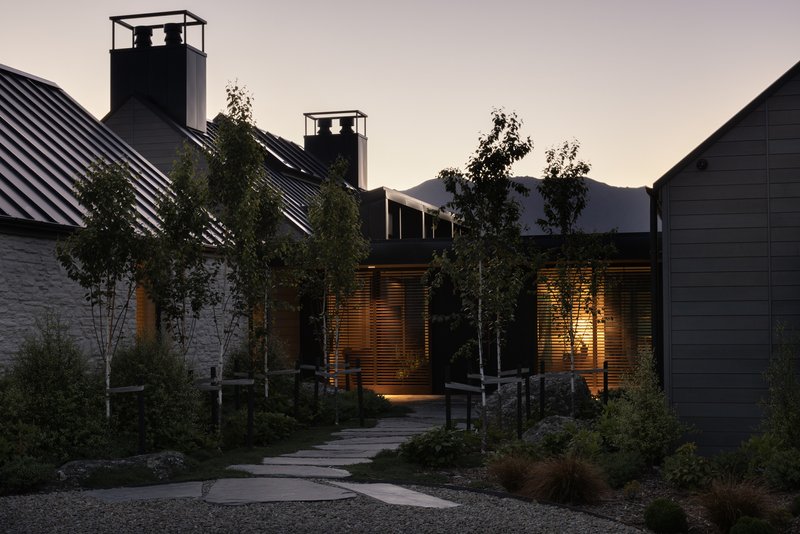
Architectural Concept and Spatial Arrangement
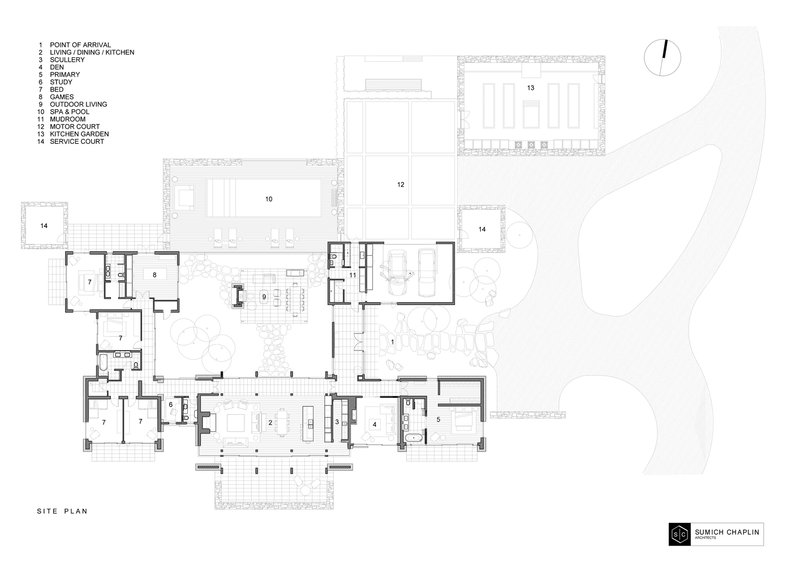
The architectural concept revolves around a series of single-level, interconnected pavilions organized around a central courtyard. The main living space opens towards both the northern and southern aspects, connecting the interior to the expansive alpine surroundings.
Each structure is designed with a distinct function while maintaining a domestic scale within the dramatic landscape. The design takes cues from traditional farm buildings, creating a modern interpretation of rural living that respects both heritage and contemporary comforts.
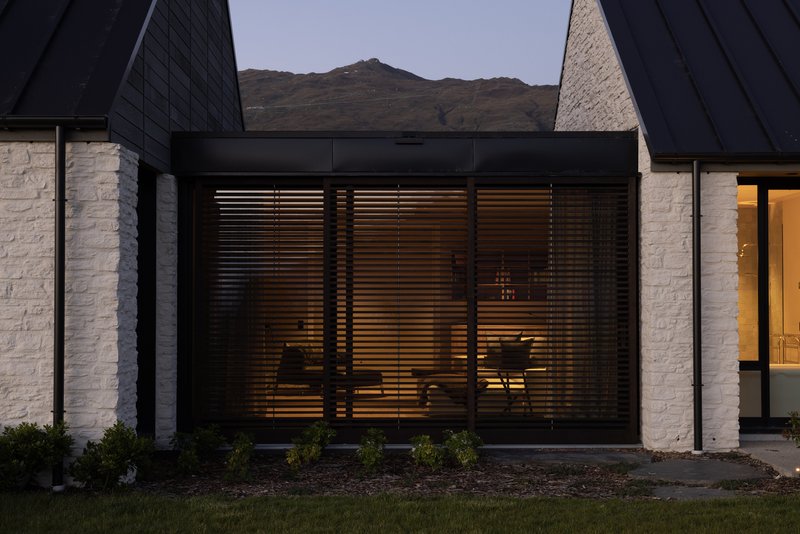
Form, Hierarchy, and Roof Design
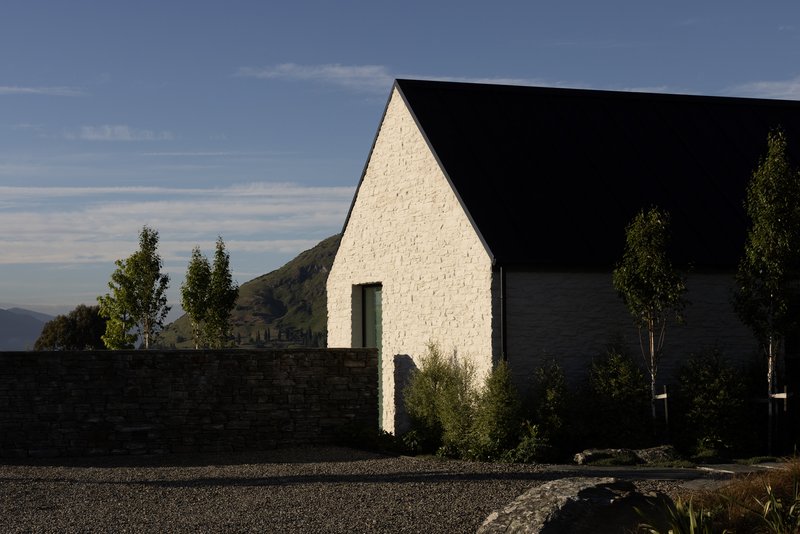
The forms of the Speargrass House are traditional in shape but exhibit a clear hierarchy based on height and materiality. The main living and bedroom pavilions are the tallest and clad in a combination of schist stone and stained cedar. These materials reflect the vernacular architecture of the region, particularly referencing the limewashed stone cottages found on neighboring properties.
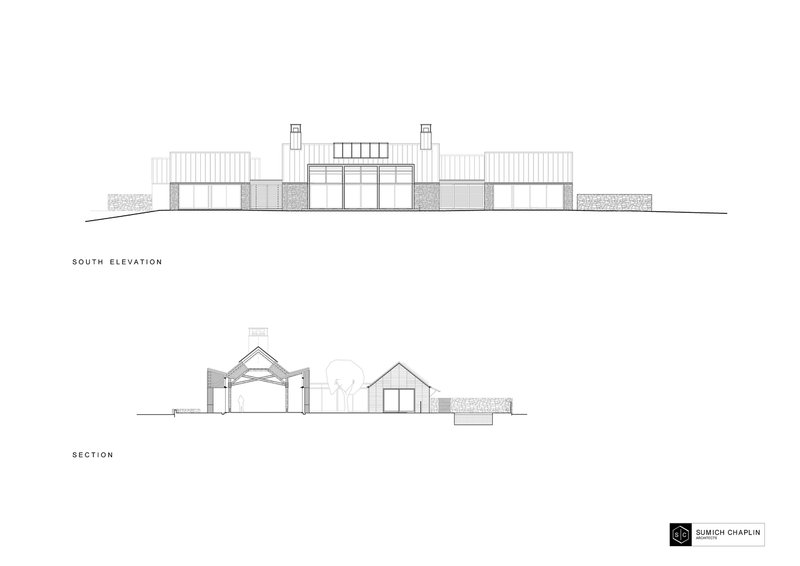
The roof design is a standout feature, particularly the inverted gable on the main living pavilion. This unique architectural gesture was inspired by an old deer-run structure discovered on-site during the initial survey. The roof's orientation captures views in both directions, emphasizing the seamless connection between interior spaces and the rugged landscape.
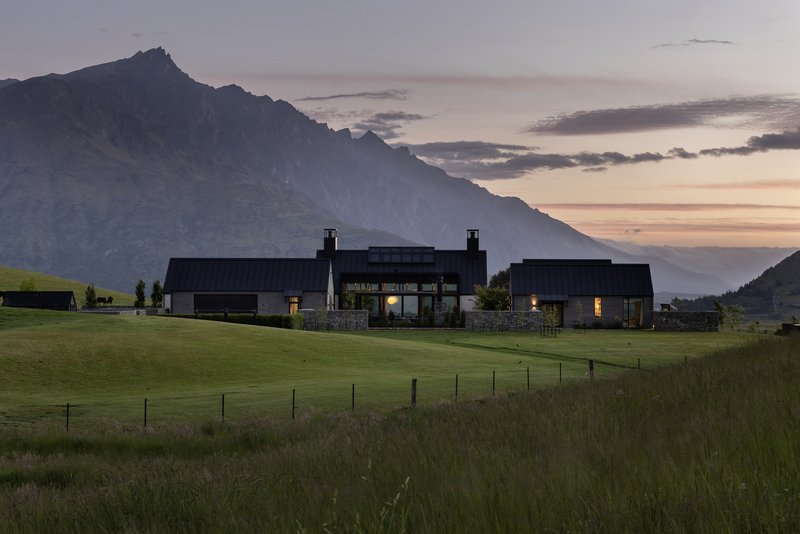
Material Palette and Textural Contrast
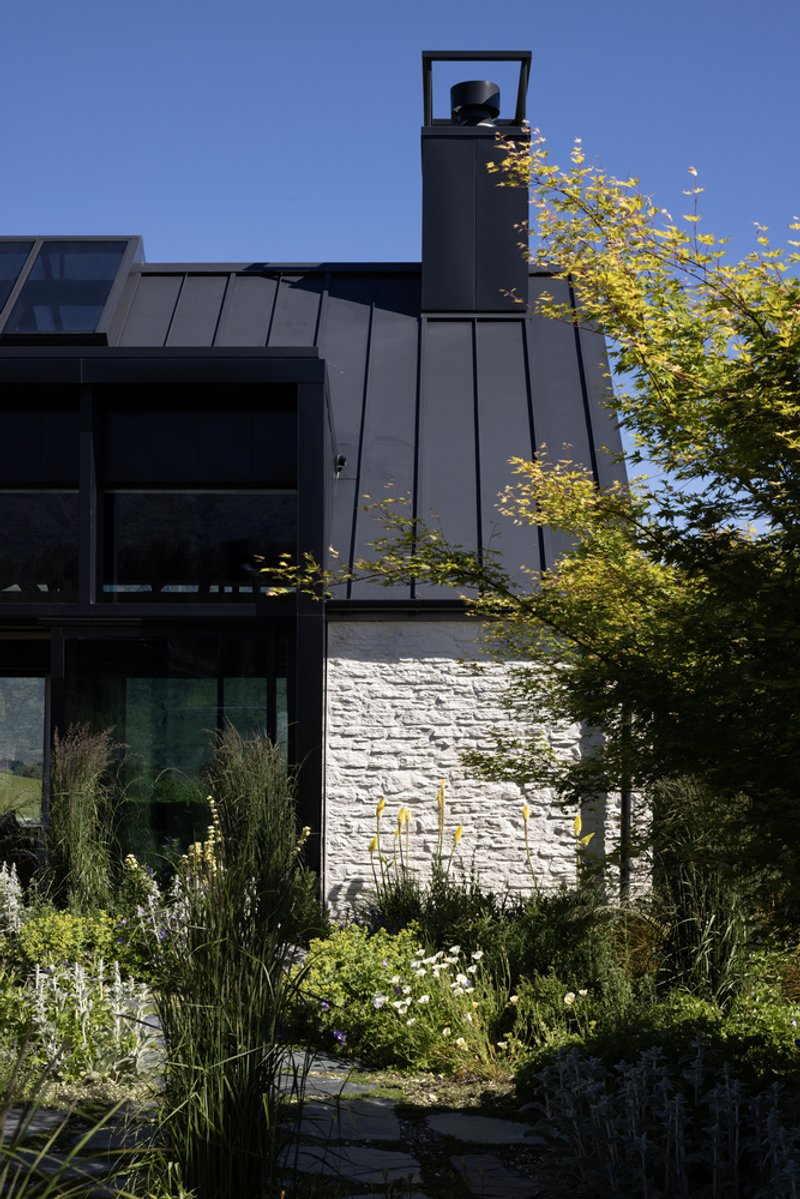
The material selection is integral to the success of this rural modern house design. Two primary materials define the exterior: band-sawn cedar weatherboards stained in a washed cedar hue and schist stonework treated with a mineral whitewash finish. These materials reference the historic architecture of the nearby Thurlby Domain while grounding the house in its natural context.
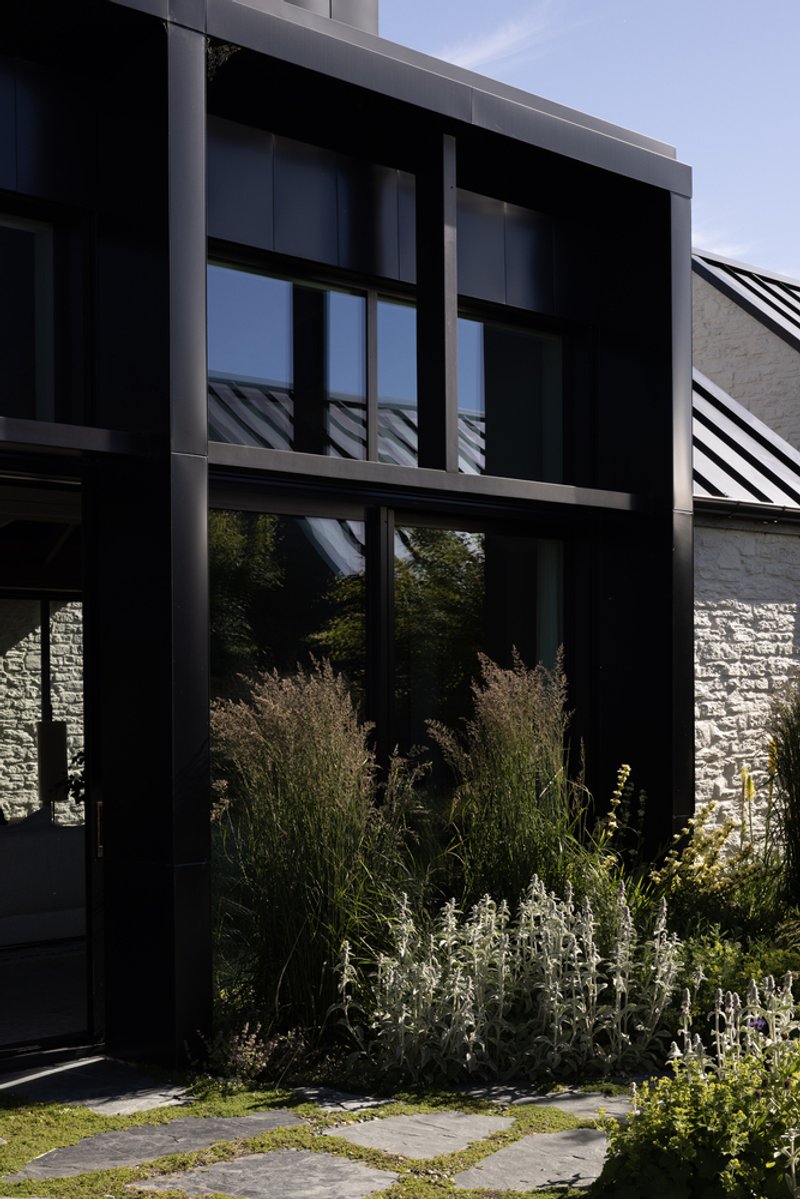
The roof and chimneys are clad in dark metal trays with a low light reflectance value (LRV) of less than 36%, ensuring they visually recede into the landscape. Aluminum triple-glazed windows provide energy efficiency and resilience against the region’s harsh alpine climate.
Interior Design and Flow
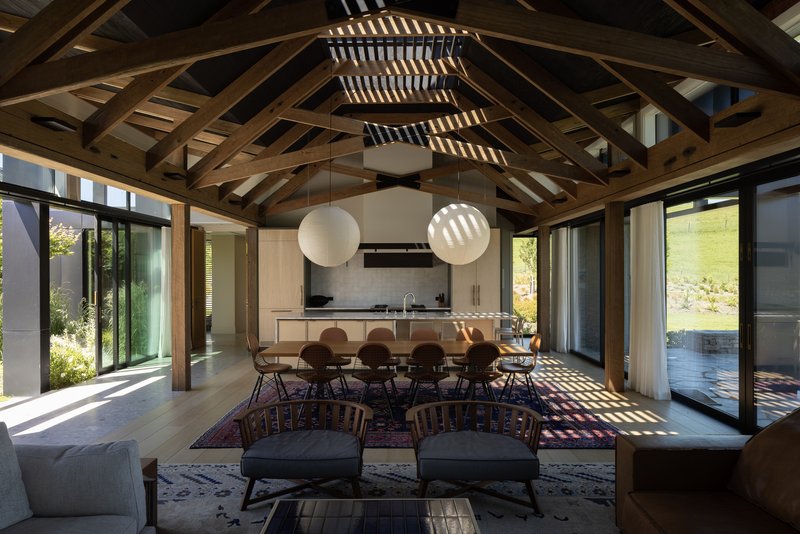
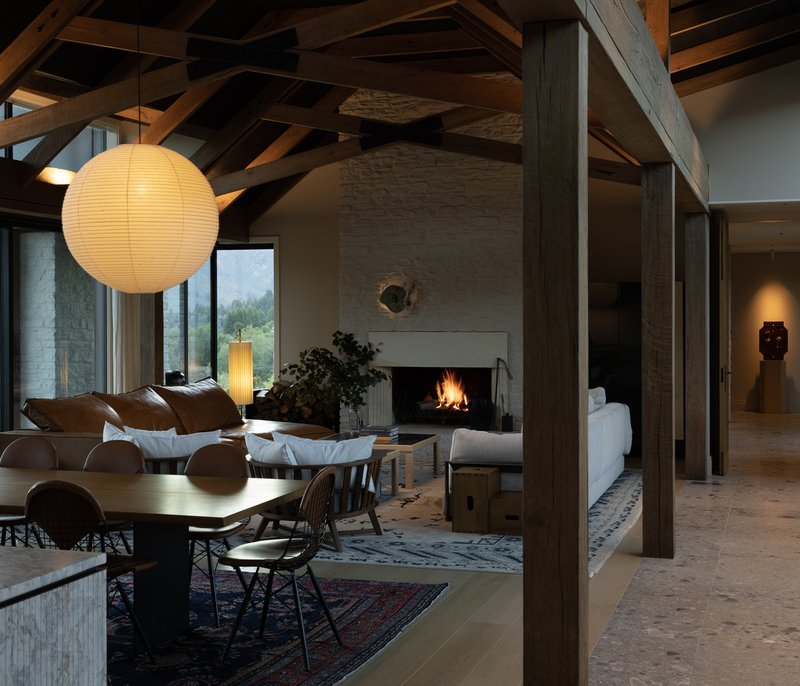
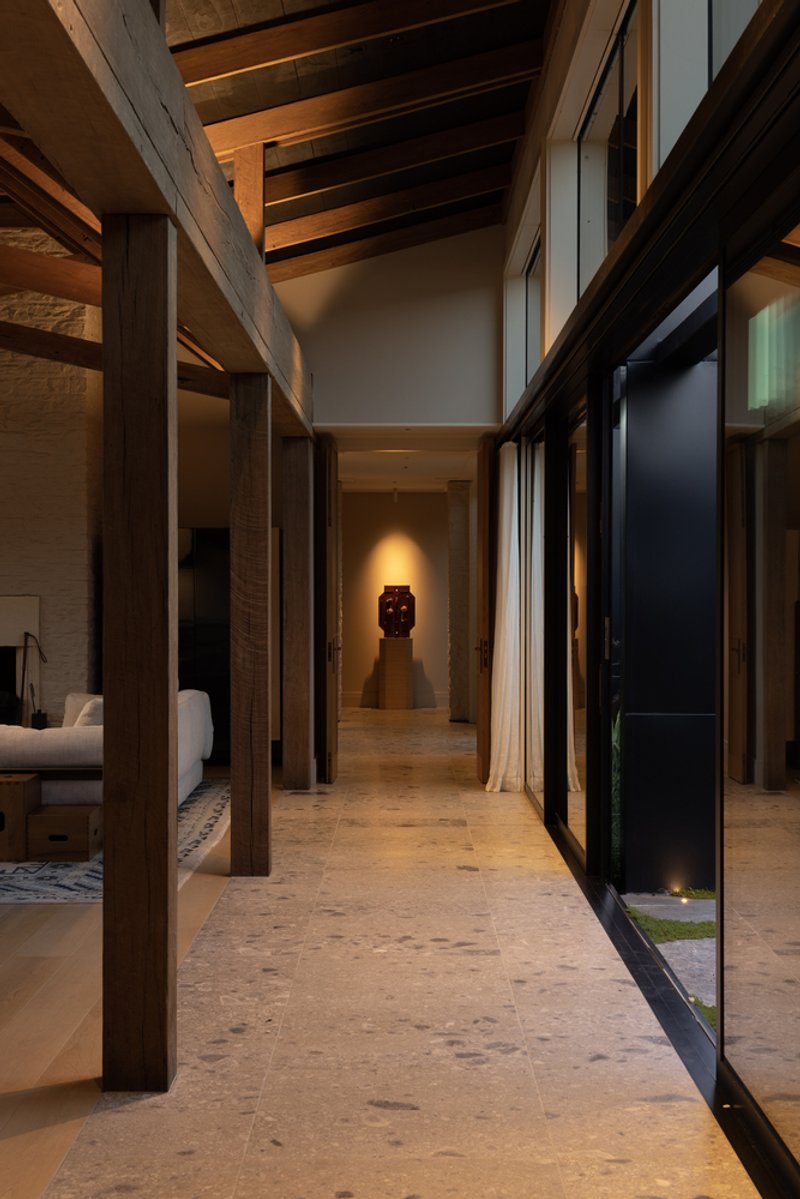
Inside, the house emphasizes warmth and natural textures, reflecting the principles of rural modern house design. Timber beams, stone features, and expansive glazing create a comfortable and inviting atmosphere. The open-plan living area seamlessly flows into the courtyard and outdoor spaces, encouraging indoor-outdoor living—a hallmark of New Zealand architecture.
Flat-roofed galleries with full-height glazing link the different pavilions, enhancing transparency and maintaining visual connectivity with the landscape. These transitional spaces blur the boundaries between the built environment and nature, fostering a constant relationship with the outdoors.
Courtyard as the Heart of the Home
The central courtyard serves as the heart of the home, providing a sheltered outdoor gathering space protected from prevailing winds. It enhances natural light penetration into the surrounding rooms while creating a private oasis within the vast openness of the plateau.
This internalized outdoor space underscores the rural modern house design ethos—combining functionality, comfort, and an intimate relationship with the landscape.
Sustainable Design Considerations
Sustainability is an inherent part of the design philosophy. The strategic orientation of the pavilions maximizes passive solar gain, reducing energy consumption during colder months. Triple-glazed windows enhance thermal performance, while the use of natural materials like stone and timber ensures durability and low maintenance.
The house also incorporates rainwater harvesting and energy-efficient heating systems, aligning with the growing demand for environmentally conscious rural modern house designs in New Zealand.
Historical Inspiration and Contemporary Expression
Speargrass House strikes a delicate balance between honoring regional architectural traditions and embracing modern design principles. The whitewashed schist cladding echoes the historic stone cottages scattered throughout the Wakatipu Basin, while the cedar weatherboards introduce a contemporary softness.
This synthesis of past and present exemplifies the rural modern house design approach—respecting the site’s history while catering to modern family living.
A Home Rooted in Landscape and Family
The Speargrass House is more than a residence; it is a sanctuary that nurtures a family's connection to the land. It reflects the client's desire to raise their young children amidst nature, offering an environment where farm life, outdoor activities, and modern comfort coexist.
Sumich Chaplin Architects have crafted a home that not only responds to the breathtaking Queenstown landscape but also celebrates the evolving narrative of rural modern house design in New Zealand.
A Benchmark in Rural Modern House Design
The Speargrass House is a benchmark in rural modern house design, illustrating how architecture can harmonize with its natural setting while fulfilling the functional and aesthetic needs of contemporary living. Sumich Chaplin Architects have masterfully fused tradition and modernity, creating a residence that will undoubtedly inspire future rural homes in New Zealand and beyond.
This project is a testament to the power of thoughtful architecture—one that respects its landscape, draws from history, and ultimately enriches the lives of those who call it home.
All Photographs are works of Simon Devitt




Popular Articles
Popular articles from the community

A Contemporary Take on Iranian Residential Architecture
A modern interior design in Mashhad that reinterprets brick, light, and spatial flow to create a warm, contemporary residential architecture.
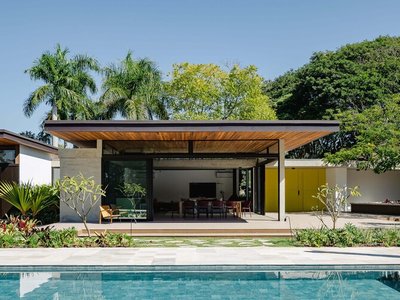
Flamboyant House by Juliana Camargo + Prumo Projetos
Modern Brazilian house integrating existing tree, pool, and volumes with glass, wood, and transitional spaces blending interior, exterior, and landscape seamlessly.
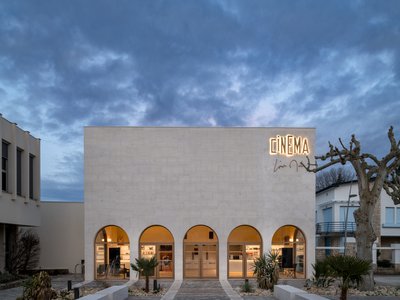
Louis Malle Cinema: A Limestone Cultural Landmark Revitalizing Community Life in Prayssac
Limestone cinema extension with public forecourt, blending heritage and modern design to create flexible cultural spaces and strengthen community interaction.
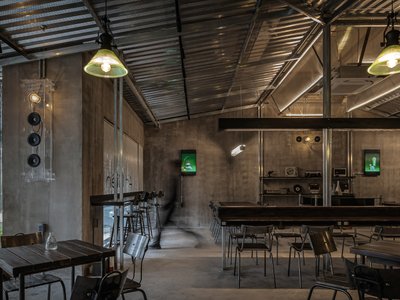
An Miên Lumière Cafe by xưởng xép, Ho Chi Minh City, Vietnam
An industrial-inspired café where layered steel and warm light create a dynamic, immersive environment shaped by reflection, depth, and perception.


Similar Reads
You might also enjoy these articles


The Ken Roberts Memorial Delineation Competition (Krob)
As the most senior architectural drawing competition currently in operation anywhere in the world, it draws hundreds of entries each year, awarding the very best submissions in a series of medium-based categories.


Waterfront Redevelopment and Urban Revitalization in Mumbai: Forging a New Dawn for Darukhana
A transformative waterfront redevelopment project reimagining Darukhana’s shipbreaking heritage into an inclusive urban future.

OUT-OF-MAP: A Call for Postcards on Feminist Narratives of Public Space
Rhizoma Design and Research Lab invites artists, designers, architects, researchers, and students to reflect on how feminist perspectives can reshape public space. Selected works will be exhibited in Barcelona, October 2026. Submissions open until 15 April 2026.


Documentation Work on Buddhist Wooden Temple
Architectural syncretism and cultural hybridity: A comparative study of the Buddhist temples in Chattogram Hill tracks


Explore Architecture Competitions
Discover active competitions in this discipline




The International Standard for Design Portfolios


The Global Benchmark for Architecture Dissertation Awards


The Global Benchmark for Graduation Excellence


Challenge to reimagine the Iron Throne
Comments (0)
Please login or sign up to add comments
No comments yet. Be the first to comment!