
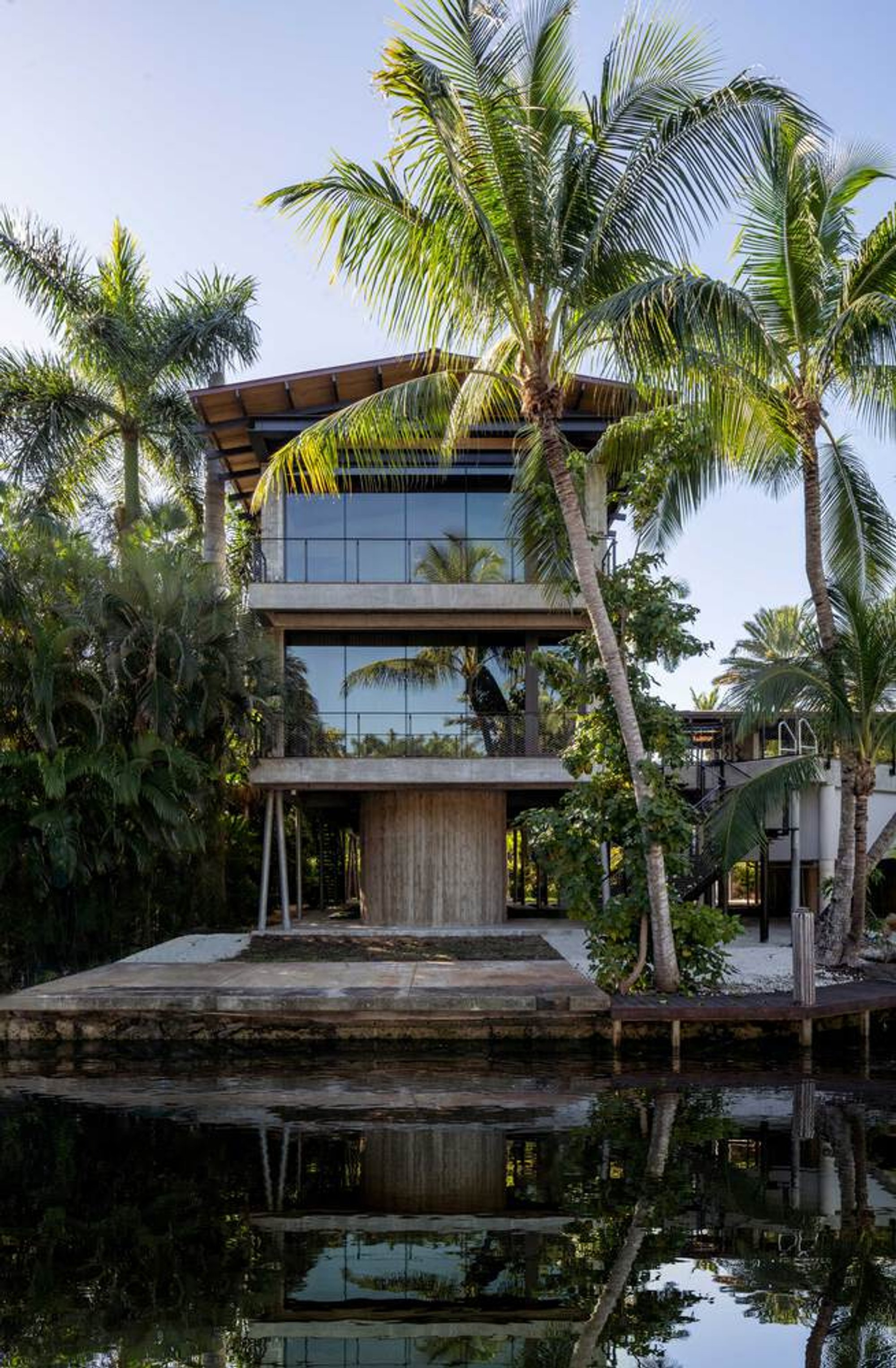
Stewart Avenue Residence by Brillhart Architecture: Redefining Elevated Coastal Living in Miami
Elevated Miami residence by Brillhart Architecture blends climate resilience, tropical modernism, and refined detailing for flood-zone coastal living.

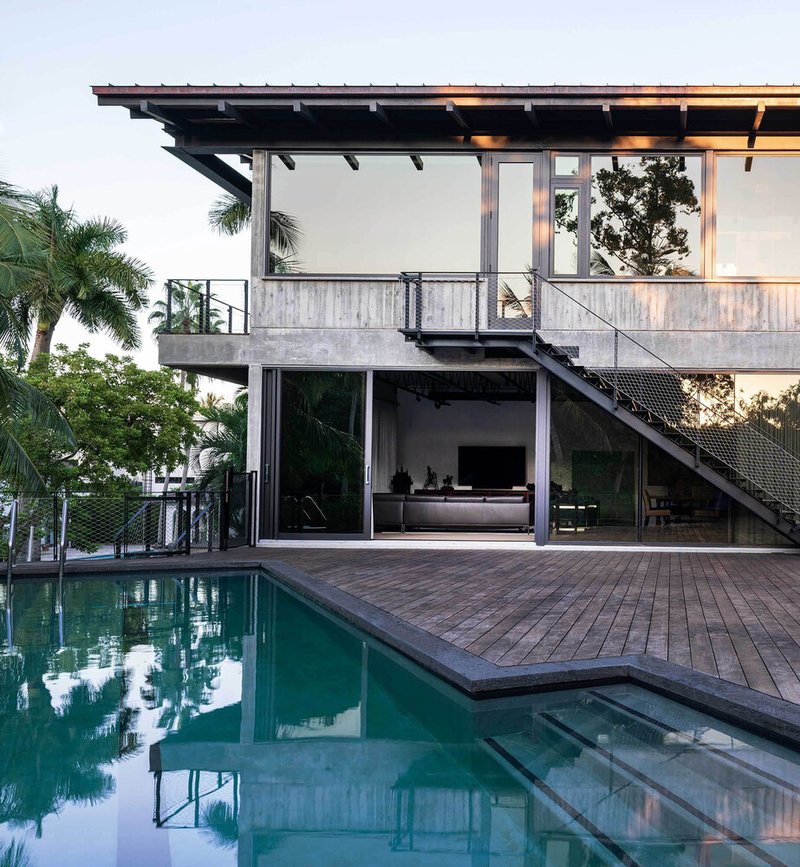
Located in the heart of South Coconut Grove, Miami, the Stewart Avenue Residence by Brillhart Architecture represents a bold reimagining of elevated coastal residential design. Completed in 2021 and spanning 4,500 square feet, this stunning waterfront home responds directly to the urgent demands of climate resilience, flood adaptation, and architectural innovation. Set within FEMA’s most extreme flood zone (VE), the project required the home’s first floor to be lifted a full story—12 feet above sea level—marking a fundamental shift in how elevated structures are conceived and experienced in coastal environments.
Post-Hurricane Irma: A New Vision for Resilient Waterfront Architecture
For homeowner Brad Herman, a prominent Miami surgeon, the journey toward the Stewart Avenue Residence began after experiencing repeated storm damage to his original 1923 canal-front home, which was just 900 feet from Biscayne Bay. The cumulative toll of hurricanes—beginning with Hurricane Wilma in 2005 and culminating in the devastating impact of Hurricane Irma in 2017—highlighted the inadequacies of patchwork repairs and the limitations of FEMA’s $250,000 flood insurance cap. Herman decided it was time to rebuild with a forward-thinking, storm-resilient home—one that could stand as a model for future waterfront development in a climate-challenged city.
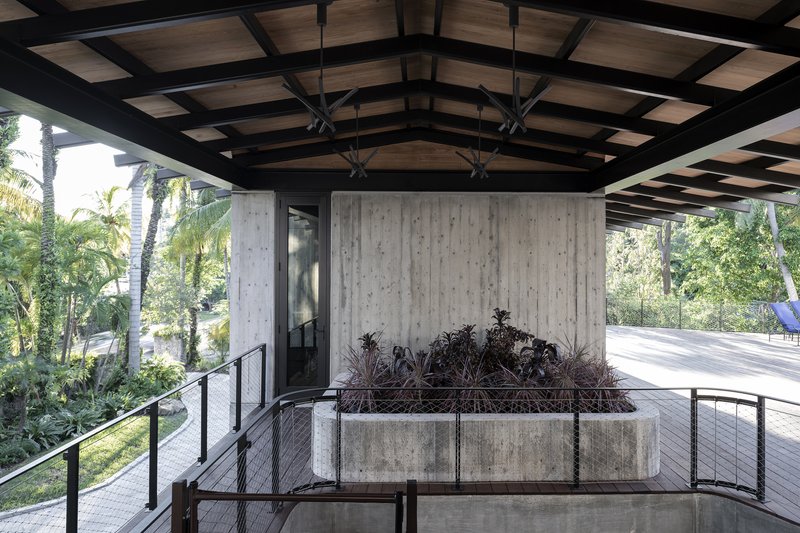
Elevating Design: A Conceptual Shift in Tropical Architecture
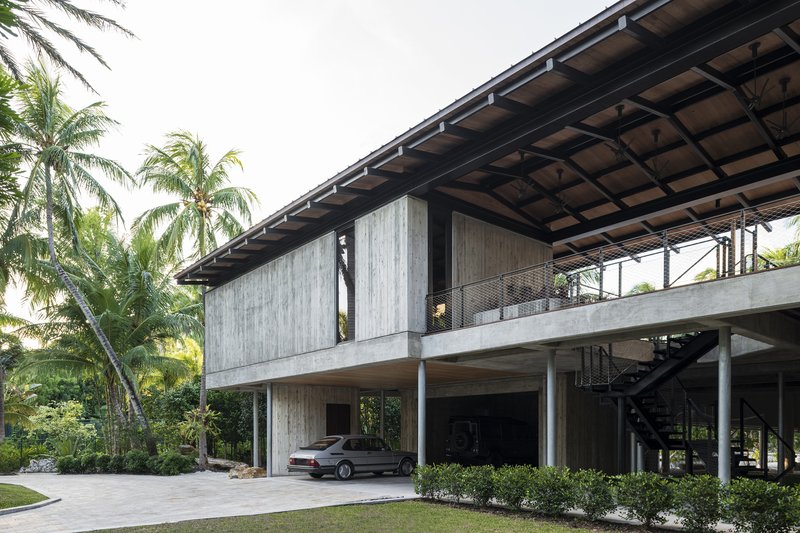
Brillhart Architecture, led by Jacob Brillhart and Andrew Aquart, approached the Stewart Avenue Residence not simply as a house on stilts, but as a redefinition of what elevated coastal architecture can be. Rejecting the standard model of raised homes that appear awkwardly perched on columns, the architects embraced elevation as a spatial and aesthetic opportunity. Their design incorporates three critical conceptual strategies:
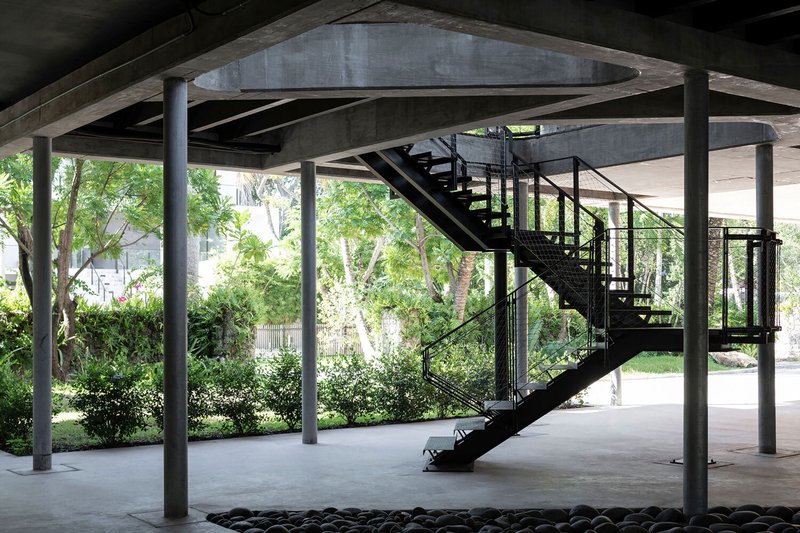
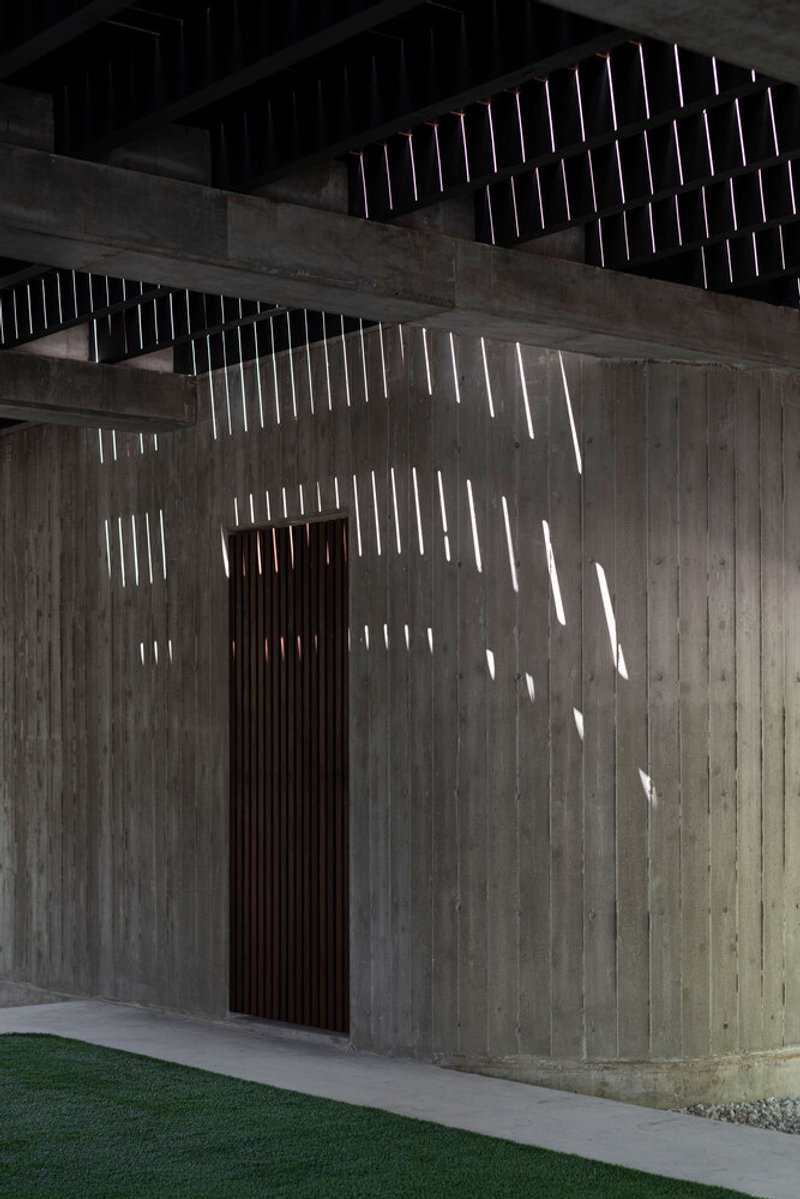
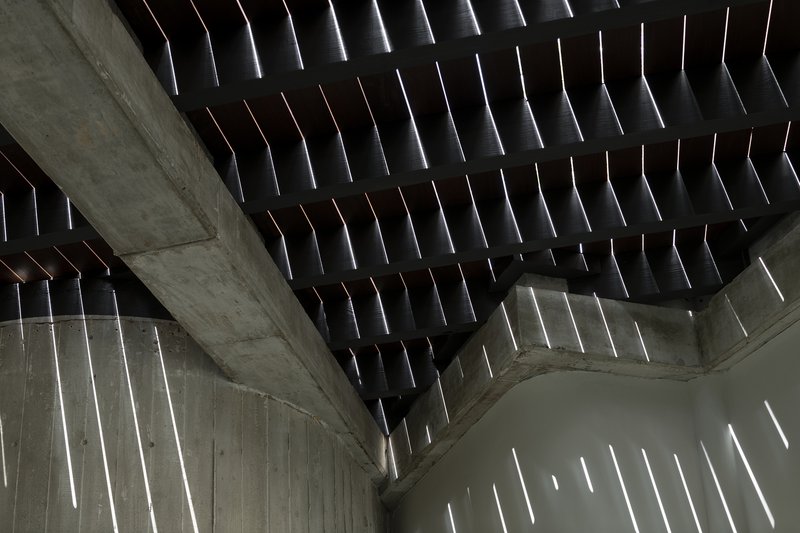
- Celebrating the Understory: Rather than hiding the space below the elevated living area, the design embraces the understory as a vital, functional, and architectural part of the home.
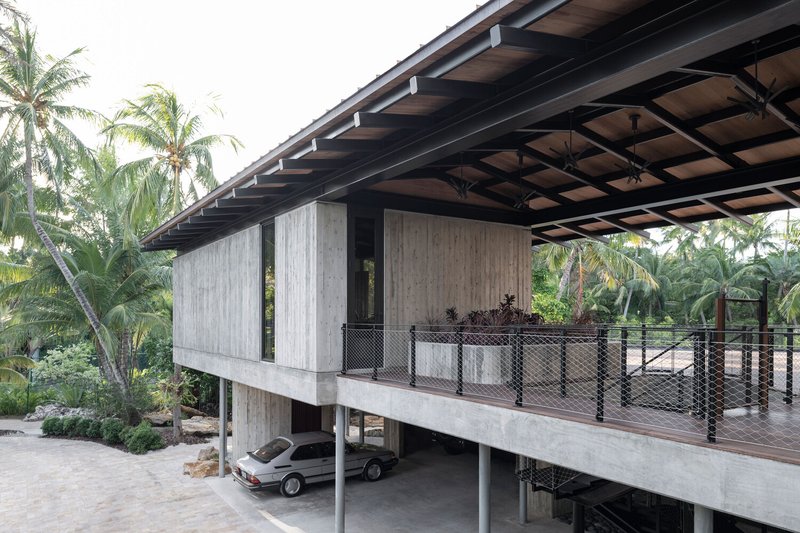
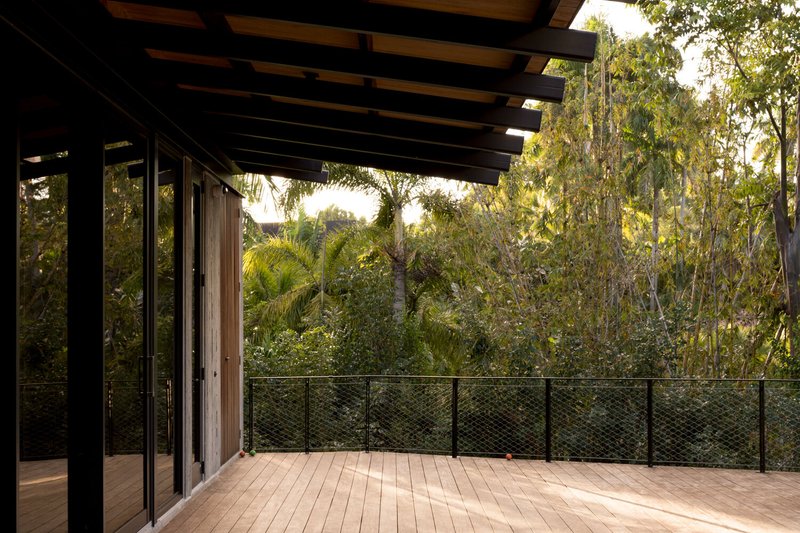
- Creating a New Ground Plane in the Sky: The elevated main level offers a reconstituted "ground floor" experience above sea level—complete with gardens, outdoor decks, and open views.
- Breaking Down the Massing: To reduce visual bulk and harmonize with Miami’s tropical character, the building mass is segmented into smaller volumes, making the home appear light, airy, and human-scaled.
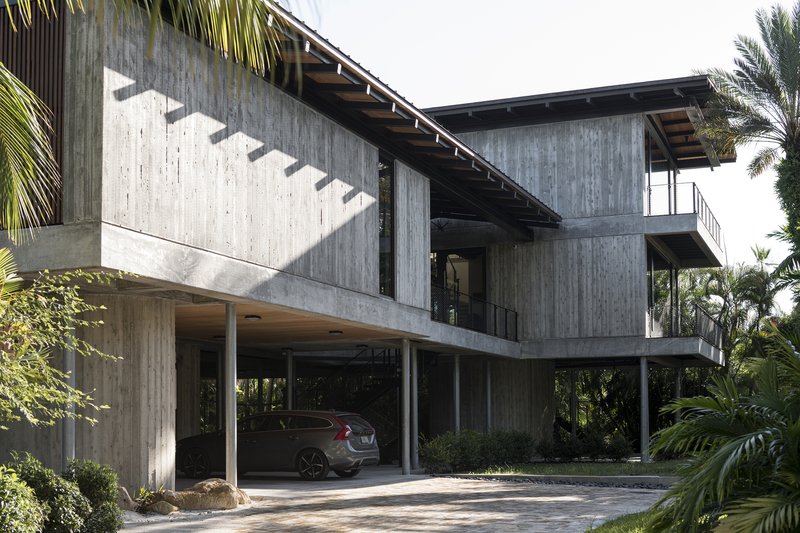
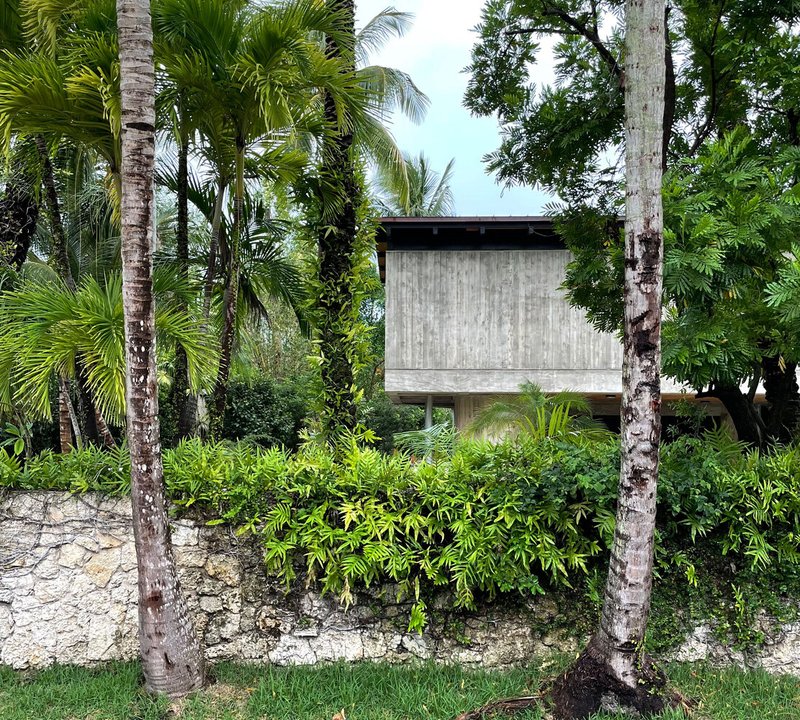
Material Expression and Detail Precision
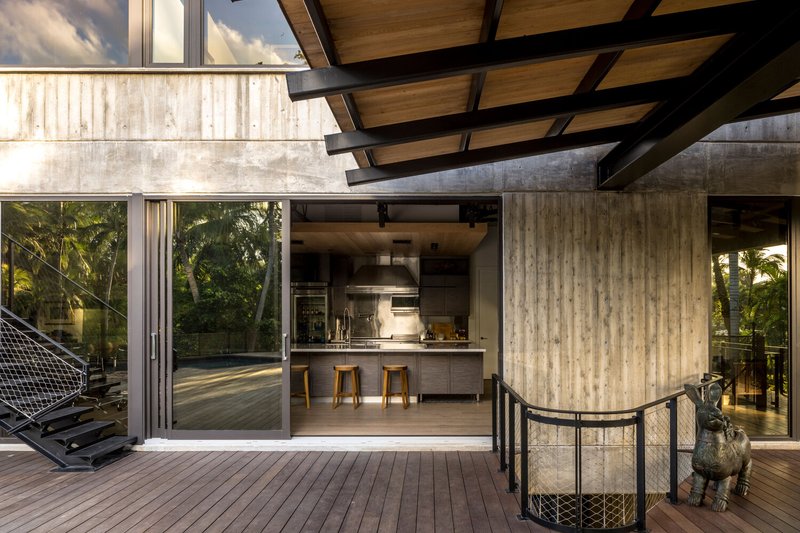
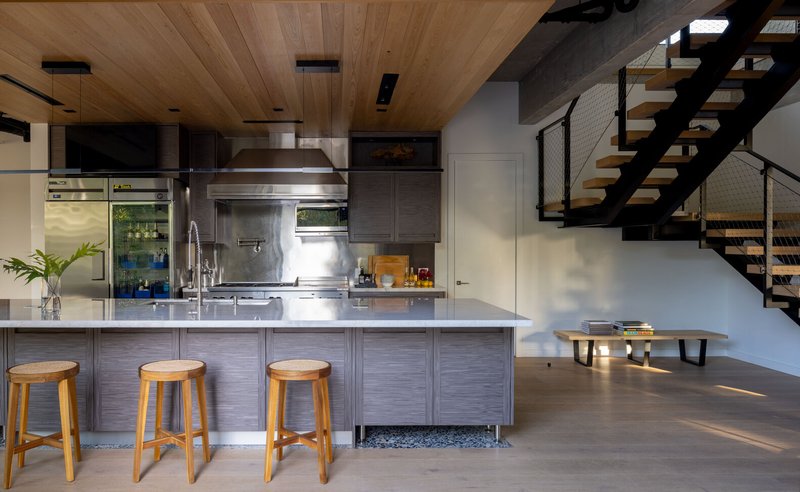
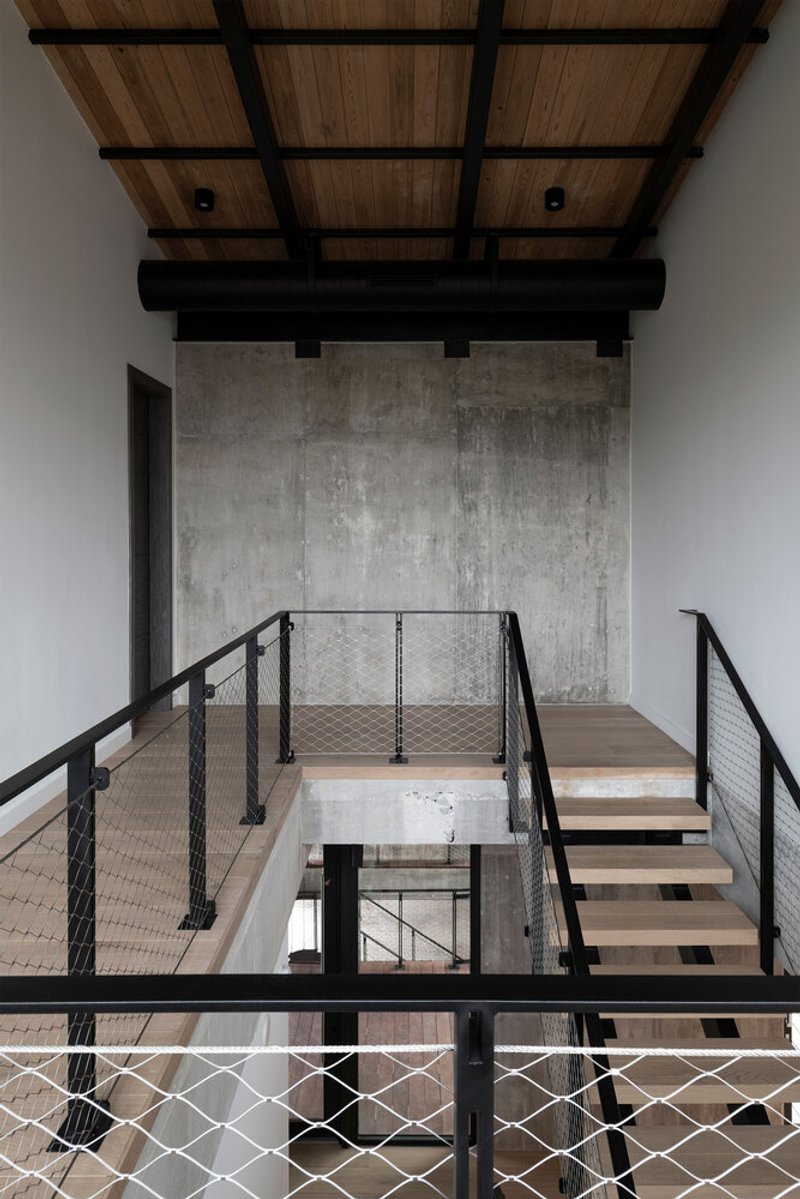
Crafted with extraordinary attention to materiality, the home blends natural wood elements, exposed structural beams, and floor-to-ceiling openings that connect interiors to lush landscaping and canal views. The exterior reflects the tones and textures of Miami’s subtropical context, while the interior detailing echoes the refinement seen in institutions like the Pérez Art Museum Miami (PAMM). From its thoughtful facade articulation to the sculptural staircases and open kitchen design, the Stewart Avenue Residence exemplifies an architectural language that is as refined as it is resilient.
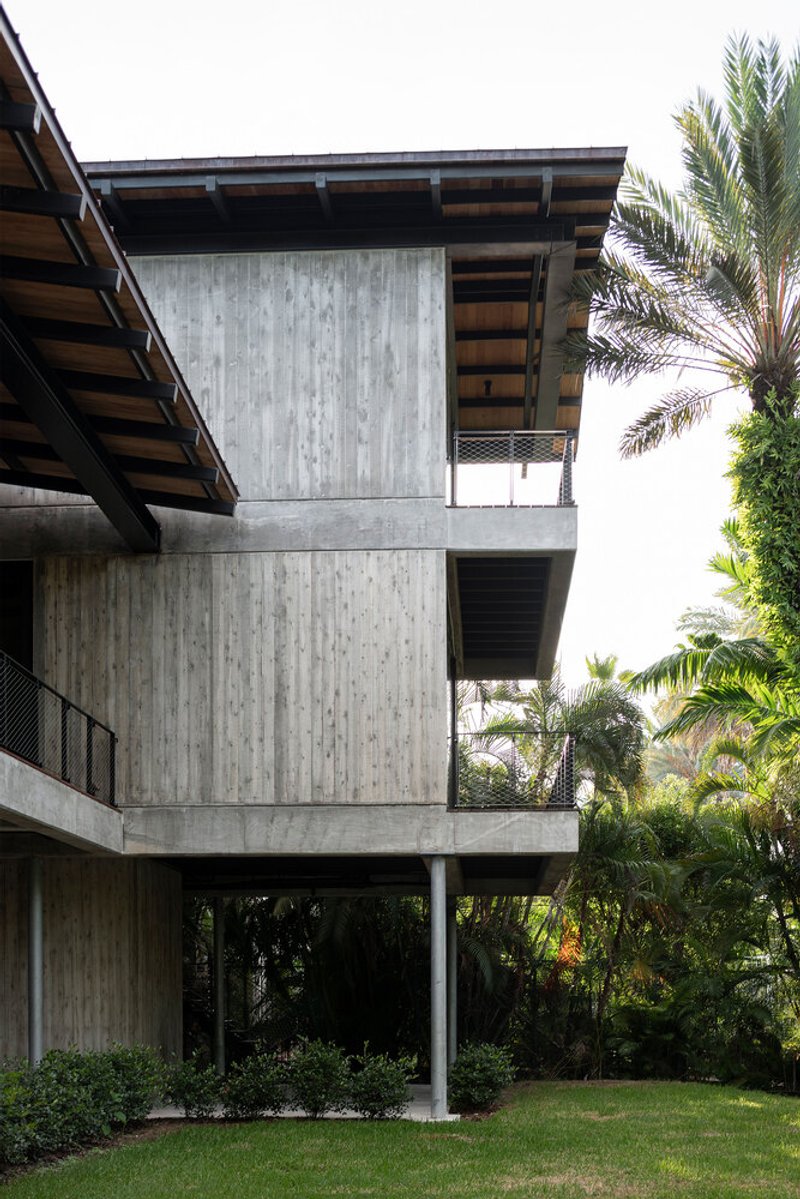
Landscape Integration and Urban Resilience
In collaboration with Chris Cawley Landscape Architects and ASD Consulting Engineers, the project’s design responds not only to environmental risks but also to the aesthetic potential of coastal living. Lush vegetation, native plantings, and elevated green spaces contribute to a serene and immersive experience, while also supporting water management and biodiversity in the surrounding neighborhood.
Community Impact and Market Response
The house has already captured the attention of the community and beyond. According to Herman, "People stop by all the time to ask if I’d consider selling. I’ve had multiple unsolicited offers—some from people who came to see other homes but changed their minds when they saw mine." This overwhelming interest speaks to the home's unique architectural appeal and its relevance in a city facing the realities of sea-level rise.
A Blueprint for the Future of Waterfront Homes
While stilted homes are nothing new—common in coastal areas from the Gulf Coast to the Outer Banks—Brillhart Architecture’s Stewart Avenue Residence signals an evolution in both purpose and aesthetics. It offers a blueprint for future flood-resilient architecture that does not compromise on design, beauty, or comfort. As climate change and rising sea levels reshape urban coastal areas, homes like this one will become not just desirable, but necessary.
All Photographs are works of Stephan Goettlicher, Michael Stavaridis




Popular Articles
Popular articles from the community

Louis Malle Cinema: A Limestone Cultural Landmark Revitalizing Community Life in Prayssac
Limestone cinema extension with public forecourt, blending heritage and modern design to create flexible cultural spaces and strengthen community interaction.
On the Brooks House by Monsoon Collective – A Contemporary Kerala Home Rooted in Tradition
Kerala home blending tradition and modernity with water-inspired design, brick architecture, courtyard planning, and sustainable rainwater harvesting strategies.
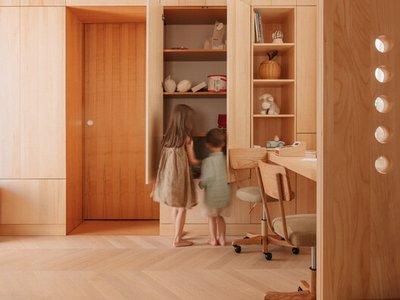
Treehouse Apartment: A Warm Timber Interior Blending Craft, Play, and Contemporary Living
Warm timber apartment with integrated treehouse, combining natural materials, craftsmanship, and playful design to create a flexible, family-oriented living environment.


The Ken Roberts Memorial Delineation Competition (Krob)
As the most senior architectural drawing competition currently in operation anywhere in the world, it draws hundreds of entries each year, awarding the very best submissions in a series of medium-based categories.


Similar Reads
You might also enjoy these articles
The Ken Roberts Memorial Delineation Competition (Krob)
As the most senior architectural drawing competition currently in operation anywhere in the world, it draws hundreds of entries each year, awarding the very best submissions in a series of medium-based categories.


Waterfront Redevelopment and Urban Revitalization in Mumbai: Forging a New Dawn for Darukhana
A transformative waterfront redevelopment project reimagining Darukhana’s shipbreaking heritage into an inclusive urban future.

OUT-OF-MAP: A Call for Postcards on Feminist Narratives of Public Space
Rhizoma Design and Research Lab invites artists, designers, architects, researchers, and students to reflect on how feminist perspectives can reshape public space. Selected works will be exhibited in Barcelona, October 2026. Submissions open until 15 April 2026.


Documentation Work on Buddhist Wooden Temple
Architectural syncretism and cultural hybridity: A comparative study of the Buddhist temples in Chattogram Hill tracks


Explore Architecture Competitions
Discover active competitions in this discipline




The International Standard for Design Portfolios


The Global Benchmark for Architecture Dissertation Awards


The Global Benchmark for Graduation Excellence


Challenge to reimagine the Iron Throne
Comments (0)
Please login or sign up to add comments
No comments yet. Be the first to comment!