

Sustainable Building Renovation in Spain: A Closer Look at the Espellos Building by Díaz y Díaz Arquitectos
This article explores the sustainable renovation of Spain's Espellos Building by Díaz y Díaz Arquitectos, focusing on energy efficiency and aesthetics.


In the heart of Santiago de Compostela, Spain, the Espellos Building stands as a testament to the advancements in sustainable building renovation. Spearheaded by the renowned Díaz y Díaz Arquitectos, in collaboration with MIBA Architects, this project sets a benchmark for energy-efficient refurbishment in the government sector. The year 2023 marks the completion of a significant phase in the transformation of the San Caetano administrative complex, focusing on the Espellos Building's envelope renovation.

Background and Architectural Significance
Constructed in 1985, the Espellos Building initially diverged in configuration and typology from its historical counterparts. Comprising a lower trapezoidal section and a protruding rectangular upper section, the structure required a thoughtful approach to meld with the existing architectural fabric and enhance its energy performance.


Objectives of the Renovation
The primary goal of this sustainable building renovation in Spain was twofold: to significantly improve the working conditions for administrative staff and to elevate the quality of service provided to the public. Achieving high energy efficiency and presenting a modern, yet contextually harmonious aesthetic were pivotal.


Enhancing Energy Efficiency
A critical aspect of the renovation involved updating the building's envelope to bolster its energy efficiency. This entailed the introduction of a new facade system characterized by high-energy performance, capable of reducing thermal bridging and improving insulation.


Aesthetic Integration and Sustainability
Echoing the materials and aesthetics of the historical buildings in the complex, the renovation embraced pitched tile roofs, white mortar facades, wooden joinery with granite surrounds, and granite baseboards. This modern interpretation of traditional materials underscores the project's commitment to sustainability and aesthetic coherence.


The Modernization of Historical Context
The Espellos Building renovation exemplifies how sustainable practices can be integrated into the renovation of existing structures, particularly in sensitive historical contexts. By creating a continuous base and unifying the building's appearance with the overall complex, the project fosters a connection between the past and the present, paving the way for future sustainable initiatives in Spain.

Leading by Example in Sustainable Renovation
The Espellos Building envelope renovation by Díaz y Díaz Arquitectos, captured in stunning detail by photographer Juan Rodriguez, stands as a beacon of sustainable building renovation in Spain. Through meticulous planning and a deep respect for both heritage and environmental responsibility, this project demonstrates how modern architectural practices can breathe new life into older structures, making them more energy-efficient, aesthetically pleasing, and functional for contemporary use.

In embracing sustainable renovation practices, the Espellos Building project contributes to a greener, more sustainable future, setting a standard for similar projects across Spain and beyond.


All photographs are work of Juan Rodríguez


Popular Articles
Popular articles from the community


Opera on the Sea: Driftwood Logic Shapes a Timber Opera House on Estonia's Coast
Trevor Orgill's opera house translates the entangled drift of floating timber into a civic building where wood, water, and music converge.
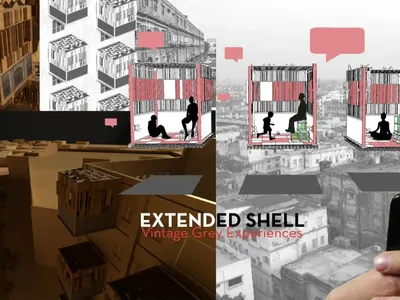
Extended Shell: Retrofitting Kolkata's Balconies as Living Urban Thresholds
A modular retrofit system recovers the social and environmental intelligence of Kolkata's historic verandas for contemporary Park Street residents.
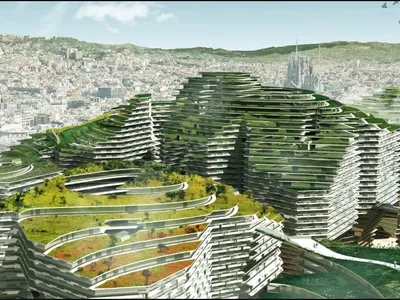
Manzana Morphosis: Stretching Barcelona's Grid into a Living Landscape for 2050
A radical reworking of the Eixample manzana turns density into a tool for generous public space, vertical ecology, and environmental performance.

Tsunami Convergenics: Turning Catastrophic Ocean Forces into Underwater Housing Infrastructure
A speculative underwater settlement off the coast of Onagawa, Japan, treats tsunamis and typhoons as energy sources rather than threats.

Similar Reads
You might also enjoy these articles


Hodi-Mandai Geram
Project Function: Preservation and revitalization of the Intangible heritage and socio-spatial identity of the Hodi by Housing, Cultural Memory Center, Sacred Grove, landscape, local tourism economy

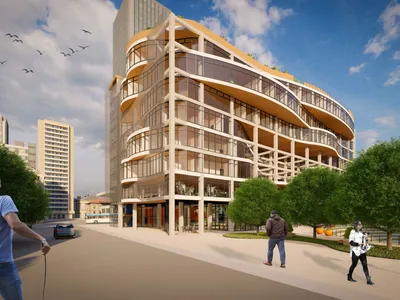
Olio Towers: A Mid-Rise for Performers That Fuses Housing, Rehearsal, and Stage
Located blocks from Houston's Theater District, this modular tower stacks living units around a central performance atrium.

Oasis: Modular Green Housing Carved into Dhaka's Urban Fabric
A shortlisted Plugin Housing entry reclaims unauthorized settlements in Dhaka with stepped concrete volumes, green roofs, and ventilation-driven design.

Black Hole: A Floating Megastructure for the Post-Physical Era
Emiliano Mazzarotto envisions a spherical, self-scaling arena where e-sports, digital hotels, and holographic stadiums replace traditional public space.

Explore Commercial Buildings Competitions
Discover active competitions in this discipline

Challenge to reimagine the Iron Throne

Photograph architecture without architects

Illustrate the lost glory of Angkor Wat - Render Challenge

Design challenge to reuse E-waste
Comments (0)
Please login or sign up to add comments
No comments yet. Be the first to comment!