
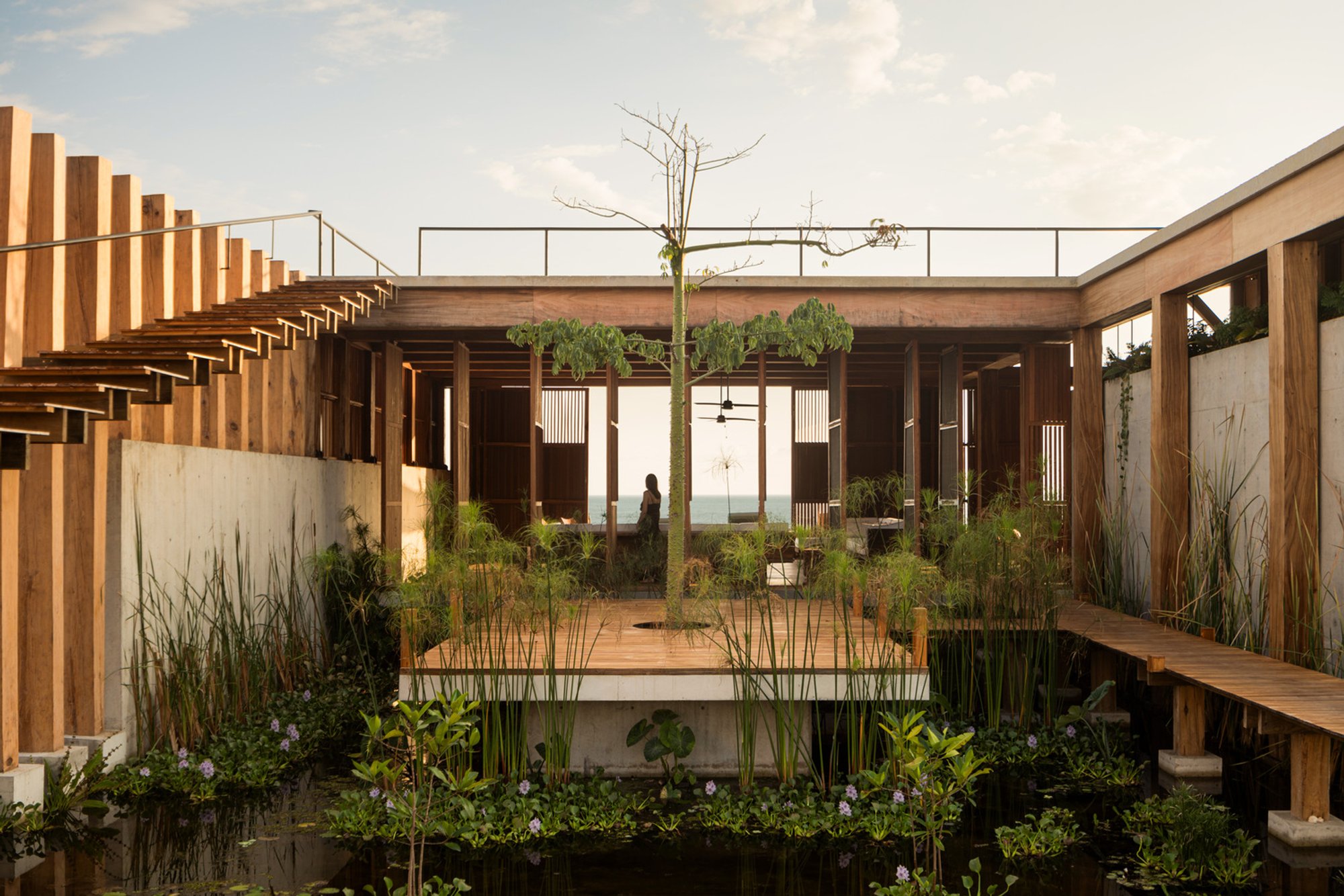
Sustainable Coastal House Design in Mexico: Casa Kani-Ini by TAC Taller Alberto Calleja
A sustainable beachside residence in Oaxaca, Casa Kani-Ini harmonizes modular living with landscape through climate-sensitive architectural design.

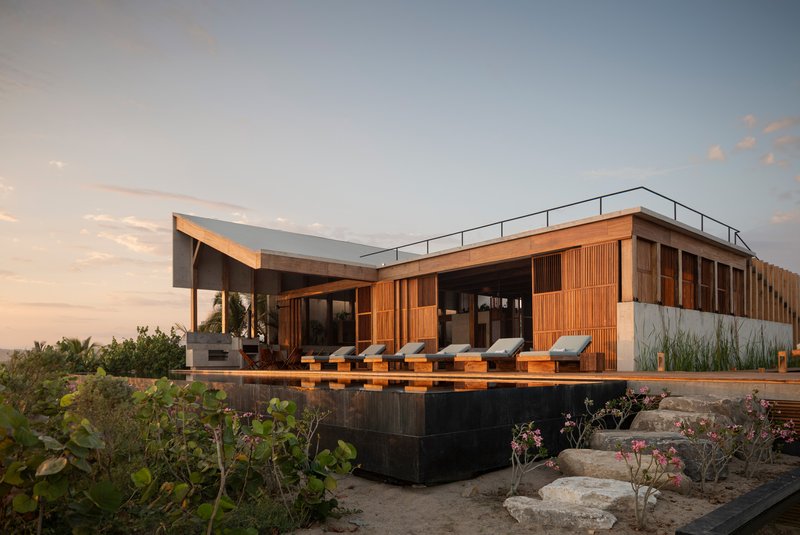
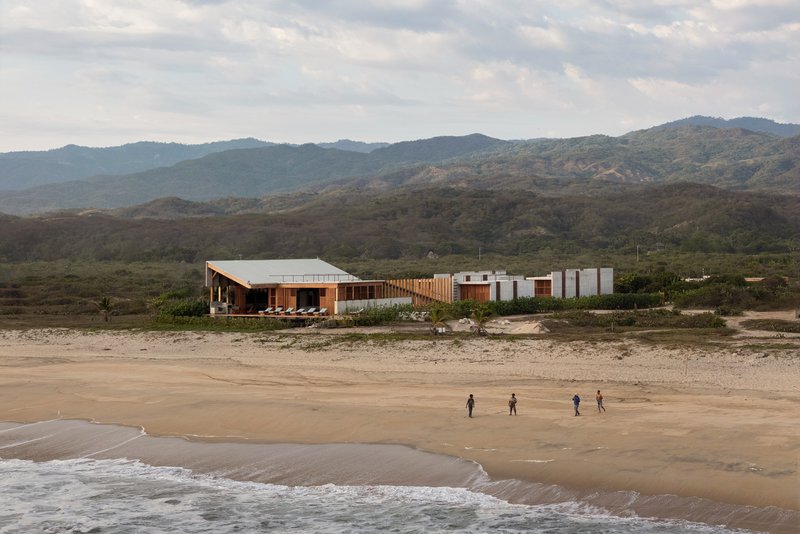
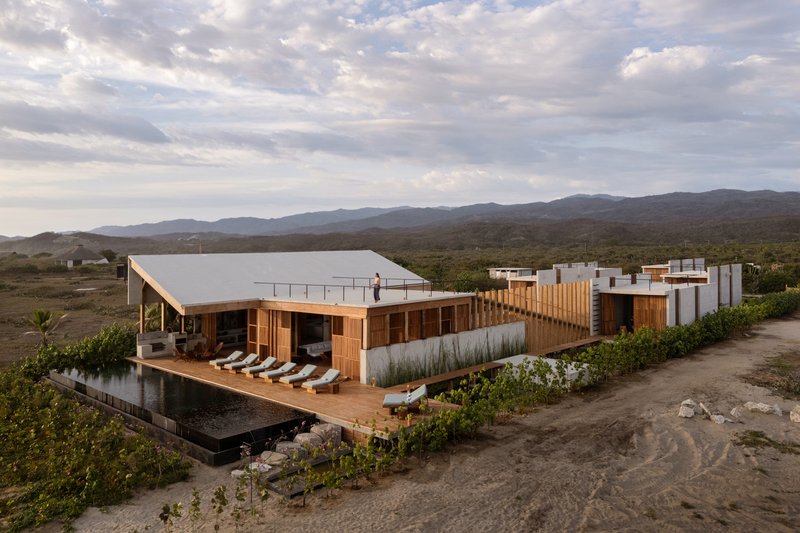
Nestled on the Pacific coast in Puerto Escondido, Oaxaca, Casa Kani-Ini by TAC Taller Alberto Calleja redefines the language of sustainable coastal house design in Mexico. Designed for a family seeking both retreat and permanence, this project carefully balances a rich architectural program with environmental sensitivity. With a total built area of 1,340 square meters on a sprawling 4,500-square-meter site, the house demonstrates how spatial complexity can be harmonized with the natural landscape.
A Landscape-Responsive Residential Strategy
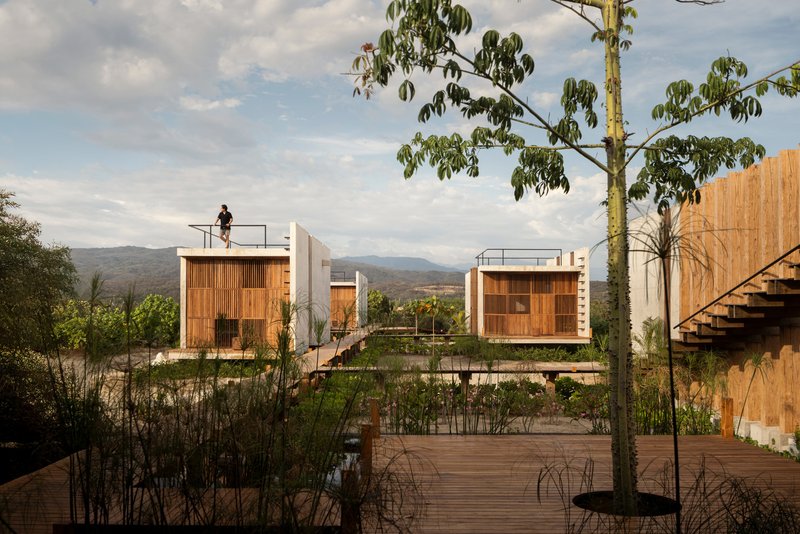
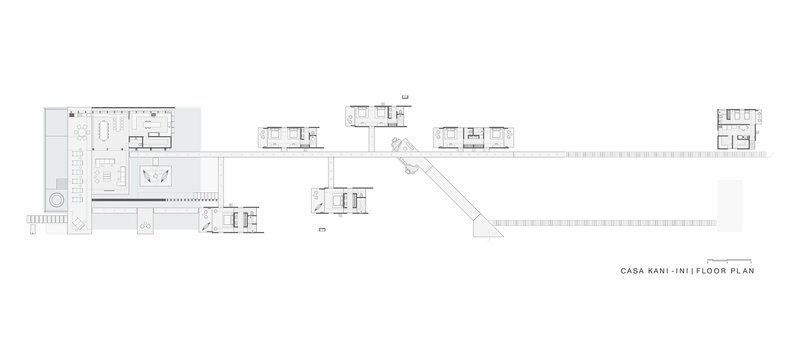
Faced with the challenge of minimizing the environmental impact of such an extensive program, the architectural strategy revolved around breaking the built mass into multiple, strategically placed structures. Rather than constructing a monolithic building, the design disperses functional spaces across the plot, allowing for greater interaction with the surrounding topography and vegetation. This fragmentation fosters a natural rhythm between built and unbuilt, architecture and ecology.
Framing the Pacific: A Continuous Social Nave
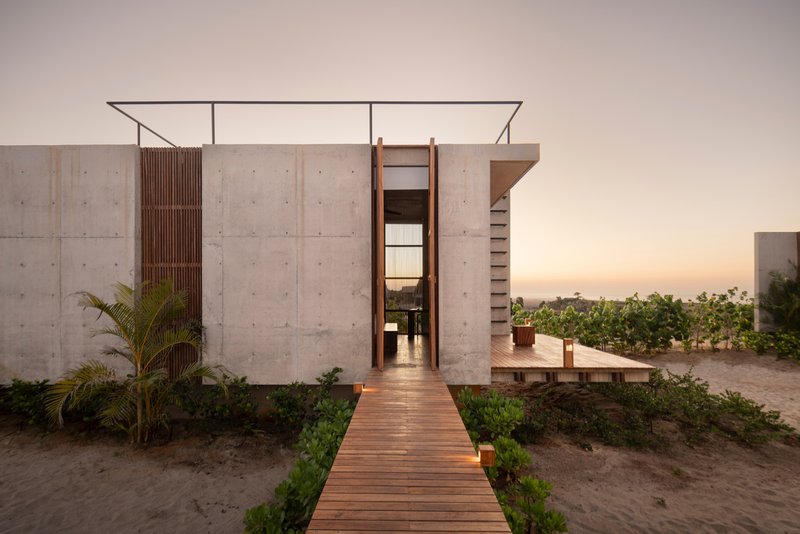
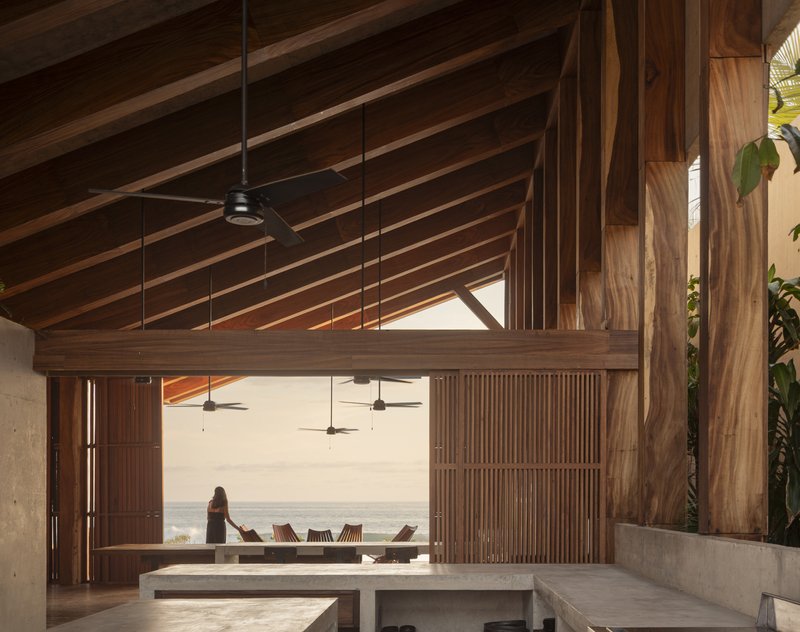
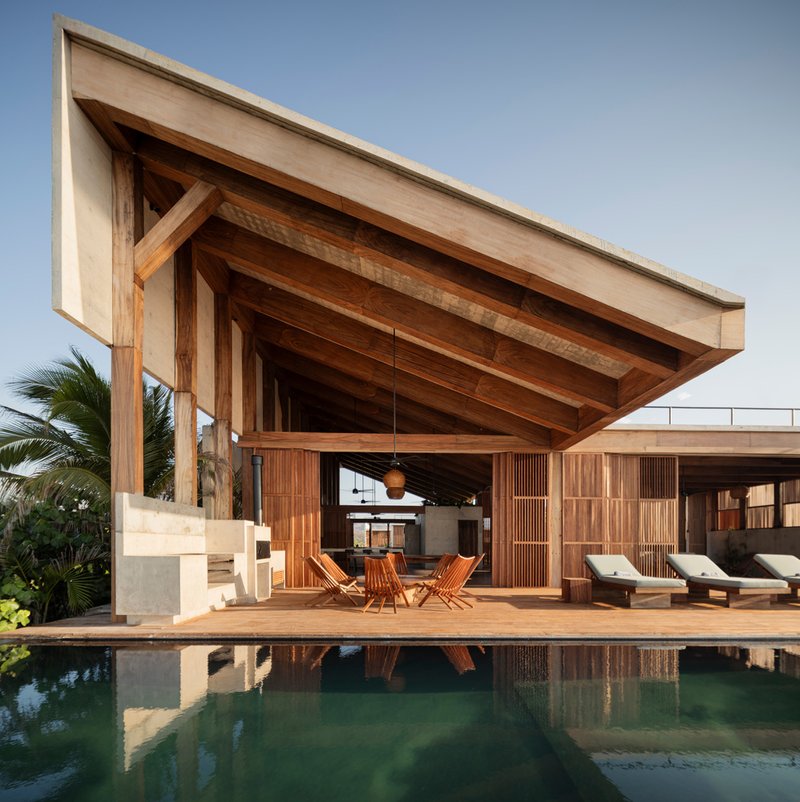
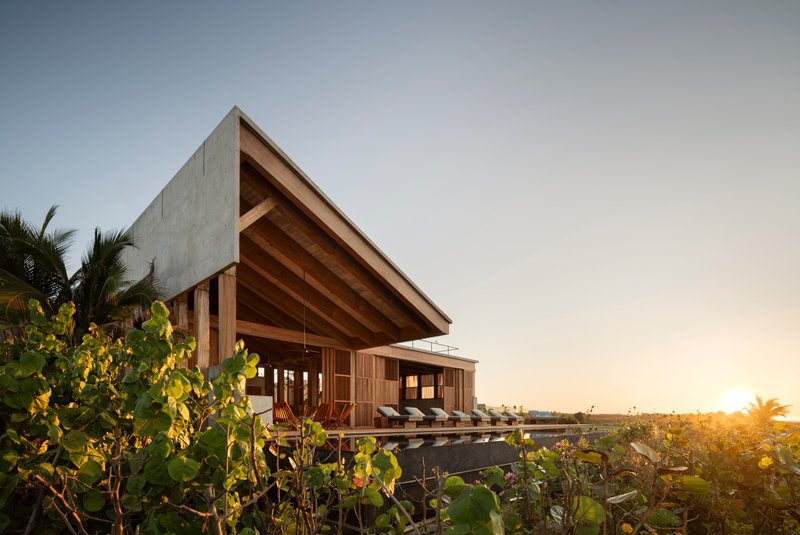
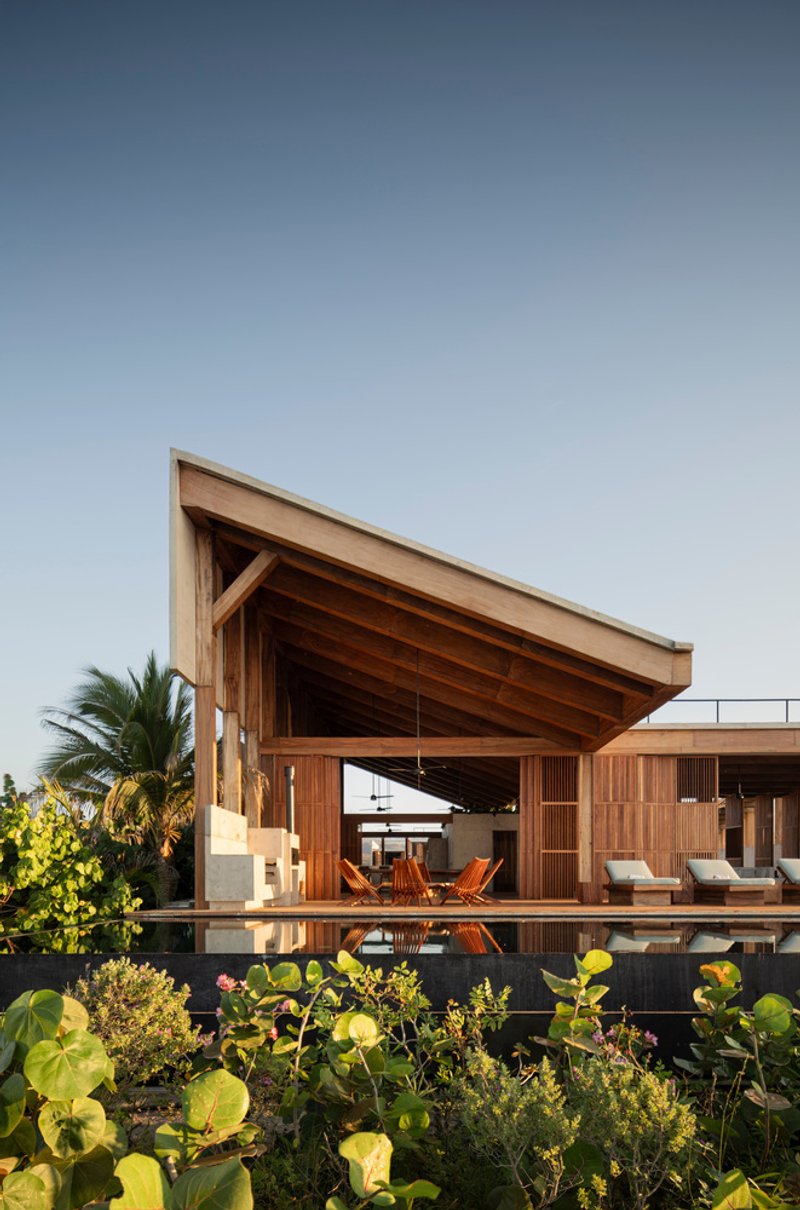
The social and recreational spaces are contained in a single, continuous nave facing the ocean. Its orientation captures the breeze and maximizes the visual connection with the sea. The structure combines wood and concrete in a mixed tectonic system, giving the space both warmth and solidity. A sloped roof and a rooftop platform provide not only shelter and shade but also elevated perspectives for contemplation and relaxation, reinforcing the sensory relationship between the house and its maritime context.
The Courtyard as an Organizing Element
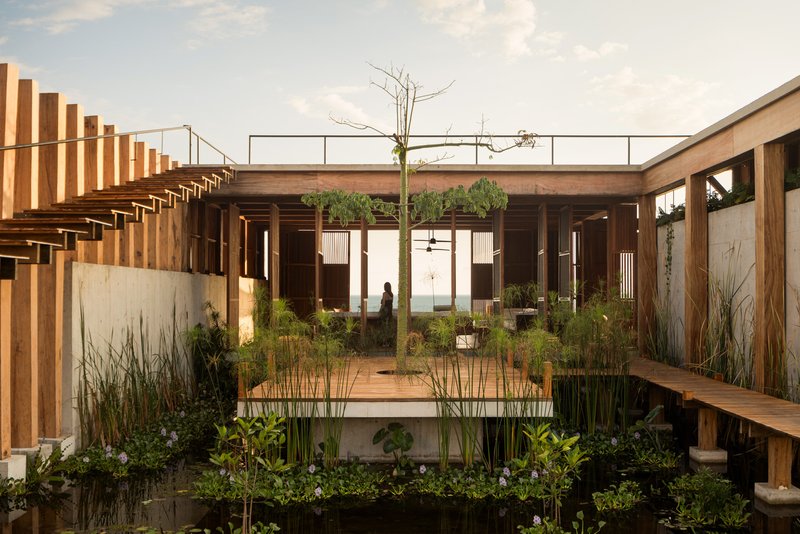
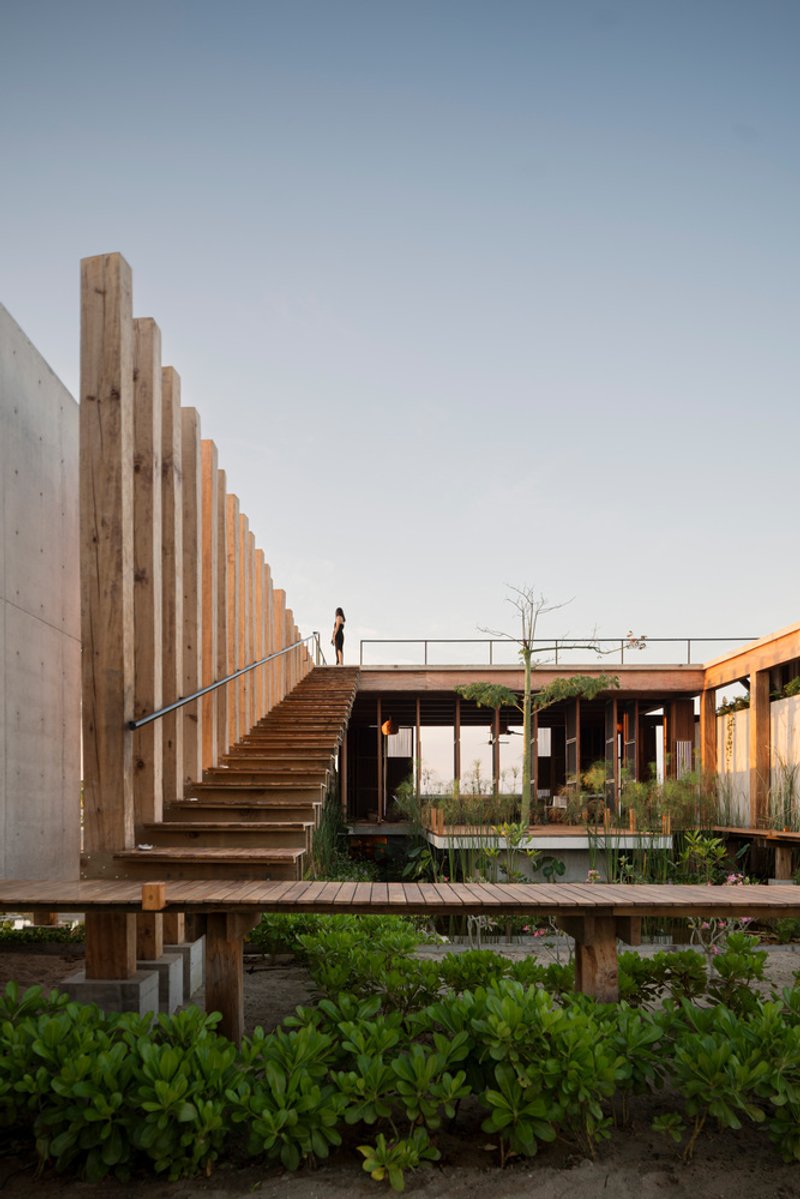
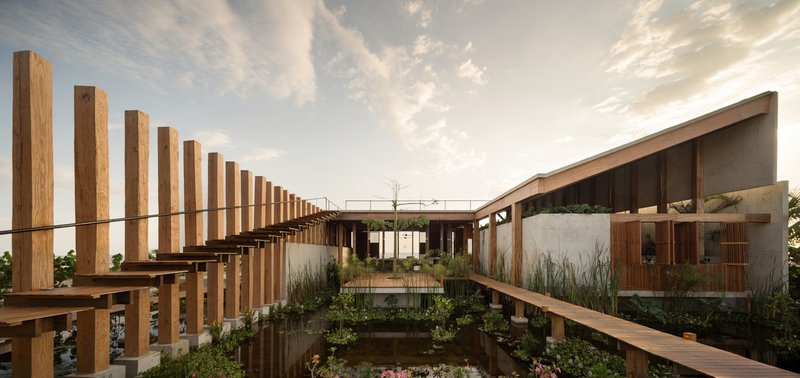
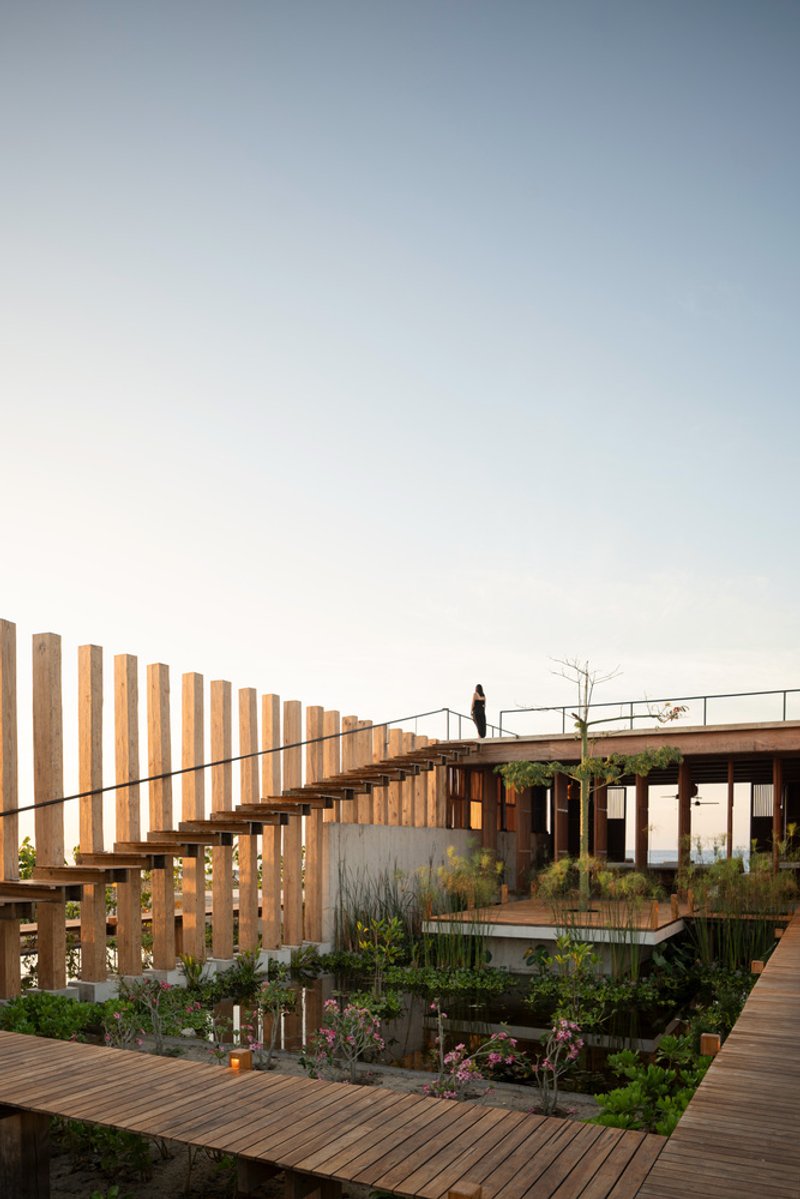
At the core of Casa Kani-Ini lies a central green water courtyard, serving as a transitional zone that organically connects the various structures. This courtyard is more than a circulation node—it’s the emotional heart of the house, where light, water, and vegetation coexist. The courtyard creates a buffer that offers privacy, supports passive cooling, and visually anchors the spatial composition of the home.
Modular Living and Spatial Independence
Six independent modules house the private and service areas, laid out in a staggered configuration toward the rear of the site. Each module is self-contained, promoting spatial autonomy and structural efficiency. These volumes are linked only by open-air circulation bridges, encouraging moments of pause and contact with nature. This modularity not only enhances privacy but also minimizes disruption to the land, reinforcing a respectful relationship with the environment.
Architecture as a Harmonious Extension of Place
Casa Kani-Ini is a model of sustainable coastal house design in Mexico, where architecture and landscape are not in opposition but in dialogue. The use of local materials, passive environmental strategies, and thoughtful spatial distribution culminate in a house that feels both rooted and elevated—an embodiment of shelter, openness, and regional identity. The residence invites users to inhabit the land rather than dominate it, offering a blueprint for future coastal architecture in sensitive environments.
With Casa Kani-Ini, TAC Taller Alberto Calleja achieves a compelling synthesis of form, function, and environmental care. Through its dispersed layout, material honesty, and integration with nature, the residence stands as a testament to how contemporary architecture can be simultaneously ambitious and restrained. It sets a new standard for sustainable coastal house design in Mexico—one that foregrounds context, experience, and ecological responsibility.




Popular Articles
Popular articles from the community


Solar Steam: A Climate-Responsive Architecture That Redefines the Monument
A climate-responsive memorial architecture that transforms heat, decay, and time into a living system reflecting humanity’s ecological impact.
Treehouse Apartment: A Warm Timber Interior Blending Craft, Play, and Contemporary Living
Warm timber apartment with integrated treehouse, combining natural materials, craftsmanship, and playful design to create a flexible, family-oriented living environment.
Flamboyant House by Juliana Camargo + Prumo Projetos
Modern Brazilian house integrating existing tree, pool, and volumes with glass, wood, and transitional spaces blending interior, exterior, and landscape seamlessly.
An Miên Lumière Cafe by xưởng xép, Ho Chi Minh City, Vietnam
An industrial-inspired café where layered steel and warm light create a dynamic, immersive environment shaped by reflection, depth, and perception.


Similar Reads
You might also enjoy these articles


Bamboo Housing Challenge 2026: Design Affordable, Sustainable Homes Using Bamboo
An international design competition by Bamboo U and IBUKU inviting architects and designers to reimagine affordable housing using bamboo — with the winning design built full-scale in Bali.

Computational Design & Education: Beegraphy Design Awards Introduces 7th Category (Featuring Jiyun's Innovative Approach)
Dive into Beegraphy’s 7th Design Awards category, where computational design meets education to create immersive, interactive learning tools, inspired by Jiyun’s work.

From Parametric Lighting to Urban Furniture: Join the 2nd Workshop in Beegraphy’s Computational Design Series
Dive into Cutting-Edge Design Techniques and Practical Applications with Industry Experts

Introducing Sphere by UNI: Pioneering a New Era in AEC Industry
Unlocking Global Potential with BIM and Agile Management


Explore Architecture Competitions
Discover active competitions in this discipline




The International Standard for Design Portfolios


The Global Benchmark for Architecture Dissertation Awards


The Global Benchmark for Graduation Excellence


Challenge to reimagine the Iron Throne
Comments (0)
Please login or sign up to add comments
No comments yet. Be the first to comment!