
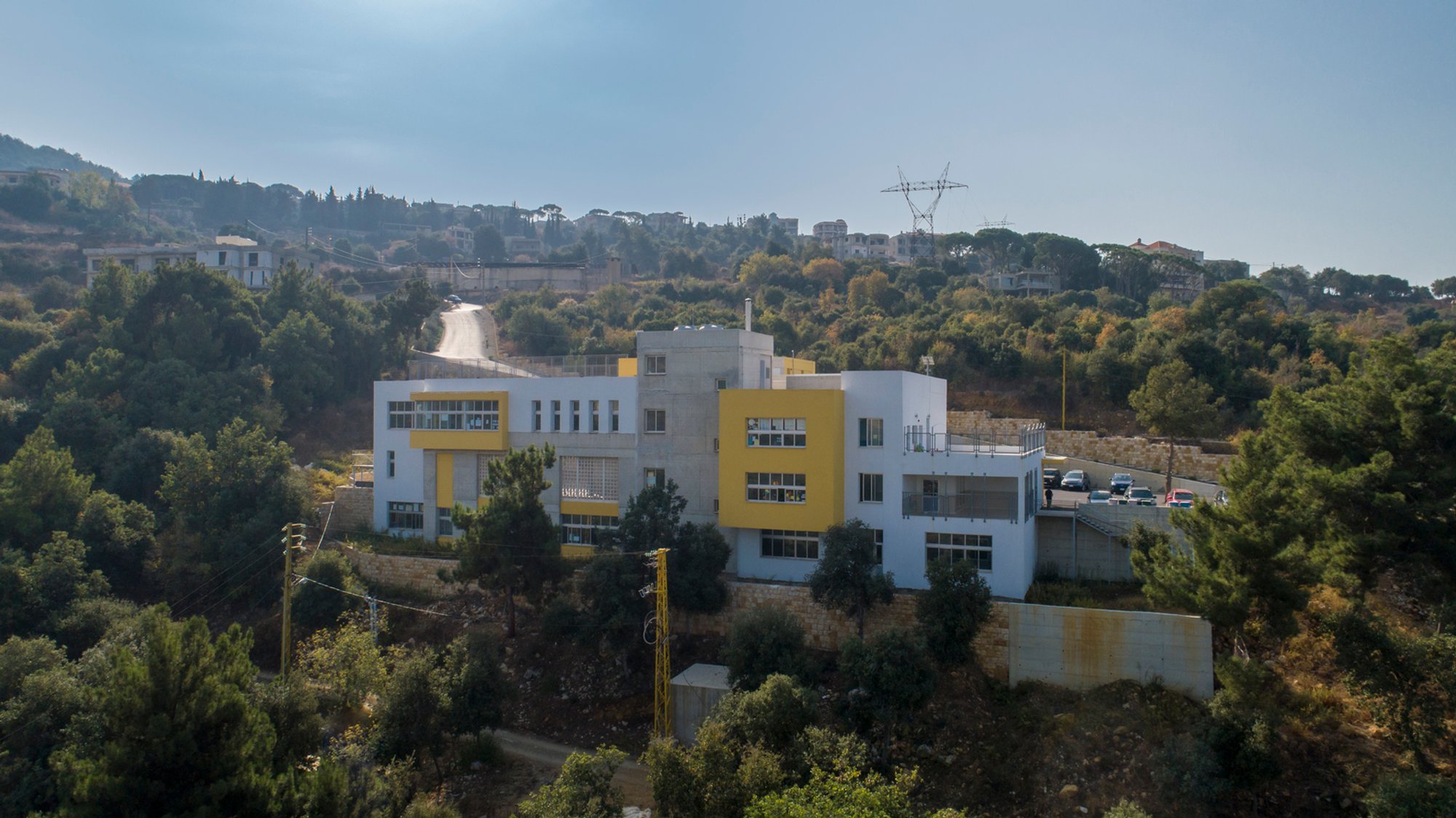
Sustainable School Architecture
The article explores Abey Public School's sustainable design by Almimariya, integrating community, heritage, and eco-friendly practices in Lebanon.

Sustainable architecture is at the forefront of modern design, prioritizing environmental responsibility and community integration. Abey Public School, designed by Almimariya, exemplifies these principles. Situated in Abey, Lebanon, this project not only caters to educational needs but also fosters community cohesion and environmental sustainability.
Abey Public School: A Model of Sustainable School Architecture
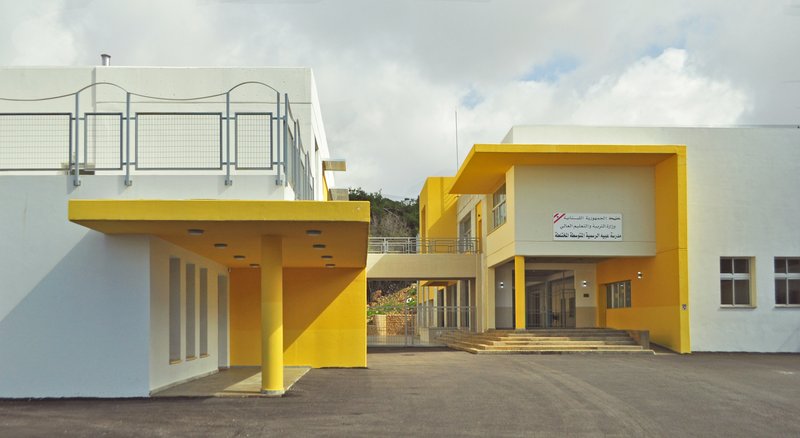
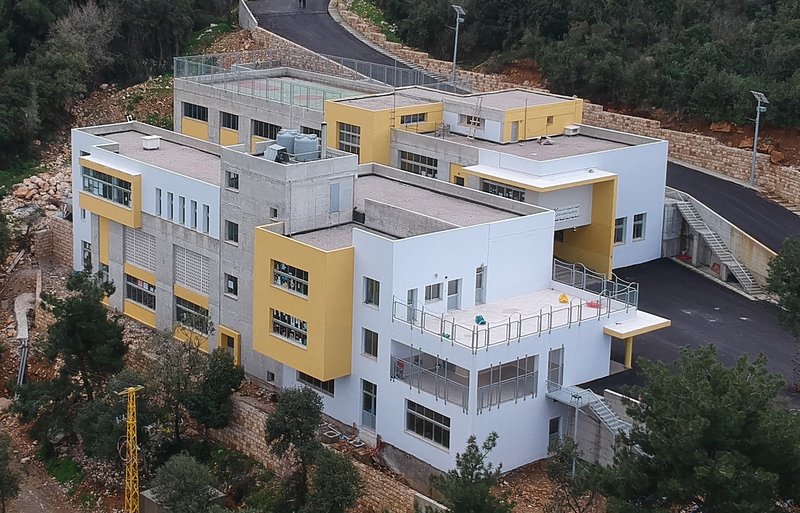
Abey Public School is a testament to how thoughtful design can address educational, environmental, and community needs. The school comprises a nursery, elementary, and intermediate sections, accommodating 360 students. The funding for this project came from the compensation paid by the government for a waste landfill, transforming a site of past environmental degradation into a beacon of hope and learning.
Embracing Local Heritage and Community
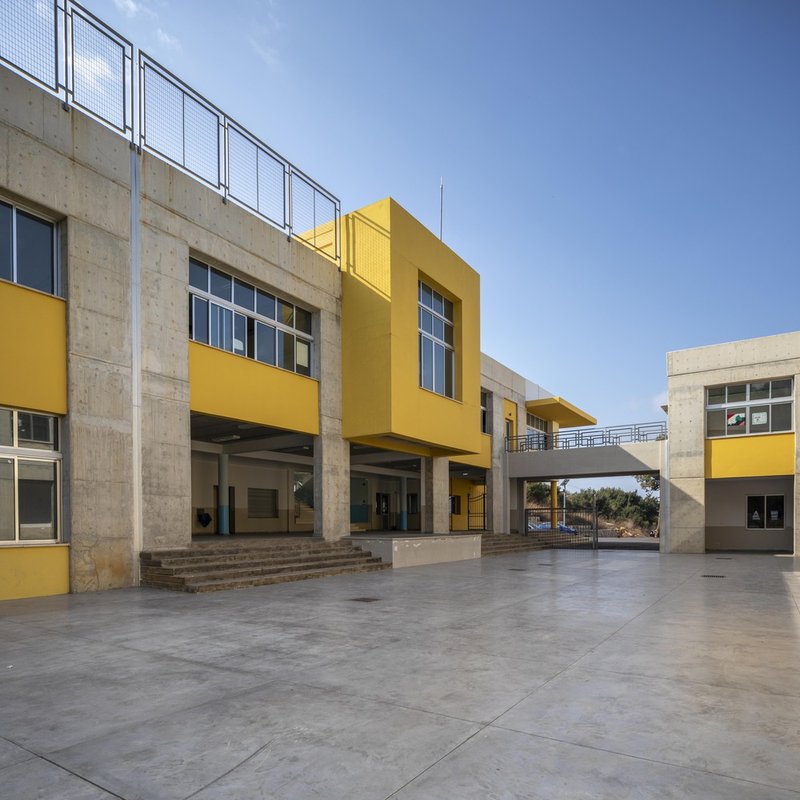
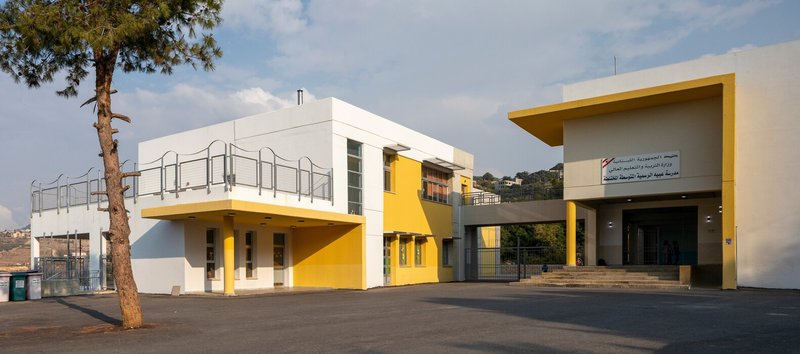
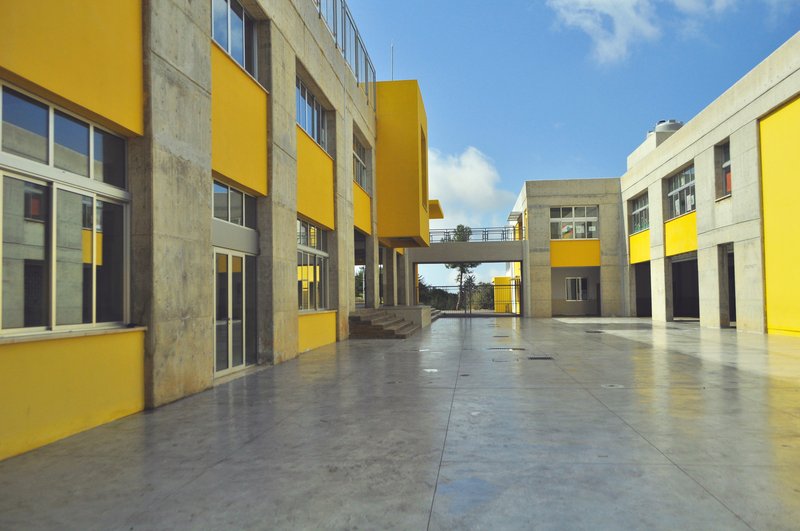
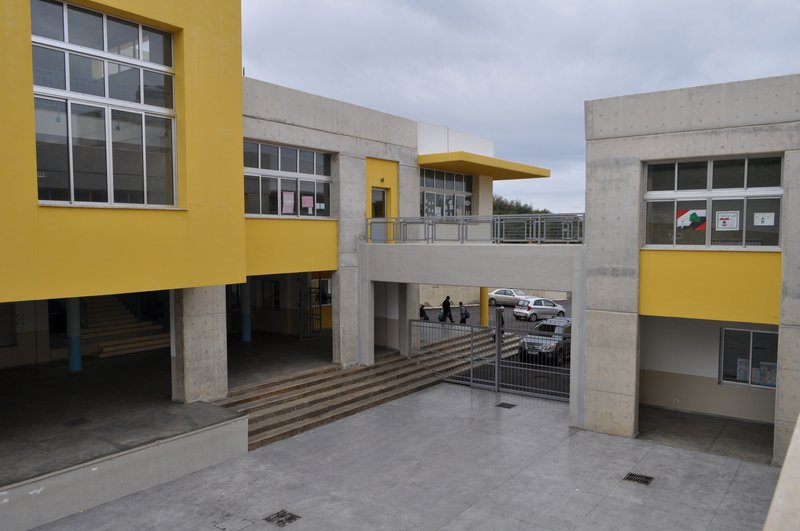
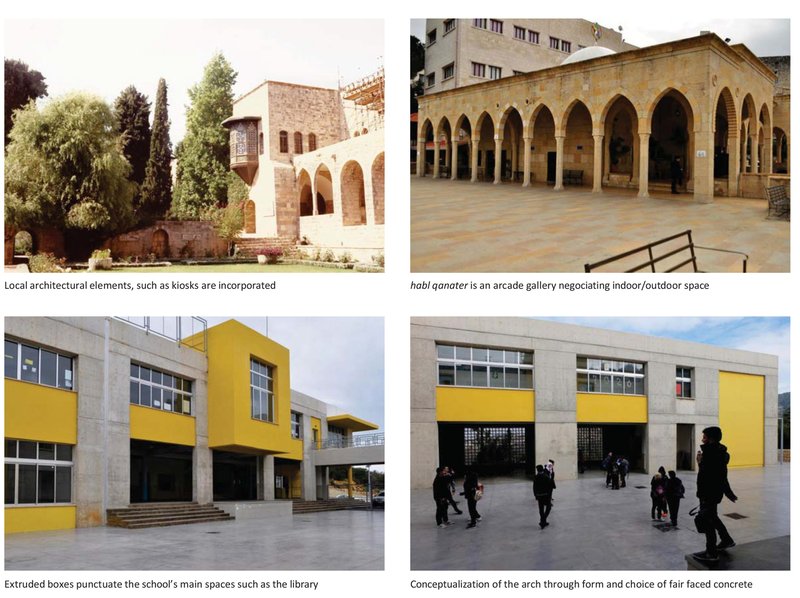
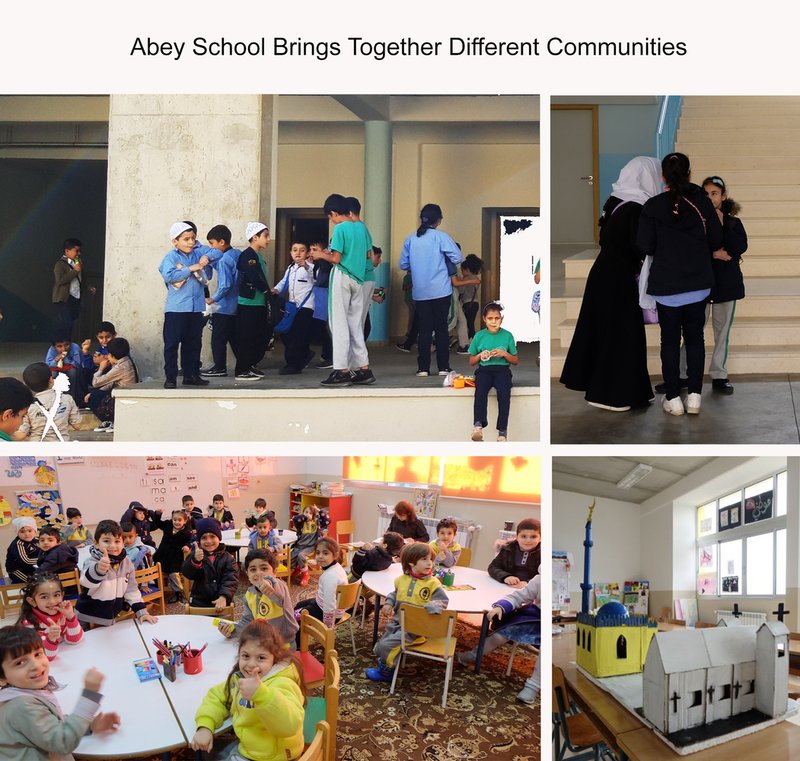
Abey, a village in Mount Lebanon, is known for its rich heritage and religious coexistence. The school’s design reflects this heritage with a modern twist, using playful colors and styles reminiscent of the local architecture. This approach not only creates a sense of place and identity but also fosters a shared sense of belonging among the students and the community.
Overcoming Site Challenges with Ecological Design
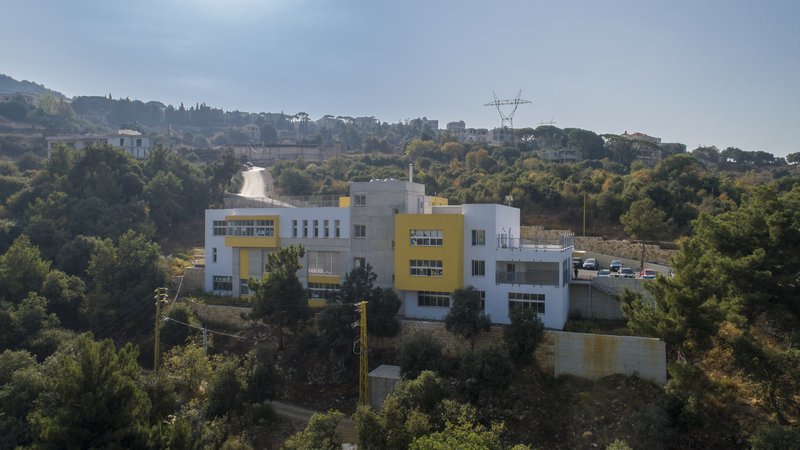
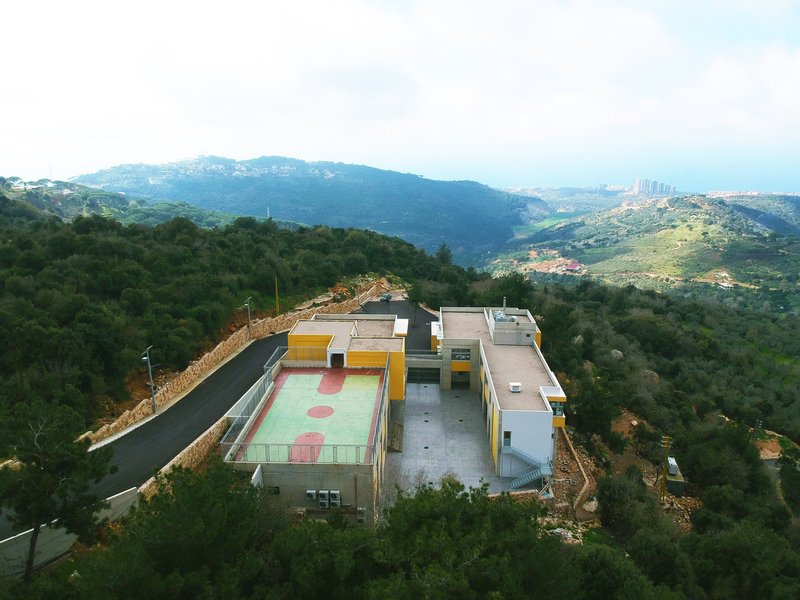
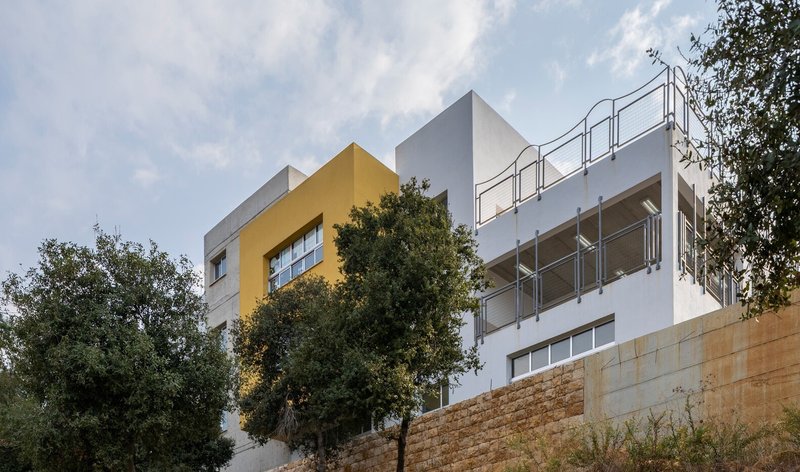
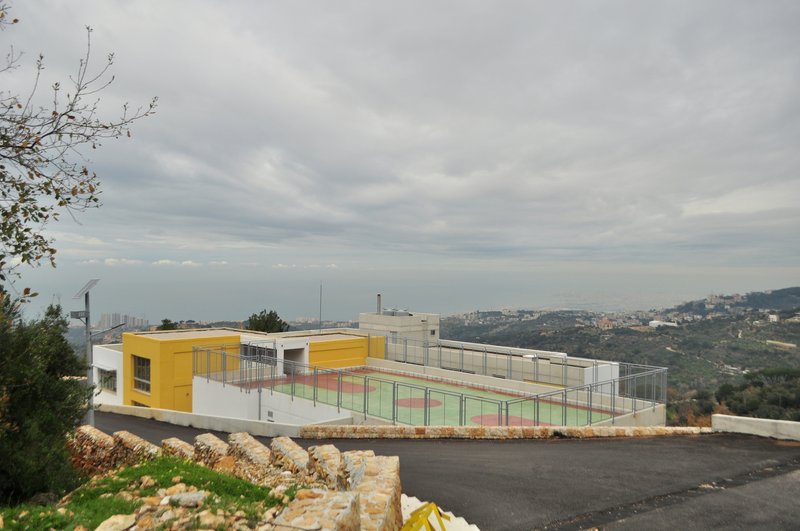
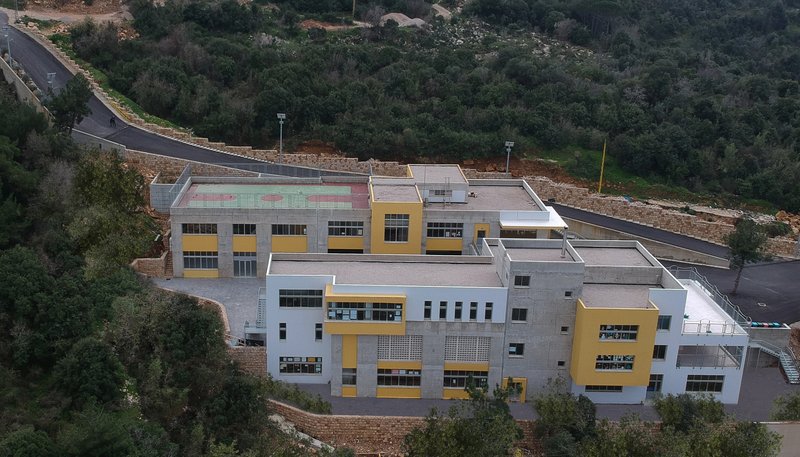
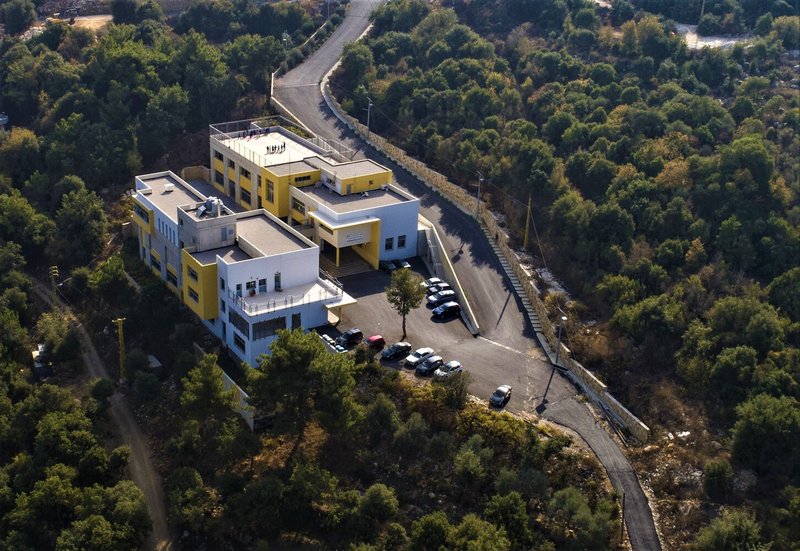
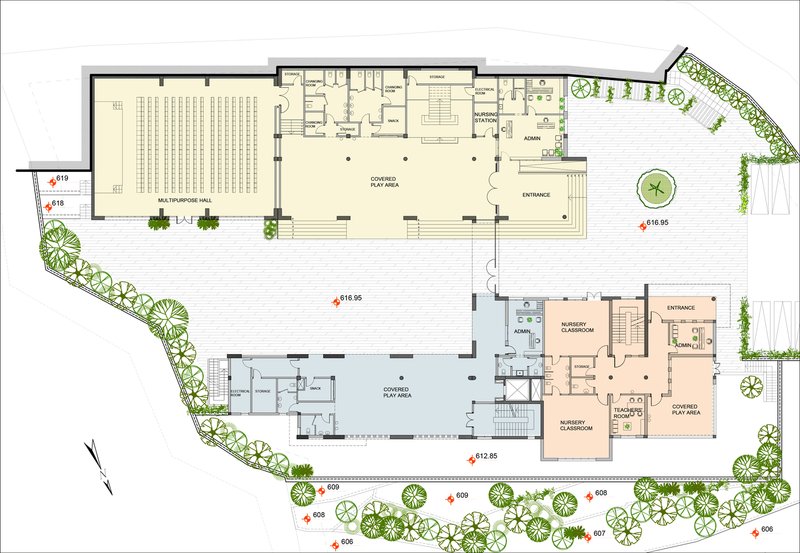
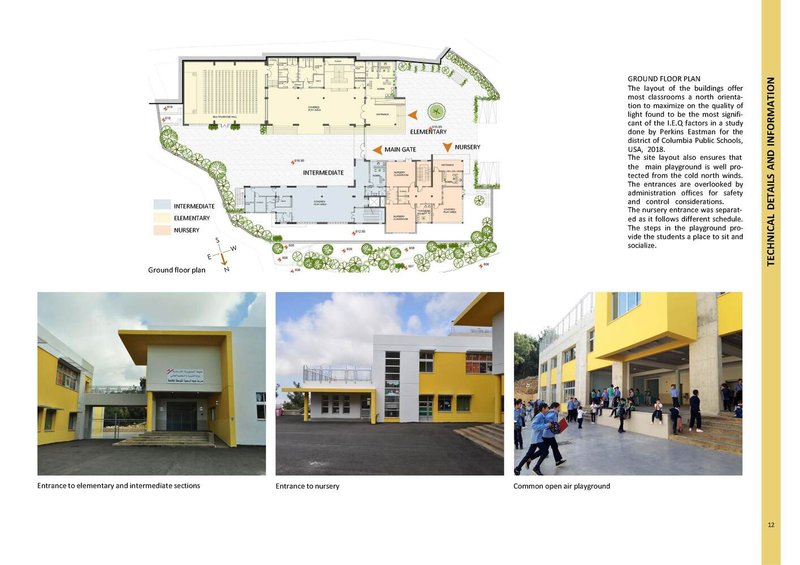
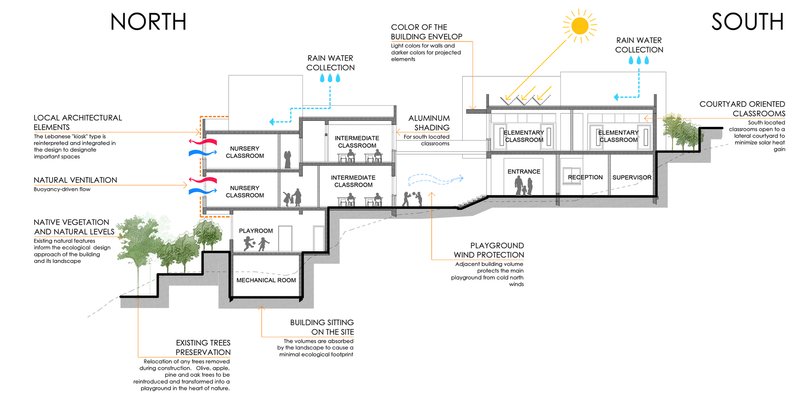
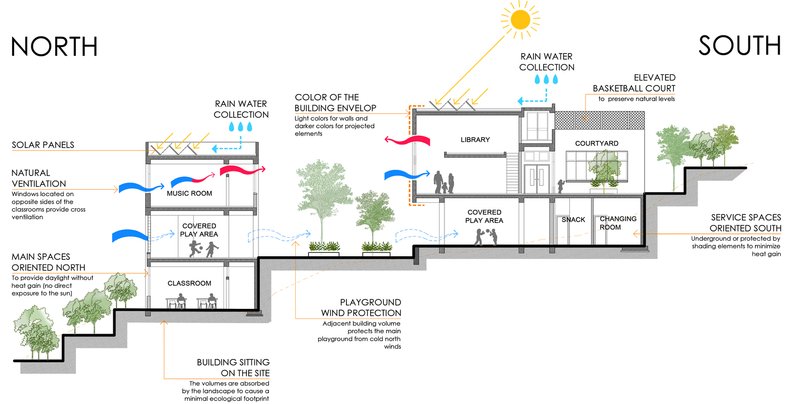
The steep site of the school posed significant challenges, but Almimariya adopted an ecological approach to seamlessly integrate the buildings into the landscape. The structures were positioned near the main road to minimize road intrusion, and the building footprint was reduced by utilizing roof spaces for the basketball court and nursery playground.
Maximizing Natural Light and Energy Efficiency
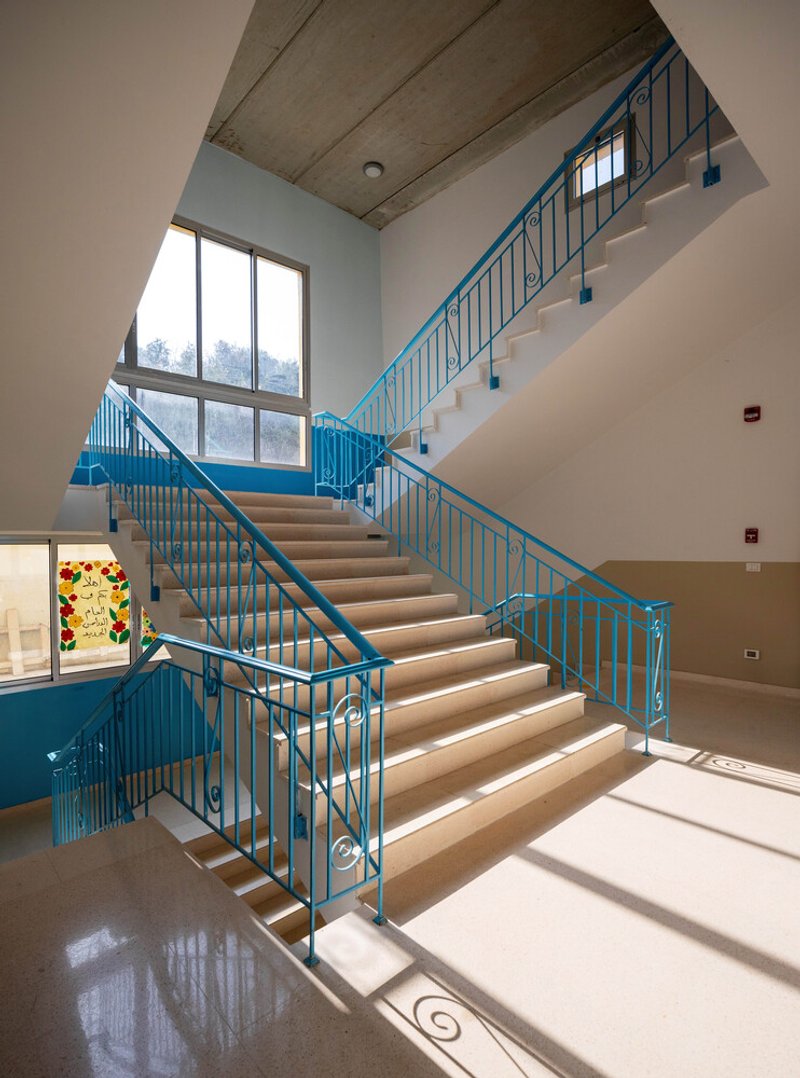
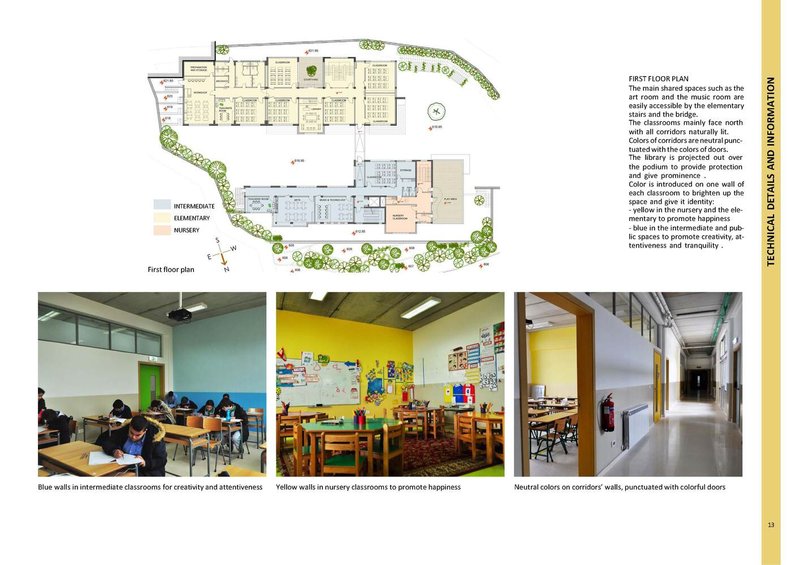
Classrooms were oriented to the north to take advantage of natural light while protecting the playground from the cold northern wind. This design choice enhances the learning environment and significantly reduces the need for artificial lighting. Additionally, all spaces are naturally lit, contributing to lower energy consumption and a healthier indoor atmosphere.
Local Materials and Economic Support
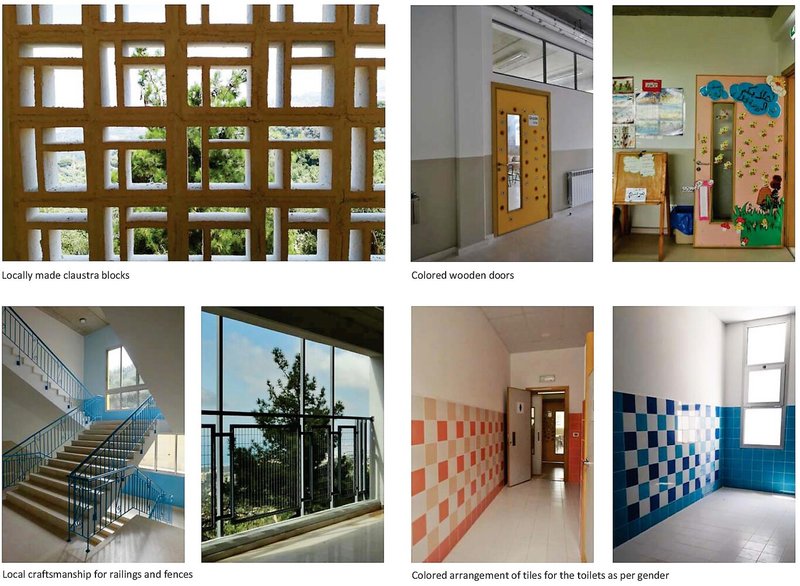
The use of locally procured materials not only supports the local economy but also reduces the environmental impact associated with transporting building materials. This decision underscores the project’s commitment to sustainability at both environmental and economic levels.
Green Infrastructure and Future-proofing
Despite a limited budget, the designers incorporated infrastructure for solar panels and rainwater collection systems. This phased approach allows for the future addition of these components, demonstrating that financial constraints should not hinder green initiatives. This innovative strategy ensures that the school can become even more sustainable over time.
Community Integration and Accessibility
The school serves as more than just an educational facility. It is fully accessible to individuals with disabilities, ensuring inclusivity. Moreover, facilities like the playground, meeting hall, and basketball court are available for community use outside school hours, enhancing community integration and engagement.
Abey Public School by Almimariya is a shining example of sustainable school architecture. By blending modern design with local heritage, addressing environmental challenges, and fostering community integration, the project sets a new standard for educational facilities. This school not only educates the young but also builds a stronger, more cohesive community while paving the way for a sustainable future.
All photographs are work of Hana Alamuddin




Popular Articles
Popular articles from the community

Atelier Macri Concept Store Interior Design by CASE-REAL
Atelier Macri store features a "ko" counter, walnut wood details, cork displays, blending retail, gallery, and seamless customer experiences.

Solar Steam: A Climate-Responsive Architecture That Redefines the Monument
A climate-responsive memorial architecture that transforms heat, decay, and time into a living system reflecting humanity’s ecological impact.
An Miên Lumière Cafe by xưởng xép, Ho Chi Minh City, Vietnam
An industrial-inspired café where layered steel and warm light create a dynamic, immersive environment shaped by reflection, depth, and perception.
Flamboyant House by Juliana Camargo + Prumo Projetos
Modern Brazilian house integrating existing tree, pool, and volumes with glass, wood, and transitional spaces blending interior, exterior, and landscape seamlessly.


Similar Reads
You might also enjoy these articles


The Ken Roberts Memorial Delineation Competition (Krob)
As the most senior architectural drawing competition currently in operation anywhere in the world, it draws hundreds of entries each year, awarding the very best submissions in a series of medium-based categories.


Waterfront Redevelopment and Urban Revitalization in Mumbai: Forging a New Dawn for Darukhana
A transformative waterfront redevelopment project reimagining Darukhana’s shipbreaking heritage into an inclusive urban future.

OUT-OF-MAP: A Call for Postcards on Feminist Narratives of Public Space
Rhizoma Design and Research Lab invites artists, designers, architects, researchers, and students to reflect on how feminist perspectives can reshape public space. Selected works will be exhibited in Barcelona, October 2026. Submissions open until 15 April 2026.


Documentation Work on Buddhist Wooden Temple
Architectural syncretism and cultural hybridity: A comparative study of the Buddhist temples in Chattogram Hill tracks


Explore Architecture Competitions
Discover active competitions in this discipline




The International Standard for Design Portfolios


The Global Benchmark for Architecture Dissertation Awards


The Global Benchmark for Graduation Excellence


Challenge to design public laboratory
Comments (0)
Please login or sign up to add comments
No comments yet. Be the first to comment!