
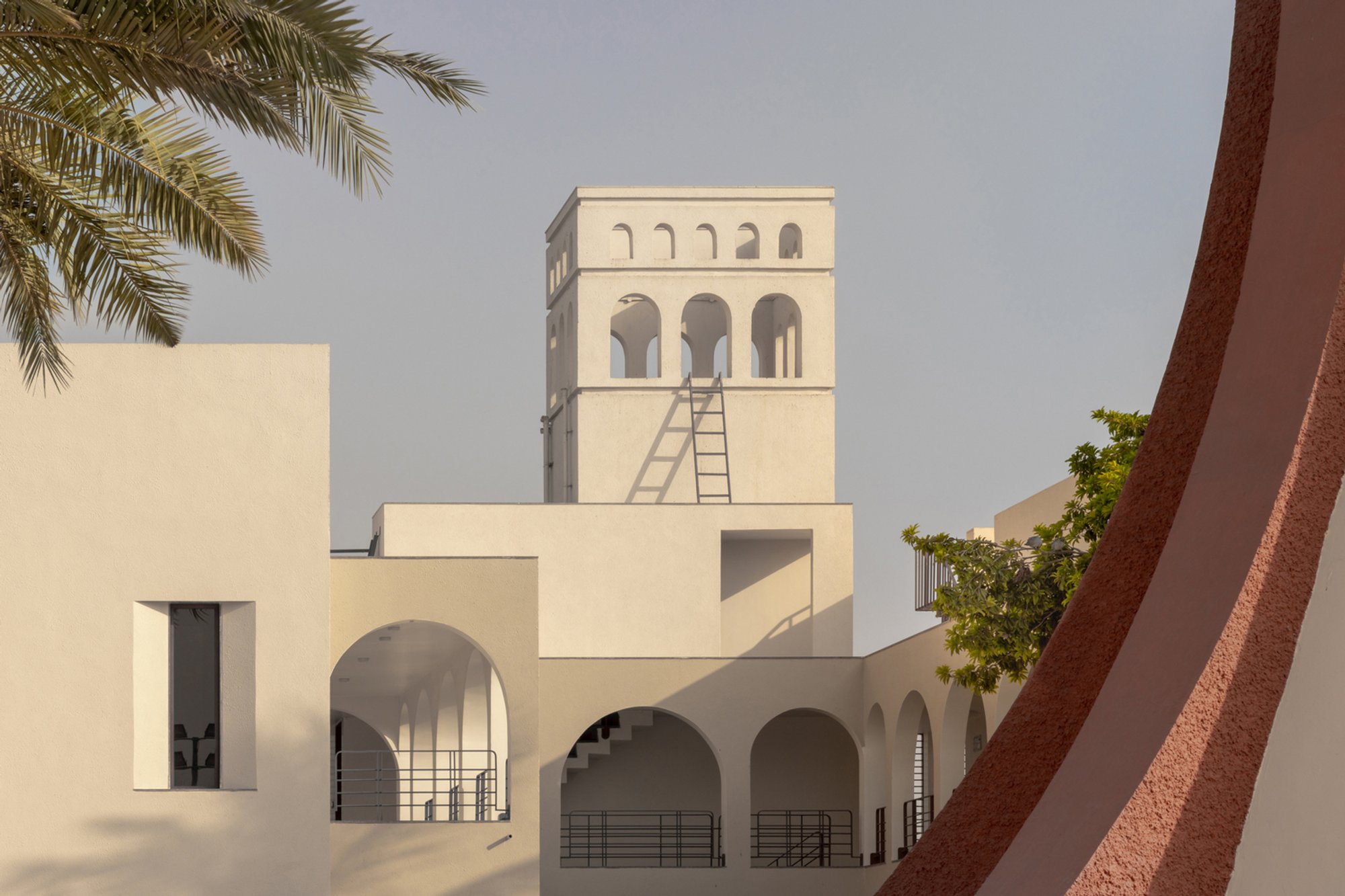
Temple Complex and Community Center Nardipur by Raasa Architects
A serene temple complex blending arches, courtyards, and nature, fostering spiritual connection, community interaction, and harmony through light and simplicity.

A Dialogue Between Nature, Community, and Spiritual Architecture
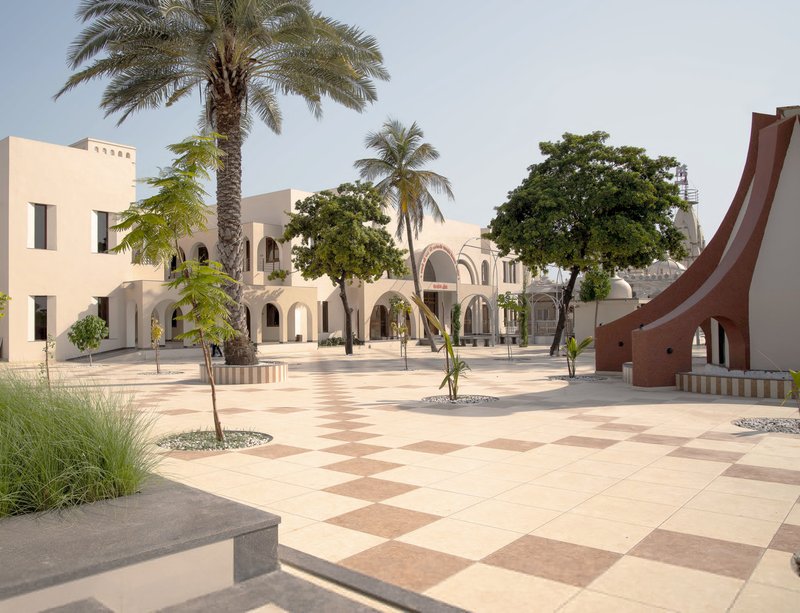
The Temple Complex and Community Center in Nardipur, designed by Raasa Architects, embodies a delicate balance between spirituality, nature, and community life. Rather than asserting dominance, the architecture gently supports the everyday rhythms of ritual and gathering. Situated within a lush site filled with mature trees and vibrant birdlife, the complex preserves and celebrates the natural ecosystem, allowing architecture and landscape to coexist in harmony.
The design approach moves away from monumental temple architecture and instead focuses on creating an environment that encourages interaction, reflection, and shared experience. The built form becomes a subtle backdrop to the community’s spiritual and social activities — a place where sacred rituals, informal conversations, and intergenerational gatherings naturally intertwine.
A Dialogue Between Architecture, Nature, and Community
The Temple Complex and Community Center in Nardipur by Raasa Architects redefines sacred architecture as a living extension of community life. Rooted in the spiritual and ecological essence of Gandhinagar, the project gently merges traditional temple planning with contemporary architectural sensibility, allowing built form and landscape to coexist in serene equilibrium.
Set within a lush site abundant with trees and birds, the design respects the existing natural ecosystem, ensuring that architecture does not dominate but supports the spiritual rhythm of daily life. The built environment acts as a subtle backdrop for prayer, gathering, and contemplation—spaces where the community can connect through shared rituals and experiences.
Courtyard-Centered Spatial Planning
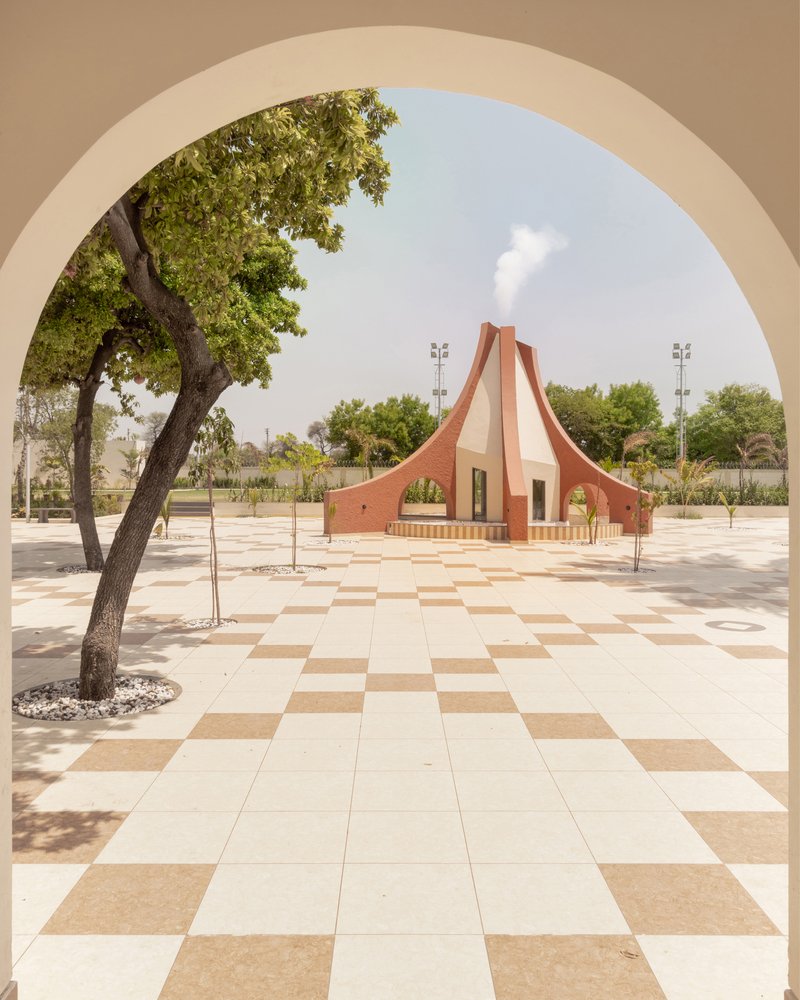
Inspired by traditional Indian temple typologies, the spatial layout is anchored around a central courtyard, establishing a clear hierarchy of public, semi-public, and private zones. This open-to-sky space becomes the heart of the complex, fostering interaction among generations and hosting cultural as well as spiritual events.
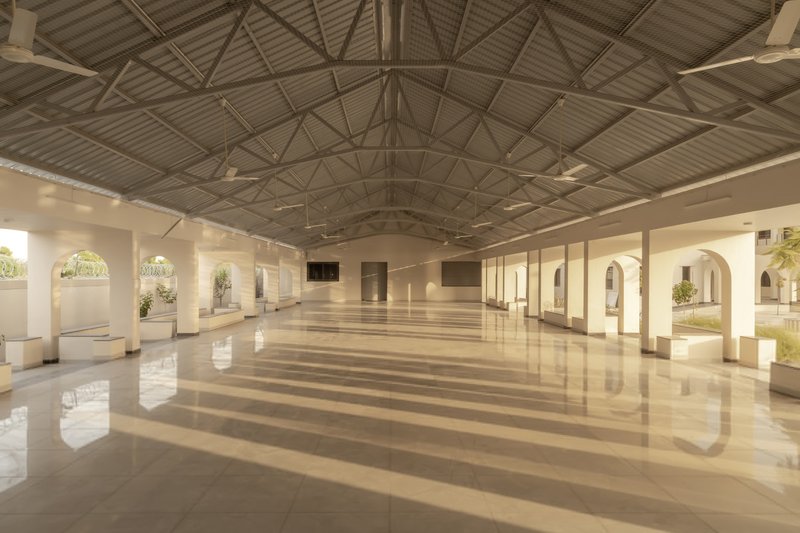
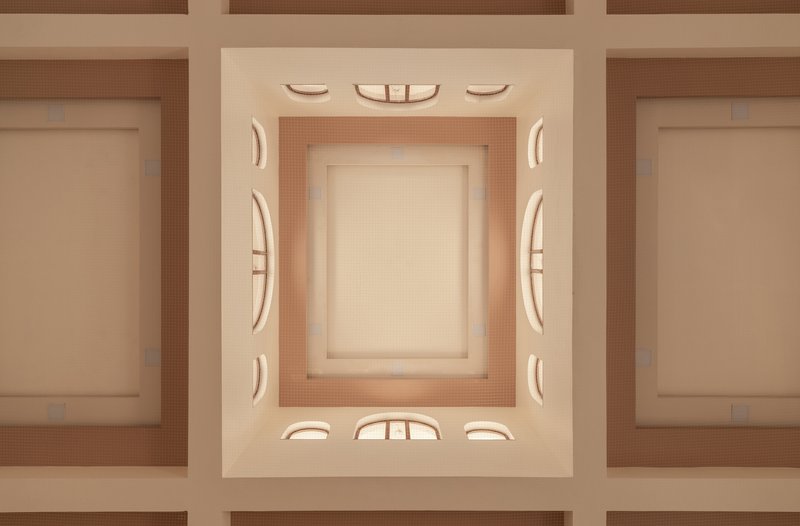
Natural light and ventilation are integral to the architectural narrative. Arched openings, breezeways, and clerestory windows guide the movement of air and sunlight throughout the day, minimizing energy dependence while creating a dynamic play of light and shadow that enhances sensory experience.
Architectural Language of Arches
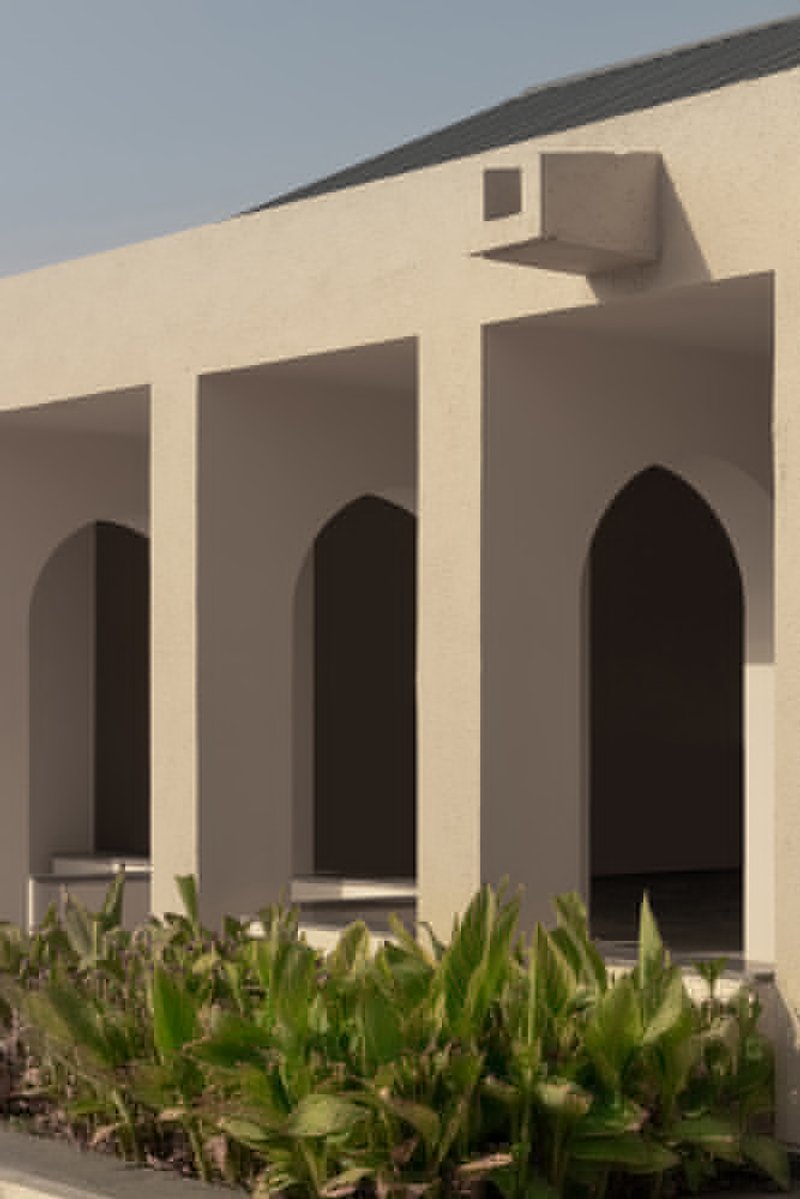
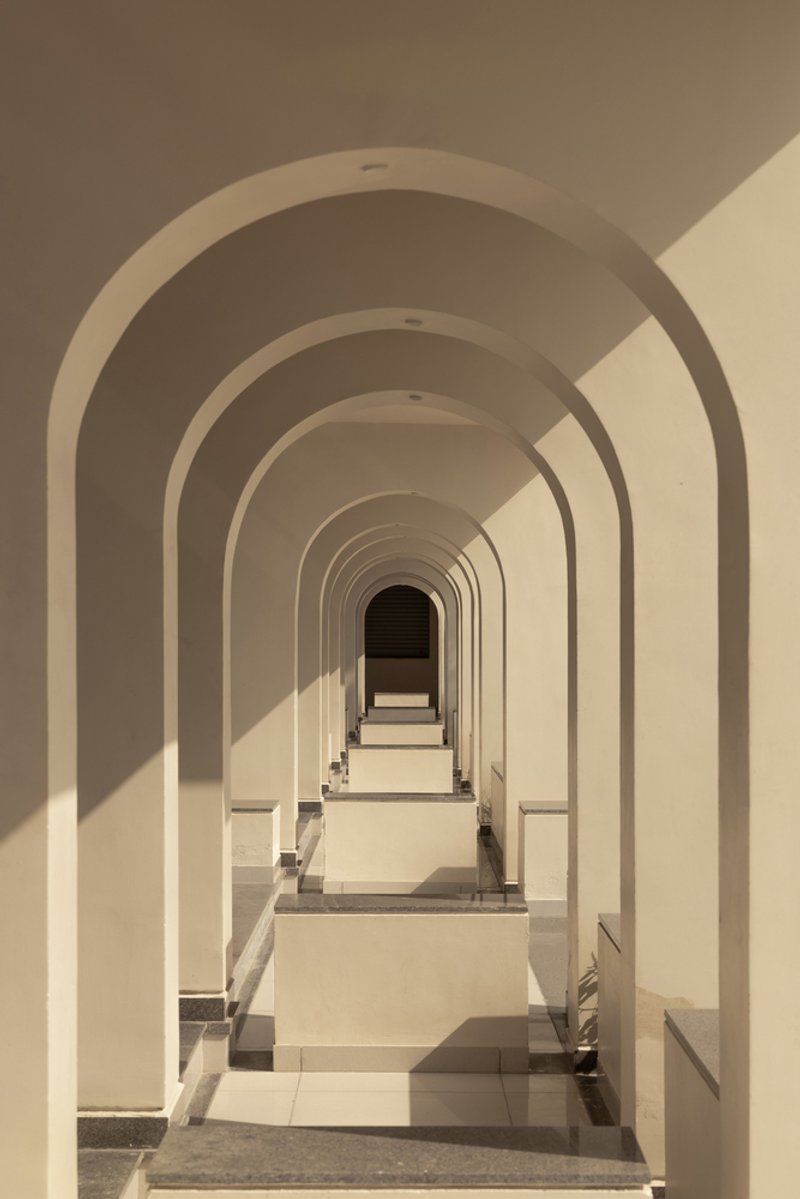
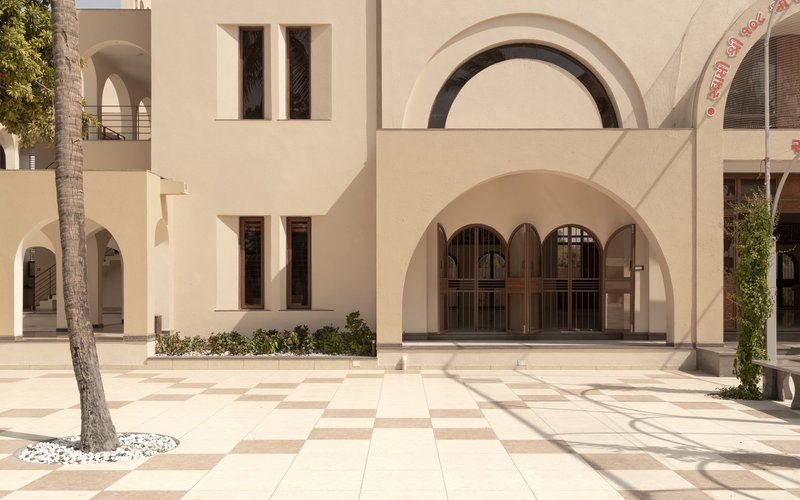
Arches serve as the unifying architectural motif throughout the complex. Their design stems from the symbolic archway that once framed a blooming Bougainvillea on the site—a gesture of reverence and transition. This idea evolved into a structural and aesthetic vocabulary that manifests across various programs:
- In the prayer hall, a series of parallel arches articulate the façade, creating rhythm and depth.
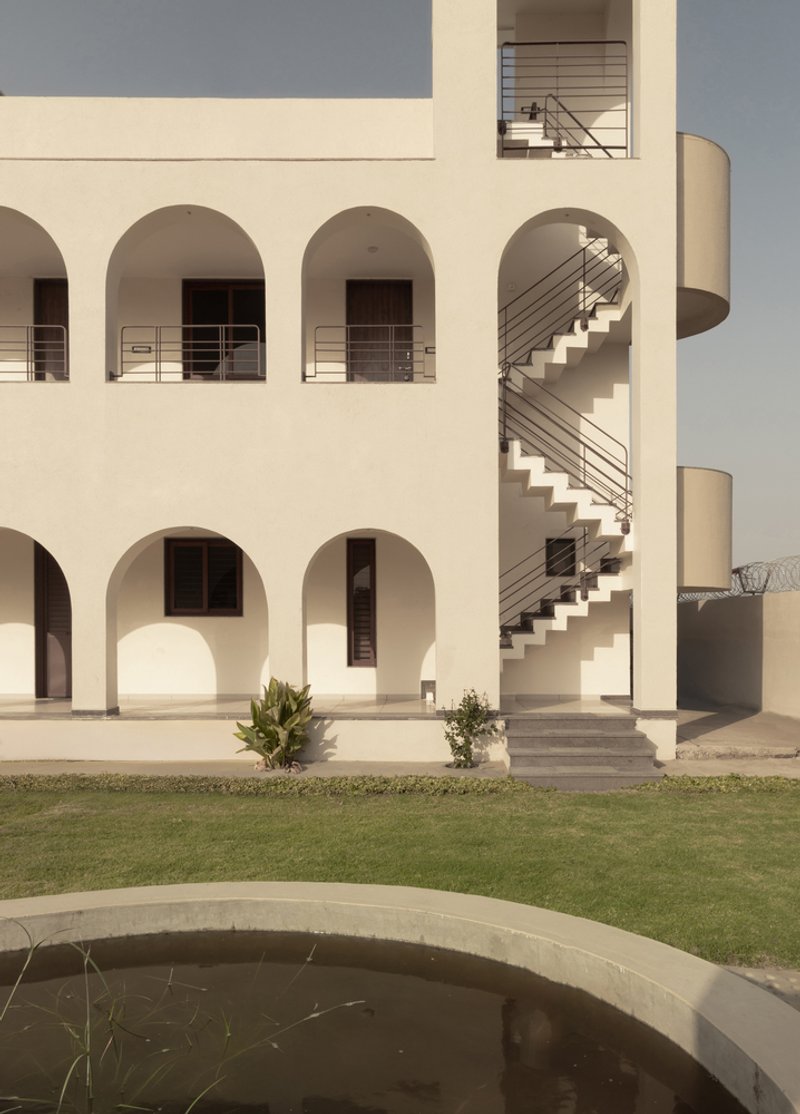
- Around the lodging courtyard, smaller arches frame semi-open verandas for quiet reflection.
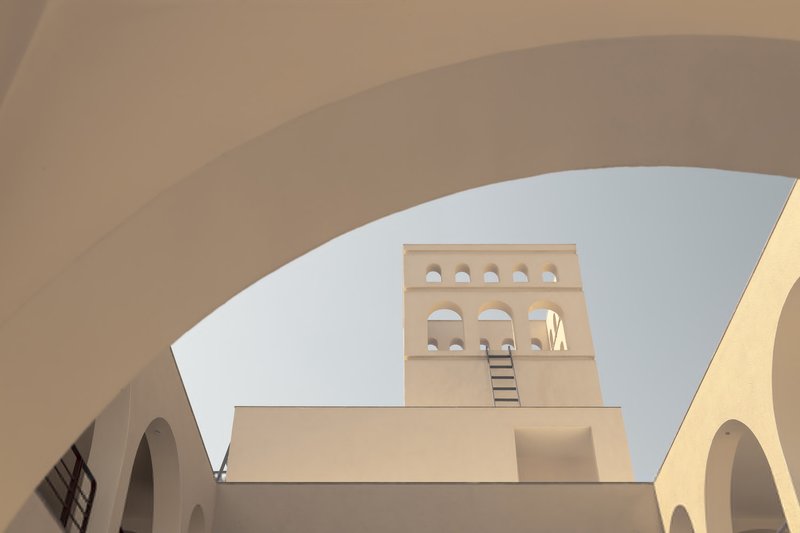
- The bird tower transforms the arch into miniature niches, offering shelter to birds—a poetic connection to nature.
- Within the bhojanshala (dining hall), perpendicular arches reveal themselves gradually, creating an unfolding spatial experience.
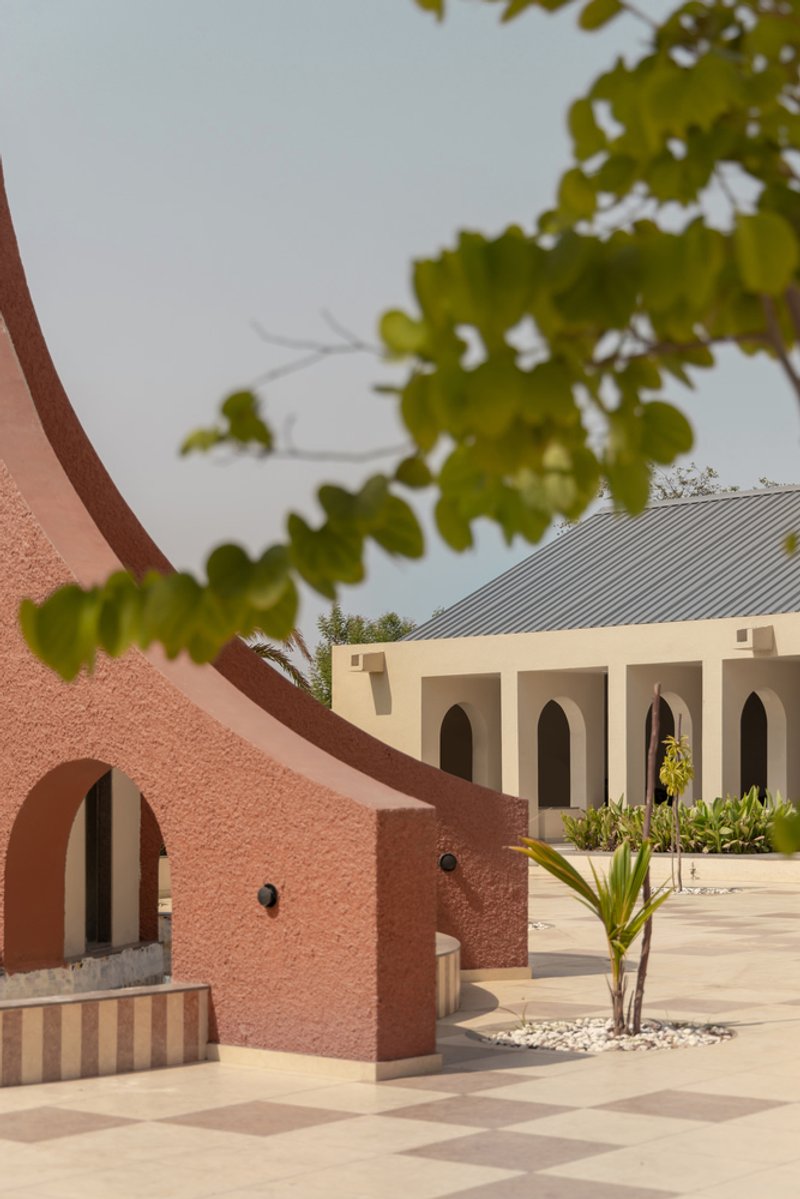
- The sacred fire space becomes a focal element, where inverted arches symbolize introspection and balance.
Harmony of Function and Form
Each architectural element responds thoughtfully to its program. The prayer hall, designed for collective gatherings, embodies openness and inclusivity, while the lodging courtyard provides a more intimate, meditative environment. This deliberate modulation of scale, proportion, and light creates diverse spatial experiences unified through a consistent design language.
Material selection reinforces simplicity and longevity. Brick, reinforced concrete, and plastered surfaces maintain low maintenance while achieving an uncluttered aesthetic. The restrained palette emphasizes form and light over ornamentation, ensuring the architecture remains timeless, grounded, and user-driven.
Simplicity, Functionality, and Community
At its core, the project embodies the philosophy of simplicity and adaptability. Spaces are deliberately minimal—flexible enough to accommodate prayer, meditation, celebration, or rest. Architecture here becomes a framework for human interaction and spiritual connection, evolving organically with the life of the community.
All photographs are works of The Space Tracing Company



Popular Articles
Popular articles from the community

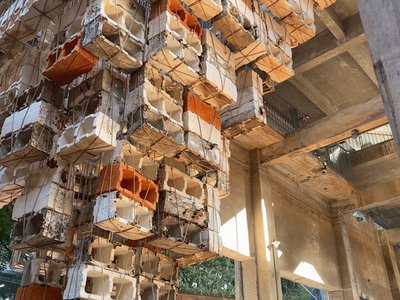
Inverted Architecture Installation by Studio Link-Arc: Exploring the Intersection of Architecture and Living Organisms
Inverted Architecture Installation by Studio Link-Arc blends mycelium, sustainability, inverted design, ecological cycles, and urban adaptive architecture in Shenzhen.
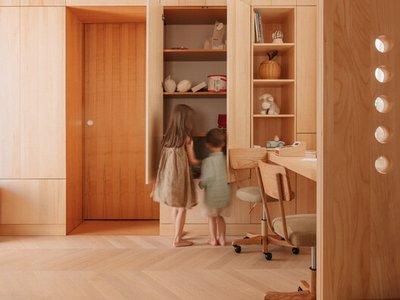
Treehouse Apartment: A Warm Timber Interior Blending Craft, Play, and Contemporary Living
Warm timber apartment with integrated treehouse, combining natural materials, craftsmanship, and playful design to create a flexible, family-oriented living environment.
Solar Steam: A Climate-Responsive Architecture That Redefines the Monument
A climate-responsive memorial architecture that transforms heat, decay, and time into a living system reflecting humanity’s ecological impact.
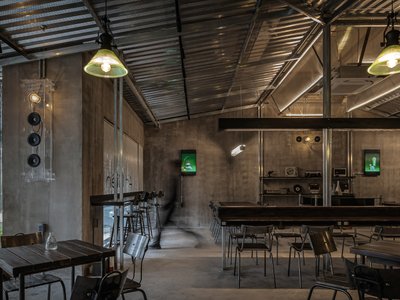
An Miên Lumière Cafe by xưởng xép, Ho Chi Minh City, Vietnam
An industrial-inspired café where layered steel and warm light create a dynamic, immersive environment shaped by reflection, depth, and perception.
Similar Reads
You might also enjoy these articles


The Ken Roberts Memorial Delineation Competition (Krob)
As the most senior architectural drawing competition currently in operation anywhere in the world, it draws hundreds of entries each year, awarding the very best submissions in a series of medium-based categories.

Waterfront Redevelopment and Urban Revitalization in Mumbai: Forging a New Dawn for Darukhana
A transformative waterfront redevelopment project reimagining Darukhana’s shipbreaking heritage into an inclusive urban future.
OUT-OF-MAP: A Call for Postcards on Feminist Narratives of Public Space
Rhizoma Design and Research Lab invites artists, designers, architects, researchers, and students to reflect on how feminist perspectives can reshape public space. Selected works will be exhibited in Barcelona, October 2026. Submissions open until 15 April 2026.

Documentation Work on Buddhist Wooden Temple
Architectural syncretism and cultural hybridity: A comparative study of the Buddhist temples in Chattogram Hill tracks
Explore Architecture Competitions
Discover active competitions in this discipline




The International Standard for Design Portfolios


The Global Benchmark for Architecture Dissertation Awards


The Global Benchmark for Graduation Excellence

Design Challenge - Contemporary interpretation of a religious complex
Comments (0)
Please login or sign up to add comments
No comments yet. Be the first to comment!