
The Black Taj – The Unbuilt Legend
A poetic reinterpretation of Mughal architecture that transforms legend into spatial experience through light, shadow, and imagination.

Honorable Mention Entry – The Black Taj Competition
Reimagining a Legend through Contemporary Architectural Interpretation
The legend of the Black Taj Mahal—a mythic counterpart to the ivory monument of Agra—has long captured the world’s imagination. Rooted in stories of love, passion, and spirituality, this unbuilt vision stands as a mirror image of the Taj Mahal, reflecting both its physical perfection and the emotional depth it symbolizes.
In this conceptual proposal, architects Simona and David reinterpret the myth not by constructing a literal twin, but by transforming the idea of the unseen into an architectural experience. The project, titled The Black Taj – The Unbuilt Legend, embraces the intangible essence of memory, shadow, and perception.
Architecture as an Act of Imagination
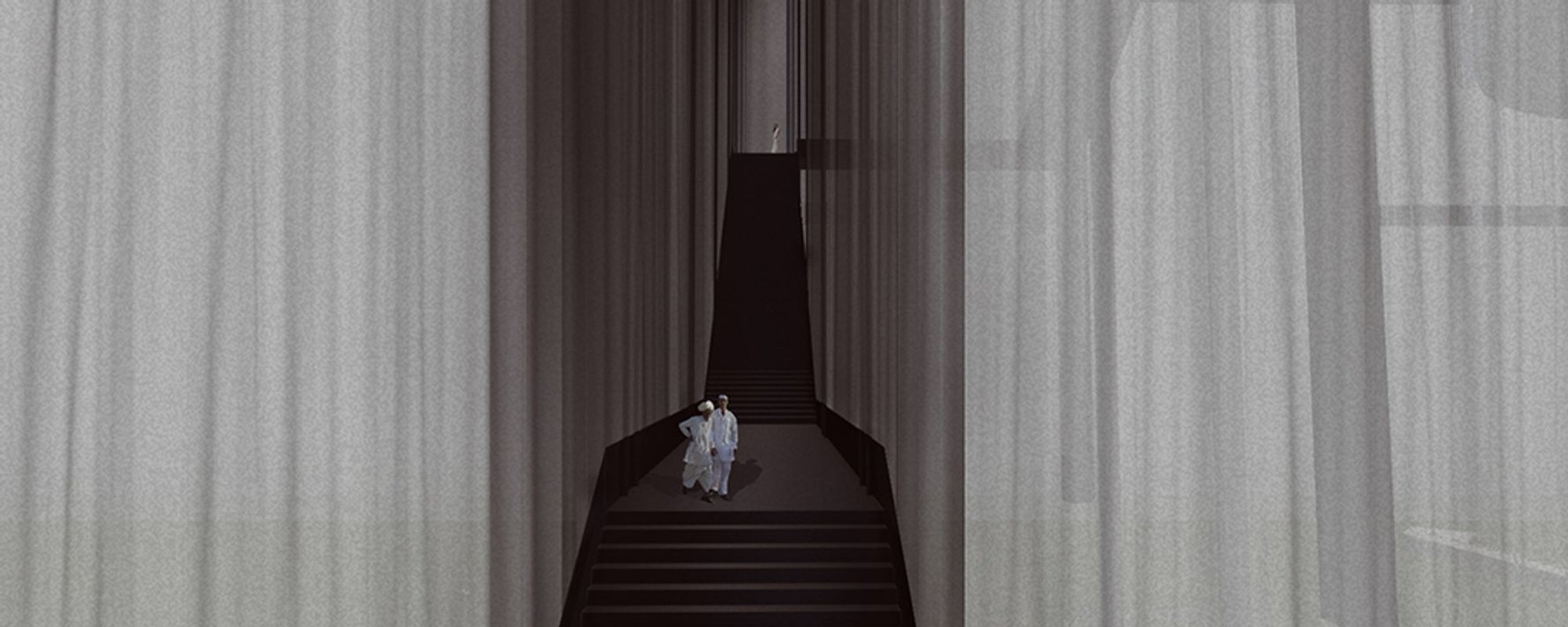
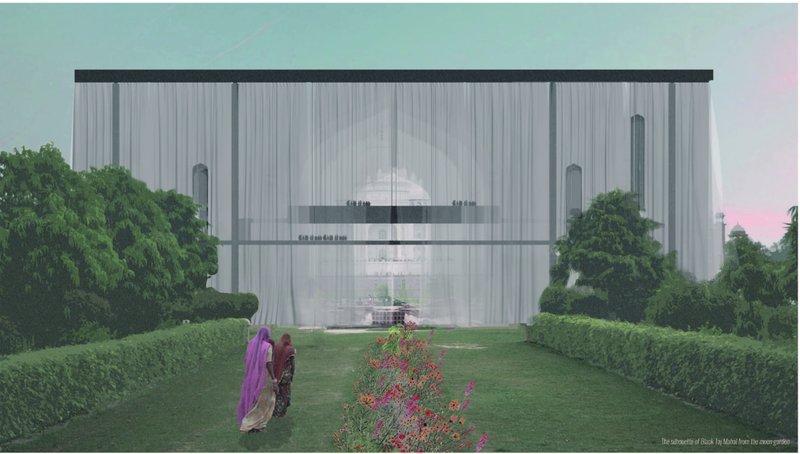
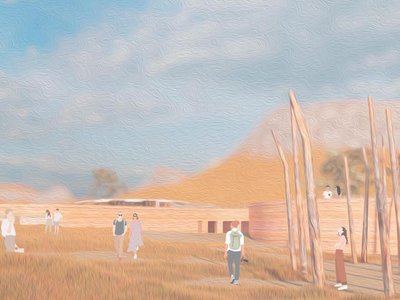
The designers envision the Black Taj Mahal not as a tangible object, but as a spatial illusion—an experience that blurs the line between the visible and the imagined. The structure is composed of a framework draped in translucent curtains, cut in patterns reminiscent of Mughal arches and motifs.
These sheer layers create a poetic veil that conceals and reveals views of the original Taj across the river, allowing visitors to perceive it through a shifting filter of light, air, and movement. The design doesn’t seek to compete with the historical monument—it invites visitors to dream, to reconstruct the unbuilt legend in their own minds.
Experiencing the Black Taj: Layers, Light, and Reflection
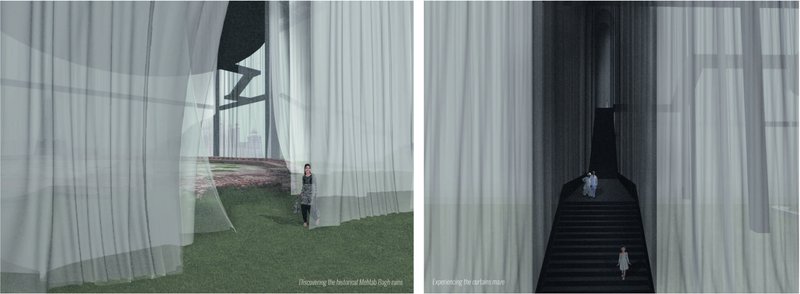
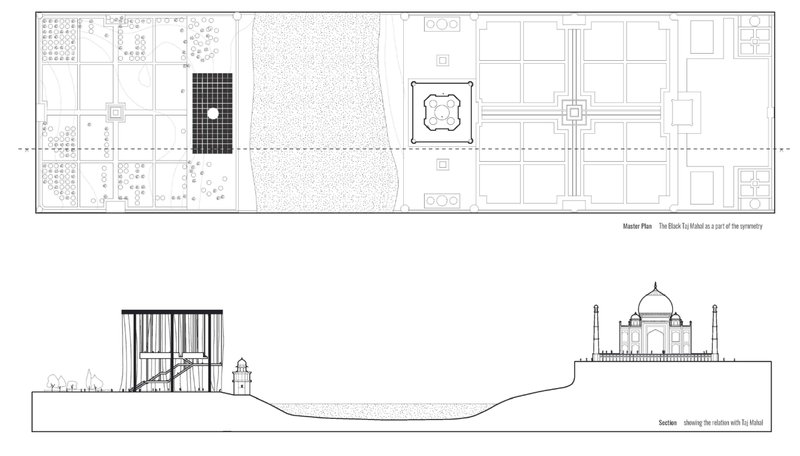
Visitors enter through the Mehtab Bagh, the remains of the Moon Garden, where symmetry aligns perfectly with the Taj Mahal across the Yamuna River. As they walk toward the structure, the translucent façade gradually unveils the Taj’s silhouette. The spatial journey unfolds like a theater—an orchestrated sequence of discovery, concealment, and reflection.
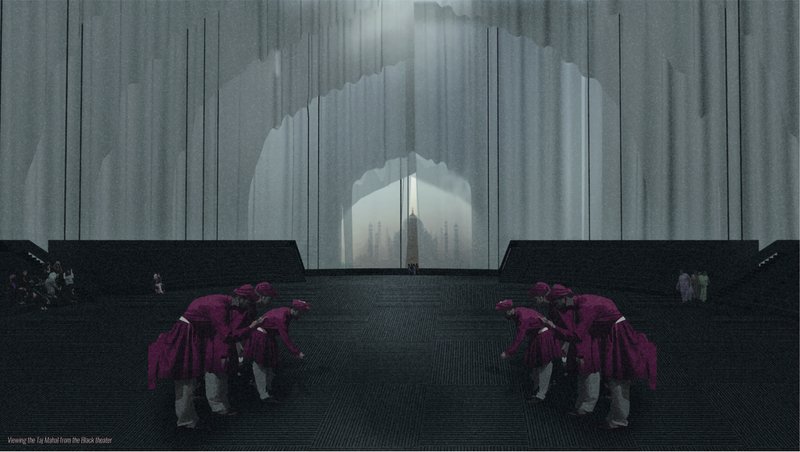
Inside, a labyrinthine path leads through alternating layers of darkness and illumination. The draped curtains modulate sunlight, creating a dynamic interplay of shadow that transforms with every step. This journey culminates in a central theatre, where light penetrates softly from above, framing the distant view of the Taj.
Here, architecture becomes performance—visitors are not mere observers but participants in an emotional narrative of remembrance and longing.
Constructing the Invisible
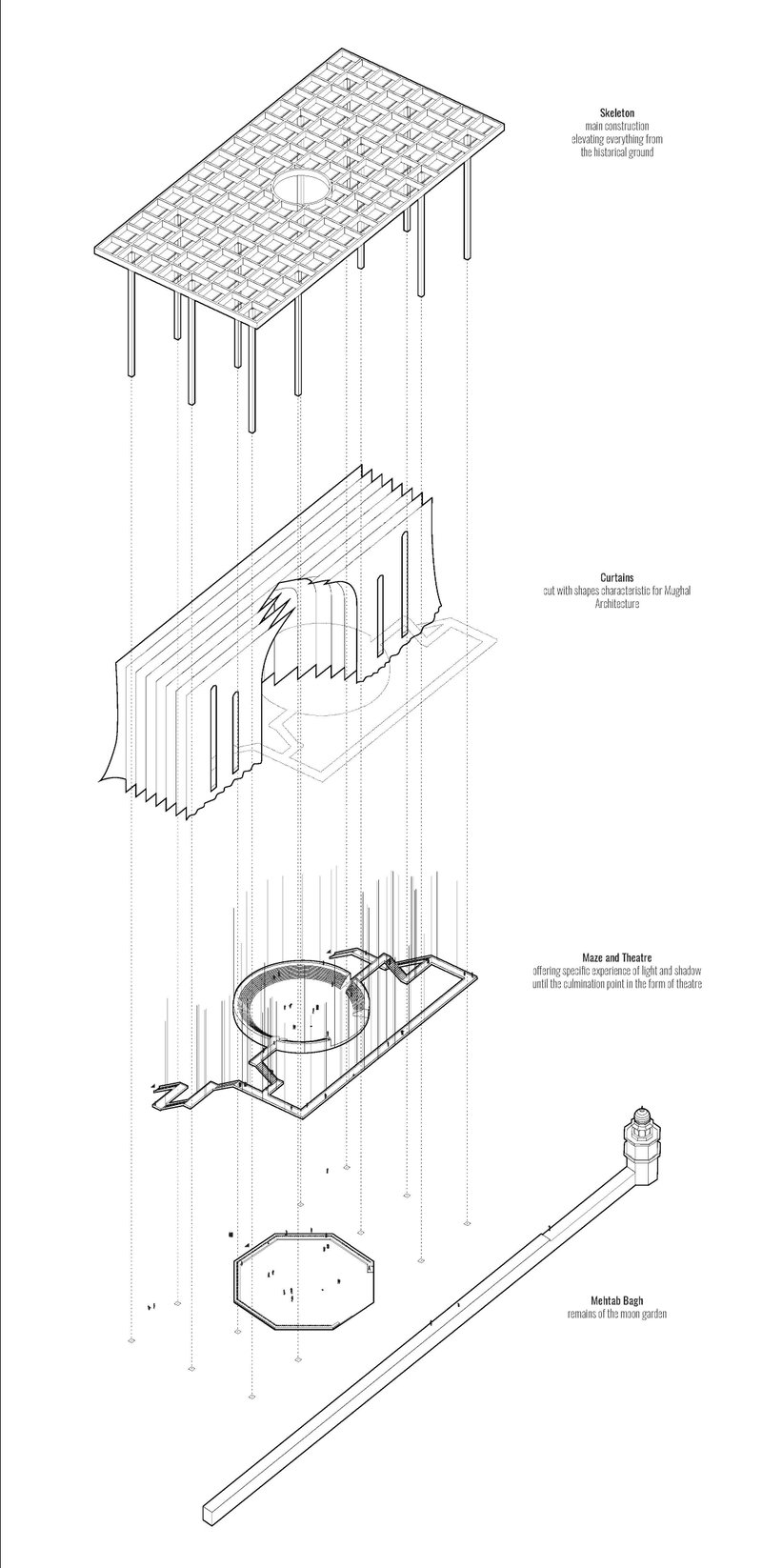
The project’s structural logic is articulated through a minimal skeleton, elevating the built form above the historical ground. This separation pays respect to the sacred landscape while offering a contemporary reinterpretation of Mughal architectural symmetry.
The three core components—Skeleton, Curtains, and Maze & Theatre—symbolize the layers of memory and imagination:
- Skeleton: A modular frame that floats above the ground, ensuring no disruption to the archaeological site.
- Curtains: Light fabric sheets cut in Mughal-inspired shapes, allowing filtered glimpses of the Taj beyond.
- Maze & Theatre: A spatial journey that transforms light and shadow into an experiential dialogue between presence and absence.
This architectural approach preserves the sanctity of history while opening a new lens for experiencing it—an ephemeral monument to the imagination.
A Dialogue Between Past and Future
By situating the Black Taj within the geometry of Mehtab Bagh, the project completes the symmetry axis of the Taj Mahal complex, long speculated in historical lore. Yet, instead of reconstructing a lost monument, it offers a metaphysical counterpoint—a shadow that only becomes whole when perceived alongside its luminous twin.
In this way, The Unbuilt Legend becomes a meditation on duality: light and dark, seen and unseen, presence and void. It is an architectural narrative that challenges the boundaries of physical construction and poetic interpretation.
Architecture as Memory
The Black Taj – The Unbuilt Legend redefines the role of architecture in preserving cultural myths. It is not a reproduction, but a reawakening of collective memory through contemporary spatial expression. The project invites viewers to question how architecture can exist not just as built form, but as an evocation of imagination, memory, and love.
Through its delicate balance of restraint and symbolism, Simona and David’s vision transforms absence into beauty—an architecture of remembrance that honors what was never built, yet never forgotten.



Popular Articles
Popular articles from the community

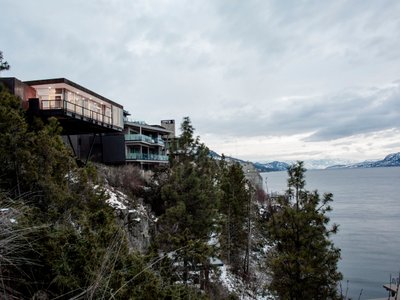
Alton Cliff House: A Harmonious Retreat by f2a Architecture in Lake Country, Canada
Alton Cliff House blends corten steel, prefabrication, and sustainable design, creating a luxurious, energy-efficient retreat perched on Canadian cliffs.
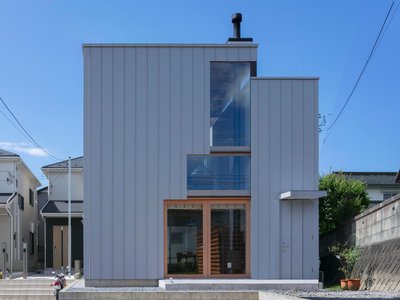
Split House: A Compact Urban Home Blending Privacy, Light, and Flexible Living in Japan
Compact Japanese home featuring DOMA space, flexible café potential, passive lighting, privacy zoning, and sustainable urban living design.

Solar Steam: A Climate-Responsive Architecture That Redefines the Monument
A climate-responsive memorial architecture that transforms heat, decay, and time into a living system reflecting humanity’s ecological impact.



Similar Reads
You might also enjoy these articles


Digital Façade Design for our cities’ urban fronts
Prima Facie - Result Story
Protecting avian biodiversity: Bird observatories to help spread awareness & save rare bird species.
Results for ‘Fly’ - Landscape design competition out now
Connecting with nature: Forest interpretation center in Australia's Wollemi National Park
‘Asatti’ - Landscape design competition - Result story


Explore Architecture Competitions
Discover active competitions in this discipline




The International Standard for Design Portfolios


The Global Benchmark for Architecture Dissertation Awards


The Global Benchmark for Graduation Excellence


Challenge to design an urban locus of culture and heritage
Comments (0)
Please login or sign up to add comments
No comments yet. Be the first to comment!